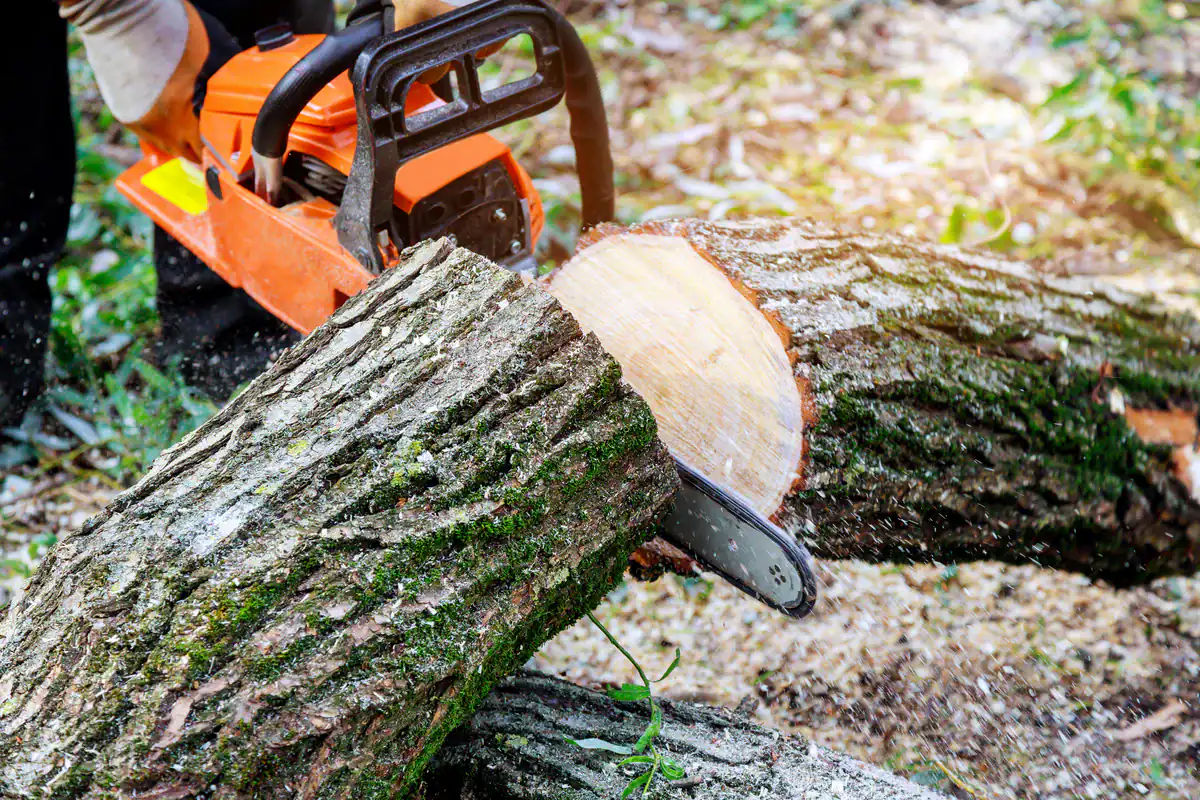
A dead or hazardous tree isn’t just an eyesore — it’s a liability sitting in your yard, and in Overland Park, the stakes are real. The area sees severe weather warnings dozens of times a year. Spring storms roll through Johnson County with 60 to 70 MPH wind gusts, hail, and enough force to bring down a weakened tree without any warning at all. When that happens, what’s underneath it matters — your roof, your fence, your neighbor’s car. Getting ahead of it isn’t being overcautious. It’s being smart.
For homeowners in Overland Park’s older neighborhoods — the ones north of 95th Street with homes built in the 60s, 70s, and 80s — the trees that came with those properties are now 40 to 60 years old. They’ve grown massive, and some have been quietly pushing roots through clay soil for decades, lifting driveways, cracking sidewalks, and in some cases working their way toward sewer lines and foundation edges. Removing the right tree at the right time stops that damage before it compounds.
Once the tree is gone and the yard is clean, you get back something simple: peace of mind. No more watching the sky every time a storm rolls in. No more wondering if that leaning trunk is going to make a decision for you. Just a safe, clean property — and the confidence that the job was done right.
We’ve been working in the Kansas City, KS & MO metro for over a decade. Overland Park isn’t a stretch of our service map — it’s one of the areas we actually work in regularly, from the established neighborhoods near Antioch and Shawnee Mission Parkway to the newer developments pushing south toward the Blue Valley corridor.
We’re Kansas-raised, locally rooted, and fully insured — liability and workers’ compensation both. That matters more than most homeowners realize until something goes wrong on a job. With an uninsured crew on your property, an injury doesn’t just become their problem. It can become yours.
What you’ll notice when we show up is that we’re straight about what your tree actually needs. If a trim can solve the problem, we’ll tell you. If the tree needs to come down, we’ll explain why. No pressure, no upsell — just an honest assessment from a crew that’s been doing this long enough to know the difference.
It starts with a free estimate. Someone from our crew comes out, looks at the tree, and gives you a straight read on what needs to happen and what it’s going to take. In Overland Park, that assessment includes proximity to your home or fence, root spread in the clay soil, how the tree is leaning, and whether there are overhead lines or neighboring structures in the drop zone. Large, mature trees in tight residential lots require a different approach than a straightforward removal on open ground — and that’s most of what we handle here.
Once the work is scheduled, we handle everything: the cut, the limb work, the trunk sections, and the cleanup. Every job ends with the yard left clean — no wood piles, no chip piles, no debris scattered across the lawn. If you want to keep the wood or mulch for personal use, just say so before the job starts and we’ll set it aside for you.
One thing worth knowing: if your tree is in the right-of-way — between the sidewalk and the street — that’s technically city-managed property in Overland Park, and removal requires authorization from the city forester. We work on private property. If you’re not sure which side of that line your tree falls on, we can help you figure it out during the estimate.
Ready to get started?
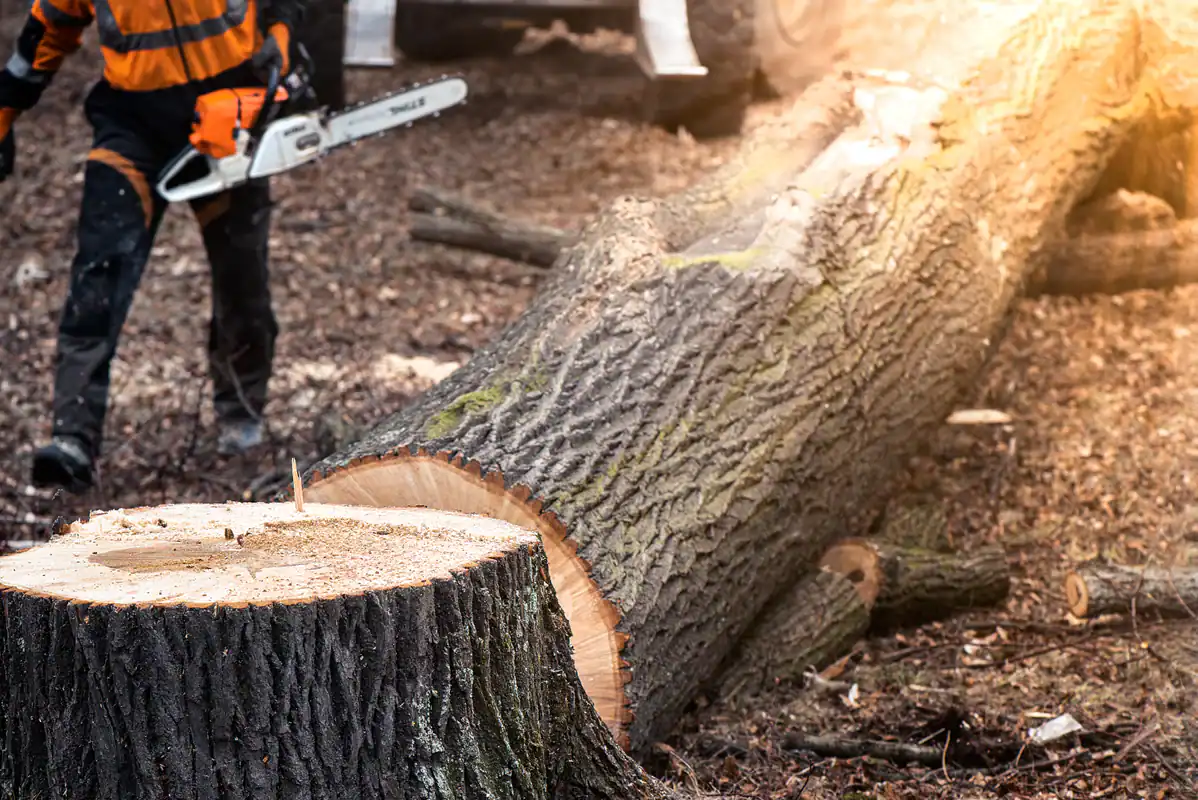
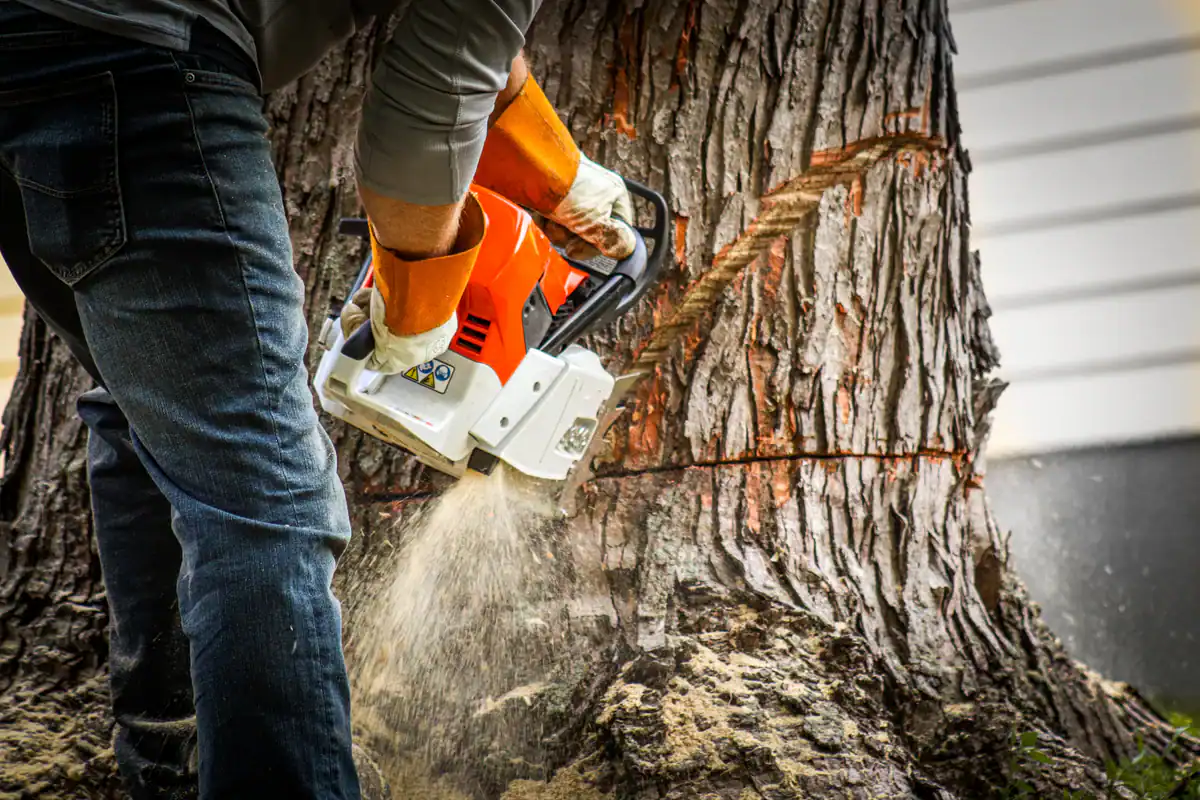
Tree removal in Overland Park isn’t a one-size situation. The work ranges from taking down a dead ash in a northern Overland Park neighborhood — where Emerald Ash Borer has been quietly killing trees for years — to clearing a large oak that’s grown too close to a home’s foundation in one of the older subdivisions off Shawnee Mission Parkway. We handle residential and commercial removals, and we’re equipped for the large, complex jobs that require more than a chainsaw and a pickup truck.
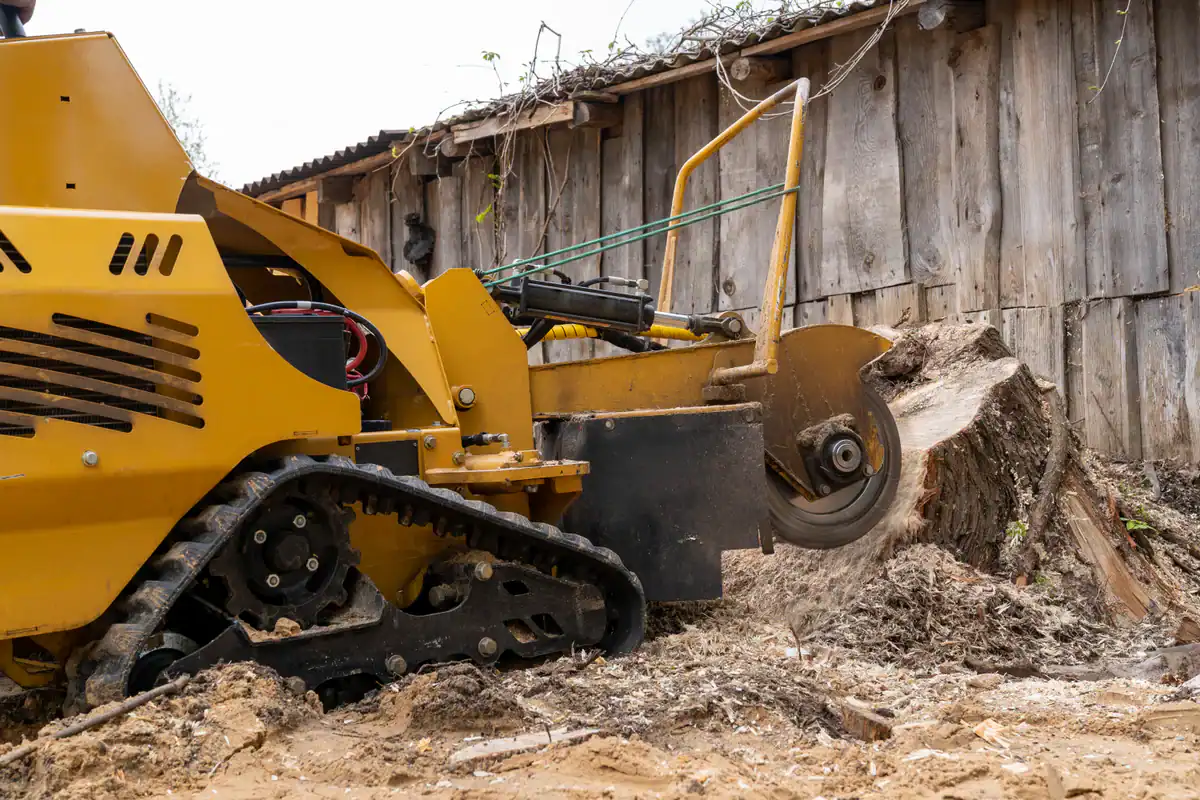
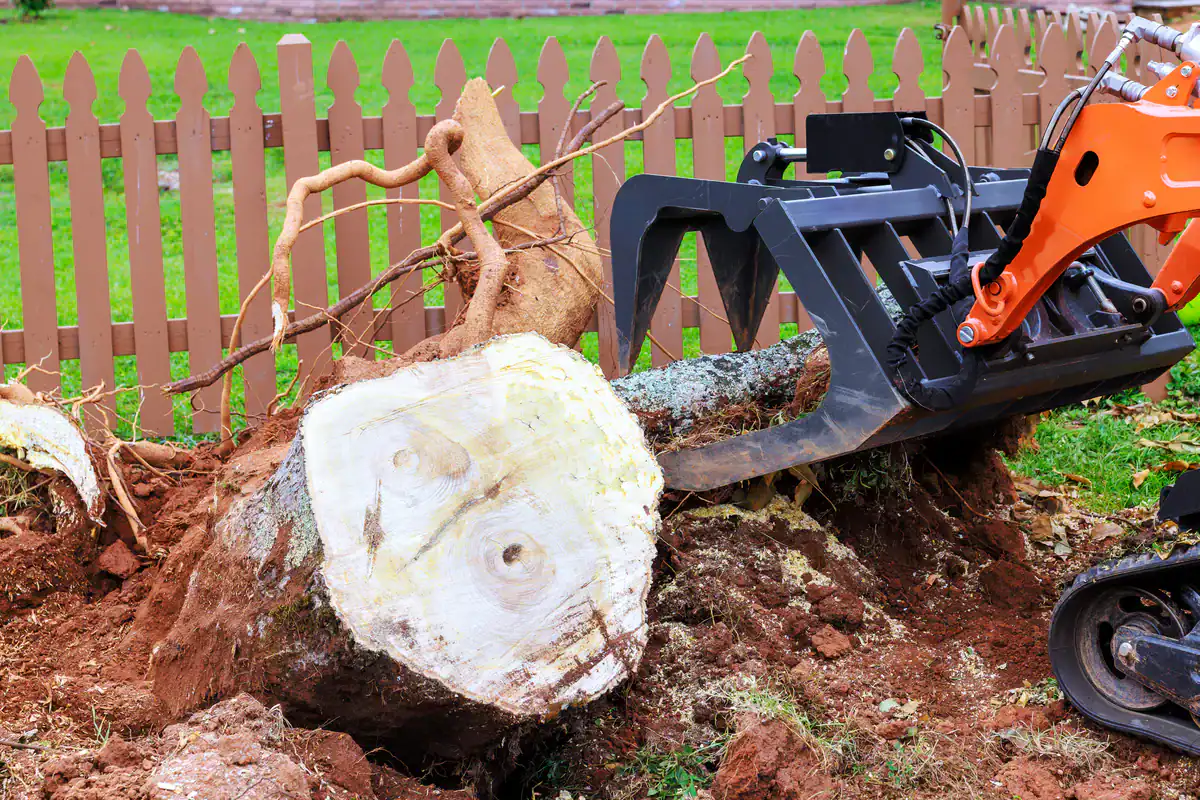
Beyond full removal, we also handle stump grinding, brush removal, and tree trimming when that’s the right call. Stump grinding is worth considering if you want the area to look clean and you want to stop the root system from continuing to spread — which is a real concern in Overland Park’s clay soil, where shallow roots don’t stop moving just because the trunk is gone.
If your HOA requires documentation that the work was performed by a licensed, insured contractor — which is common in many Overland Park subdivisions — we can provide that. We carry full insurance coverage and have the credentials to back up the work, which matters when you’re dealing with a homeowners association that has standards about how property maintenance gets handled.
For trees on private property in Overland Park, there’s generally no city permit required for standard residential tree removal. The permit question comes up most often with street trees — the ones in the right-of-way between the sidewalk and the street. Those are considered city-managed, and removing them without authorization from the city forester is prohibited under Overland Park’s street tree program.
If you’re not sure whether your tree is on private property or in the right-of-way, that’s something worth clarifying before any work starts. During the estimate, we can take a look and help you understand which situation you’re dealing with. It’s also worth checking with your HOA if you’re in a subdivision — many Overland Park communities have their own rules about tree removal on private lots, and some require written approval before work begins.
This is one of the most common questions, and honestly, the answer isn’t always removal. If a tree has structural damage limited to a few limbs, or if it’s growing too close to a roofline but the trunk and root system are healthy, strategic trimming can often solve the problem without taking the whole tree down. A good crew will tell you that upfront instead of defaulting to the most expensive option.
That said, there are clear signs that removal is the right call: a tree that’s dead or dying throughout most of its canopy, one with significant root damage or decay at the base, a tree that’s leaning toward a structure, or one that’s been hit hard by disease — like the Emerald Ash Borer, which has been a documented problem in the Kansas City, KS & MO metro and kills ash trees within a few years of infestation. In Overland Park’s older neighborhoods, where mature ash trees are common, EAB-related removal requests are not uncommon. An honest on-site assessment will tell you which way to go.
It depends on the circumstances, and the answer isn’t always what homeowners expect. If a healthy tree falls during a storm and damages your home, most homeowners insurance policies will cover the structural damage, though the coverage for debris removal is typically limited — often in the $500 to $1,000 range. But if the tree was dead or visibly diseased before it fell, your insurer may deny the claim on the grounds of negligence. The logic is straightforward: if you knew — or reasonably should have known — the tree was a hazard and did nothing about it, the damage may be considered preventable.
This is a real consideration in Overland Park, where severe weather is frequent and mature trees in older neighborhoods are aging out. A dead tree that survives one storm season may not survive the next. Getting it removed before it becomes a claim issue is almost always less expensive than dealing with the damage after the fact, especially if the insurance payout is reduced or denied because of the tree’s prior condition.
The timeline depends on the size and complexity of the tree. A smaller tree — say, 30 feet or under — can typically be taken down and cleaned up in two to four hours. Larger trees, especially the kind of mature oaks and sycamores common in northern Overland Park’s established neighborhoods, can take a full day depending on how close they are to structures and how the limb work needs to be staged.
As for the yard — every job we do includes full cleanup. That means no wood piles left behind, no chip piles sitting in the driveway, no debris scattered across the lawn. The job isn’t considered done until the property is clean. If you want to keep the wood for firewood or the chips for mulch, just let us know before we start and we’ll set it aside. For homes in subdivisions with active HOAs, a clean finish after the job isn’t optional — it’s the standard we hold ourselves to.
Yes — but it requires the right crew and the right approach. Large tree removal near structures is one of the more technically demanding jobs in this trade, and it’s not something you want to hand off to whoever shows up with the lowest quote. The work involves staged limb removal, controlled cuts, and careful rigging to bring sections down without damaging whatever is underneath — your roof, your fence, a neighbor’s property.
Overland Park’s older residential neighborhoods are full of exactly this kind of job: tall trees on narrow lots, close to homes and shared fences, with root systems that have been growing for decades. We’ve handled these situations throughout the Kansas City, KS & MO metro and have a documented track record of completing large removals in tight residential settings without property damage. We’re also fully insured, which means if something unexpected does happen, you’re covered — and so are we.
It does, and it’s something worth understanding if you’re dealing with a large or mature tree in one of Overland Park’s established neighborhoods. The expansive clay soil throughout the KC metro — including most of Overland Park — causes tree roots to grow shallow and wide rather than deep. That’s because deep clay layers don’t have enough oxygen for roots to thrive, so they spread laterally instead. Over time, those shallow root systems can extend well beyond the tree’s canopy, pushing under driveways, lifting sidewalk sections, and in some cases working toward sewer lines or foundation edges.
When a tree comes down, the root system doesn’t automatically stop being a problem. If you skip stump grinding, the roots can continue to decay slowly underground — and in clay soil, that decomposition can create soft spots or voids beneath hardscaped surfaces over time. Stump grinding removes the base and disrupts the root system at the source, which is the cleaner long-term solution. For homeowners in Overland Park who’ve already dealt with root damage to a driveway or sidewalk, it’s usually the right call to grind the stump at the same time as the removal rather than come back to it later.
Other Services we provide in Overland Park