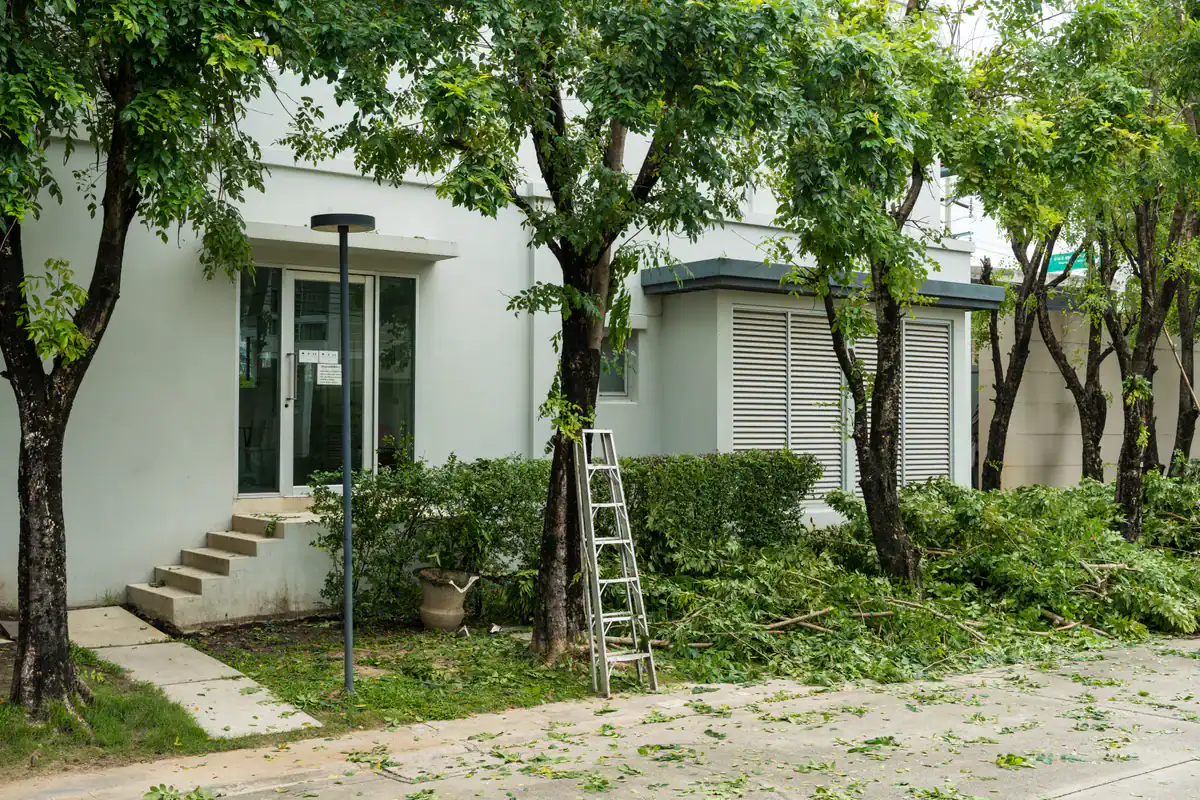
There’s a version of this that ends with you coming home to a clean yard, no debris against the fence, no wood chips in the flower beds, and a tree that was a problem this morning just — gone. That’s what a well-run tree removal actually looks like. It’s not dramatic. It’s just done right.
For Overland Park homeowners in established subdivisions like Cedar Creek, Deer Creek, or Nottingham Forest, the trees in your yard aren’t small. They’ve had decades to grow into tight spaces between homes, over driveways, and up against fences shared with neighbors. That proximity changes everything about how removal has to be done — and it’s exactly why experience matters here more than it might somewhere else.
The emerald ash borer situation in Overland Park is real and ongoing. The city had roughly 11,000 ash street trees making up nearly a quarter of its street tree canopy. While the city has handled its public trees, if you have an ash on your property, that’s your responsibility. A dead or dying ash doesn’t just look bad — it becomes structurally unpredictable fast. Getting a professional assessment early gives you options. Waiting until it’s leaning usually doesn’t.
We’ve been working in the Kansas City, KS & MO area for over 10 years, and Overland Park is a regular part of that territory — not an afterthought on a service map. We’re licensed and insured, Kansas-based, and the kind of operation where you deal with real people, not a dispatch queue routing calls through a national call center.
The 100% safety record across 1,200-plus removals isn’t something we throw out to sound impressive. In Overland Park, where homes in subdivisions like Deer Creek sit close together and mature canopies hang over shared fence lines, it’s the only number that actually matters. If a branch comes down wrong, it’s your roof, your neighbor’s car, your problem. That record is what you’re actually hiring when you call.
Every job includes full cleanup — wood hauled, debris cleared, yard raked. If you want to keep the wood for firewood or the chips for mulch, just say so. If not, it disappears. You come home to a clean yard either way.
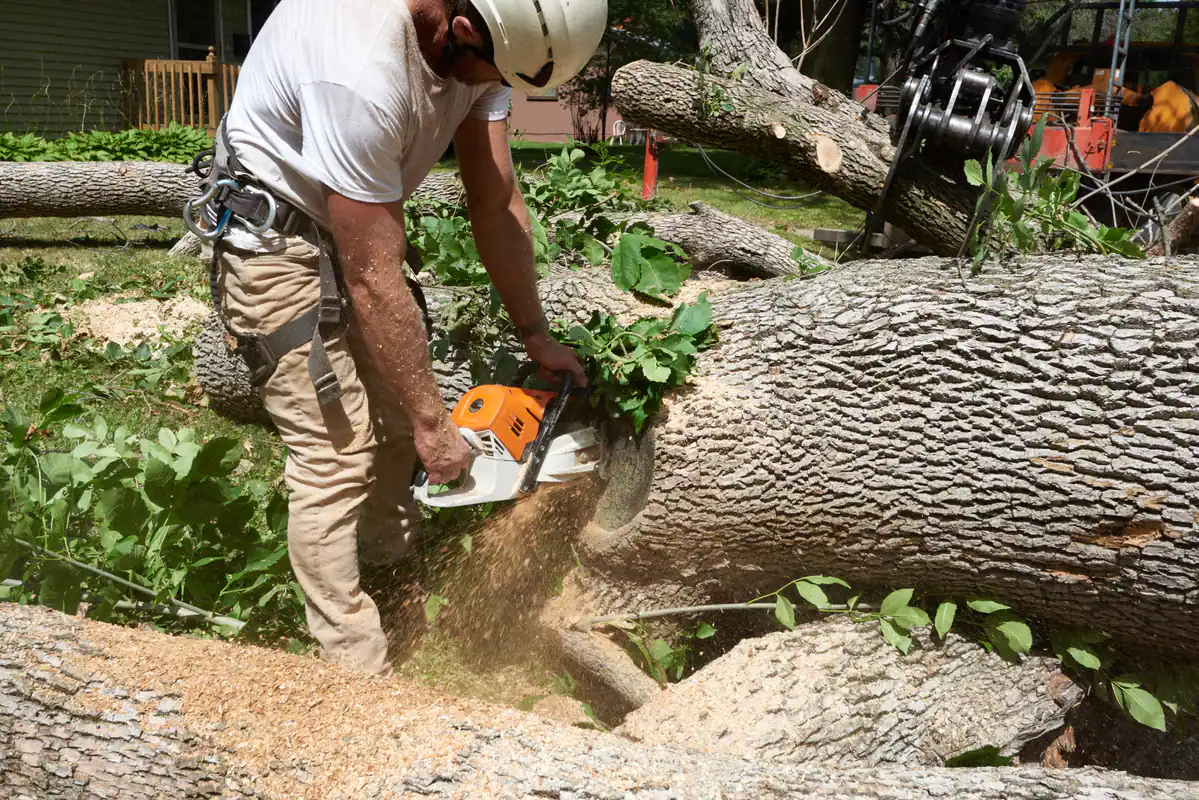
It starts with a free estimate — same day in most cases. Someone comes out, looks at the tree, and gives you a clear price before anyone picks up a chainsaw. No vague ranges, no pressure, no runaround. If the tree is near a structure, a fence line, or overhead lines, that gets factored into the assessment right there on-site. You know what the job costs before it starts.
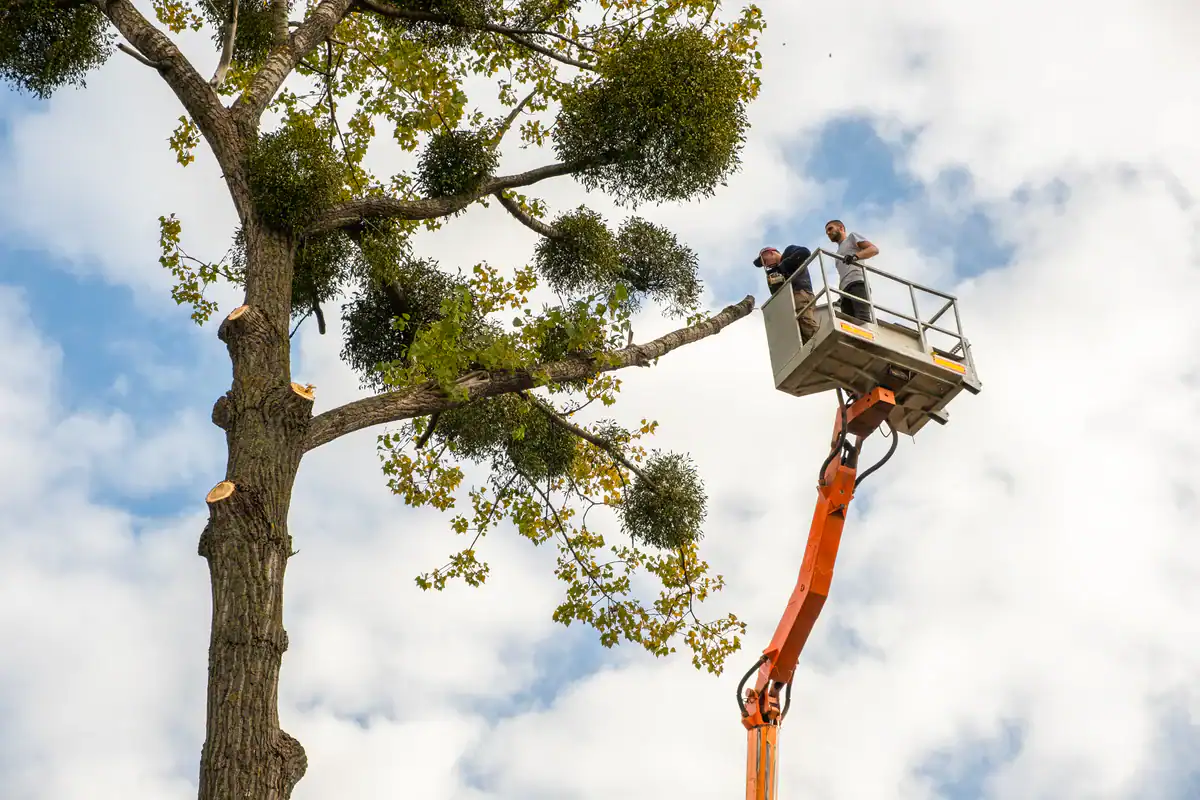
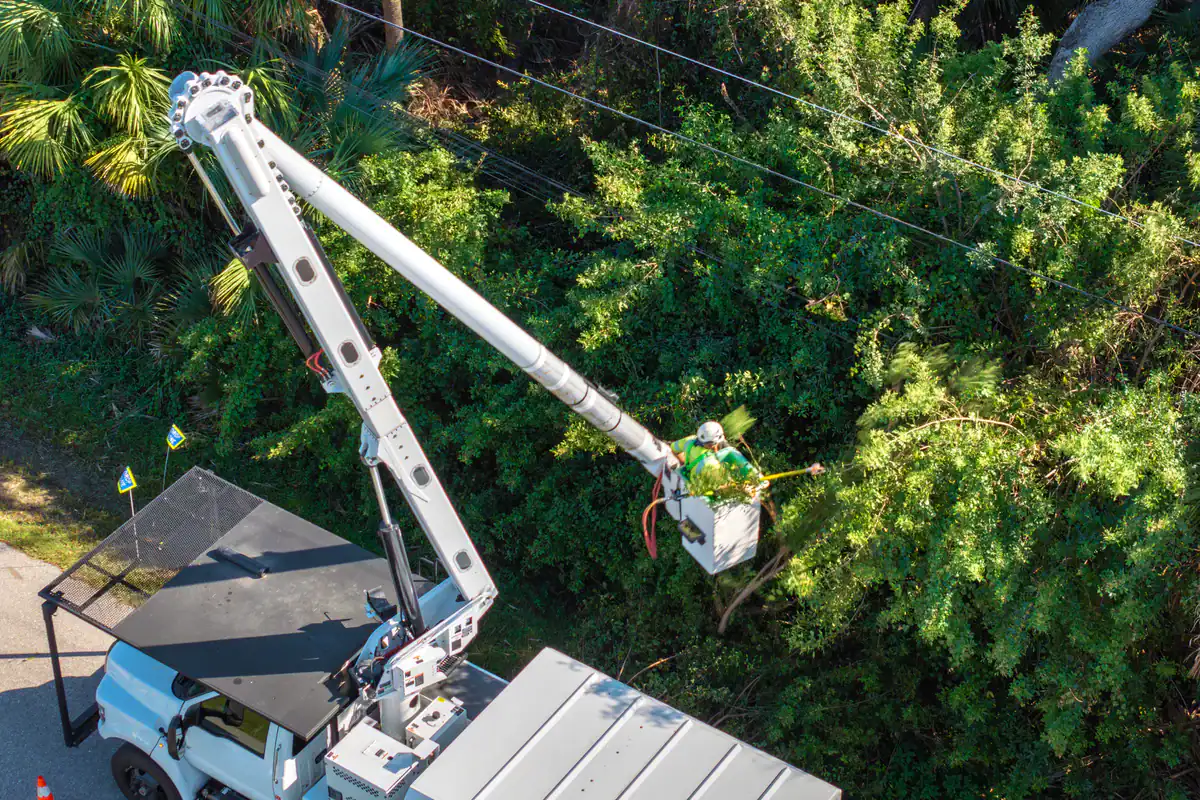
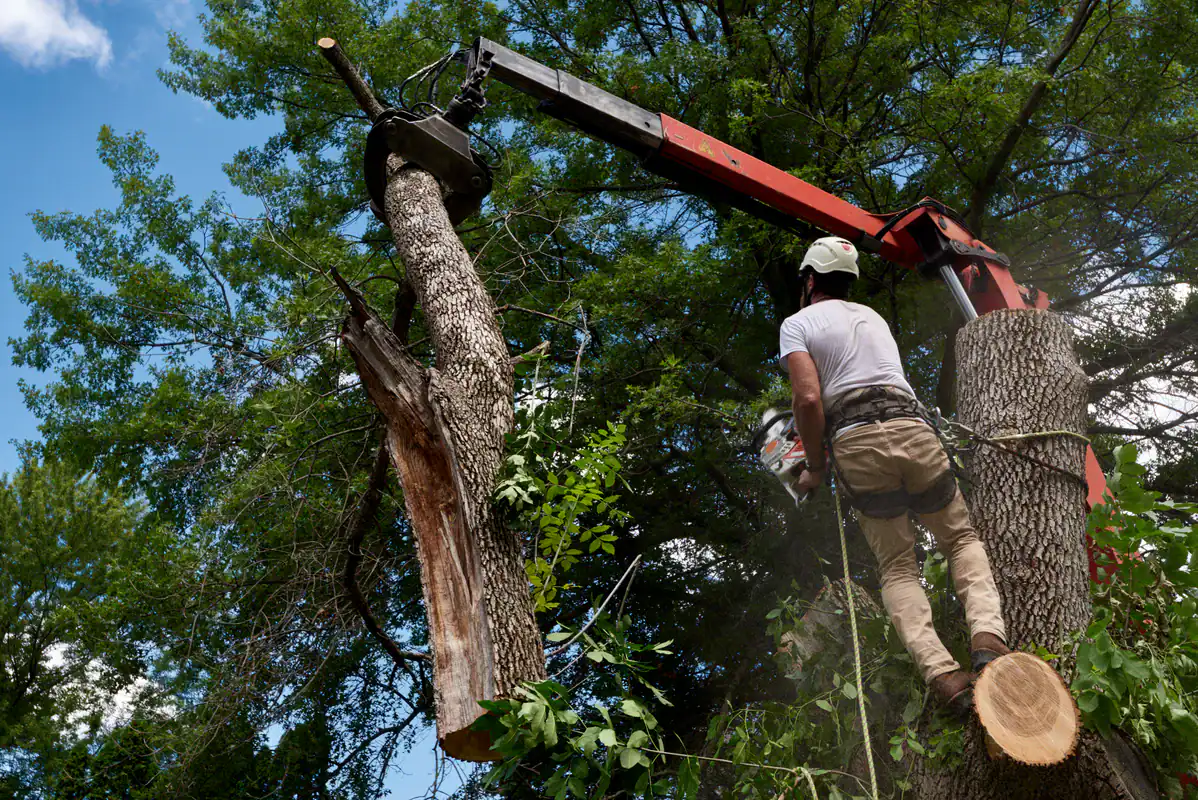
Most removals in Overland Park’s established neighborhoods require what’s called sectional dismantling — the tree comes down in pieces, not all at once. Limbs are roped and lowered carefully to protect whatever’s below: your landscaping, your driveway, your neighbor’s fence. This is standard practice in tight residential settings, and it’s part of why the job takes the time it takes. Rushing a sectional removal in a dense subdivision is how property gets damaged.
Once the work is done, we handle full cleanup before we leave. If you’re dealing with an ash tree, we also handle the debris in compliance with Johnson County’s EAB quarantine regulations — which restrict how ash wood and chips can be transported and disposed of. That’s not something every company thinks about, but it matters in Overland Park.
Ready to get started?
We handle the full range of what Overland Park homeowners typically need: tree removal, tree trimming and pruning, stump grinding, land clearing, and on-site tree health assessments. There are no named packages or preset tiers — every job is quoted based on what’s actually in front of the crew. Size, species, proximity to structures, access difficulty — all of it gets looked at before a number is given.
The health assessment piece matters more than people realize. Not every tree that looks concerning needs to come down. Sometimes a Bradford pear that’s starting to split can be cabled. Sometimes a pin oak showing yellowing from iron chlorosis in Overland Park’s alkaline clay soil just needs a soil treatment, not removal. The on-site assessment gives you an honest read on what the tree actually needs — and occasionally that saves you a removal cost entirely.
Stump grinding is quoted separately from tree removal, which is standard in this industry. If you want the stump gone after a removal, just include that in the initial conversation so it gets priced into the estimate. Dead stumps — especially ash stumps — attract termites and carpenter ants over time, so it’s worth addressing rather than leaving behind. No permit is required for tree removal on private residential property in Overland Park, so there’s no paperwork standing between you and getting the job done.
No — Overland Park does not require a permit for tree removal on private residential property. The city’s Forestry Division manages trees in the public right of way, but trees on your own lot are your call. You don’t need to file anything or wait on approval before scheduling the work.
The one exception worth knowing about is right-of-way trees — the strip of land between your sidewalk and the street. Those trees are technically under the city’s jurisdiction, and removing them without authorization from the city forester isn’t allowed. If you’re unsure whether a tree falls on your property or in the right of way, that’s something we can help you sort out during the on-site estimate. It’s a more common question than you’d think in Overland Park’s older northern neighborhoods where the property lines aren’t always obvious.
It depends on how far the infestation has progressed. Emerald ash borer treatment is most effective when the tree is caught early — generally when it still has at least 50% of its canopy intact. Signs of EAB damage include thinning or dying branches starting at the top of the tree, S-shaped galleries under the bark, D-shaped exit holes roughly the size of a pencil tip, and unusual woodpecker activity, since woodpeckers feed on EAB larvae.
If the tree is already more than half dead, treatment typically isn’t a viable path. At that point, removal is usually the safer and more cost-effective option. Johnson County has been under an EAB quarantine since the beetle was first confirmed near I-435 and Holliday Drive in 2013, which means ash wood and debris have to be handled according to specific disposal rules — not just thrown in a trailer and hauled anywhere. When we assess an ash tree on your Overland Park property, we give you a straight recommendation on whether treatment is realistic or whether removal makes more sense, and we handle the debris properly either way.
Stump grinding is the process of using a machine to grind the leftover stump down below ground level after a tree has been removed. It’s not the same as full stump removal — the root system stays in the ground — but the stump itself gets ground down far enough that you can cover it with soil, reseed, or landscape over it without it being a tripping hazard or an eyesore.
It is not automatically included with tree removal — it’s a separate service that gets quoted separately. This is standard across the industry, not something specific to us. If you want the stump addressed, just mention it when you call so it gets added to the estimate upfront. This is especially worth doing with ash stumps in Overland Park’s established neighborhoods — dead ash stumps are known to attract termites and carpenter ants as they decay, which creates a secondary pest problem you don’t want sitting in your yard long-term.
For urgent situations, same-day visits are available. Johnson County sits squarely in tornado country, and Overland Park has dealt with real storm damage in recent years — the May 2024 system dropped tornadoes in the county and left tree limbs blocking roughly 80 streets across the city. When that kind of event hits, the demand for tree service spikes fast and the companies that answer the phone and show up win the job.
If a tree or large limb has come down on your property after a storm, the priority is assessing whether there’s an immediate safety risk — to the structure, to power lines, or to anyone on the property. We respond quickly, assess the situation on-site, and give you a clear picture of what needs to happen and what it’ll cost before any work starts. We also recommend you document the damage with photos before cleanup begins, especially if you plan to file a homeowner’s insurance claim. Whether insurance covers it depends on the specifics of your policy and the cause of the damage.
Tree removal cost varies based on the size of the tree, its species, how close it is to structures or overhead lines, and how accessible the work area is. Smaller ornamental trees in the $350–$700 range are straightforward. Mid-size shade trees — the kind common in Overland Park’s established subdivisions — tend to run $800–$1,800. Large cottonwoods or mature oaks near homes can reach $2,500–$3,800 depending on the complexity of the removal.
The proximity-to-structures factor matters a lot in Overland Park’s older neighborhoods, where homes are close together and most removals require sectional dismantling rather than a straightforward fell. That technique takes more time and more skill, which is reflected in the price. The best way to get an accurate number is to have someone come out and look at the actual tree — not give you a range over the phone based on a description. We provide free, same-day estimates, so you’re not committing to anything just by calling.
Start with licensing and insurance — both matter, and both are verifiable. Kansas requires an arborist license for tree work, and any crew working on your property should carry liability insurance and workers’ compensation. If someone gets hurt on your property and the company isn’t properly insured, you can be held liable. Asking for proof of insurance before work starts is completely reasonable and any legitimate company will provide it without pushback.
Beyond credentials, look at how they communicate. Do they give you a written estimate? Do they explain what’s included and what isn’t — like whether stump grinding is part of the price? Do they show up when they say they will? In Overland Park’s professional-class neighborhoods, the tree companies that get repeat business and referrals aren’t necessarily the cheapest ones — they’re the ones that respond quickly, show up on time, do the work cleanly, and leave the yard the way they found it. Reviews with specific details, named crew members, and mentions of cleanup quality are a better signal than star ratings alone.
Other Services we provide in Overland Park