That stump sitting in your yard isn't just an eyesore — it's quietly working against you. Here's what's actually happening underground.
You had the tree taken down. The crew cleaned up, hauled everything away, and the yard looked almost normal again — except for that stump. And now it’s just sitting there. Maybe you told yourself you’d deal with it later. Maybe you figured it would eventually rot on its own and save you the trouble. That’s a completely understandable call, and it’s one a lot of Kansas City homeowners make. But “later” has a way of getting expensive. What looks like a passive, harmless leftover is actually an active problem — one that gets harder and costlier to ignore the longer it stays. Here’s what’s really going on, and why stump grinding is almost always the right move.
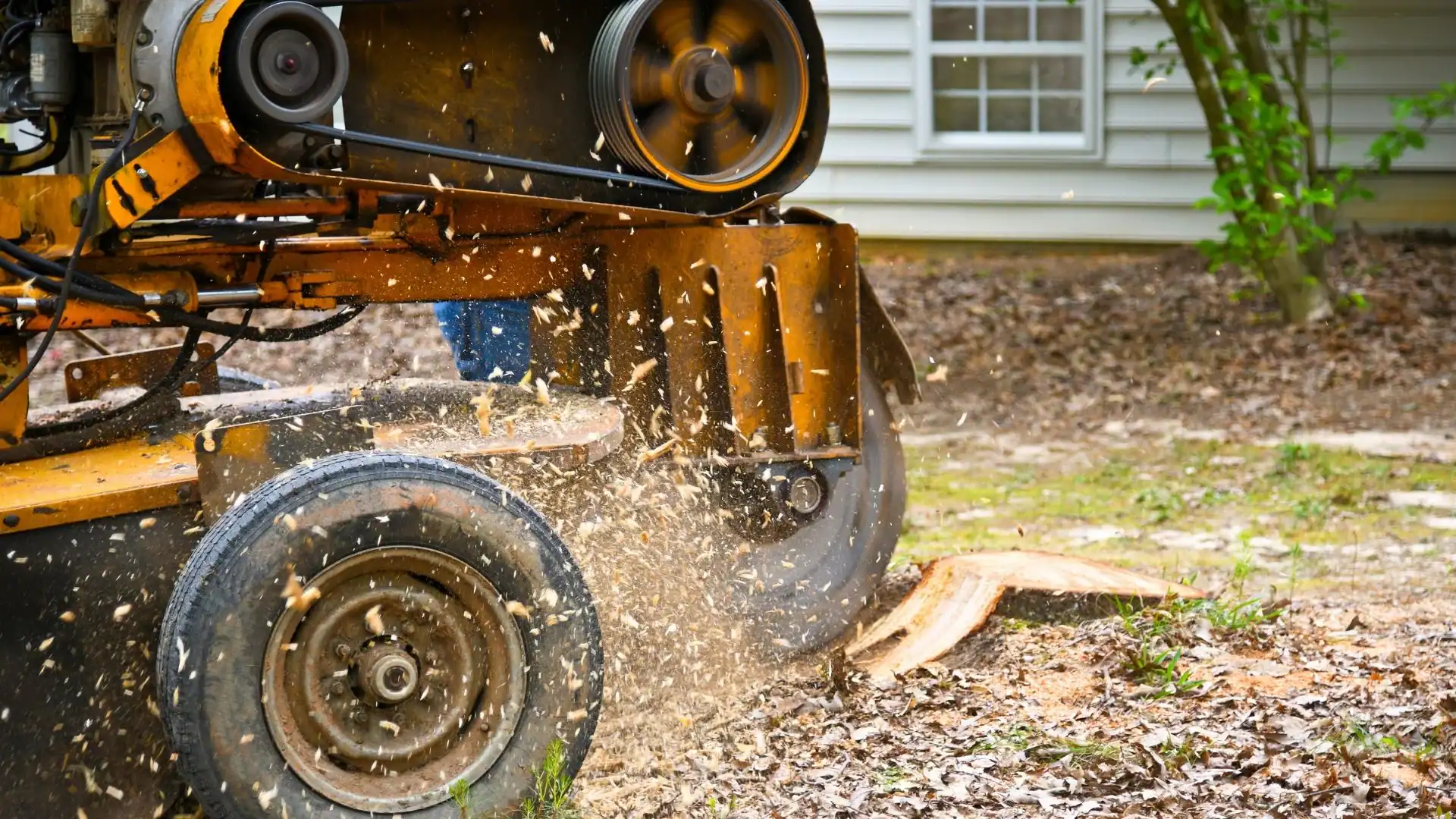
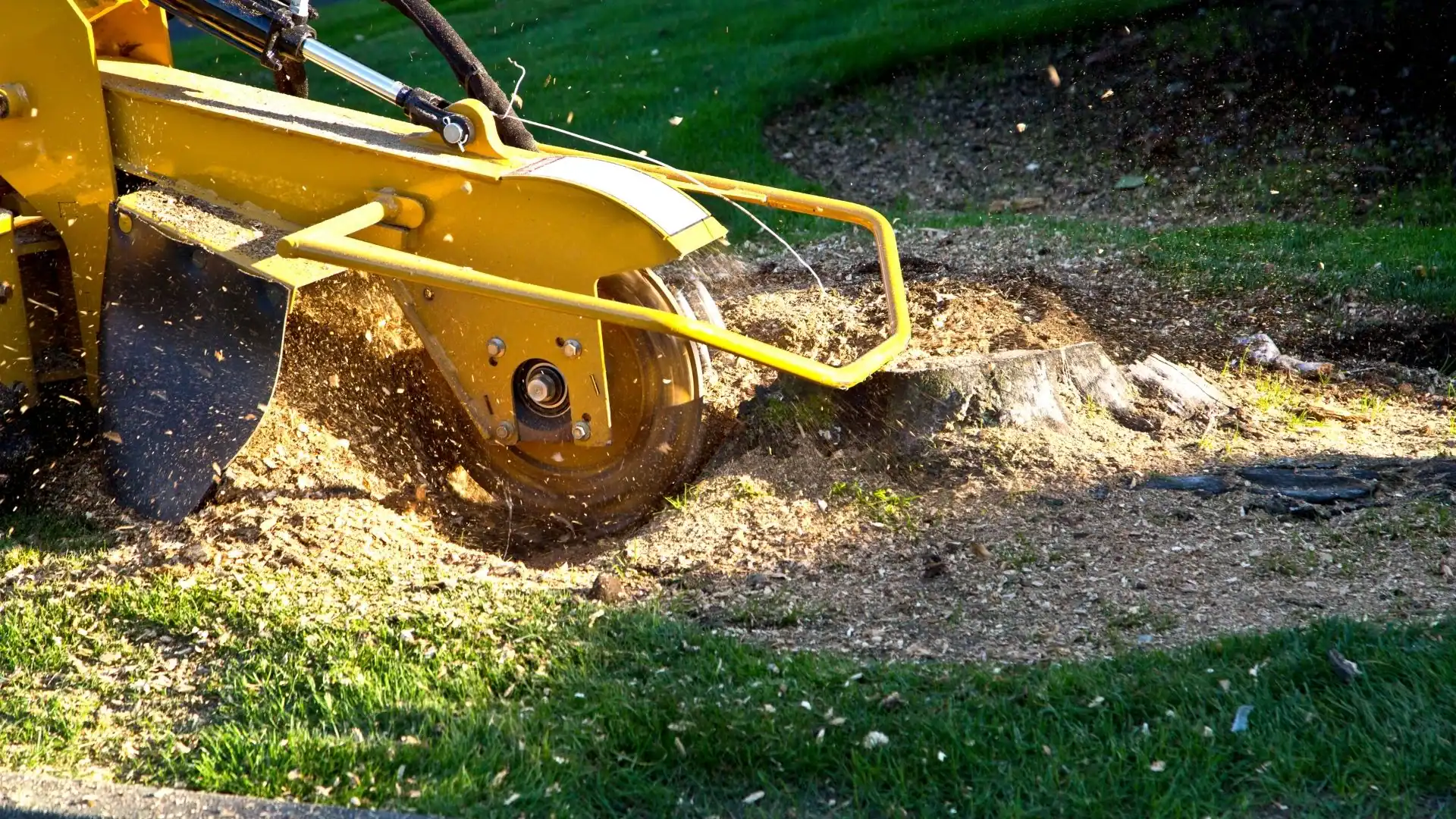
Stump grinding isn’t excavation. Our commercial-grade stump grinder uses a rotating cutting wheel to chip the stump down below ground level — typically six to eight inches deep — without tearing up the surrounding yard. The result is a shallow depression filled with wood chips where the stump used to be, and a yard that’s ready to be seeded, landscaped, or built on.
The root system stays in the ground and decomposes naturally over time. That’s not a problem for most uses — it only matters if you’re planning to plant a new tree in the exact same footprint or pour a foundation directly on top. For the vast majority of homeowners, grinding is the cleanest, fastest, and least disruptive way to get the job done.
Here’s the honest answer: it rots. Eventually. Depending on the species, a stump can take anywhere from three to ten years to fully decompose on its own. That’s a long time to have a pest magnet sitting in your yard.
Decaying wood is one of the most attractive environments for termites, carpenter ants, beetles, and even rodents. They don’t just stay in the stump — that’s the part most homeowners miss. Once a colony establishes itself in a rotting stump, it starts looking for the next food source. In Kansas City, MO, that’s a serious concern. The metro’s clay-heavy soil retains moisture against decaying wood, which creates underground pathways that termites use to travel directly toward a home’s foundation. That’s not a hypothetical risk — it’s a documented behavior that local tree care professionals see regularly, and it’s more pronounced here than in markets with sandier, better-draining soil.
The pest problem alone makes a compelling case for grinding, but it’s not the only one. Rotting stumps also create the right conditions for fungal growth. The moist, decomposing environment is ideal for certain fungi and root rot pathogens that can spread underground to nearby healthy trees and shrubs. If you’ve got mature oaks or maples in your yard — common throughout established Kansas City neighborhoods like Brookside, Blue Springs, and Independence — a diseased stump nearby is a real threat to trees you actually want to keep.
Then there’s regrowth. Many of the tree species most common in the Kansas City, MO metro, including oaks, silver maples, and Bradford pears, will send up new shoots from the root system after the trunk is cut. Those sprouts are persistent. They’ll keep coming back every season until the stump is ground out, turning a one-time problem into ongoing yard maintenance you didn’t sign up for.
The cost of repairing termite structural damage runs into the thousands of dollars. The cost of a fungal infection spreading to a mature, healthy tree can mean losing that tree entirely. Stump grinding, by comparison, is a straightforward, one-time service. The math isn’t complicated.
This is one of the most common concerns we hear, and it’s worth addressing directly. The short answer is no — not when it’s done with the right equipment and handled by someone who knows what they’re doing.
A professional stump grinder is purpose-built for this work. It’s not a backhoe. It doesn’t excavate wide areas or disrupt the surrounding soil the way heavy digging equipment would. The machine works on the stump itself, chipping it down in place, which means your lawn, garden beds, and landscaping on either side of the stump stay intact. The wood chips produced during grinding can be spread as mulch in your garden beds or around other trees — they’re actually useful — or we can haul them away if you’d prefer a clean finish.
One thing worth knowing before any grinding begins: underground utilities need to be marked first. Missouri requires a call to 811 before any digging or grinding work, and we handle that step before the machine ever starts. It’s a legal requirement, and it’s the kind of thing that separates professional service from a rental unit and a YouTube tutorial. Rental stump grinders are available at home improvement stores, but they’re typically underpowered for anything larger than a small softwood stump. On a large oak or mature maple — the kind of trees that come down regularly across the Kansas City, MO metro after storms or emerald ash borer damage — a rental unit often isn’t up to the job, and operating one safely around your home’s foundation, utility lines, and landscaping requires real experience.
After grinding, the area is ready. You can seed it with grass, plant a garden, pour a patio, or install a play set. That’s the part that gets overlooked in most conversations about stump grinding — it’s not just about removing something, it’s about what the space becomes afterward.
Want live answers?
Connect with a Squirrel Master Tree Services LLC expert for fast, friendly support.
Stump grinding makes sense anywhere, but there are a few factors specific to the Kansas City, MO metro that make the case even stronger here than in most markets.
The clay-heavy soil throughout the region is one of them — we’ve already covered how it amplifies termite risk. But there’s also the storm factor. Kansas City’s spring and early summer storm season regularly produces straight-line winds that bring down trees across the metro, and every tree removal leaves a stump behind. Post-storm is exactly when stump grinding demand spikes, and exactly when scheduling a prompt appointment matters most — before the stump has time to begin attracting the pests that will inevitably find it.
If you live in Overland Park, Leawood, Lenexa, Shawnee, or most other planned communities in the Kansas City, MO suburbs, there’s a reasonable chance your HOA has something to say about tree stumps. Stump removal requirements are common in HOA governing documents across the metro, and enforcement tends to pick up in spring when yards are being inspected and community standards are top of mind.
An HOA notice changes the calculus entirely. What was a “I’ll get to it eventually” situation becomes a deadline, and ignoring it can lead to fines that compound over time. Stump grinding is the fastest and most straightforward path to compliance — it’s a single appointment, and the stump is gone. There’s no excavation, no hauling away large root balls, and no extended project timeline. The area is cleaned up the same day.
Even if you haven’t received a notice yet, it’s worth checking your HOA’s rules before you end up in that position. A lot of homeowners don’t know the requirement exists until they get the letter. Addressing the stump proactively is always easier than addressing it under pressure.
Beyond HOA compliance, there’s the simple reality of what a stump does to your property’s appearance. A yard with a visible stump reads as unfinished — and if you’re thinking about selling, buyers notice. Curb appeal isn’t just about what looks nice; it’s about what signals to a buyer that a home has been properly maintained. A ground stump, a clean lawn, and a yard that’s ready for whatever comes next tells a very different story than a rotting wood mass that’s been there for three years.
Not every stump grinding service is the same, and in a market as active as Kansas City, MO, it pays to know what actually matters when you’re choosing who to call.
Licensing and insurance are the baseline. Any company doing stump grinding on your property should carry full liability insurance and workers’ compensation coverage. If a crew member is injured on your property and the company doesn’t have workers’ comp, you could be held liable. It’s not a fun conversation to have, and it’s entirely avoidable by asking the right question upfront.
Beyond insurance, the credential worth looking for is ISA Certified Arborist. The International Society of Arboriculture’s certification requires a minimum of three years of hands-on industry experience and a comprehensive exam — it’s the recognized professional standard in tree care. An arborist’s involvement in a stump grinding job means someone is assessing the right depth, the right approach for the stump’s size and species, and the proximity to structures and utilities — not just running a machine until the stump disappears.
Customer reviews tell you a lot, too. Look for consistent patterns across multiple platforms, not just a handful of reviews on one site. Volume matters as much as rating — a company with 40 verified reviews averaging 4.9 stars is telling you something meaningful about how they operate day to day.
At Squirrel Master Tree Services LLC, our owner is a certified arborist with more than 15 years of experience, and we’ve completed over 1,200 tree removals across the Kansas City, MO area with a 100% safety record. We’re licensed and insured, we offer free estimates, and we handle cleanup as part of the job — not as an afterthought. When the work is done, the stump is gone and the area is clean. That’s what the job is supposed to look like.
Leaving a stump behind feels like the easy choice in the moment, but it rarely stays easy. Between the pest risk that Kansas City, MO’s soil conditions amplify, the HOA notices that show up in suburban communities across the metro, the regrowth that keeps coming back every spring, and the yard space that’s been sitting blocked for years — the cost of waiting usually ends up higher than the cost of acting.
Stump grinding is a one-appointment fix. The process is fast, the disruption to your yard is minimal, and the result is a clean, usable space you can actually do something with. Whether you’re planning a landscaping project, dealing with a compliance issue, or just tired of mowing around something that should have been gone two years ago, it’s a straightforward problem with a straightforward solution.
If you’re in the Kansas City, MO area and ready to get it handled, reach out to Squirrel Master Tree Services LLC for a free estimate. We’ll take a look, give you a straight answer, and get it scheduled.
Summary:
Article details:
Share: