Tree removal doesn't end when the trunk hits the ground. Here is what Kansas City homeowners need to know about stump grinding, and why waiting costs more than you think.
The tree is down. The crew packed up, the debris is gone, and you are left looking at a stump sitting in the middle of your yard. It is easy to tell yourself you will deal with it later, or that it will eventually rot away on its own. A lot of Kansas City homeowners think precisely that. The problem is that waiting has a way of turning into a pest problem, a mowing headache, an HOA violation, or a tripping hazard before the stump so much as softens. We have seen it happen hundreds of times. This post covers what stump grinding involves, why leaving a stump in place carries more risk than most people expect, and what makes the Kansas City market a particularly important place to get it right.
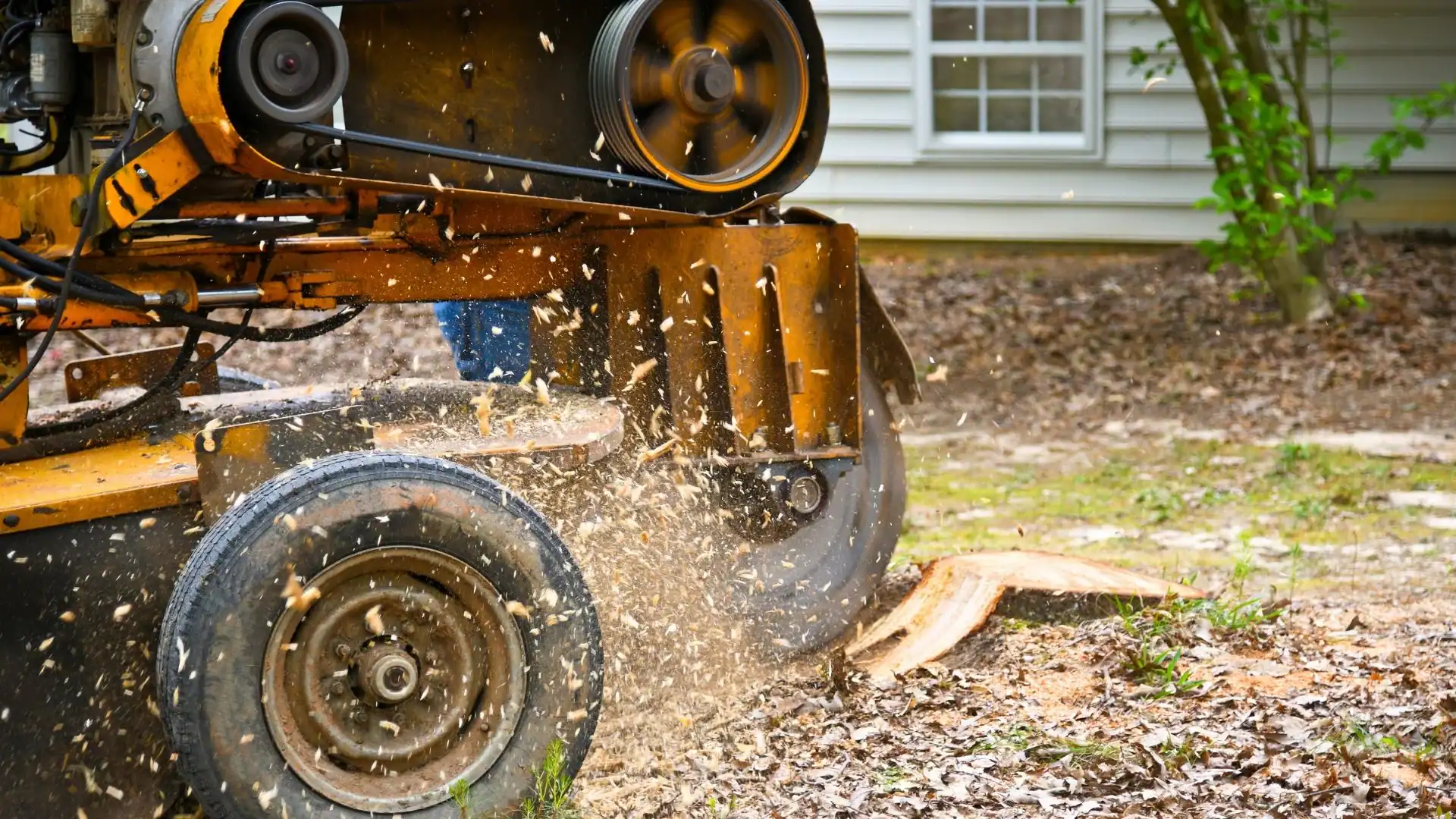
Stump grinding is precisely what it sounds like. A rotating cutting wheel fitted with carbide teeth grinds the stump down in layers until it rests below the surface of the ground. A professional-grade grinder works through the wood systematically, reducing it to chips. The result is a hole filled with wood chip material where your stump used to be, and a yard that is functional again.
What separates a proper grinding job from a mediocre one is depth. The industry standard for professional grinding is 6 to 12 inches below grade, meaning it sits neither flush with the surface nor just an inch or two down. The right depth depends on what you plan to do with the space afterward. Are you laying sod? Planting a new tree? Pouring a patio? Each scenario has different requirements, and getting the depth wrong means dealing with buried wood that interferes with whatever comes next.
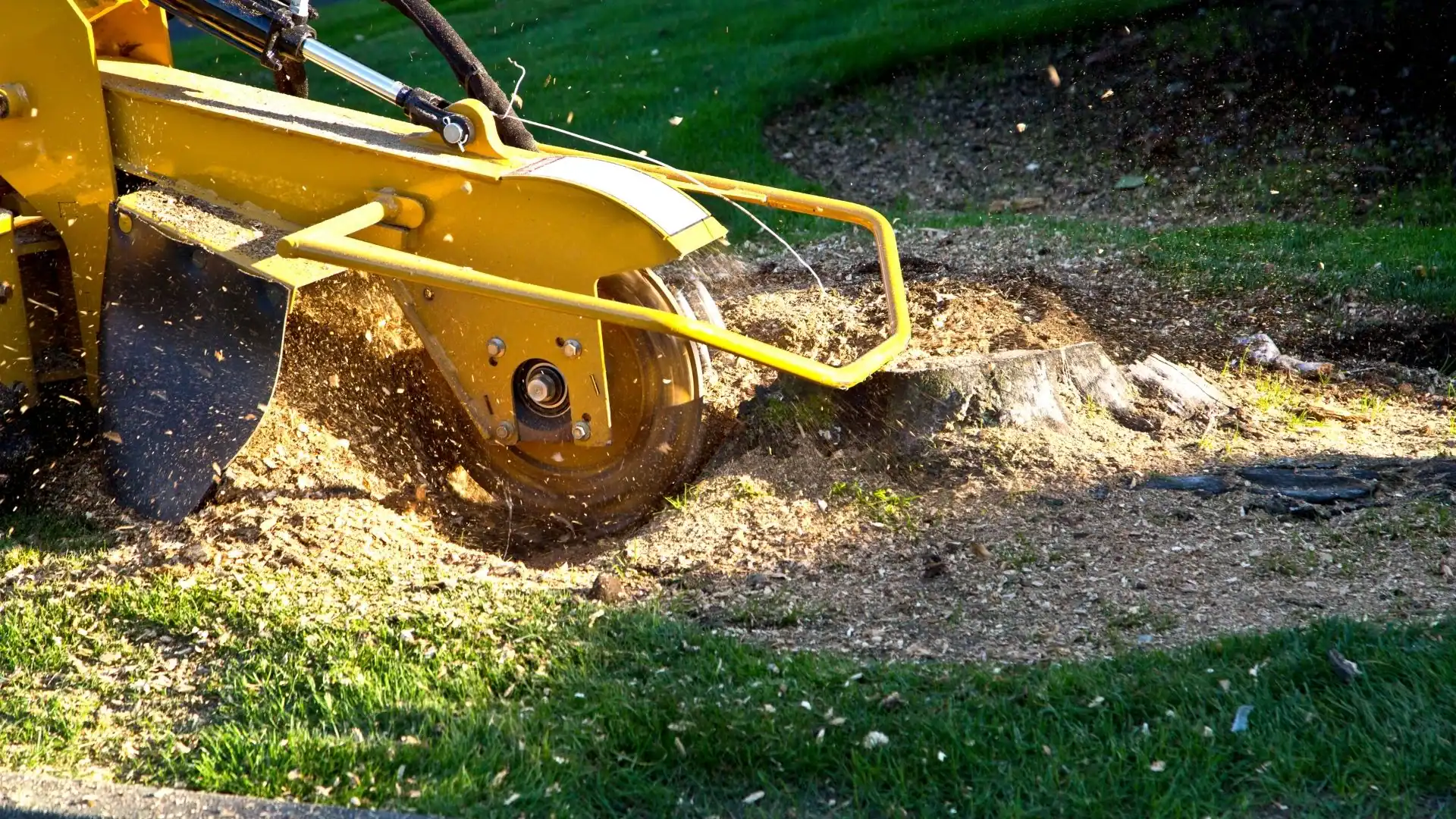
This is one of the most common points of confusion for homeowners, and it is worth clearing up before you call anyone. Stump grinding removes the stump and the root collar, which includes the visible portion and the structural base just below it, down to below grade. The lateral roots that spread outward through the soil remain in place and decompose naturally over time. For the vast majority of residential situations in Kansas City, grinding is all you need.
Full stump removal is a different animal. It involves excavating the entire root system, roots and all, which requires heavy equipment, tears up a significant area of your yard, and costs considerably more. It is typically reserved for situations where a new structure is going in over the exact footprint, or where root removal is required for construction purposes. For a homeowner who wants a clean, usable yard without the disruption of a full excavation, grinding is the right call.
One detail worth knowing is that grinding does not mean you can immediately replant a tree in the same spot. The root system is still decomposing underground, and the soil chemistry in that area will be off for a period of time. If replanting is your goal, we can advise you on timing and soil preparation. That is a conversation worth having before the grinder ever starts.
The wood chips produced during grinding don’t have to be hauled away as waste. They can be raked back into the hole as fill, since they will break down into the soil over time, or spread across garden beds as mulch. We walk every customer through their options so there are no surprises once the job is done.
Here is something that catches a lot of homeowners off guard: tree removal and stump grinding are not the same service, and many tree removal quotes do not include stump grinding by default. The crew takes down the tree, clears the debris, and leaves. The stump stays. It is not a bait-and-switch, but rather just how the industry is structured, which means you need to ask specifically about the stump before any work begins.
In Kansas City, this situation comes up constantly after storm events. The metro sits squarely in severe weather territory, as tornadoes, ice storms, and straight-line wind events move through the area on a regular basis. When a storm takes out a tree, homeowners focus on getting the fallen wood cleared quickly. The stump question gets pushed to the back burner. Then spring arrives, the grass comes in, and suddenly there is a three-foot oak stump sitting in the middle of a yard that someone wants to use.
Emerald Ash Borer damage has made this even more common across the Kansas City metro over the past several years. Thousands of ash trees have been removed from neighborhoods throughout the area, and ash stumps have a way of sticking around. They are moderately hard wood, they hold moisture well in Kansas City’s clay-heavy soil, and they become attractive habitat for insects faster than most homeowners expect.
The takeaway is simple: if a stump is still in your yard after a removal, it is not a finished job. It is simply the part that still needs to be addressed.
Want live answers?
Connect with a Squirrel Master Tree Services LLC expert for fast, friendly support.
The most common reason homeowners delay stump grinding is the belief that the stump will rot away on its own within a reasonable timeframe. For softwood species, decomposition is faster. For the trees that dominate Kansas City neighborhoods, such as oak, elm, and maple, a stump can take 10 to 20 years to fully break down. That is not a typo.
During those years, the stump isn’t just sitting there quietly. It is attracting pests, potentially sprouting new growth, and creating hazards that compound the longer they are ignored. The logic that it will rot eventually is technically true. It is simply not a practical plan.
Termites, carpenter ants, and wood-boring beetles are drawn to decaying wood. A stump sitting in your yard, especially one staying moist in Kansas City’s clay-heavy soil, is precisely the kind of habitat they seek. The problem isn’t that insects move into the stump. The problem is that they don’t stay there. Once a colony establishes itself in a rotting stump, the nearest wooden structure, such as your fence, your deck, or your house, becomes the next destination. That represents a pest control bill that dwarfs the cost of grinding.
Regrowth is the other issue that surprises people. A cut stump doesn’t know it is supposed to be dead. Many species, particularly oak and elm, will send up suckers and sprouts from the root system for years after the tree is removed. These shoots are persistent and frustrating to manage, and you can mow them down repeatedly, but they keep coming back until the root system is exhausted. Grinding destroys the growth point and ends the cycle.
Then there is the HOA factor, which is particularly relevant in Kansas City’s Johnson County suburbs like Overland Park, Olathe, Lenexa, and Leawood. Many managed communities in these areas have explicit provisions about yard appearance that include stumps. A stump left after tree removal can trigger a violation notice, and fines escalate quickly. For homeowners in these neighborhoods, stump grinding is not optional, as it is merely a matter of how soon you get it done before the letter arrives.
Tripping hazards matter too, especially for families with young kids or homes that see elderly visitors. A stump at ground level is easy to miss, easy to catch a foot on, and entirely avoidable. The liability question alone is worth taking seriously.
It does, and this is a factor that doesn’t get discussed enough in this market. Kansas City’s soil is predominantly clay-heavy, and that has real implications for what happens to a stump after a tree comes down.
Clay soil retains moisture far longer than sandy or loamy soil. That moisture accelerates the decay process in the stump itself, which sounds like an advantage since faster rot means it disappears sooner. However, it also keeps the stump damp and soft, making it significantly more attractive to insects earlier in the decay cycle. A stump in clay-heavy soil becomes a pest habitat faster than the same stump would in a drier environment.
Clay soil also affects how root systems behave. Tree roots in clay tend to spread laterally rather than driving deep, which means the root system from a removed tree can extend well beyond the stump’s footprint. Those lateral roots can interfere with irrigation lines, crack hardscaping, and create pressure on nearby structures over time. Grinding to the right depth, paired with a proper assessment of the root spread, matters more in this environment than in markets with looser, drier soil.
This is one of the reasons having a professional assess the job before grinding begins is worth more than it might seem. Our owner holds ISA Certified Arborist credentials with more than 15 years of experience in the Kansas City market. When we look at a stump, we evaluate root proximity to utilities, soil conditions, depth requirements for your intended use, and species-specific wood hardness, rather than just measuring the diameter and quoting a price. Older neighborhoods like Brookside, Waldo, and Midtown feature mature oak and elm canopies that produce some of the largest, hardest stumps in the metro. Getting the assessment right matters.
We have safely completed more than 1,200 tree removals across the Kansas City area with a 100% safety record. That experience applies not only to the trees, but also to understanding what is left behind and how to handle it properly.
If you have a stump in your yard, regardless of whether it has been there for a week or a few years, the right time to address it is before it becomes a bigger problem. The longer a hardwood stump sits in Kansas City’s clay-heavy soil, the more opportunity it creates for pests, regrowth, and the kind of damage that costs more to fix than the grinding would have.
A professional assessment costs nothing up front. We will walk your site, evaluate the stump, explain the depth requirements for your specific plans, and provide a clear, honest estimate with no pressure and no upsell.
If you are in the Kansas City metro and want a straight answer about what your stump situation requires, reach out to Squirrel Master Tree Services LLC. We are a family-owned crew living and working in this community, and we will tell you precisely what needs to happen and what does not.
Summary:
Article details:
Share: