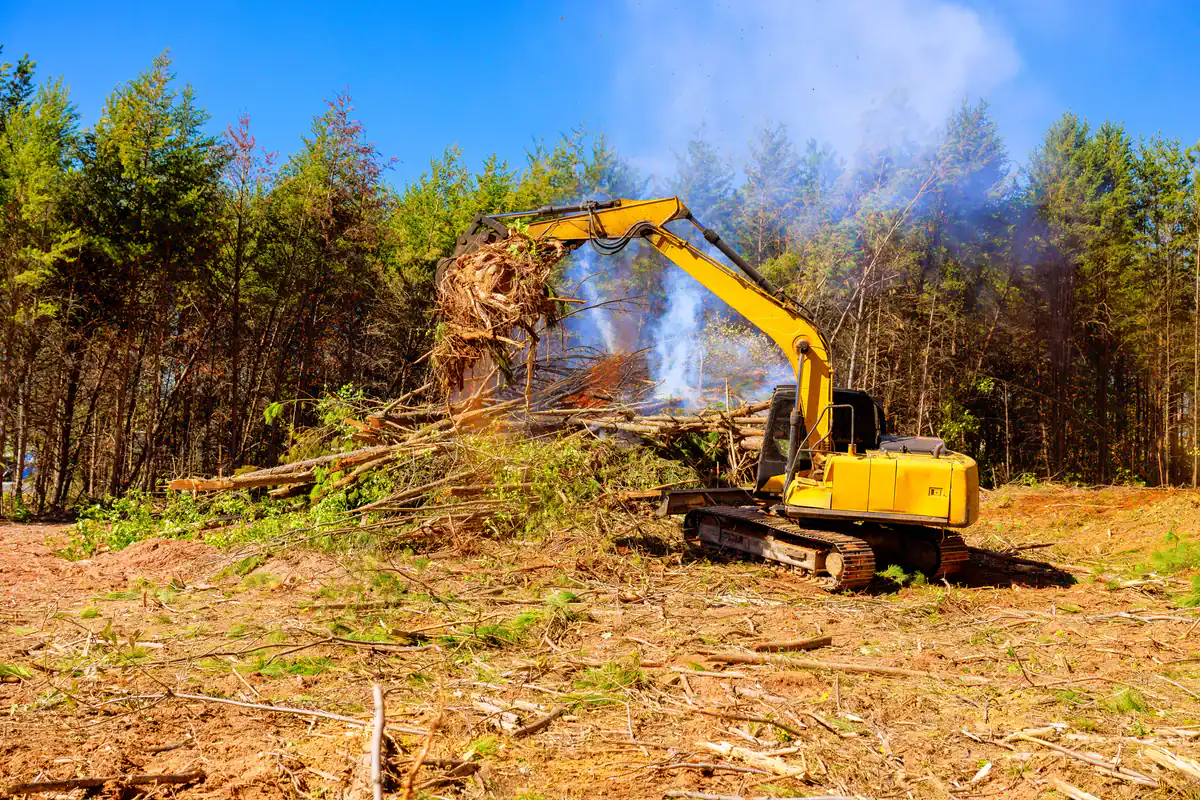
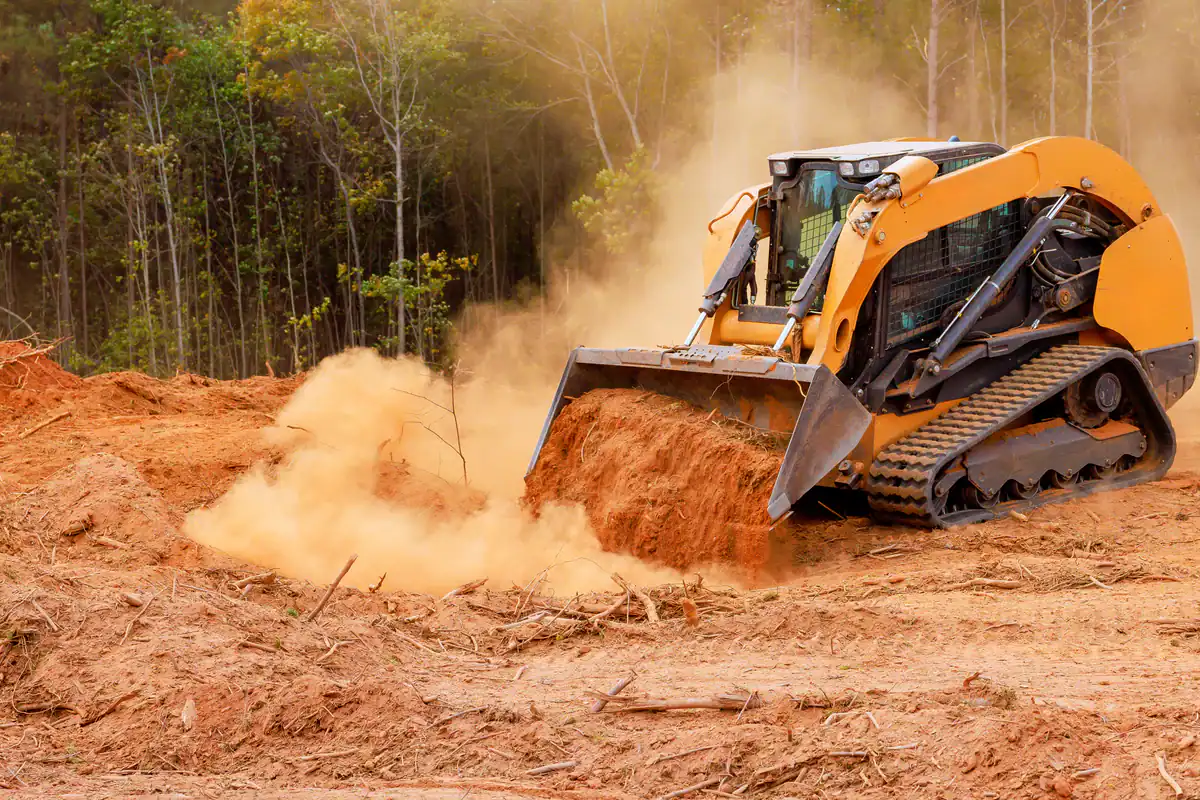
Roeland Park is one of the most densely settled cities in Kansas — 1.62 square miles, homes built shoulder to shoulder, and a housing stock that’s mostly mid-century bungalows pushing 60 to 70 years old. When you’re clearing one of these lots — whether for a teardown, a renovation, or just to finally deal with what’s been growing unchecked since the Eisenhower administration — the work is more involved than it looks from the street.
Deep root systems, mature hardwoods, decades of layered brush, and neighboring structures just a few feet away. That combination doesn’t leave room for guesswork. We’ve removed over 1,200 trees across the Kansas City, KS & MO metro with a 100% safety record, and we know how to work in tight quarters without damaging a neighbor’s fence or roof.
What you actually get out of a properly done lot clearing or brush removal job is a site that’s ready for whatever comes next. That might be a foundation pour, a landscaping overhaul, or simply a yard that doesn’t make the code enforcement officer slow down when they pass by — and in Roeland Park, that officer is actively patrolling, not just waiting for complaints. Overgrown shrubs and trees are a listed code violation here, and violations get investigated within one business day.
When the job is done, the debris is gone. The stumps are handled. The site is clean. That’s what you’re paying for, and that’s exactly what we deliver — confirmed by the customers who’ve said it themselves: “left the yard spotless,” “not only on my property, but also the neighbors.”
Squirrel Master Tree Services is a family-owned, licensed, and insured tree care company serving the Kansas City, KS & MO metro on both sides of the state line. Our owner is a certified arborist with 15-plus years of hands-on experience and holds a Kansas Arborist License — which is required by state law for any tree work performed for a fee in Kansas. That credential matters more than it might seem. It means the person directing the work on your property actually understands tree biology, structural risk, and how to read a removal before it becomes a problem.
We hold a 4.9-star rating across 40-plus verified reviews and were recognized by Quality Business Awards 2024 as a top 1% business in Kansas City, KS & MO with a quality score above 95%. More than 1,200 trees removed with a 100% safety record. For Roeland Park homeowners navigating tight residential lots along Roe Boulevard or the close-in streets near Johnson Drive, that track record isn’t a small thing.
We’re also fully bilingual — one of the only land clearing companies in this part of Johnson County that can say that. If Spanish is your preferred language, we’ve got you covered.
It starts with a free estimate — and not a phone guess. We come to your property, walk the site, look at the vegetation density, check access points, and assess what’s actually there. In Roeland Park, that assessment matters more than in most places. A lot that looks manageable from the curb can have 70-year-old root systems running under a shared fence line, limited equipment access off a narrow residential street, or a mature tree canopy that requires a specific removal sequence to avoid the neighbor’s roof.
You get a real number based on what’s actually in front of us — no upfront cost, no hidden fees.
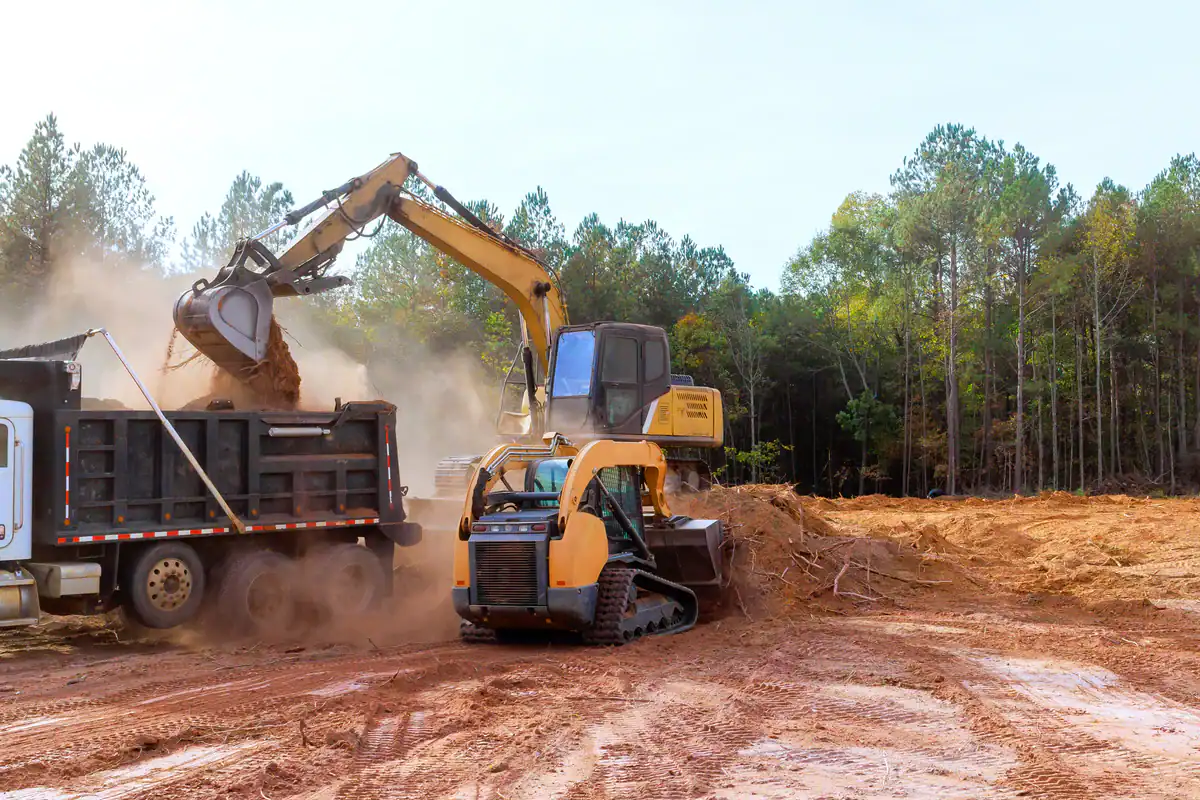
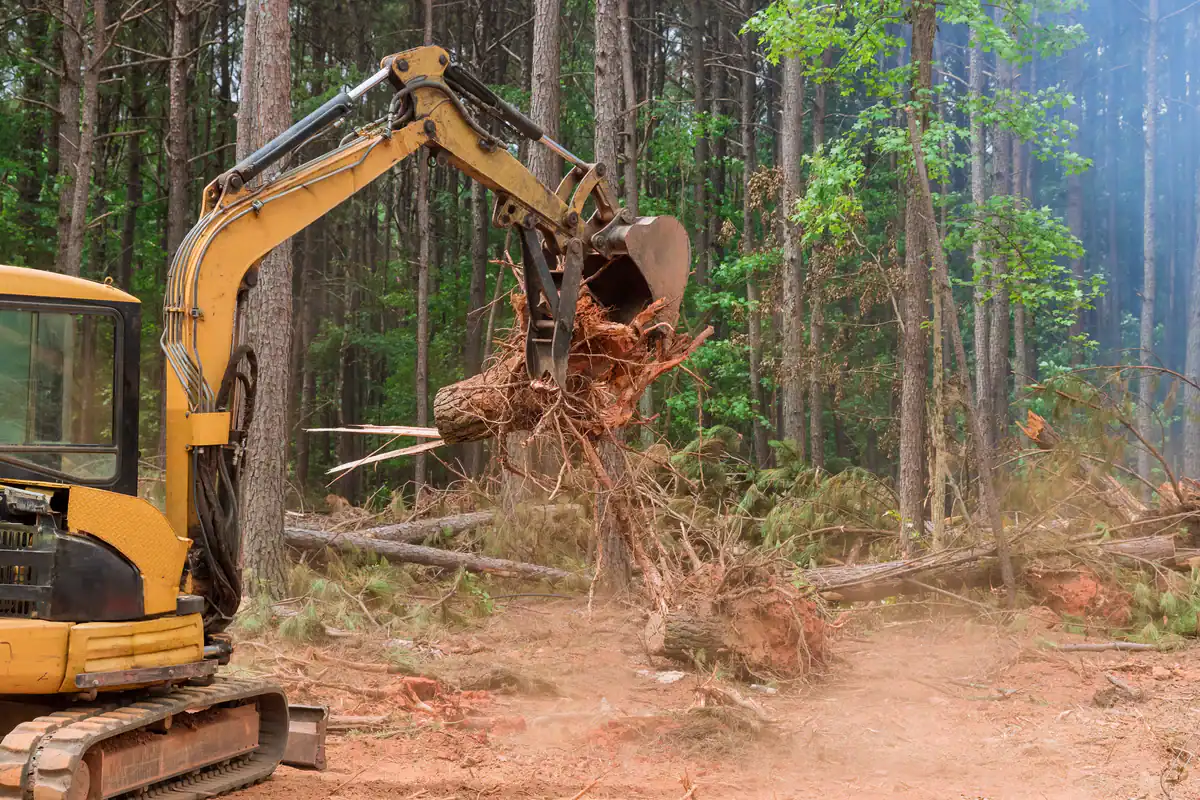
Once you approve the estimate, we schedule the work and show up with the right equipment for the job. For residential lot clearing in Roeland Park, that typically means precise, controlled removal rather than heavy bulldozing — the kind of careful work that protects neighboring structures and leaves the site clean.
If your project involves land disturbance beyond routine clearing, Johnson County requires a Land Disturbance Permit, and we can walk you through what applies to your specific situation. Most residential lots in Roeland Park fall well under the one-acre threshold that triggers the full permit process, but it’s worth knowing before you start.
The job itself is designed to be completed in a single visit wherever possible. Debris gets hauled away, stumps get ground down, and the site gets left clean. Before we leave, you walk the property together. If something isn’t right, we address it on the spot — not scheduled for a follow-up that may or may not happen.
Ready to get started?
Land clearing in Roeland Park isn’t a one-size situation. The work varies depending on what you’re starting with and what you’re building toward. A teardown lot on a residential street near Shawnee Mission Parkway — where the original home is coming down and a new build is going up — has different requirements than an overgrown side yard that’s been neglected for a decade or a corner lot that’s drawn a code enforcement notice.
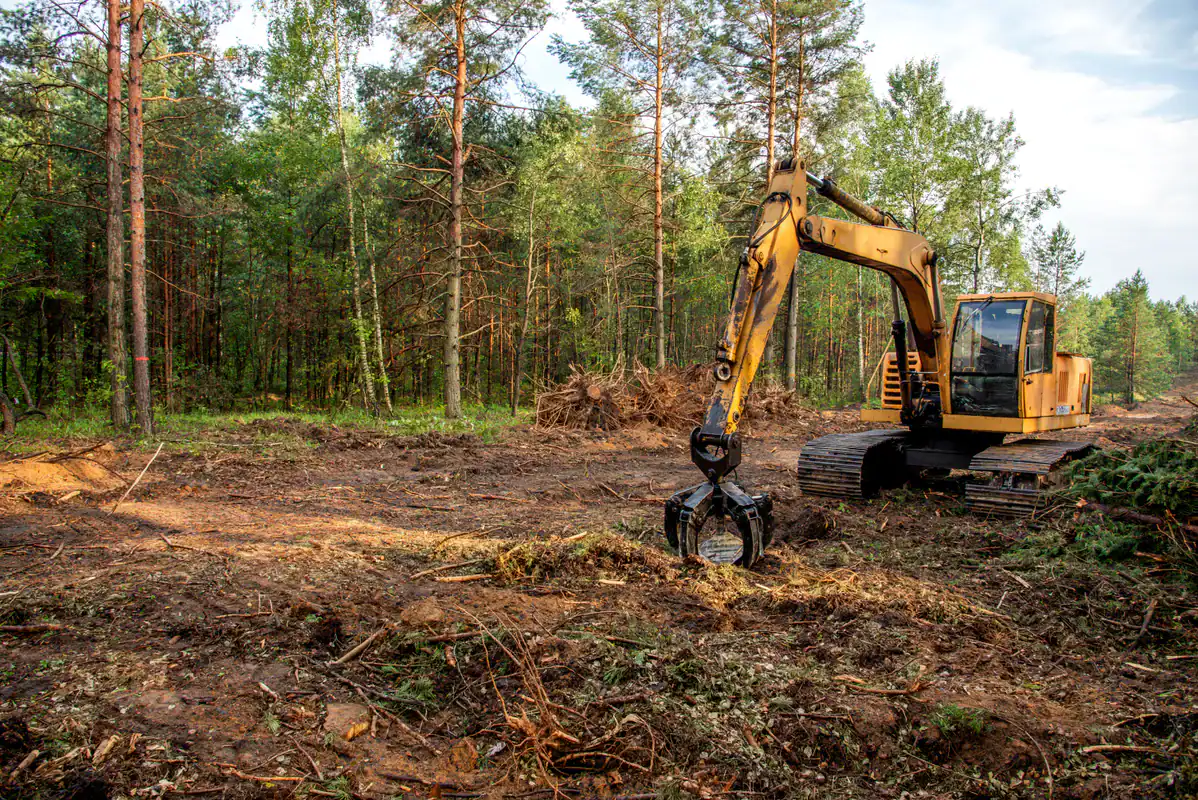
We handle the full scope: tree removal, stump grinding, brush removal, lot clearing, site clearing, and full debris haul-off. For acreage clearing on larger parcels at the edges of the metro, the process scales accordingly — more equipment, more crew, same standard of care. For dense residential work in tighter quarters, the approach is surgical.
Our certified arborist evaluates what’s there before anything comes down, which means you’re not losing trees that were actually worth keeping, and you’re not left with a stump field or a debris pile that becomes its own problem.
Pricing is straightforward. You get a free on-site estimate with no obligation, and the number we quote is the number you pay — no surprise charges for debris disposal, stump grinding, or equipment fees that weren’t mentioned up front. For Roeland Park homeowners who’ve dealt with contractors who find new line items mid-job, that’s not a small thing.
All work is performed in compliance with Johnson County contractor licensing requirements and Kansas state arborist licensing law.
For most residential lot clearing projects in Roeland Park, you won’t need a full Land Disturbance Permit — but it depends on the scope of the work. Johnson County requires a Land Disturbance Permit for any project that involves clearing, grubbing, grading, or removing vegetation in a way that disturbs the land’s surface. The permit application needs to be submitted at least 60 days before construction begins, and the fee is $250. Projects disturbing one acre or more trigger the full permit requirement, along with erosion and sediment control measures.
Most residential lots in Roeland Park are well under one acre, so a standard lot clearing or brush removal job typically doesn’t require the full permit process. That said, if you’re clearing in preparation for new construction — which is increasingly common in Roeland Park as older bungalows are torn down and replaced — the permit question becomes relevant to your overall build timeline, not just the clearing itself.
When you get your free estimate, ask specifically about what applies to your project. We’ll give you a straight answer based on your actual lot size and scope, not a generic response.
Land clearing costs vary significantly depending on what’s on the lot, how dense the vegetation is, how accessible the site is, and what you want done with the debris. Nationally, the average residential land clearing project runs between $3,743 and $3,805. Per-acre costs in the Kansas City, KS & MO area range from $1,500 to $5,000 or more depending on conditions — lighter brush on an accessible lot comes in at the lower end, while heavily wooded sites with mature hardwoods and large stumps push toward the higher end.
In Roeland Park specifically, the cost drivers tend to be vegetation maturity and site access rather than sheer acreage. Most lots here are small, but they carry decades of growth — 60 to 70-year-old trees with root systems that have had a long time to establish. Equipment access on tight residential streets can also affect the approach and the time required.
The most accurate way to know what your project will cost is to get a free on-site estimate. We come to the property, assess the actual conditions, and give you a real number with no hidden fees — not a ballpark figure based on square footage alone.
Roeland Park’s code enforcement model is proactive — the officer actively patrols the city’s streets rather than just responding to complaints. Overgrown shrubs and trees are explicitly listed as code violations under the city’s adopted International Property Maintenance Code, and complaints are investigated within one business day. If you’ve received a notice, the clock is already running.
We’re built for fast turnaround. We can schedule an on-site estimate quickly, and in most cases the clearing work itself is completed in a single visit — same-day project completion is confirmed by multiple customer reviews. That matters when you’re working against a code enforcement deadline rather than a flexible renovation timeline.
We handle the full scope: brush removal, tree clearing, stump grinding, and full debris haul-off, so the property is left in a condition that resolves the violation, not just reduces it. If you’re not sure exactly what the notice requires, bring it to the estimate appointment — we can walk through what needs to happen to bring the property into compliance.
These terms get used interchangeably in most conversations, and for practical purposes they describe overlapping work — but there are distinctions worth understanding when you’re scoping a project. Lot clearing generally refers to removing everything from a parcel to prepare it for new use: trees, stumps, brush, root systems, and debris. It’s the term most commonly used in residential contexts, especially for teardown-rebuild projects like the ones becoming more common in Roeland Park as older mid-century homes are replaced with new construction.
Site clearing means essentially the same thing, but the term is more often used in a construction context — it’s the clearing work that precedes a foundation pour or a formal build. Brush removal is narrower: it refers to clearing overgrown vegetation, shrubs, and smaller woody growth without necessarily removing large trees or grinding stumps.
For a Roeland Park homeowner dealing with an overgrown side yard or a code enforcement notice about encroaching shrubs, brush removal may be all that’s needed. For someone clearing a full lot ahead of new construction, you’re looking at the complete scope. The free on-site estimate will tell you exactly what your property requires.
This is one of the most common concerns for homeowners in dense neighborhoods, and it’s a legitimate one. Roeland Park has over 4,200 residents per square mile packed into 1.62 square miles — homes are close, lots are small, and mature trees don’t fall in convenient directions on their own. The risk of damaging a neighbor’s fence, a parked car, or a structure isn’t hypothetical.
That’s the primary reason why hiring a certified arborist-led crew matters more in a neighborhood like this than it does on an open rural parcel. We’ve removed more than 1,200 trees with a 100% safety record, and multiple customer reviews describe exactly this kind of work: “They did an excellent job cutting down my tree with no accidents as I live in a neighborhood and it was a tall tree. The clean up was also excellent, not only on my property, but also the neighbors.”
Our certified arborist assesses each tree’s lean, structural condition, and fall path before any cutting begins. The removal sequence is planned, not improvised. That’s the difference between a crew that does residential work and a crew that does it well.
For most tree removal and land clearing work, late fall through early spring is generally the preferred window — and that holds true for Roeland Park. Once trees drop their leaves, the crew has better visibility into the canopy structure, access to the site is easier, and the ground tends to be firmer, which matters for equipment movement on residential lots. If you’re clearing a lot ahead of spring construction, scheduling the work in fall or early winter keeps your build timeline on track without rushing into the job during peak demand season.
That said, Roeland Park’s spring storm season — April through June — creates its own timing pressure. Kansas City, KS & MO’s severe weather, including high-wind events and the occasional derecho, can take down mature trees on older residential properties with little warning. When storm damage turns a tree into an immediate hazard, waiting for the “ideal” season isn’t an option.
We handle storm-damaged tree removal and emergency clearing when the situation calls for it. If you have a tree that came down or is leaning dangerously after a storm, that’s a call worth making regardless of the time of year.
Other Services we provide in Roeland Park