Roeland Park is one of the most densely packed cities in Kansas — 1.62 square miles, nearly 7,000 residents, and over 3,700 documented trees in the right-of-way and front yards alone. On a lot this size, an overgrown tree isn’t just a yard issue. It’s a roofline issue, a fence issue, a neighbor issue.
Once the canopy is properly trimmed and shaped, you get your property back. Branches that were creeping toward the gutters are gone. The driveway isn’t a minefield after every storm. Your yard gets light again.
There’s also the practical side that most people don’t think about until it’s too late. The city’s 2022 tree inventory put the replacement value of Roeland Park’s tree canopy at over $33 million. A well-maintained tree adds roughly 7% to property value and can cut cooling costs by up to 30% when it’s placed and shaped right. That’s not a small thing when home values in this city have climbed from $107,000 to over $278,000 in the last two decades.
Johnson County sees 40 to 60 severe thunderstorm days a year. The branches you leave untrimmed today are the ones most likely to come down on something expensive this spring. Proactive trimming isn’t a luxury — it’s the cheaper option.
We are a family-owned, fully insured tree care company based in Kansas City, KS & MO — right next door to Roeland Park. We’ve been working across the Kansas City, KS & MO metro for over 10 years, and we know the difference between trimming a young subdivision tree and managing a mature oak that’s had seven decades to grow into a structure.
We’ve safely removed and trimmed more than 1,200 problem trees across the metro with a 100% safety record. On tight Roeland Park lots — where your tree is also your neighbor’s problem if something goes wrong — that record matters. Every job includes a full cleanup. No debris piles left in the yard, no chips in the neighbor’s driveway along Nall Avenue or the Roe Boulevard corridor.
You get a straight quote before anything starts, and most quotes are given the same day at no charge. We carry a 4.9-star rating across 40-plus verified reviews, and were recognized in 2024 among the top 1% of American businesses in our category by Quality Business Awards. That kind of track record doesn’t happen by accident.
It starts with a free on-site assessment. We come out, walk the property with you, and look at what’s actually going on — not a phone estimate, not a ballpark guess. For Roeland Park properties, that walkthrough matters more than most people realize.
The city enacted Ordinance No. 1062 in 2024, which formally protects any tree 12 inches or larger in diameter located in the right-of-way or your front yard. If you have one of those trees, knowing its condition before you make any decisions is important. We can assess what’s there and help you understand what you’re working with.
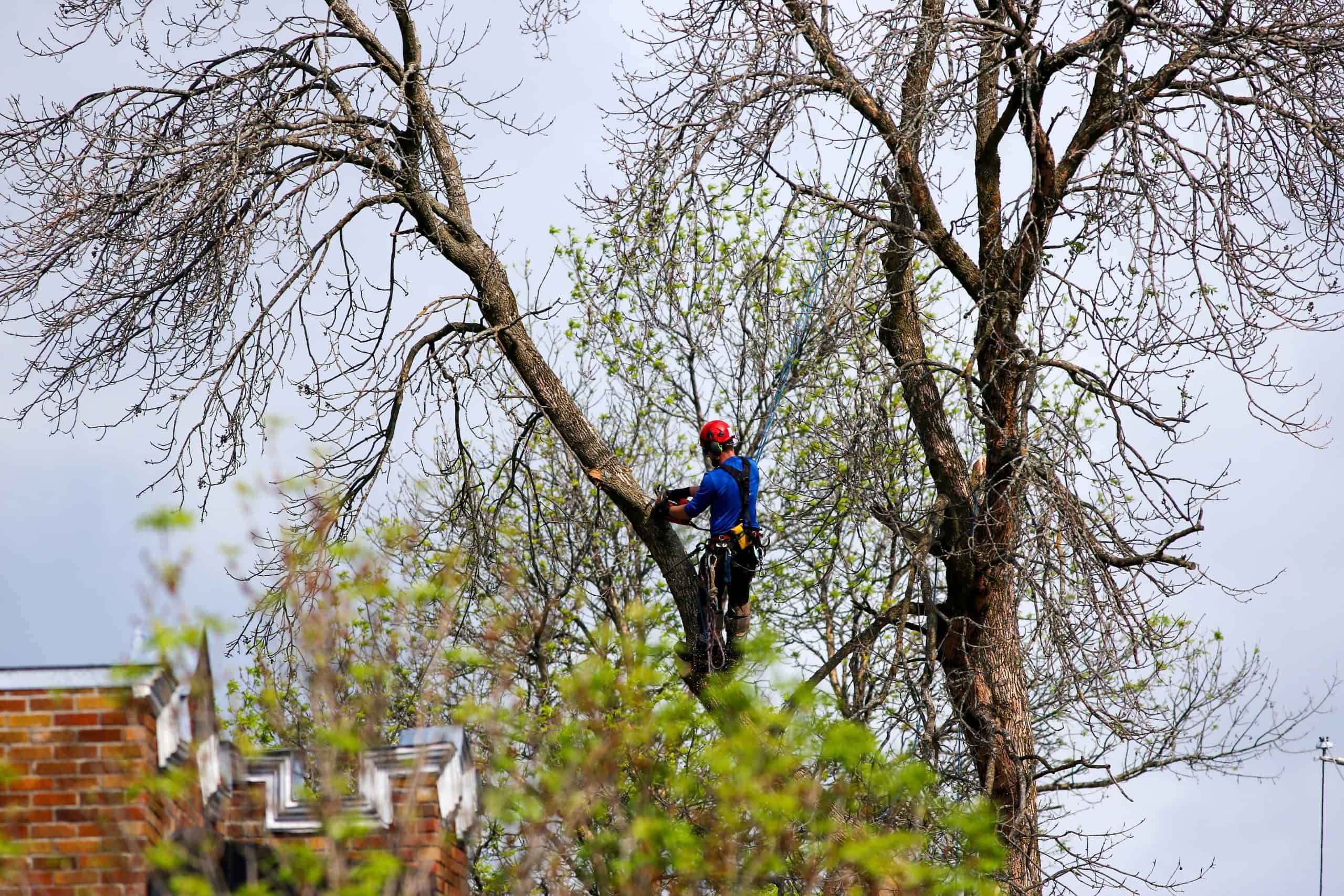
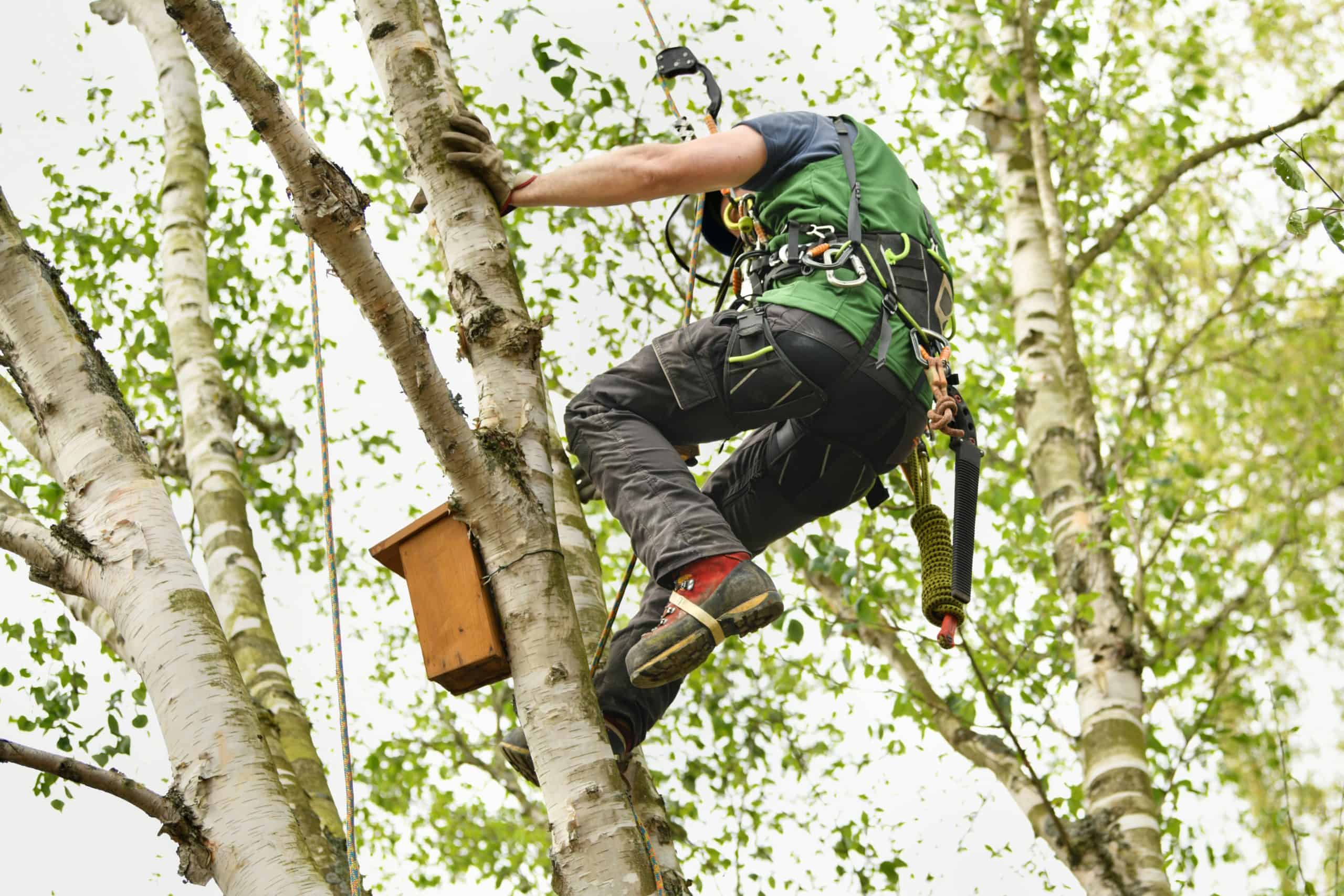
Once the scope is agreed on, our crew gets to work. For tree canopy trimming, branch trimming, and canopy raising on tight lots — the kind of close-quarters work that defines most Roeland Park properties — every cut is planned before it’s made. That’s how a 100% safety record stays intact.
If you’re trimming oaks, timing matters too: the highest-risk window for oak wilt transmission in this area runs from April through July, so dormant-season trimming in late winter or early spring is the smarter call for most oak work.
When the job is done, our crew cleans everything up before they leave. That means all debris, all chips, all branches — off your property and your neighbor’s side if anything landed there. You do the walkthrough, confirm you’re satisfied, and that’s it.
Ready to get started?
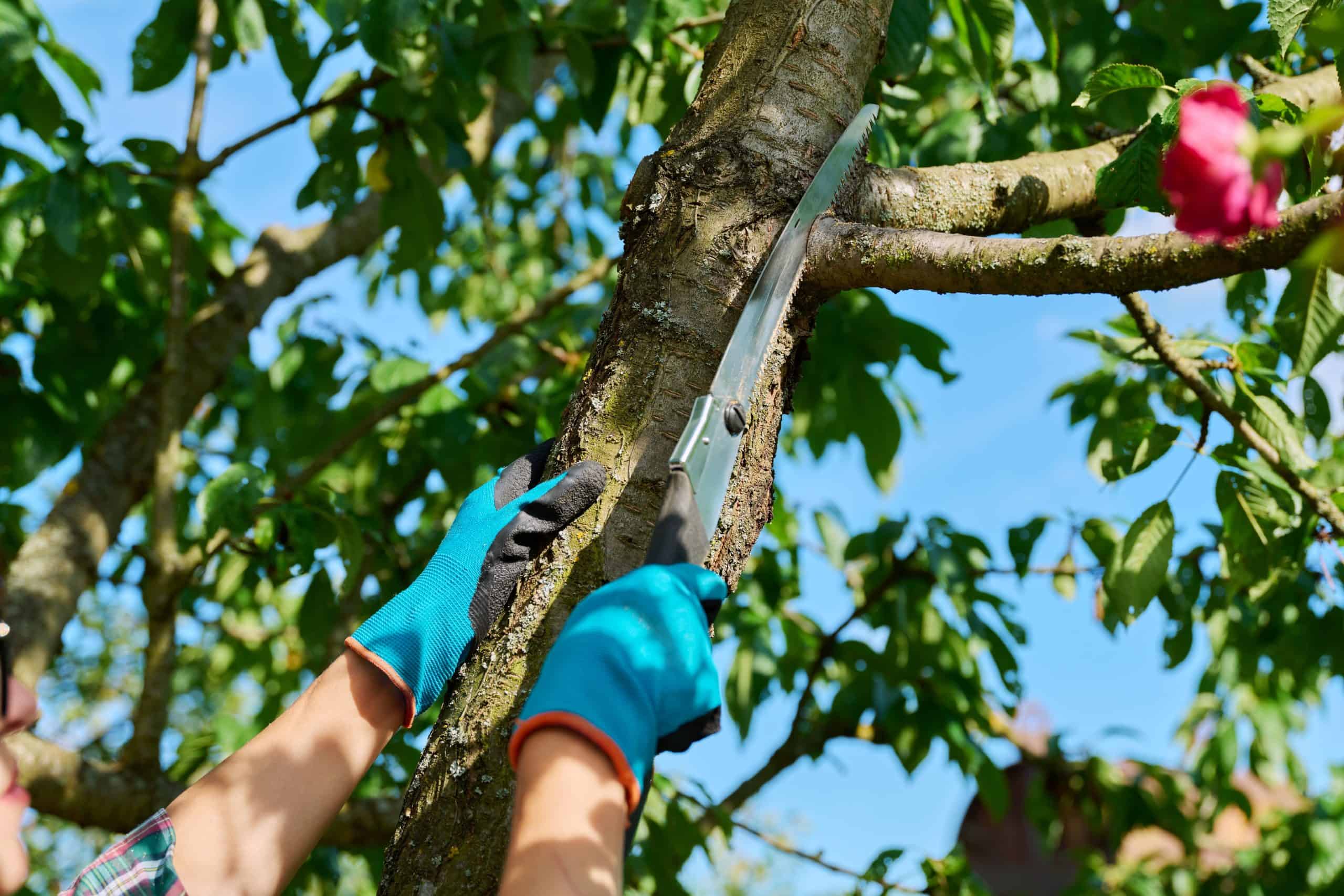
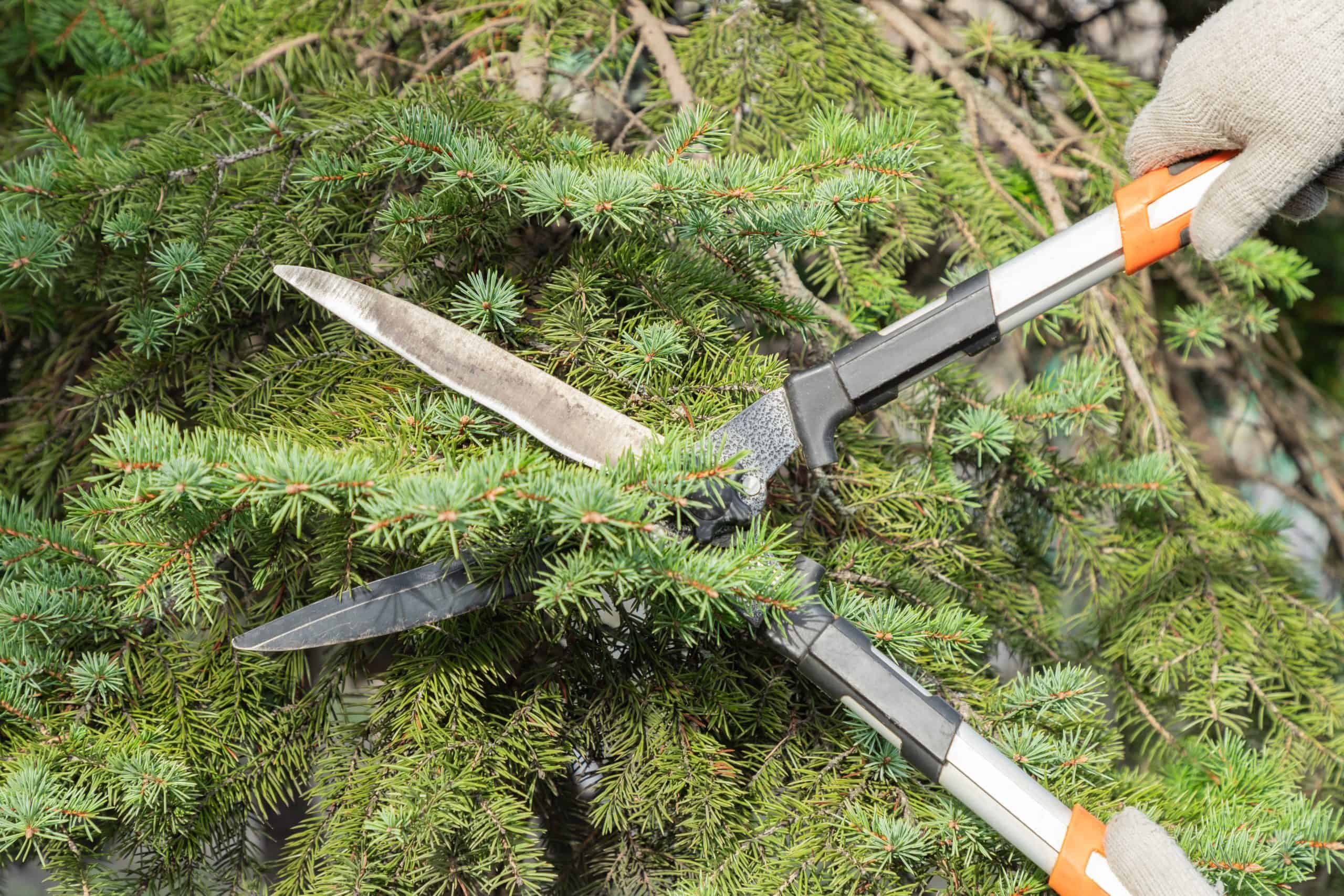
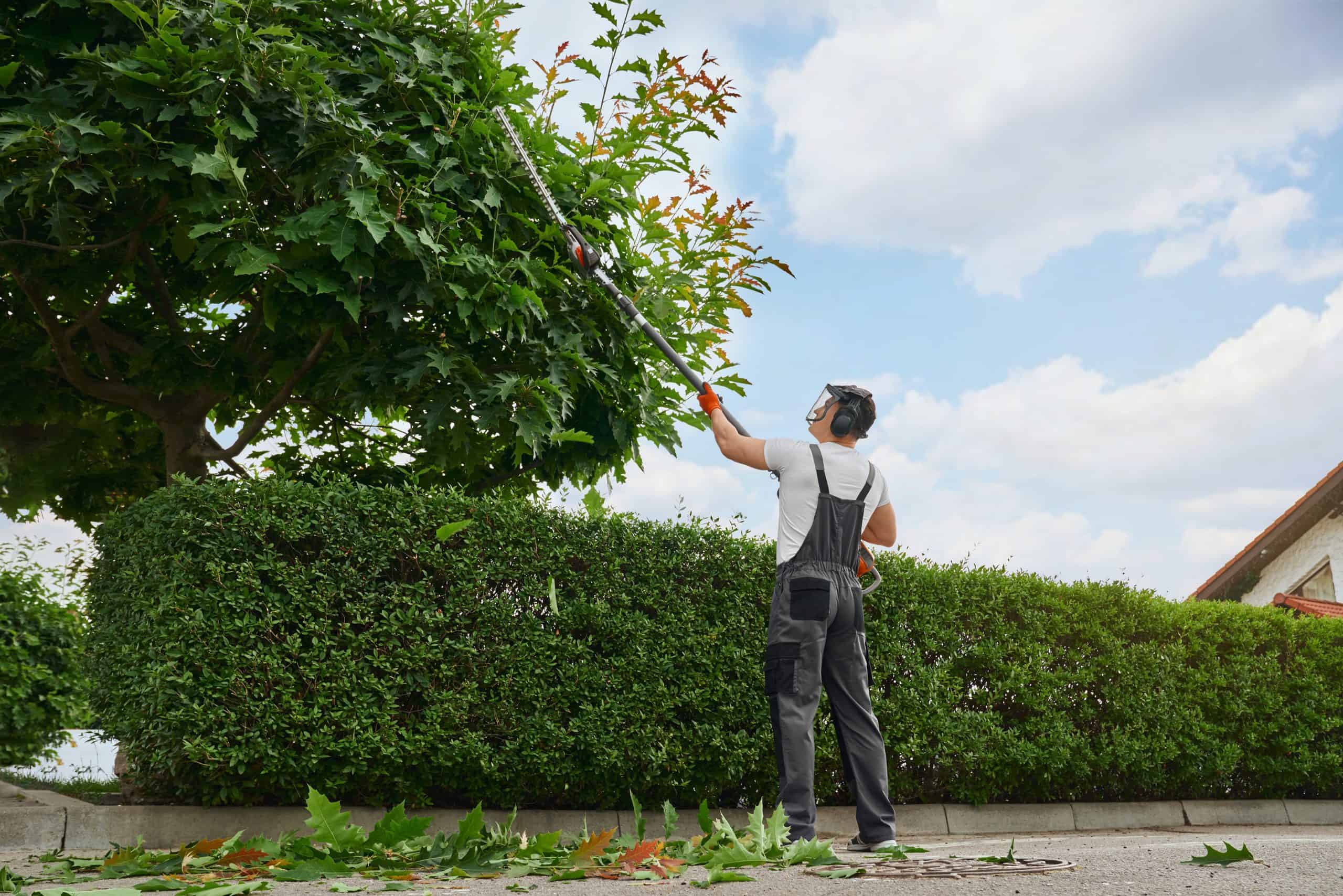
Tree trimming and tree pruning are related but not the same thing, and both matter for Roeland Park’s aging housing stock. Trimming focuses on controlling size, clearing structures, and shaping the canopy — keeping branches off rooflines, away from fences, and clear of the sightlines along streets like Johnson Drive and Roe Boulevard where the city’s traffic hazard code gives Public Works authority to require trimming if a tree obstructs visibility.
Pruning goes deeper — removing dead, diseased, or structurally weak branches to protect the tree’s long-term health and reduce the risk of failure during a storm.
We handle both. Canopy raising — lifting the lower canopy to create clearance over driveways, sidewalks, and fences — is a common request on Roeland Park’s compact lots and is included as part of the trimming work when needed. Tree shaping keeps the structure looking right while reducing weight on branches that have grown too far over neighboring properties.
Overgrown tree trimming on mature trees, the kind that define the streetscape along the Roe Boulevard corridor and throughout Roeland Park, is exactly the type of work we do regularly. Every job includes full cleanup with no piles left behind. You can keep the wood or mulch if you want it — otherwise it goes with us.
Pricing varies by tree size and access, and quotes are always free and given same-day when possible.
It depends on what you’re doing and which tree is involved. Roeland Park enacted Ordinance No. 1062 in September 2024, which established a formal Tree Protection Policy. Under that ordinance, any tree with a trunk measuring 12 inches or larger in diameter — located in the city right-of-way, a park, or the front yard of a private property — is considered a protected tree. You need City Arborist authorization before removing one of those trees, and if you remove it without authorization or without replacing it, the city charges a $500 Tree Mitigation Fee.
The good news is that routine trimming and pruning of protected trees does not require City Arborist authorization under the ordinance as written. You can maintain a protected tree without going through a permitting process. Where it gets more complicated is if a protected tree is in bad enough shape that removal becomes the only real option — that’s when the ordinance kicks in fully. Getting a professional assessment early, before the tree deteriorates to that point, is the straightforward way to avoid that process entirely.
The honest answer is that it depends on the tree — its size, species, how much access our crew has, and whether it’s near structures or utility lines. Nationally, most homeowners pay somewhere between $300 and $900 per tree for professional trimming, with smaller trees running $150 to $250 and larger ones climbing to $500 or more.
On Roeland Park’s compact lots, access can be a factor — tight clearances between houses, fences, and driveways sometimes add complexity to a job that would be straightforward on a larger property. We offer a free same-day quote after an on-site walkthrough. That means you get an actual number based on your actual trees, not a phone estimate that changes when the crew shows up.
Given that Roeland Park’s tree ordinance creates a $500 mitigation fee for protected trees that need to be removed without replacement, proactive trimming — which keeps trees healthy and structurally sound — often costs less than letting a problem grow until removal is the only option.
For most deciduous trees — the oaks, maples, hickories, and ashes that dominate Roeland Park’s streetscape — late winter to early spring is the professional standard. Trees are dormant, which means they’re leafless (easier to see the branch structure clearly), under less stress from cuts, and not attracting the insects that spread disease.
Johnson County sees 40 to 60 severe thunderstorm days a year, so getting trimming done before storm season starts in spring also reduces the risk of branches coming down during a high-wind event. For oaks specifically, timing is more than a preference — it’s a health issue. The highest-risk window for oak wilt transmission in the Kansas City, KS & MO area runs from April through July. Oak wilt is spread by beetles that are attracted to fresh pruning cuts during that period. Trimming oaks in late winter, when those beetles are dormant, dramatically reduces that risk.
Roeland Park’s 2022 tree inventory documented multiple oak species throughout the city’s right-of-way and front yards, so this is a real consideration for a lot of homeowners here, not a theoretical one.
Canopy raising means trimming the lower branches of a tree to lift the bottom of the canopy higher off the ground — creating clearance underneath it. On Roeland Park’s small lots, this comes up constantly. Low-hanging branches that extend over driveways, sidewalks, fences, and neighboring properties are a daily reality in a city this dense. Canopy raising solves that without taking the whole tree down or dramatically changing its shape.
It’s also relevant from a code standpoint. Roeland Park’s municipal code places a duty on property owners to trim branches that overhang public rights-of-way and to remove dead limbs that extend over streets or alleys. The city’s traffic hazard provision gives the Public Works Director authority to require trimming if a tree obstructs sightlines for drivers or pedestrians. If you’ve got a large tree near the street along Johnson Drive or the Roe Boulevard corridor and the lower canopy is getting low, canopy raising is the straightforward fix — and it’s included as part of the trimming work when the job calls for it.
A few things are obvious — dead branches, limbs hanging over the roof or touching the gutters, branches that have grown into a fence or are overhanging a neighbor’s property. Those aren’t situations that get better on their own.
But a lot of the conditions that matter most aren’t visible from the ground without a trained eye. Weak branch unions, internal decay, crossing limbs that are rubbing and creating wound entry points for disease — these are things that look fine until they don’t. For Roeland Park specifically, the age of the housing stock is worth keeping in mind. Most homes here were built in the 1950s, which means the trees planted with them are now 60 to 80 years old. Mature trees at that age are more prone to structural issues than younger trees, and the consequences of a failure on a tight urban lot are higher — your neighbor’s fence, their car, or their roof is close enough to be in the drop zone.
A free on-site assessment from us gives you a straight answer about what’s actually going on, without any obligation to book.
Full cleanup is included on every job — that’s not a premium add-on, it’s just how we operate. When the trimming is done, our crew removes all debris: branches, chips, and anything that came down during the work. We leave the property neat and safe before we go. You have the option to keep the wood or mulch if you want it — some homeowners do — but if you don’t, it goes with us.
In Roeland Park, this matters more than it might in a lower-density suburb. On a lot where your yard and your neighbor’s yard are separated by a few feet and a shared fence line, debris that lands on the wrong side of the property line creates a real problem. Our customers have specifically noted that we cleaned up not just their own property but the neighbor’s side as well when debris landed there. That’s the kind of detail that’s easy to overlook when you’re comparing quotes, but it’s the difference between a job that’s actually finished and one that leaves you with a follow-up conversation you didn’t want to have.
Other Services we provide in Roeland Park