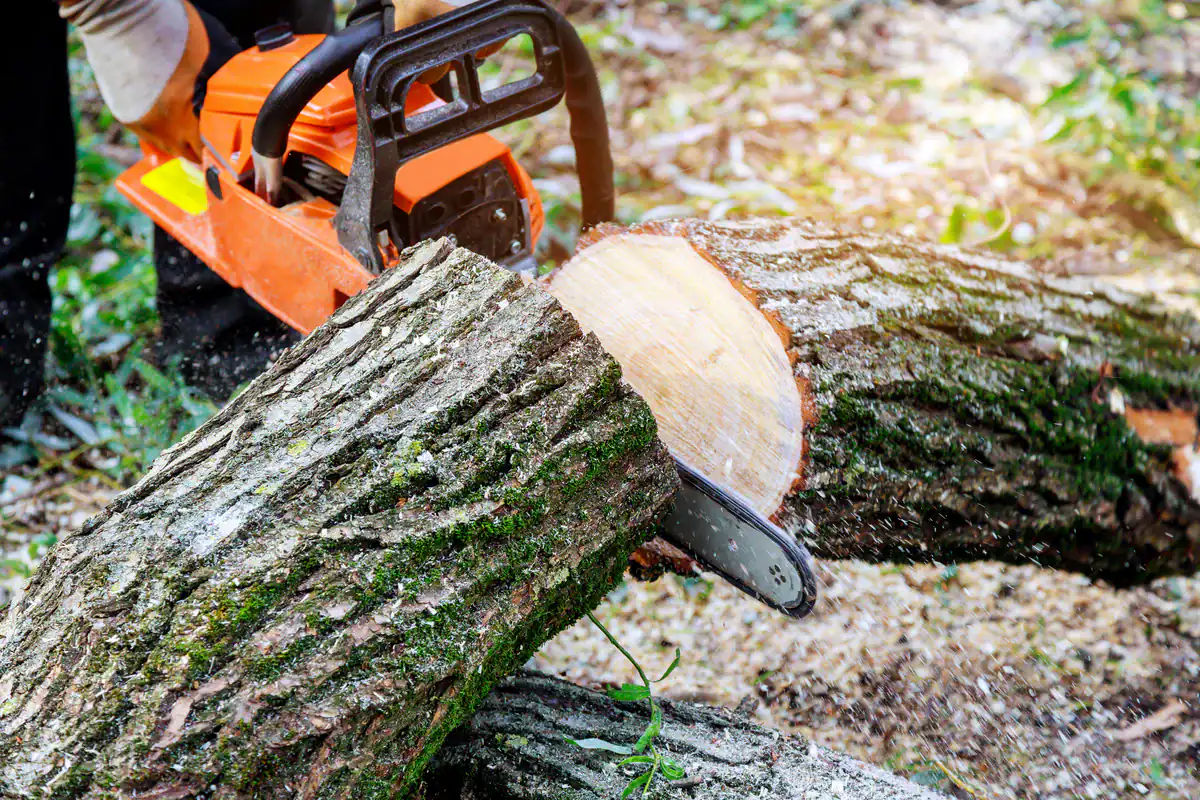
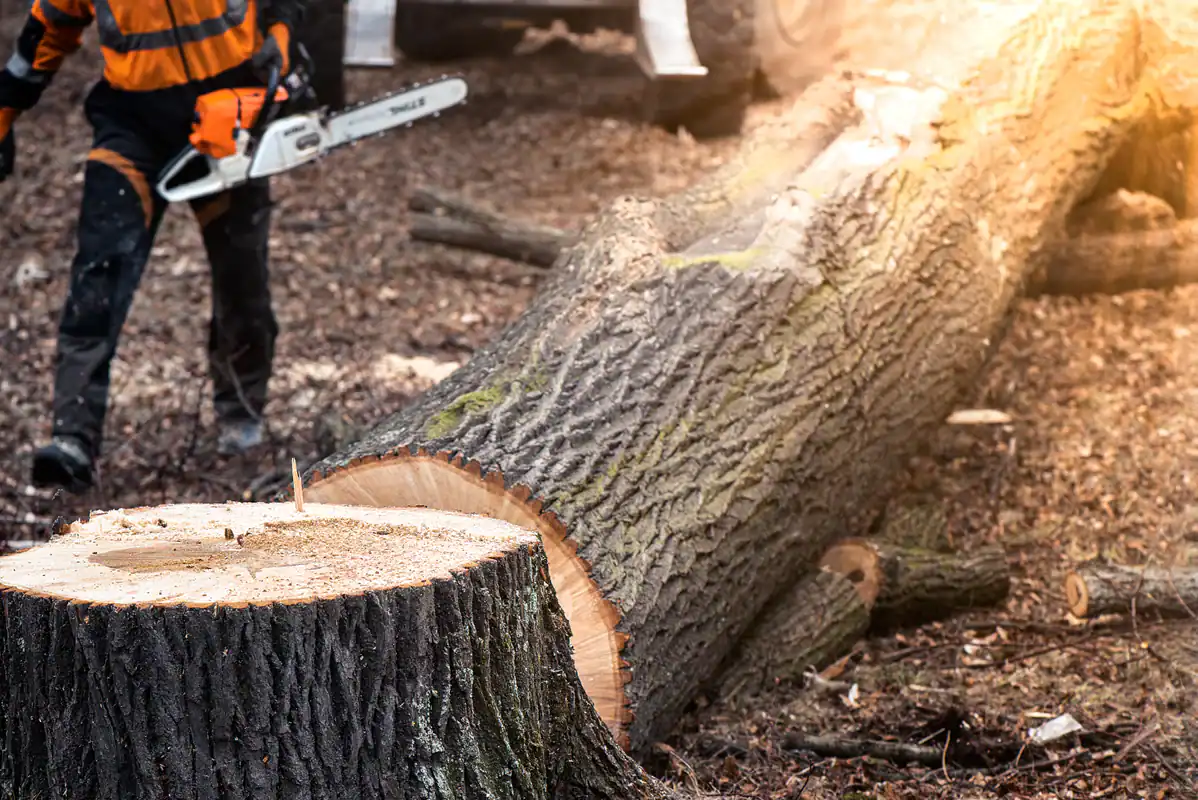
Most of Roeland Park’s homes were built in the 1950s and 1960s. The trees that came with those properties — or were planted shortly after — are now 60 to 70 years old. At that age, ash, oak, and elm trees commonly develop internal decay, weakened structure, and root systems that have been shifting in Johnson County’s heavy clay soil for decades.
They can look completely fine from the street until they don’t. In a compact Roeland Park yard, “wait and see” isn’t a strategy — it’s a liability waiting to happen.
When you get tree removal done right, you stop worrying every time a storm rolls through on Shawnee Mission Parkway. You stop watching that dead limb hang over your driveway. You stop wondering whether your homeowner’s insurance would even cover the damage if it came down — because a dead or neglected tree that causes damage may not be covered if your insurer decides you knew about the risk and did nothing.
What you’re left with is a clean yard, a safer property, and a crew that handled the whole thing without leaving a pile of debris behind. Every job we complete includes full cleanup. No wood stacks, no chip piles, no mess left for you to deal with. If you want to keep the wood or mulch, just say so upfront — otherwise, it’s gone when we leave.
Squirrel Master Tree Services, LLC is headquartered in Kansas City, KS & MO, KS — directly adjacent to Roeland Park, just across the Johnson County line. This isn’t a franchise dispatching strangers from across the metro. We’re a family-owned crew that’s been doing this work in the Kansas City, KS & MO area for over a decade, in neighborhoods that look a lot like yours — compact lots, mature trees, houses close together, and not much room for error.
We’re fully insured, which matters more in a dense neighborhood like Roeland Park than almost anywhere else. Liability coverage and workers’ compensation mean that if anything goes wrong on the job — on your property or your neighbor’s — you’re not the one absorbing the cost. That’s the credential that actually protects you, and it’s one we carry on every job.
Reviews from customers across the KC metro consistently point to the same things: fast response, honest assessment, fair pricing, and a yard that’s cleaner after we leave than it was before we arrived. That track record doesn’t happen by accident — it happens when a company treats your property like their own.
It starts with a free estimate. We come out, look at the tree, and give you a straight answer — what the job involves, what it will cost, and whether full removal is actually what’s needed or whether a strategic trim could solve the problem. That honesty matters because not every call ends in a removal, and a company that tells you that upfront is one worth trusting.
If your tree is in the front yard and measures 12 inches or more in diameter at chest height, there’s an important step specific to Roeland Park that most homeowners don’t know about. Under Ordinance No. 1062, removing a protected tree from your front yard requires authorization from the City Arborist before any work begins. If that authorization isn’t obtained, you could face a mitigation fee of $500 per tree — plus a requirement to plant a replacement.
We understand this process and can help you navigate it correctly before a single cut is made.
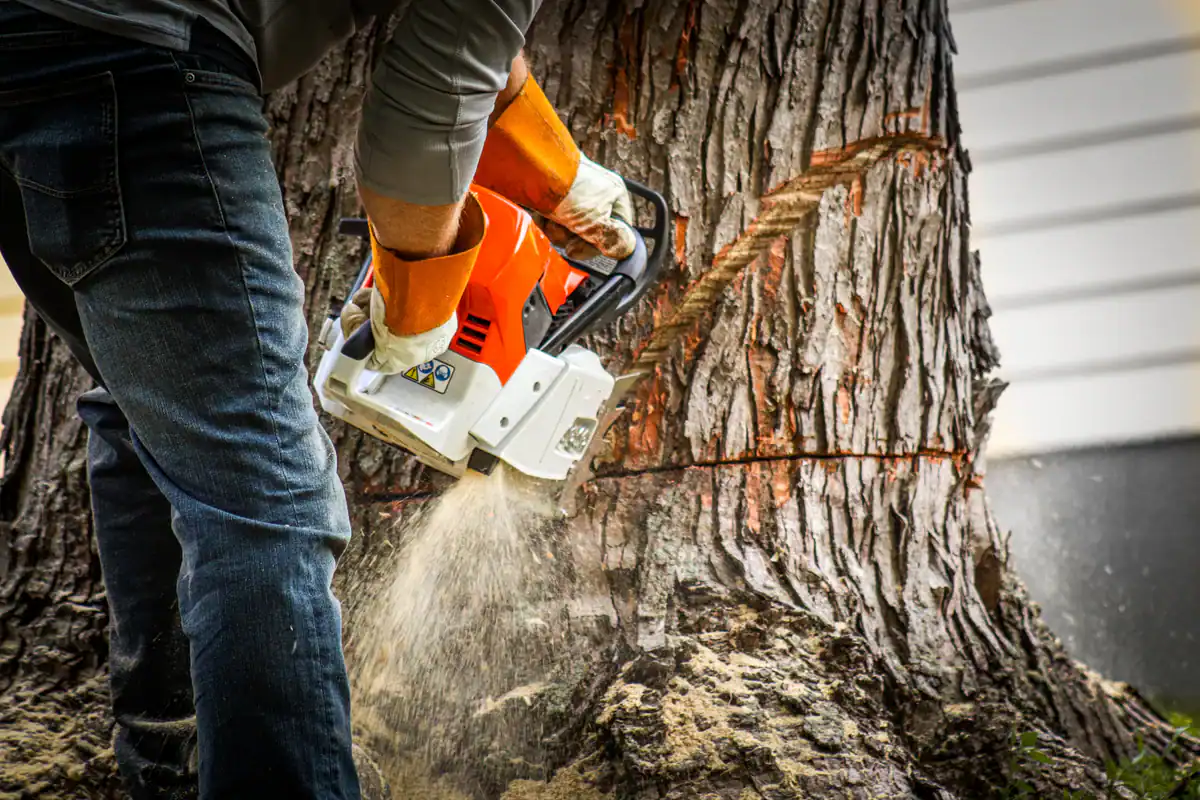
Once everything is in order, we handle the removal itself — working carefully around your structure, your neighbor’s fence, and any overhead lines along the way. In Roeland Park’s compact lots, that means deliberate, methodical work rather than a fast swing-and-drop approach. When the tree is down, the cleanup is thorough. Branches, trunk sections, chips — all of it goes. You’re left with a clean yard and one less thing to worry about.
Ready to get started?
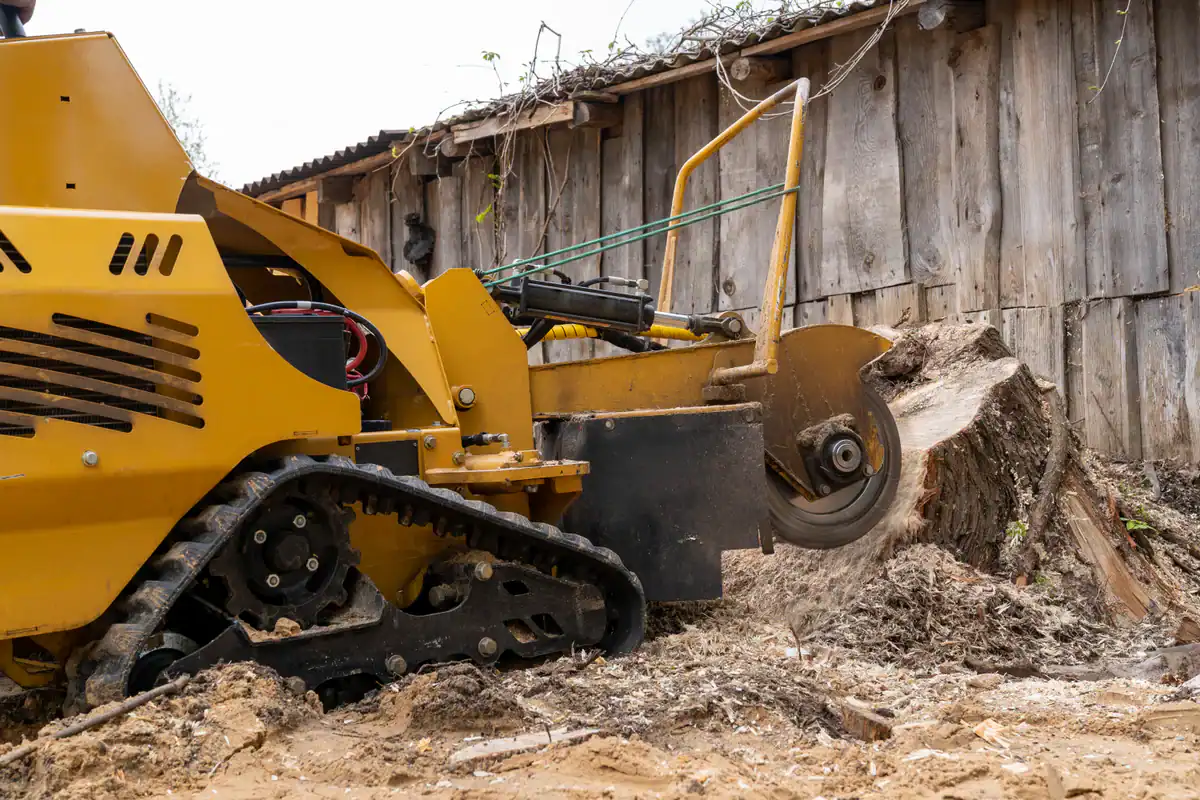
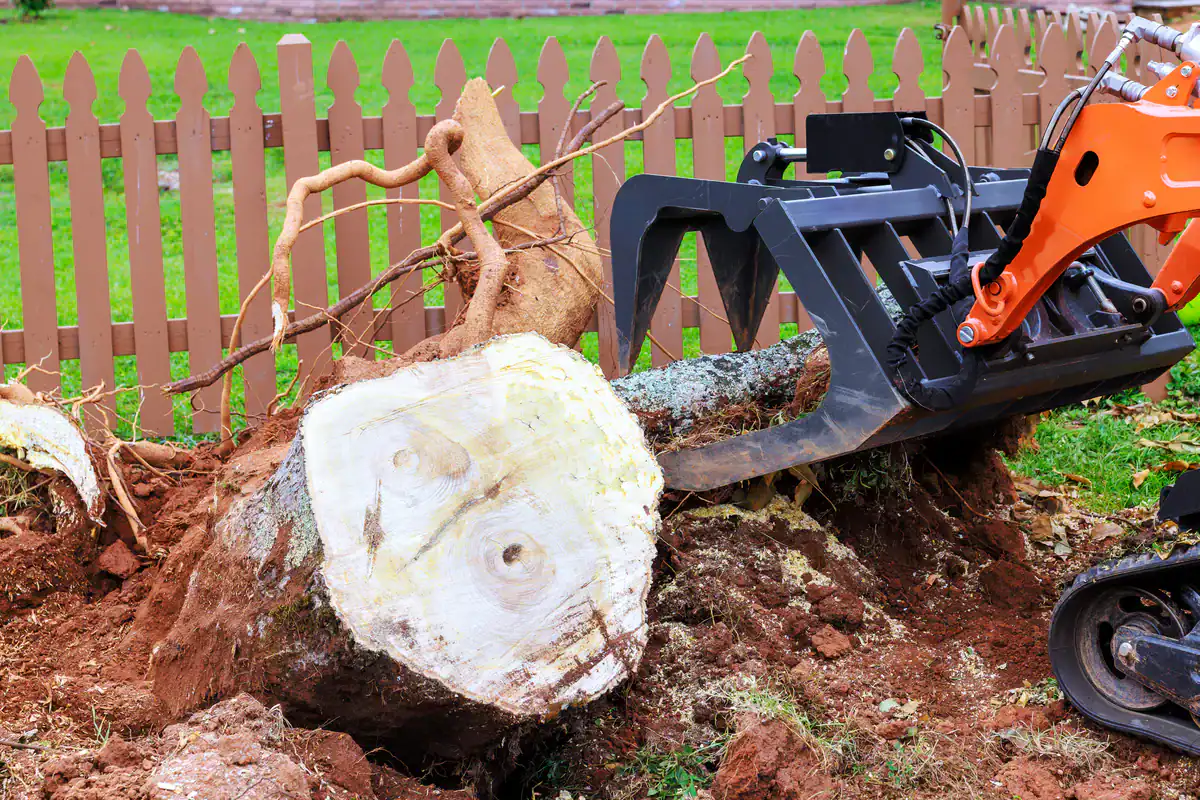
Tree removal in Roeland Park covers the full scope of the job — not just the cut. That means the trunk, the limbs, the debris, and the cleanup, all handled by the same crew on the same day. Stump grinding is available if you want the stump taken down to ground level so the area can be replanted or restored. If you’d like to keep the firewood or wood chips for personal use, just mention it when you schedule — otherwise everything is hauled away.
Dead tree removal and diseased tree removal are two of the most common calls in this area, and for good reason. Roeland Park’s 2022 city tree inventory identified thousands of trees across the city’s right-of-way and front-yard zones, including ash trees that are increasingly at risk from Emerald Ash Borer — a pest that has been spreading steadily through Johnson County. A dead ash tree in a compact residential yard is one of the more unpredictable removal scenarios in the business.
The wood becomes brittle and can fail in ways a healthy tree won’t. Getting it down before that happens is the right call.
Roeland Park’s municipal code also places a legal obligation on property owners to remove dead trees, dead branches, and dead shrubbery that extend over any public street, avenue, or alley. If you have a dead limb hanging over the sidewalk or the road along Johnson Drive or near Roe Boulevard, that’s not just a safety concern — it’s a code issue. We handle these situations routinely and can document the work for your records.
Yes — and this is something a lot of Roeland Park homeowners find out too late. Under Ordinance No. 1062, any tree in your front yard or in the city’s right-of-way that measures 12 inches or more in diameter at 4.5 feet from the ground is considered a protected tree. You cannot remove it without first getting authorization from the City Arborist. If you skip that step, you may be required to pay a Tree Mitigation Fee of $500 per tree removed, plus plant a replacement tree on the property.
This ordinance applies specifically to front-yard trees and right-of-way trees — backyard trees on private property are generally not subject to the same requirement. But if you’re unsure whether your tree falls under the ordinance, the safest move is to find out before any work begins. We’re familiar with Roeland Park’s tree protection rules and can help you understand what’s required for your specific situation before a single cut is made.
That’s genuinely one of the most useful questions you can ask. A tree that has lost less than about 25% of its branch structure can often recover with proper pruning. But a tree that is structurally compromised — with internal decay, significant deadwood, a leaning trunk, or root damage from years of shifting in Johnson County’s heavy clay soil — is a different situation entirely.
In Roeland Park specifically, a lot of the trees homeowners are dealing with are 60 to 70 years old. At that age, the signs of decline aren’t always obvious from the outside. Dead branches can come down without any warning, even on calm days. If a tree is showing significant dieback, has a hollow section in the trunk, or has had large limbs fail recently, a free on-site assessment will tell you more than any general rule of thumb. We’ll give you a straight answer — if a trim will handle it, that’s what we’ll tell you.
This is where a lot of homeowners get caught off guard. If a tree falls and damages your own home, your homeowner’s insurance may cover it — but not always. If your insurer determines that the tree was visibly dead or diseased and you were aware of the risk and didn’t act, they can deny the claim based on negligence.
The neighbor situation is a bit different. If your tree falls onto a neighbor’s property, the general rule is that each homeowner’s insurance covers damage to their own property. But if your neighbor can show that you knew the tree was dead or at risk and did nothing about it, liability can shift to you. In a dense neighborhood like Roeland Park — where houses sit close together and trees frequently span property lines — that’s not a hypothetical. It’s a scenario worth taking seriously before something actually comes down.
For most residential jobs in Roeland Park, a single tree removal takes anywhere from a couple of hours to a full day, depending on the size of the tree, how close it is to structures, and how much clearance we have to work with. A large, mature oak or ash in a tight front yard — the kind that’s common in Roeland Park’s mid-century neighborhoods — takes longer than a tree in an open backyard simply because every cut has to be planned around what’s nearby.
Roeland Park’s compact lot sizes do add some complexity. Limited backyard access, overhead utility lines, and neighboring fences mean we work more methodically than we might on a larger suburban property. That’s not a problem — it’s just the reality of doing this work correctly in a dense neighborhood. The goal is always to get the tree down safely without disturbing neighboring properties, and cleanup is included so the street and sidewalk are clear when we leave.
Yes, and it’s worth taking seriously if you have ash trees on your property. Emerald Ash Borer has been spreading through Johnson County for years, and Roeland Park’s own 2022 city tree inventory documented ash trees throughout the city’s right-of-way and front-yard zones. Once an ash tree is infested, it typically dies within two to four years, and the decline can be rapid in the later stages.
The removal challenge with dead ash trees is that the wood becomes brittle and unpredictable in ways that a healthy tree doesn’t. Branches can fail without much warning, and the structural integrity of the trunk degrades faster than most people realize. If you have an ash tree that has been losing leaves, showing thinning in the upper canopy, or has visible bark splitting or woodpecker activity — those are signs worth having someone look at. A dead ash in a compact Roeland Park yard is one of the more urgent removal situations, and waiting typically makes the job harder and riskier.
The two most important things to verify before anyone starts work on your property are proof of liability insurance and workers’ compensation coverage. In Kansas, there’s no state licensing requirement that prevents someone from calling themselves a tree service — meaning anyone with a truck and a chainsaw can legally show up and bid the job. Insurance is what separates a legitimate operation from one that leaves you holding the bill if something goes wrong. If a worker is injured on your property and the company doesn’t carry workers’ comp, that liability can fall on you.
Beyond insurance, ask whether the company is familiar with Roeland Park’s tree ordinance — specifically Ordinance No. 1062 — if the tree in question is in your front yard. Ask whether cleanup is included, what happens to the stump, and whether you’ll get a written estimate before any work begins. A company that answers those questions clearly and without hesitation is one worth trusting. One that can’t — or that asks for a large deposit upfront before the job starts — is worth passing on.
Other Services we provide in Roeland Park