
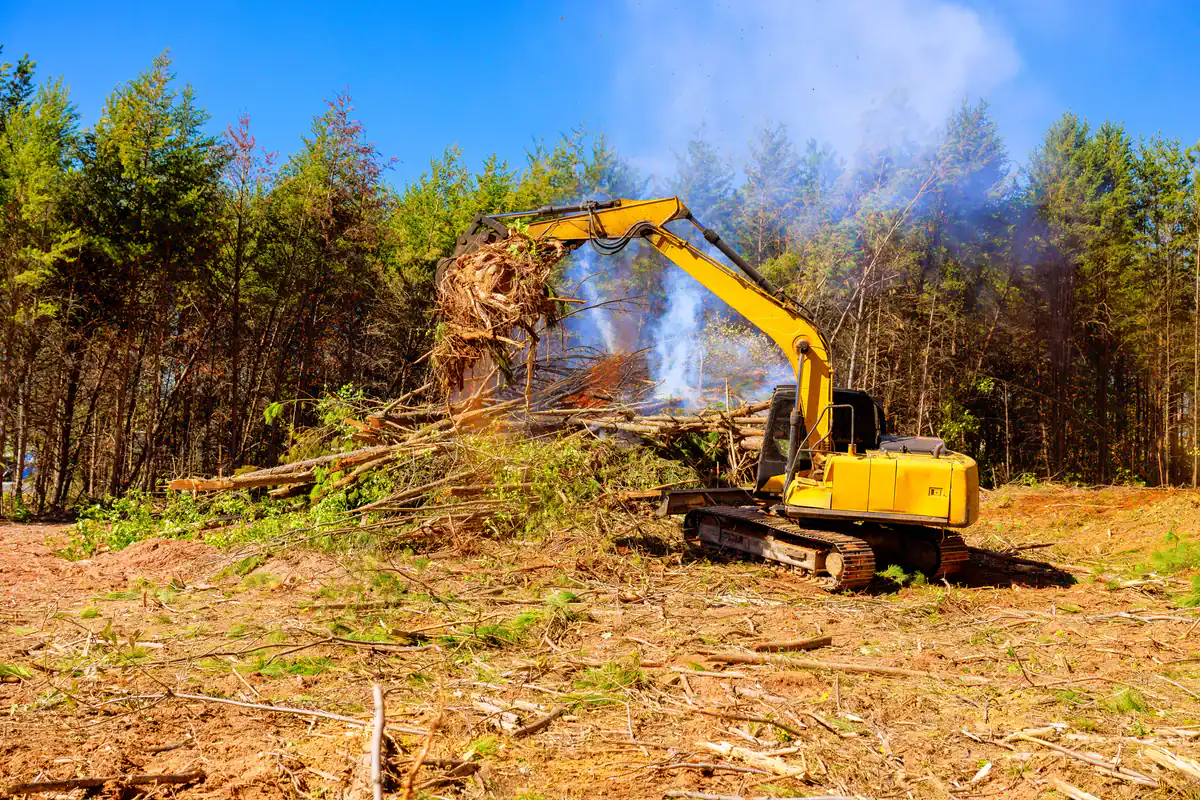
There’s a specific kind of frustration that comes with owning land you can’t use. Maybe it was manageable a few years ago and now it’s not. Maybe you inherited the parcel and haven’t seen the back half of it in years. Either way, you’re not dealing with a simple mowing problem — you’re dealing with Missouri River bottomland, and that’s a different animal entirely.
The vegetation that grows along the Clay County river corridor — cottonwood, willow, Osage orange, invasive bush honeysuckle — doesn’t just grow fast. It comes back fast after clearing if it’s not handled right. A crew that doesn’t understand riparian terrain will leave you in the same spot two seasons from now. What you actually need is someone who can assess what’s there, clear it properly, and tell you honestly what kind of maintenance makes sense going forward.
Once the land is cleared, the difference is immediate and practical. You can see your property lines. You can access areas that were blocked off. The eyesore is gone. And if you’re planning to build, sell, or simply reclaim what’s yours, you’re starting from a clean slate — not a jungle.
We are a family-owned, licensed, and insured tree and land clearing company based in Kansas City, KS & MO — connected to Missouri City via Route 210 through the river bottoms. Our owner is a certified arborist with more than 15 years of hands-on tree care experience, and he’s the one making the judgment calls on your property. That matters more than it sounds.
Knowing which trees are worth saving, which stumps need grinding before the ground can be used, and how to work safely near a riverbank — those aren’t things you pick up overnight. We’ve safely removed more than 1,200 trees with a 100% safety record and hold a 4.9-star rating across 40-plus verified reviews. For Missouri City homeowners dealing with mature, overgrown properties in the 64072 zip code, that track record is exactly what you want behind a crew working on your land.
It starts with a free in-person estimate. Not a phone quote, not a ballpark figure based on square footage — an actual site visit where we walk your property, look at what’s growing, check the terrain and access, and give you a real number. For Missouri City properties near the river bottom, this step isn’t optional.
Vegetation density, equipment access off Route 210, proximity to the riverbank, and what’s underneath the brush all affect the scope and cost of the job. You deserve a number based on your land, not a formula.
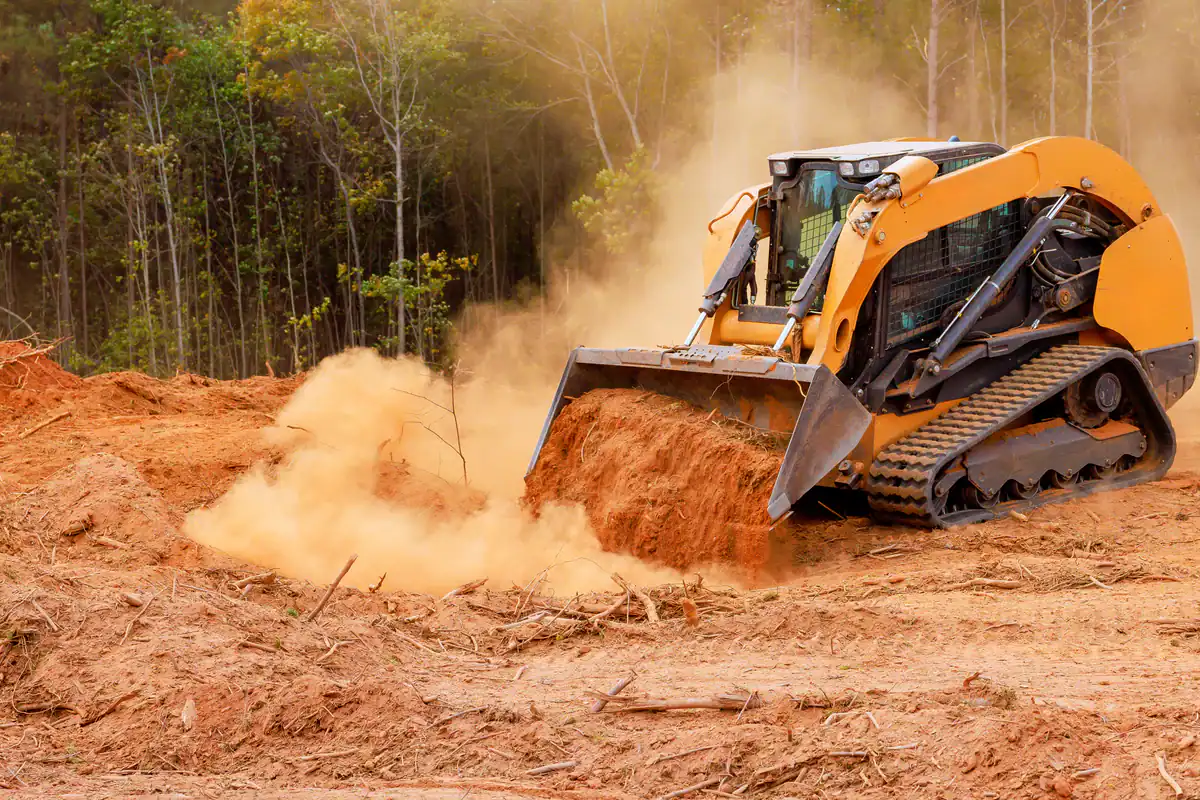
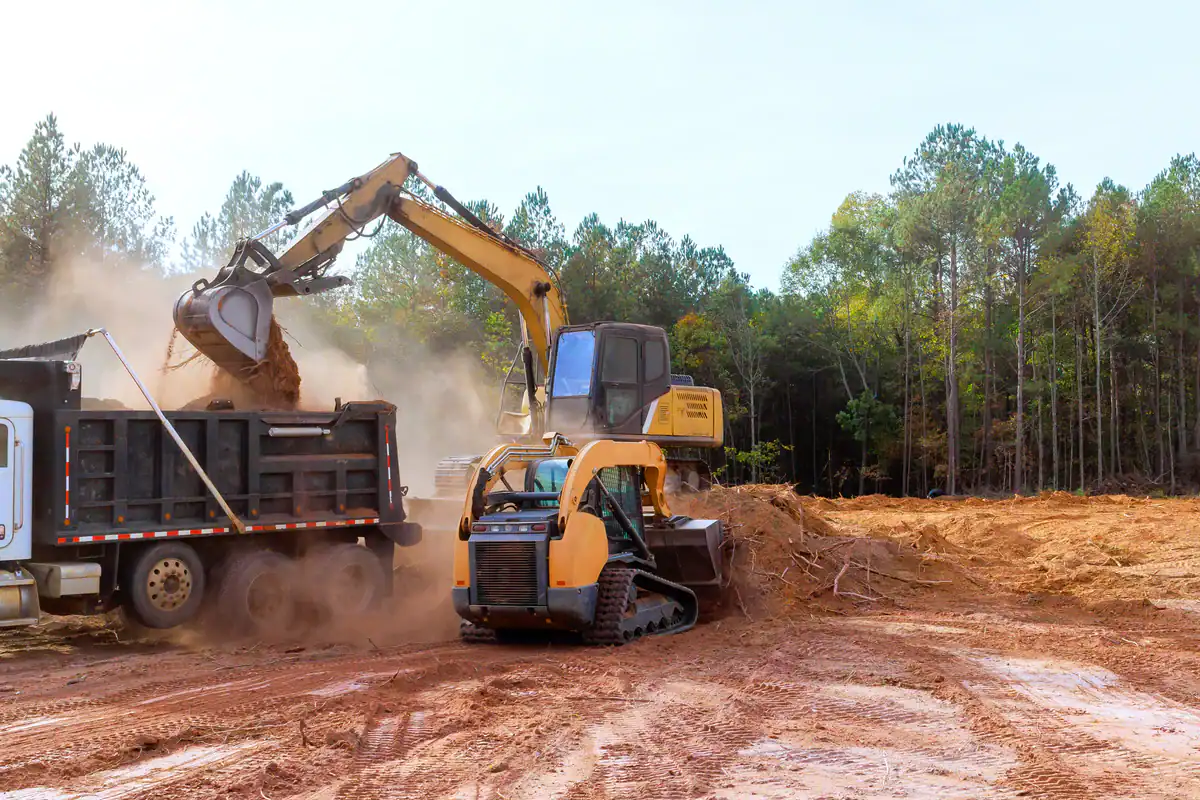
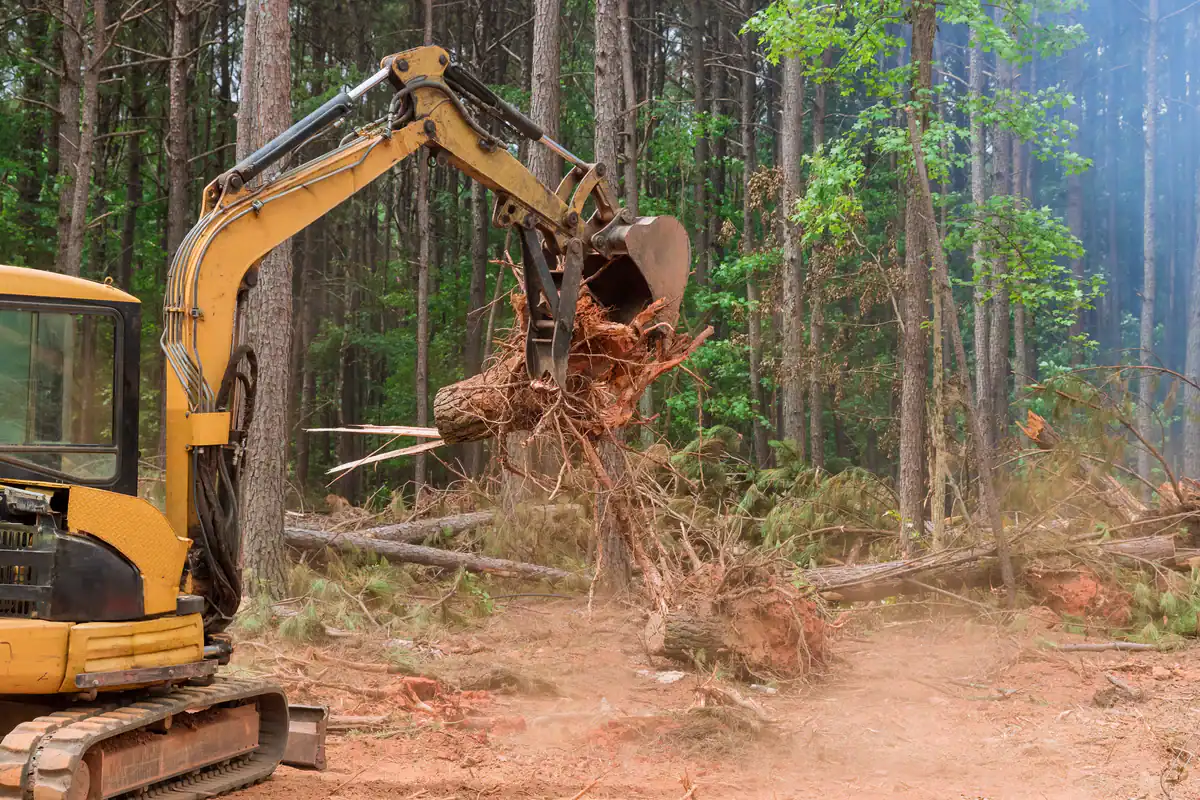
Once you approve the estimate, we mobilize with the right equipment for the job. Before any ground disturbance begins, utilities are located — always. From there, the clearing process moves systematically: brush and smaller vegetation first, then trees, then stumps if grinding is part of the scope. Debris is hauled away or handled on-site depending on what you’ve agreed to. Nothing gets left behind without your knowledge.
When the work is done, the site gets cleaned up. That’s not a bonus — it’s part of the job. Multiple customers have specifically called out how thorough the cleanup was, including on neighboring properties. You get a walkthrough before we leave, and you’re not asked to sign off on anything until you’re satisfied with what you see.
Ready to get started?
We handle the full range of land and lot clearing work that Missouri City and Clay County property owners actually need. That includes brush removal on overgrown residential lots, full site clearing for new construction, tree and brush removal on rural parcels, fence line clearing, and acreage clearing on larger properties along the river corridor. There are no named tiers or preset packages — the scope is built around what’s on your land.
For properties in the Missouri City area, a few things come up consistently. River-adjacent parcels often have invasive species — bush honeysuckle and multiflora rose especially — that require more than just cutting. If the root system isn’t addressed, they come back. Stump grinding is a separate cost driver that gets factored into your estimate upfront, not added as a surprise line item after the fact.
For any land disturbance near the Missouri River floodplain, there may be state-level considerations under Missouri’s land disturbance rules — something a certified arborist with local knowledge is equipped to flag before work begins, not after. We also offer bilingual service in English and Spanish, which removes a real communication barrier for Spanish-speaking property owners in the Kansas City, KS & MO metro area. Pricing is straightforward, the estimate is free, and nothing starts until you’ve agreed to the full scope in writing.
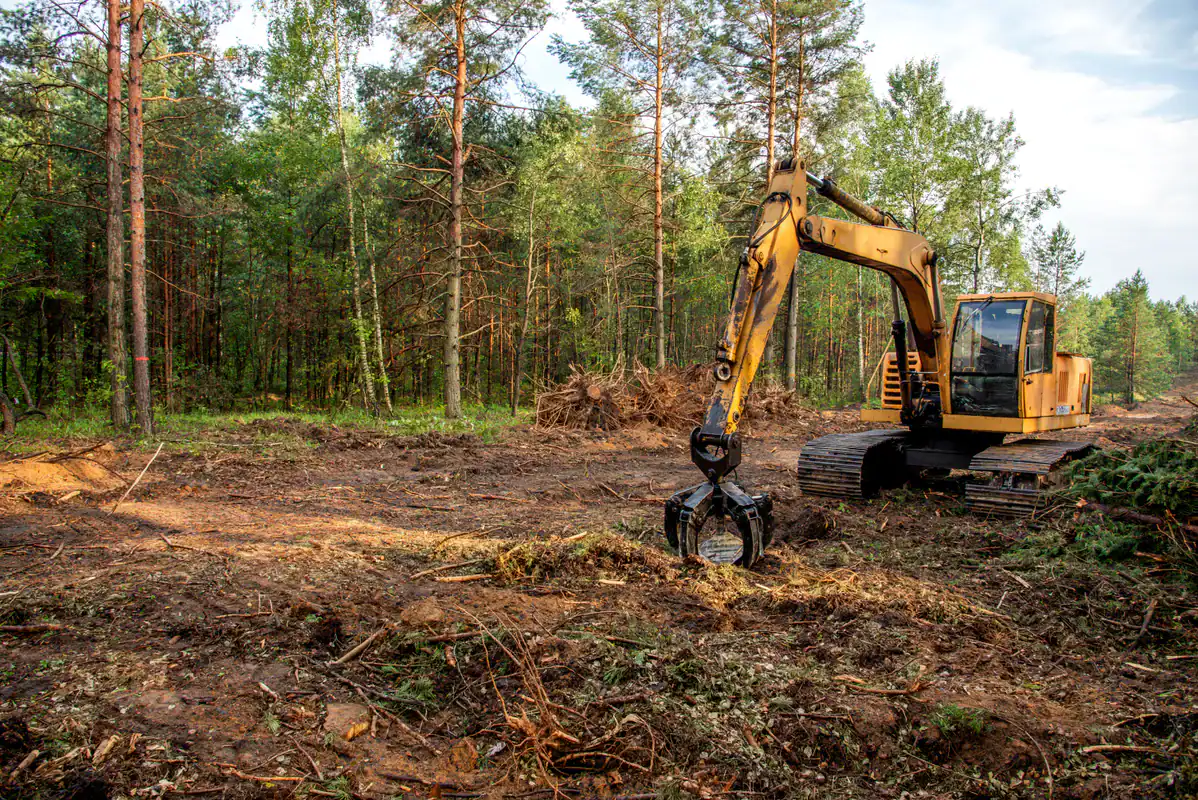
The honest answer is that it depends on what’s actually on your property — and that’s exactly why we come out to look before quoting anything. In the Kansas City, KS & MO area, land clearing costs typically range from around $1,500 to over $5,000 per acre, with the biggest variables being vegetation density, terrain, equipment access, and how debris is handled. A flat, lightly brushed lot costs less than a dense, river-adjacent parcel choked with Osage orange and invasive honeysuckle.
For Missouri City properties along the Route 210 corridor, bottomland terrain and riparian vegetation can push costs toward the higher end of that range — not because the job is being padded, but because the work is genuinely more involved. Stump grinding, debris haul-off, and any grading needs are separate cost factors that get discussed and agreed upon before anything starts. You’ll know the full number before a single piece of equipment touches your land.
These terms get used interchangeably, and for most residential projects, they’re describing the same basic outcome — removing trees, brush, stumps, and overgrowth so the land is usable. The distinction is mostly about scale and context. Lot clearing typically refers to a defined parcel being fully cleared, often for construction. Land clearing can mean anything from a small residential lot to several acres of rural property. Brush removal is usually a subset of the larger job — clearing dense undergrowth and invasive vegetation without necessarily taking down mature trees.
For Clay County property owners, the lines blur further because many parcels have a mix of all three: mature trees, dense brush, and invasive ground cover that’s spread unchecked for years. What matters more than the label is getting someone out to assess what’s actually there and tell you what the job involves. That’s what the free estimate is for.
It depends on the specifics of your property and what you’re planning to do with it. Missouri City itself is a small incorporated municipality with a special legislative charter, and it doesn’t have the elaborate tree protection ordinances you’d find in a larger suburban city. However, if your property is in or near a FEMA-designated flood zone — which applies to a significant portion of land along the Missouri River corridor in Clay County — there may be state-level considerations under Missouri’s land disturbance permit program for projects disturbing more than one acre.
The Missouri Department of Natural Resources also has rules that apply to land disturbance near rivers and their tributaries. Most residential clearing jobs in Missouri City don’t trigger major regulatory hurdles, but it’s worth having a certified arborist on the crew who knows how to flag these issues before work starts, not after. We can walk you through what applies to your specific parcel during the estimate visit.
Most residential lot clearing jobs in the Missouri City area are completed in a single day. A heavily overgrown parcel with mature trees, large stumps, and dense riparian brush may run into a second day depending on size and debris volume, but that’s the exception rather than the rule. We come prepared with the right equipment for the job, work efficiently, and don’t leave mid-project.
Timing also matters seasonally. Late fall through early winter is generally the best window for clearing in Clay County — vegetation is dormant, the ground is firmer, and you can see the full canopy structure without summer foliage blocking the view. If you’re planning to build or develop in spring, booking a clearing job in the fall gives you the cleanest start. We handle clearing year-round, including post-storm response when downed trees or flood debris need to come out quickly.
This is one of the most common concerns property owners bring up, and it’s a fair one. Heavy equipment and chainsaw work on a residential or rural property leave very little margin for carelessness. We’ve removed more than 1,200 trees with a 100% safety record — and that includes jobs in tight spaces, near fences, near neighboring properties, and near structures.
Our certified arborist leads the crew and makes the call on how to approach each tree and each section of the clearing. That means knowing which direction a tree needs to fall, how to protect root systems of trees you want to keep, and how to work around outbuildings and fence lines without causing damage. Customers have specifically noted in reviews that we cleaned up not just their own property but neighboring properties as well. If you have existing trees or features you want preserved, flag them during the estimate walk — that’s exactly the kind of detail that gets built into the plan before the work starts.
Yes, and this is actually one of the more important questions to ask any land clearing company working along the Missouri River corridor. Bush honeysuckle, multiflora rose, and Eastern red cedar are persistent invasive species throughout Clay County and the river bottomland around Missouri City. They’re not just fast-growing — they’re aggressive resprouters. Cut them at the surface and they come back. If the root system isn’t dealt with properly, you’re looking at the same problem two growing seasons from now.
Our certified arborist understands the difference between surface clearing and actually addressing invasive species in a way that doesn’t just reset the clock. During the estimate, we identify what’s growing on your property and discuss the most effective approach for the specific species present. For river-adjacent parcels in the 64072 zip code where these plants are particularly aggressive, that conversation matters a lot. Getting it right the first time saves you from calling for another clearing job a couple of years down the road.
Other Services we provide in Missouri City