There’s a specific kind of stress that comes with having a large, aging tree leaning toward your house. You notice it every time a storm rolls up the Missouri River valley. You think about it when the wind picks up along Route 210. And then the storm passes and you tell yourself you’ll deal with it next season. That cycle ends when you actually call us.
After a tree removal job with Squirrel Master Tree Services LLC, what you get is straightforward: the tree is gone, the property is clean, and that background worry goes with it. Every job includes full cleanup — no wood piles stacked against the fence, no debris left in the yard. If you want to keep the firewood or mulch, just say so before the crew starts. Otherwise, it all goes.
For Missouri City homeowners specifically, this outcome matters in a way that’s different from newer suburbs. These are older properties with large, mature trees — cottonwoods, silver maples, green ash — growing in periodically saturated bottomland soil. A tree that looks solid above ground may have a root system weakened by years of high water. Getting it down before a storm makes that decision for you. That’s the whole point.
We’ve been doing this work in the Kansas City, KS & MO metro for over a decade. That means we’ve worked in communities like Missouri City — small, older, river-adjacent — where the trees are big, the properties are established, and the homeowners have been watching those trees for years. We know what bottomland removal actually involves, and we don’t treat every job like it’s the same.
We’re family-owned and Kansas City, KS & MO-based. We’re not a franchise, and we’re not routing your call through a national call center. When you call for an estimate, you get a real response — typically within 24 hours — and the work gets done without a long wait.
We’re fully insured, which matters more than most people realize until something goes wrong. Liability coverage and workers’ compensation both. In Clay County, where older homes and mature trees often share tight spaces, that coverage is what separates a responsible crew from a liability you don’t want.
It starts with a free on-site estimate. Someone from our crew comes out to your Missouri City property, looks at the tree, and gives you a straight answer — what it’ll take to remove it, what the job involves, and what it’s going to cost. If a trim can solve the problem instead of a full removal, we’ll tell you that too. No upsell, no runaround.
Once you’re ready to move forward, we handle the removal from start to finish. For large bottomland trees — the kind common to properties along the Missouri River corridor — that means working carefully around structures, neighboring lots, and the soft, sometimes saturated ground that comes with this geography. We’ve handled tight residential situations many times, and we plan the job accordingly before a single cut is made.
When the work is done, the property gets cleaned up completely. Limbs, trunk sections, debris — all of it. If you’re on a property with older outbuildings or a tight lot, that cleanup matters as much as the removal itself. Missouri City gets its share of ice storms and severe weather moving through the river valley. Late winter or early spring — before new growth starts — is often the right window to get ahead of the next storm season. We can advise you on timing when we come out.
Ready to get started?
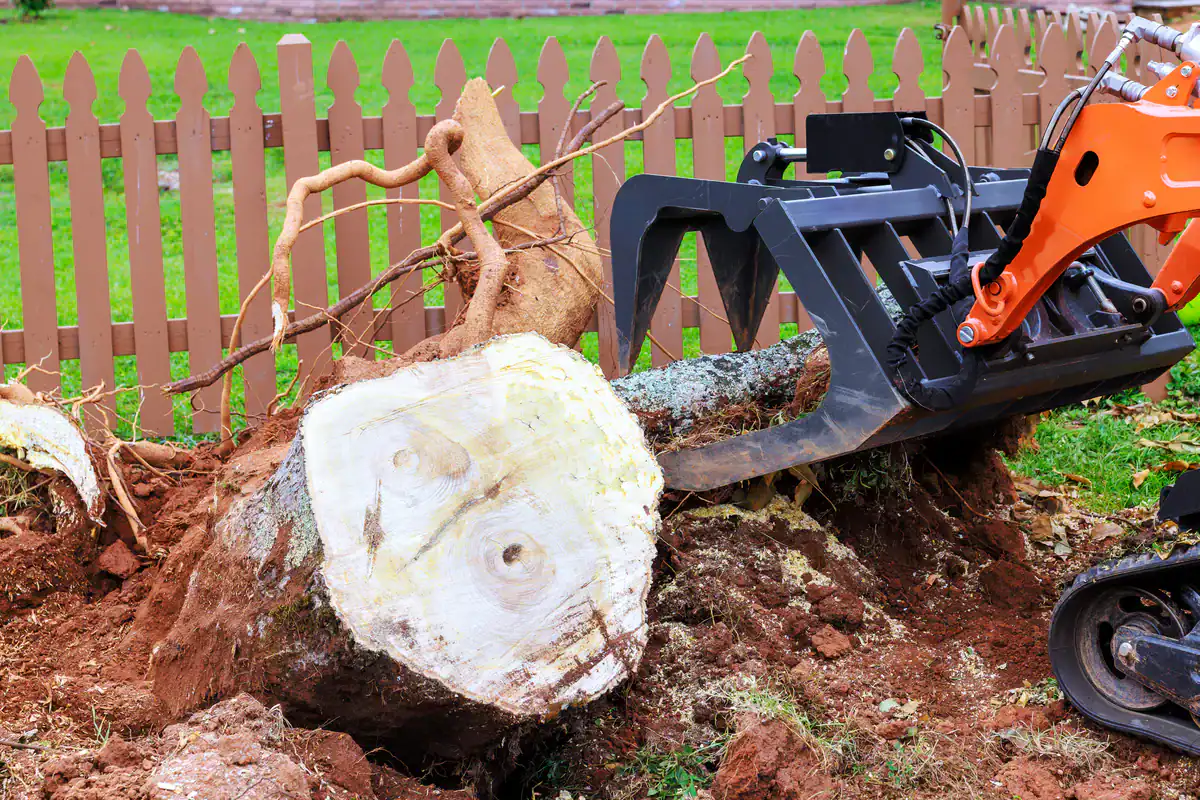
Tree removal in Missouri City, MO covers more ground than just cutting something down. We handle the full scope — tree removal, stump removal, brush clearing, and complete debris cleanup on every job. There are no named tiers or packages; the work is scoped to what your property actually needs.
In this part of Clay County, a few specific situations come up more than others. Green ash trees are common along the Missouri River bottomlands, and the Emerald Ash Borer has been working through this area for years. A dead ash goes brittle fast — faster than most other species — which makes it a genuine hazard that needs to come down sooner rather than later. If you have an ash on your property that’s been in visible decline, that’s worth addressing now.
Large tree removal is also a common need here. Cottonwoods and silver maples that have been growing on these properties for decades can reach significant size, and removing them safely — especially near a home or outbuilding — takes real planning and experience. Missouri City has no local tree service providers, which means you’re calling into the KC metro market regardless. We’re based in Kansas City, KS & MO and serve Clay County communities, so the response time and familiarity with local conditions are both there. Free estimates, no commitment required to get one.
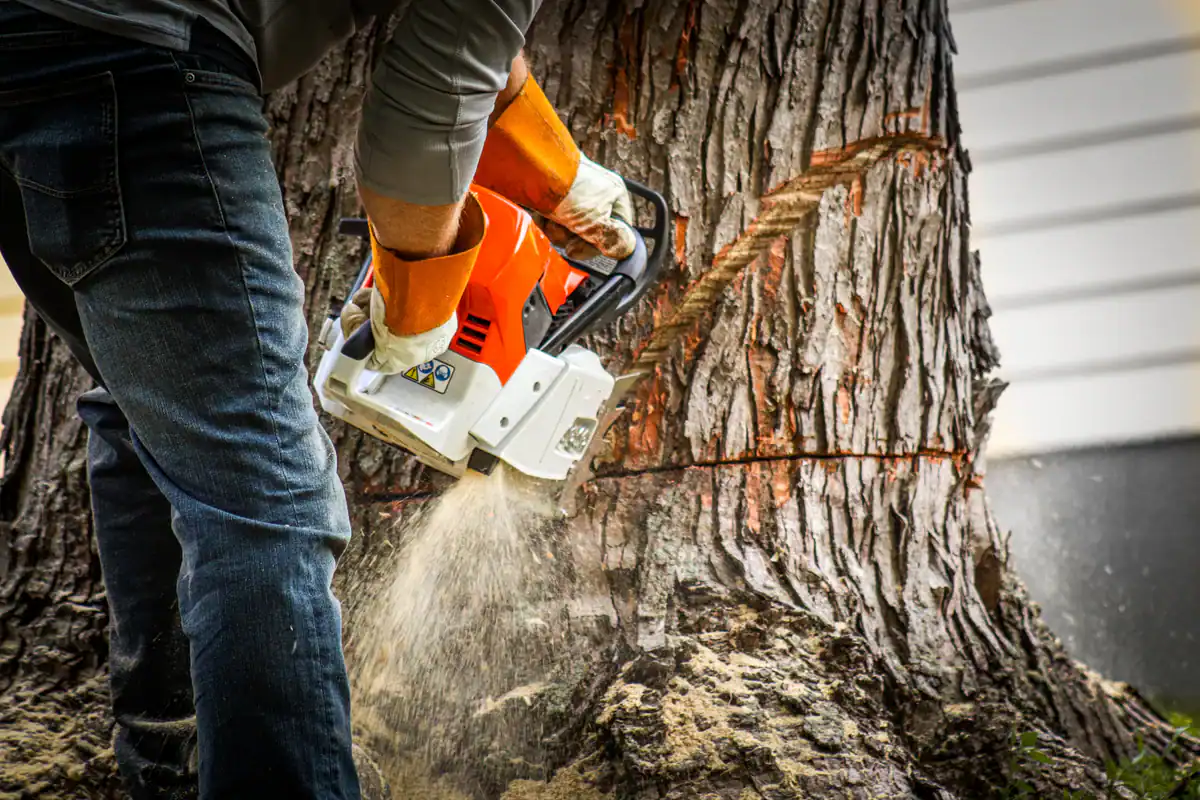
Not every tree that looks rough needs to come down, and we’ll tell you that honestly. The main things to look for are structural issues — a significant lean that wasn’t there before, large dead sections in the crown, cracks or splits in the trunk, or visible decay at the base. If a tree has lost more than about a quarter of its canopy to disease or damage, removal is usually the right call. If it’s less than that, targeted pruning may be enough to address the problem.
In Missouri City specifically, there’s an added factor worth knowing about. Properties in the Missouri River bottomlands deal with periodically saturated soil, and that saturation can compromise root systems over time even when the tree looks fine from the outside. A tree that’s been through repeated flood cycles may be less stable than it appears. If you have a large tree close to your home and you’re not sure, the right move is to get an on-site assessment. We offer free estimates, so there’s no cost to getting a real answer.
It depends on the situation, and the answer isn’t always what homeowners expect. If a healthy tree falls on your home during a storm, most homeowners insurance policies will cover the structural damage and contribute something toward removal — typically in the range of $500 to $1,000 toward the removal cost itself. But if the tree was already dead or visibly diseased before it fell, your insurer may deny the claim on the basis of negligence. The argument is that you knew — or should have known — the tree was a hazard and didn’t address it.
That’s not a hypothetical. Insurance companies do make that determination, and it can leave you responsible for both the removal cost and the repair cost out of pocket. For Missouri City homeowners with older properties and mature trees, this is a real financial consideration. Proactive removal of a dead or hazardous tree is almost always cheaper than dealing with the aftermath of a fall — and it keeps your insurance coverage intact when you actually need it.
Size is only part of it. The bigger factors are what’s around the tree and what the ground conditions are like. In Missouri City, you’re dealing with properties that often have large, mature bottomland species — cottonwoods, silver maples, sycamores — that have been growing for decades. These trees can have wide canopies and significant weight, which means the removal has to be planned carefully to control where limbs and sections fall, especially when a house, fence, or neighboring lot is nearby.
The soil conditions here add another layer. Bottomland properties along the Missouri River corridor have periodically saturated ground, which affects how equipment can be positioned and how stable the base of the tree actually is. A crew that’s only worked in dry, upland suburban settings may not anticipate those variables. We’ve spent over ten years working in the Kansas City, KS & MO metro, including properties along the river corridor. We assess the full picture before any cutting starts, and we’ve handled large, complex removals in tight residential settings with verified results from customers in exactly that situation.
For most residential tree removal on private property in Missouri City, no permit is required. Missouri state law does not mandate permits for removing trees on your own land, and Missouri City — as a very small municipality of around 220 residents — does not have a formal tree permit program in place. You can move forward with removal without navigating a local approval process in most standard situations.
There are a couple of edge cases worth knowing about. If the tree is near underground utilities, Missouri law requires you to contact Missouri 811 before any digging — that applies to stump removal and grinding, not the tree removal itself, but it’s worth mentioning. If a tree is adjacent to Route 210 or one of the lettered routes serving the area, and its removal could affect the road right-of-way, it’s worth a quick check with MoDOT or Clay County. And if your property sits in the Missouri River floodplain, large-scale land disturbance can sometimes involve Army Corps of Engineers considerations — though this typically applies to clearing projects, not single-tree removal. If you’re unsure about your specific situation, we can help you think through it when we come out for the estimate.
The Emerald Ash Borer is an invasive beetle that has devastated ash tree populations across the Kansas City, KS & MO metro and throughout Missouri. It kills ash trees by disrupting the tree’s ability to move water and nutrients under the bark, and once a tree is infested, it typically dies within a few years. The problem is that the early signs are easy to miss — thinning in the upper canopy, increased woodpecker activity, and S-shaped galleries under the bark — and by the time the tree looks obviously dead, it’s already become a hazard.
Green ash is one of the most common bottomland tree species along the Missouri River corridor, which means properties in Missouri City are in an area where ash trees are prevalent and EAB pressure is real. What makes this urgent is how quickly a dead ash deteriorates structurally. Unlike some other species that remain relatively stable for years after death, ash trees become brittle and unpredictable within one to two years of EAB kill. If you have an ash on your property that has been in visible decline — sparse leafing, dead crown sections, bark damage — it’s worth getting it assessed now rather than waiting until it becomes an emergency removal situation.
The most important question is about insurance, and it’s not optional. Ask for proof of both general liability insurance and workers’ compensation coverage before anyone picks up a chainsaw on your property. In most states, including Missouri, there’s no required licensing for basic tree work — anyone with a truck and equipment can legally call themselves a tree service. That means the only real protection you have is verifying their insurance yourself. If a crew member is injured on your property and the company doesn’t carry workers’ comp, you can be held personally liable for those costs. That’s a risk no Missouri City homeowner should take.
Beyond insurance, ask how long they’ve been in business, whether they’ll provide a written estimate before starting, and what cleanup is included. Some companies quote low and then leave you with a yard full of debris to deal with yourself. We include full cleanup on every job — that’s not an add-on, it’s part of the work. Also ask whether removal is actually necessary or if trimming could address the issue. A company that gives you an honest answer to that question — even if it means a smaller job — is one you can trust with the bigger ones.
Other Services we provide in Missouri City