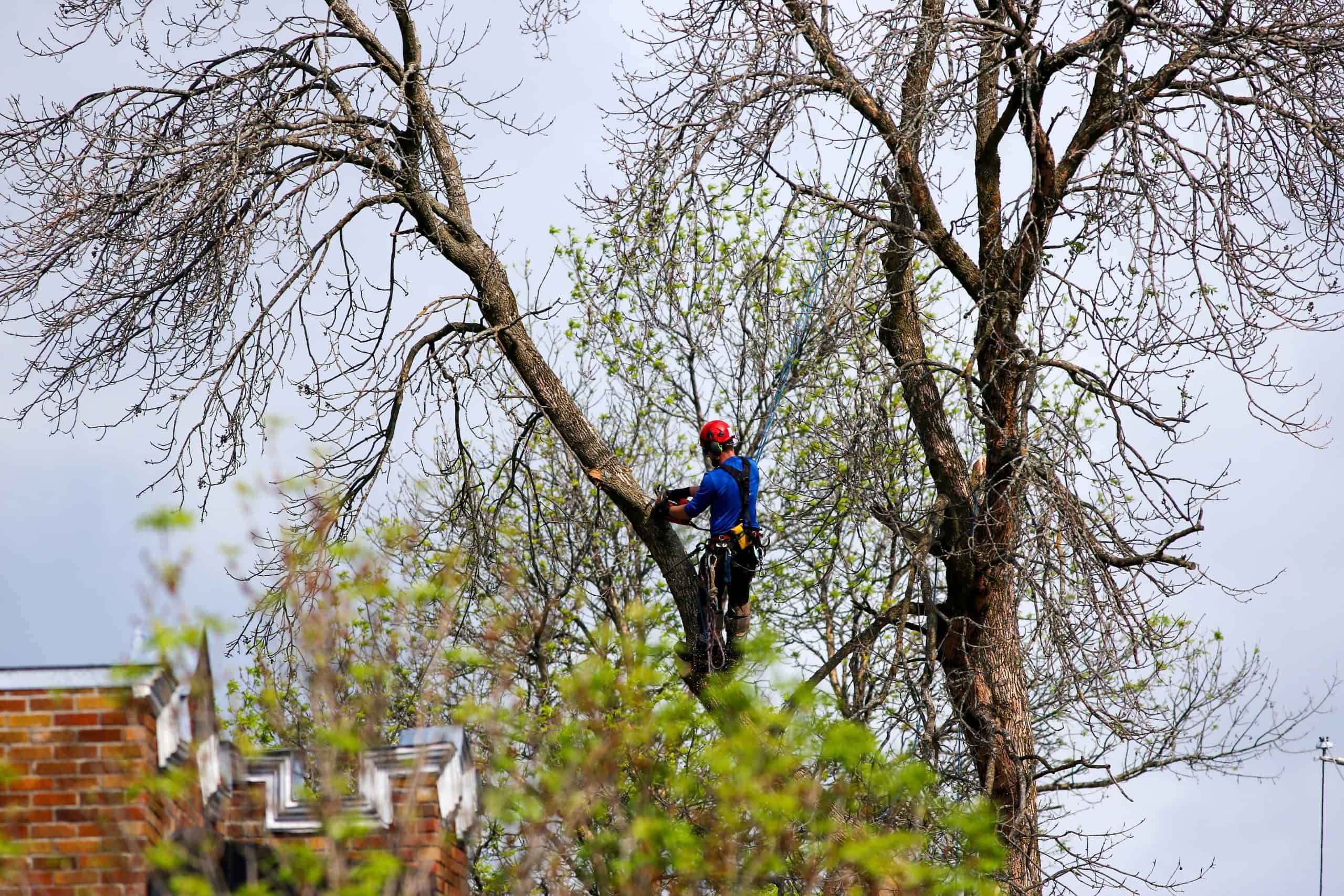
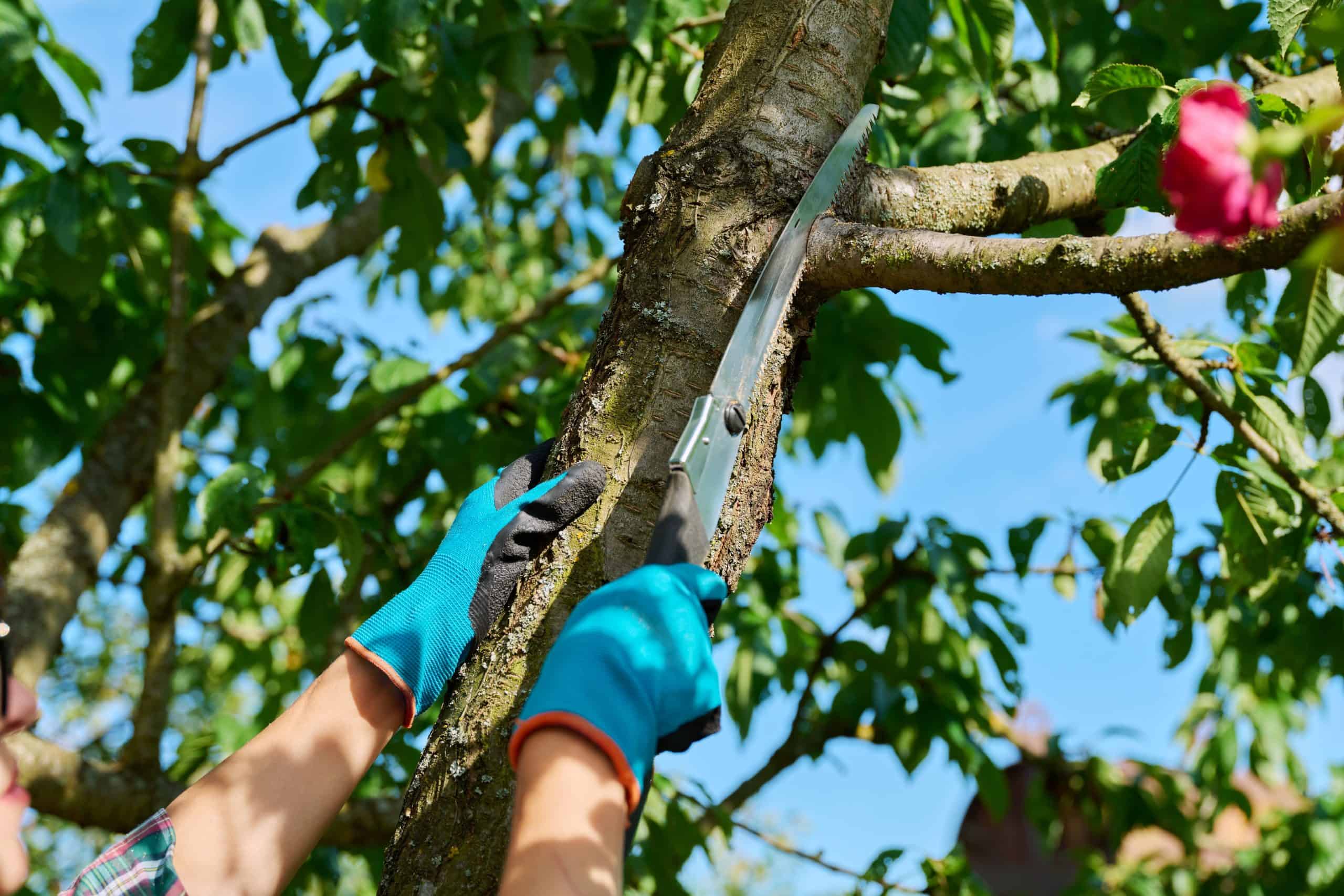
Grain Valley has nearly tripled in population over the past decade. Most of that growth came through subdivision development — Rosewood Hills, Woodbury, Eagle Ridge Estates, Eagle Creek — where builders planted ornamental and shade trees that are now 15 to 30 years old and reaching heights of 25 to 45 feet. Those trees were saplings when you moved in. Now they’re pushing over rooflines, crowding fences, and developing the kind of deadwood and crossing limbs that become a real problem when a storm rolls through Jackson County.
And storms do roll through. The National Weather Service has confirmed tornado activity directly hitting Grain Valley. Homefacts classifies this area as Very High Risk for tornadoes. An overgrown canopy that hasn’t been thinned or shaped acts like a sail in straight-line winds — it catches everything and holds it until something gives. That something is usually a limb, a fence, or a section of your roof.
Proper canopy trimming, deadwood removal, and canopy raising reduce wind resistance and eliminate the loose material that becomes a projectile in severe thunderstorms. After the work is done, the difference is immediate. Your yard looks clean and intentional. The trees are shaped in a way that supports their long-term structure. Branches that were creeping toward your gutters or your neighbor’s fence are gone. You’re not sitting through the next storm season wondering whether tonight is the night one of them comes down.
Squirrel Master Tree Services is a family-owned, locally operated tree care company based in Kansas City, KS & MO. We’ve been working across the metro for over 10 years, and Grain Valley is a straight shot down I-70 — no complicated routing, no long drive times, which matters when you need someone out quickly after a storm.
We’ve safely managed more than 1,200 trees across the Kansas City, KS & MO area with a 100% safety record. That’s a documented track record across thousands of hours of work on residential properties just like yours. We’re fully insured, which protects you from the liability that comes with an uninsured crew working on your property. Missouri doesn’t require statewide licensing for tree service companies, so that insurance verification matters more than most homeowners realize.
Our reviews consistently mention the same things: fair price, no runaround, cleaned up the same day, and safe execution from start to finish. That’s the standard we hold every job to, whether it’s a single overgrown oak in Eagle Ridge Estates or a full canopy cleanup across multiple trees in Grain Valley.
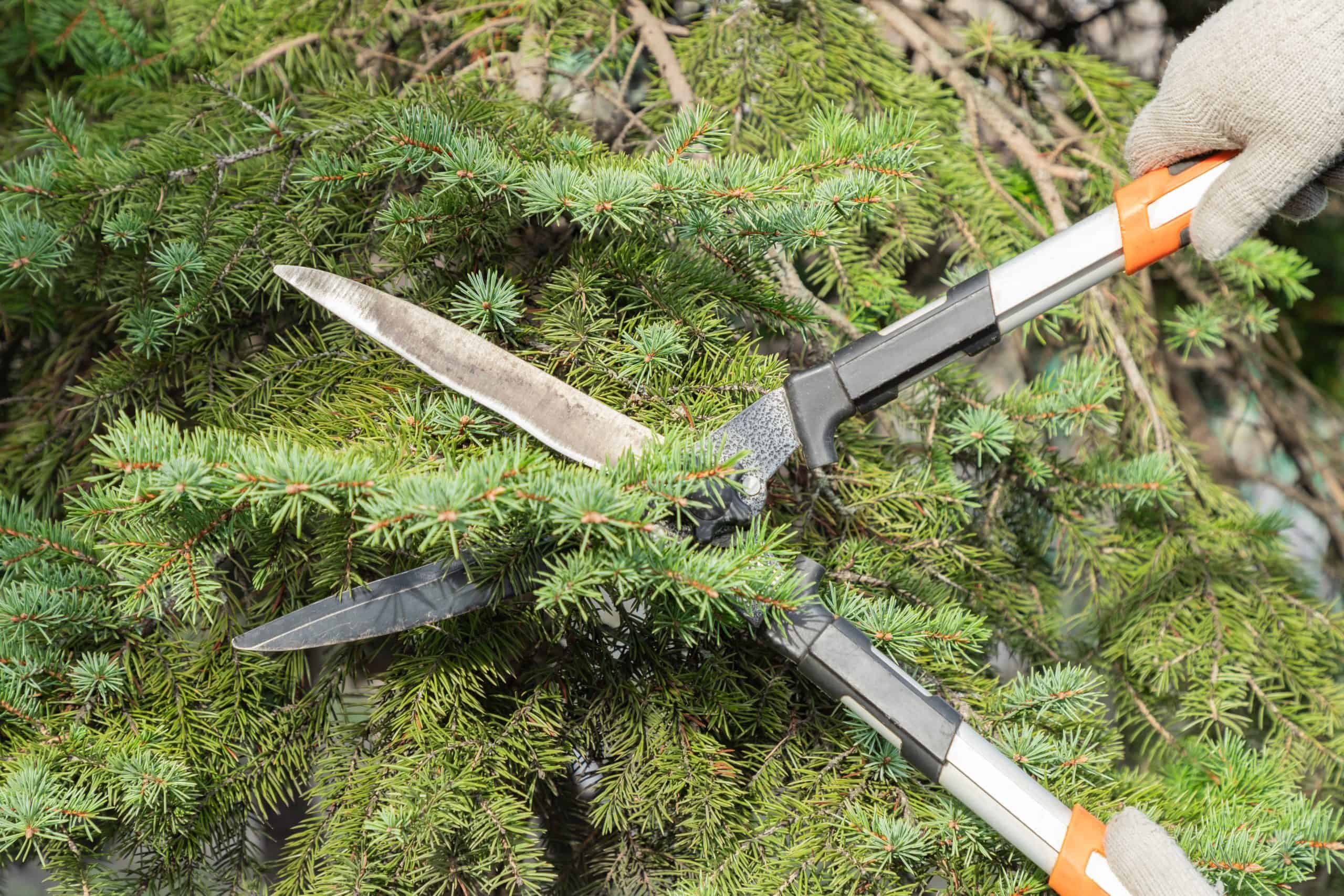
It starts with a free on-site quote, and for most jobs in Grain Valley, we can get that done the same day you call. We come out, walk the property, look at what you’re dealing with — tree size, canopy condition, proximity to your roofline or fence, any deadwood or structural concerns — and give you an accurate number before any work starts. No phone estimates that change when the crew shows up. The quote you get is the price you pay.
Once you’re ready to move forward, we schedule the job and show up when we say we will. The crew brings everything needed for the work — no back-and-forth, no half-finished jobs that drag on for days. For most residential tree trimming in Grain Valley, the work is completed in a single visit.
Timing matters here too: late fall through early spring is the optimal window for most species, when the trees are dormant and structural issues are easier to identify and address before storm season picks back up. If you’re dealing with storm damage or an urgent hazard, we also offer same-day emergency response.
When the trimming is done, we clean up completely. Every branch, every chip — gone. We blow off the driveway, clear the lawn, and leave the property the way it looked before we arrived, minus the overgrowth. If you want to keep any of the wood or mulch, just say so. Otherwise, we haul it out.
Ready to get started?
Tree trimming covers more than just cutting back branches that are in the way. When we work on your property in Grain Valley, the job includes a full assessment of the tree’s canopy structure before we make a single cut. We look at deadwood, crossing limbs, weak branch unions, and how the canopy is distributing weight — because in Jackson County’s storm environment, those details determine how a tree holds up in severe weather.
Depending on what your trees need, the work might include canopy raising — lifting the lower canopy to clear sightlines, improve airflow, and create clearance over driveways, fences, and rooflines. It might include canopy thinning to reduce wind resistance and let light through. It might include targeted branch trimming to address specific hazards, or full tree shaping to bring an overgrown canopy back into proportion with the yard. We handle all of it, and we don’t make cuts that damage the tree’s long-term health — no topping, no improper pruning that creates more problems than it solves.
Every job includes full cleanup, no exceptions. For homeowners in Grain Valley’s cul-de-sac subdivisions, where the whole neighborhood can see your yard, that matters. The work gets done, the debris gets cleared, and your property looks exactly the way it should when we leave.
Pricing is based on your specific trees — size, height, access, and what the job actually requires. The best way to get an accurate number for your property is a free on-site quote, which we can typically get you the same day you call.
Based on HomeAdvisor data for the Grain Valley area, the average cost for tree services locally runs around $797, with a typical range of $398 to $720 depending on the scope of work. That’s notably higher than the national average of around $460, which makes sense — the trees in Grain Valley’s established subdivisions are mature, often 30 to 45 feet tall, and working around rooflines, fences, and neighboring lots adds complexity to the job.
The honest answer is that pricing depends on your specific trees. Size and height are the biggest factors, followed by how many trees you’re having done, how accessible they are, and whether there’s deadwood or structural work involved. A small ornamental tree in an open yard is a different job than a 40-foot oak overhanging a fence in Eagle Ridge Estates.
The best way to get an accurate number is a free on-site quote — we can usually get that done the same day you call, so you’re not waiting a week just to find out what the job costs.
They’re related but not the same thing, and the distinction matters depending on what you’re trying to accomplish. Tree trimming is primarily about managing size, shape, and clearance — cutting back branches that are encroaching on your roofline, fence, or neighboring property, shaping the canopy, and keeping the tree proportional to the yard. Pruning is more focused on the tree’s internal health and structure — removing dead, diseased, or crossing branches that create long-term problems if left alone.
In practice, most jobs involve both. When we come out to trim your trees in Grain Valley, we’re not just cutting to a shape — we’re also looking at what’s dead, what’s crossing, and what’s creating structural risk. The two go together.
If your trees have been left alone for several years, which is common in subdivisions that were built out in the 1990s and 2000s, there’s usually a combination of overgrowth and internal structural issues that need to be addressed at the same time. A free on-site assessment is the fastest way to figure out exactly what your trees need.
For most species, late fall through early spring is the optimal window — when the trees are dormant. Trimming during dormancy reduces stress on the tree, makes it easier to identify structural issues without foliage in the way, and lowers the risk of pest and disease problems that can follow fresh cuts during the growing season. In the Kansas City, KS & MO area, that typically means November through February is the ideal scheduling window for routine trimming.
That said, there are situations where you trim regardless of season. If you have storm damage, a hanging limb, or a branch that’s actively threatening your roof or a neighboring structure, that gets addressed immediately — not in February. Jackson County’s spring and summer storm season creates a steady stream of urgent situations that can’t wait for optimal timing.
The practical advice is this: if you’ve been putting off routine trimming, schedule it in the fall or winter. If you have a hazard, call now.
For routine residential tree trimming on your own property in Grain Valley, no permit is generally required. The City of Grain Valley’s code of ordinances does give the Codes Enforcement Officer authority to notify property owners of nuisance conditions — including overgrown vegetation that creates a blighting influence on neighboring properties — but that’s an enforcement provision, not a permitting requirement for standard maintenance work.
Where things get more complicated is when work affects the public right-of-way or involves trees near utility lines. Any work within proximity to electrical conductors requires coordination with the utility provider and, in some cases, a specifically credentialed line-clearance arborist. If you’re not sure whether your situation involves any of those factors, the easiest thing to do is ask when we come out for the quote. We’ll tell you upfront if there’s anything that needs to be handled differently, and we won’t start work that creates a problem for you.
A few things to look for: branches that are visibly dead or brittle, limbs that are rubbing against your roofline or gutters, sections of the canopy that are noticeably denser or heavier on one side, and any branches that hang over your fence line or a neighboring structure. You don’t need to be an arborist to spot those — they’re visible from the ground and they’re all signs that the tree needs attention before the next storm season.
What’s harder to see from the ground is internal structural issues — crossing limbs that create weak unions, deadwood buried inside a dense canopy, or branch attachments that look solid but aren’t. In Grain Valley’s subdivision neighborhoods, where a lot of the tree stock was planted during buildout 20 to 30 years ago, those internal issues are increasingly common. Trees at that age and size are past the point where occasional light trimming is enough.
An on-site assessment from an experienced crew is the only way to know for certain what you’re dealing with, and ours is free.
Cleanup is included in every job — no exceptions, no add-on fee. When the trimming is done, we clear all branches, debris, and wood chips from your property. We blow off the driveway and leave the lawn the way it looked before we started, minus the overgrowth. If you want to keep any of the cut wood for firewood or the chips for mulch, just let us know before we start and we’ll set it aside for you. Otherwise, it all goes with us.
This matters more than it sounds like it should, especially in Grain Valley’s tighter cul-de-sac subdivisions where your yard is visible to the whole street and neighboring lots are close. One of the things customers consistently mention in our reviews is that we cleaned up not just their property but the neighboring yard as well when debris ended up there during the job. That’s not a special service — that’s just how we operate. You shouldn’t have to spend your evening hauling branches because a crew didn’t finish what they started.
Other Services we provide in Grain Valley