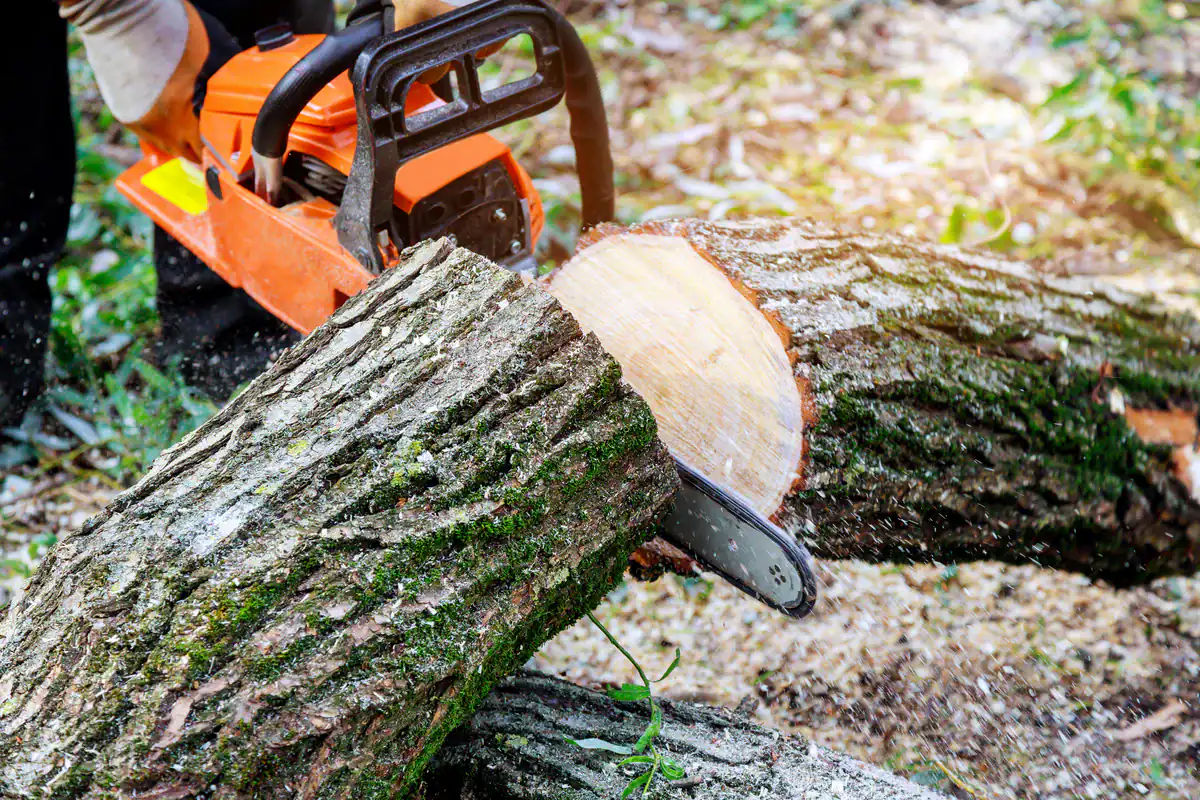
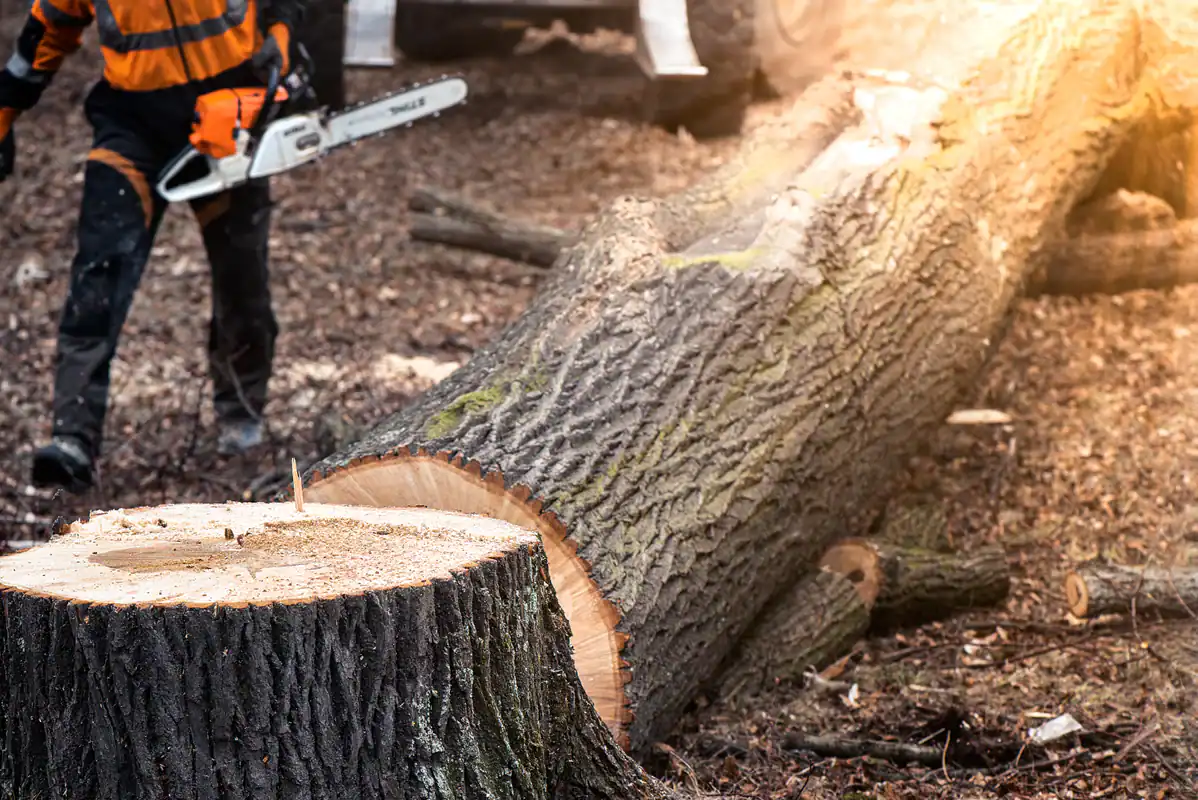
There’s a specific kind of relief that comes after a hazardous tree is gone. You stop glancing at it every time the wind picks up. You stop wondering what happens if it comes down on the fence, the garage, or worse — the neighbor’s car. That worry disappears, and it doesn’t come back.
Grain Valley has a real storm history. The EF3 tornado that touched down here in 2017 wasn’t a fluke — it was a reminder that this corridor along I-70 gets hit. When a tree is already stressed, structurally compromised, or sitting close to your roofline, it doesn’t take a tornado to bring it down. A wet spring, saturated clay soil, and a strong wind gust can do the same job on a Tuesday afternoon.
A lot of Grain Valley’s residential growth came from developing former farmland — the Sni-A-Bar Farms area being the most well-known example. If you bought into one of those subdivisions, there’s a real chance you inherited trees that were never maintained as residential landscape trees. They weren’t pruned, weren’t assessed, and weren’t planted with your house in mind. Getting an honest evaluation of what those trees actually need is the first step to protecting what you’ve built here.
We’ve been doing this work in the Kansas City, KS & MO metro for over a decade. We’re based in Kansas City, KS & MO — just 23 to 24 miles from Grain Valley via I-70, the same highway you drive every day. We already serve the Blue Springs area directly to the west, so the eastern Jackson County corridor isn’t unfamiliar territory.
We’re a family-owned crew. Not a franchise, not a call center dispatching whoever’s available. The same people who answer the phone are the people who show up, assess the job honestly, and do the work. We carry full liability insurance and workers’ compensation coverage — which matters in Grain Valley specifically, because the city requires contractors to carry both, with the city listed as a certificate holder.
When you call for an estimate, you’ll get a straight answer. If the tree needs to come down, we’ll explain why. If a trim can handle the problem, we’ll tell you that instead.
It starts with a free on-site estimate. We come out, look at the tree in person, and give you a clear picture of what’s going on — what the tree needs, what the job involves, and what it’ll cost. No vague ballpark over the phone, no pressure to commit on the spot.
Once you’re ready to move forward, scheduling is straightforward. We’ve consistently provided estimates within 24 hours and completed work the following day. In a community like Grain Valley, where a lot of residents are commuting to Kansas City, KS & MO and managing busy schedules, that kind of turnaround matters. You’re not waiting around for weeks.
The removal itself is handled with care — especially in Grain Valley’s denser subdivisions like Brigadoon Estates, Christie Meadows, or Countryside at Sni-A-Bar, where lots are close together and neighbors are watching. We work safely around structures, fences, and adjacent properties. When the job is done, full cleanup is included. No wood piles, no debris left on the lawn. If you want to keep the wood or mulch for personal use, just say so before the job starts — otherwise it’s gone when we leave. One thing worth knowing: Grain Valley’s solid waste ordinance (Chapter 235) specifically regulates how tree limbs and yard waste are handled. Hiring a full-service crew means that’s not your problem to figure out.
Ready to get started?
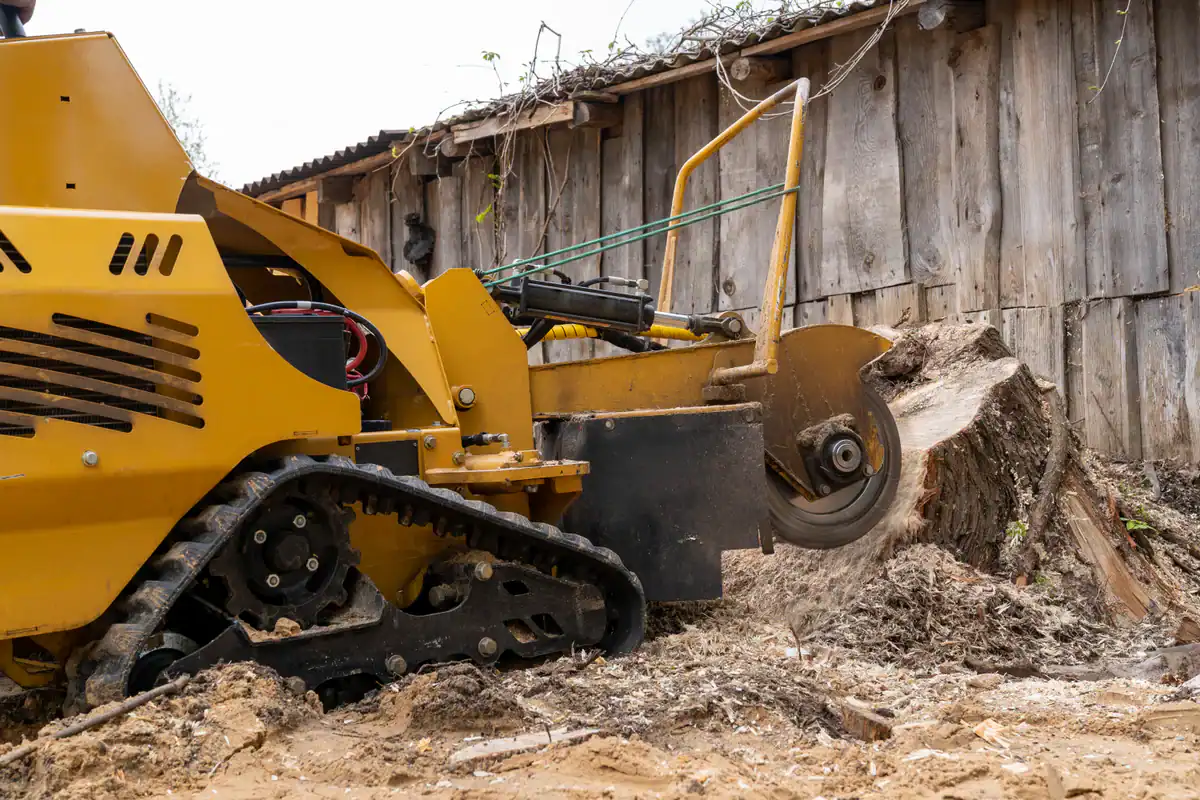
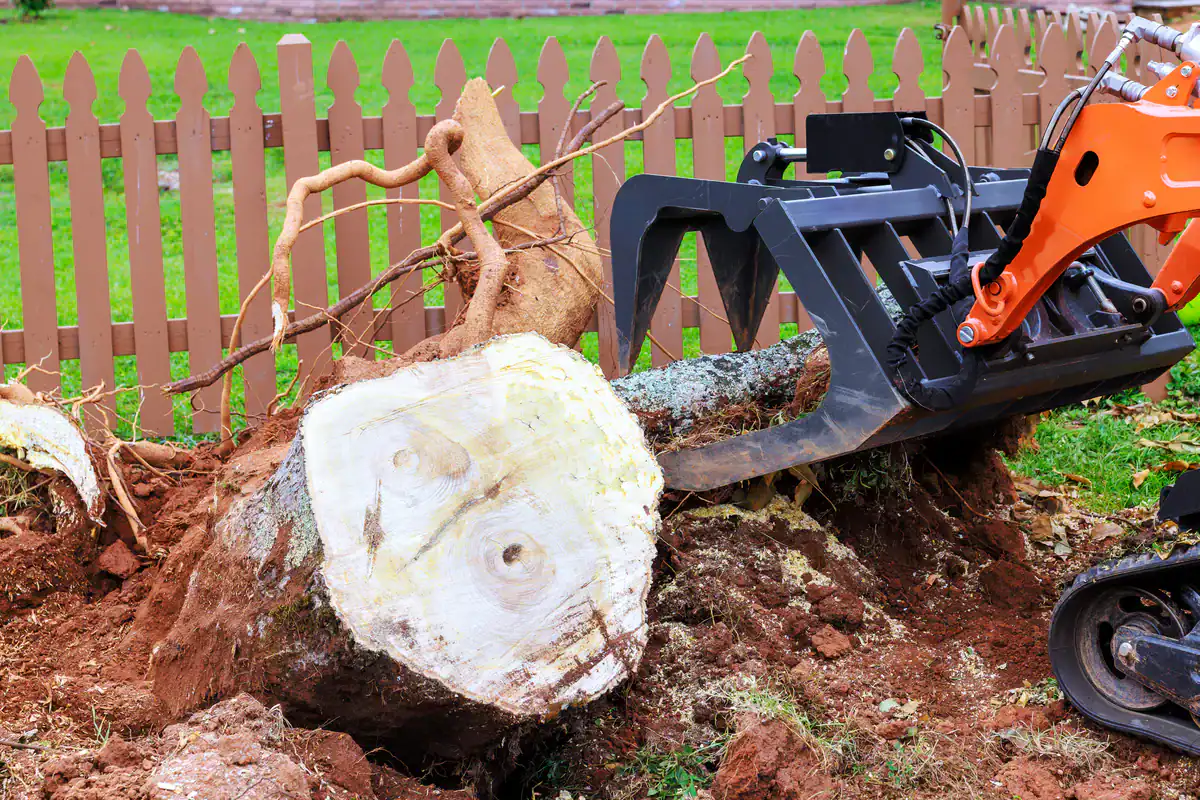
We handle the full range of residential tree removal work — dead tree removal, diseased tree removal, large tree removal, hazardous tree removal, stump grinding, brush removal, and emergency response after storm damage. There are no named packages or preset tiers. The scope of each job is based on what the tree actually needs, not a menu of upsells.
In Grain Valley, that often means dealing with large, unmanaged trees inherited from the area’s agricultural past. Cottonwood, sycamore, silver maple, and box elder trees that grew along former field edges or the Sni-A-Bar Creek corridor are common — and they’re the kind of trees that look fine until they’re not. These aren’t ornamental trees that were planted and pruned over the years. They’re big, fast-growing species that can develop serious structural problems without obvious warning signs.
Diseased tree removal is also a real concern in eastern Jackson County. Emerald Ash Borer pressure has affected ash trees across the KC metro, and Oak Wilt is a documented threat to oaks in Missouri. If you’ve got an ash tree that’s been declining or an oak showing symptoms, getting it assessed and removed before it fails on its own is the responsible move — both for your property and for adjacent trees that could be affected. We’ll tell you what you’re actually dealing with and what makes sense to do about it.
For most private residential trees in Grain Valley, no permit is required to remove them from your own property. That said, there are a couple of situations where city regulations come into play. Grain Valley’s nuisance ordinance (Chapter 225) includes provisions that can compel property owners to address trees that encroach on or threaten public rights-of-way — so if your tree is near a city easement or the street, the city has authority to require action.
Grain Valley also has specific solid waste rules under Chapter 235 that govern how tree limbs and yard debris must be handled and disposed of. If you’re thinking about doing any of this yourself, those rules can catch you off guard. When you hire us, cleanup and debris removal are included — so the disposal question is handled without you having to sort it out separately.
If your removal involves any grading or drainage changes — which can happen with large trees and significant root systems — Grain Valley’s land disturbance permit requirements may apply. We can flag anything like that during the on-site visit.
This is one of the most common questions we hear, and it’s a fair one. Not every tree that looks rough needs to come down. If a tree has lost less than about 25% of its branches, it can often recover with proper pruning. But there are situations where removal is clearly the right call — and waiting makes the job harder and more expensive.
Signs that a tree likely needs to come down include a large dead section at the top, a trunk that’s splitting or showing significant included bark between major stems, visible root damage or heaving soil at the base, a significant lean that wasn’t there before, or a history of dropping large limbs without much warning. Trees near structures, power lines, or fences that show any of these signs should be assessed sooner rather than later.
In Grain Valley specifically, a lot of homeowners are dealing with trees they didn’t choose — former field trees and hedgerow remnants from when the land was agricultural. Those trees often have structural issues that aren’t obvious from the outside. The honest answer is: get an in-person look. We’ll tell you what the tree actually needs, not what generates the biggest invoice.
It depends, and the answer is more complicated than most people expect. If a healthy tree falls during a storm and damages a structure, your homeowners insurance will typically cover the repair — and may cover a portion of the removal cost if the tree hit a covered structure. But if the tree was visibly dead, diseased, or structurally compromised beforehand, your insurer may deny the claim on the basis of negligence. The argument is that you knew — or should have known — the tree posed a risk, and you didn’t address it.
That same logic applies if your tree falls on a neighbor’s property. If your neighbor can demonstrate that the tree was clearly dead or damaged before it fell, liability can shift to you personally. That’s not a hypothetical — it’s a scenario that plays out in residential neighborhoods every storm season.
Grain Valley sits in an active storm corridor. The 2017 EF3 tornado and the documented storm warnings since then are a reminder that this area gets hit. A dead or hazardous tree on your property isn’t just an aesthetic problem — it’s a financial exposure. Removing it proactively is cheaper than the alternative.
Local data puts average tree removal costs in Grain Valley in the range of roughly $400 to $800 for typical residential jobs, with larger or more complex removals running higher. The size of the tree is the biggest factor — a small ornamental tree in a clear area costs significantly less than a large cottonwood or sycamore near a fence line or structure.
Other factors that affect the price include how close the tree is to your house, a neighboring property, or utility lines; whether the root system is extensive; and whether the job requires specialized rigging to bring it down safely in sections. In Grain Valley’s denser subdivisions — Brigadoon Estates, Cross Creek, Farmington Meadows — where lots are close together and equipment access can be limited, these factors can add complexity.
We give you a straight price after seeing the job in person. Customers consistently describe our pricing as fair and reasonable — not the cheapest number in the market, but an honest quote from a fully insured crew that shows up when we say we will and leaves the property clean.
Yes — when it’s done by an experienced crew that knows what they’re doing in tight residential spaces. The concern is legitimate, though. Large tree removal near a structure requires careful planning: assessing the lean of the tree, identifying the natural fall zone, deciding whether the tree needs to come down in sections from the top rather than as a single fell, and making sure equipment is positioned to avoid damage to fences, driveways, and neighboring properties.
We’ve handled exactly this kind of job in dense residential neighborhoods. One customer specifically noted that we removed a tall tree in a neighborhood with no accidents, and that cleanup extended to the neighboring yard as well — not just their own property.
In Grain Valley’s subdivisions, where homes are close together and lots don’t leave a lot of room for error, that kind of precision matters. Our multi-state storm response experience — including deployments to large-scale recovery operations across Missouri, Kansas, and several other states — means we’ve worked in far more complicated conditions than a typical subdivision removal. A large tree near your house in Countryside or Christie Meadows is a job we’ve done before.
Fast. Multiple verified customer reviews confirm that we’ve provided estimates within 24 hours and completed work the following day. In storm situations — where a tree is actively threatening a structure or blocking access — that response time is the difference between a contained problem and an escalating one.
Grain Valley’s location on the I-70 corridor in eastern Jackson County puts it directly in the path of the storm systems that move through the Kansas City, KS & MO metro. The 2017 EF3 tornado, the 2025 tornado warning that named Grain Valley specifically, and documented overnight storm damage at local properties are all reminders that this isn’t a low-risk area. When a storm moves through and a tree comes down or a major limb cracks, you need someone who can assess the situation quickly and remove the hazard safely.
We’ve deployed to storm recovery operations across multiple states, including large-scale events in Missouri and beyond. That level of experience means we’re not learning on the job when conditions are urgent. We know how to assess storm-damaged trees safely, prioritize what needs to come down immediately, and get the work done without adding to the damage that’s already been done.
Other Services we provide in Grain Valley