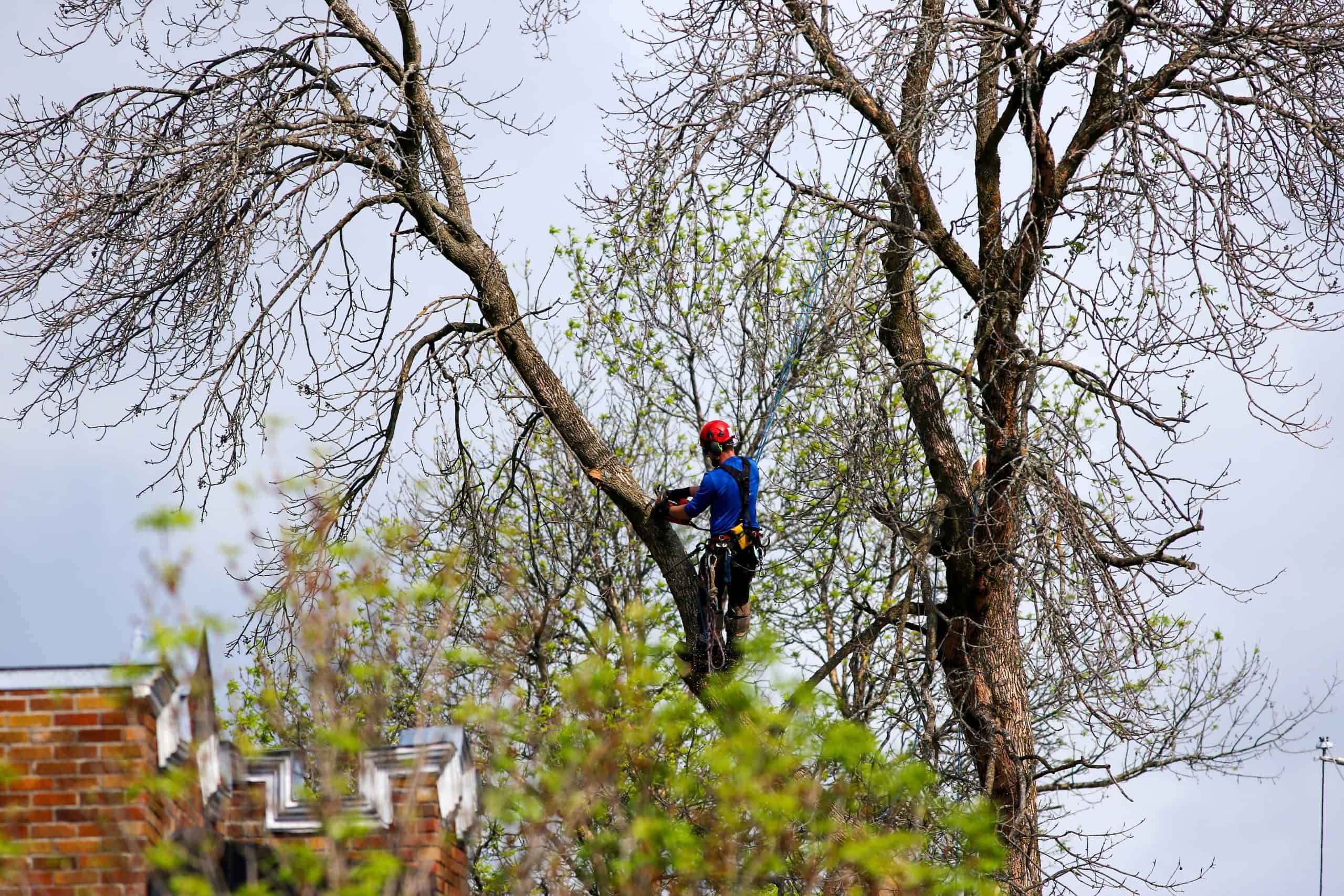
De Soto is growing faster than almost anywhere in Johnson County right now. The Panasonic plant, the Merck expansion, new housing going up along the K-10 corridor — it’s bringing a lot of new residents onto properties that haven’t seen a tree crew in years. Maybe ever. And what a lot of those homeowners are finding is that the mature oaks, cottonwoods, and Silver Maples on their lots have been doing whatever they want for a long time.
That matters because untrimmed canopy in De Soto isn’t just an eyesore. Silver Maples are one of the most brittle-wooded trees in Johnson County — they shed limbs under wind load in ways that catch homeowners completely off guard. Johnson County recorded wind gusts up to 75 mph in a single March storm in 2026, with the National Weather Service mapping more than 15 damage areas across the county. Edgerton and Gardner — both right next to De Soto — reported downed trees and power outages from that same event.
Once the overgrowth is managed properly, you get clearance over your roofline, better light into your yard, and the real peace of mind that comes from knowing what’s up there and knowing it’s not going to come down on its own terms. That matters when you’re living in De Soto, where the next storm season is never that far off.
Squirrel Master Tree Services is a family-owned, Kansas-based tree care company with more than a decade of experience across the Kansas City, KS & MO metro. We’ve safely managed more than 1,200 trees — with a 100% safety record — and we carry full insurance on every job, which matters a lot more than most homeowners realize until something goes wrong on a neighbor’s property.
We serve De Soto and the surrounding Johnson County area, including neighborhoods like Timber Trails and the Sunflower Ridge corridor. We know the tree profile out here — the cottonwoods along the Kansas River, the Silver Maples that look fine until a storm hits, the Bradford Pears in newer subdivisions that split almost on schedule. We’re not guessing at what your De Soto property needs.
The quote is free, it’s usually same-day, and there’s no pressure attached to it. You find out what the job involves, what it costs, and you decide from there.
It starts with a free on-site assessment. We come out, walk the property with you, and look at what’s actually going on up in the canopy — not just what’s visible from the street. Dead branches, crossing limbs, weak unions, overgrowth near your roofline or fence line — we flag all of it and give you a clear picture of what needs to happen and why. Most quotes in De Soto are given same-day.
Once you’re comfortable with the plan and the price, we schedule the work. The crew arrives with everything needed — no trips back for equipment, no subcontractors you’ve never met. For larger lots in De Soto, where the canopy can be significantly more extensive than in the denser suburbs to the east, we plan the job accordingly. If you’re near the Kansas River corridor and dealing with fast-growing cottonwoods or overgrown riparian species, that factors into how we approach the work.
One thing worth knowing: under De Soto’s city code, trees within the public right-of-way — the strip between your property line and the street curb — are the city’s responsibility, not yours. We’ll help you identify what falls on your side of that line so you’re not paying to manage something the city handles. When the job is done, we do a full cleanup. Every branch, every chip, every scrap. You can keep the wood if you want it — otherwise it leaves with us.
Ready to get started?
Tree trimming in De Soto isn’t the same job it is in Overland Park or Lenexa. With a population density of around 581 people per square mile, properties here are larger, the trees are often older, and the canopy is frequently more complex than what you’d find in a tightly developed suburb. We approach every job with that in mind.
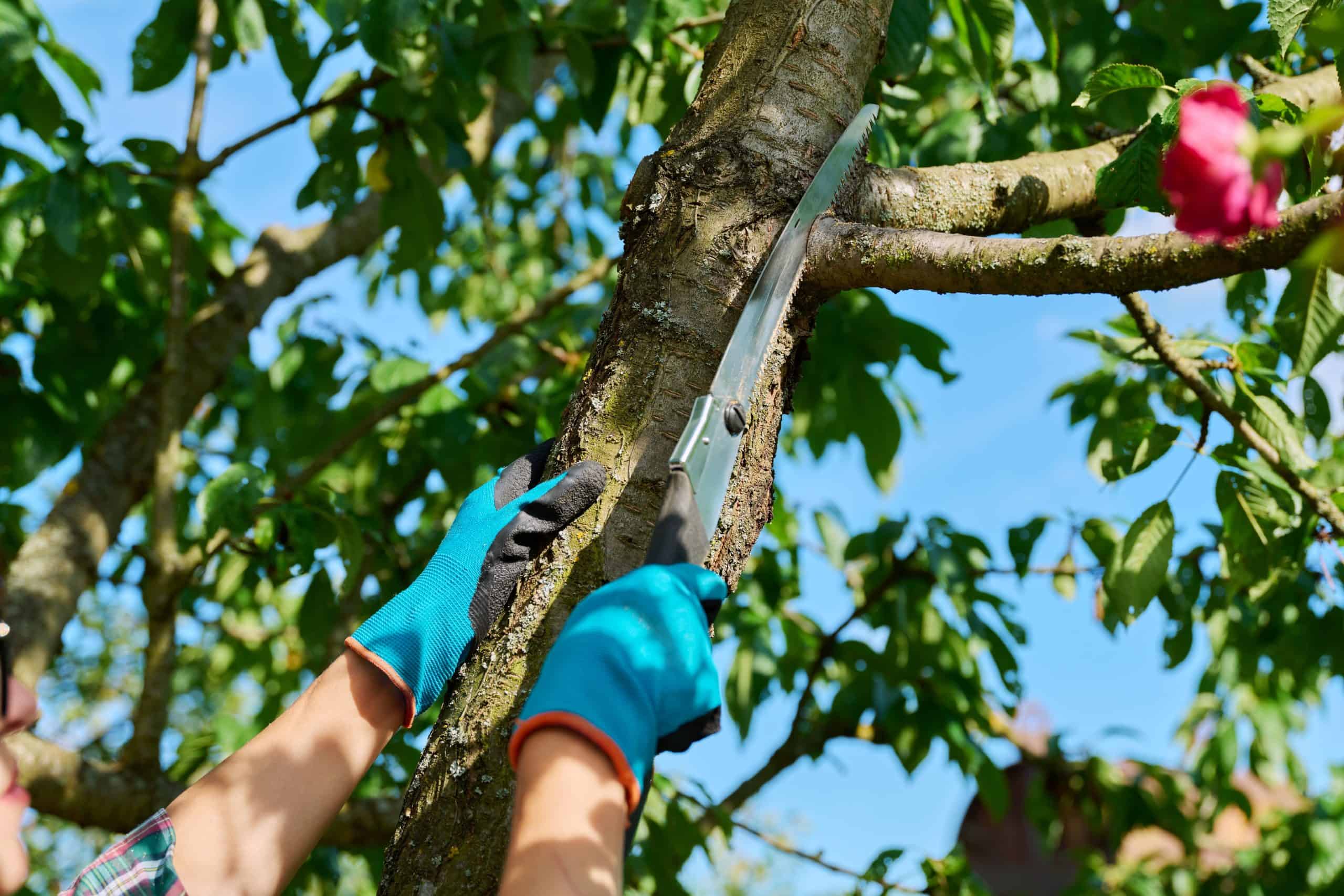
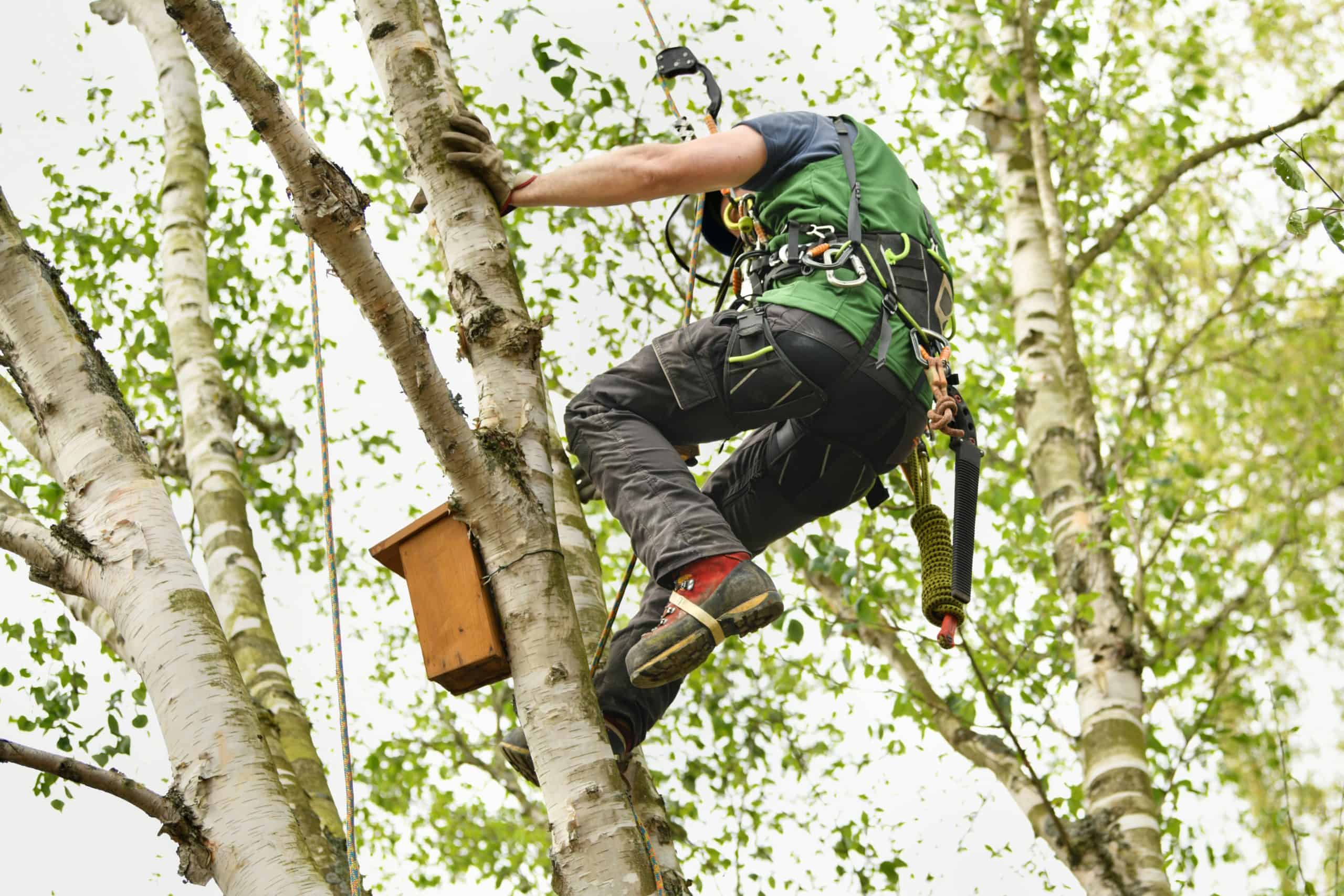
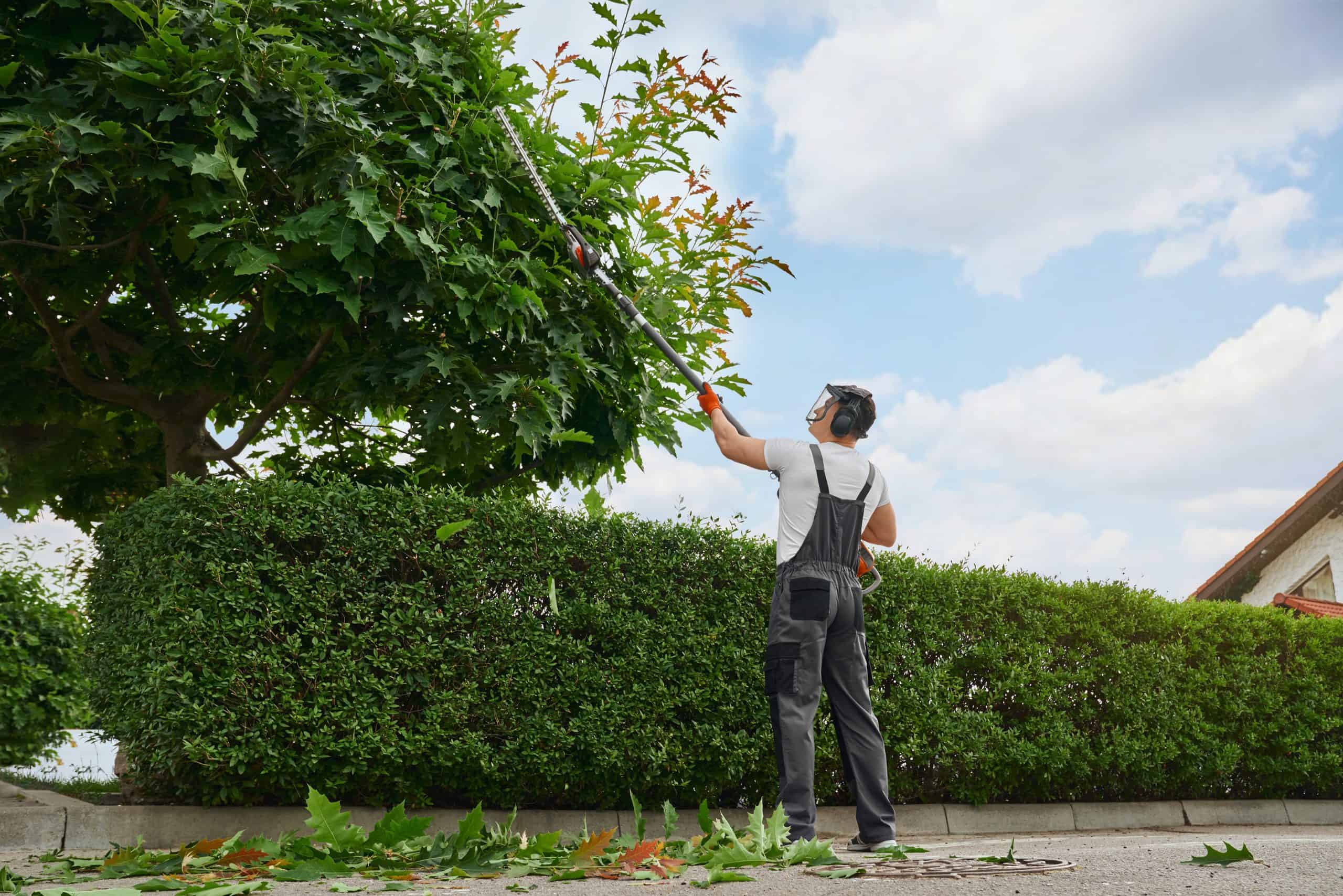
Tree trimming covers the work most homeowners are thinking about when they call — shaping the canopy, clearing branches away from structures and rooflines, removing dead or hazardous limbs, and raising the canopy to create clearance beneath large trees. Canopy raising is particularly relevant along the Lexington Avenue corridor and on larger lots near the Sunflower Ridge area, where mature trees have grown well above the height where a ladder and a handsaw make any sense. Tree shaping keeps your yard looking intentional rather than overgrown, and for homeowners in newer De Soto subdivisions, it’s often the first professional service the trees have ever received.
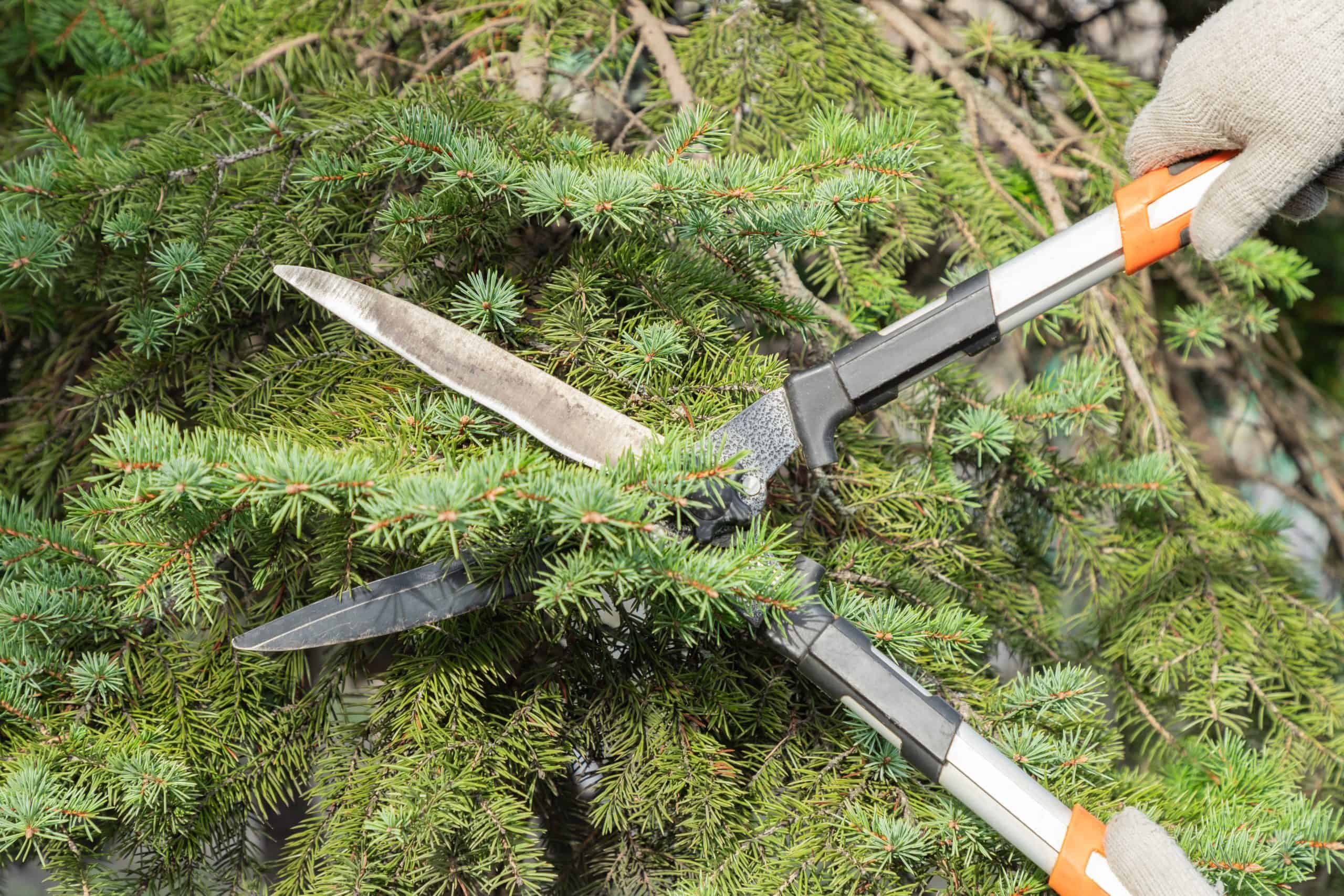
For properties dealing with significant overgrowth — common on De Soto’s rural-edge lots and on homes that have changed hands recently — overgrown tree trimming is a heavier lift. It may involve multiple trees, substantial canopy reduction, and a full day of work. We’re built for that. Pricing varies based on tree size, number of trees, and site access, and we’ll give you the full breakdown before any work starts. The cleanup is always included, no exceptions.
Pricing depends on a few factors — tree size, how many trees you’re dealing with, how accessible the canopy is, and whether there are any complicating factors like proximity to your roofline, a fence, or utility lines. Nationally, most homeowners pay somewhere between $300 and $900 per tree, with smaller trees on the lower end and large mature trees on the higher end.
In De Soto specifically, where lot sizes tend to be larger and the trees are often more mature than in the denser Johnson County suburbs, jobs frequently involve multiple trees and more canopy volume than a typical suburban trim. That affects the total cost of the job even if the per-tree rate is comparable. The best way to get a real number is to have someone walk the property with you — which is exactly what we do at Squirrel Master Tree Services, free of charge, usually the same day you call.
Late winter into early spring — roughly February through April — is the best window for most deciduous species in this part of Kansas. Trees are dormant, which means less stress on the tree, better visibility into the canopy structure, and lower risk of attracting insects or disease through fresh pruning cuts. For Silver Maples and Bradford Pears, which are both common in De Soto and both prone to storm damage, getting ahead of spring storm season with a late-winter trim is genuinely smart timing.
That said, if you have a hazardous limb — something that’s already cracked, leaning over your roof, or hanging over a fence line — you don’t wait for the ideal season. You get it handled before the next wind event makes the decision for you. Johnson County has seen multiple significant storms in recent years, and De Soto’s position in the western part of the county, with fewer natural windbreaks than the more developed suburbs to the east, means wind exposure is real. We’re available for emergency trimming when the situation calls for it.
Canopy raising means removing the lower branches of a tree to lift the base of the canopy higher off the ground. It’s done for a few different reasons — to create clearance over a driveway, a walkway, or a structure; to improve sightlines; to let more light reach the ground beneath a large tree; or simply to keep branches from scraping your roof or gutters every time the wind picks up.
In De Soto, canopy raising comes up a lot on larger lots where mature oaks and cottonwoods have developed extensive lower branching that encroaches on structures or creates visibility issues. It’s also common along the Lexington Avenue corridor and on properties near the Kansas River, where cottonwoods and other fast-growing species put out aggressive lower growth. If your trees are starting to feel like they’re closing in on your house or blocking your view of the street, canopy raising is usually the right call — and it’s a lot less disruptive than people expect when it’s done by a crew that knows what they’re doing.
Some signs are obvious — a large dead branch hanging over your roof, a tree that’s visibly leaning toward a structure, or a trunk with significant rot or hollow sections. But a lot of hazardous conditions aren’t visible from the ground without a trained eye. Dead wood in the upper canopy, crossing branches that are rubbing and creating wound sites, or narrow crotch angles that will eventually split under load — these are things that look fine until they don’t.
Silver Maples are a good example of why this matters in De Soto. They’re one of the most common trees in Johnson County and one of the most brittle. They can look perfectly healthy and still drop major limbs in a wind event because the wood itself is structurally weak. Bradford Pears, which show up in a lot of the newer De Soto subdivisions, have a growth pattern that makes them prone to splitting as they mature — it’s almost predictable. A professional assessment catches these issues before they become an emergency. We offer free on-site evaluations, so there’s no cost to finding out where you actually stand.
For small ornamental trees — something under 15 feet with straightforward access — a homeowner with the right tools and some basic knowledge can manage light trimming without too much risk. But once you’re dealing with anything taller than that, especially near a structure, a fence, or a utility line, the calculus changes quickly. Falls from trees are a leading cause of serious injury in home maintenance, and that’s before you factor in the risk of a large branch coming down somewhere you didn’t intend.
On De Soto’s larger lots, where the trees are often significantly taller and more mature than in a typical suburban yard, DIY trimming carries real risk. Cottonwoods along the Kansas River corridor, large oaks on rural-edge properties, Silver Maples with brittle upper canopy — these aren’t jobs where a ladder and a chainsaw are the right answer. Beyond safety, improper cuts can cause long-term damage to a tree — opening it up to disease, creating weak regrowth, or shortening its lifespan significantly. We bring the equipment, the experience, and the insurance to do it right without putting you or your property at risk.
Under De Soto’s city code — specifically Chapter 13, Article 3, which covers trees and shrubs — trees located within the public right-of-way are the city’s responsibility to plant, maintain, and remove. The parkway strip, which is the area between your property line and the street curb (sometimes called the boulevard or tree-shelf in De Soto’s code), falls within that right-of-way. As an adjacent property owner, you are not responsible for trees in that zone.
This is worth knowing before you call a tree service, because it affects what you’re actually on the hook for. If a tree in the parkway strip is causing you concern — overhanging the sidewalk, dropping debris, or showing signs of disease — the right call is to contact the city directly rather than paying a private contractor to handle it. Your private property trees, however, are entirely your responsibility. We can help you sort out exactly which trees fall on your side of that line during the free on-site assessment, so you’re not spending money on work that isn’t yours to manage.
Other Services we provide in De Soto