
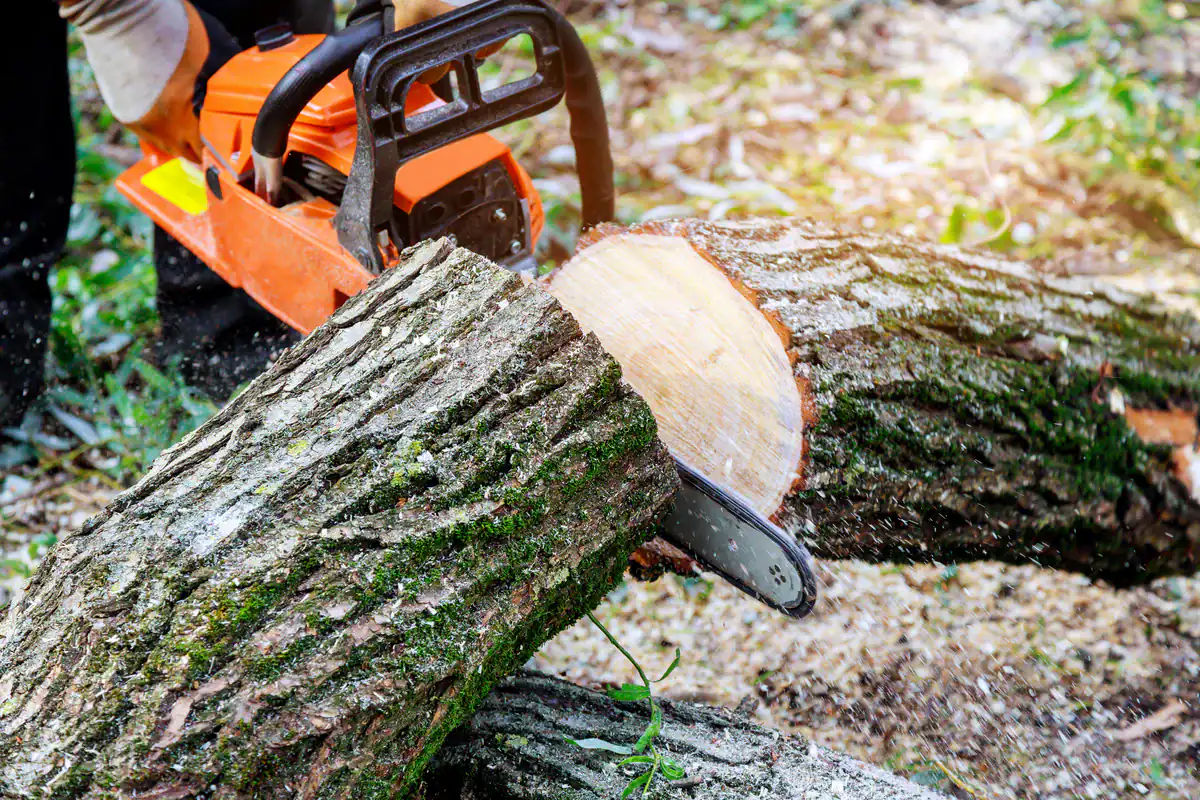
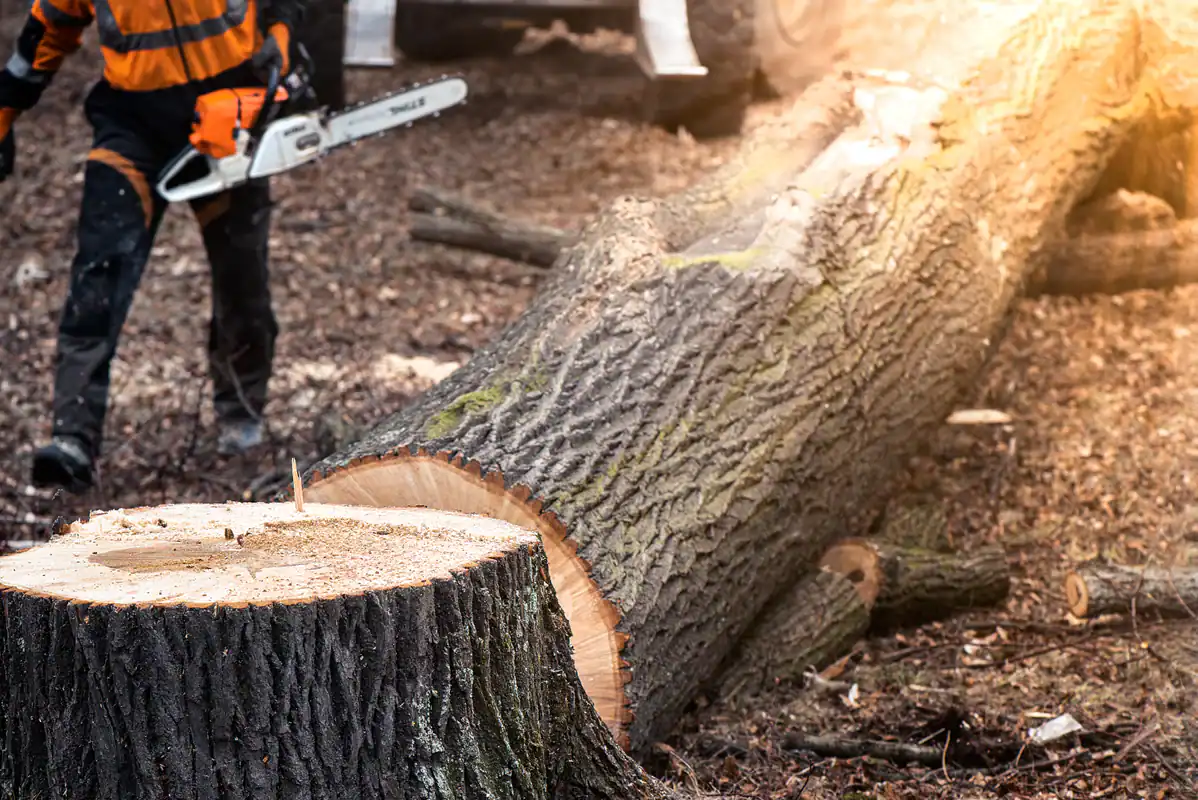
Westwood Hills is unique in Johnson County — and not just because of its history. The city ordinance here is explicit: removing dead and diseased trees is the homeowner’s responsibility. If you don’t handle it promptly, the city can remove it and send you the bill. That’s not a vague warning buried in fine print. It’s enforcement.
Calling us means you choose the crew, you control the process, and you don’t end up paying the city’s rate for a job you never scheduled.
Beyond the ordinance, there’s the practical reality of living in Westwood Hills. With 175 homes packed into 0.07 square miles — the highest population density in the entire Kansas City, KS & MO metro — a failing tree has almost nowhere to fall except onto something. Your roof, your neighbor’s fence, a car parked along Glendale Road.
The trees planted alongside these Tudor Revival and Colonial Revival homes a century ago are now aging hardwoods with root systems pressing against old foundations and canopy extending over historic rooflines. Getting them removed by a crew that knows how to work in tight quarters isn’t a luxury — it’s the only way to do it right.
Once the work is done, your property is clean. No wood piles, no debris, no chip scatter left behind. Every job includes full cleanup. If you want to keep the wood or mulch, just say so before the crew starts.
We’ve been doing this work in the Kansas City, KS & MO area for over a decade. Our crew is local — raised in Kansas, working on both sides of State Line Road — and we’ve handled large-tree removals in dense, close-in neighborhoods throughout northeast Johnson County, including Westwood Hills and the communities that border it along Rainbow Boulevard and into Mission.
What that experience means for you is straightforward. We’ve removed large trees in tight residential settings without damaging neighboring structures. We’ve worked next to historic homes, old stone features, and small lots where there’s no margin for imprecision. Customer reviews confirm it — including one that specifically notes a large tree removed in a dense neighborhood with no accidents and cleanup that extended to the neighboring property.
We’re fully licensed and insured, carrying both liability coverage and workers’ compensation. In a neighborhood of 100-year-old homes where one wrong move has real consequences, that’s not a checkbox — it’s the baseline for doing business in Westwood Hills.
It starts with a free on-site estimate. We come out, look at the tree, and tell you honestly what it needs — whether that’s full removal or something less. In Westwood Hills, where century-old specimens are part of what makes the neighborhood what it is, the answer isn’t always removal. If strategic trimming can address the hazard without taking the tree down, you’ll hear that. If removal is the right call, we’ll give you a clear explanation of why and what the job involves.
Once the work is scheduled, our crew arrives prepared for the specific conditions of your property. Working in Westwood Hills means working in close quarters — small lots, neighboring homes just feet away, stone entranceways and landscaped traffic islands that are part of the historic district fabric. We plan the removal around what’s nearby, not just what’s coming down. That planning is what keeps neighboring structures out of the equation.
If you have a dead or diseased tree, it’s worth knowing that Westwood Hills city code gives the city authority to act if you don’t. Timing matters. Spring storm season in the Kansas City, KS & MO area runs March through May, and ice loading in winter puts additional stress on aging branch structure. Getting ahead of those windows — rather than reacting after something fails — is almost always the better outcome.
After the work is complete, the property is cleaned up fully before our crew leaves.
Ready to get started?
Tree removal in Westwood Hills covers the full scope of the job — cutting, lowering, hauling, and cleanup. There are no add-on charges for debris removal or wood disposal. The property is left clean when our crew leaves, and if you want to keep the wood or mulch for personal use, that’s easy to arrange before the work begins.
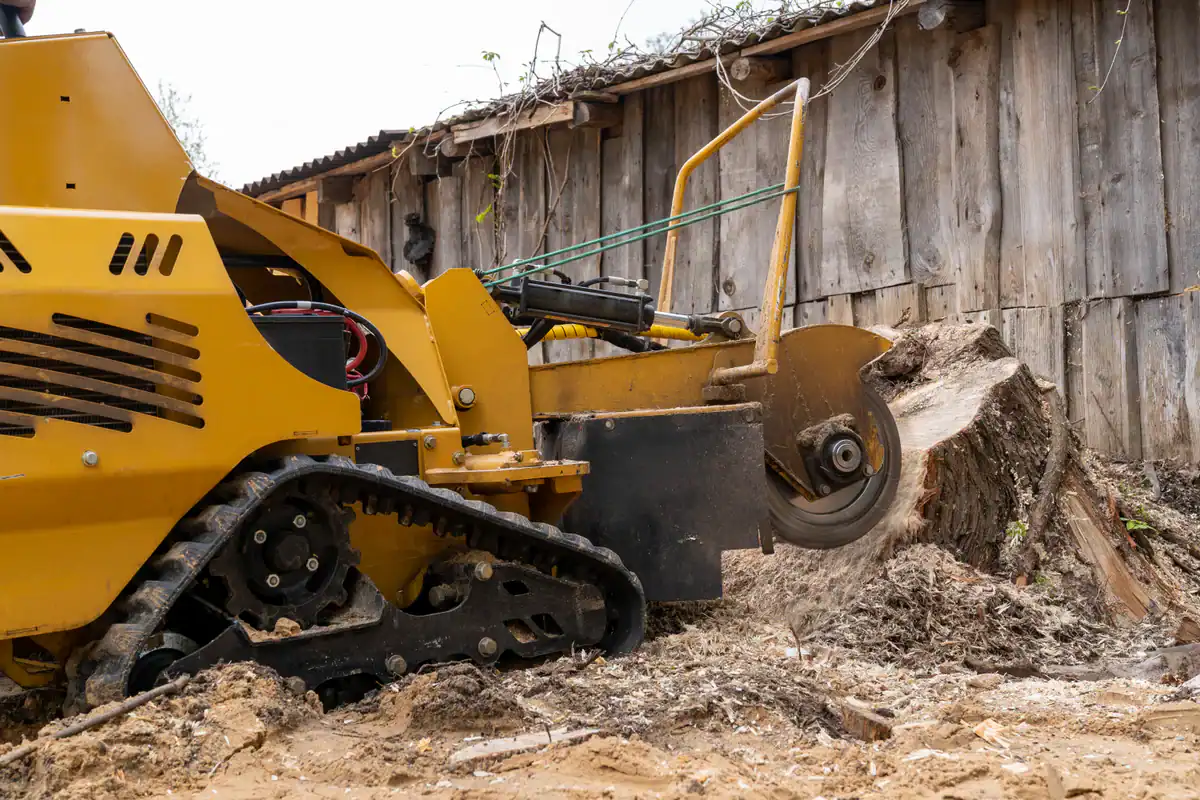
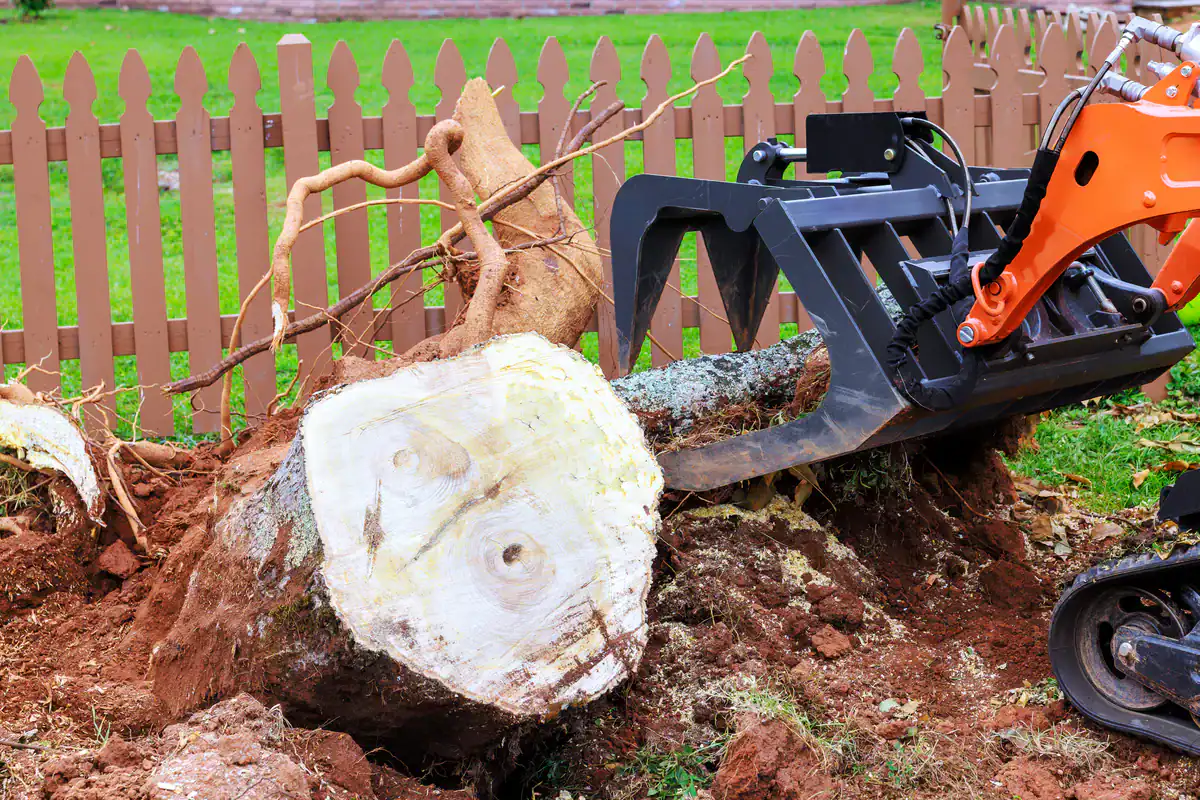
Beyond standard removal, we handle stump removal and stump grinding, brush removal, and emergency storm response. Given the age of the tree canopy in Westwood Hills and the density of the neighborhood, storm-damaged limb removal and hazardous tree situations are common calls — and fast response matters when a limb is threatening a 100-year-old roofline. We’ve handled storm recovery work across multiple states, which means we’re not learning on the job when conditions are urgent.
It’s also worth knowing that the Kansas City, KS & MO area has documented pressure from Emerald Ash Borer and Oak Wilt — both of which affect the aging tree stock common in a neighborhood like Westwood Hills. If a tree is diseased, the city ordinance backs up what the safety case already says: removal isn’t optional, and waiting only narrows your options. Whether the job is a large hazardous tree removal, a diseased tree, or a dead limb situation, the work is handled with full insurance coverage and a crew that has done this type of close-in residential work for over a decade in this market.
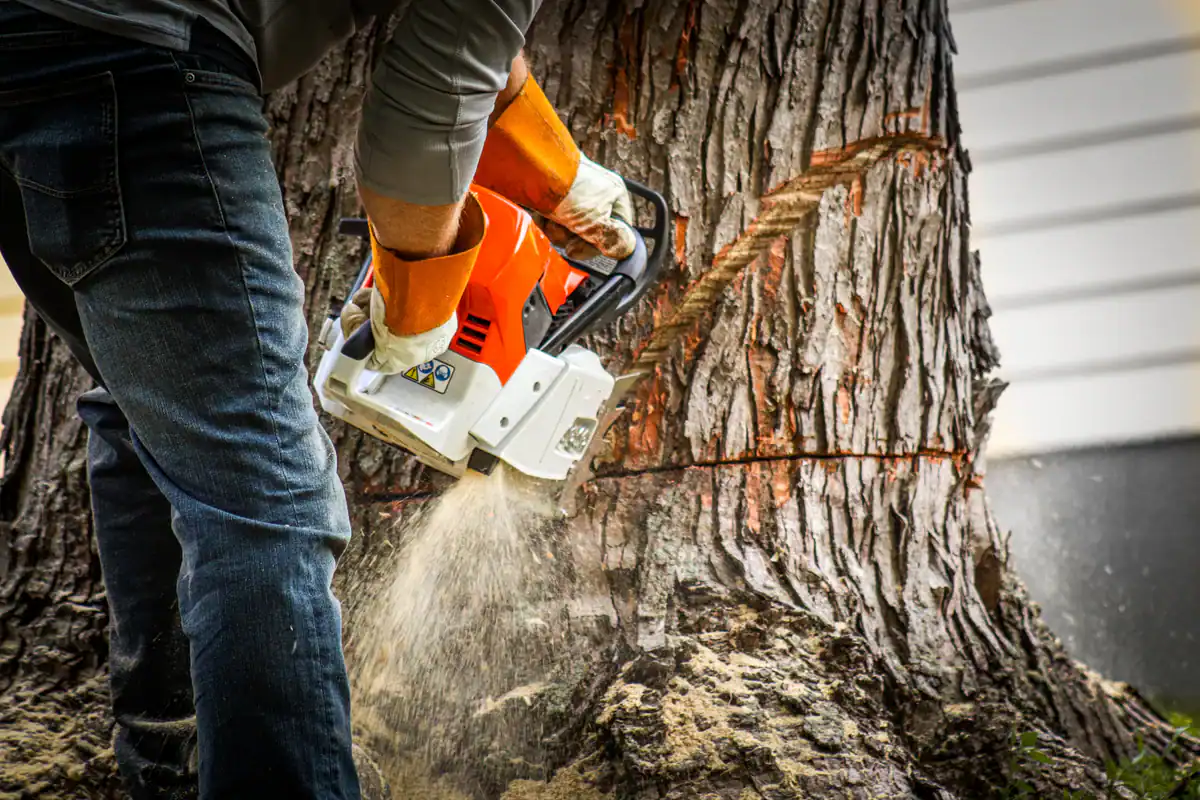
For dead and diseased trees, the more pressing legal question in Westwood Hills isn’t whether you need a permit to remove it — it’s what happens if you don’t. The city ordinance explicitly states that removing dead and diseased trees is the homeowner’s responsibility, and that if the obligation isn’t met promptly, the city can remove the tree and bill the homeowner for the cost. That’s an enforceable obligation, not a suggestion.
On the permit side, minor landscaping work is listed as an exception to the general building permit requirement in Westwood Hills. Tree removal typically falls outside the standard permit process, particularly for dead or visibly hazardous trees — a pattern consistent across Johnson County municipalities, where dangerous trees are generally exempt from standard permit requirements. If you have any specific concerns about your property’s situation, it’s worth a quick call to the city directly. What’s confirmed is this: the ordinance creates a legal obligation to act, and we can help you handle it on your terms before the city gets involved.
This is one of the most common questions, and the honest answer is that it depends on what’s actually wrong with the tree — which is why an on-site assessment matters more than a phone diagnosis. A tree that looks bad from the street isn’t automatically a removal candidate. If less than about 25% of the branch structure is damaged or dead, a tree can often recover with proper pruning. The problem is that dead branches don’t only fall during storms — they can come down on calm days too, which makes even a partially damaged tree a real hazard in a neighborhood as dense as Westwood Hills.
In a community where homes sit just feet apart and the trees are often 80 to 100 years old, the risk profile is different from a newer suburb with larger lots. Root systems on century-old trees can press against aging foundations, and large canopies over historic rooflines leave little room for error if something fails. A free on-site estimate from us will tell you what the tree actually needs — and if trimming can solve the problem safely, that’s what you’ll hear. The goal is the right answer, not the bigger invoice.
This is where the legal and financial stakes get real. If a tree on your property was visibly dead or diseased and you hadn’t addressed it, your neighbor’s homeowners insurance company — or your own — may treat that as negligence. When negligence can be established, liability can shift to you personally. That means you could be responsible for the cost of repairs to your neighbor’s property, not just your own.
In Westwood Hills specifically, this risk is amplified by the density of the neighborhood. With 175 homes packed into 0.07 square miles, a failing tree almost always falls toward something — another home, a shared fence, a vehicle, or a pedestrian on one of the city’s walkable streets. The city’s own ordinance reinforces this: homeowners are legally responsible for dead and diseased tree removal, and the city can act if you don’t. Proactive removal by a fully insured crew is the financially responsible move. If something goes wrong during a properly handled removal by our team, our liability coverage is in place — which is a very different situation from an uninsured crew or a tree that fails on its own.
Yes — and it’s worth understanding why before you hire anyone. The homes in Westwood Hills were built primarily in the 1920s, and many feature stone entranceways, original foundations, and architectural details that can’t simply be repaired if damaged. The landscaped traffic islands along Glendale Road and the two stone bridges within the historic district are part of the neighborhood’s fabric. Working around these features requires more planning and more precision than a straightforward removal on a newer suburban lot.
The tight lot sizes compound this. When homes are separated by just a few feet, a crew that drops a limb in the wrong direction isn’t just causing a cleanup problem — they’re potentially damaging a neighboring structure that’s 100 years old. We have a verified track record of large-tree removal in dense residential settings, with customer reviews specifically confirming safe work in neighborhood conditions with cleanup that extended to neighboring properties. That kind of close-in experience is what the work in Westwood Hills actually requires. Full liability insurance and workers’ compensation coverage are also in place, which protects you if anything unexpected happens on your property during the job.
For most pruning and trimming work, late winter — before new growth begins — is the optimal window in the Kansas City, KS & MO area. Trees are dormant, wounds close more efficiently, and you avoid the spring and summer periods when certain species are more vulnerable. Oak trees in particular should not be pruned during picnic beetle season due to Oak Wilt risk, which is an active concern in the KC metro.
For removal of dead or hazardous trees, the timing calculus is different — urgency takes priority over seasonality. A dead tree in Westwood Hills doesn’t become less dangerous because it’s January. Ice loading during winter storms puts significant stress on aging branch structure, and the Kansas City, KS & MO area sits in a genuine ice storm belt. Spring storm season runs March through May and brings the highest risk of storm-damaged limb emergencies. If you have a tree that’s dead, visibly diseased, or showing signs of structural failure, the right time to remove it is before the next weather event — not after. Westwood Hills city code supports that urgency: the obligation to act exists regardless of the season.
Full cleanup is included on every job — it’s not an add-on and it’s not negotiable. When our crew finishes a tree removal in Westwood Hills, the property is left clean. No wood piles, no debris scattered across the lawn, no chip piles sitting at the curb. In a neighborhood where 175 homes share the same streets and neighbors can see your front yard from their front door, that matters more than it might in a larger, more spread-out community.
If you want to keep the wood or mulch — for a fireplace, a garden bed, whatever the use — that’s easy to arrange. Just mention it before the work begins, and we’ll set it aside rather than haul it. What won’t happen is our crew leaving and you spending a weekend cleaning up what we left behind. That’s been confirmed in multiple customer reviews, including one that specifically noted cleanup extending to a neighboring property after a large-tree removal in a dense residential setting. In Westwood Hills, where the standard for how properties look is high and the community is tight-knit, that kind of follow-through is part of the job — not a bonus.
Other Services we provide in Westwood Hills