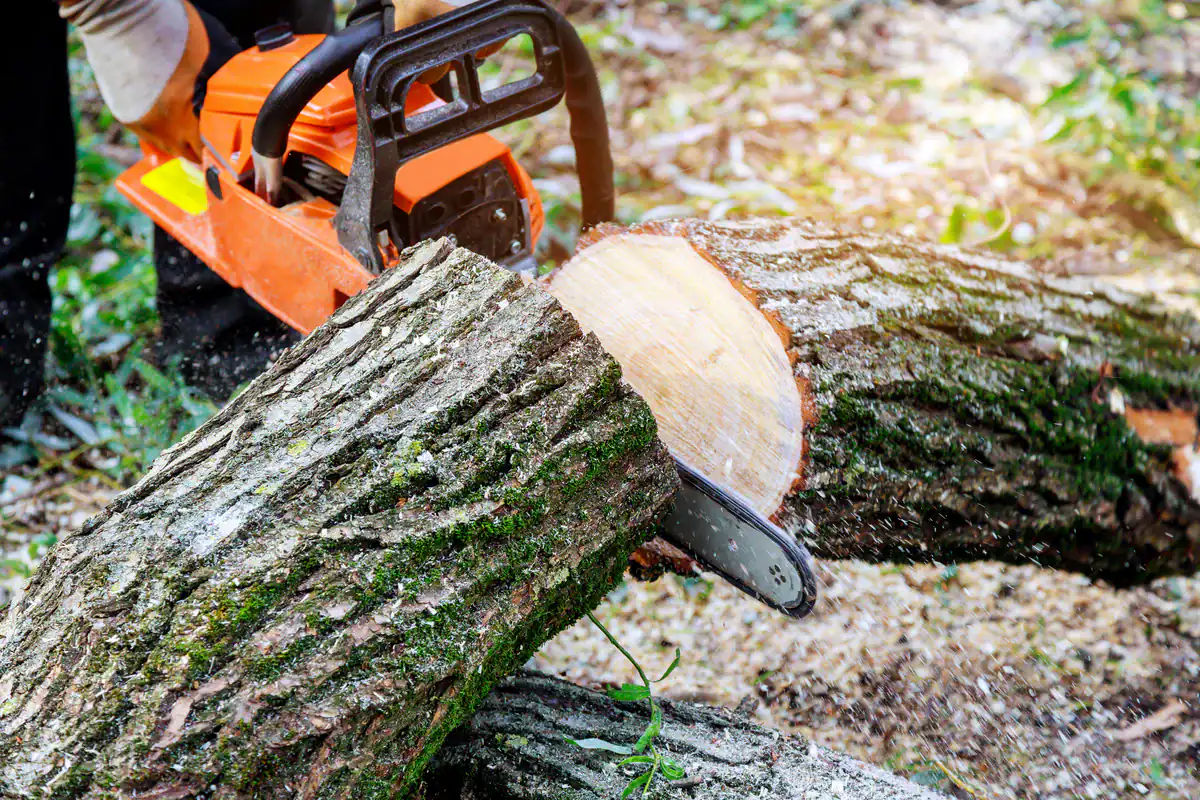
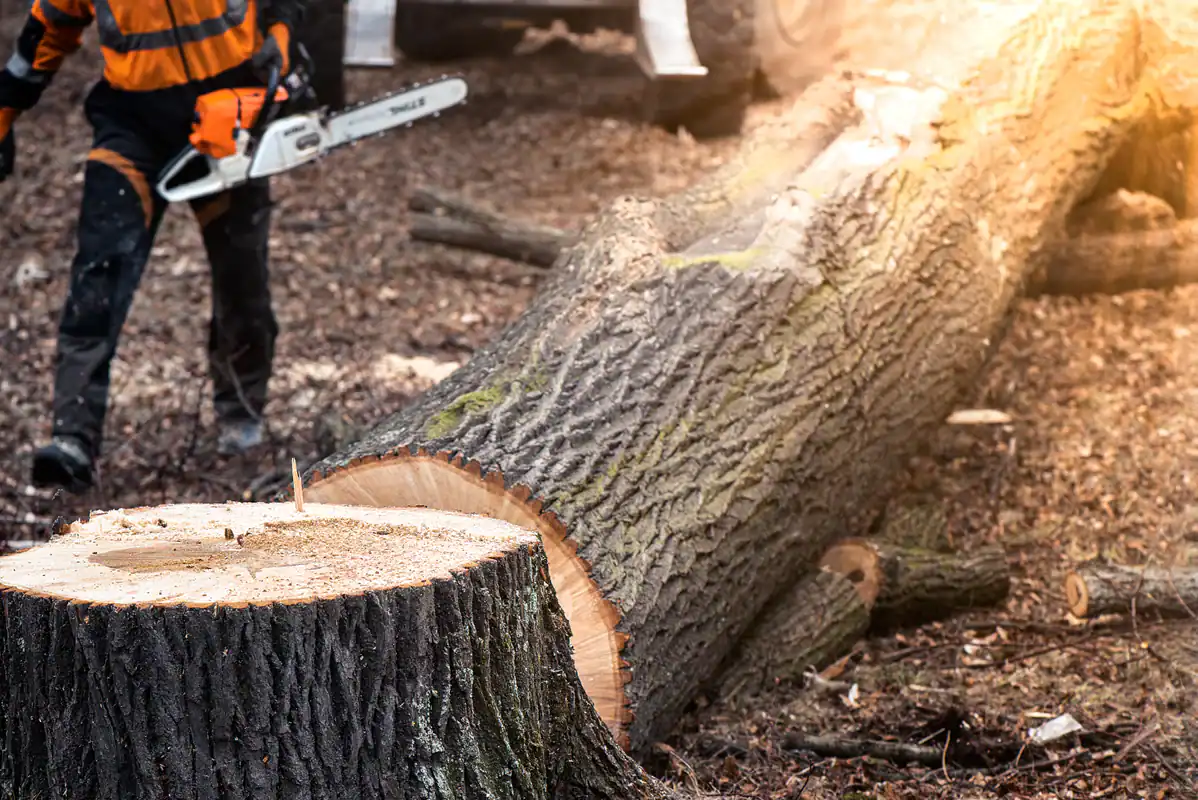
Lee’s Summit sits in a documented storm corridor. The National Weather Service in Pleasant Hill issues tornado warnings, 70 mph wind gusts, and explicit “considerable tree damage” alerts for this city on a regular basis. When a storm rolls through the I-470 corridor and you walk outside to find a leaning oak or a hanging limb over your garage, the outcome you want is simple — the tree is gone, the yard is clean, and nothing got damaged in the process.
What makes this market different from most is the ground itself. Jackson County clay swells after heavy rain and contracts in the summer heat, and that cycle quietly undermines root systems in ways you can’t see from the surface. We’ve documented a pattern where trees that showed no visible distress begin leaning after heavy rain — not because the storm was violent, but because the saturated clay lost its grip. In Lakewood, Raintree Lake, and the older established neighborhoods near downtown Lee’s Summit, where mature oaks and maples have been in the ground for 40 to 60 years, that’s a real and specific risk.
The result you get from a properly handled removal isn’t just a tree that’s gone. It’s a yard that doesn’t have a liability sitting in it, a property that holds its value, and the peace of mind that comes from knowing a crew with over 10 years of KC metro experience made the right call — not the most expensive one.
Squirrel Master Tree Services, LLC is a family-owned, fully insured tree care crew based in Kansas City Metropolitan Area, MO. We’ve been working the KC metro for over a decade, and Lee’s Summit — with its clay soil, its lake communities, its established neighborhoods, and its recurring storm seasons — is territory we know well. We’re not a franchise dispatching strangers to your address. We’re a small, tight-knit crew raised in this region who treat every property the way we’d want our own handled.
We carry full liability insurance and workers’ compensation coverage on every job. That matters more than most homeowners realize until something goes wrong — and in a market where anyone with a truck and a chainsaw can legally call themselves a tree service, it’s the first thing worth verifying. Beyond insurance, what we bring is 10-plus years of experience working in neighborhoods like Lakewood and Raintree Lake, where large-canopy trees in tight residential lots demand precision, not just power.
We’ve also deployed storm recovery crews across Kansas, Missouri, North Carolina, South Carolina, and Florida. That experience informs how we handle the post-storm situations that Lee’s Summit faces seasonally.
It starts with a free on-site assessment. We come out, look at the tree, and give you a straight answer about what it actually needs — removal, trimming, or something else entirely. If a strategic trim can solve the problem, we’ll tell you that. We’re not going to recommend a full removal on a tree that doesn’t need one, because that’s not how you build a reputation in a city where neighbors talk.
Once the scope is agreed on, we schedule the work and show up when we said we would. For most residential jobs in Lee’s Summit — including large-canopy trees in established neighborhoods near Longview Lake or along the US-50 corridor — the work is completed in a single visit. Our crew handles the cut, the limb management, and the cleanup in one continuous process. We pay attention to the details that matter in tight residential lots: neighboring fences, driveways, adjacent structures, and the tree’s proximity to your home or a power line.
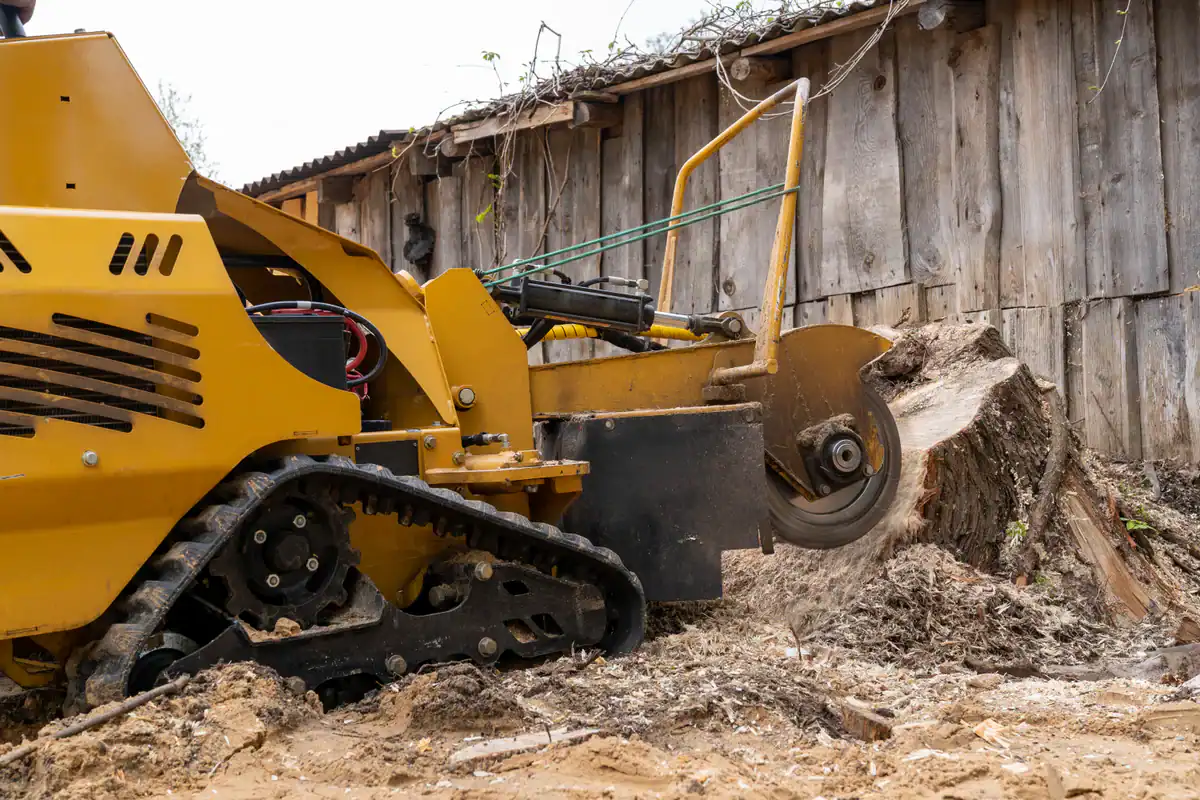
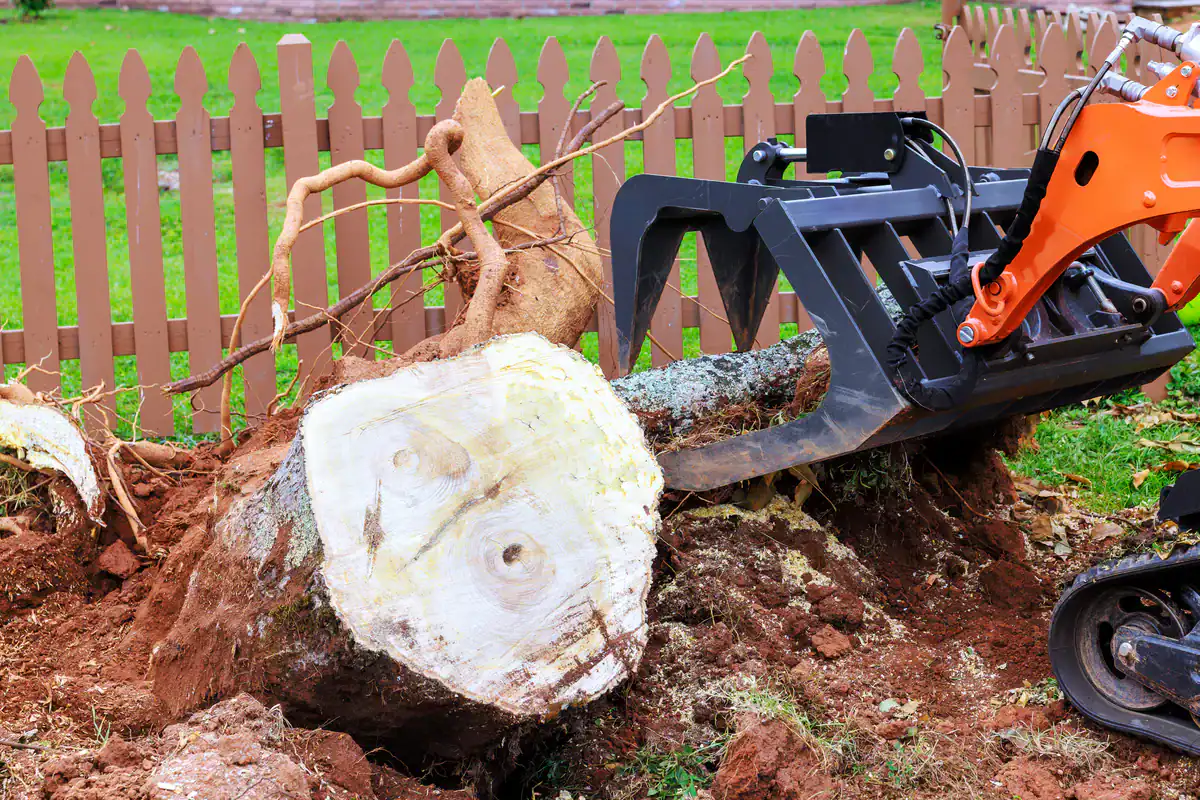
One thing worth knowing about Lee’s Summit specifically: the clay soil here affects how stumps behave after removal. Stumps left in saturated Jackson County clay decompose in a way that attracts wood-destroying insects, and in dense clay, those insects can travel easily toward nearby structures. Stump grinding is available and worth discussing during the assessment if the stump is close to your foundation or a neighbor’s property line.
When the job is done, the property is clean — no piles, no debris, no chips scattered across the yard. If you want to keep the wood or mulch, just let us know in advance and we’ll set it aside for you.
Ready to get started?
Tree removal in Lee’s Summit covers the full scope: cutting, limb management, trunk removal, and complete cleanup of all debris. Every job ends with a clean property — that’s not optional, and it’s not a premium add-on. For homeowners in HOA-governed communities like Lakewood and Raintree Lake, where appearance standards are enforced and a debris pile left overnight can become a compliance issue, this matters practically, not just aesthetically.
Dead tree removal and diseased tree removal are two of the most common calls we get in this area, and for good reason. The KC metro has documented threats from Emerald Ash Borer, Oak Wilt, and Bagworm — and once a tree is structurally compromised by disease, the clay soil instability common to Jackson County accelerates the risk timeline significantly. A dead tree that might stand for years in sandy soil can fail in a single wet season in Lee’s Summit.
We also handle large tree removal for the mature oaks, maples, and elms that define Lee’s Summit’s older neighborhoods, as well as the construction-stressed trees common in newer subdivisions where grade changes and root compaction during development have silently killed trees that looked fine at move-in. If you’re not sure what you’re dealing with, the assessment will tell you.
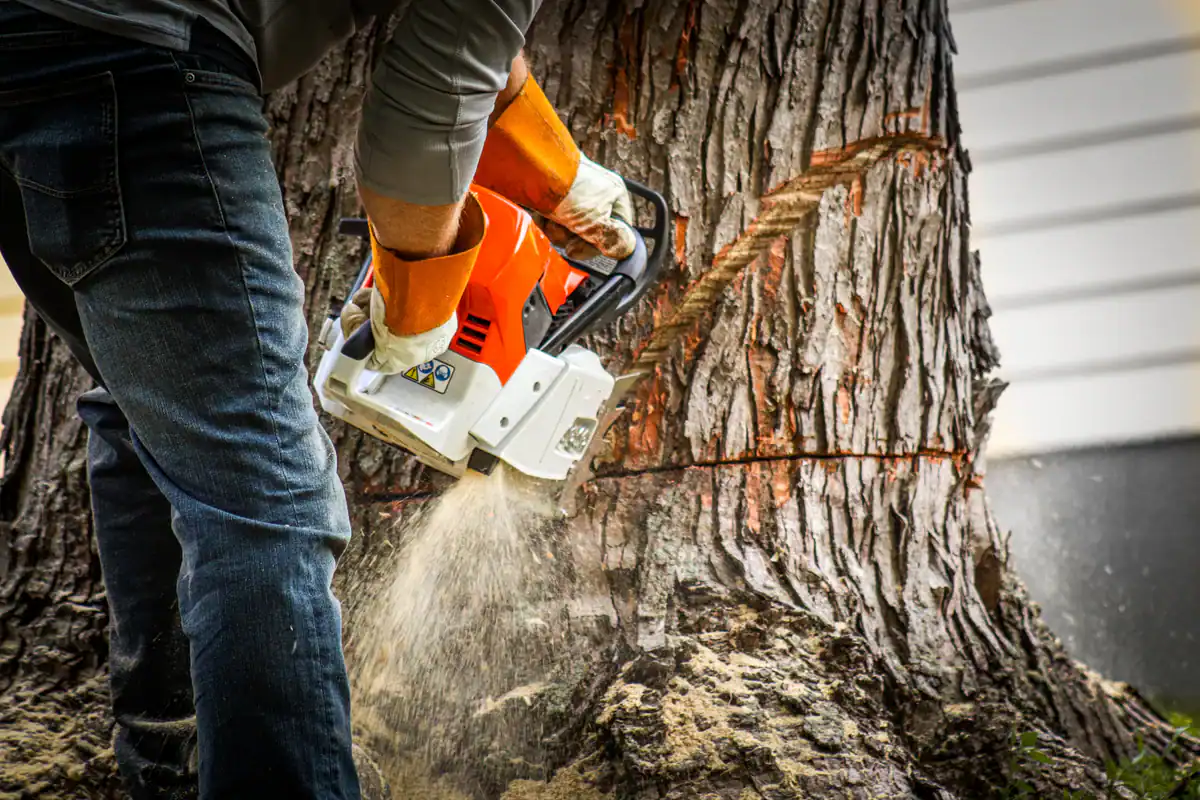
Jackson County clay is expansive — it swells significantly when wet and contracts when it dries out. That cycle puts constant stress on root systems, and for mature trees that have been in the ground for decades, it can gradually undermine the anchoring that keeps a large tree stable. The visible warning signs are a tree that begins leaning after heavy rain, soil heaving or cracking around the base, or roots that appear to be lifting on one side. These aren’t just cosmetic issues — they’re structural ones.
The tricky part is that clay soil can mask instability. A tree can look completely healthy above ground while its root system has been compromised by years of saturation and contraction cycles beneath the surface. That’s why an on-site assessment matters more in Lee’s Summit than in markets with sandier or loamier soil. We look at the base, the lean, the root zone, and the proximity to structures before making any recommendation. If the tree is stable and a trim addresses the issue, that’s what we’ll tell you. If the clay has done enough damage that the tree is a genuine hazard, we’ll explain why clearly — and give you a straight price to handle it.
It depends on the circumstances, and the answer is often not what homeowners expect. Most standard homeowners insurance policies will cover a portion of tree removal — typically in the range of $500 to $1,000 — if the tree falls and damages a covered structure like your home, fence, or garage. If the tree falls in your yard without hitting anything, most policies won’t cover removal costs at all.
The more important issue is the negligence clause. If your insurer can demonstrate that the tree was visibly dead, diseased, or structurally compromised before it fell — and that you were aware of it and didn’t act — they may deny the claim entirely on the basis of negligence. In Lee’s Summit, where storm seasons are active and clay soil creates conditions that visibly destabilize trees, a tree that’s been leaning or showing signs of disease for a season or two can become a liability that your policy won’t cover. Proactive removal is typically the financially sound move, even when it feels like an expense you’d rather defer.
For most standard residential tree removal on private property in Lee’s Summit, a permit is not required. Missouri generally does not mandate permits for removing trees on privately owned residential lots, and Lee’s Summit follows that general framework for typical removal jobs. That said, there are situations where additional considerations apply and it’s worth confirming before work begins.
If the tree is located near a public right-of-way, within a utility easement, or adjacent to a city-maintained street, different rules may apply and the city may need to be contacted. For homeowners in HOA-governed communities like Lakewood or Raintree Lake, your association’s governing documents may have their own requirements about tree removal that operate independently of city code — some HOAs require written approval before a tree of a certain size is removed. During your free assessment, we can walk through the specifics of your property and flag anything that warrants a closer look before we proceed.
This is one of the most common questions we get, and the honest answer is that it depends on what’s actually going on with the tree — not just what it looks like from the street. A tree with significant dead branching, a visible lean that has developed or worsened recently, a hollow trunk, fungal growth at the base, or root damage from construction or soil movement is typically a removal candidate. A tree that looks scraggly or has some storm-damaged limbs but is otherwise structurally sound may do fine with a targeted trim.
In Lee’s Summit specifically, two scenarios come up frequently. The first is mature trees in established neighborhoods — Lakewood, Raintree Lake, the older areas near downtown — where large oaks and maples are aging and showing signs of structural decline. The second is newer subdivisions where trees were left standing during construction but suffered root damage from grade changes and soil compaction, and are now dying from the inside out several years later. Both situations look different and call for different responses. The only way to know for certain is an on-site assessment, which is free. We’ll tell you what the tree actually needs — and if a trim is the right call, that’s what we’ll recommend.
Fast response is something we take seriously, and it’s documented in our customer reviews — same-day estimates and next-day job completion are the standard, not the exception. For storm damage situations where a tree is actively threatening your home, sitting on your roof, or blocking access to your property, we treat that as the priority it is.
Lee’s Summit sits in a storm corridor that the National Weather Service in Pleasant Hill monitors closely. Tornado warnings, severe wind events, and hail storms that specifically name Lee’s Summit are a recurring seasonal reality — not a rare occurrence. After a significant storm event, demand for emergency tree removal across the southeastern Jackson County area spikes quickly, and response times across all tree services in the region slow down. Our recommendation is to call as soon as it’s safe to do so after a storm — the earlier you get on the schedule, the faster we can get to you. We’ve deployed storm recovery crews across multiple states, so large-scale aftermath is not new territory for us. We know how to work efficiently and safely in post-storm conditions, including situations involving hanging limbs, partially uprooted trees, and debris-covered access points.
After a tree is removed, the stump stays in the ground unless you specifically request stump grinding as part of the job. We offer stump grinding, and in Lee’s Summit, it’s worth a genuine conversation rather than a reflexive yes or no.
Here’s the local-specific reason it matters more here than in some other markets: stumps left in Jackson County clay soil decompose in a way that creates ongoing problems. The dense, moisture-retaining clay keeps the stump wet longer than sandy or loamy soils would, which accelerates decay and creates an attractive environment for wood-destroying insects. More specifically, termite colonies can travel through clay soil more easily than through other soil types, and a decaying stump close to your foundation or near your home’s perimeter is a pathway you’d rather not leave open. If the stump is in the middle of an open yard and well away from any structures, the urgency is lower. But if it’s within 10 to 15 feet of your home, a fence line, or a neighboring structure — particularly in a tighter residential lot in Lakewood or one of the older downtown-adjacent neighborhoods — grinding it down is the cleaner, safer long-term call. We’ll give you a straightforward assessment of whether it’s worth doing during the initial visit.
Other Services we provide in Lee'S Summit