
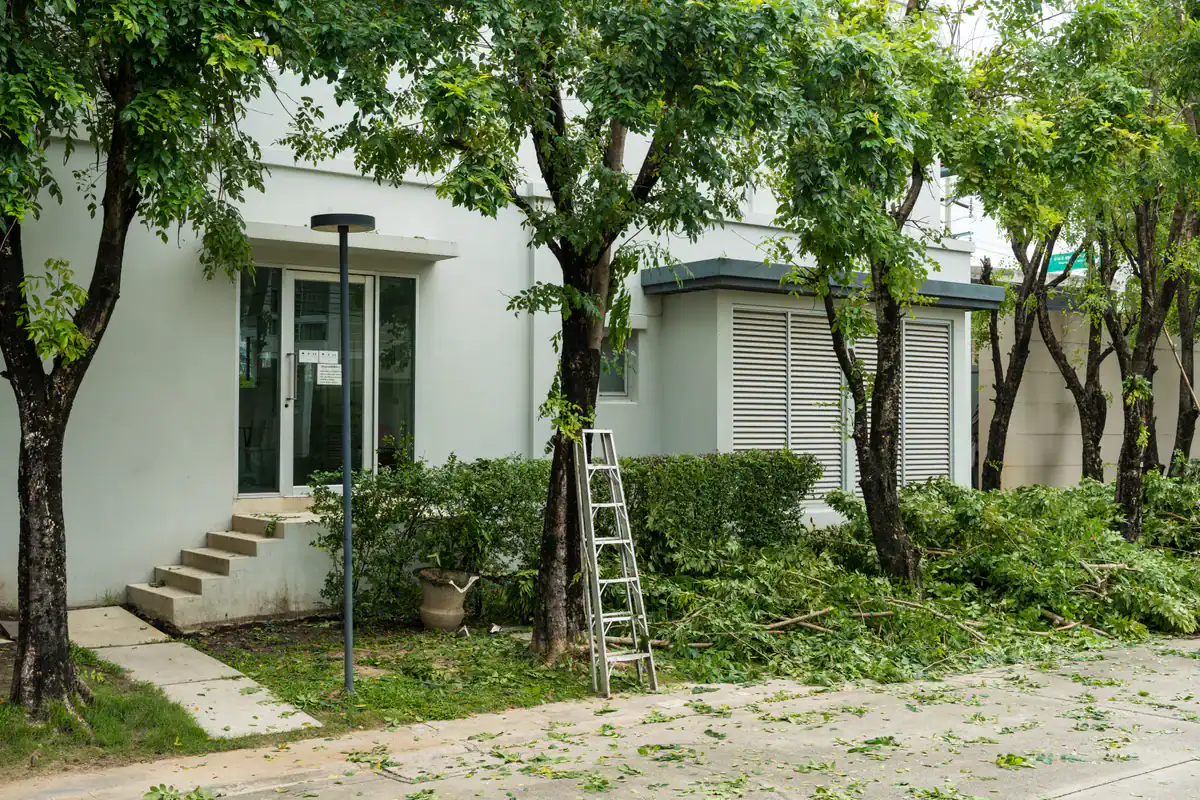
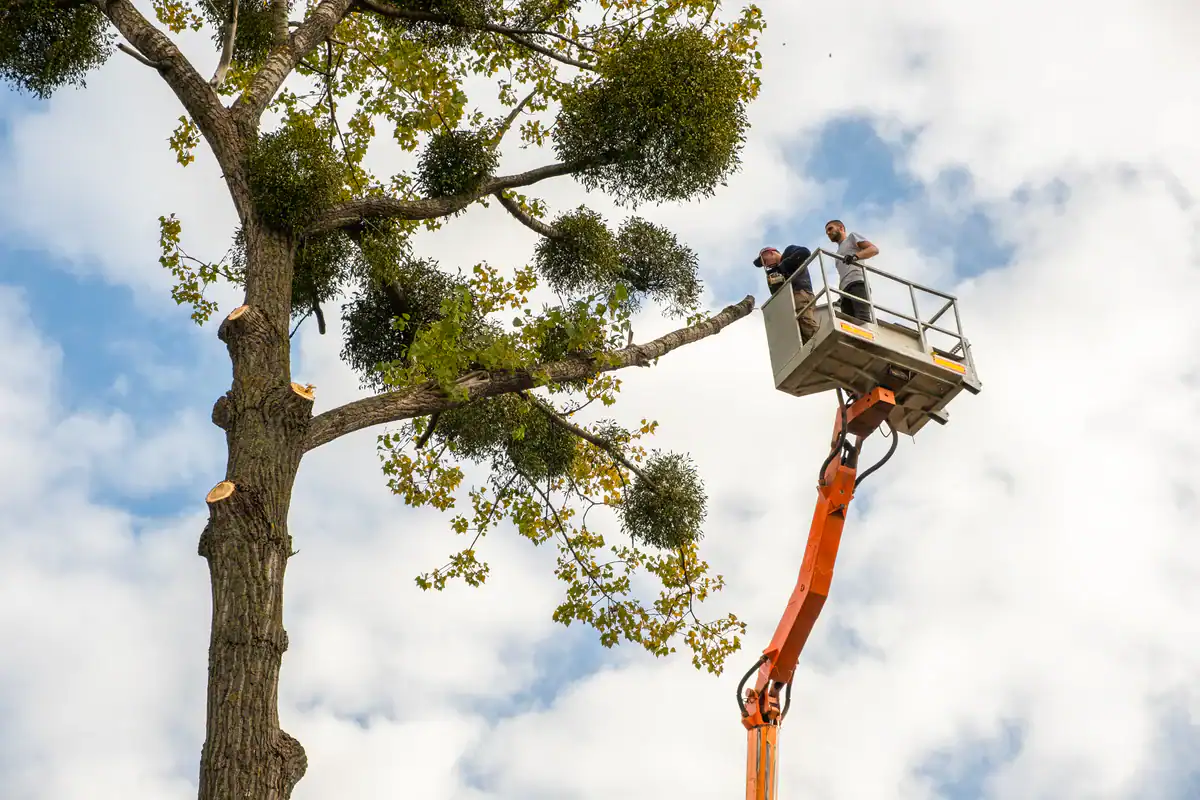
You stop guessing. That’s the biggest thing. Whether you’ve been watching a dead limb hang over your roof for two seasons or you woke up after a storm to find a tree leaning toward your fence, the uncertainty is what wears on you. A real assessment from someone who knows what they’re looking at gives you a clear answer — and usually a same-day quote to go with it.
For homeowners in Lee’s Summit’s established neighborhoods, that clarity matters more than most people realize. Lakewood’s trees are now 50-plus years old. The ones that look perfectly fine from the street can have hollow trunks, compromised root systems, or internal decay that only shows up when the wind hits them the wrong way. If your property backs up to one of the drainage corridors or sits near Lakewood Lakes, erosion has likely been working on those root systems for years without you knowing it.
And when a storm does roll through — and in Lee’s Summit, they do — you want to already know where you stand. The city sits within 25 miles of 133 documented tornadoes since 1950. Severe thunderstorm warnings here routinely call for 60 to 70 mph wind gusts and considerable tree damage. Getting ahead of that isn’t paranoia. It’s just smart property ownership.
We’re a small, family-owned tree company serving the Kansas City Metropolitan Area, MO metro — including Lee’s Summit, MO and the surrounding Jackson County area. When you call, you reach the crew. Not a call center, not a national dispatch queue. The same people who give you the quote are the ones doing the work.
That matters in a community like Lee’s Summit, where HOA standards are real, neighbors are paying attention, and a job done sloppily doesn’t just affect your yard — it affects your standing in the neighborhood. We’re fully licensed and insured, carry documentation, and leave every property cleaner than it was found. No piles left behind, no debris in the driveway, no scrambling to explain the mess to your HOA.
With 10-plus years serving the Kansas City Metropolitan Area, MO metro and a 4.9-star rating across 40 reviews, our track record speaks for itself. We’ve worked in tight residential lots, around lakeside properties, and up against the kinds of mature tree situations that Lee’s Summit, MO homeowners actually deal with.
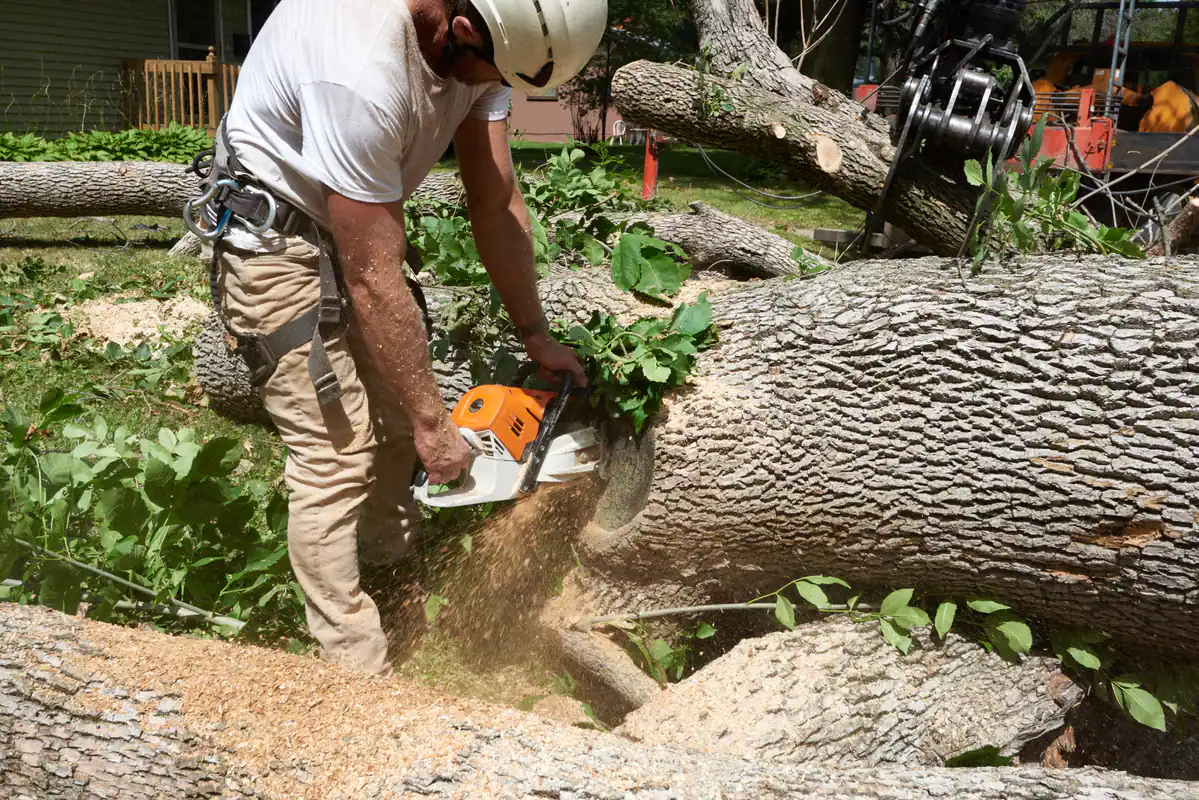
It starts with a free on-site assessment. You call, and in most cases a crew member is out the same day to take a look. We walk the property with you, assess the trees in question, and give you a straight answer — whether that’s a full removal, a structural trim to reduce wind load before storm season, or a stump grinding job on something that’s been sitting since the last crew left. No pressure to decide anything on the spot.
Once you’re ready to move forward, the job gets scheduled. For emergency situations — a storm-damaged tree, a hanging limb over a structure — same-day service is available. For planned work, timing is coordinated around your schedule. Because roughly 80% of Lee’s Summit residents commute outside the city for work, we’re used to working around that. You don’t need to babysit the job; you just need to make sure there’s clear access to the area.
The work itself is done with your property treated like it’s our own. Every job includes full cleanup — debris hauled away, chips cleared, yard left in good shape. If you want to keep the wood or mulch, just say so before we start. If you’re in an HOA community like Lakewood or New Longview, we provide documentation of the work. Missouri requires an Occupational License for tree services, and we carry it — so if your HOA asks for proof, you’ve got it.
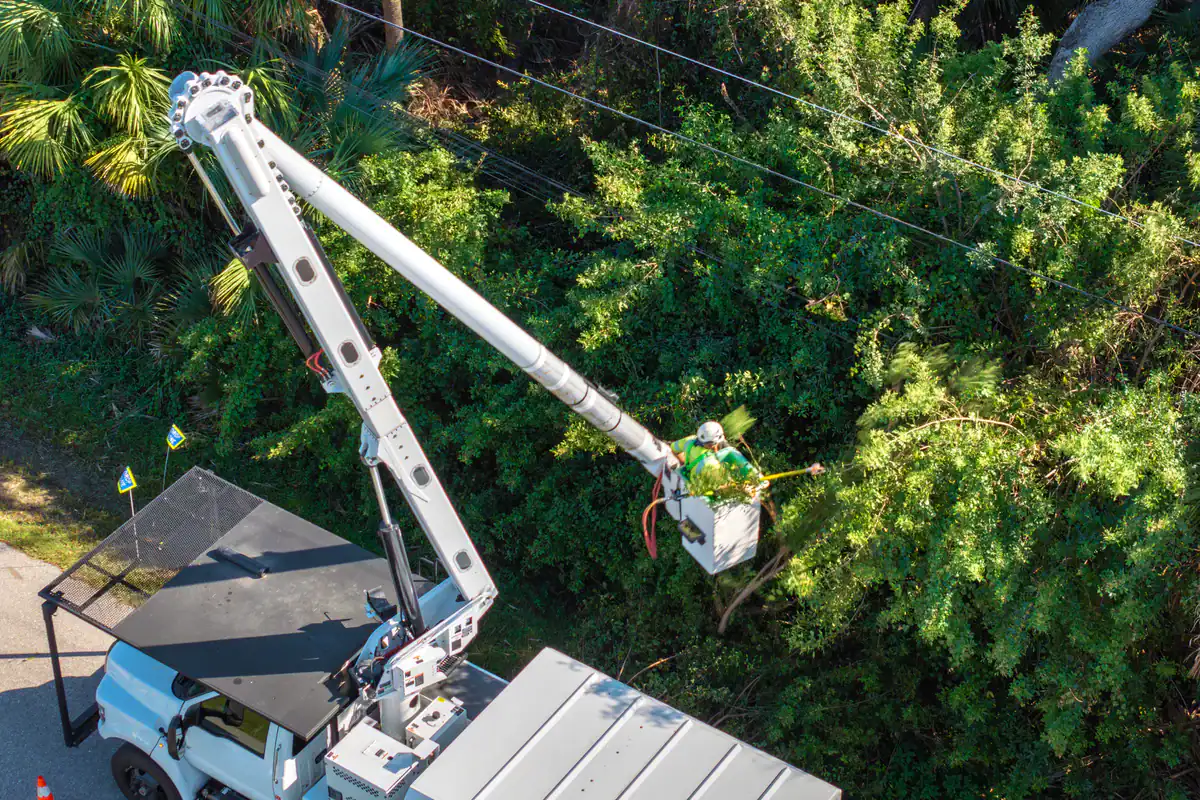
Ready to get started?
Tree removal is the most common call, but it’s rarely the only thing a property needs. We handle the full range: tree removal for hazardous, storm-damaged, or dead trees; trimming and pruning to shape for health and reduce wind resistance before severe weather season; stump grinding for stumps left behind by previous crews or old removals; land clearing for properties being prepared for construction or open space; and on-site tree health assessments to give you an honest read on what’s at risk and what can wait.
In Lee’s Summit, MO, the clay soils that run through much of the Kansas City Metropolitan Area, MO metro retain water in ways that affect root health over time — particularly in lower-lying areas and near drainage easements. Properties in Lakewood, Raintree Lake, and along the city’s drainage corridors see higher rates of root instability and waterlogged soil conditions that weaken otherwise healthy-looking trees. That’s worth knowing before you decide a tree is fine.
Stump grinding is quoted separately from tree removal and is not automatically included — a detail a lot of homeowners don’t find out until after the tree is already down. If you want the stump gone, just say so upfront and it gets worked into the job. Cleanup is always included at no extra charge, regardless of what service is being performed.
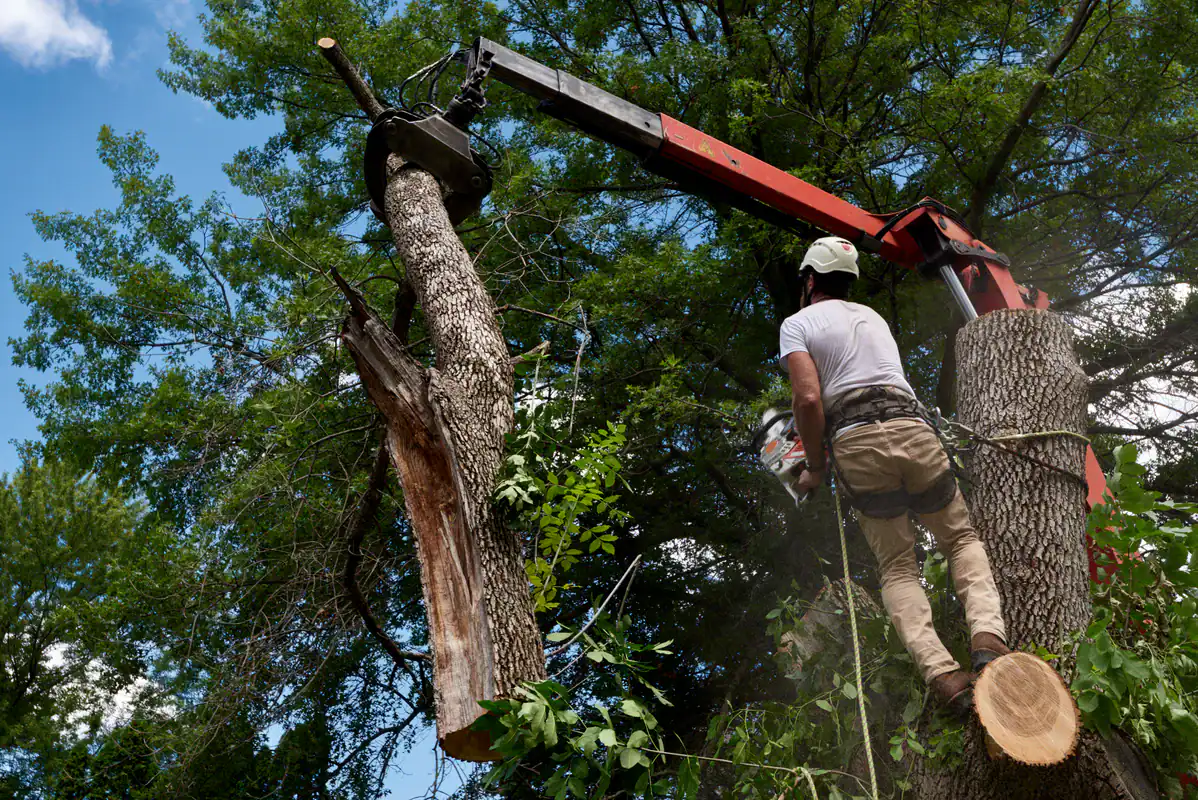
The honest answer is that you often can’t tell just by looking at it from the yard. Internal decay, hollow trunks, and root plate instability — the things that actually make a tree dangerous — don’t always show up on the surface. A tree can look full and healthy right up until a storm hits it the wrong way.
In Lee’s Summit, MO, the neighborhoods built out in the 1970s through the 1990s — Lakewood, Highland Meadows, Chapel Ridge, and the areas around downtown — have trees that are now 40 to 60 years old. That’s the age range where structural decline becomes a real concern, even in trees that have looked fine for years. Properties near Lakewood Lakes, Longview Lake, or any of the city’s drainage corridors are at higher risk because erosion gradually compromises root systems from below.
The safest move is to have someone walk the property with you and give you an honest assessment. We offer free, same-day on-site evaluations — and we’ll tell you straight whether it needs to come down, whether a structural trim will handle it, or whether it can wait. No pressure either way.
Stump grinding is a separate service and is quoted separately from tree removal. This catches a lot of homeowners off guard — the tree comes down, the crew leaves, and there’s a stump sitting in the yard that nobody mentioned would cost extra to deal with.
The straightforward way to handle it is to bring it up before the job starts. If you want the stump removed, let us know during the estimate and it gets included in the scope of work from the beginning. If you’d rather leave it for now and come back to it later, that’s fine too — but it’s worth knowing going in so there are no surprises after the fact.
In Lee’s Summit, MO’s clay-heavy soils, stumps can also become a longer-term issue if left in place. The root system continues to decay underground, which can attract insects and create soft spots in the lawn over time. For properties in HOA communities like New Longview or Arborwalk, a visible stump may also run into HOA property standards. It’s a small thing to address upfront and a bigger headache to deal with after the fact.
First, don’t go near it until you know what you’re dealing with. A tree that’s partially fallen or has a large hanging limb is unstable in ways that aren’t always obvious. If there’s any contact with power lines, call the utility company before anything else — that’s not a job for a tree crew until the lines are confirmed safe.
Once it’s safe to assess, call for emergency service. We offer same-day response for storm-damaged trees in Lee’s Summit, MO. A crew will come out, evaluate what needs to happen immediately versus what can wait, and give you a clear plan. Storm damage situations often involve multiple issues at once — a fallen trunk, hanging limbs, root heave — and it helps to have someone experienced walk through it with you rather than trying to sort it out yourself.
Lee’s Summit sits in a corridor that sees real severe weather. The 2019 ice storm left two inches of ice across the city and caused widespread tree failures. The severe thunderstorm warnings that roll through here regularly forecast 60 to 70 mph wind gusts. Having a licensed, insured crew on call for those situations is practical property management.
For most standard residential tree removals on private property in Lee’s Summit, MO, a specific tree removal permit is not typically required. That said, there are situations where permits or approvals do come into play — particularly if the work involves land clearing connected to a development project, if the tree is near a public right-of-way, or if your HOA has its own approval process before work can begin.
The HOA piece is worth paying attention to in Lee’s Summit specifically. Communities like Lakewood, Raintree Lake, Eagle Creek Estates, and New Longview all have active HOAs with property maintenance standards. Some require documentation that the contractor is licensed and insured before work starts. Others have specific rules about what can be removed and what the finished yard needs to look like. We’re fully licensed under Missouri’s Occupational License requirement for tree services and carry documentation if your HOA asks for it.
If you’re unsure whether your specific situation requires a permit or HOA approval, the safest approach is to check with the City of Lee’s Summit directly before the job begins. We can advise based on what we see on the property, but formal permit questions are best confirmed with the city.
A general rule of thumb for most mature trees is an inspection every two to three years and a structural trim every three to five years, depending on the species, age, and condition. But that’s a starting point, not a hard rule — and in Lee’s Summit, MO, the local conditions push that timeline earlier for a lot of properties.
If your trees are in one of the neighborhoods developed in the 1970s through the 1990s, they’re old enough that annual or biennial check-ins make more sense than waiting several years between looks. Mature oaks and maples at that age can develop internal issues that progress faster than most homeowners expect. Properties near Lakewood Lakes, Raintree Lake, or drainage easements should be checked more frequently because waterlogged and erosion-affected root systems can deteriorate between seasons in ways that aren’t visible from above.
Practically speaking, the best time to schedule a trim in Lee’s Summit is either in late fall — when trees are dormant and structural issues are easier to spot without foliage — or in early spring before the severe weather season ramps up. Pre-storm trimming to reduce wind load on heavy canopies is one of the most effective things you can do to protect your property before the worst weather hits.
Ask for it directly, before any work starts. A legitimate tree service will have no hesitation showing you proof of liability insurance and workers’ compensation coverage. If they’re evasive about it or tell you it’s not necessary, that’s your answer.
In Missouri, tree service companies are required to carry an Occupational License to operate legally. That’s not a formality — it’s a baseline standard that separates legitimate operators from the storm chasers and door-to-door crews that show up after severe weather events looking for quick cash jobs. Lee’s Summit has seen those situations after ice storms and tornado-season storms, and the pattern is usually the same: a low quote, a request for cash upfront, and a job that either doesn’t get finished or causes damage the homeowner is left dealing with alone.
The insurance piece matters as much as the license. If an uninsured crew member is injured on your property, the liability can fall on you as the homeowner. In Lee’s Summit’s HOA communities, many associations require proof of contractor insurance before work can even begin — so this isn’t just a personal protection question, it’s often a compliance requirement. We carry both and will provide documentation on request.
Other Services we provide in Lee'S Summit