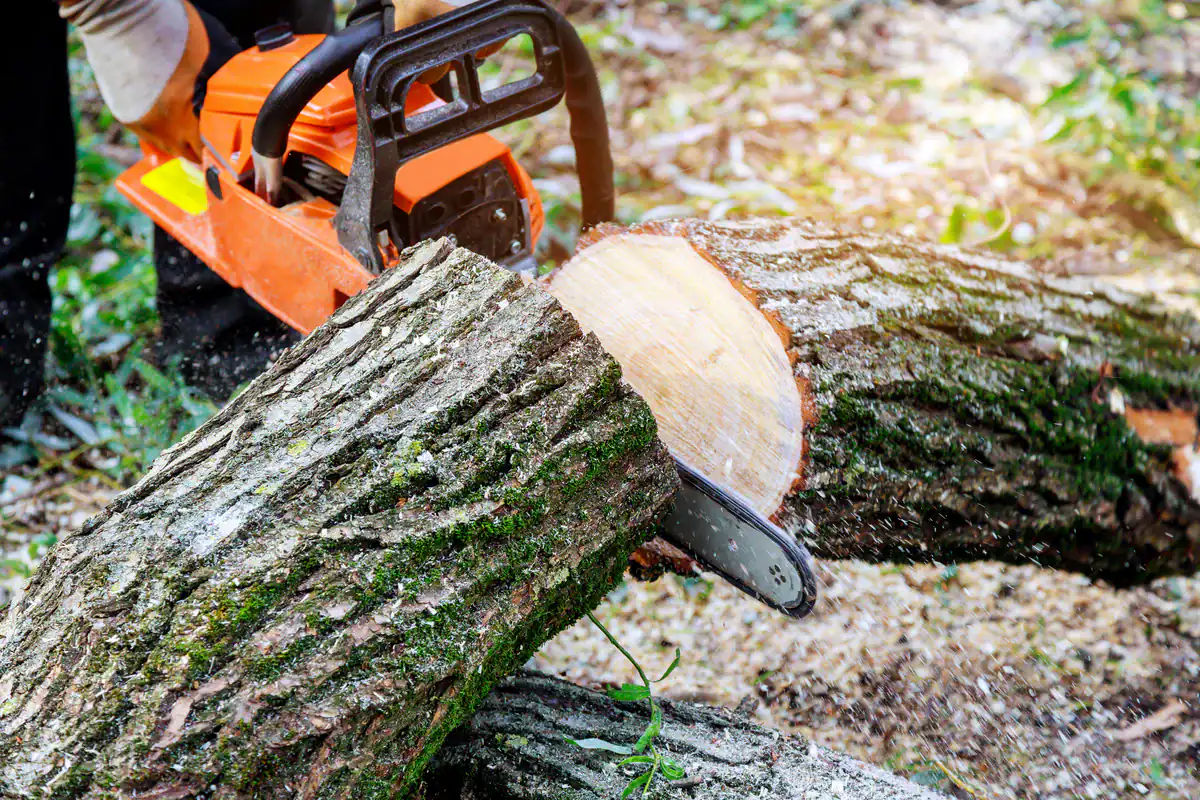
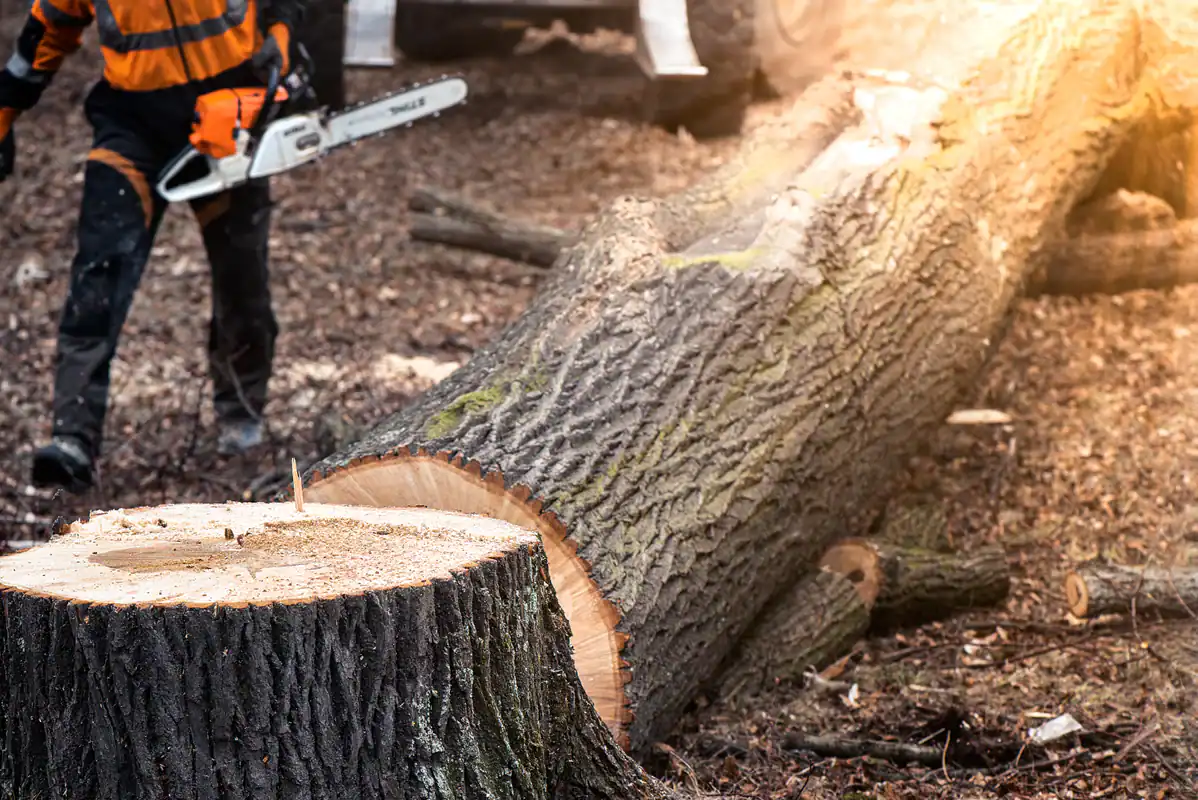
There’s a particular kind of tree problem that’s common along the north bank of the Kansas River in Bonner Springs. The tree looks okay from the outside. It survived the last flood, the one before that, and the big one in 2011 that nearly closed I-70. But repeated saturation does something to root systems that you can’t always see — it weakens the anchor, accelerates internal decay, and turns what looks like a healthy tree into a serious hazard waiting for the next windstorm to make the decision for you.
When a tree comes down the right way — on your schedule, with a crew that knows what they’re doing — you get your yard back. No hanging limbs over the roofline, no roots threatening the foundation, no liability sitting in your front yard every time the weather turns.
For properties near the river or in older neighborhoods downtown where these trees have been growing for decades, that peace of mind is real and immediate. Bonner Springs has maintained its Tree City USA designation for 30 years. That’s a community with a mature, well-established canopy — which also means large cottonwoods and silver maples have had plenty of time to grow close to homes, driveways, and power lines. When one of those trees reaches the end of its life or takes storm damage, the removal needs to be handled carefully. That’s exactly the kind of work we were built for.
We’re based in Kansas City, KS & MO, KS — Wyandotte County, same as Bonner Springs. This isn’t a company dispatching crews from across the metro. When a storm rolls through on the I-70 corridor and drops a cottonwood across your driveway at Cedar Ridge or puts a silver maple through your fence line near downtown, our response time is short because the distance is short.
Our crew has over a decade of experience in the Kansas City, KS & MO metro, and that includes the kind of work that doesn’t come up in newer suburbs — large, mature trees on tight lots, flood-adjacent properties, older homes where the trees predate the current owners by thirty years. We’ve also deployed to storm recovery operations across multiple states, which means the big, complicated jobs aren’t new territory.
We’re fully insured, honest on assessments, and upfront on pricing. If a trim can solve the problem, we’ll tell you that instead of pushing for a full removal. That’s not a marketing angle — it’s just how the work gets done here.
It starts with a free on-site estimate. We come out, look at the tree, and give you a straight answer — what it needs, what it’ll cost, and whether removal is actually the right call or if something less involved would handle it. No pressure, no upsell, no vague numbers over the phone.
Once you’re ready to move forward, we schedule the job and show up with the equipment needed for the specific situation. In Bonner Springs, that often means accounting for tight lot lines near older downtown properties, proximity to neighboring fences or structures in newer subdivisions, or the kind of terrain you find on properties that back up toward the Kaw River corridor. Large trees — especially cottonwoods and silver maples, which are common here and tend to be structurally unpredictable — get handled in sections, carefully, with the surrounding property in mind the whole time.
When the tree is down, the cleanup is included. Every piece of it. Bonner Springs has specific yard waste rules — limbs need to be bundled in four-foot lengths under fifty pounds for curbside pickup, or hauled to the Wyandotte County Recycling and Yard Waste Center on Park Drive. You don’t have to deal with any of that. We remove everything, and if you want to keep the wood or mulch for your own use, just say so before the job starts.
Ready to get started?
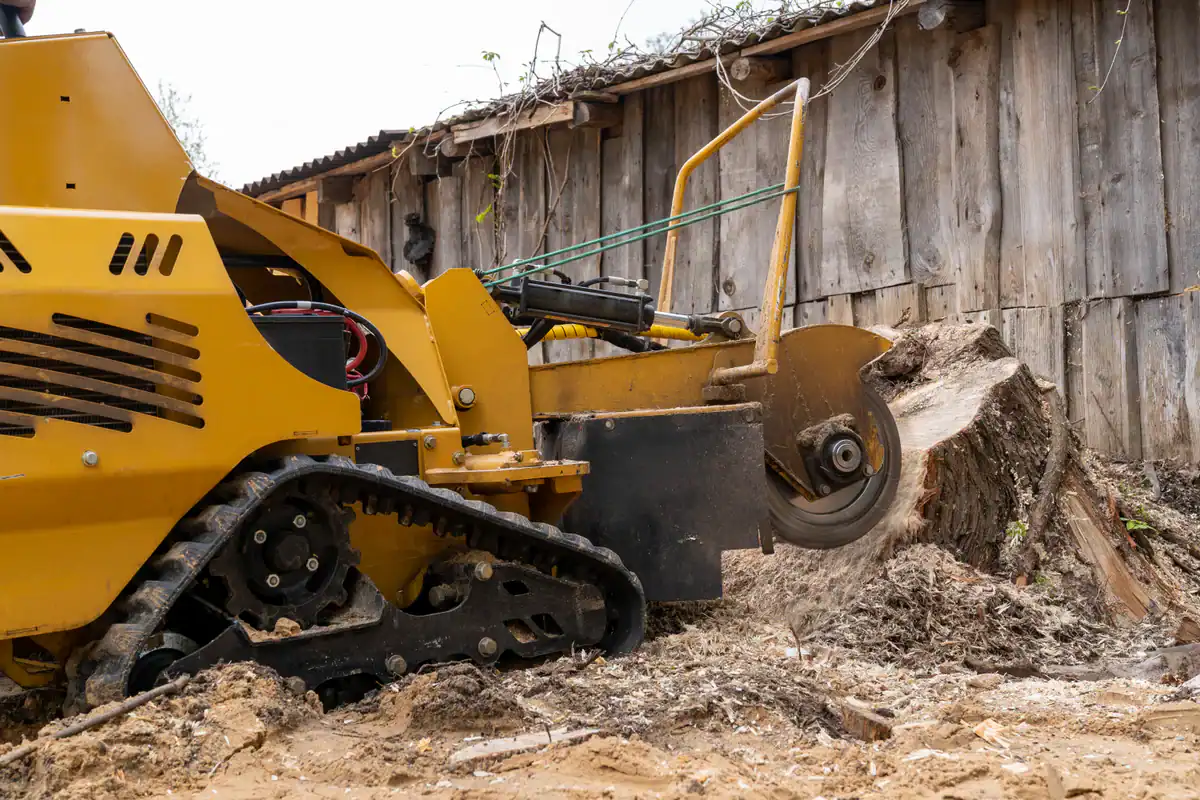
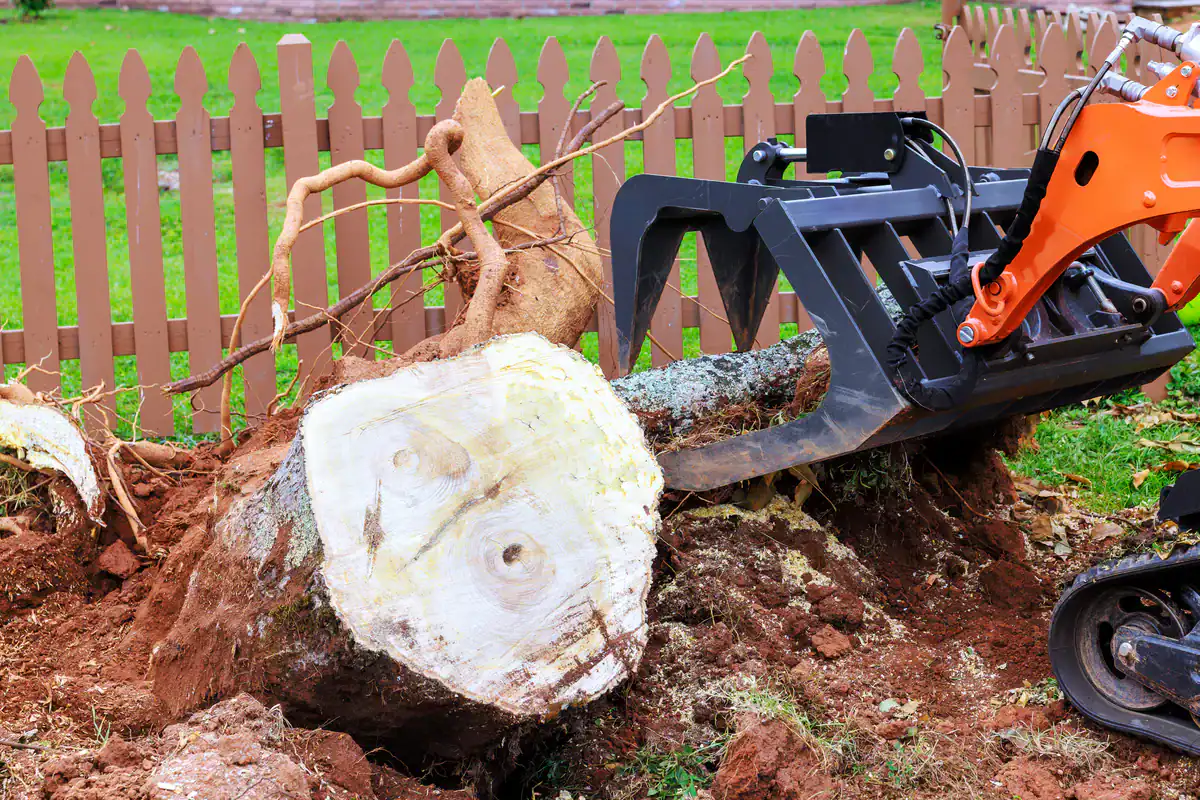
Our tree removal service covers the full scope — cutting, hauling, and cleanup — for dead trees, diseased trees, hazardous trees, and large trees that have simply outgrown their space or become a structural risk. Stump grinding and brush removal are also available if you want the area cleared completely.
For Bonner Springs specifically, the work frequently involves species that require careful handling. Cottonwoods along the river corridor and in older neighborhoods develop structural weakness as they age and can fail unpredictably. Silver maples, common throughout the city’s residential areas, are notoriously brittle under ice loading and high winds — exactly the conditions that hit this stretch of the I-70 corridor during Kansas winters and spring storm season. Knowing how these trees behave, and how to bring them down safely in tight residential settings, is the difference between a clean job and a costly one.
We also handle diseased tree removal for trees affected by Oak Wilt or Emerald Ash Borer, both of which are documented threats in the Kansas City, KS & MO metro. If you’re not sure whether your tree is diseased, dead, or just stressed from a rough season near the floodplain, the on-site assessment will give you a clear answer. No guessing, no unnecessary removal, no leaving you with a problem that a trim could have fixed.
This is probably the most common question, and the honest answer is: it depends on what’s actually going on with the tree. A tree that’s lost a major limb in a storm but still has a healthy structure and strong root system may do fine with a strategic trim and some time. A tree that’s internally decayed, has significant root damage from repeated flooding, or is showing signs of disease progression is a different situation entirely — trimming won’t fix a structural problem that’s working from the inside out.
In Bonner Springs, this question comes up a lot for trees near the Kansas River corridor that have been through multiple flood events. A tree that looks healthy on the surface may have compromised root anchoring from years of saturation. The only way to know for sure is an on-site assessment by someone who can look at the full picture — the canopy, the trunk, the root zone, and the surrounding conditions. We’ll give you a straight answer on that without pushing you toward the more expensive option if it isn’t warranted.
No. Full cleanup is included on every job. We remove all of it — cut sections, branches, chips, everything. You don’t have to bundle anything, make any trips, or figure out Bonner Springs’ yard waste disposal rules on your own.
For context, the city does have specific requirements for curbside yard waste pickup: limbs need to be tied in bundles no longer than four feet and weighing under fifty pounds. Anything larger has to go to the Wyandotte County Recycling and Yard Waste Center on Park Drive, which is only open Thursday through Sunday. If you were handling this yourself after a large tree removal, that’s a significant amount of work and multiple trips. When we do the job, none of that falls on you. If you want to keep the wood for firewood or the chips for mulch, just let us know before we start — we’ll set it aside for you.
It depends on the circumstances, and the details matter more than most people realize. If a tree falls and damages a structure — your roof, your fence, your garage — most standard homeowners policies will cover some portion of the removal cost, typically in the range of five hundred to a thousand dollars toward the debris removal specifically. The structural damage itself is usually covered under the dwelling portion of your policy, subject to your deductible.
Where it gets complicated is when the tree was already dead or visibly diseased before it fell. If your insurer can demonstrate that you knew — or reasonably should have known — the tree was a hazard and you didn’t address it, they can deny the claim based on negligence. That’s a documented reason for claim denials, and it’s why proactive removal of dead or hazardous trees is actually the financially responsible move. If you have a tree on your Bonner Springs property that you’ve been watching and wondering about, getting an honest assessment sooner is better than finding out after the fact that you’re not covered.
We don’t publish set pricing because the cost of any removal depends on the specific job — the size of the tree, its location on the property, proximity to structures or power lines, and how complicated the removal will be. What we do offer is a free on-site estimate so you know exactly what you’re looking at before committing to anything.
What’s worth knowing as a general reference point is that nationally, tree removal averages somewhere between seven hundred fifty and twelve hundred dollars for a standard residential job, with larger or more complex removals running higher. In Bonner Springs, large cottonwoods and mature silver maples — which are common here — tend to fall on the higher end of that range because of their size and the structural unpredictability involved. The best way to get a real number for your specific tree is to have someone look at it. The estimate is free, there’s no obligation, and you’ll get a straight answer on what the job actually involves.
Yes, when it’s done by a crew that has experience with exactly that kind of situation. The concern is legitimate — large tree removal in tight residential spaces requires careful planning, the right rigging, and a crew that knows how to bring a tree down in sections without letting any of it go where it shouldn’t. This is not the same job as dropping a tree in an open field.
Bonner Springs has a mix of older downtown lots where large trees sit very close to homes and property lines, and newer subdivisions along K-7 where houses are relatively close together. We have a documented track record of handling large tree removal in dense residential settings without damage to neighboring property — customers have specifically noted this in reviews, including situations involving tall trees in tight neighborhoods where the margin for error was small. Full liability insurance is in place for every job, so if something unexpected does happen, your property and your neighbor’s property are covered.
For most standard residential tree removal on private property in Bonner Springs, a permit is not typically required. However, there are situations where additional considerations apply — trees near public right-of-way, work within utility easements, or removal of city-owned trees would involve a different process and likely require coordination with the city before any work begins. The city also has exterior property maintenance rules that address vegetation near intersections and driveways, specifically requiring that sight lines remain clear of obstructions above two feet unless previously approved.
If you’re unsure whether your specific situation involves any of these factors — particularly if the tree is near the street, close to a utility line, or on a property boundary — it’s worth a quick call to the City of Bonner Springs before the work starts. We can also help you think through the situation during the on-site estimate. Getting clarity on this upfront takes five minutes and avoids any complications after the job is done.
Other Services we provide in Bonner Springs