
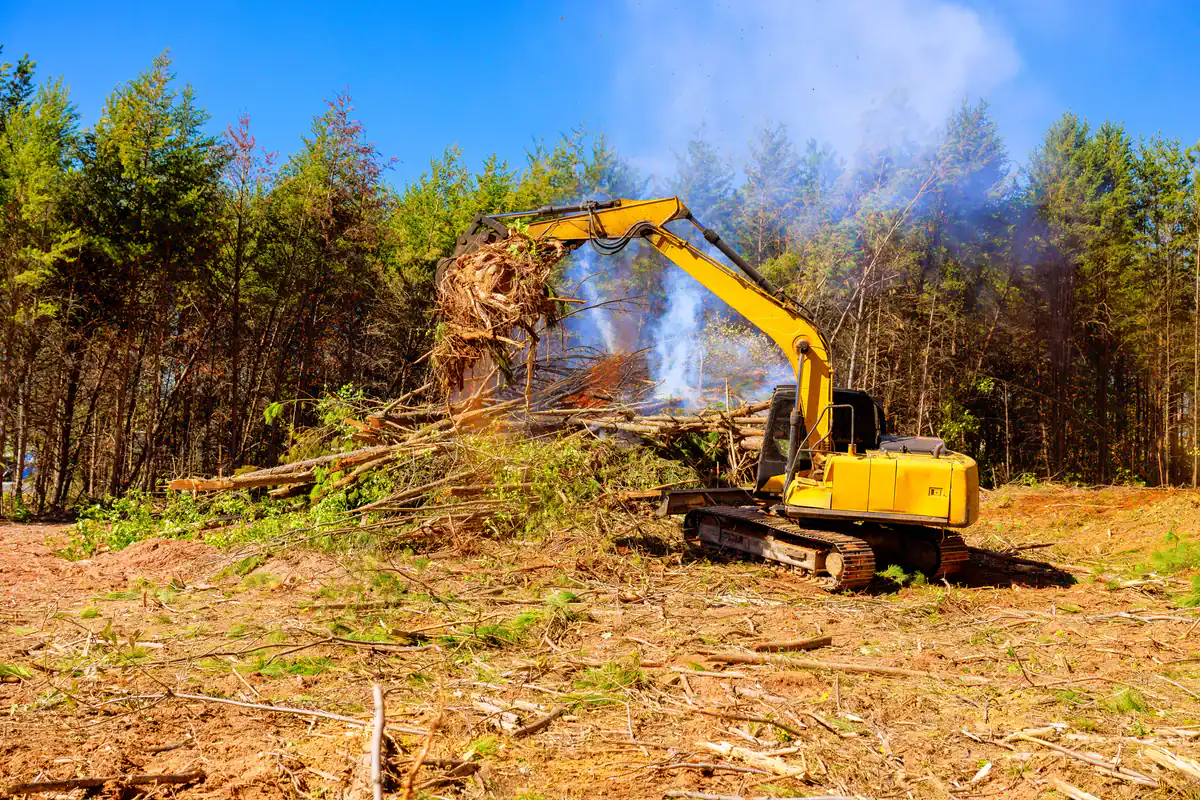
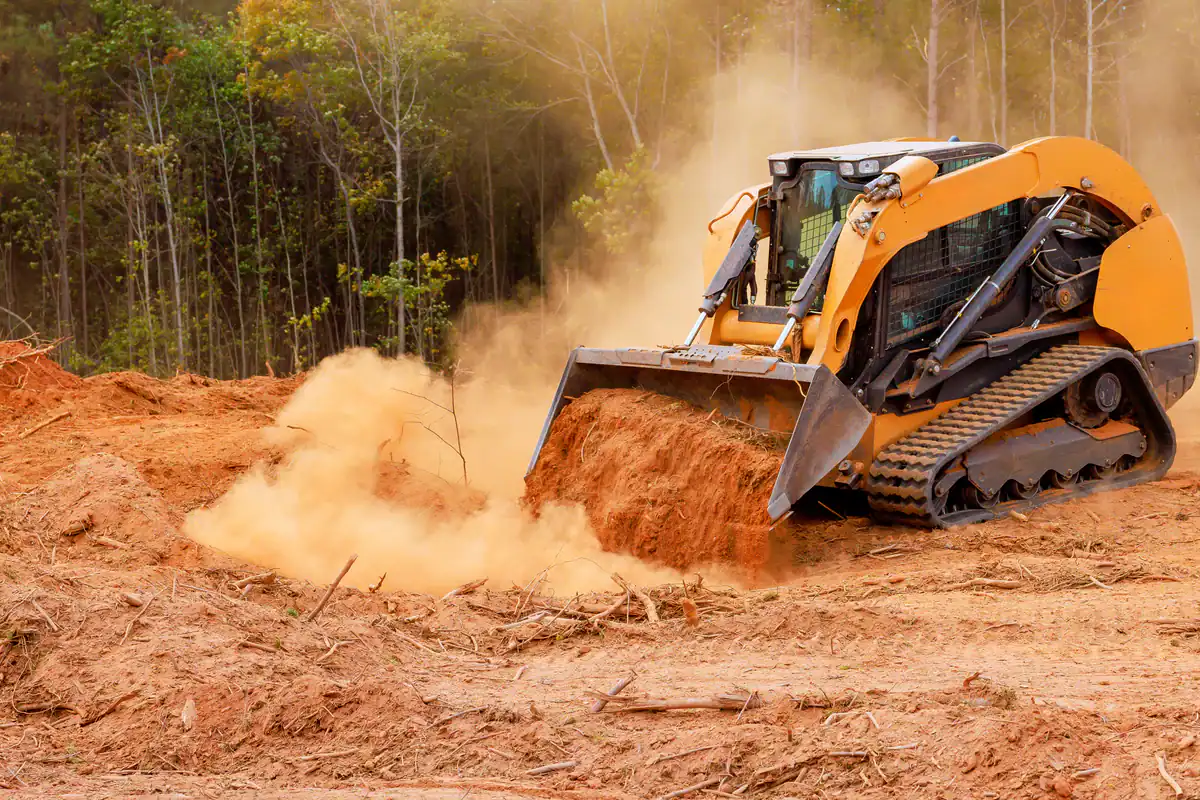
Bonner Springs sits on rolling hills along the Kansas River corridor, and the land here grows things fast. Eastern red cedar spreads from seed and takes over unmanaged lots within a single season. Black locust sends up root sprouts after cutting. Osage orange — what locals call hedge — is one of the densest, thorniest hardwoods in the region. If you’ve let a section of your property go for even a couple of years, you already know what you’re dealing with.
When we clear that tangle the right way, you get your land back. A buildable lot. A usable backyard. A property that doesn’t look abandoned. Because Wyandotte County has been dealing with Emerald Ash Borer since 2012 — one of the first counties in Kansas to be affected — many Bonner Springs properties also have dead or structurally compromised ash trees sitting on them. Those need to come down before they come down on their own.
A proper clearing job doesn’t just remove what’s there. We remove it safely, account for what’s worth keeping, and leave the site clean enough to hand directly to whoever comes next — your builder, your landscaper, or just yourself. No debris piles. No half-finished stumps. No surprises on the invoice.
Squirrel Master Tree Services is a family-owned, licensed, and insured tree care company serving the Kansas City, KS & MO metro, including Wyandotte County and Bonner Springs. Our owner is an ISA Certified Arborist with over 15 years of experience — and that credential isn’t just a wall decoration. Kansas state law requires an Arborist License for any tree work performed for a fee, and we hold it. More importantly, it means the person making decisions about your property actually understands tree biology, hazard assessment, and what happens when you remove a root system from hilly terrain near a structure.
We’ve removed more than 1,200 trees across the Kansas City, KS & MO area with a 100% safety record. We’ve worked on wooded hillside lots in Bonner Springs, cleared overgrown parcels for new construction, and handled the vegetation specific to this part of Kansas. We speak both English and Spanish, which matters in a community like Bonner Springs where roughly 1 in 9 residents is Hispanic. Straightforward pricing, free estimates, and no upfront cost — that’s our standard every time.
It starts with a free on-site estimate. Not a phone guess — an actual visit to your property. Bonner Springs land varies significantly: a flat residential lot near Pioneer Hills is a different job than a wooded hillside parcel near the Kansas River, and there’s no honest way to quote a price without seeing what we’re working with. We walk the property, assess vegetation density, terrain, access points, and any structures or features worth protecting. You get a real number before anything is agreed to.
One thing worth knowing before work begins: the City of Bonner Springs requires you to check with City Hall before any excavation, fill, or grading activity. If your clearing project involves ground disturbance — which most lot and acreage clearing does — a permit may be required. Bonner Springs also spans three counties (Wyandotte, Leavenworth, and Johnson), so depending on exactly where your parcel sits, the applicable regulations may differ. We’re familiar with this area and know to ask those questions upfront, not after the equipment is already on site.
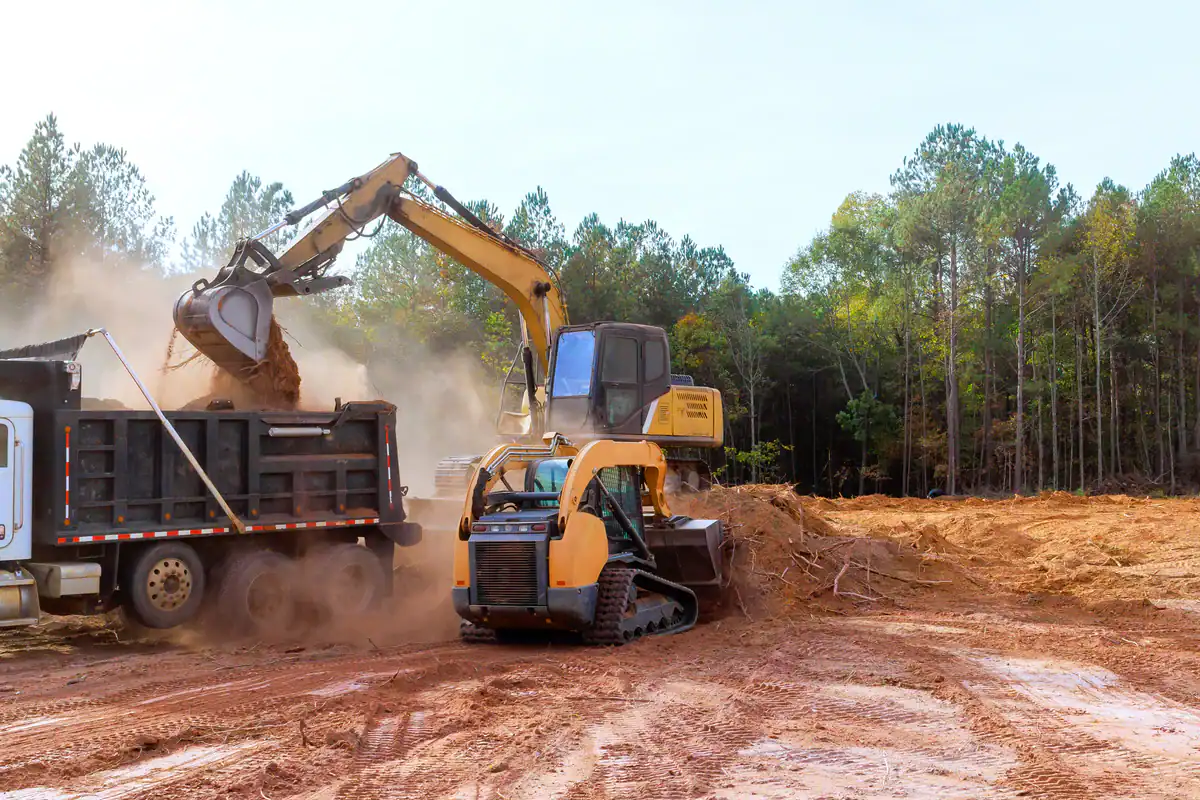
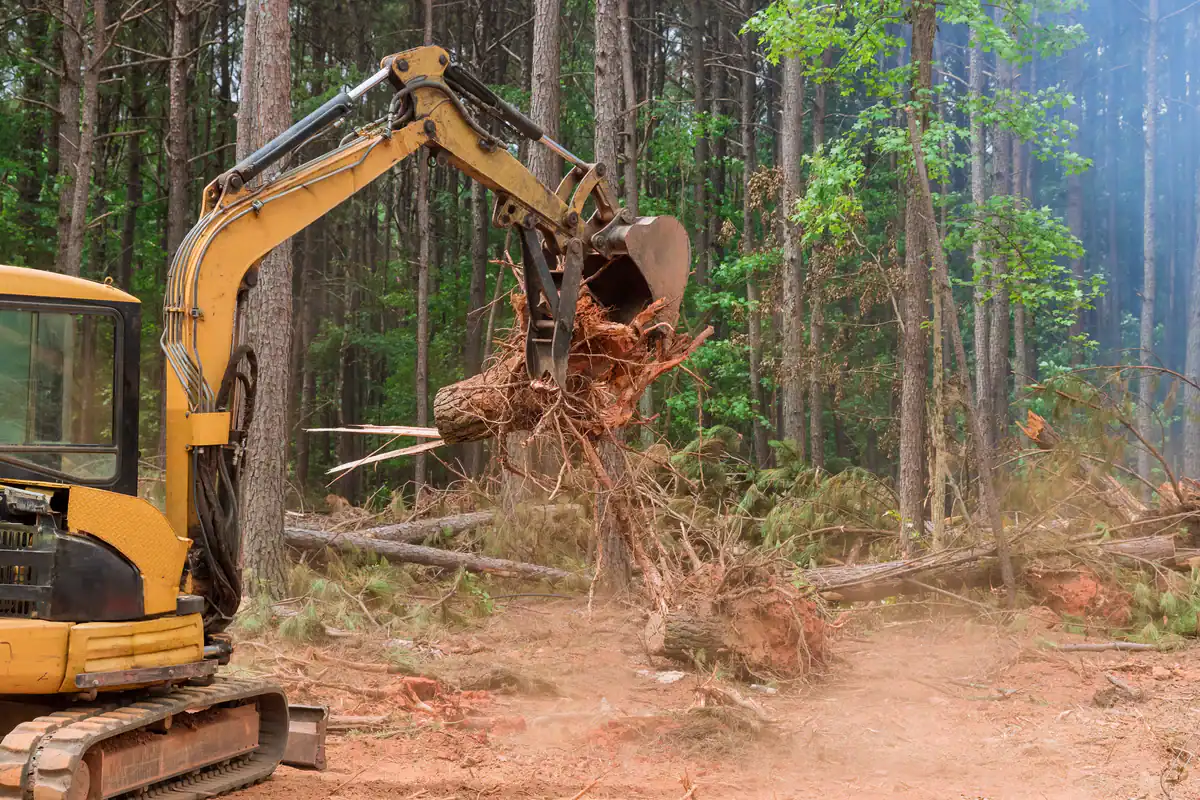
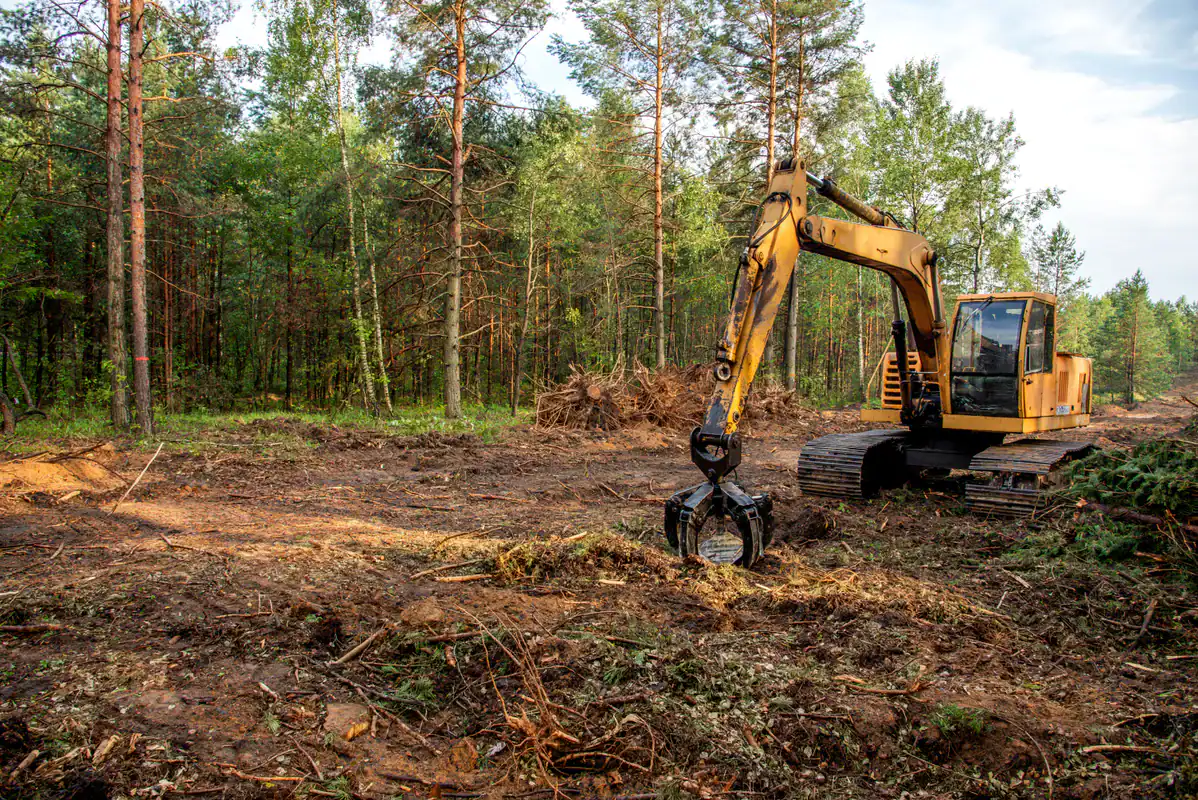
Once the scope is confirmed and any permits are sorted, we get to work. Trees come down in a controlled sequence, stumps are ground out, brush is cleared, and all debris is hauled away. The goal is to leave the site clean and ready — whether that means handing it to a builder, a landscaper, or just giving you back land you can actually use. Cleanup is included. What you see when we leave is what you paid for.
Ready to get started?
Land clearing in Bonner Springs covers a range of situations, and the right approach depends on what’s actually on your property. A residential lot with a mix of mature trees and dense brush is handled differently than a multi-acre parcel being prepped for new construction. We handle both — tree removal, stump grinding, brush removal, and full debris haul-off are all part of the job. If you’re dealing with EAB-damaged ash trees, we assess them before removal begins, because dead ash loses structural integrity fast and needs to come down carefully.
For properties near the Riverview area or along the Kansas River corridor, the vegetation profile often includes riparian species — willows, cottonwoods, and invasive growth that comes back aggressively if not handled properly. For lots in northern Bonner Springs being prepped for new construction — like the residential developments actively moving through the city’s planning pipeline — the timeline matters as much as the scope. We move efficiently and finish the job in a single visit when possible, so your build schedule doesn’t get pushed.
Bonner Springs is in the growth path of western Kansas City, KS & MO, and a lot of the clearing work here is tied to people who’ve bought land and are ready to build. If that’s your situation, the process is straightforward: free estimate, confirm scope, clear the land, haul the debris, leave the site ready. No upfront cost, no hidden fees, and no debris left behind for you to deal with.
The City of Bonner Springs requires you to check with City Hall before any building, demolition, excavation, fill, or grading activity. That means if your land clearing project involves disturbing the ground — which most lot clearing and site clearing work does — you’ll want to confirm whether a permit is required before work begins. You can reach City Hall directly at (913) 667-1710 to ask.
One thing that makes Bonner Springs slightly more complicated than neighboring cities is its tri-county geography. The city spans parts of Wyandotte, Leavenworth, and Johnson Counties, and depending on exactly where your parcel sits, the applicable rules can differ. Bonner Springs also has what’s called the Loring Service Area — an extra-territorial jurisdiction that extends the city’s regulatory reach beyond the formal city limits. If your property is on the fringe of town, it may still fall under Bonner Springs regulations even if the address doesn’t look like it. We work regularly in this area and know to check before equipment rolls in.
Land clearing costs in the Kansas City, KS & MO area typically range from around $1,500 to $5,000 or more per acre, depending on vegetation density, terrain, and how the debris is handled. The national average for a residential clearing project runs between $3,743 and $3,805, but that number can shift significantly based on what’s actually on your property.
In Bonner Springs specifically, the terrain and vegetation profile tend to push costs toward the higher end of that range for wooded parcels. Eastern red cedar, black locust, and Osage orange are common on unmanaged lots here, and all three are labor-intensive to clear properly. Cedar and locust require stump grinding or root treatment to prevent regrowth — just cutting them down isn’t enough. If you also have EAB-damaged ash trees on the property, those add complexity because of the structural risk involved in removing a compromised tree safely.
The only honest way to give you a real number is to see the property. We provide free on-site estimates with no upfront cost and no obligation, so you’ll know exactly what you’re looking at before you commit to anything.
These terms get used interchangeably, and for most residential purposes, they mean the same thing: removing trees, brush, stumps, and vegetation from a piece of land to make it usable. The terminology tends to shift depending on context. “Lot clearing” usually refers to a residential parcel — someone who bought a wooded lot and needs it cleared before building a house. “Site clearing” is more common in construction language — a contractor preparing a site for a foundation or development project. “Land clearing” is the broadest term and covers both.
In Bonner Springs, all three situations are common right now. The city has active residential development in the pipeline, including a large single-family project approved in 2026 in the northern part of the city. There are also plenty of existing residential properties on wooded, hilly lots where the vegetation has gotten out of hand. Whether you’re prepping for new construction or reclaiming an overgrown section of your property, the work involved is largely the same — it’s the timeline and end goal that differ.
If you have ash trees on your Bonner Springs property that are declining, losing bark, or showing signs of dieback, there’s a good chance Emerald Ash Borer is involved. Wyandotte County was one of the first counties in Kansas to have EAB confirmed — that detection goes back to 2012 — and the City of Bonner Springs has even included an EAB alert on its property maintenance page, noting that the pest will cause widespread decline of ash trees in Wyandotte and Johnson Counties.
The reason this matters for land clearing is that dead and dying ash trees lose structural integrity quickly. Within two to three years of dying, ash becomes brittle and unpredictable — the way it falls during removal is harder to control than a healthy tree of the same size. If an EAB-compromised ash is near your house, fence, driveway, or a neighboring structure, it should be assessed by a certified arborist before anyone picks up a chainsaw. Our owner holds an ISA Certified Arborist credential specifically because these judgment calls require real expertise, not just equipment. If your clearing project involves ash trees, that assessment happens before any work begins.
Fall and winter are actually ideal times to clear land in the Bonner Springs area, and there are a few practical reasons for that. Without foliage on the trees, we have better visibility of the canopy structure and can make more accurate decisions about how trees will fall. The ground in late fall and winter tends to be firmer, which means heavy equipment causes less damage to the surrounding soil and any areas you want to preserve. Clearing during the dormant season means the vegetation isn’t actively growing, so there’s less stress on any trees you’re keeping.
If you’re planning to build in the spring or summer, scheduling your clearing in the fall or winter prior is the smart move. Construction timelines in Bonner Springs are active right now — the city has new residential development in progress — and getting your land cleared before your permits are pulled means you’re not waiting on a clearing crew while your build window is open. We respond fast and can often complete residential clearing jobs in a single visit, which keeps your schedule moving.
Full debris removal is part of the job. When we finish a clearing project, the trees, brush, stumps, and debris are hauled away — the site is left clean. This isn’t a bonus or an add-on; it’s what the job includes. Multiple customers have specifically noted the cleanup quality in their reviews, mentioning that we left the yard spotless and cleaned up not just their property but the surrounding area as well.
For Bonner Springs properties, this matters more than it might in a flat suburban neighborhood. Wooded, hilly lots — especially those near the Kansas River corridor or on properties with dense cedar and locust growth — generate a significant volume of debris. Leaving that material on-site creates problems: brush piles attract pests, stumps become tripping hazards, and leftover debris can interfere with whatever comes next, whether that’s a builder, a landscaper, or your own use of the land. We hand you a clean site, not a cleared site with a pile of logs in the corner. What you’re quoted covers the work and the cleanup — no surprises on the invoice when the job is done.
Local Resources
Other Services we provide in Bonner Springs