Mission Woods wasn’t built around cookie-cutter landscaping. J.C. Nichols developed these four streets specifically for their tree-studded character, and the mature oaks, elms, and native hardwoods that line Mission Woods Road are part of what makes this neighborhood what it is. But those same trees — many of them 80 to 90 years old — can become liabilities. Structural decay, storm damage, root conflicts with foundations, and overgrowth that blocks drainage or crowds neighboring properties are real issues here, and they don’t fix themselves.
When you hire us for land clearing on a Mission Woods property, the outcome you’re paying for isn’t just “trees gone.” It’s a site that’s been assessed by someone who understands what to remove, what to protect, and how to leave the ground in a condition that reflects the standards of the community around it. That means clean debris removal, no torn-up driveways, no damaged fencing, and a yard your neighbors won’t be calling the ARB about.
Mission Woods sits directly on State Line Road — the dividing line between Kansas and Missouri — and we work both sides of it. Whether you’re clearing a lot ahead of a renovation, dealing with storm damage along Shawnee Mission Parkway, or managing overgrowth on a commercial property in the State Line Road corridor, you get a crew that shows up prepared, works carefully, and leaves the site spotless.
Squirrel Master Tree Services is a family-owned, licensed, and insured tree care company serving the Kansas City Metropolitan Area, MO metro on both sides of State Line Road. We’re owned and operated by a certified arborist with more than 15 years of hands-on tree care experience — not a project manager who schedules crews from an office, but the person who actually understands tree biology, structural risk, and what it takes to bring a mature tree down safely in a tight residential space.
That track record matters more in a place like Mission Woods than almost anywhere else in Johnson County. With homes averaging over $830,000 and an Architectural Review Board that oversees exterior changes to property, there’s no room for a crew that eyeballs the job and hopes for the best. We’ve removed more than 1,200 trees with a 100% safety record, and our reviews reflect it — customers consistently describe the same outcome: careful work, no accidents, and a site left completely clean.
Squirrel Master Tree Services holds a 4.9-star rating on Birdeye and was recognized by Quality Business Awards 2024 as a top 1% business in Kansas City Metropolitan Area, MO with a quality score above 95%. Those aren’t numbers we put on our own website — they’re third-party verified.
It starts with a free, in-person estimate. Not a phone quote, not a ballpark figure based on square footage — an actual site visit where we walk your property, look at what’s there, and give you a real number. For Mission Woods properties, that assessment matters more than usual. Vegetation density, tree age and condition, equipment access on narrow residential streets, proximity to structures, and the condition of adjacent trees all affect how the job gets done and what it costs. You’ll know exactly what’s included before any work begins.
One thing worth knowing before you schedule: Mission Woods has an active Architectural Review Board that may need to approve exterior property changes — including significant yard work — before a building permit is issued. The city also has a noise ordinance with specific allowable hours for landscape and construction work. A crew that isn’t aware of these requirements can create problems for you even if the physical work is done well. We operate as a licensed, professional company that understands the regulatory environment in communities like Mission Woods.
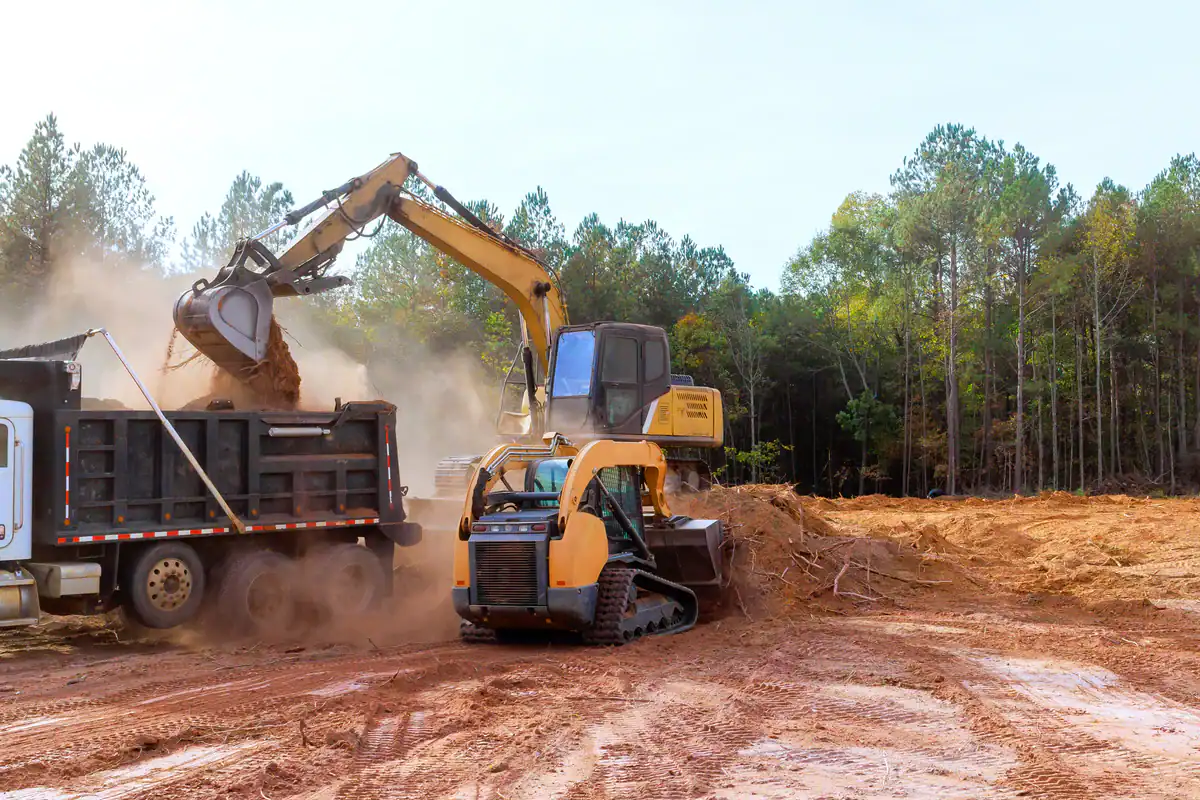
Once the estimate is approved and any required approvals are in place, our crew arrives with the right equipment for the job. Trees come down in sections where needed to protect structures and adjacent plantings. Debris is chipped, hauled, or handled per your preference. Stumps are ground if that’s part of the scope. When we leave, the site is clean — not “mostly clean” — and you’re not left chasing someone down to finish what they started.
Ready to get started?
Land clearing in Mission Woods looks different than it does on a rural acreage or a new construction site on the suburban fringe. The lots here are smaller, the trees are older, the neighbors are close, and the community has aesthetic standards that are actively enforced. That shapes how we approach every job.
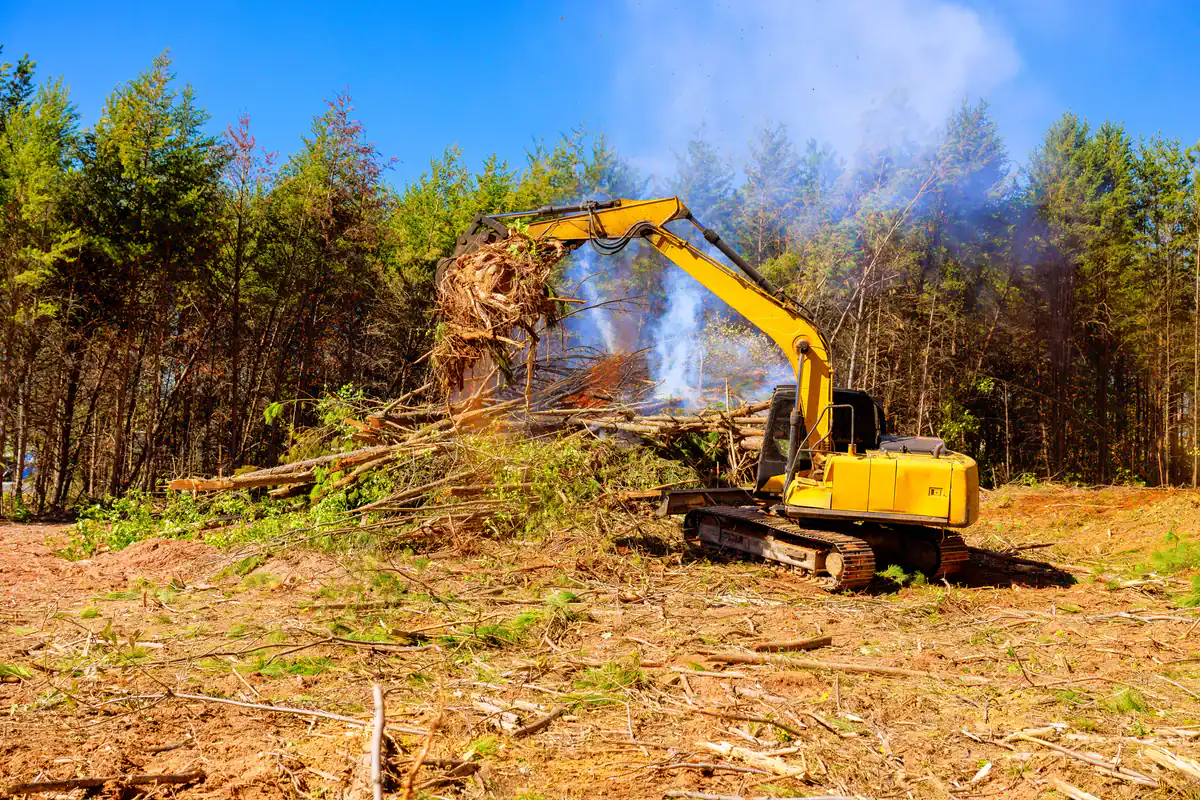
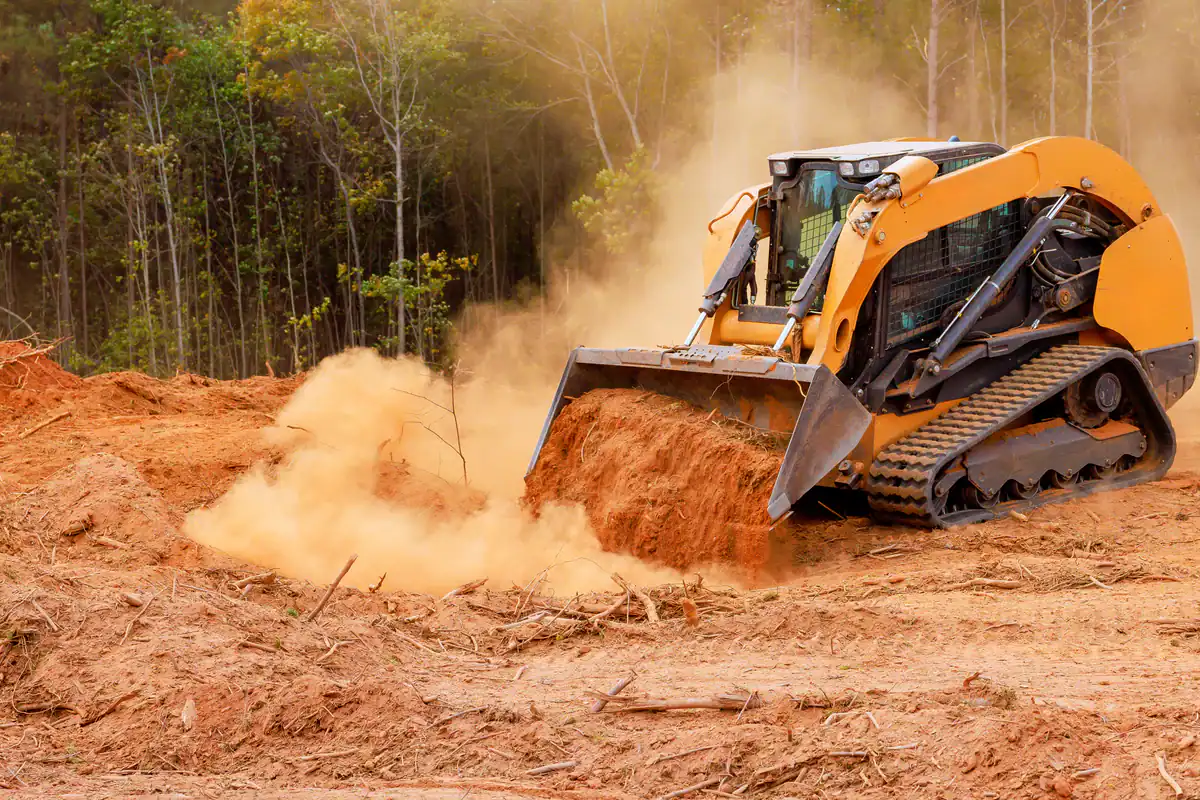
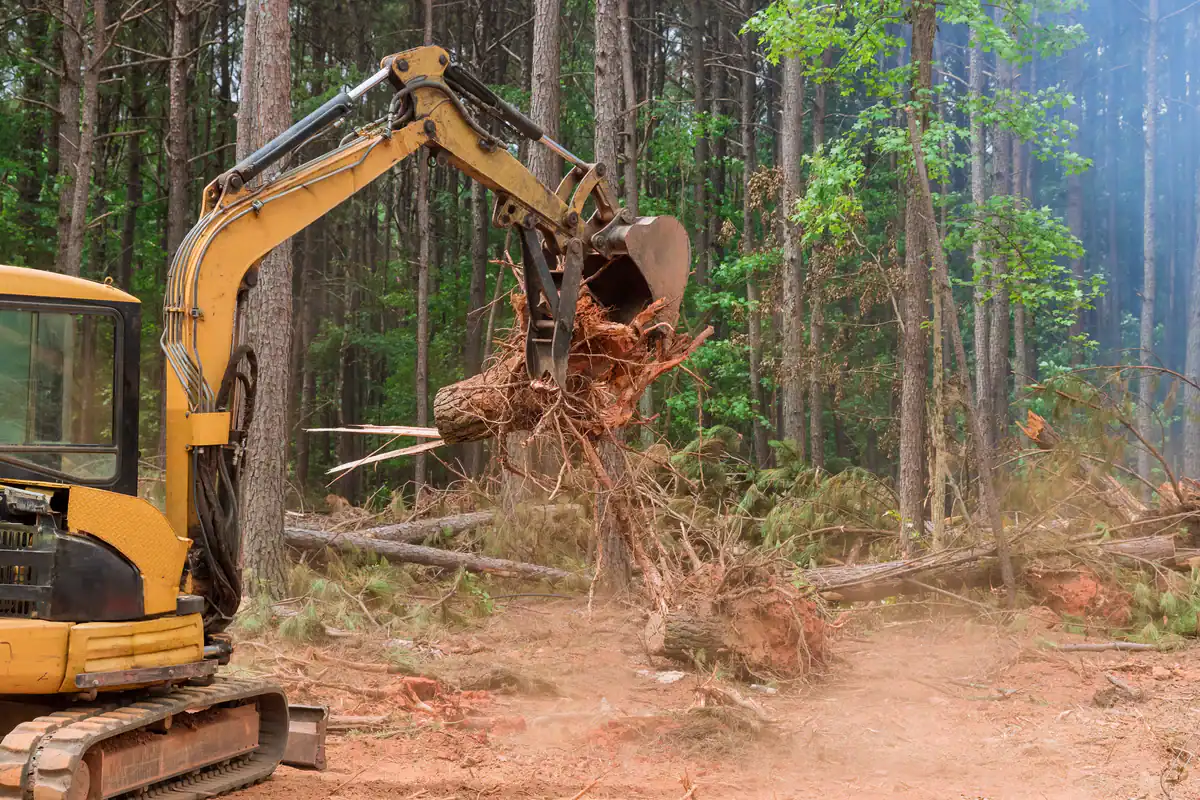
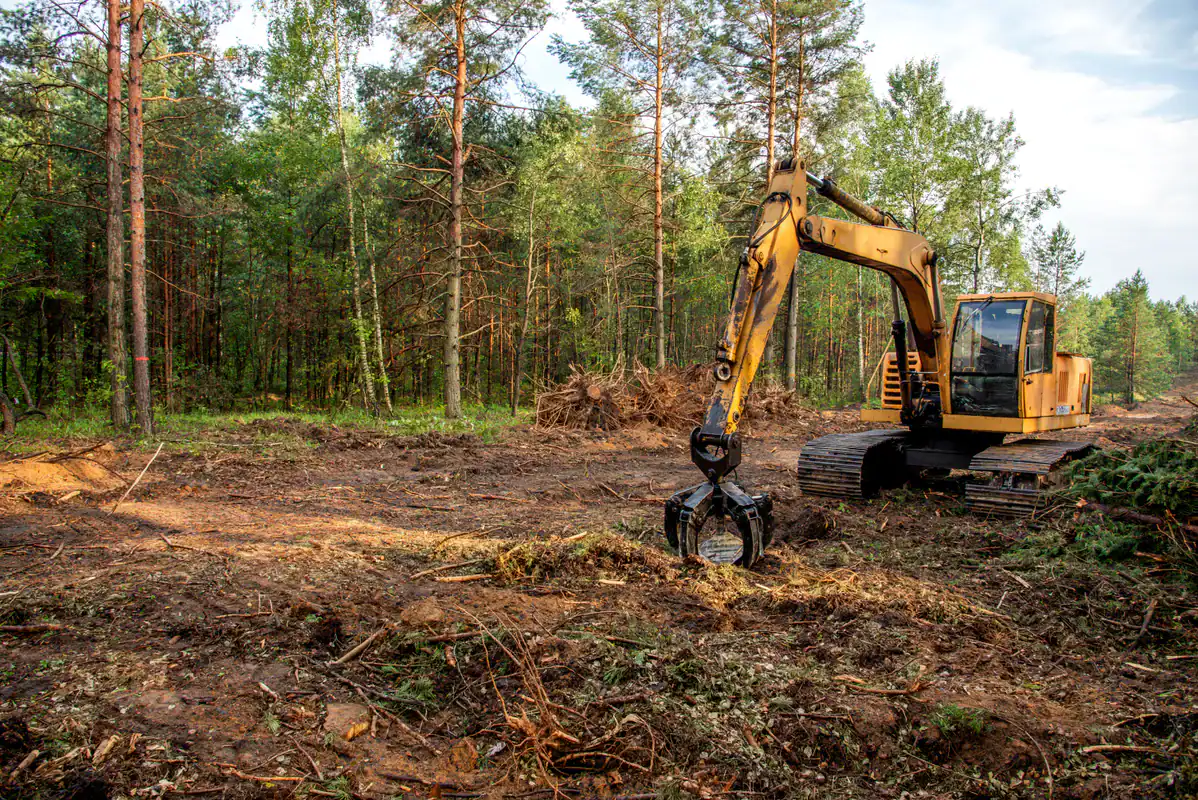
Tree and brush removal on a Mission Woods property typically involves careful, section-by-section removal of trees rather than wholesale felling, because the clearance between a mature oak and a $900,000 home — or a neighbor’s property — doesn’t leave room for error. Stump grinding is available as part of the scope if you want a clean finish at ground level. Brush removal, lot clearing for renovation or rebuild projects, and site clearing for commercial properties along the State Line Road corridor are all services we handle in this area.
Debris removal is included. We don’t leave a pile at the curb and call it done. Everything is hauled or chipped, and the site is walked before we leave. If emerald ash borer has taken out ash trees on your property — an active issue in the Mission area — those removals are handled as part of the broader clearing scope when applicable. We offer free estimates with no upfront cost and no hidden fees, so the number you’re quoted is the number you pay. We accept credit card payments and serve Mission Woods as part of our core Kansas City Metropolitan Area, MO metro service area on both the Kansas and Missouri sides of State Line Road.
Mission Woods has an active Architectural Review Board that must approve most exterior changes to property before a building permit can be issued. The ARB’s scope explicitly covers yard work — not just structural changes to the home itself — and the process typically requires neighbor notification before approval is granted. If you’re planning significant tree removal, lot clearing for a renovation, or any work that visibly changes the exterior character of your property, it’s worth checking with the city before scheduling a crew.
This doesn’t mean every small job requires formal approval, but the threshold in Mission Woods is lower than most people expect. A licensed contractor who understands this environment will ask about it upfront rather than assume. The city also has a noise ordinance with defined allowable hours for landscape and construction work, so scheduling matters too. Getting those details sorted before the crew arrives protects you from fines or mandatory restoration — which, on a property in Mission Woods, is not a minor inconvenience.
Land clearing costs vary significantly based on what’s actually on the property — vegetation density, tree size and age, equipment access, terrain, and how debris is handled all affect the final number. Nationally, the average residential land clearing project runs between $3,743 and $3,805, but that figure covers everything from flat grassland to heavily wooded acreage. In the Kansas City Metropolitan Area, MO area, per-acre costs for moderately wooded land typically fall between $500 and $3,000, while heavily wooded or mature-tree properties can run $3,300 to over $6,000 per acre.
For Mission Woods specifically, the relevant cost drivers aren’t usually acreage — the lots are small — but rather the complexity of the work. Removing large, mature trees in tight residential spaces, working around structures and adjacent landscaping, and managing debris removal on narrow streets adds to the scope. Stump grinding, if needed, is typically a separate line item. The most accurate way to understand what your specific job will cost is an in-person estimate, which we provide at no charge and with no obligation.
These terms get used interchangeably, and for good reason — they often describe the same work. Land clearing and lot clearing both refer to removing trees, brush, stumps, and vegetation to prepare land for a specific use, whether that’s a new home, a renovation, or simply reclaiming usable outdoor space. Site clearing is the same concept applied in a construction context. Brush removal is a narrower scope — it typically refers to clearing dense undergrowth, shrubs, and smaller vegetation without necessarily taking down large trees.
In practice, most residential jobs in a neighborhood like Mission Woods involve some combination of all three. You might be removing a few large, aging trees that have become hazards, clearing overgrown brush along a fence line, and grinding stumps left from previous removals. The scope gets defined during the site visit, not over the phone, because what’s actually on the property determines what the job entails. A certified arborist can also help you identify which trees are worth preserving and which ones have reached the end of their safe lifespan — that distinction matters a lot in a community built around its tree canopy.
Mission Woods was developed in the 1930s by J.C. Nichols, and many of the trees on these properties have been growing for 80 to 90 years. That creates a very different clearing environment than a newer subdivision where trees are young and relatively uniform. Mature hardwoods — bur oaks, elms, and similar species common to this part of Johnson County — are significantly heavier, have deeper and more established root systems, and often have structural complexities like co-dominant stems, included bark, or internal decay that aren’t visible from the ground.
Removing a tree like that safely in a space where homes, driveways, fences, and neighboring properties are within falling distance requires a certified arborist’s assessment, not just a chainsaw operator’s judgment. The tree needs to be evaluated for weight distribution, decay, and the safest direction of fall before any cuts are made. That’s the difference between a crew that knows what they’re doing and one that gets lucky. In Mission Woods, where the cost of a mistake is measured in six figures, that distinction is worth paying attention to.
The emerald ash borer is an active threat in the Mission area, including communities along the State Line Road corridor like Mission Woods, KS. Ash trees infested with EAB decline rapidly — typically within two to four years of infestation — and once a tree is dead, it becomes a hazard tree. Dead ash trees lose structural integrity faster than most other species, and a large, dead ash near a home or driveway is not something you want to leave standing through a Kansas City Metropolitan Area, MO storm season.
If you have ash trees on your Mission Woods property that are showing signs of decline — thinning canopy, D-shaped exit holes in the bark, woodpecker activity, or epicormic sprouting at the base — it’s worth having them assessed before they reach the point of emergency removal. Removing a standing, dead tree in a tight residential space is more complicated and typically more expensive than removing a tree that still has some structural integrity. We can assess ash trees as part of the site visit for any clearing project and include their removal in the overall scope if needed.
The first things to confirm are licensing and insurance. Kansas requires an Arborist License for any tree work performed for a fee — that’s a state law, not a preference. A company that can’t confirm their licensing status upfront is a company you should pass on, regardless of their price. Insurance matters equally: if a crew member is injured on your property or equipment damages your home, you need to know you’re not the one holding the bill.
Beyond credentials, ask whether the company does in-person estimates or quotes over the phone. In a neighborhood like Mission Woods, where tree conditions, site access, and proximity to structures all affect the scope of work, a phone quote is essentially a guess. Ask what’s included in the estimate — specifically whether debris removal and cleanup are part of the price or billed separately. Ask whether they’re familiar with Mission Woods’s ARB process and noise ordinance. And ask for specific examples of similar jobs they’ve completed in comparable neighborhoods. A company that’s done this work in high-value, densely treed residential areas will be able to answer all of these questions without hesitation.
Other Services we provide in Mission Woods