
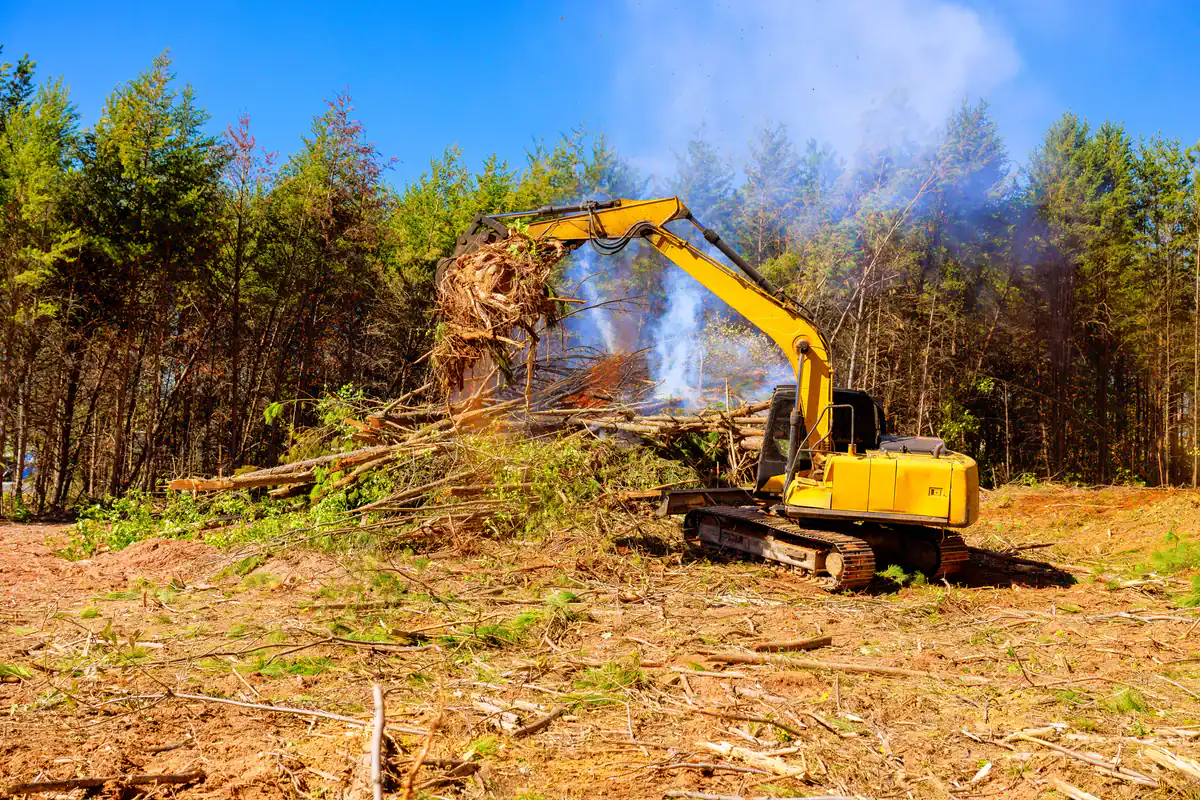
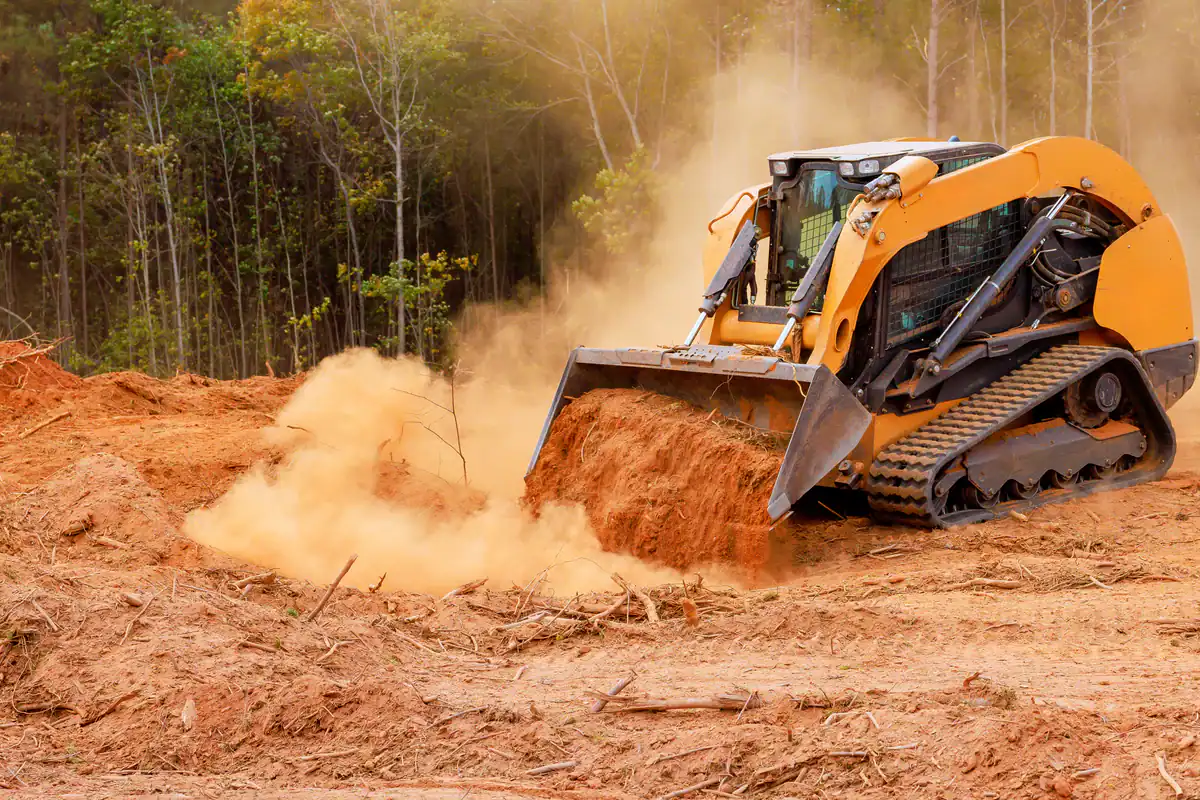
Basehor is growing fast — third-fastest-growing suburb in the Kansas City, KS & MO metro, to be exact. With that growth comes a lot of raw land changing hands: rural subdivision lots in communities like Cheyenne Crossing, larger acreage parcels off 155th Street, wooded sections sitting behind newer homes in Sunnyside Estates. If you’ve purchased land here and haven’t been able to use it yet, you’re not alone. The vegetation doesn’t wait.
What you get after a proper land clearing job isn’t just a cleared lot — it’s a project that can actually move forward. If you’re building, your contractor has a clean site to work with and your timeline doesn’t stall waiting on a crew to show up. If you’re reclaiming acreage you already own, you get usable space back — no more brush piles, no more cedar stands taking over the back section, no more avoiding that corner of your property because it’s become a tick habitat.
Basehor’s Kaw Valley landscape has its own challenges. Eastern red cedar, osage orange, and invasive bush honeysuckle are aggressive growers that take over fast and don’t respond well to half-measures. Getting the clearing done right — with the right equipment, the right sequencing, and full debris hauled away — means you’re not dealing with the same problem again in two seasons.
We’re a family-owned, Kansas City, KS & MO-based operation run by a certified arborist with over 15 years of hands-on tree care experience. That matters more than it might sound. When our crew shows up to clear your Leavenworth County lot, having someone on the job who actually understands tree biology — root systems, hazard assessment, what’s worth saving versus what needs to go — is the difference between a clean result and a costly mistake.
We hold a Kansas Arborist License, which state law requires for any tree work performed for a fee. We’re fully insured, carry a 4.9-star rating across more than 40 verified reviews, and were recognized in 2024 as a top 1% business in Kansas City, KS & MO by Quality Business Awards with a quality score above 95%. We’ve removed more than 1,200 trees across the metro — with a 100% safety record.
We serve the Basehor area and the broader Leavenworth County corridor, and we’re not a national franchise routing your call to a regional dispatch. You get a local crew that knows this part of Kansas, knows the terrain along the US-24 corridor, and shows up when we say we will.
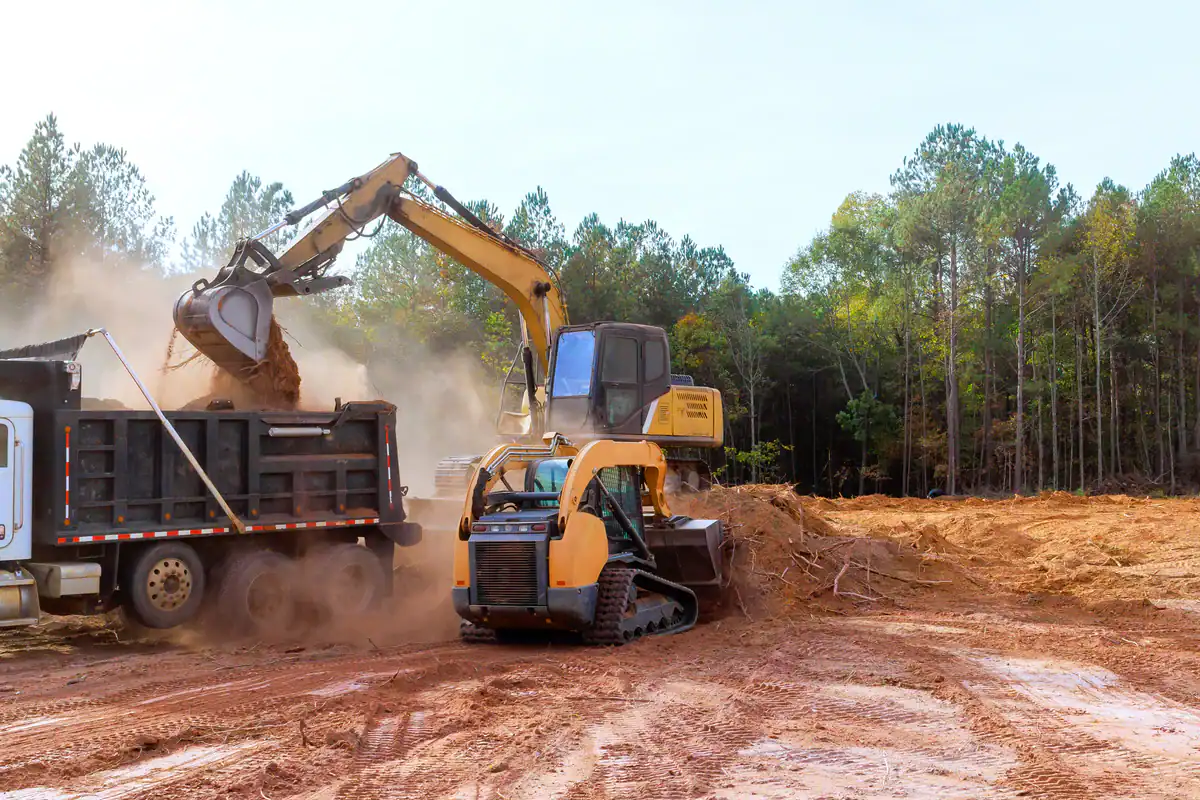
It starts with a free in-person estimate. Not a phone quote based on rough acreage — an actual site walk where we assess your vegetation density, terrain, access points, and anything worth preserving before a number gets put on paper. For Basehor properties, that assessment often includes identifying mature cottonwood trees near planned foundation areas, mapping cedar stands that have spread into usable yard space, and checking for any drainage features or property boundaries that need to be worked around carefully.
Once you’ve agreed on the scope and the price — with no upfront payment required — we schedule the job and show up with the right equipment for what your property actually needs. The work is sequenced to protect existing structures, neighboring lots, and any features you want to keep. This matters especially on the larger rural parcels common in this area, where equipment access and site conditions vary significantly from a standard subdivision lot.
When the clearing is done, the debris goes with us. Every branch, stump, and brush pile is hauled away — you’re not left managing disposal on your own or trying to work within Basehor’s city brush dump hours at 2300 N. 158th Street. The site gets a final walkthrough before we leave, and you see exactly what you paid for.
One thing worth knowing for Basehor specifically: the city’s Planning and Engineering department actively manages development within city limits and a three-mile extraterritorial jurisdiction around them. If your project involves grading, land disturbance near drainage features, or removal of significant vegetation on a permitted development site, it’s worth checking with the City of Basehor on whether a permit applies. We can help you think through what questions to ask.
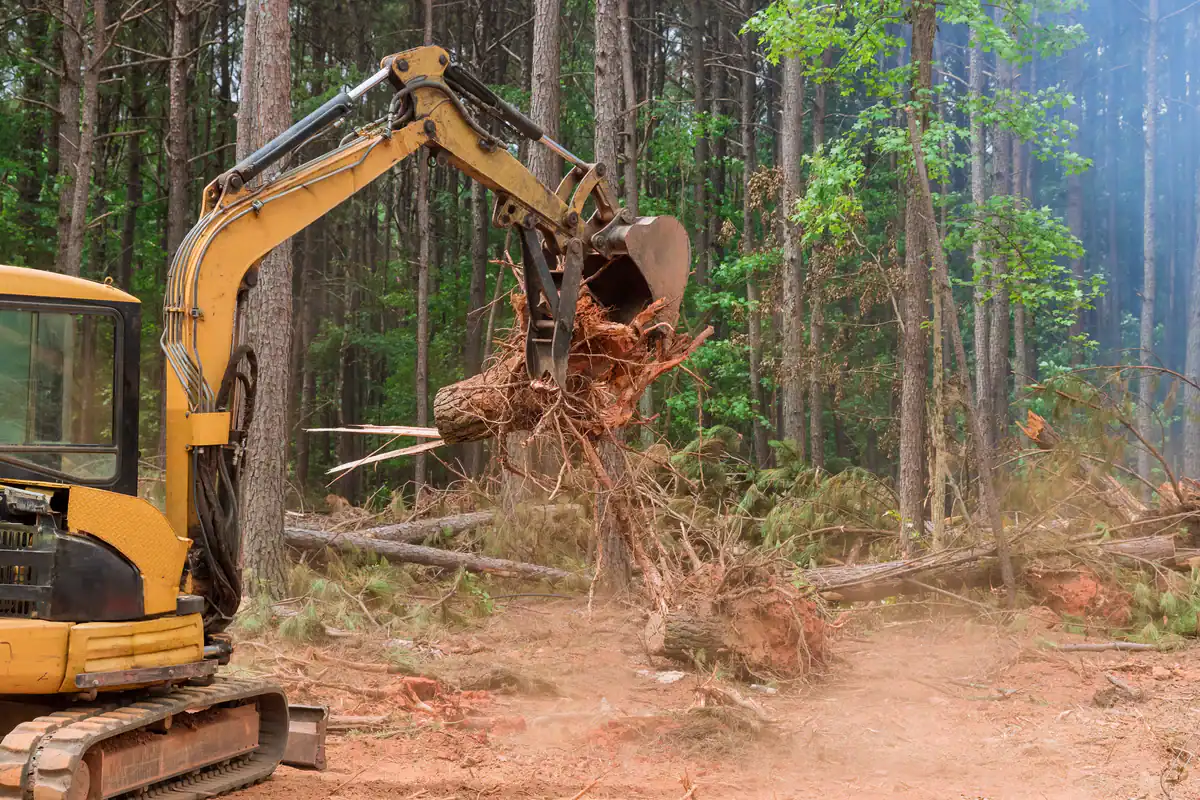
Ready to get started?
Land clearing in Basehor isn’t one-size-fits-all, and the scope of work varies a lot depending on what you’re dealing with. A standard residential lot prep for new construction is a different job than clearing five acres of cedar and osage orange on a rural parcel, and both are different from reclaiming a fence line that’s been swallowed by brush over the past few years.
We handle the full range. Tree and brush removal, stump grinding, lot clearing for new home construction, site clearing for development, acreage clearing on larger rural properties, and brush removal along fence lines and property boundaries. If your project involves a combination of these — which is common on Leavenworth County acreage lots — the estimate will reflect the full scope so there are no surprises mid-job. Pricing is straightforward, with no hidden fees and no upfront cost required to get started.
For Basehor properties specifically, the vegetation types most commonly encountered are Eastern red cedar, osage orange, Eastern cottonwood, and invasive bush honeysuckle — all of which require proper equipment and sequencing to clear effectively. We also handle debris disposal completely, which matters here because Basehor’s city disposal rules require branches cut to four-foot lengths, bundled to specific dimensions, and placed in paper bags only — with limited drop-off hours at the municipal brush dump. On any project beyond a few limbs, professional haul-off isn’t just convenient, it’s a genuine time-saver.
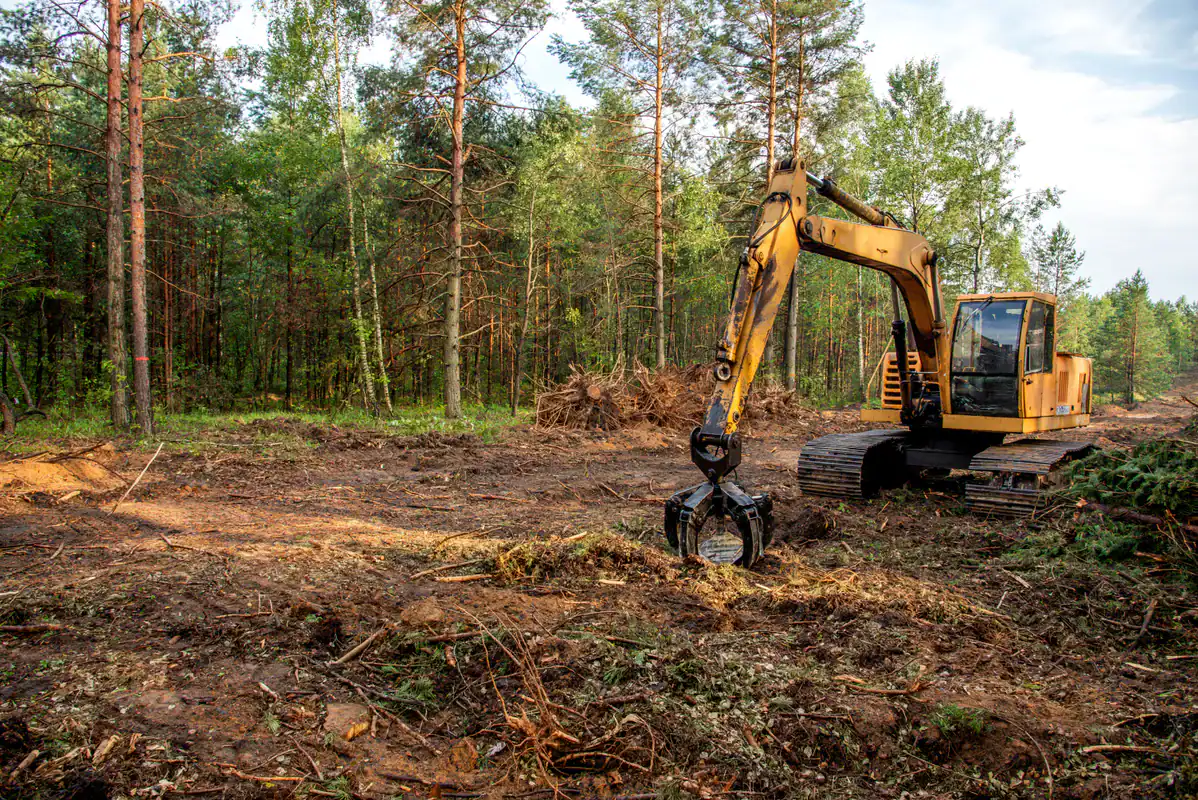
Cost depends on several factors that vary a lot from one Basehor property to the next: vegetation type and density, lot size, terrain, how the debris gets handled, and whether stump grinding is part of the scope. Nationally, the average residential land clearing project runs between $3,743 and $3,805, but that number can shift significantly based on what’s actually on the ground. Heavily wooded properties with mature hardwoods or dense cedar can run $3,300 to over $6,000 per acre, while lighter brush clearing on open land can come in much lower.
For Basehor specifically, the mix of Kaw Valley vegetation — Eastern red cedar, osage orange, and invasive honeysuckle — tends to push clearing costs toward the middle to upper end of the range because these species are dense and labor-intensive to remove properly. Larger acreage lots, like the 2- to 12-acre parcels common in communities like Cheyenne Crossing and Sunnyside Estates, will carry higher total costs than a standard residential lot. The best way to get a real number for your property is a free in-person estimate — we offer no-obligation estimates so you know exactly what you’re looking at before committing.
It depends on the scope of your project and where your property sits. The City of Basehor’s Planning and Engineering department manages development within city limits and a three-mile extraterritorial jurisdiction around them. For routine residential clearing — removing trees, brush, and stumps on a private lot — a permit is often not required. But if your project involves significant land disturbance, grading, work near drainage features or floodplain-adjacent areas, or is part of a permitted construction project, a permit may be needed before work begins.
Basehor’s Kaw Valley location means some properties near creek drainages or low-lying areas fall within floodplain zones, which can trigger additional review requirements. If you’re not sure whether your project needs a permit, it’s worth a quick call to the City of Basehor’s Planning Department at cityofbasehor.org before scheduling work. We can help you think through the right questions to ask, but the final permit determination comes from the city. Starting without a required permit can delay your project or create compliance issues, especially if you’re building on the lot afterward.
These terms get used interchangeably, and for most residential projects, they refer to the same thing: removing trees, brush, stumps, and vegetation to prepare land for use. The distinction is mostly contextual. “Lot clearing” tends to describe residential parcels being prepped for home construction — the kind of work common on new subdivision lots throughout Basehor. “Site clearing” is the same concept applied to a construction or development context, where a contractor needs a clean, prepared surface before grading or foundation work begins. “Land clearing” is the broader term that covers all of it, including larger acreage projects.
For Basehor buyers, the practical question is usually: what does your property look like right now, and what do you need it to look like when we leave? Whether you’re prepping a 0.5-acre subdivision lot in Honeycreek Residential for a foundation pour, or clearing 5 acres of cedar and brush on a rural parcel you just purchased in Leavenworth County, the process and the crew are the same. The scope and equipment scale with the job. When you call for an estimate, just describe what you’ve got — we’ll figure out what it takes.
Timeline depends on lot size, vegetation density, and the complexity of the site. A standard residential lot — the kind being developed throughout Basehor’s active new home communities — can typically be cleared in a single day, including debris haul-off. Customer reviews note same-day completion as a consistent outcome, which matters if you’re working around a construction schedule with a builder waiting on a cleared site.
Larger acreage projects take longer. A multi-acre rural parcel with dense cedar stands, mature cottonwood, and stumps throughout might require two to three days depending on the scope. Properties with limited equipment access — tight entry points, proximity to structures, or uneven terrain — can also affect how quickly we can move. The in-person estimate is where timeline gets discussed realistically, not as a sales pitch but as a practical planning conversation. For Basehor buyers coordinating with builders or working toward a construction start date, knowing your clearing timeline upfront is part of keeping the whole project on track.
All debris is hauled away as part of the job. That includes cut trees, brush, stumps after grinding, and any vegetation cleared from the site. You’re not left with a pile to manage on your own.
This is worth paying attention to in Basehor specifically, because the city’s yard debris disposal rules are fairly specific: branches must be cut to four-foot lengths with a diameter of four inches or less, bundled to no more than 18 inches in diameter or 65 pounds, and placed in paper lawn bags only. The city’s Brush Dump site at 2300 N. 158th Street accepts branches from Basehor residents during limited hours — Monday through Friday, 7am to 3:30pm, and the second Saturday of each month from 8am to noon. For anything beyond a few limbs, DIY disposal under those rules is a significant time commitment. When we haul everything away, that whole process disappears from your plate. The site gets cleaned up before we leave, and the only thing left is the cleared land you paid for.
Late fall through early winter is generally one of the better windows for land clearing in the Basehor area, and there are a few practical reasons for that. Trees in their dormant season are easier to assess and remove — less foliage means better visibility, cleaner cuts, and reduced stress on any trees you want to preserve nearby. Ground conditions in late fall and early winter also tend to be firmer, which reduces the risk of heavy equipment rutting up your yard or leaving deep tracks across a property you’re about to build on.
For Basehor buyers with construction timelines in mind, getting clearing done in the fall or early winter positions you well for a spring construction start — which aligns with when most builders in the area are ramping up. That said, Leavenworth County’s spring tornado season and summer storm activity also create demand for clearing after weather events, and we respond quickly to storm-related work year-round. If a derecho or severe thunderstorm drops a cottonwood across your lot, waiting for a seasonal window isn’t an option — and we’re set up to handle urgent clearing when it comes up.
Other Services we provide in Basehor