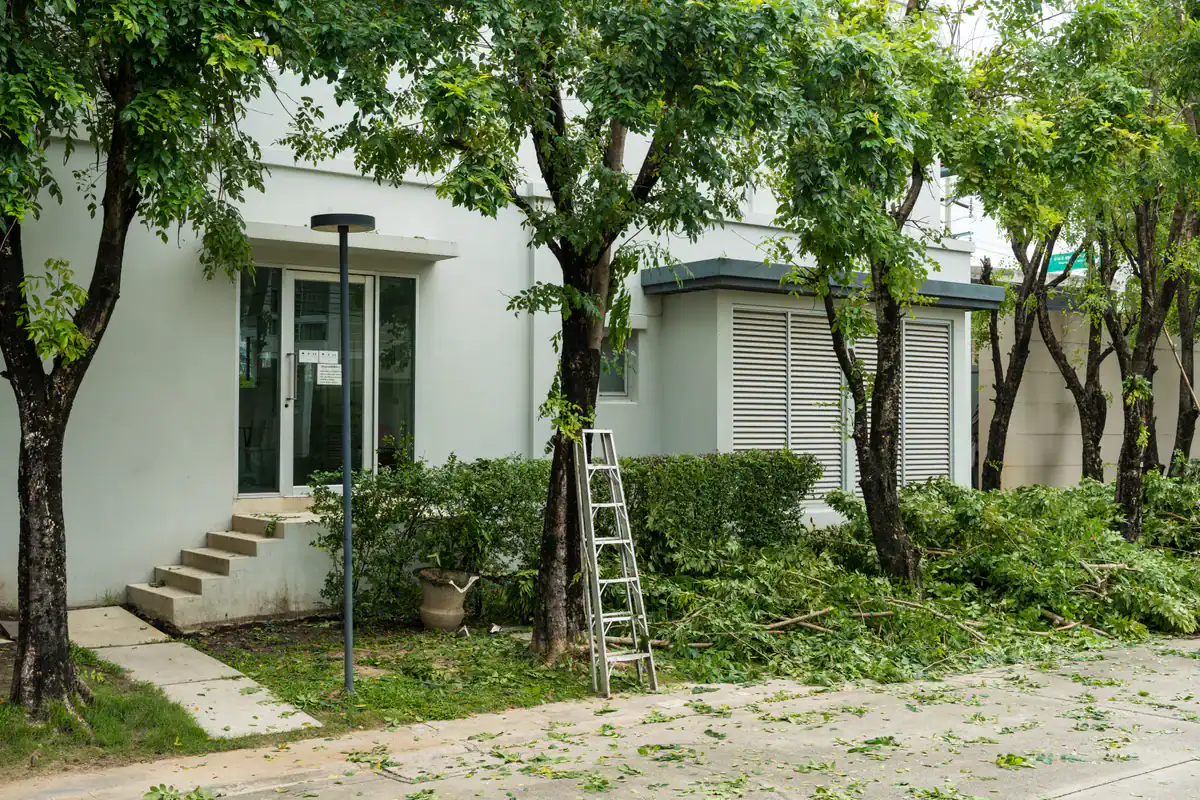
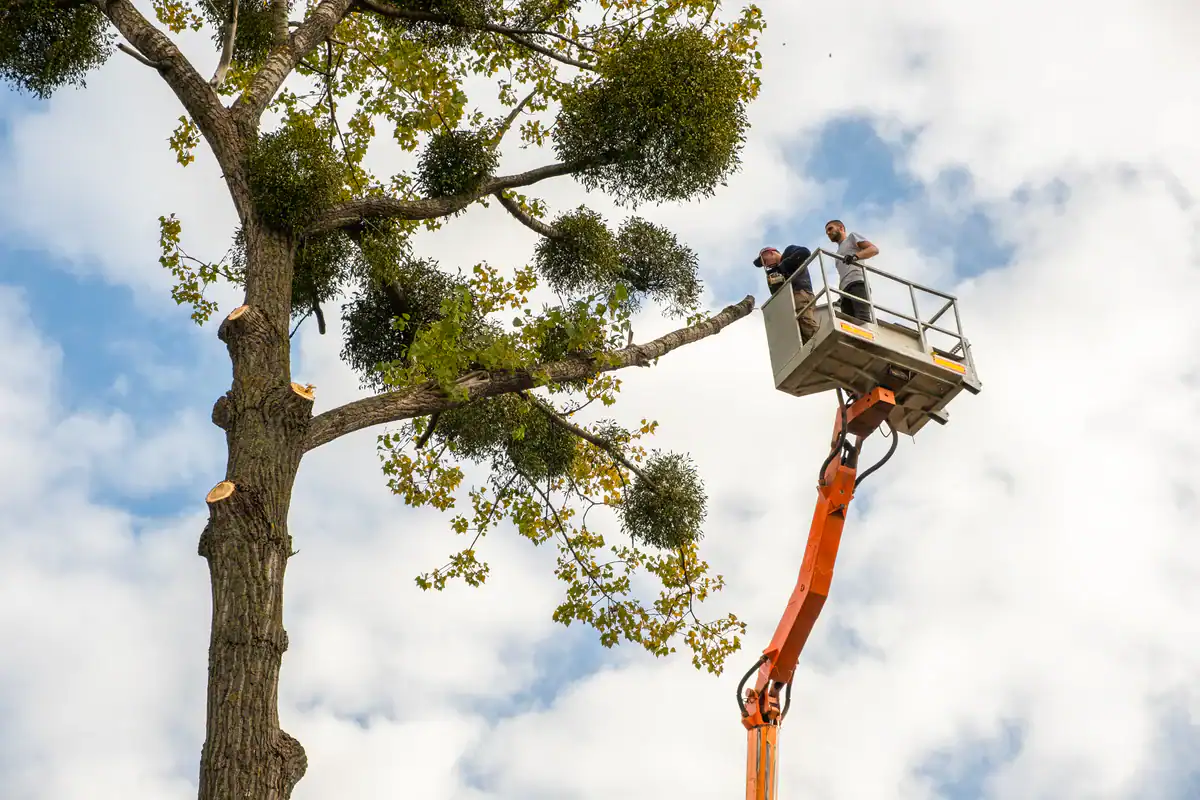
Gardner has grown faster than almost any city its size in the Kansas City, KS & MO metro — and that growth came with a wave of builder-planted trees chosen for curb appeal, not long-term fit. Fast-growing species planted close to foundations, driveways, and fence lines are now reaching the size where they need professional attention.
Getting ahead of that isn’t just about appearances. It’s about keeping your property safe and your yard usable. When a tree is properly trimmed, assessed, or removed, you get your space back. No more branches scraping the roof every time the wind picks up. No more wondering whether that leaning tree near the garage is actually a problem or just looks like one.
Gardner sits squarely in the path of severe spring weather. The EF-1 tornado that touched down near Gardner in May 2024 was a reminder that storm damage here isn’t hypothetical — it’s a seasonal reality. Having your trees assessed before storm season, and knowing who to call after, makes a real difference when 70 mph winds roll through and something comes down overnight.
We’ve been working in the Kansas City, KS & MO metro for over a decade, serving Johnson County communities including Gardner. Our crew is small, which means you deal with real people — not a dispatch queue or a call center. When someone shows up to look at your tree, they’re the same people doing the work.
Kansas requires an arborist license for professional tree work, and we’re fully licensed and insured. That matters more than most homeowners realize until something goes wrong on a job. If an uninsured crew gets hurt on your property, you can be held liable. That’s not a risk worth taking to save a few dollars on a quote.
We’ve removed more than 1,200 trees from Kansas homes with a 100% safety record. In tight neighborhoods like those off Moonlight Road or in the Gardner Lake area, where homes sit close together and there’s not much margin for error, that kind of track record is the whole reason you’d call.
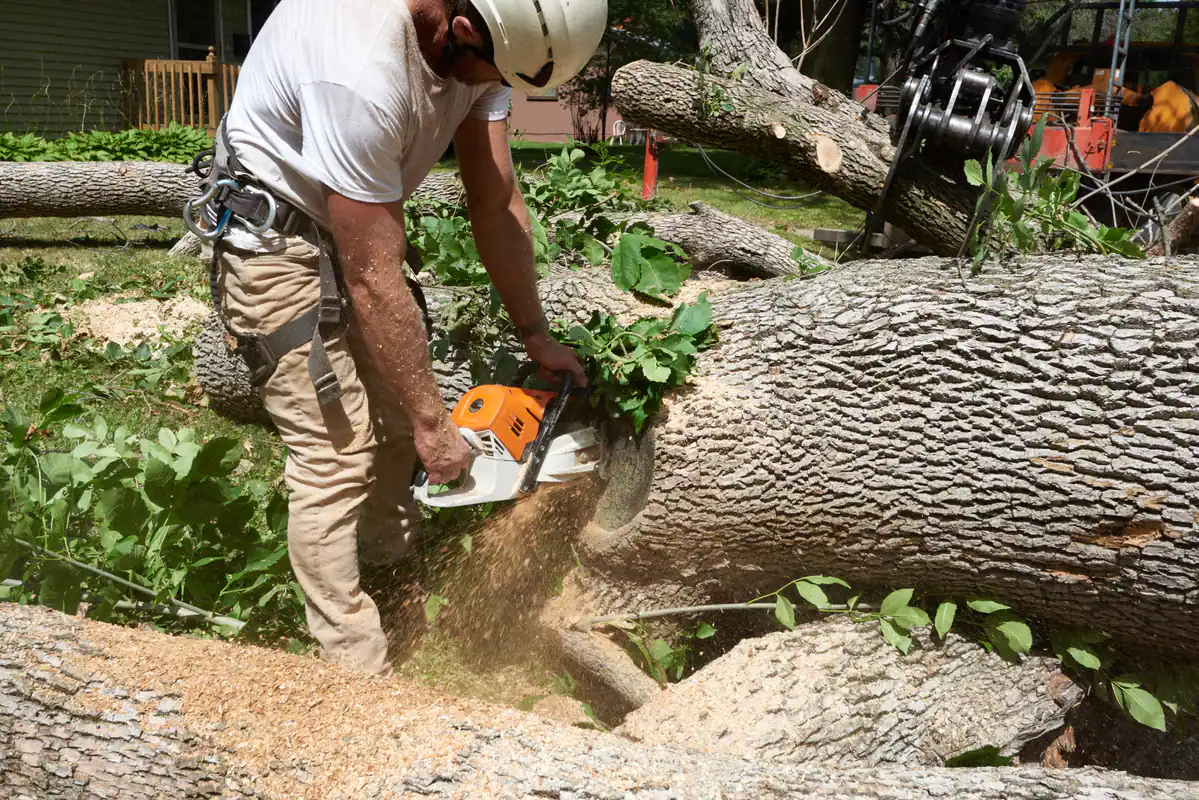
It starts with a free assessment. You call, describe what you’re dealing with — a leaning tree, overgrown limbs, storm damage, a stump that’s been sitting there since last year — and we get out to take a look, usually the same day. The quote is always free, and most are given on-site so you know exactly what you’re looking at before any decision gets made.
From there, our recommendation is honest. If a trim is all the tree needs, that’s what you’ll hear. If it needs to come down, we’ll explain why in plain terms — not technical jargon, just a clear explanation of the risk and what the job involves. For trees on private residential property in Gardner, you typically don’t need a city permit to proceed. Gardner’s Municipal Code Chapter 12.35 governs trees on public land — rights-of-way, parks, city property — but work on your own property doesn’t require city approval. If there’s any question about whether your tree touches public land, we sort that out before the crew starts.
Once the job is underway, we handle everything. Every job includes full cleanup — branches, wood, debris — hauled away and the yard left clean. If you want to keep the wood or mulch for your own use, just say so. Nothing gets left in a pile for you to deal with later.
Ready to get started?
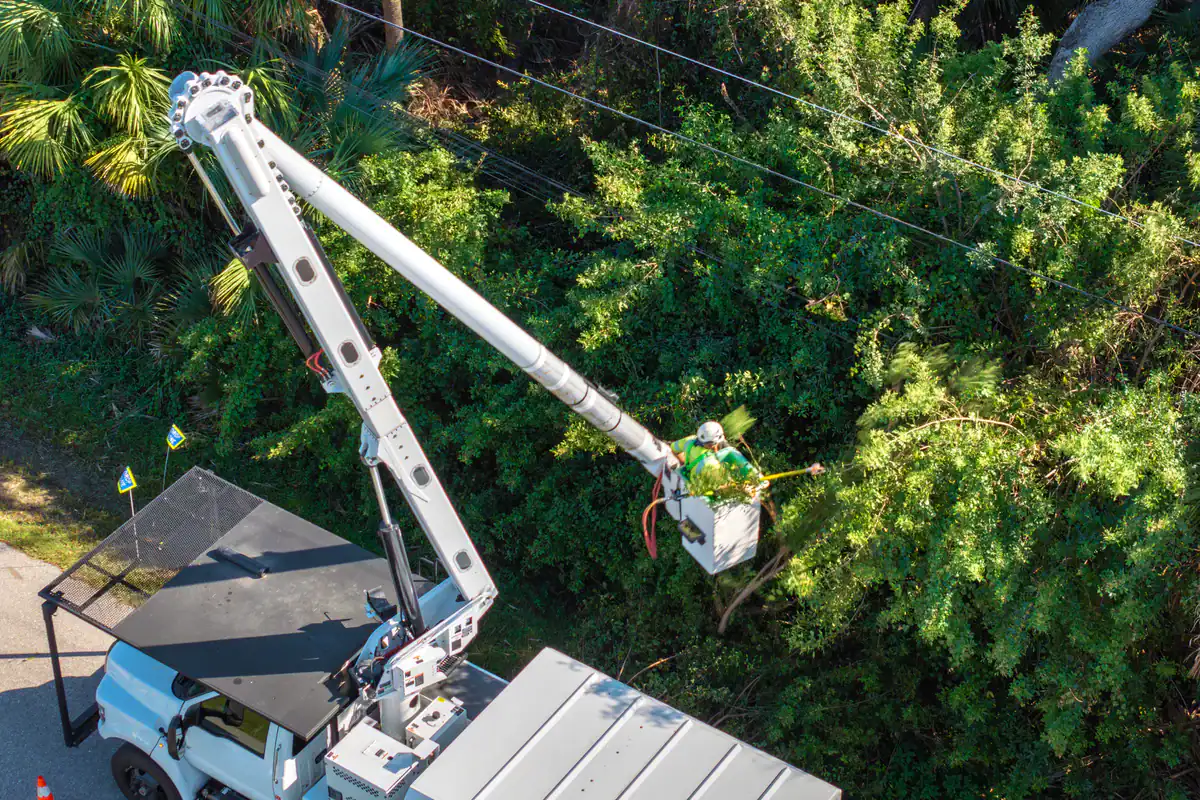
We handle the full range of residential tree care — trimming and pruning, full tree removal, stump grinding, land clearing, and on-site tree health assessments. Each service is available individually, and we can handle multiple needs in a single visit.
In Gardner specifically, the mix of jobs tends to fall into two categories. The first is new-construction tree work — the builder-planted trees in subdivisions like Sunset Ridge, Stone Creek, and the newer developments along Waverly Road and Cedar Niles Road that are now outgrowing their space. These trees need trimming to clear rooflines and structures, or removal when they’ve been planted in a spot that was never going to work long-term.
The second category is aging tree stock — the mature hardwoods in Gardner’s established neighborhoods, including Osage-orange, black walnut, and American elm, some averaging 57 years old and 43 feet tall. These trees carry real structural risk as they age, and a health assessment is often the most important first step before deciding whether to trim or remove.
Stump grinding is a separate service from tree removal — it doesn’t happen automatically, and it’s worth asking about when you get your quote. A leftover stump can attract pests, create a tripping hazard, and allow the tree to resprout. Getting it ground down at the same time as the removal is almost always the cleaner, more cost-effective approach.
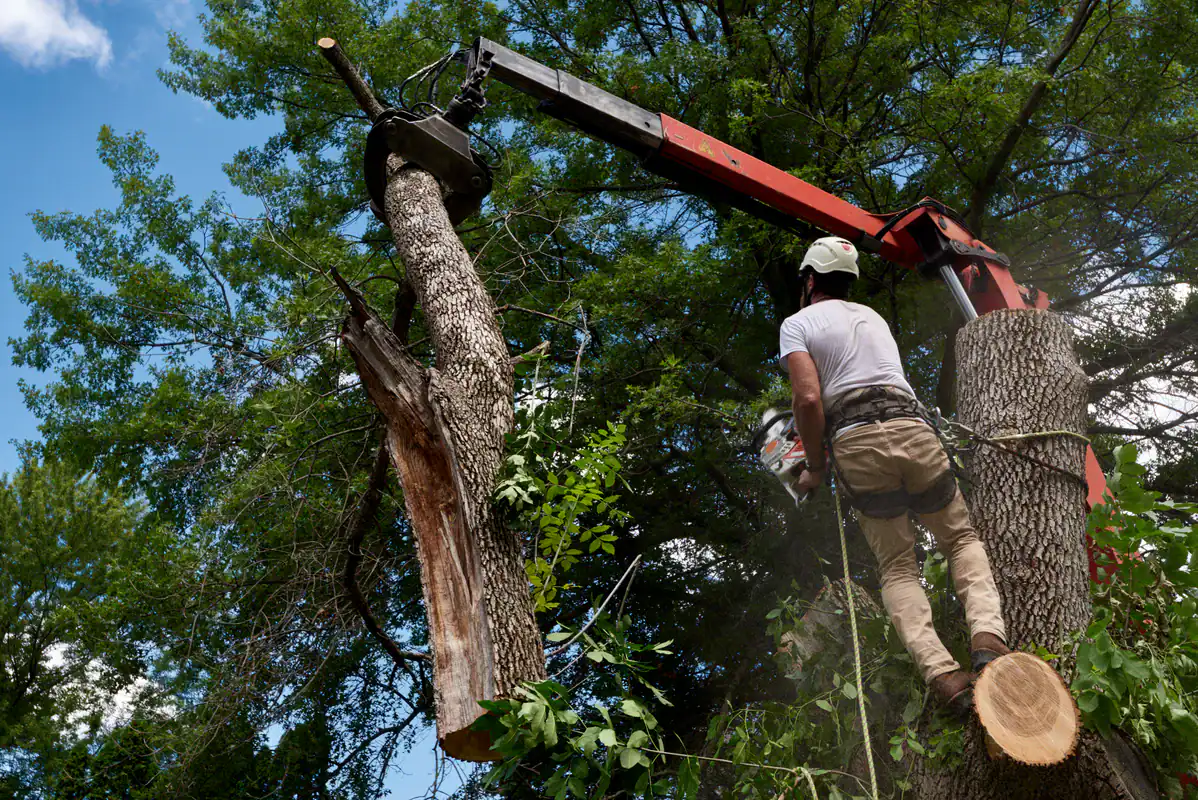
For trees on your own private residential property in Gardner, you generally do not need a city permit to remove them. Gardner’s Municipal Code Chapter 12.35 covers trees on public land — that means trees in rights-of-way, city parks, and other public property. Work on those trees requires a written permit from the City Building Inspector before anything is done.
Where it gets a little gray is when a tree’s canopy or root system extends onto public land. If that’s the case, the city may have an interest in the work, and it’s worth confirming before you start. When we do your on-site assessment, we look at exactly where the tree sits and whether any public-land considerations apply. That way you’re not caught off guard by a permit requirement after the crew has already shown up.
This is the question most Gardner homeowners have, and the honest answer is that you usually can’t tell just by looking at it from the ground. Internal decay, root damage, and structural weakness don’t always show up on the surface. A tree can look completely healthy and still be carrying significant risk — especially mature hardwoods like the black walnut and American elm common in Gardner’s older neighborhoods, where internal rot can develop over decades without visible signs.
The on-site assessment is how you find out. We look at the lean, the canopy structure, the trunk condition, root exposure, and proximity to structures. Sometimes a strategic trim removes the problem branches and the tree stays. Sometimes the tree needs to come down. Either way, you get a straight answer on-site, not a vague recommendation designed to sell you the most expensive option. The assessment is free, and there’s no pressure to book anything on the spot.
Full cleanup is included with every job — that’s not an add-on or an upsell, it’s just how the work gets done. We chip branches, haul debris, and leave your yard clean before we leave. In Gardner’s newer subdivisions where HOA rules and close neighbor proximity make a mess more than just inconvenient, that matters.
If you want to keep the wood — for firewood, a fire pit, or mulch for your yard — just let us know before we start. We’ll set aside what you want and take the rest. What you won’t get is a pile of branches stacked against your fence with a “we’ll come back for that” promise. The job isn’t done until the yard is clean.
Stump grinding is a separate service from tree removal — it’s not automatically included, and it’s one of the things worth asking about when you get your quote. A lot of homeowners don’t realize this until after the tree is gone and there’s still a stump sitting in the yard.
Leaving a stump in place isn’t just an eyesore. Over time it can attract wood-boring insects, create a tripping hazard in the yard, and allow the tree to resprout from the root system — which means you’re dealing with the same problem again in a few years. Getting it ground down at the same time as the removal is almost always the cleaner approach, and it’s worth factoring into your decision when you’re comparing quotes. Ask us about stump grinding when you get your free on-site estimate and we’ll give you a clear number for both services together.
There’s no single “wrong” time to deal with a tree problem — if a branch is hanging over your roof or a tree took storm damage, that gets handled whenever it happens. But for routine trimming and maintenance work, timing does matter.
Fall and late winter are generally the best windows for pruning in the Gardner area. Once trees go dormant, trimming causes less stress to the tree, the cuts heal more efficiently, and there’s less risk of attracting certain insects that are drawn to fresh cuts during the growing season. Spring is when storm season picks up in Johnson County, so getting trimming done in the fall or late winter means your trees are in better shape before the weather turns. For new-construction neighborhoods in Gardner where builder-planted trees have been growing unchecked for several years, a fall assessment can tell you a lot about what needs attention before the next growing season starts.
Ask directly and ask for proof. Any legitimate tree service operating in Kansas should be able to show you a current certificate of insurance — both general liability and workers’ compensation. Kansas requires an arborist license for professional tree work, so asking whether the company holds a Kansas arborist license is a completely reasonable question. If a company gets evasive or tells you insurance “isn’t necessary for this kind of job,” that’s your answer.
The reason workers’ compensation matters specifically is that if an uninsured crew member is injured on your property, you as the homeowner can be held liable for their medical costs. That’s a real legal exposure, not a hypothetical. Gardner saw significant post-storm activity after the May 2024 tornado brought operators through Johnson County door-to-door. Those situations are exactly when it’s most tempting to go with whoever shows up first, and exactly when verifying credentials matters most. We’re fully licensed and insured, and there’s no hesitation in providing documentation if you ask for it.
Other Services we provide in Gardner