From storm damage to diseased ash trees, Kansas City homeowners face real tree problems. Here's how to handle them the right way.
If you’ve got a tree that’s worrying you (leaning the wrong way, dropping limbs, or looking sicker every season), you already know that uneasy feeling of not being sure what to do next. Do you call someone now, or wait and see? Is it dangerous, or just ugly? And if you do hire someone, how do you know you’re not overpaying for work you didn’t need?
Those are fair questions. This guide is here to answer them honestly, walk you through what different tree services involve, and help you figure out what your property in Kansas City, MO really needs, before anything goes wrong.
“Tree services” is a broad term that covers a lot of ground, sometimes literally. Tree removal, trimming, stump grinding, land clearing, and health inspections are all distinct services with different purposes, timelines, and costs. Lumping them together is one reason homeowners end up either overspending or putting off work that needed to happen sooner. The right starting point isn’t picking a service; it’s understanding the problem. A tree that’s leaning toward your roof after a storm is a different situation than one that’s simply overgrown or hasn’t been touched in a few years. Once you know what you’re dealing with, the right service becomes a lot more obvious.
This is the question we hear most often, and it’s a good one. The honest answer is that removal isn’t always the right call, and a company that defaults to “take it down” without inspecting the tree first isn’t doing you any favors.
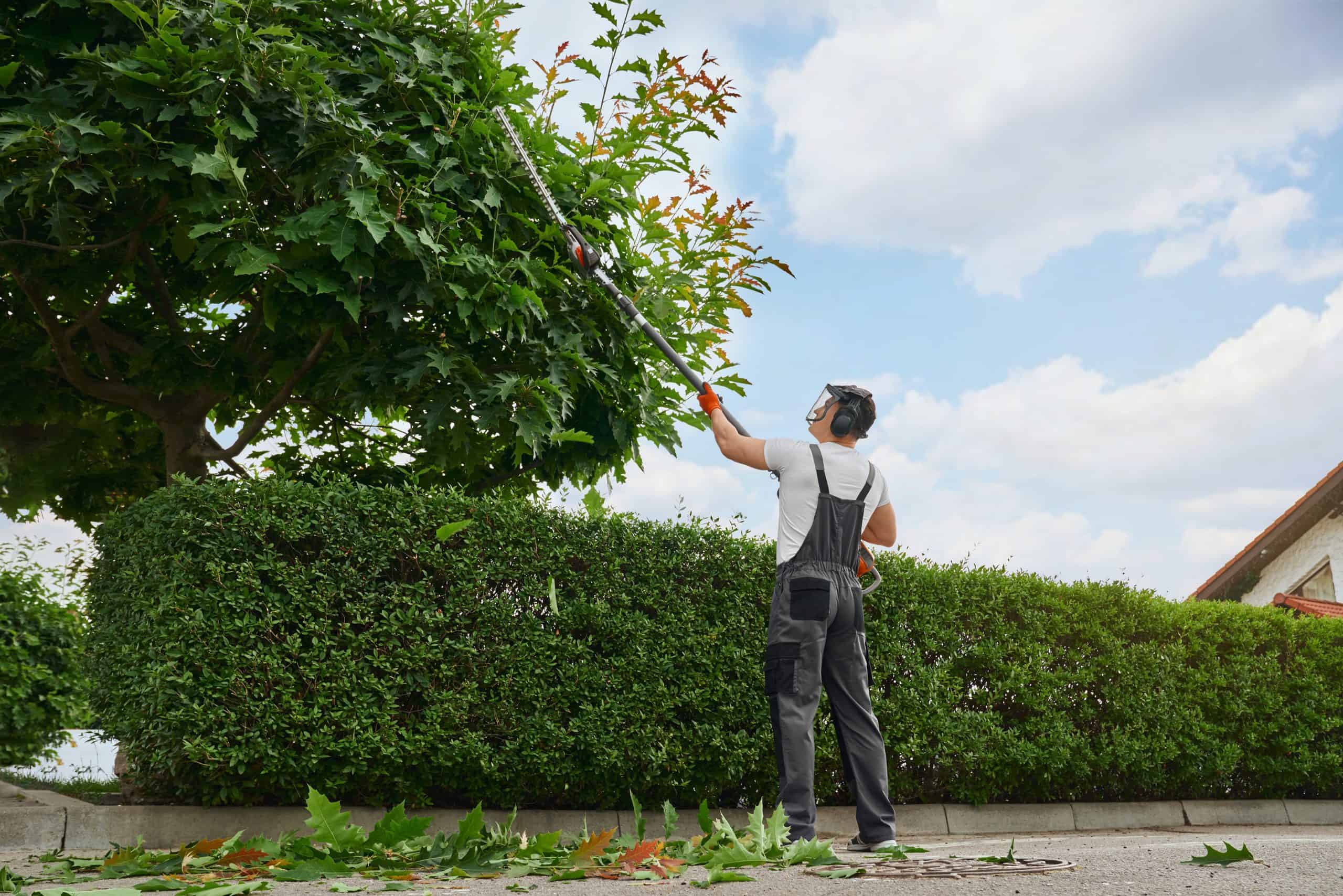
Tree trimming makes sense when the tree itself is structurally sound but has limbs that are dead, crossing each other, growing too close to your house, or creating a hazard during wind events. A well-placed cut can relieve a lot of stress on a tree and dramatically reduce the risk it poses to your property.
In Kansas City, MO’s older neighborhoods (Brookside, Hyde Park, Waldo, and Midtown), you see a lot of large, mature trees that have been neglected for years. Most of them don’t need to come down. They need proper attention.
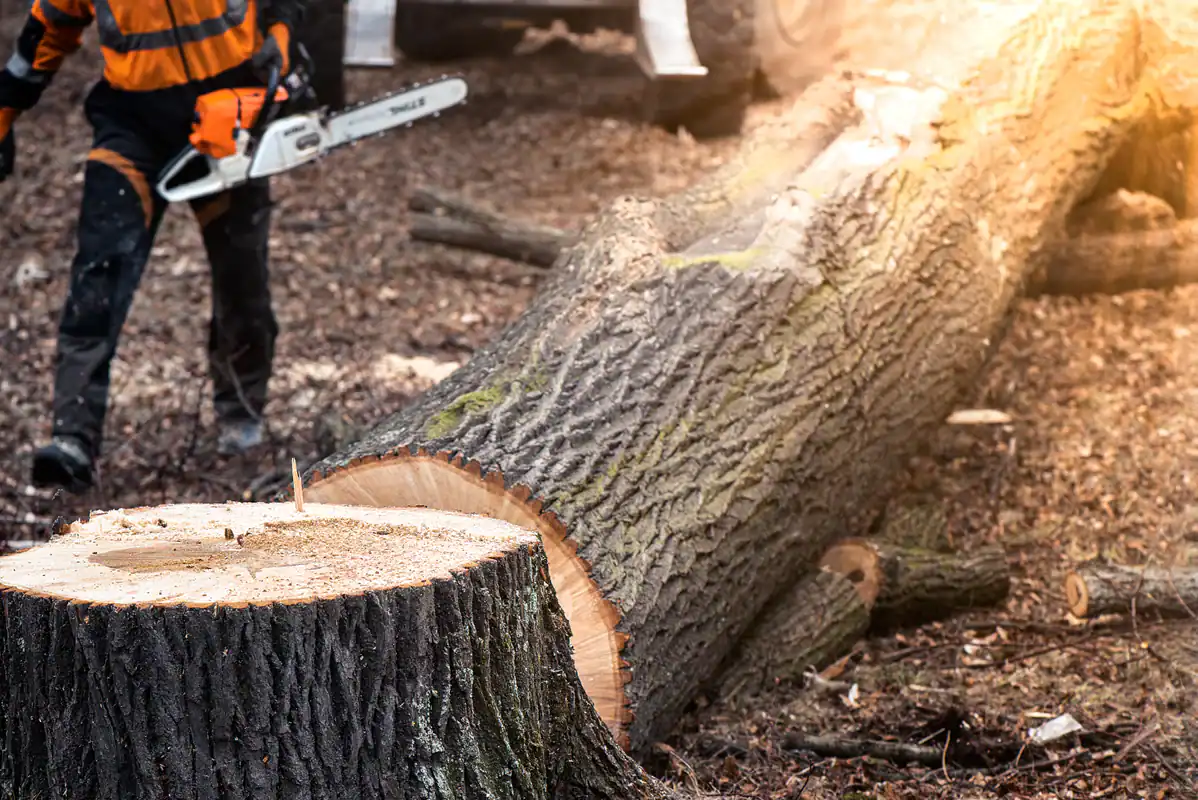
Tree removal becomes the right answer when the tree is dead, severely diseased, structurally compromised at the root or trunk, or in a location where the risk it poses can’t be managed any other way. A tree with a hollow trunk, significant root rot, or an active Emerald Ash Borer infestation, which is a real and widespread problem across the Kansas City, MO metro, may be past the point where treatment or trimming can help.
The key is getting an honest inspection before making that call. We look at the full picture: the structure of the tree, signs of disease or pest activity, how close it is to structures, and whether there’s a realistic path to saving it. Sometimes a strategic trim genuinely solves the problem. When removal is necessary, we’ll tell you straight and explain why.
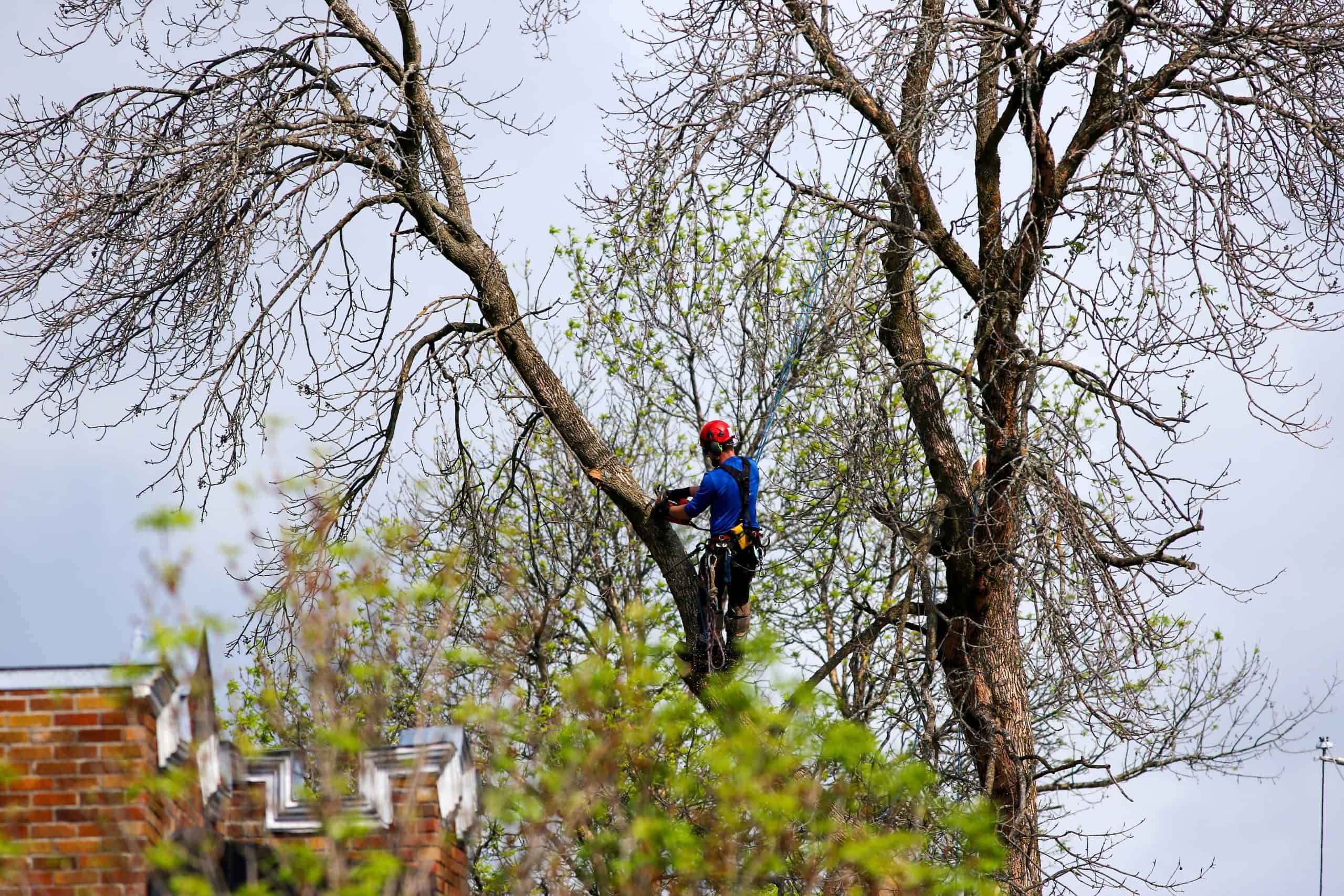
Tree removal in tight residential spaces, like the densely packed streets in older Kansas City, MO neighborhoods, requires more than a chainsaw and a truck. Getting a large tree down safely when it’s surrounded by fences, neighboring yards, and overhead lines takes real skill and the right approach. That’s not a job for whoever’s cheapest on the list.
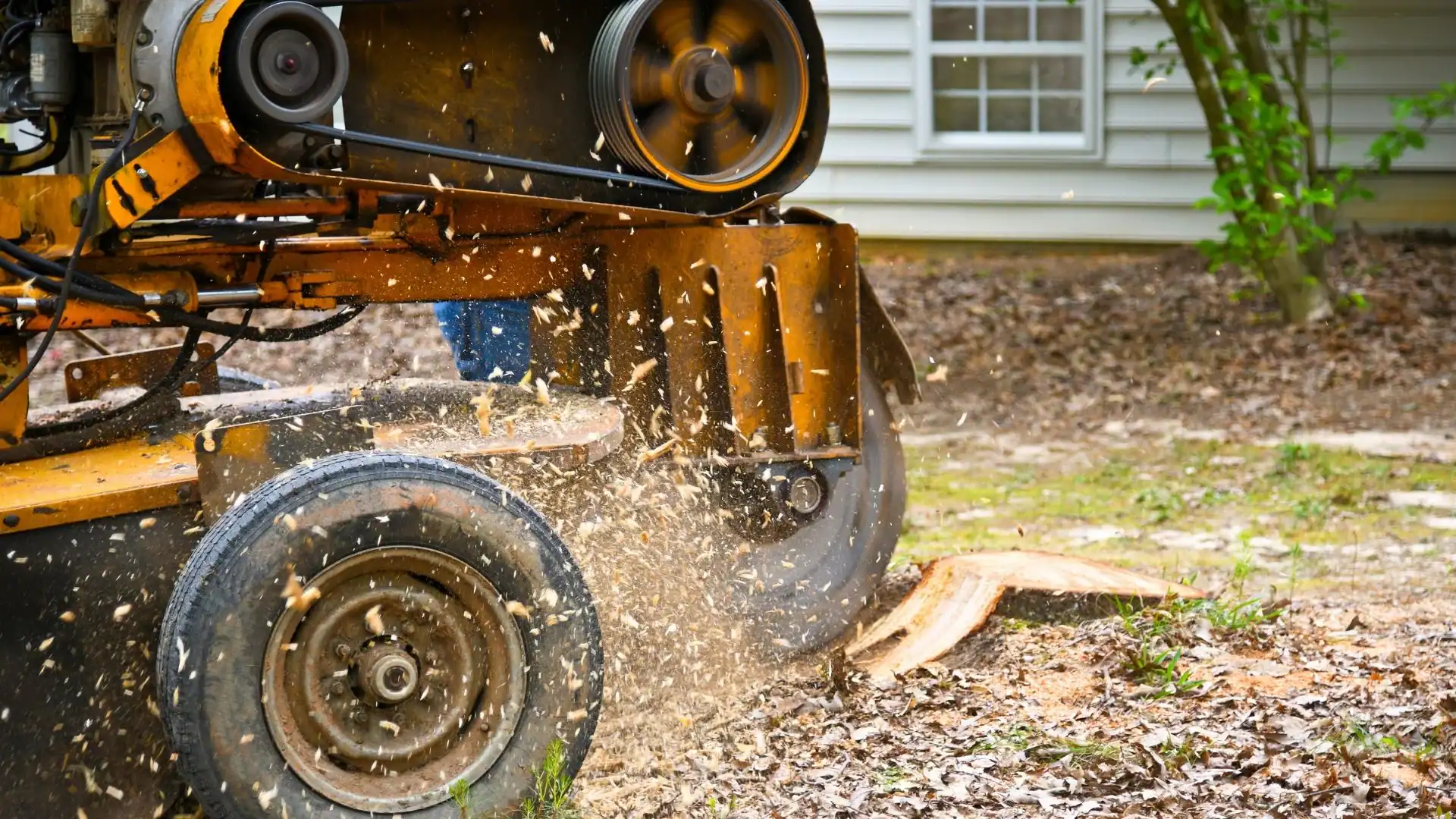
Stumps have a way of becoming permanent fixtures. The tree comes down, the stump stays, and suddenly it’s been three years and you’re still mowing around it. It’s easy to put off because it doesn’t feel urgent, but stumps are tripping hazards, they make landscaping a headache, and they can attract pests over time. Stump grinding takes care of it fast, bringing the stump below ground level so the space is clean, safe, and ready to use however you want.
Land clearing is a different scale of work entirely, but the same principle applies: it’s a job people delay until they absolutely can’t anymore. If you’ve got a corner of your property overgrown with brush, a lot you’re preparing for construction, or acreage that needs to be cleaned up for farming or open use, land clearing involves removing trees, brush, and debris in a way that leaves the ground workable. It’s not just cutting things down; it’s thinking about what the space needs to look like when the work is done.
In Kansas City, MO, land clearing often comes with an extra layer of complexity because of the heavy clay soil throughout the metro. Clay doesn’t drain the way sandy or loamy soil does, and it affects how root systems spread and how deeply they anchor. That matters when you’re grinding stumps or clearing land that’s going to be graded or built on. A crew that knows the local soil conditions isn’t just more efficient; they’re less likely to run into surprises halfway through the job.
If you’ve got a stump that’s been sitting there for years, or land that needs to be cleared before you can do anything useful with it, these aren’t jobs to keep kicking down the road. Getting a free, same-day quote is the easiest way to find out exactly what you’re looking at.
Want live answers?
Connect with a Squirrel Tree Service expert for fast, friendly support.
The Kansas City, MO metro has some specific conditions that make tree care more urgent here than in a lot of other markets. It’s not just about aesthetics or curb appeal; there are real, documented threats affecting trees across the city right now that homeowners need to know about.
Understanding those local factors is part of what makes working with us different from calling a regional chain that sends whoever’s available. We know what we’re dealing with in this market because we’re in it every day.
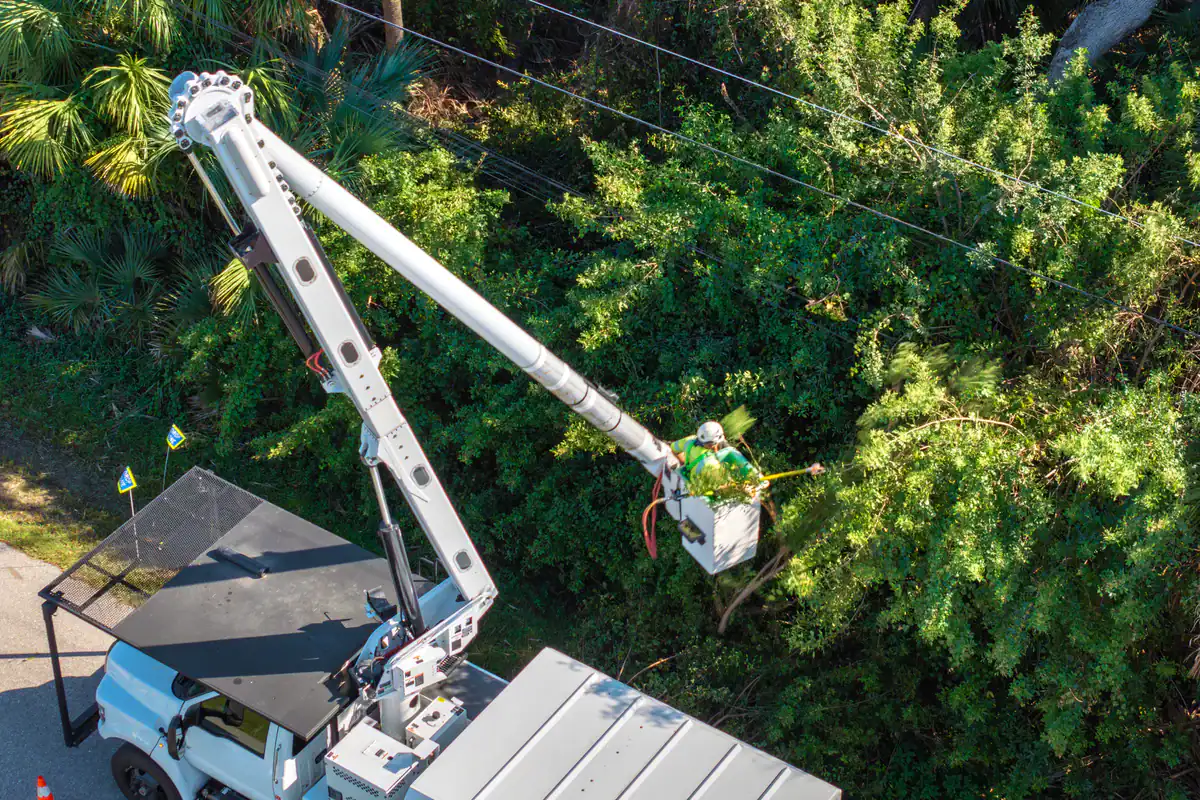
The Emerald Ash Borer (EAB for short) has already killed more than 50 million ash trees across the United States, and Kansas City, MO is squarely in its path. Kansas City, MO alone has an estimated 400,000 ash trees on private property, and the broader nine-county Kansas City, MO region has approximately 4.6 million ash trees at risk.
EAB was first confirmed in Wyandotte County, Kansas (right on the doorstep of the metro) back in 2012, and it’s been spreading steadily since. The problem is that EAB damage often isn’t obvious until the tree is already in serious decline. By the time you notice the canopy thinning out or the bark splitting, the infestation may have been active for a year or more.
That’s why tree health inspections matter: not as an upsell, but as a genuine early warning system. If you have ash trees on your property and you’re not sure whether they’ve been affected, getting an inspection sooner rather than later can make the difference between saving a tree and losing it.
Treatment options exist for trees that are caught early enough. For trees that are too far gone, removal is the safer and more responsible path, as a dead or dying ash tree can become structurally unstable quickly, especially after a wind event.
Kansas City, MO Parks & Recreation has its own EAB management program for the city’s public trees, which tells you something about the scale of the problem. The trees on your private property are your responsibility, and the clock on ash tree health in this region has been running for over a decade.
Kansas City, MO sits in a part of the country where severe weather is just a fact of life. Tornadoes, straight-line winds, and ice storms (particularly in late winter and early spring) regularly leave homeowners dealing with downed limbs, split trunks, and trees that are suddenly leaning against structures they were never supposed to touch.
When that happens, the question isn’t whether to call someone. It’s who to call, and how fast they can get there.
Post-storm tree situations are different from planned removal jobs. The tree may already be partially down, resting on a fence, a car, or a roof. The ground may be saturated. The job requires a crew that can assess the situation quickly, work safely in non-ideal conditions, and get the hazard cleared without creating new ones. We offer same-day emergency response for exactly these situations. When a storm comes through and you’re left with a tree blocking your driveway or threatening your home, you shouldn’t have to wait two weeks for an appointment. We’ll get out there, assess what’s going on, and give you a straight answer about what needs to happen, same day and free of charge.
Always verify that the company you hire is licensed and insured, and make sure they carry both general liability and workers’ compensation coverage. If a crew member gets injured on your property and the company doesn’t have workers’ comp, you could be left holding the bag. A legitimate company won’t hesitate to confirm their coverage.
The best tree service company for your property is one that shows up, gives you an honest assessment, explains what they’re doing and why, and leaves the job site cleaner than they found it. That’s not a high bar, but it’s one that not every company clears.
Ask about licensing and insurance before anyone picks up a tool. Get your estimate in writing. Be cautious of anyone who pushes removal before they’ve looked at the tree, or who asks for full payment upfront before the work begins. Those are real red flags in this industry.
If you’re in Kansas City, MO and you’re dealing with a tree situation, regardless of if it’s urgent or just something you’ve been meaning to handle, we’re a local crew that’s been doing this work for over a decade, serve both the Kansas and Missouri sides of the metro, and will give you a straight answer and a free same-day quote. No runaround.
Summary:

Article details:
Share: