
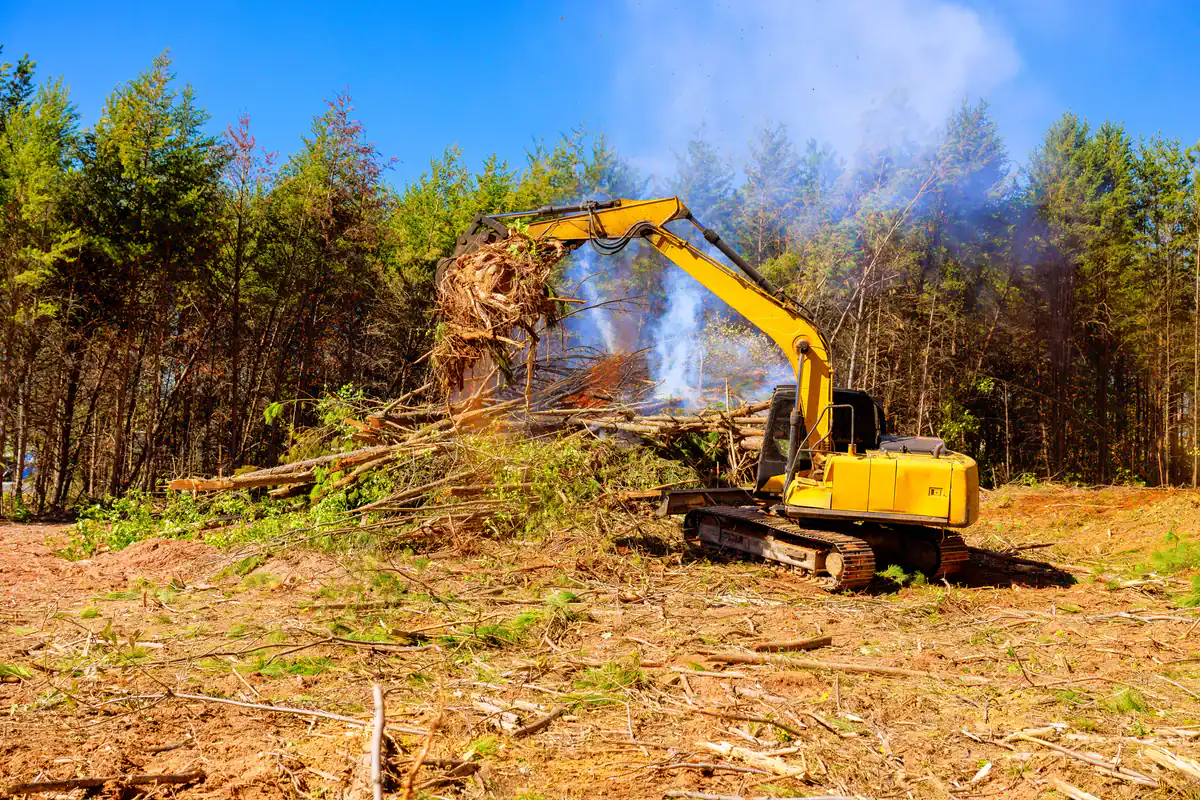
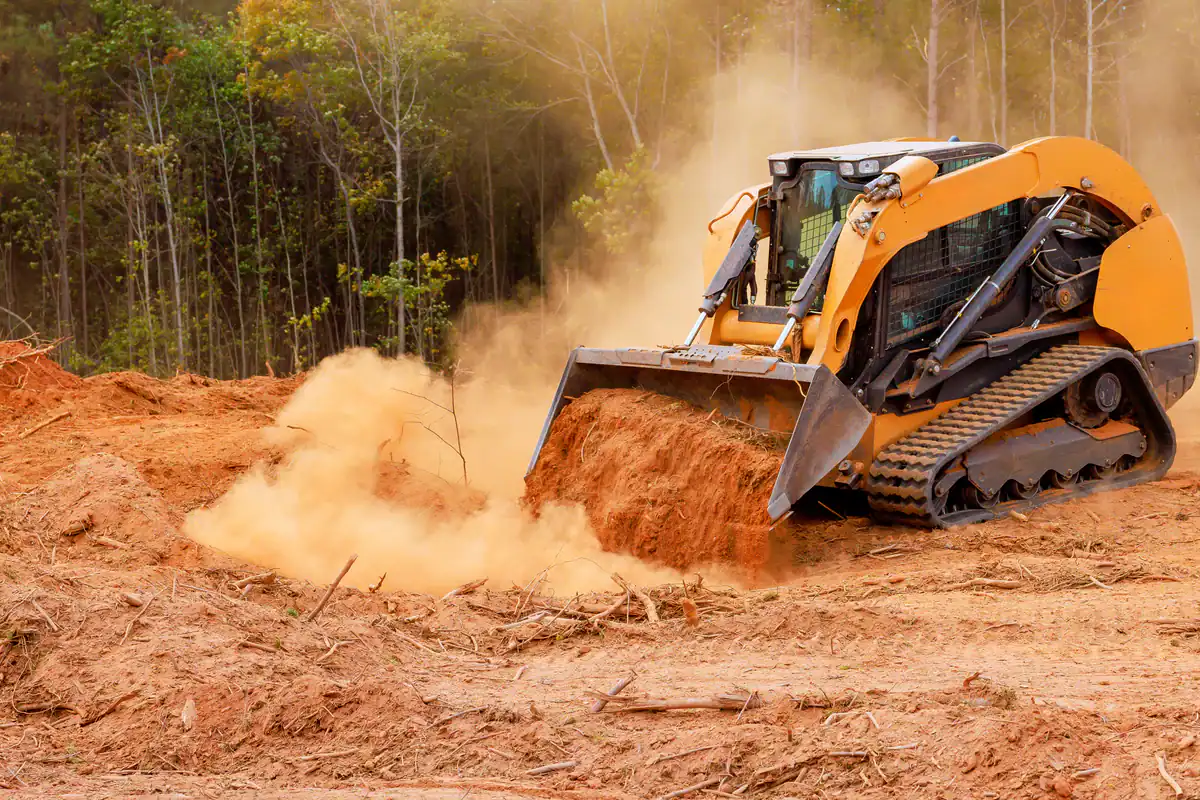
Prairie Village is one of the few communities in the Kansas City Metropolitan Area, MO metro where land clearing and lot clearing come with real regulatory stakes. Trees 3 inches DBH or larger within 20 feet of your front lot line are protected under the city’s tree removal ordinance. So are trees 20 inches DBH or larger outside the buildable area, and trees 30 inches DBH or larger within it. Remove one without the right permit, and you’re looking at a municipal court citation.
When you hire a crew that doesn’t know this, you’re the one who pays for it. When we walk your property, we’re assessing it the same way we have for 15-plus years as a certified arborist with a Kansas Arborist License — identifying which trees are protected, which require permits before anything moves, and what the clearing plan needs to look like to keep you clean with the city.
Beyond the permit question, Prairie Village’s lots are compact. Homes sit close together. Driveways, fences, and your neighbor’s landscaping are within feet of where the work happens. We’ve removed more than 1,200 trees with a 100% safety record — and that record was built doing exactly this kind of tight, technical residential work where there’s no margin for a mistake.
Squirrel Master Tree Services is a family-owned, Kansas City Metropolitan Area, MO-based tree care company operated by a certified arborist with more than 15 years of hands-on experience. We’re a small, tight-knit crew — not a rotating roster of seasonal workers, but the same people who have been doing this work together across the Kansas City Metropolitan Area, MO metro for years. We’re local, we’re licensed, and we’re insured.
For Prairie Village specifically, our certified arborist background isn’t just a credential on a website. It’s the difference between a crew that shows up and starts cutting and one that actually walks the lot, identifies the protected trees under Prairie Village’s ordinance, and makes sure the permit process is handled before a single piece of equipment moves. Whether you’re prepping a lot along Nall Avenue for a teardown-rebuild, dealing with an aging oak in Corinth Hills that’s become a liability, or clearing overgrown brush from a neglected property near 75th Street, you get someone who knows what they’re looking at.
We hold a 4.9-star rating across 40-plus verified reviews and were recognized by Quality Business Awards 2024 as among the top 1% of businesses in Kansas City Metropolitan Area, MO in this category.
It starts with a free, in-person estimate — not a phone guess. We come out to the property, walk it, and look at what’s actually there: how many trees, what sizes, what the access looks like, whether any stumps are going to be a problem, and whether any trees on the lot fall under Prairie Village’s protection thresholds. That last part matters here more than in most other towns.
Prairie Village’s aging housing stock means a lot of these lots have 70- and 80-year-old oaks and maples that are large enough to trigger permit requirements. Knowing that before work begins protects you.
Once the scope is clear, you get a straightforward quote — no upfront cost, no hidden fees added later for debris disposal or stump grinding that weren’t in the original number. If permits are needed, that process gets sorted before we schedule the job. Prairie Village’s city code is specific about what requires authorization, and we know it.
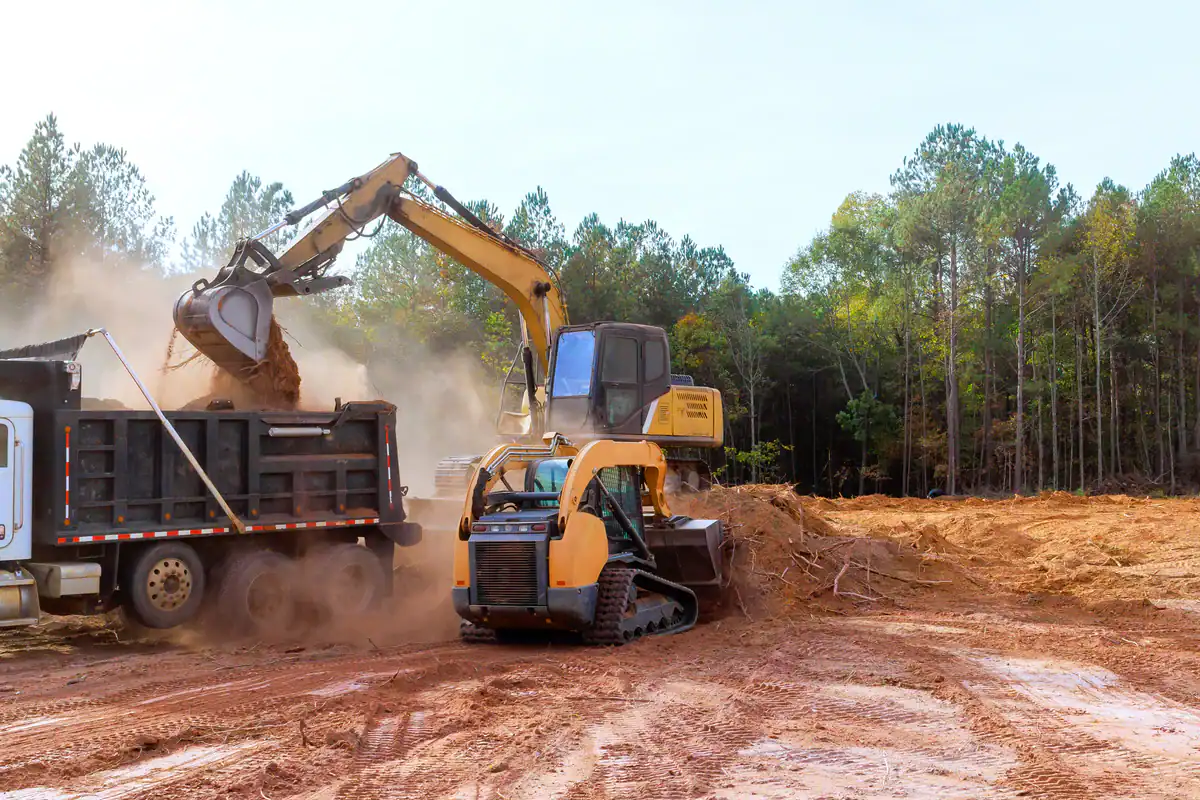
On the day of the job, we arrive with the right equipment for the conditions. Debris gets removed from the site. Stumps get ground. The property gets left clean — not “we’ll come back for that” clean, but actually done. Multiple customers have specifically noted that we cleaned up not just their own property but the neighboring property as well.
Ready to get started?
Land clearing in Prairie Village almost always means one of three things: prepping a lot for a teardown-rebuild, removing a hazard tree that’s reached the end of its structural life, or clearing overgrown brush and vegetation from a neglected property. We handle all three, and the scope of what’s included doesn’t change based on job size.
Tree removal covers the full job — sectional removal where needed (which is the standard on Prairie Village’s compact, close-set lots), stump grinding, and debris haul-off. Brush removal and site clearing include all vegetation, root systems where applicable, and full cleanup of the cleared area. For teardown-rebuild projects, we coordinate the tree assessment and permit process alongside the clearing work so builders and property owners aren’t managing multiple contractors for what should be one job. We also offer bilingual service in English and Spanish — one of the few tree and land clearing providers in the Kansas City Metropolitan Area, MO area that does.
Pricing is based on the actual conditions of your property — vegetation density, tree sizes, access constraints, stump count, and debris volume. You get a real number after an in-person assessment, not a range that triples once we arrive. Prairie Village’s clay-heavy soil can make stump removal more labor-intensive than in other parts of the metro, and that gets factored into the estimate honestly, not added as a surprise charge after the fact.
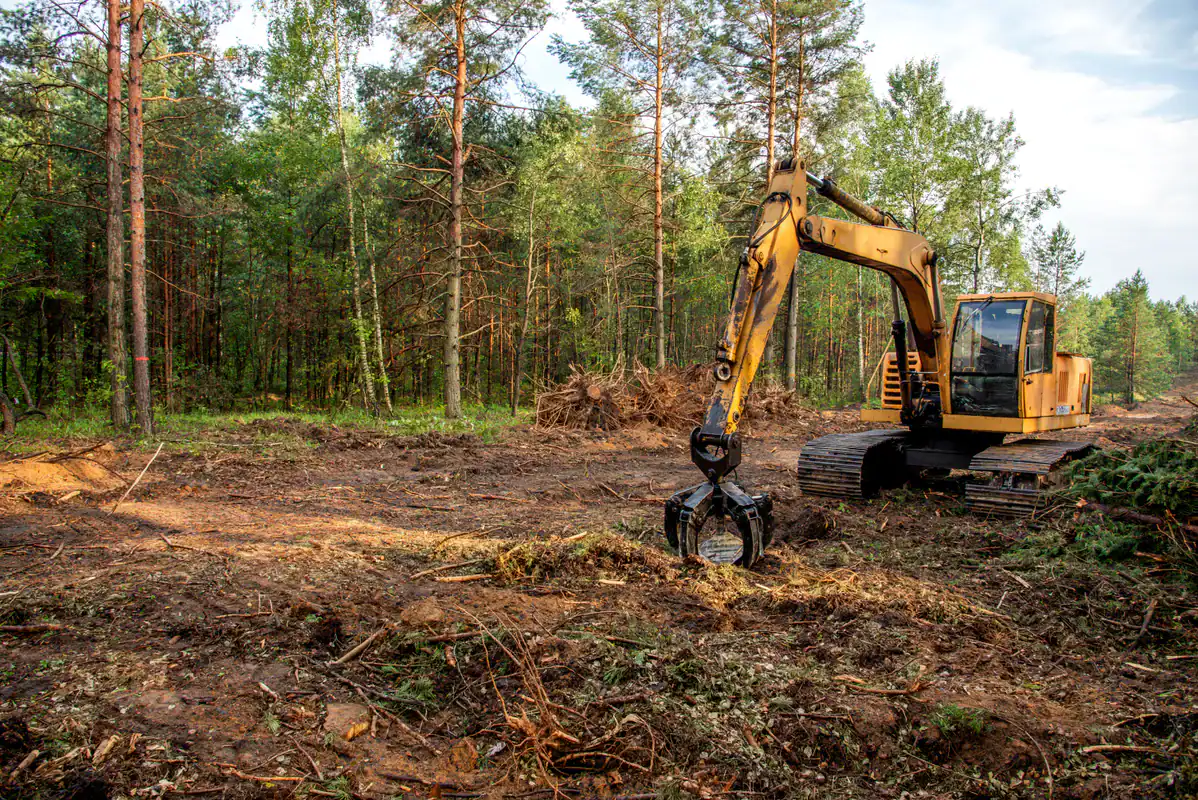
Yes, in many cases — and Prairie Village’s tree protection ordinance is more specific than most homeowners expect. The city requires a permit before removing any tree that is 3 inches DBH or larger if it’s within 20 feet of your front lot line. Beyond that zone, trees 20 inches DBH or larger outside the buildable area of the lot are also protected, as are trees 30 inches DBH or larger within the buildable area. These thresholds apply regardless of whether the tree is healthy or problematic.
If you’re planning a teardown-rebuild, permit applications for protected tree removal need to be submitted as part of the building permit process, along with a tree protection and removal plan. Removing a protected tree without authorization is a municipal code violation in Prairie Village and results in a citation to appear in municipal court. The replacement requirement also applies — when a protected tree is removed, it must be replaced with at least a 2-inch DBH tree upon construction completion. If you’re not sure whether the trees on your lot are protected, we can assess the property and tell you exactly what requires a permit before any work begins.
Lot clearing costs in the Kansas City Metropolitan Area, MO metro generally range from $1,500 to $5,000 or more for a residential property, depending on the number of trees, their sizes, site access, stump count, and how the debris is handled. Prairie Village-specific conditions can push costs toward the higher end of that range. The city’s lots were platted in the 1940s with tight 65-foot street frontages, which limits equipment access and often requires sectional removal techniques rather than straightforward felling.
The clay-heavy soil in Prairie Village also makes stump grinding more labor-intensive than in sandier parts of the metro. The most important thing to know is that the right quote comes from an in-person assessment, not a phone call. A crew that gives you a number without seeing the property is either guessing or planning to add charges later. We provide free estimates after a site visit, with no upfront cost and no hidden fees tacked on after the fact. The permit process, if applicable, is also factored in from the start — not discovered mid-job as an unexpected complication.
These terms get used interchangeably, but they describe slightly different scopes of work. Lot clearing typically refers to removing all trees, stumps, and vegetation from a residential or commercial lot to prepare it for construction or a new use — this is the most common service for Prairie Village’s teardown-rebuild projects. Site clearing is essentially the same thing in a construction context, often used when the job is part of a larger development or commercial build. Brush removal is a narrower scope — clearing overgrown shrubs, small trees, and dense vegetation without necessarily removing large mature trees or grinding stumps.
In Prairie Village, the distinction that matters most practically is whether mature trees are involved. If you’re clearing a lot that has large oaks or maples — which is almost always the case given the city’s 1940s-era housing stock — you’re in lot clearing territory, not just brush removal. That changes the equipment needed, the permit considerations under Prairie Village’s tree ordinance, and the overall scope of the job. When you call for an estimate, describing what’s on the property is more useful than trying to categorize the service yourself — we’ll assess it and tell you what the job actually involves.
It adds a step that a lot of property owners and builders don’t anticipate until they’re already in the middle of the project. Before any protected tree can be removed as part of a teardown-rebuild, the removal has to be included in the building permit application along with a tree protection and removal plan. The Building Official reviews this as part of the permit process. If protected trees can be preserved without compromising the construction, the city expects reasonable efforts to do so — removal is authorized when it’s genuinely necessary for construction, not just convenient.
Prairie Village has averaged 45 to 71 new single-family homes per year since 2020, the majority of which are teardown-rebuilds. The city’s tree ordinance has been in place throughout that period and is actively enforced. Builders and property owners who skip the permit step — or who hire a crew that doesn’t flag the issue — end up with municipal court citations and project delays. Having a certified arborist assess the lot before the permit application is submitted means the tree protection plan is accurate, the permit process moves smoothly, and there are no surprises once clearing begins.
For a standard Prairie Village residential lot — one or two mature trees, associated stumps, and general brush — most clearing jobs are completed in a single day. We arrive, complete the removal, grind the stumps, and haul the debris in one visit. That’s the standard, not the exception. Multiple customers have specifically noted same-day completion as one of the things that stood out about working with us.
Larger or more complex jobs take longer. A lot with several large, aging hardwoods — which is common in Prairie Village given the city’s 1940s and 1950s housing stock — requires more time for sectional removal, especially on tight lots where trees can’t simply be felled in one piece. Permit timelines are a separate variable: if protected trees are involved, the permit process needs to run its course before clearing can begin, and that timeline is set by the city, not the contractor. The best way to get an accurate time estimate for your specific property is through the in-person site assessment, where we can look at what’s actually there and give you a realistic schedule.
Late fall through early winter is generally the preferred window for proactive land clearing and tree removal in Prairie Village. Once trees go dormant, the work is easier — less foliage means better visibility into the canopy structure, which matters when you’re doing sectional removal on large oaks or maples in tight residential conditions. Ground conditions in Prairie Village’s clay-heavy soil also tend to be firmer in cooler months, which makes equipment movement more predictable and reduces the risk of turf damage on adjacent areas.
That said, Prairie Village’s spring thunderstorm and ice storm seasons create their own clearing needs that can’t be scheduled in advance. When a storm drops a limb from a 70-year-old oak onto a roof or driveway, timing is out of your hands. We respond quickly to storm-damage calls across the Kansas City Metropolitan Area, MO metro, and Prairie Village’s location as a close-in first-ring suburb means we can reach the area fast. Whether you’re planning ahead or responding to damage, the process starts the same way — a call, a site visit, and a clear plan.
Other Services we provide in Prairie Village