
Prairie Village was built in a concentrated burst between 1941 and 1965. The trees planted alongside those original ranch homes and two-stories are now 60 to 80 years old — and a lot of them are in serious decline. Elms, maples, ashes, oaks. These aren’t small trees anymore. They’re massive specimens growing on tight lots with narrow side yards, close to foundations, fences, driveways, and neighboring properties. When one fails, it doesn’t just fall — it falls on something.
The Emerald Ash Borer has made this more urgent than most Prairie Village homeowners realize. The City of Prairie Village removed 443 ash trees from its own parks and rights-of-way by early 2022 because of EAB. Those were the city’s trees. Your residential ash trees face the same beetle, and there’s no city program coming for them. A dead ash loses structural integrity fast and unpredictably — it’s one of the most hazardous removal scenarios there is, especially near a structure.
Getting a dead, diseased, or hazardous tree removed means your home is protected, your neighbors aren’t at risk, and you’re not staring at a liability every time the wind picks up. It also means your property looks like what Prairie Village homes are supposed to look like — clean, well-kept, and worth what you paid for it.
We’re a family-owned, Kansas-based crew that has been working in the Kansas City, KS & MO metro for over a decade. We’re fully insured — liability and workers’ compensation — and we’ve handled tree removal across both the Kansas and Missouri sides of the metro, including the Johnson County communities that surround Prairie Village.
This isn’t a franchise or a call center dispatching strangers. We’re a tight-knit crew that lives and works in the same area our customers do. We know the clay-heavy Johnson County soils that affect how root systems behave on these older lots. We know what it takes to remove a large tree safely in a dense residential neighborhood where the next-door fence is six feet away and the driveway is right underneath.
When a storm rolls through — and Prairie Village knows storms, after the July 2023 emergency declaration and the May 2024 tornado event — we respond fast. Multiple customers have confirmed same-day estimates and next-day work. That kind of response matters when a tree is actively threatening your home.
It starts with a free estimate. We come out, look at the tree, look at the space around it, and give you a straight answer — what needs to happen, how we’ll do it safely, and what it will cost. No runaround. If a strategic trim can solve the problem without full removal, we’ll tell you that too. That kind of honesty is worth something.
Before any work begins on a larger job in Prairie Village, it’s worth knowing that the city has a tree protection ordinance with specific permit requirements tied to construction activity. If your removal is connected to a renovation, addition, or new structure, a permit may be required depending on the tree’s size and location on your lot. The thresholds are based on trunk diameter and where the tree sits relative to your front lot line and buildable area. We understand how these regulations work in the KC metro and can help you figure out whether your job triggers any permit requirements before a single cut is made.
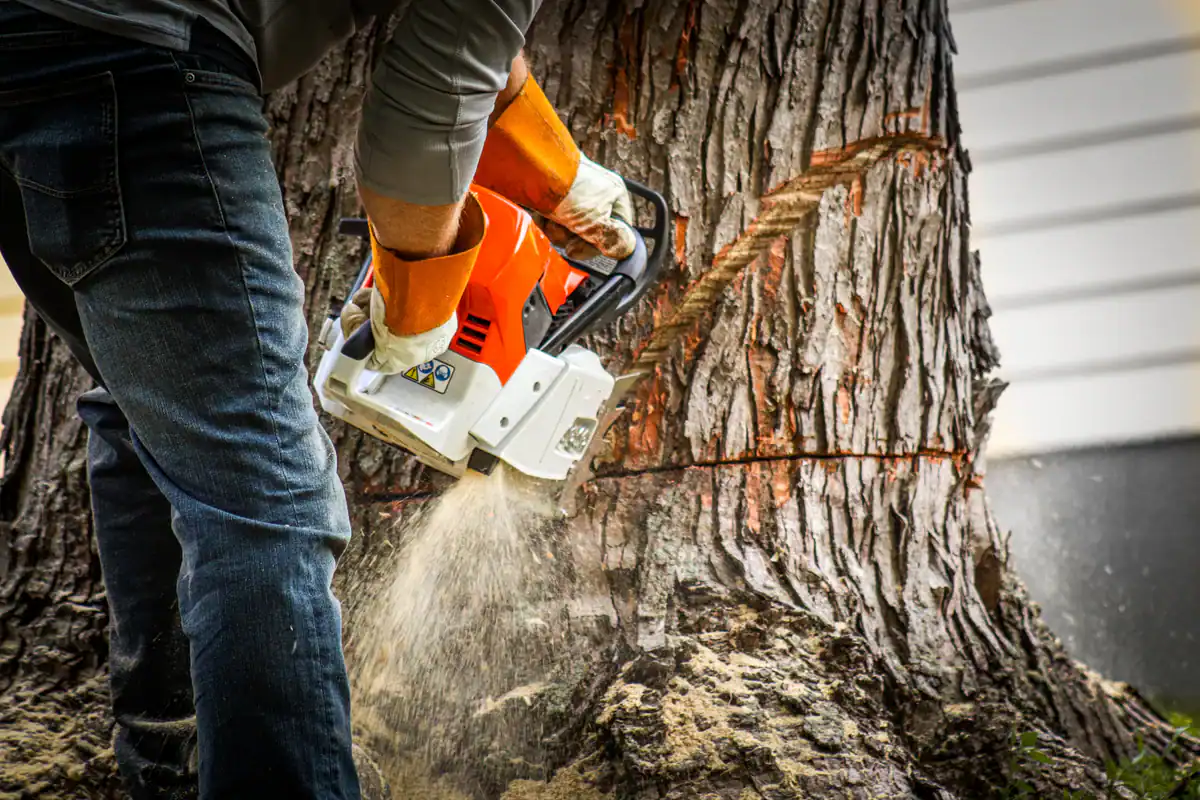
The removal itself is planned around the specific conditions of your property — the proximity to your house, your neighbor’s fence, your driveway, any established landscaping you want to protect. Once the tree is down, full cleanup is included. No wood piles left behind, no debris scattered across your lawn. If you want to keep the wood or mulch, just say so in advance. The job ends with a clean property.
Ready to get started?
Tree removal in Prairie Village isn’t a one-size situation. The postwar housing stock across subdivisions like Corinth Hills, Prairie Hills, Indian Fields, and Kenilworth means you’re typically dealing with large, mature trees on lots that weren’t designed with removal equipment in mind. We handle the full scope — from cutting and rigging to stump grinding and complete debris cleanup — with the experience to do it safely in exactly these conditions.
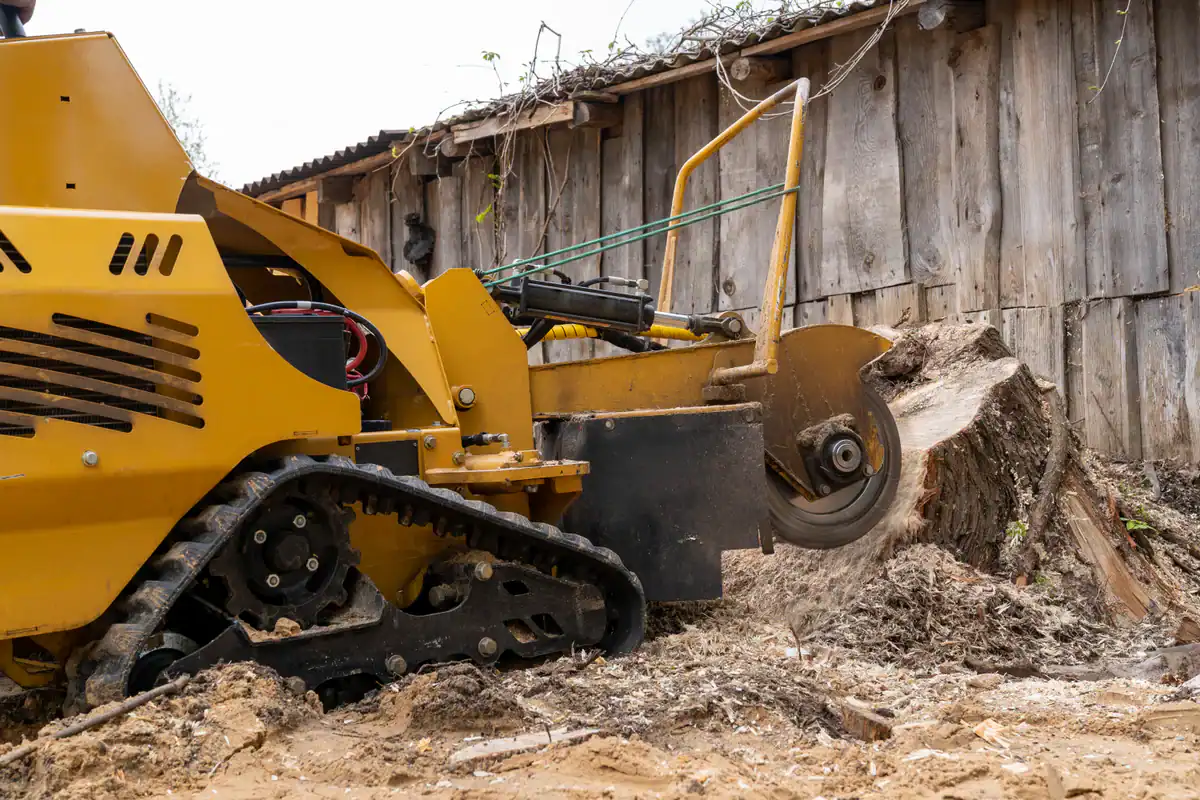
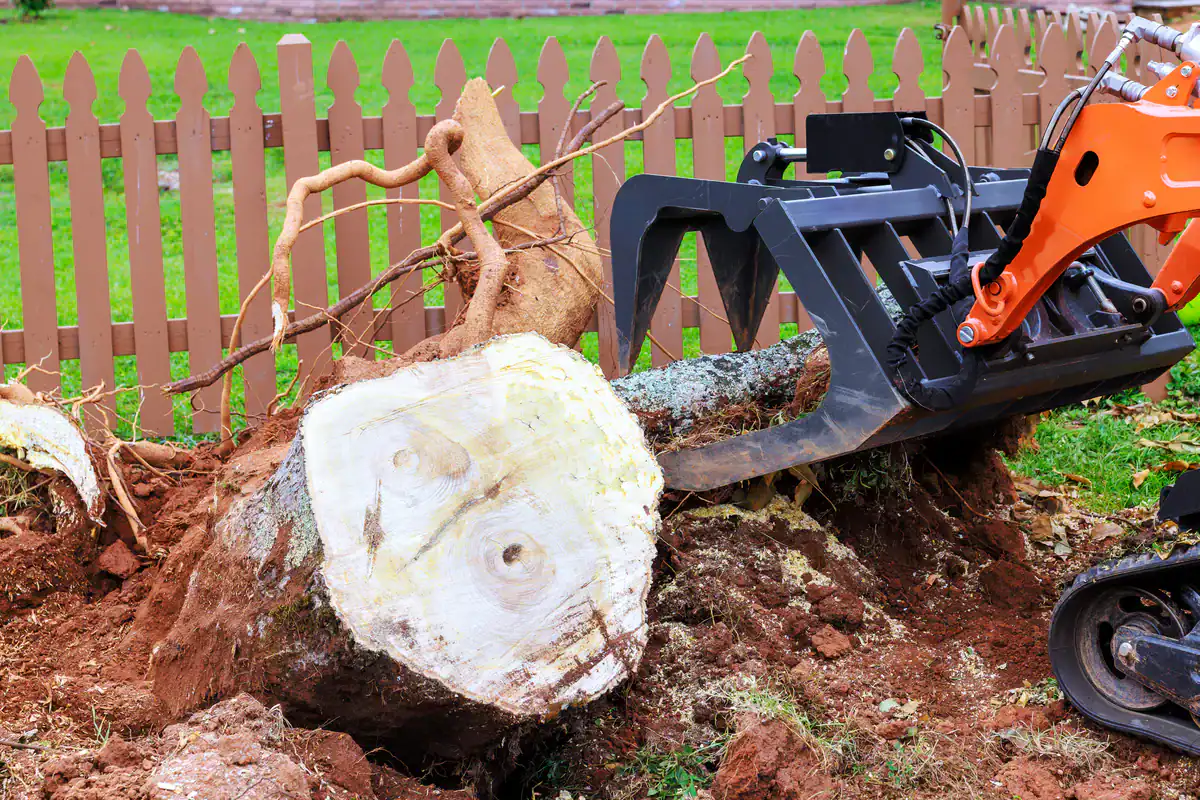
Dead tree removal, diseased tree removal, hazardous tree removal, large tree removal — these are all part of what we handle. Emerald Ash Borer damage, Dutch elm disease, storm-split limbs, root systems cracking driveways and foundations — these are the specific scenarios that come up repeatedly in Prairie Village, and we’ve seen them before. Stump removal is also available if you want the area restored after the tree is gone.
For homeowners thinking about a future sale, it’s worth knowing that Prairie Village’s real estate market is highly competitive — homes move fast and buyers notice everything. A dead or declining tree in the front yard is a visible liability in a market where curb appeal matters. Handling it proactively protects your asking price and removes a negotiating point before it ever comes up. We offer free estimates with no obligation, so you know exactly what you’re looking at before you commit to anything.
Prairie Village has a tree protection ordinance, but the permit requirement is primarily triggered by construction activity — not every standalone removal automatically requires one. Specifically, if your tree removal is connected to building a new residential structure, tearing down more than 10% of an existing structure, adding 600 or more square feet to your home, or a commercial project requiring a Drainage Permit, you’ll need to submit a tree protection and removal plan along with your building permit application.
The ordinance defines protected trees by their trunk diameter and location on the lot. Trees in the public right-of-way are always protected. Trees 3 inches in diameter or larger within 20 feet of your front lot line are protected. Trees 6 inches or larger anywhere else on the lot are protected. Removing a protected tree without approval during a covered construction project can result in a citation and a municipal court appearance. If you’re unsure whether your situation triggers a permit, it’s worth asking before work starts — we can help you think through it during the free estimate visit.
The signs are pretty recognizable once you know what to look for. EAB-infested ash trees typically show dieback starting at the top of the canopy — branches at the crown begin dying before the rest of the tree shows obvious symptoms. You may also notice S-shaped tunnels under the bark, D-shaped exit holes about the size of a pencil eraser in the bark surface, and unusual woodpecker activity, since birds will peck at infested bark to get at the larvae underneath.
The harder reality for Prairie Village homeowners is that by the time visible symptoms appear, the infestation is usually well advanced. The City of Prairie Village began its own EAB response program in 2014 and had removed 443 ash trees from public parks and rights-of-way by early 2022. That’s the scale of what EAB has done to the city’s publicly owned trees alone. Residential ash trees across neighborhoods like Prairie Hills and Corinth Hills face the same pressure. If your ash tree hasn’t been assessed recently and is showing any crown dieback, the window for treatment may have already closed — and a dead ash near a structure needs to come down before it becomes unpredictable.
Dead trees don’t wait for a storm to fall. Structurally compromised trees — especially dead ash trees, which lose integrity faster than most species — can drop branches or fail entirely on calm days with no warning. The risk isn’t just to your property. On Prairie Village’s tightly spaced residential lots, a falling tree can easily reach a neighbor’s fence, car, or structure.
The insurance angle is worth understanding here. If a dead or visibly diseased tree on your property falls and causes damage, your homeowners insurance may deny the claim on the basis of negligence — meaning you knew the tree was at risk and didn’t act. That shifts the financial liability directly to you. If the tree damages a neighbor’s property and they can show you were aware of the tree’s condition, your personal liability exposure increases further. Proactive removal isn’t just about aesthetics or peace of mind — in Prairie Village, where home values run from $425,000 to $585,000 and neighbors know each other, it’s a straightforward financial and neighborly decision.
For a standard tree removal, a smaller tree — under 30 feet — typically takes two to four hours. Larger trees, which are common on Prairie Village’s postwar lots where 60 to 80-year-old specimens have had decades to grow, can take a full day depending on the size, location, and complexity of the job.
As for yard damage, the honest answer is that it depends on the tree’s location and the crew’s approach. On Prairie Village’s mid-century lots with narrow side yards and mature landscaping, experienced crews plan the job around what needs to be protected — established plantings, driveways, fences, neighboring structures. We work with the specific conditions of your property, not against them. Full cleanup is included on every job, so there are no wood piles or debris left behind when we leave. If you want to keep the wood or mulch, just let us know before the job starts. Stump grinding is also available if you want the area as close to its original condition as possible.
Yes, size is the primary cost driver in tree removal. Larger trees require more time, more labor, more equipment, and more careful planning — especially when they’re growing close to a structure, over a driveway, or in a tight side yard. The canopy spread matters too, not just the height. A tree with a large canopy requires more rigging and more careful piece-by-piece removal to control where limbs fall.
Prairie Village’s housing stock means large, mature trees on relatively compact lots are the norm, not the exception. A 70-year-old oak or elm that’s been growing since a Corinth Hills home was built in 1955 is a very different job than removing a small ornamental tree from a newer subdivision. That doesn’t mean it’s unmanageable — it means it requires a crew with the experience and equipment to handle it safely. We provide free estimates, so you’ll know exactly what the job involves and what it costs before any work begins. No surprise charges, no bait-and-switch.
The two things that matter most before you hire anyone are proof of liability insurance and proof of workers’ compensation coverage. These aren’t formalities — they’re the difference between being protected and being personally liable if something goes wrong on your property. In most states, including Kansas, there’s no required state licensing for basic tree work, which means anyone with a truck and a chainsaw can legally call themselves a tree service. Insurance is what separates legitimate operations from fly-by-night crews.
Beyond insurance, look for verifiable local reviews that describe specific jobs — not just star ratings. Reviews that mention crew names, describe the work, and confirm cleanup and follow-through tell you a lot more than a generic five-star comment. Ask how long the company has been operating in the KC metro specifically, since Prairie Village’s Johnson County clay soils, its EAB situation, and its older housing stock create conditions that out-of-area crews won’t be familiar with. Squirrel Master Tree Services, LLC has been working in this metro for over a decade, carries full insurance, and offers free estimates with no obligation — so you can get a real read on our company before you commit to anything.
Other Services we provide in Prairie Village