
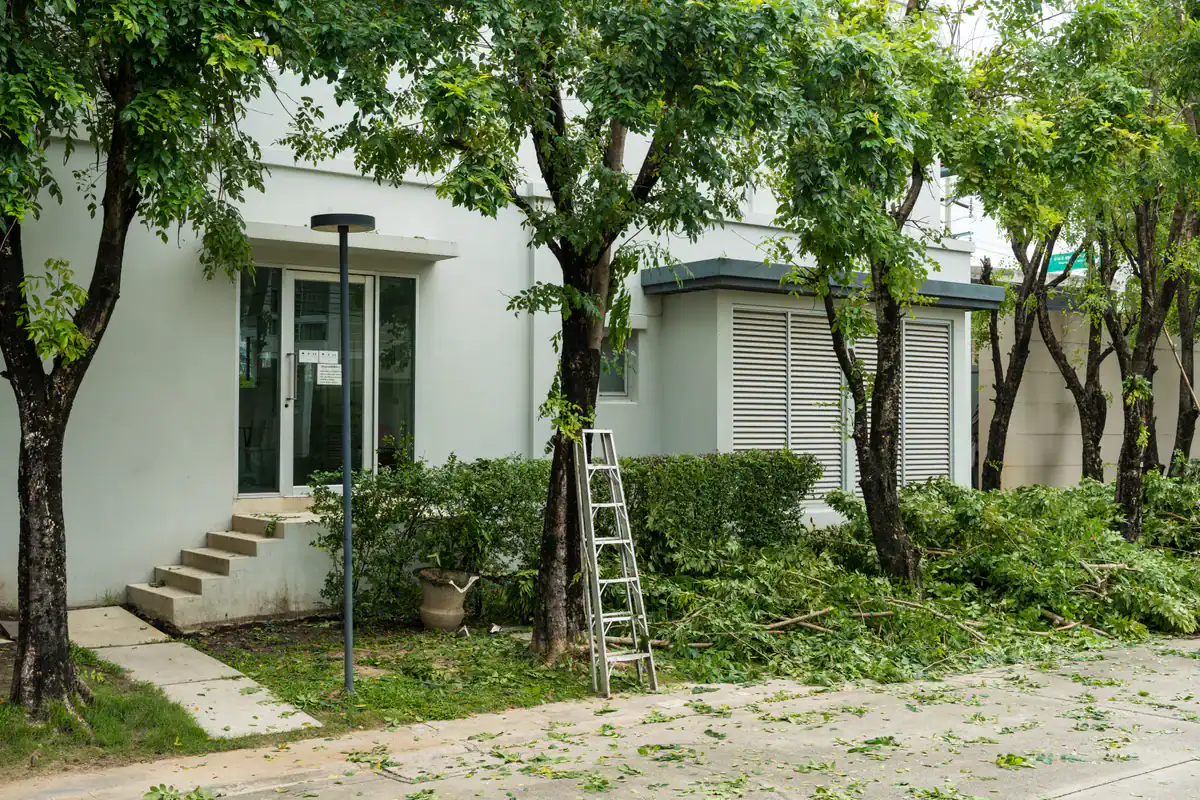
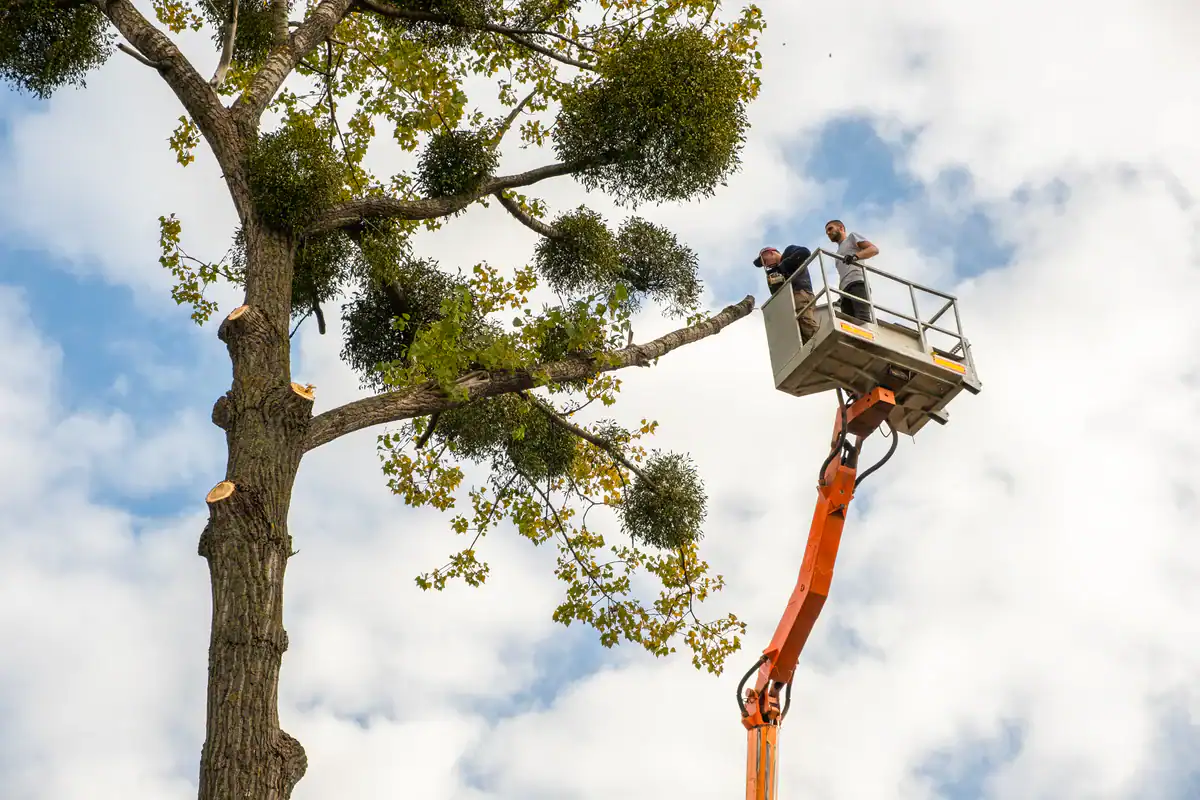
Prairie Village was built in an era when developers planted trees meant to last generations. The problem is that those generations have now passed, and what used to be a beautiful 30-foot oak is now an 80-year-old structure with potential decay you can’t see from the ground. A professional assessment tells you what’s actually going on before a storm makes the decision for you.
The homes in neighborhoods like Corinth Hills and Prairie Fields sit on modest lots where trees overhang driveways, rooflines, and fence lines shared with neighbors. That kind of tight-quarters work isn’t something you want handed to a crew without a proven track record. When the job is done right, you get your yard back, your property stays intact, and you’re not on the phone with your insurance company the following week.
Prairie Village has been under severe weather warnings 58 times in the past 12 months alone. After the July 2023 storm that prompted a citywide emergency declaration and the EF1 tornado that touched down near 79th Street and Lamar Avenue in May 2024, a lot of homeowners here learned the hard way that a mature tree with a compromised structure doesn’t wait for a convenient time to come down. Getting ahead of that is the whole point of professional tree maintenance.
We’re a locally rooted, family-owned tree care company serving the Kansas City, KS & MO metro, including Prairie Village and the surrounding Johnson County area. Our crew has been doing this work for over 10 years — fully licensed in Kansas, fully insured, and accountable to the communities we actually live in.
The 4.9-star rating across 40 reviews isn’t a marketing number. It’s the result of showing up on time, giving straight answers, doing the work clean, and leaving the yard in better shape than we found it. Every job includes full cleanup — no piles left behind, no debris on the sidewalk for your neighbors to look at. If you want to keep the wood or mulch, just say so.
In 2024, we were recognized by Quality Business Awards as a top 1% American business in tree care with a 95%+ quality score. That kind of recognition means something when you’re trying to figure out who to trust with a 70-year-old oak hanging over your roof in Prairie Village.
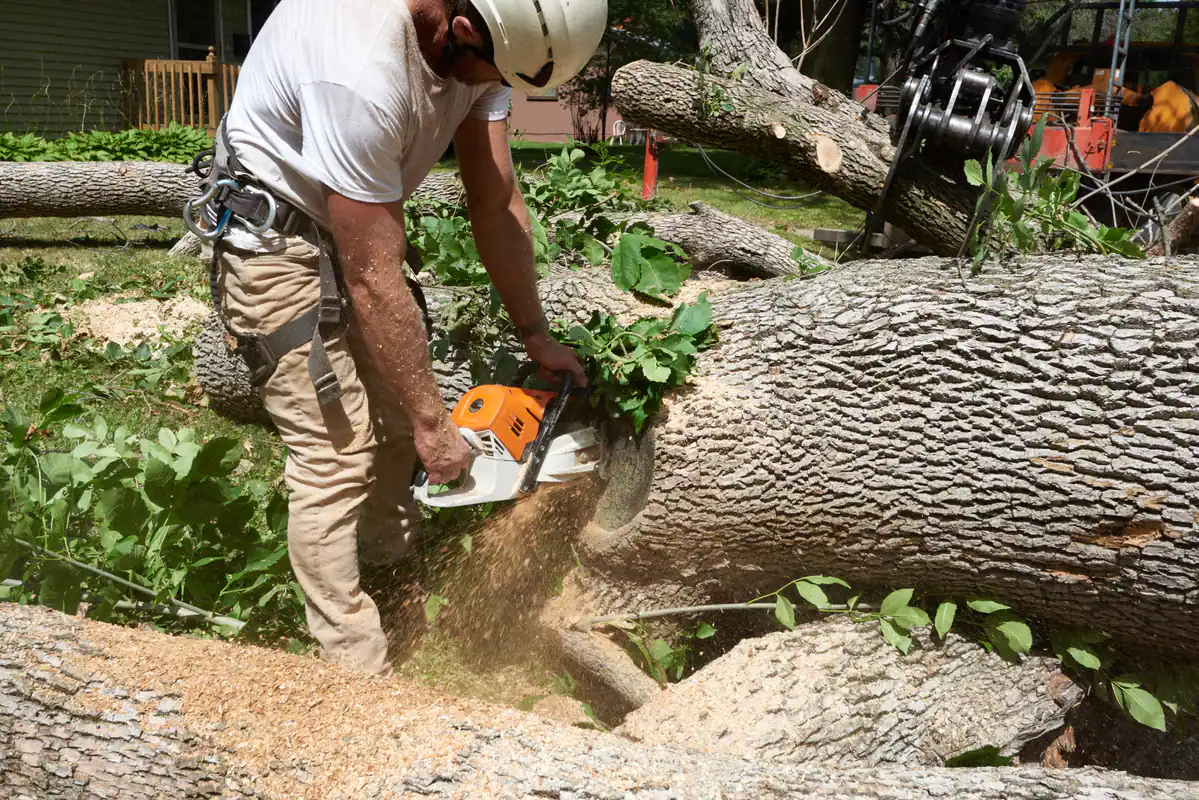
It starts with a free, same-day estimate. Someone from our crew comes out to your property, looks at the tree in question, and gives you a straight answer — not a vague range, not a pressure pitch, just a clear assessment of what needs to happen and what it will cost. Most quotes are given the same day you call.
One thing worth knowing if you’re in Prairie Village: the city adopted a Tree Protection and Removal Ordinance in 2021 that places protected status on trees above certain size thresholds, including trees in your front yard and right-of-way areas along Mission Road, Nall Avenue, and other residential corridors throughout the city. If a tree is dead, diseased, or poses a structural hazard, there’s an exception process — but it requires documentation. We can walk you through what that looks like so you’re not left dealing with city paperwork on your own.
Once the scope is clear and you’re ready to move forward, the work gets scheduled and completed with full cleanup included. We handle everything from the cut to hauling the debris, and if you want the wood or chips left on-site, just let us know before we start. There are no hidden add-ons and no surprise invoices at the end.
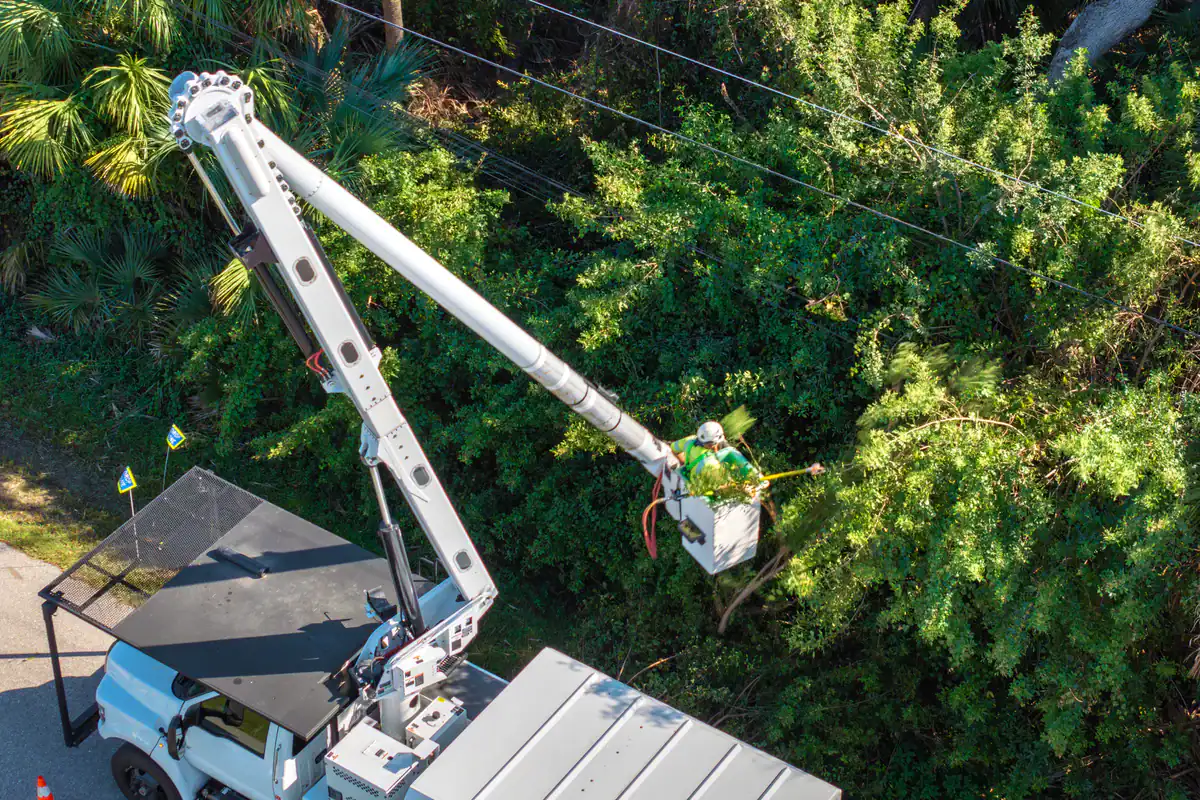
Ready to get started?
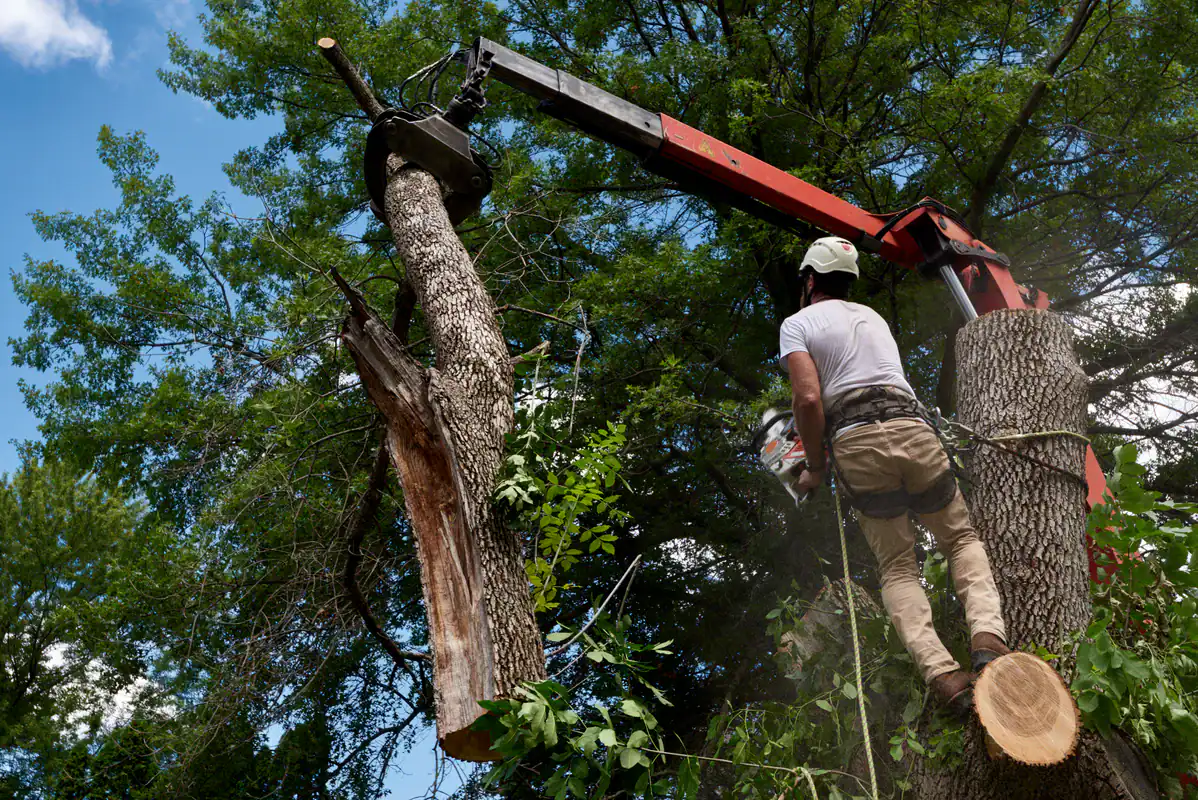
Tree removal is the most common call, and in Prairie Village that usually means working in close quarters — trees sitting near fences, near additions, near driveways shared with neighbors. We’re experienced in tight residential settings, which matters a lot when your lot line is 10 feet from your neighbor’s car.
Trimming and pruning are separate decisions from removal, and that distinction matters here. Prairie Village’s mature hardwood canopy — the oaks and maples throughout Harmon Park, Corinth Square, and the Mission Road corridor — responds well to dormant pruning in the fall, which reduces disease transmission risk and helps the tree handle the spring storm season. If removal isn’t necessary, a well-timed trim can extend the life of a tree significantly.
Stump grinding is quoted separately from tree removal, so if you want the stump gone, make sure to ask about it upfront — it doesn’t happen automatically. Tree health assessments are also available for homeowners who aren’t sure whether a tree is a hazard or just looks rough. Given Prairie Village’s Tree Protection Ordinance, having a documented assessment on record can also support an exception request with the city if removal of a protected tree turns out to be necessary. Land clearing is available for properties undergoing renovation or new construction, which is increasingly common in Prairie Village as teardown-and-rebuild activity has picked up over the past decade.
It depends on the tree’s size and location. Prairie Village’s Tree Protection and Removal Ordinance, which took effect in June 2021, divides trees into four protected categories. Any tree in the public right-of-way is protected regardless of size. Trees within 20 feet of your front lot line are protected if they’re 3 inches in diameter or larger. Trees elsewhere on your lot are protected once they reach 6 inches in diameter. Removing a protected tree without approval is a municipal code violation that results in a citation and potential fines.
That said, there is an exception for trees that are dead, diseased, or dying and pose a threat to property or public safety. To qualify, you typically need documentation that supports the removal — which is exactly where a professional on-site assessment helps. We can assess the tree’s condition, help establish whether it qualifies for the exception, and walk you through what the city’s Building Official needs to see before work begins.
The honest answer is that you usually can’t tell just by looking at it from the ground. Internal decay, root damage, and structural weakness are often invisible until a branch fails or the whole tree goes over. What you can look for are surface indicators: large dead limbs in the upper canopy, fungal growth near the base, a visible lean that wasn’t there before, or bark that’s separating in unusual ways.
In Prairie Village, where most residential trees are 60 to 80 years old, these signs show up more frequently than homeowners expect. A tree that looks healthy from the street can have significant internal rot that only becomes apparent during a close-up inspection. The safest approach is to have a professional come out and assess it directly. Sometimes the answer is removal. Sometimes a targeted trim addresses the issue. Either way, you’ll know what you’re actually dealing with rather than guessing.
Full cleanup is included on every job — that’s not a conditional offer, it’s standard. We remove all branches, debris, and wood from the property after the work is done. You won’t be left with a pile of brush on the curb or chips scattered across your lawn.
If you want to keep the wood for firewood or the chips for mulch, just let us know before we start. We can leave what you want and haul the rest. This matters in a neighborhood like Prairie Village where properties are close together and the street-facing appearance of your yard is part of the community’s shared aesthetic. The cleanup is thorough enough that your neighbors shouldn’t be able to tell the work happened — other than the fact that the tree is gone.
They’re related but not the same, and the difference matters for the health of your tree. Pruning is targeted — it means removing specific branches for the structural or health benefit of the tree. Trimming is more about shaping and managing size, typically for aesthetic reasons or to keep branches from encroaching on a structure or power line.
For the mature oaks and maples that make up most of Prairie Village’s residential canopy, pruning is generally more important than trimming. These trees have been growing for decades, and the goal is usually to remove dead or compromised limbs before they become a hazard, not just to make the tree look neat. Fall is typically the best time for dormant pruning in the Kansas City, KS & MO metro — it reduces the risk of disease transmission through fresh cuts and allows the tree to recover before spring growth. If you’re not sure what your tree needs, the on-site assessment will tell you.
Same-day visits are available for urgent situations. Prairie Village’s storm history — including the citywide emergency declaration in July 2023 and the EF1 tornado that came through the 79th Street and Lamar Avenue corridor in May 2024 — makes this a real and recurring need, not a theoretical one. When a large limb comes down on a fence or a tree splits and leans toward the house, waiting a week for an estimate isn’t an option.
After a major storm event, demand for tree services in the area spikes quickly and the crews that respond fastest are the ones that get the calls. We typically respond within 24 hours and can often get out the same day for emergencies. If you’re in a situation where a tree is actively threatening your home or blocking access, call directly rather than filling out a form — the phone number is the fastest way to get us moving.
This is one of the most important questions you can ask, and the fact that you’re asking it puts you ahead of most people. Kansas is one of the states that requires a licensed arborist for tree work — it’s not optional, and it’s not just a formality. If an unlicensed or uninsured crew member is injured on your property, the liability can fall back on you as the homeowner. That’s a real risk, not a hypothetical one.
The right move is to ask the company directly for proof of insurance before any work begins. A legitimate tree service will have both general liability coverage and workers’ compensation, and they’ll provide documentation without hesitation. We’re fully licensed and insured — that’s confirmed across every platform we’re listed on, and we’ll show you the documentation if you ask. In a community like Prairie Village, where home values run well into the $400,000 to $500,000 range and properties sit close together, working with a verified, licensed tree company isn’t a luxury — it’s basic protection for your home and your neighbors.
Other Services we provide in Prairie Village