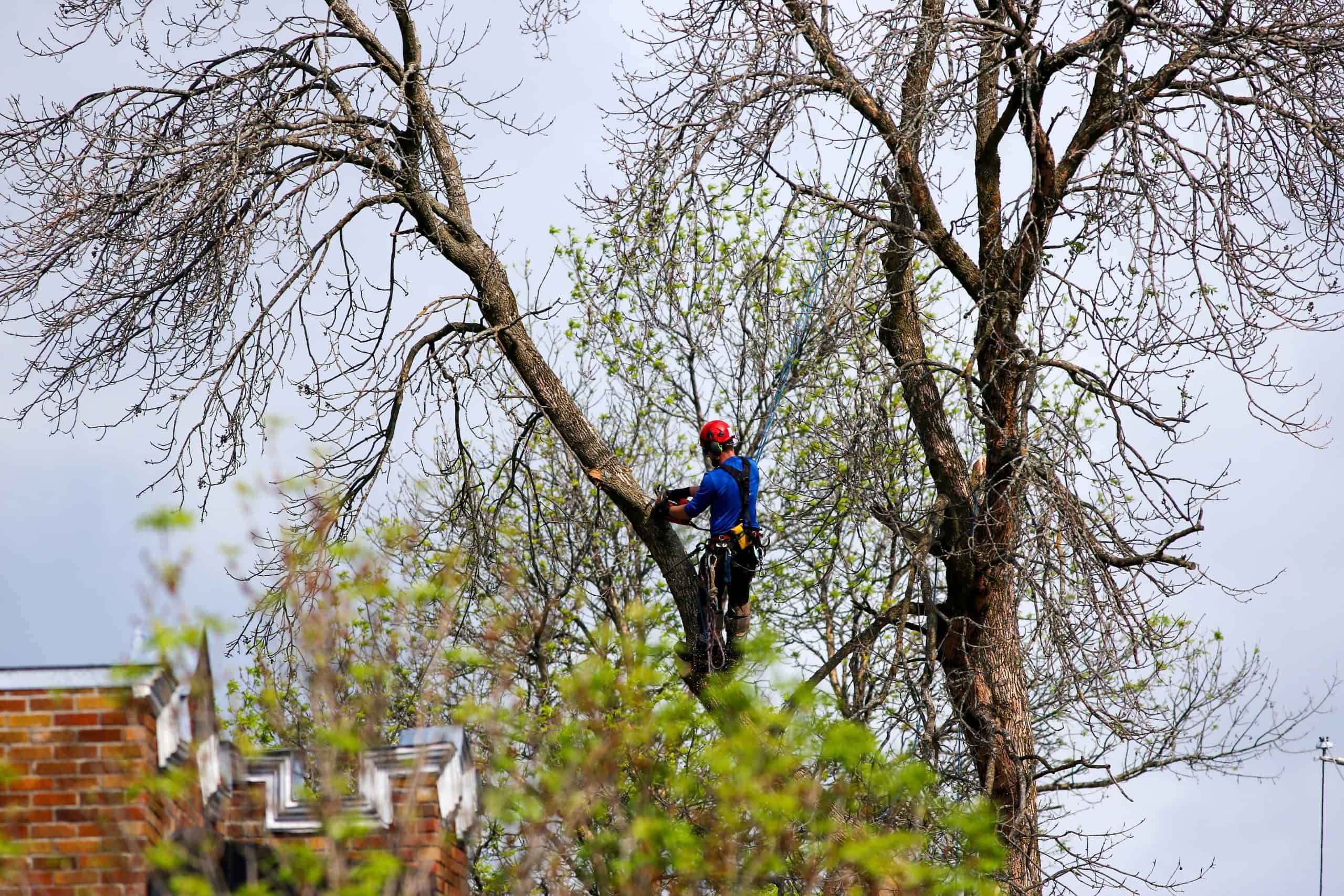
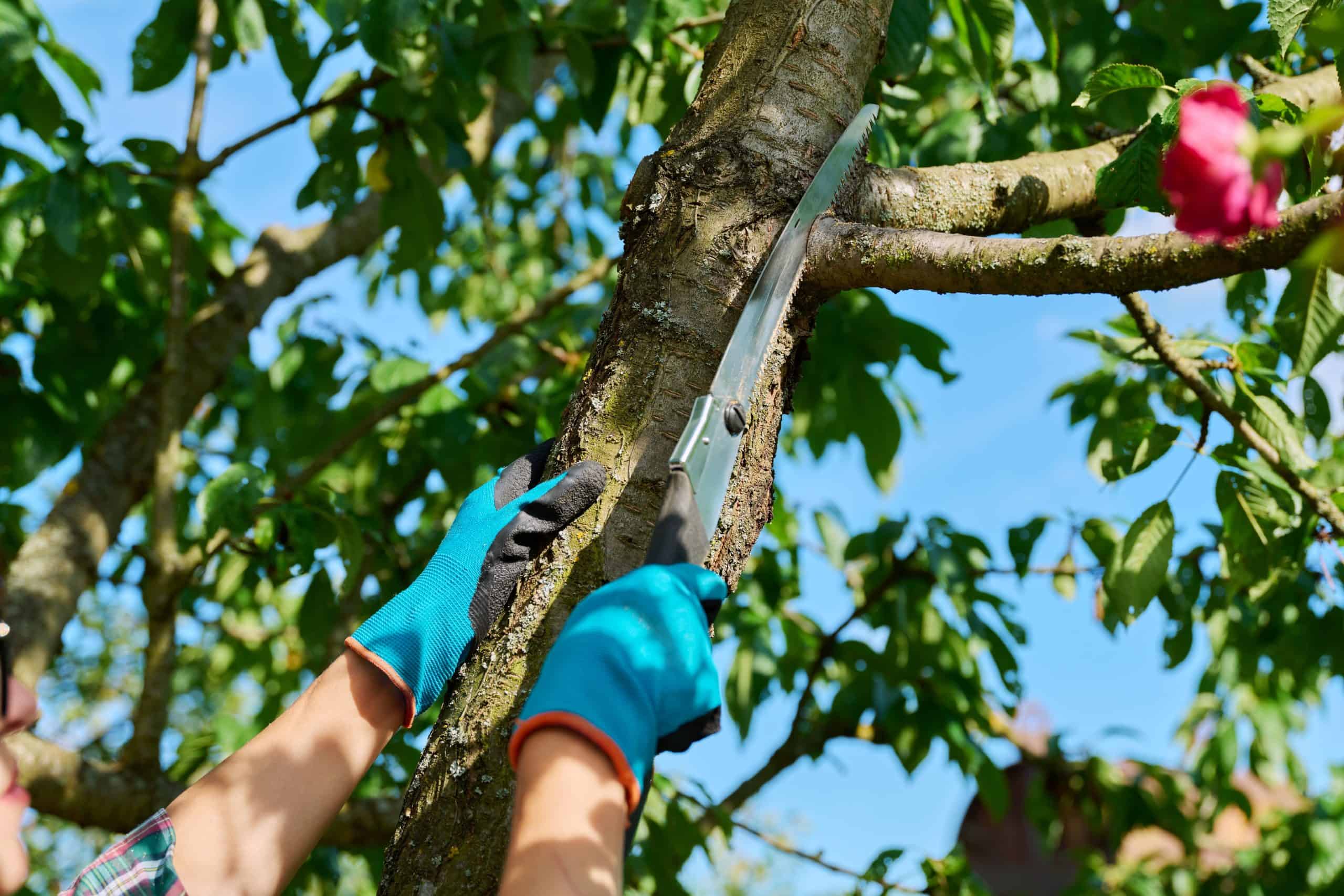
When your trees are managed well, you notice it immediately. The canopy looks right. The light comes through the way it should. Branches aren’t crowding the roofline or dropping debris on the driveway after every storm.
That matters more in Mission Hills than in most neighborhoods. This community was designed from the ground up to be beautiful — J.C. Nichols didn’t just build homes here, he planted a landscape. The oaks, maples, and elms that line the streets and fill the private lots are part of what makes Mission Hills what it is. Many of them are 80 to 100 years old.
Trees like that don’t just need trimming — they need someone who understands what they’re working with and takes the job seriously. The Kansas City Metropolitan Area, MO area gets hit hard in spring. High winds, heavy rain, ice loading in winter — all of it puts real stress on large, mature canopies. Proactive trimming removes the weak spots before a storm finds them.
Dead branches don’t fall on their own schedule. Getting ahead of that, especially on a property in Mission Hills where home values reflect the care taken with every detail, is just good thinking. Every job we complete includes full cleanup — no piles left behind, no debris on the lawn, nothing for you to deal with after the crew leaves.
We’re a family-owned company based right here in the Kansas City Metropolitan Area, MO area. For over 10 years, we’ve been managing trees across the metro — including the kind of large, established specimens that are common throughout Mission Hills and the surrounding Johnson County corridor. This isn’t a franchise operation. It’s a tight, experienced team that shows up, does the work right, and leaves the property cleaner than we found it.
We’ve safely managed more than 1,200 trees with a 100% safety record. That number matters more in a neighborhood like Mission Hills, where the trees are large, the lots are significant, and the properties are historic. A crew that hasn’t made a mistake in over a decade of this kind of work is not an accident — it’s a standard we hold ourselves to.
We carry full insurance — general liability and workers’ compensation — so you’re protected if anything unexpected happens on your property. Our 4.9-star rating across 40-plus verified reviews reflects what Mission Hills customers consistently say: fair pricing, thorough cleanup, and a crew that treats your property the way you’d expect.
It starts with a free quote, and most of the time that quote happens the same day you reach out. We come to the property, walk the site, and look at the actual trees — not a satellite image, not a photo you send over. For Mission Hills properties with mature oaks and large canopy spreads, an on-site look is the only honest way to give you an accurate number.
Once you’re ready to move forward, we handle everything. For tree trimming work in Mission Hills, timing is worth paying attention to. The city’s own arborist recommends winter pruning for oaks and crabapples specifically to reduce the risk of oak wilt — a real and documented threat to the mature trees in this neighborhood. If you’re scheduling trimming on oaks or other susceptible species, that January-through-March window is the right time to do it, and we understand why.
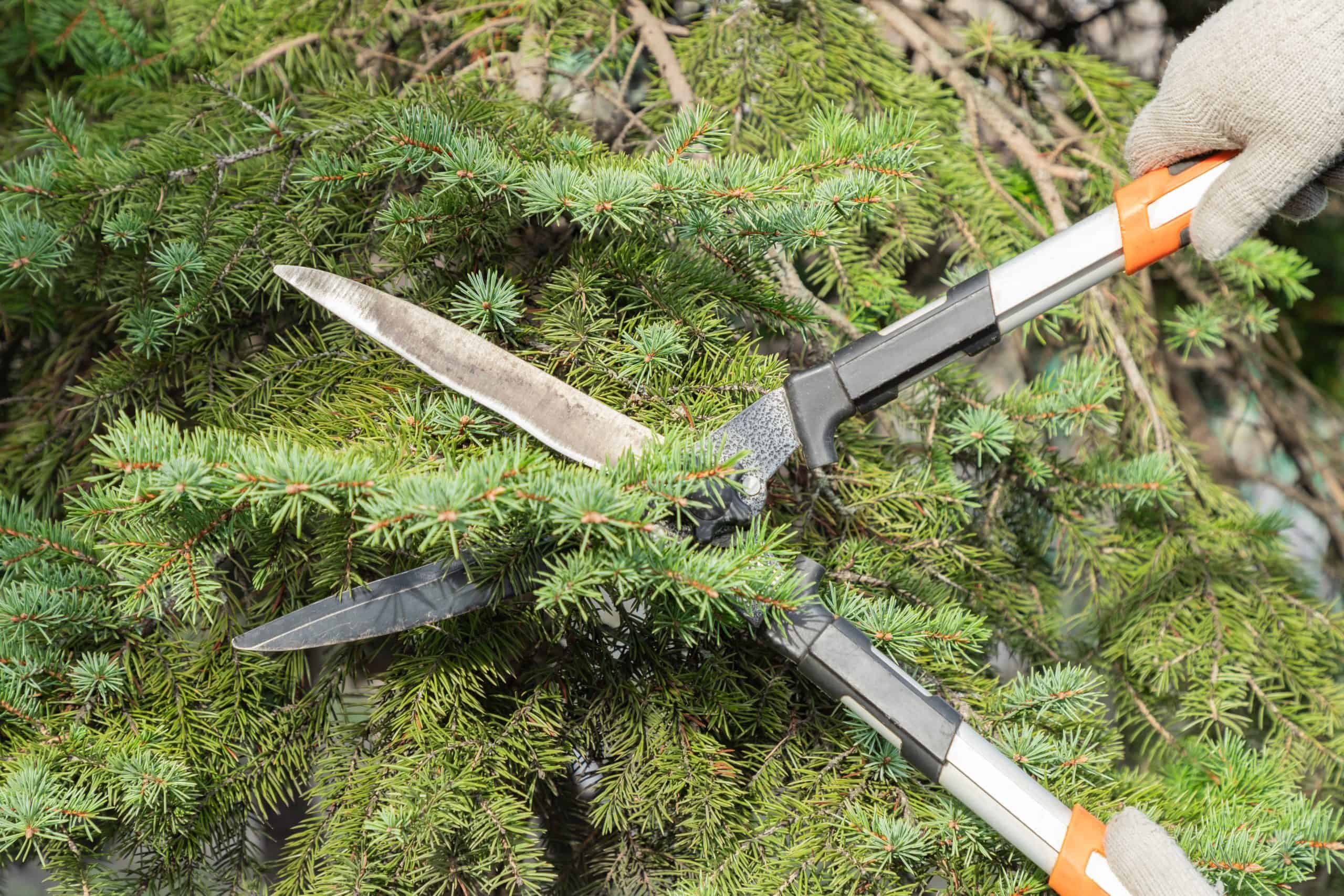
During the job, our crew works carefully around your landscaping, hardscaping, and structures. After the trimming is done, everything gets cleaned up — branches, chips, debris. You can keep the wood or mulch if you want it, or we haul it away. Either way, the property is left the way it should be.
Then we walk the site with you so you can see exactly what was done before anyone leaves.
Ready to get started?
Tree trimming covers a range of work depending on what your trees actually need. Canopy raising — lifting the lower branches to improve clearance, light, and the overall line of the tree — is one of the more common requests in Mission Hills, where the estate-scale lots and formal landscaping call for trees that are shaped with intention, not just cut back.
Tree shaping, crown thinning, and dead branch removal all fall under the same scope of work. So does overgrown tree trimming when a tree has been left alone too long and is starting to crowd structures or block sightlines.
Emerald Ash Borer is an active threat in this area, and scale insects have been documented on maples and magnolias throughout Mission Hills. If there are signs of disease or pest pressure during the trimming visit, we’ll flag it. That kind of observation matters on trees that have been growing for nearly a century — catching a problem early is always better than managing a crisis later.
It’s worth knowing that the city’s tree pruning program covers only city-owned trees within the right-of-way — the trees in the parklet and within about 10 feet of the curb. Every tree on your private property is your responsibility, and that includes the large specimen trees that define the character of most Mission Hills estates. We handle that private-property work, and the free same-day quote makes it easy to know exactly what you’re looking at before you commit to anything.
For trimming work on trees that are entirely on your private property, there is generally no permit required. Mission Hills does have a formal Tree Protection Ordinance, and the city maintains an Urban Forestry License program — but that licensing requirement applies specifically to contractors working on city-owned trees in the right-of-way, not to private property work.
If you’re considering removal of a significant specimen tree rather than trimming, it’s worth a quick call to the city to confirm whether any notification is needed under the ordinance. For standard tree trimming, canopy raising, or branch removal on your own lot in Mission Hills, you can move forward without going through a permitting process. We can walk you through what applies to your specific situation during the free on-site quote.
For most species, late winter — roughly January through March — is the recommended window. Trees are dormant, which means less stress from the cuts, better visibility into the canopy structure without leaves in the way, and a lower risk of attracting insects or disease through fresh pruning wounds.
For oaks specifically, timing is more than a preference — it’s a health issue. Oak wilt spreads through fresh cuts made during the growing season, and Mission Hills’ mature oaks are particularly valuable trees to protect. The city’s own arborist newsletter has specifically recommended winter pruning for oaks and crabapples to reduce that transmission risk. If you have oaks on your property in Mission Hills, scheduling trimming in the dormant season is the right call. We understand the seasonal considerations for the species common to this area and can advise you on the best timing for your specific trees.
A few things to look for: dead or hanging branches, limbs that are crossing and rubbing against each other, growth that’s crowding your roofline or overhanging structures, or a canopy that’s become noticeably uneven or dense. Any of those are signs that trimming is overdue.
The harder-to-spot issues are the ones that matter most on older trees. Structural weaknesses, weak branch unions, and early signs of disease or pest activity — like the Emerald Ash Borer damage that’s been documented in Mission Hills — aren’t always visible from the ground without a trained eye. For a 90-year-old oak on a property worth over a million dollars, a professional on-site assessment isn’t optional — it’s the only way to know what you’re actually dealing with. We offer free same-day quotes that include a real look at your trees, not just a number pulled from a phone call.
Yes — full cleanup is included with every job, no exceptions. That means all branches, debris, and chips are cleared from your property before we leave. You’re not left with a pile to deal with or a lawn covered in sawdust.
For Mission Hills homeowners with formal landscaping, stone walkways, manicured garden beds, and irrigated lawns, this matters more than it might somewhere else. A crew that drops limbs and leaves them is a problem on any property — on an estate-scale lot with significant landscaping investment, it’s unacceptable. We treat cleanup as part of the job, not an add-on. If you’d like to keep the wood chips for garden beds or the cut logs for firewood, just say so — that option is available. Otherwise, everything goes with us.
Pricing varies based on the size of the tree, how many trees you’re having trimmed, how accessible they are, and what the work actually involves. Nationally, most homeowners pay somewhere between $300 and $900 per tree, with larger trees — the kind that are common throughout Mission Hills — running toward the higher end of that range or beyond, depending on scale and complexity.
The most accurate way to know what your job will cost is a free on-site quote. We provide same-day quotes at no charge and with no pressure — you get a clear number before any work starts, so there’s no guessing and no surprises. Given the scale of the trees on most Mission Hills properties, getting that quote in person is the only way to give you an honest answer. Call and we’ll get out to you the same day.
Yes — we carry full insurance, including general liability coverage and workers’ compensation. Both matter when you’re hiring a crew to work on your property.
General liability protects you if something goes wrong with the work itself — a branch lands somewhere it shouldn’t, a fence gets clipped, anything like that. Workers’ compensation protects you from financial liability if a crew member is injured while working on your property. On a Mission Hills property with a home value well into seven figures, the insurance question isn’t a formality — it’s a real financial consideration. An uninsured crew working on your property can expose you to significant liability if there’s an accident. We’re fully covered, and you can ask for proof of insurance before any work begins. That’s a reasonable thing to ask for, and we have no problem providing it.
Other Services we provide in Mission Hills