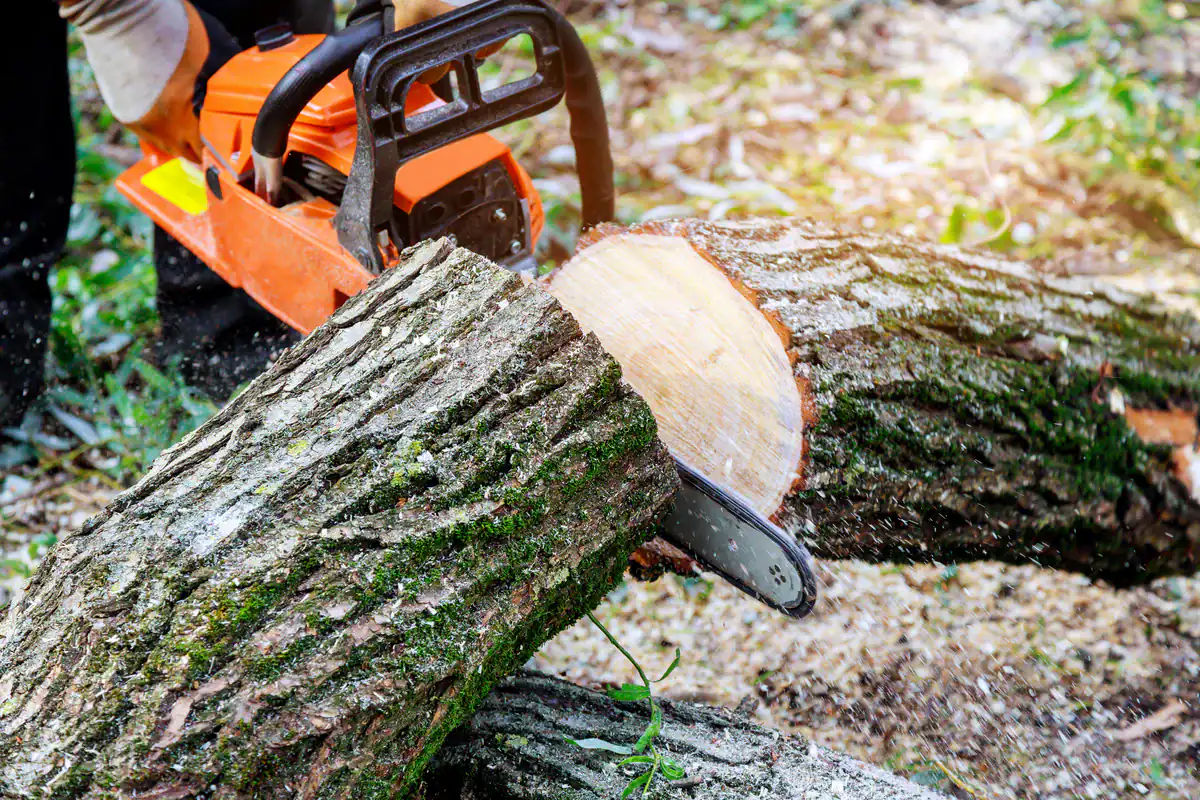
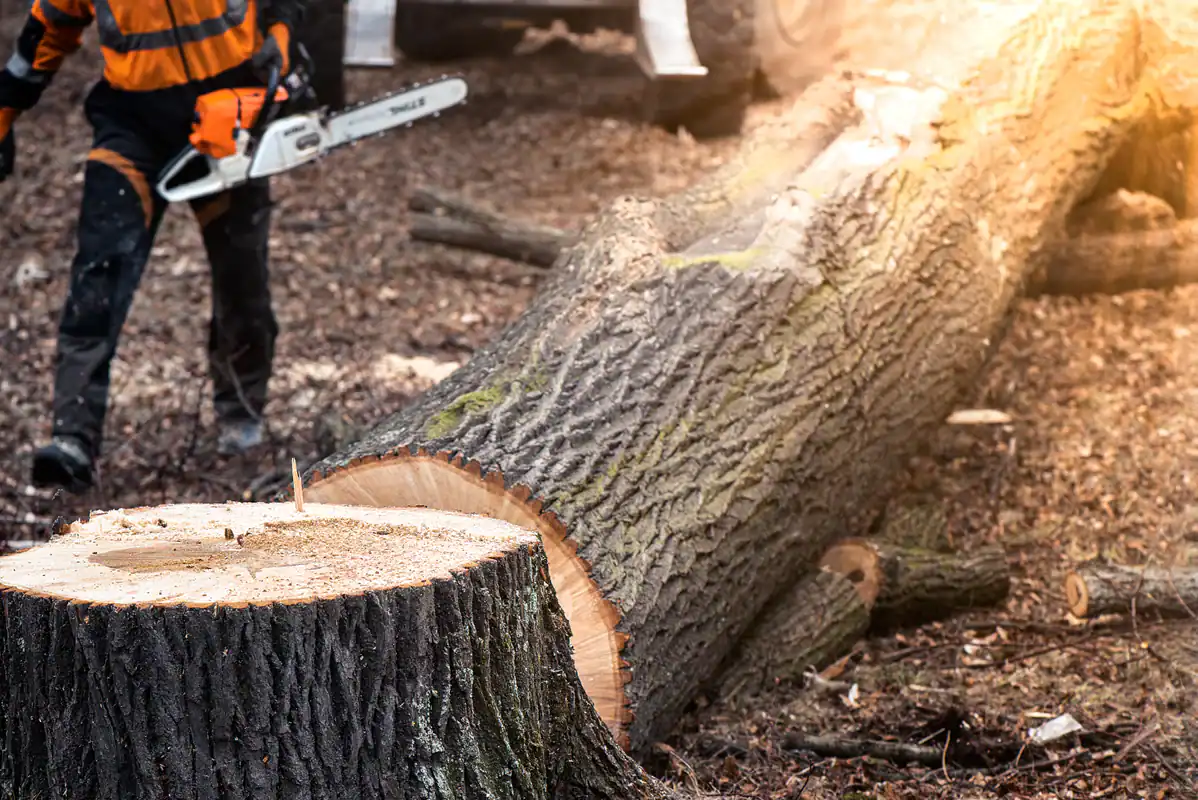
The trees that line Mission Hills’ streets and estates aren’t just landscaping — they’re part of what makes this community what it is. But a tree that’s been here for 80 or 100 years carries real risk alongside its beauty. Internal decay, compromised root systems from Brush Creek flooding, and cumulative storm damage don’t always show up in obvious ways. By the time something looks wrong from the ground, the structural situation may already be serious.
What you get after a proper removal is simple: the hazard is gone, your property is clean, and you’re not waiting on a crew to come back and finish the job. Every job we handle includes full cleanup — no wood piles, no debris left across your lawn, no chip scatter near your stone walls or garden features. If you want to keep the wood or mulch, just say so upfront. Otherwise, it leaves with the crew.
For Mission Hills specifically, that matters more than it might somewhere else. These properties have decorative stonework, manicured grounds, and in some cases, ornamental features that took decades to establish. A removal done carelessly on a property like this isn’t just an inconvenience — it’s a problem that costs real money to fix. The goal is to leave your property looking like the work was done right, because it was.
We’ve been working in the Kansas City, KS & MO metro for over a decade. That means familiarity with the clay-heavy soils that affect root stability throughout Johnson County, the storm patterns that come through the area every spring, and the specific demands of working in established residential communities where precision matters as much as power.
Mission Hills is one of those communities. The curvilinear streets, the mature canopy, the proximity of large trees to historic homes and neighboring properties — none of that is forgiving of sloppy work. We’ve handled large tree removals in tight, high-value residential environments throughout the KC metro, including neighborhoods where a wrong move means damage to a $3M home or a neighbor’s fence.
We’re fully licensed and insured — liability coverage and workers’ compensation both — which matters here more than most places. On a property worth what Mission Hills properties are worth, you want to know exactly who’s accountable if something unexpected happens. With us, that answer is clear.
It starts with a free on-site estimate. We come out, look at the tree, and give you a straight read on what it actually needs — removal, trimming, or something else entirely. If a strategic trim can solve the problem, that’s what you’ll hear. We’re not in the business of recommending full removal when it isn’t necessary, and that honesty tends to matter to Mission Hills homeowners who’ve dealt with contractors that default to the most expensive option.
Before any work begins on a Mission Hills property, there’s a permit and licensing layer worth knowing about. The city requires all tree contractors to hold an Urban Forestry License — a formal, city-issued credential that not every company bothers to obtain. Mission Hills also enforces a Tree Protection Ordinance with fines tied to the Trunk Formula Technique for improperly removed or damaged protected trees. Working with a crew that understands these requirements protects you from code violations that could follow the job long after the tree is gone.
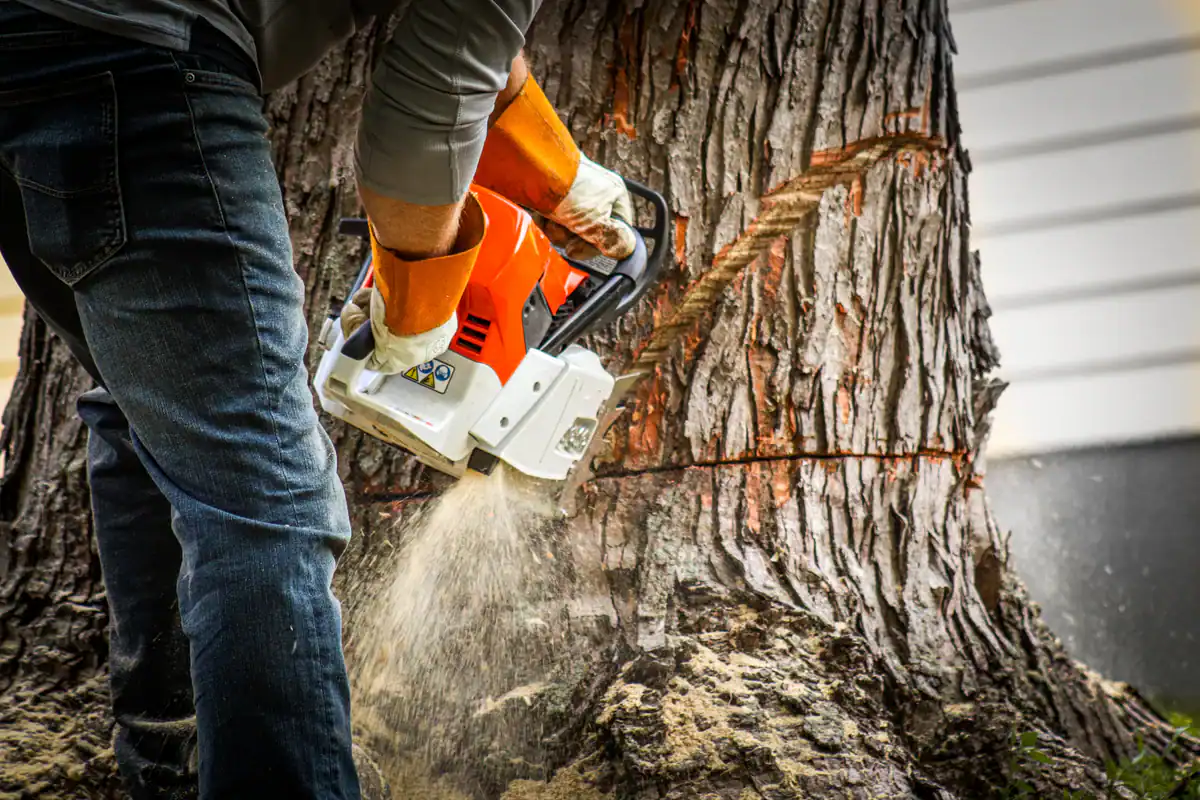
Once the scope is confirmed and everything is in order, our crew handles the removal itself — sectioning the tree down safely, managing where material falls, and keeping the work contained to your property. Given the proximity of homes, decorative features, and neighboring lots in Mission Hills, that kind of controlled execution isn’t optional — it’s the baseline. When the tree is down, full cleanup follows. The job isn’t done until the property is clean.
Ready to get started?
Tree removal in Mission Hills covers the full range of situations that come up in a community with this age and density of tree stock. Dead tree removal is one of the most common calls — trees that have quietly lost structural integrity and are now a storm-season liability waiting to happen. Diseased tree removal is another, particularly with Emerald Ash Borer and Oak Wilt active throughout Johnson County. Mission Hills has a significant population of mature ash and oak trees, and a diseased tree that isn’t addressed can spread to neighboring trees on adjacent properties — a real concern in a community where every estate has valuable mature canopy.
Hazardous tree removal covers the situations with the most urgency: trees leaning toward a structure, storm-damaged trees with compromised branch unions, and trees along the Brush Creek corridor where flooding has undercut root systems over time. Large tree removal — the kind involving mature hardwoods that have been growing for 80 to 100 years — requires a crew with the experience and equipment to work safely in close quarters, and we’ve handled exactly that kind of work throughout the KC metro.
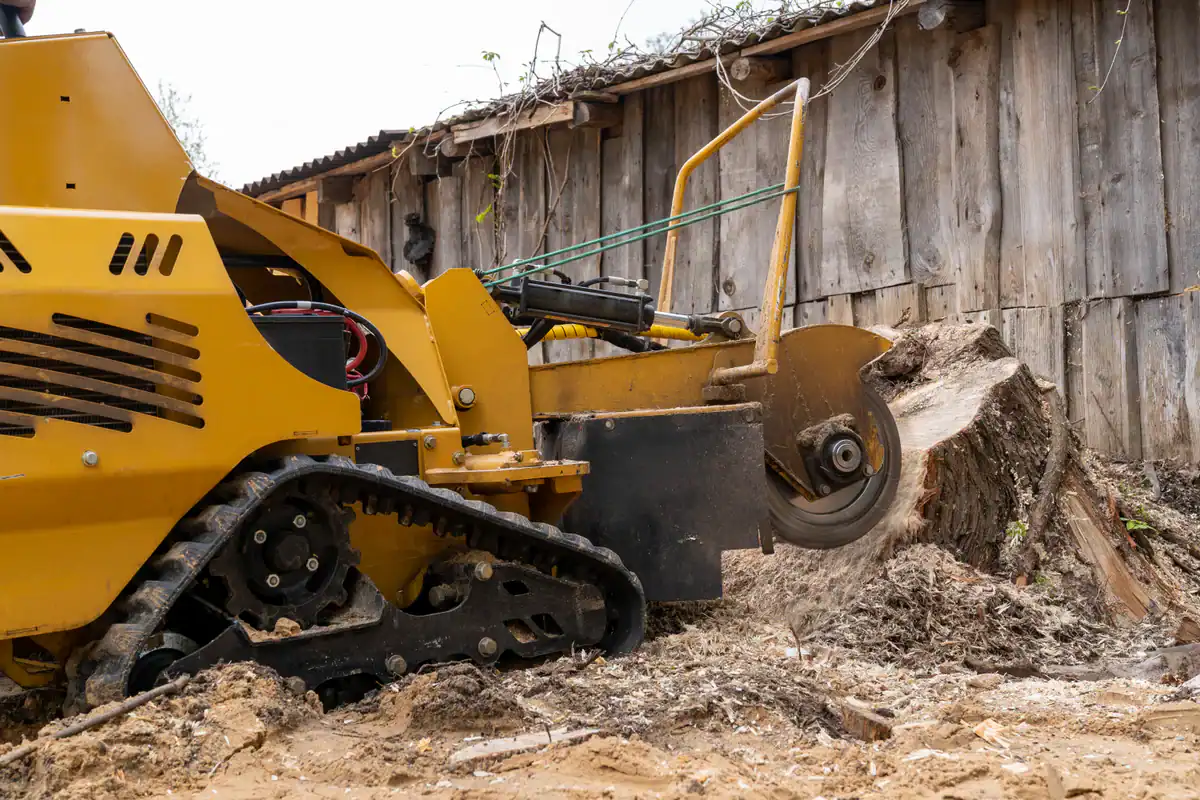
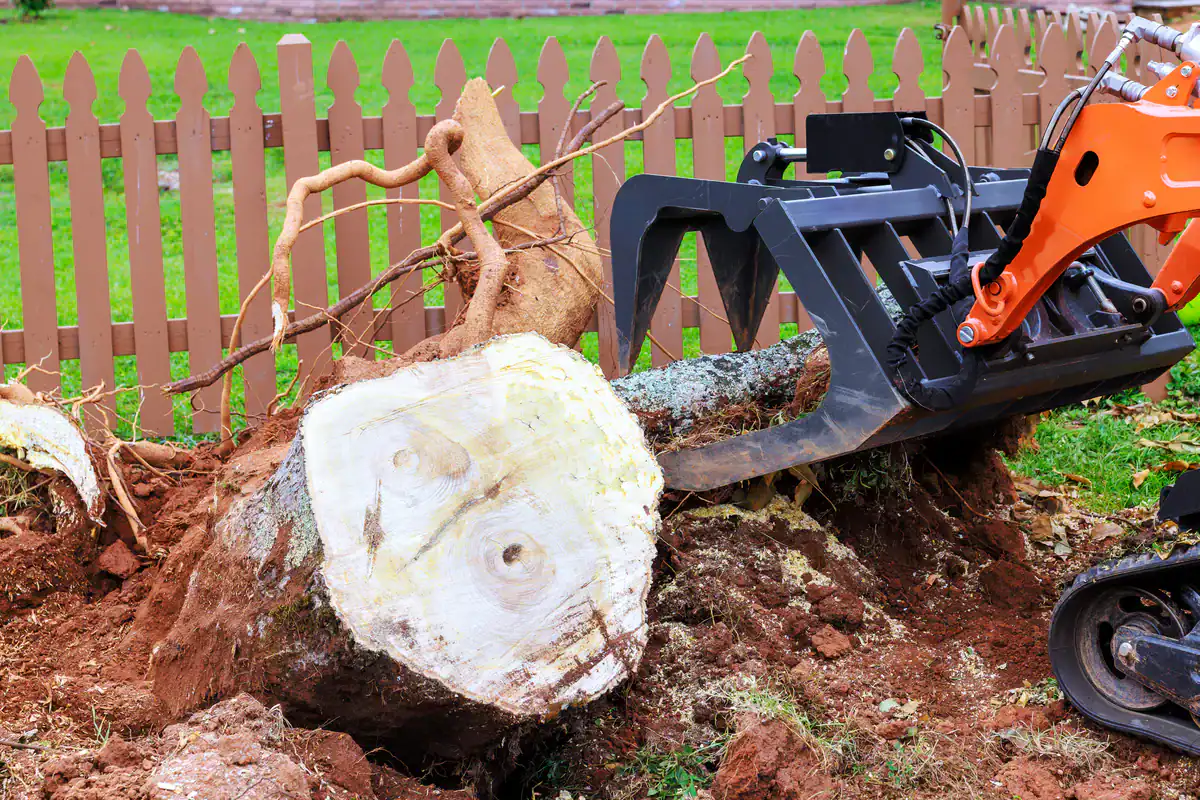
Stump removal and stump grinding are available as part of the same job or separately, depending on what you need. We also handle brush removal and general cleanup following storm events. Whatever the situation, the job ends the same way: your property is clean, the hazard is gone, and nothing is left for you to deal with afterward.
Yes — and this is one of the more important things to verify before hiring anyone for tree work in Mission Hills. The city requires all tree contractors to hold an Urban Forestry License, which is a formal, city-issued credential obtained through Mission Hills’ permitting system. It’s not the same as a general contractor’s license or a state business registration — it’s specific to the city and specific to tree work performed within city limits.
This matters because Mission Hills also enforces a Tree Protection Ordinance with real financial consequences. If a contractor removes or damages a protected tree improperly, fines are calculated using the Trunk Formula Technique, and each tree is treated as a separate incident. As the property owner, you can be on the hook for violations that stem from your contractor’s actions. Hiring a crew that’s properly licensed to work in Mission Hills isn’t just a best practice — it’s how you protect yourself from a code violation that outlasts the job itself.
That’s exactly the right question to ask before spending money on a full removal. The honest answer is that it depends on what’s actually going on with the tree — and the only way to know for certain is a proper on-site assessment. A tree with less than 25% branch damage may survive with strategic pruning. A tree with internal decay, a compromised root system, or significant structural lean is a different situation entirely.
In Mission Hills specifically, the age of the tree stock adds a layer of complexity. Trees that were planted as part of J.C. Nichols’ original development in the 1920s are now 80 to 100 years old. They may look healthy from the outside while carrying internal decay that isn’t visible without a closer look. A crew that’s genuinely experienced with mature hardwoods will be able to tell you what they’re seeing — and if a trim can solve the problem, that’s what we’ll tell you. The goal is the right answer, not the most expensive one.
It depends on the circumstances, and the answer isn’t always what homeowners expect. If a healthy tree falls due to a storm and damages a structure, most homeowners insurance policies will cover a portion of the removal — typically in the range of $500 to $1,000 toward the removal cost if the tree caused structural damage. If the tree falls in the yard without hitting anything, removal generally isn’t covered at all.
Where it gets more complicated is with dead or visibly diseased trees. If your insurer can show that the tree was already dead or declining — and that you knew about it or reasonably should have — they may deny the claim based on negligence. In a community like Mission Hills, where the city actively enforces a Tree Protection Ordinance and expects homeowners to maintain their trees to a specific standard, a neglected dead tree creates both a code risk and an insurance risk. Proactive removal of a tree that’s clearly in decline is almost always the more financially sound decision.
For a mid-sized tree — say, 30 feet or so — a professional crew typically completes the removal in two to four hours. Larger trees, particularly the mature oaks and hardwoods common throughout Mission Hills estates, can take a full day depending on the size of the canopy, the proximity to structures, and how the sections need to be managed as they come down.
The tighter the space, the more methodical the work has to be. Mission Hills properties often have large trees positioned close to historic brick and stone homes, neighboring lots, decorative garden features, and curvilinear streets that don’t leave a lot of room for error. That kind of environment requires sectional cutting — bringing the tree down in controlled pieces rather than felling it in one direction — which takes more time but protects everything around it. A crew that’s worked in dense, high-value residential neighborhoods throughout the KC metro understands this, and the extra time it takes is built into the process from the start.
For most tree species, late winter through early spring — before new growth begins — is the ideal window for removal and pruning. The tree is dormant, the ground is typically firm enough for equipment, and the work can be done before the spring storm season picks up in the Kansas City, KS & MO metro.
There’s one important exception worth knowing if you have oaks on your property, which many Mission Hills estates do. Oak Wilt is an active threat in Johnson County, and it spreads through wounds made during picnic beetle season — roughly April through July in the KC area. Pruning or removing oaks during that window increases the risk of Oak Wilt infection, which can spread to neighboring trees. If you have a large oak that needs to come down, late fall through early spring is the safer timing. If the tree is already dead or poses an immediate hazard, that timing consideration gives way to the safety need — a hazardous tree doesn’t wait for the calendar.
The stump doesn’t go away on its own — at least not on any timeline that’s useful to you. Left in place, a stump takes years to decades to decompose, and in the meantime it can attract insects, create a tripping hazard, and leave an eyesore in a yard where the rest of the property is carefully maintained. For Mission Hills homeowners who’ve invested significantly in their landscaping and grounds, a rotting stump sitting in the lawn isn’t a minor inconvenience.
Stump grinding is the standard solution. A grinder chips the stump down below grade — typically six to twelve inches below the surface — leaving wood chips behind that can be used as mulch or removed entirely. The area can then be filled, seeded, or replanted. If you’re planning to put something else in that spot, or if the stump is near a walkway, decorative wall, or other feature you want to protect, that’s worth mentioning at the estimate stage so the crew can plan accordingly. We handle stump removal as part of the same job or as a standalone service — whichever works for your situation.
Other Services we provide in Mission Hills