Liberty has a documented pattern. Storms roll through, winds hit 70 to 80 mph, and the trees that weren’t maintained end up on fences, roofs, and roads. The neighborhoods near Melrose Lane and Bennett Park have seen it firsthand — downed limbs, power lines pulled loose, and cleanup crews working for days after. That’s not bad luck. That’s deferred maintenance catching up.
Getting your trees trimmed properly means the next storm has a lot less to work with. Overgrown canopies trap wind, dead branches come down without warning, and crossing limbs weaken each other over time. Trimming addresses all of that before it becomes an emergency.
Liberty home values have climbed steadily — median values are now pushing well past $280,000, and new construction in areas like Clay Meadows is selling for $415,000 to $850,000. A structurally compromised tree near your roofline or fence line isn’t just a safety issue. It’s a financial one.
Liberty’s right-of-way ordinance makes tree maintenance your responsibility. If your trees hang over the street or block sightlines at a corner, the city can and does cite property owners whose trees obstruct driver visibility. Canopy raising — lifting the lower branches of street-facing trees — is a straightforward fix that keeps you compliant and keeps your trees healthy at the same time.
Squirrel Master Tree Services is based in Kansas City, KS & MO — about 15 miles from Liberty — and has been working across the KC metro for over a decade. That means we know the same clay soils, the same spring storm patterns, and the same tree species you’re dealing with in Liberty’s yards. Hackberries, silver maples, redbuds, oaks — we’ve worked on all of them throughout this region and know how each one behaves when it’s overgrown, stressed, or structurally compromised.
Over 1,200 trees safely managed. A 100% safety record. A 4.9-star rating across more than 40 verified reviews. Those aren’t numbers we invented — they’re the result of doing the job right, cleaning up completely, and not cutting corners on the work or the insurance. We’re fully licensed and insured, which matters more than most people realize until something goes wrong on a job site.
Liberty is a community that’s been around since 1829 and takes its character seriously. We’re not a national franchise or a call center dispatching strangers. When you call Squirrel Master Tree Services, you’re talking to the crew that shows up.
It starts with a free on-site quote — same day in most cases. Someone from our crew comes out, walks the property with you, and takes a real look at what’s going on. Not a phone estimate based on a description, but an actual assessment of the trees, the canopy structure, what’s dead, what’s crossing, what’s hanging over something it shouldn’t be. You get a straight answer on what needs to happen and what it’ll cost before anything else moves forward.
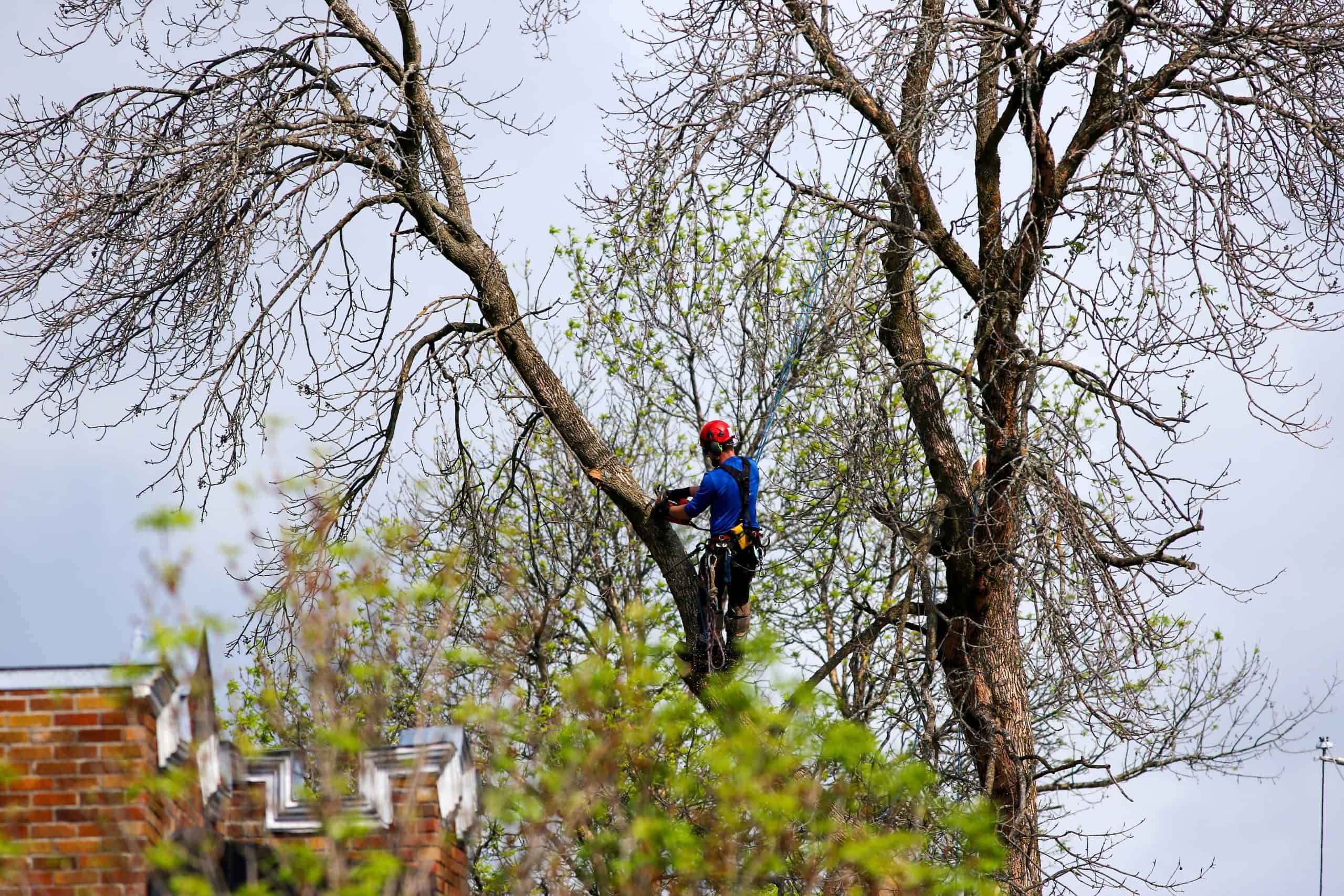
Once you’re ready to proceed, we schedule the work and show up when we say we will. Our crew handles everything — trimming, pruning, canopy raising where it’s needed, and shaping for trees that have gotten out of hand. In Liberty, that often means working around mature trees in older in-town neighborhoods where the canopy is dense and the stakes for sloppy work are high. We pay attention to what’s nearby: structures, fences, neighboring property, the street.
When the work is done, we clean up completely. Every branch, every piece of debris — gone. If you want to keep the wood or mulch, just say so. Otherwise, we haul it out and leave your yard the way we’d want to find our own. No piles. No follow-up calls asking us to come back and finish.
Ready to get started?
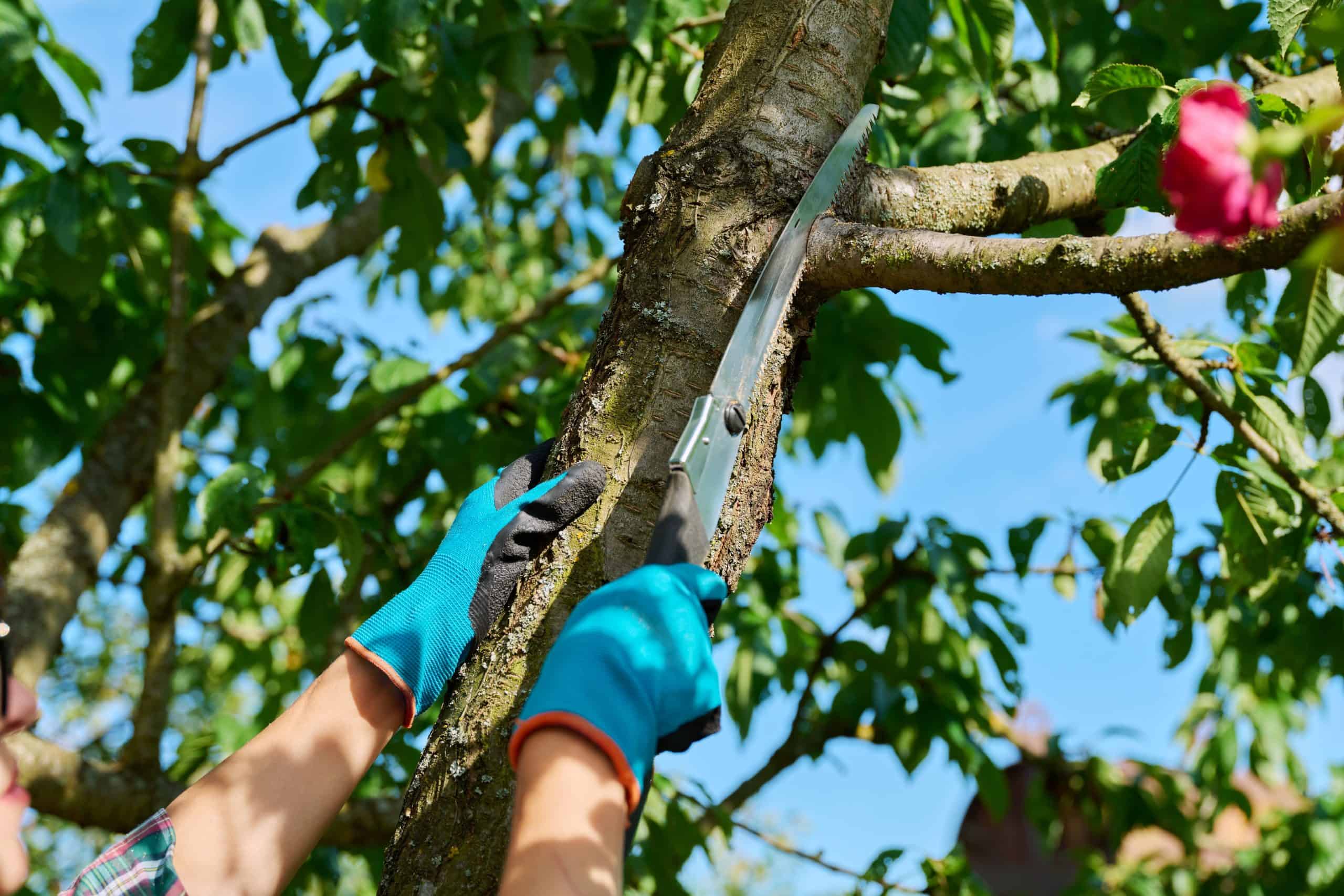
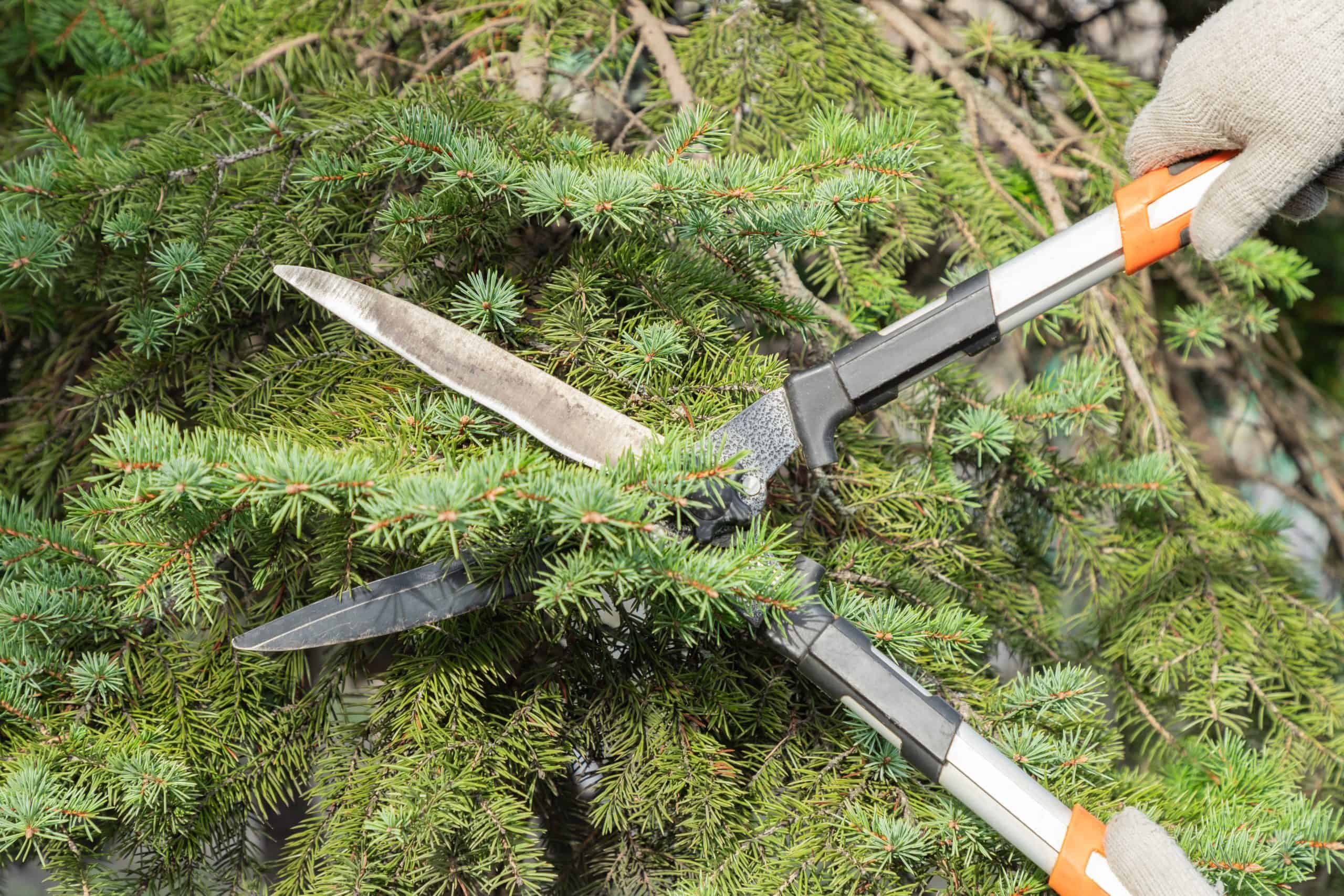
Tree trimming covers more ground than most people expect when they first call. It’s not just about cutting back what’s obviously too long. It includes removing dead and dying branches before they become projectiles in a Missouri spring storm, thinning out dense canopies so wind passes through instead of pushing the whole tree, and raising the canopy on street-facing trees to keep you clear of Liberty’s right-of-way requirements.
Tree shaping is part of it too — especially for newer properties in subdivisions like Clay Meadows or Homestead of Liberty, where younger trees are still forming their structure. The decisions you make now affect how they grow for the next 20 years.
For the older neighborhoods closer to historic downtown Liberty, the challenge is usually the opposite: large, mature trees that haven’t been touched in years. Overgrown tree trimming in these situations takes more time and more care. The canopy is bigger, the limbs are heavier, and the margin for error is smaller when there’s a roofline or a fence directly below. That’s where 10-plus years of KC metro experience actually matters.
Every job includes full cleanup — no exceptions, no add-on fees for hauling. We’re fully insured, which means your property is protected throughout the process. And every quote is free, given on-site, and comes with no pressure to commit on the spot.
Pricing for tree trimming depends on a few key factors: the size and height of the tree, how many trees you’re having done, how accessible they are, and whether they’re close to structures, fences, or power lines. Nationally, most homeowners pay somewhere between $300 and $900 per tree for professional trimming, with smaller trees on the lower end and large, mature trees on the higher end. That range holds true in the Liberty market as well.
The best way to get an accurate number for your specific yard is to have someone come out and look. We offer free on-site quotes — same day in most cases — so you’re not guessing based on a phone description. You’ll know exactly what the job costs before any work starts, and there’s no pressure to commit on the spot. If you have multiple trees, getting them done together typically brings the per-tree cost down.
For most deciduous trees — oaks, maples, hackberries, the kind you’ll find throughout Liberty’s older neighborhoods — late winter is the ideal window. When the tree is dormant and the leaves are down, you can see the full branch structure clearly, pests are inactive, and the tree experiences far less stress from the cuts. Late February through early March tends to be the sweet spot in the Kansas City, KS & MO metro before spring growth kicks in.
That said, dead branches and hazardous limbs don’t follow a seasonal schedule. If you have something that’s clearly dead, cracked, or hanging over your roof or fence, waiting until the optimal trimming window isn’t worth the risk — especially heading into Missouri’s spring severe weather season, which runs roughly April through June. Storm damage response and emergency trimming can happen any time of year. For routine maintenance and shaping, late winter is when you’ll get the cleanest results and the least stress on the tree.
For routine tree trimming on private property in Liberty, there’s no confirmed permit requirement for the work itself. However, Liberty does have a right-of-way ordinance that’s worth knowing about. If your trees overhang the street, block sightlines at a corner, or encroach into the public right-of-way adjacent to your property, you can be cited for a code violation. The city explicitly prohibits trees and landscaping that obstruct driver visibility near the right-of-way, and that responsibility falls on the property owner.
Canopy raising — lifting the lower branches of street-facing trees — is typically how that gets resolved. It keeps the tree healthy, satisfies the city’s sightline requirements, and removes the liability from your side of the fence. If you’re unsure whether your trees are encroaching, an on-site assessment will tell you exactly what you’re dealing with. We can walk you through what needs to come off and why, before any work begins.
People use these terms interchangeably, but they describe slightly different things. Trimming is primarily about controlling size, shape, and clearance — cutting back overgrowth, lifting the canopy away from structures or the street, and keeping the tree from encroaching on neighboring property or power lines. It’s often driven by aesthetics and safety clearance as much as tree health.
Pruning is more targeted toward the tree’s long-term health and structure. It focuses on removing dead, diseased, or crossing branches, improving airflow through the canopy, and correcting growth patterns that could cause problems down the road. In practice, a good trimming job incorporates pruning principles — you’re not just cutting to a shape, you’re making deliberate decisions about which limbs come off and why. For Liberty homeowners with large, mature trees in older in-town neighborhoods, that distinction matters. A crew that just cuts to a line without thinking about structure can do more harm than good over time.
For most mature trees, every three to five years is a reasonable baseline for routine trimming. Younger trees — the kind you’d find in newer Liberty subdivisions like Clay Meadows or Homestead of Liberty — often benefit from more frequent attention in their early years, sometimes every two to three years, because formative pruning while the tree is still developing sets the structure for its entire life. Getting that right early saves you from much more significant corrective work later.
That said, the three-to-five-year rule is a starting point, not a hard schedule. If you’ve had storm damage, if a tree is showing signs of disease or dieback, or if branches are starting to encroach on your roof, fence, or the street, those are reasons to have someone come out regardless of when the last trim was. Liberty’s spring severe weather season adds urgency to that — a tree that looks fine in March can become a problem in a May storm if there’s structural weakness you haven’t addressed.
The two non-negotiables are proof of insurance and verifiable reviews. General liability insurance protects your property if something gets damaged during the job. Workers’ compensation protects you from liability if someone on the crew gets hurt on your property — and without it, that liability can fall on you as the homeowner. Any legitimate tree service should be able to show you both without hesitation.
Beyond that, look for specificity. A company that gives you a real on-site quote rather than a number over the phone is showing they actually looked at the job. Reviews that mention cleanup quality, fair pricing, and showing up on time tell you more than a generic five-star rating with no detail. In Liberty’s competitive market, there are several tree services operating locally. What matters most is that the crew has real experience with the tree species and conditions in this area, carries full insurance, and leaves your property cleaner than they found it. Ask about cleanup before you book. It’s one of the most common complaints homeowners have after the fact, and it shouldn’t be a surprise either way.
Other Services we provide in Liberty