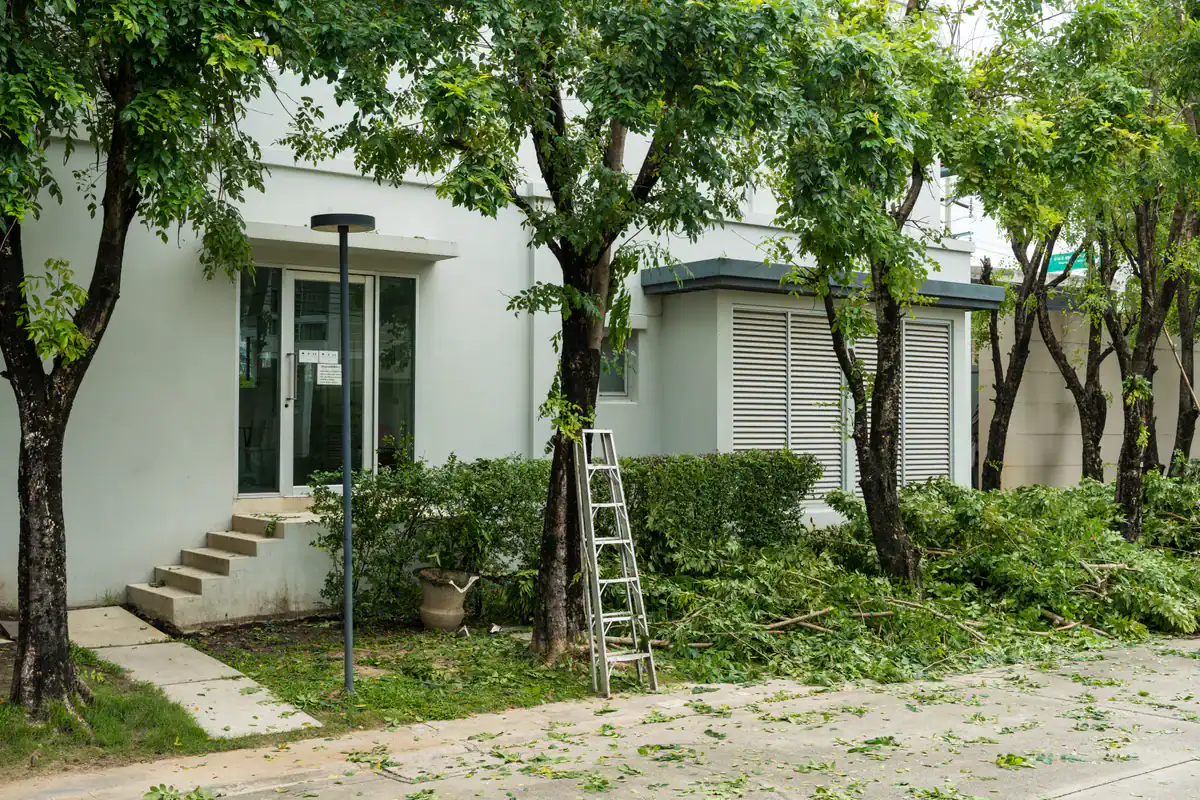
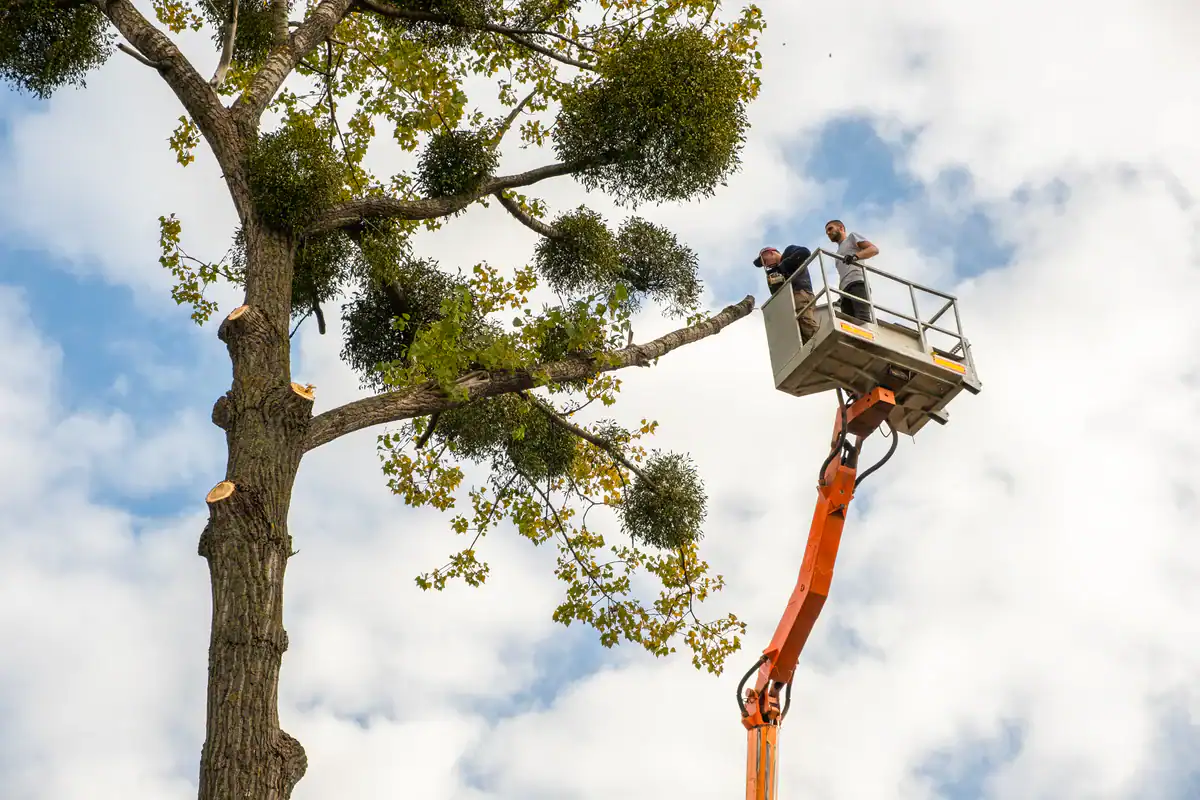
Liberty isn’t a new suburb where the trees are young and forgiving. The neighborhoods near the historic Liberty Square, out through Claywoods, Victorian Farms, and Liberty Meadows — these are areas where the trees have been growing for decades. That means they’re beautiful, yes. It also means they’re heavy, they’re close to structures, and when something goes wrong, it goes wrong fast.
Getting the right tree care means you stop guessing whether that leaning oak is a hazard or just how it grows. It means the dead limbs hanging over your roof get handled before the next spring storm tracks through Clay County. And it means your yard looks the way it’s supposed to look — not like a crew came through and left half the job behind.
We include full cleanup on every job. No debris piles on the curb, no wood chips scattered through your flower beds. If you want to keep the mulch or the wood, just say so. Otherwise, it all goes with us. That’s not a bonus — it’s just how the work gets done.
We’ve been working across the Kansas City, KS & MO metro for over 10 years, with deep roots in Clay County communities like Liberty. If you’ve been here long enough, you know this area gets tested. The May 2003 tornado outbreak left substantial damage near the Liberty Square and William Jewell College. More recent storms have knocked out trees near Bennett Park. This isn’t a market where you can fake experience.
Our crew is small, licensed, insured, and accountable. Missouri requires an occupational license for tree work — and working in a Tree City USA community like Liberty, where the city actively monitors right-of-way vegetation and enforces code around obstructing sightlines, means you want a company that understands what they’re doing and what the rules are. That’s what you get here.
We’ve removed over 1,200 trees across the KC area, with a 100% safety record. That number matters when the tree you need taken down is ten feet from a 100-year-old home on a historic Liberty street.
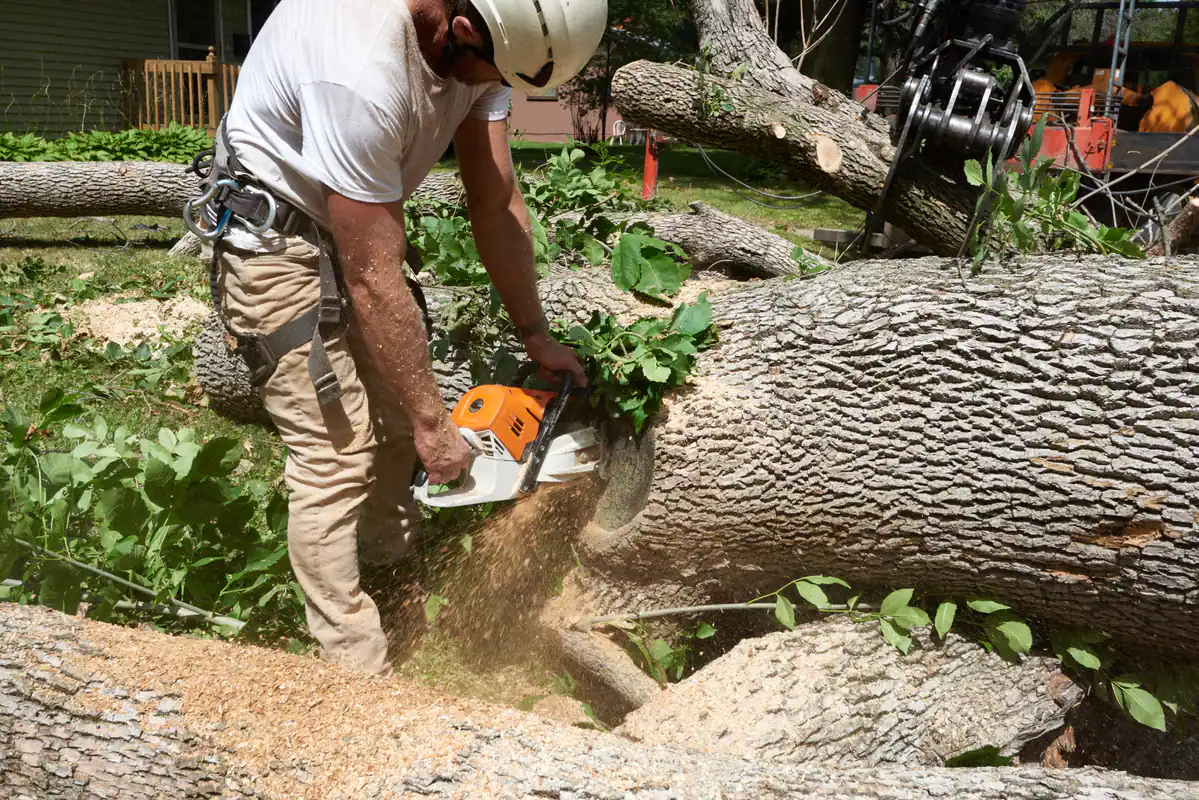
It starts with a free on-site assessment. Most quotes are given same-day, and for emergency situations — a tree down after a storm, a large limb hanging over a structure — we offer same-day visits. You don’t need to wait three days for a callback and another week for us to show up.
When we arrive, we assess the tree’s condition first. Not every tree that looks rough needs to come out. Sometimes a strategic trim is all it takes to eliminate the risk and preserve the tree. If removal is the right call, you’ll know exactly why before we pick up a saw. In Liberty’s historic district and established neighborhoods, where mature trees sit close to older homes and shared property lines, that assessment step isn’t optional — it’s what separates a good outcome from a costly one.
Liberty has held Tree City USA designation since 2005, and the city maintains active oversight of right-of-way trees and vegetation. If your tree or its branches are near the public right-of-way along a street like Kansas Street or near the Route 291 corridor, we’ll flag that during the assessment so you understand your responsibilities before work begins. Once the scope is clear, the job gets done — and cleanup is part of the job, not an add-on.
Ready to get started?
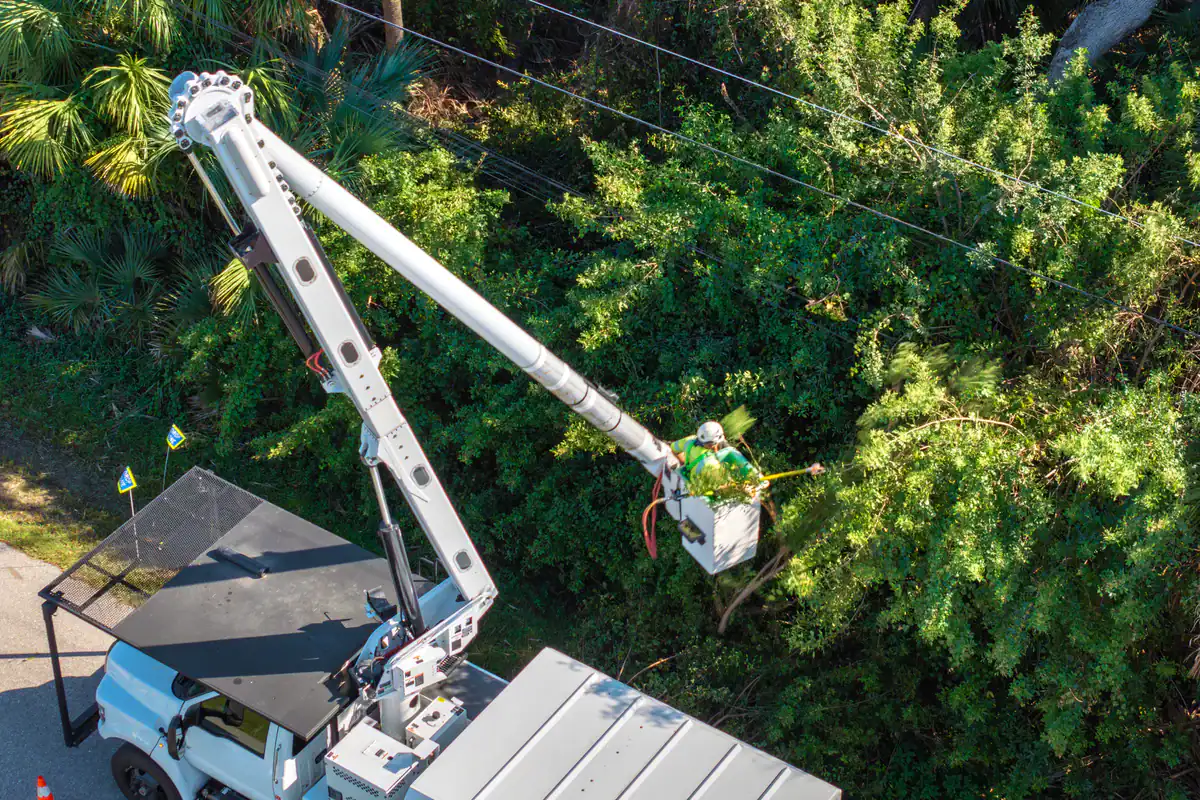
Tree removal is the most visible service, but it’s rarely the only conversation worth having. In Liberty’s established neighborhoods, tree trimming and pruning are often what actually solve the problem — shaping growth before it becomes a hazard, removing dead weight before a spring storm turns it into a projectile. We handle removal, trimming, pruning, stump grinding, land clearing, and on-site tree health assessments.
Stump grinding is worth mentioning separately because a lot of homeowners assume it’s automatically included when a tree comes down. It’s not always the case with every company. We offer it as an add-on service — and it’s worth doing. Stumps left in place attract pests, create tripping hazards, and can push up sidewalks and driveways over time. In a neighborhood where curb appeal and property values matter, a leftover stump is a problem that compounds.
For properties near the Shoal Creek corridor in Liberty, there’s a specific issue that comes up regularly: cottonwoods and willows that grow fast but have weak structure. They look fine until a storm hits, and then they don’t. If your property backs up to or sits near Shoal Creek, a professional assessment of those trees before storm season is one of the more practical things you can do. That’s exactly the kind of local, professional tree care Liberty residents need — and what we’re set up to deliver.
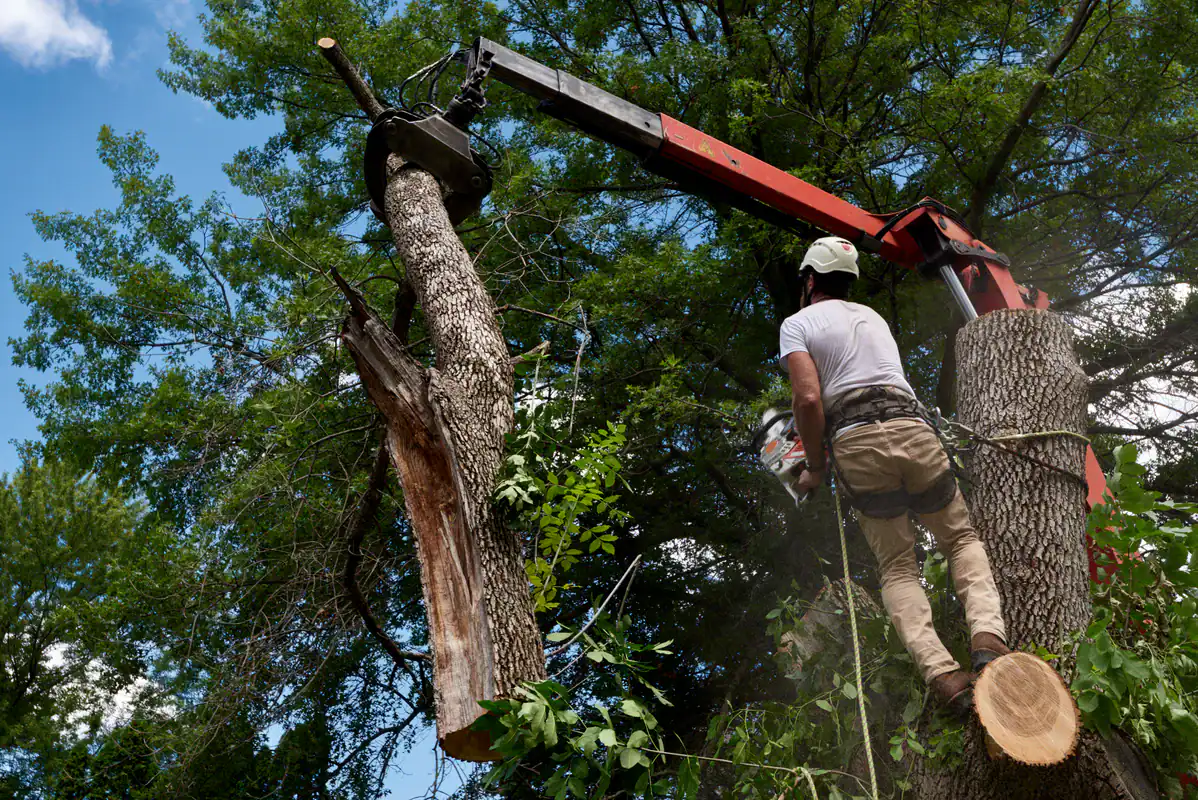
The honest answer is that you often can’t tell just by looking. Internal decay, root damage, and structural weakness don’t always show on the surface. A tree can look healthy and still be a serious risk — especially the large, mature specimens common in Liberty’s older neighborhoods near the downtown square and William Jewell College, where trees have been growing for 50 to 100 years.
The signs that do show up visually include significant leaning that wasn’t there before, large dead branches in the upper canopy, fungal growth at the base of the trunk, cracks or splits in major limbs, and hollow spots. Any one of these warrants a professional look. We offer a free on-site assessment that will give you a clear answer — not a sales pitch, just an honest read on what the tree needs and whether removal is actually necessary.
Stump grinding is a separate service. When a tree is removed, the stump is typically left at or just below ground level unless you specifically arrange for grinding. This catches a lot of homeowners off guard, so it’s worth asking about upfront before any work begins.
In Liberty, where home values are significant and neighborhood presentation matters, leaving a stump in place is rarely the right call. Stumps attract beetles, termites, and other wood-boring insects. They can also push up against driveways, sidewalks, and fencing as the root system continues to decay and shift. We offer stump grinding as an add-on to any removal job — just ask when you get your quote so it’s factored in from the start.
We include full cleanup on every job. That means branches, wood, debris, and chips are cleared from your property before we leave. You won’t come home to a pile of limbs stacked on the curb or wood chips spread across your lawn.
If you want to keep the wood for firewood or the chips for mulch, just let us know before we start. Otherwise, everything goes with us. In Liberty’s established neighborhoods — where homes sit close together and community appearance is part of what makes the area desirable — this matters. A job that leaves your yard looking worse than before isn’t a job done right.
Liberty’s Tree City USA designation, which the city has held since 2005, primarily governs how the city manages trees in the public right-of-way — the strip of land between the sidewalk and the street. The city’s Tree Board and Community Forestry Program oversee those trees, and property owners can actually be cited for code violations if trees or vegetation on their side of the property line obstruct driver sightlines within the right-of-way.
For trees that are clearly on your private property and away from the right-of-way, you generally have more flexibility. That said, it’s always worth understanding exactly where your property line falls relative to the street, especially in Liberty’s historic downtown area and along older residential streets where the boundary isn’t always obvious. When we come out for an assessment, our crew will flag anything that touches the right-of-way so you know what you’re dealing with before any work starts. When in doubt, checking with the city directly is the safest step.
For trimming and pruning, late fall through early winter is generally the best window. Trees are dormant, sap isn’t flowing, and the structural issues that need addressing are easier to see once the leaves are down. Pruning during dormancy also reduces stress on the tree and lowers the risk of pest and disease entry through fresh cuts.
For removal, timing matters less — a tree that poses a hazard needs to come down regardless of the season. That said, Liberty’s spring storm season, which runs roughly April through June, is when the consequences of delaying tree work show up most clearly. The Kansas City, KS & MO metro sits in tornado-prone territory, and Clay County has seen real storm damage — the 2003 outbreak hit the Liberty Square and William Jewell College area hard, and more recent events have left downed trees near Bennett Park. Getting ahead of storm season with an assessment and any necessary trimming or removal is the practical move for Liberty homeowners.
After a significant storm in the Kansas City, KS & MO area, unlicensed operators often show up door-to-door in affected neighborhoods, offering quick work at low prices. It’s a documented pattern — state attorneys general have issued consumer alerts about it specifically around storm events. In Liberty, where spring and early summer storms are a recurring reality, this is worth knowing before you’re in a stressful situation with a tree on your property.
The practical checklist is short: ask for proof of licensing and insurance before anyone starts work. Missouri requires an occupational license for tree services — a legitimate company will have it and won’t hesitate to show you. Ask for a written estimate, not a verbal one. And be cautious of anyone demanding full payment in cash upfront. A reputable company will give you a clear scope of work, put the quote in writing, and carry liability insurance that protects your property — not just theirs. We’re fully licensed and insured, and we’ll provide everything you need to feel confident before the first cut is made.
Other Services we provide in Liberty