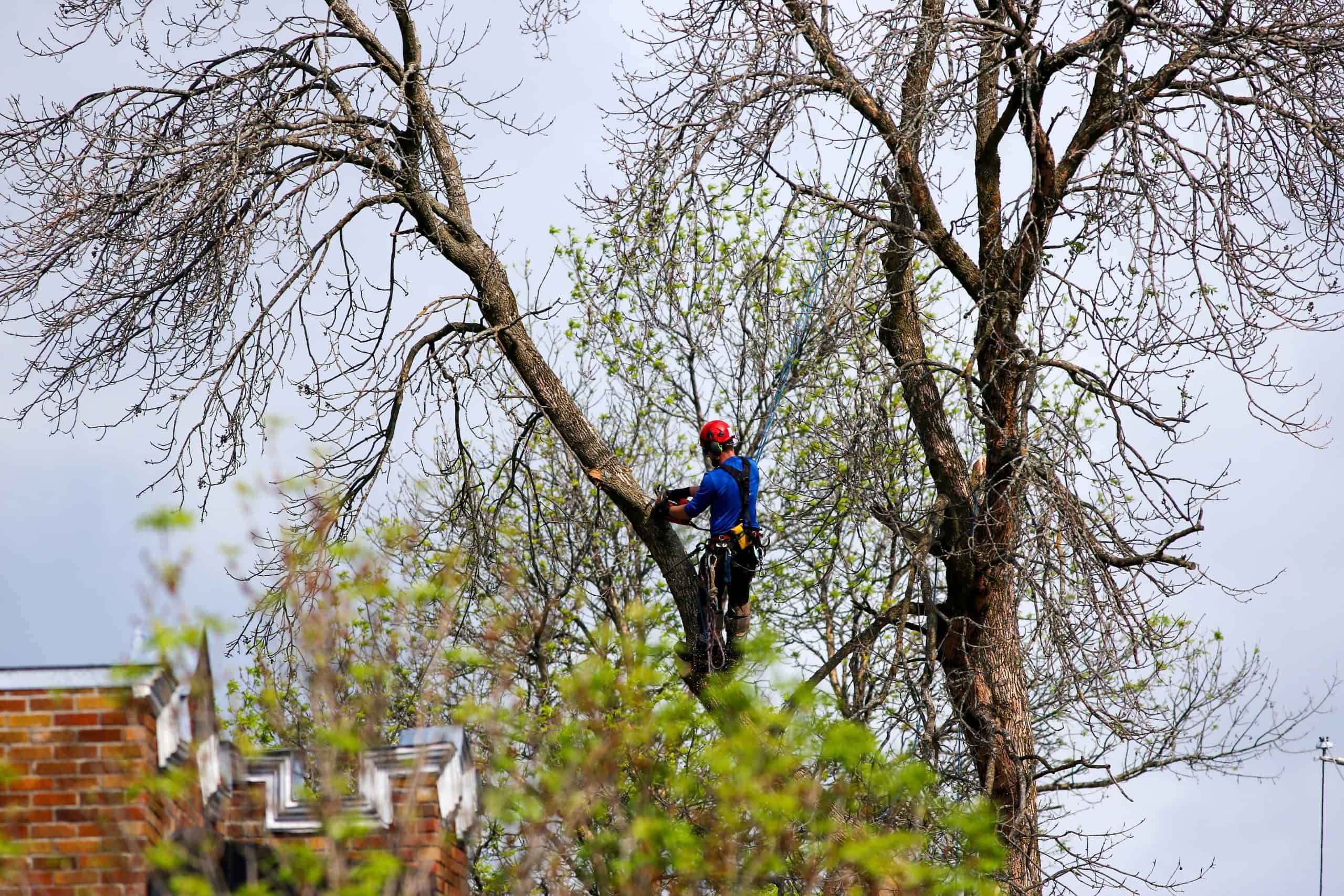
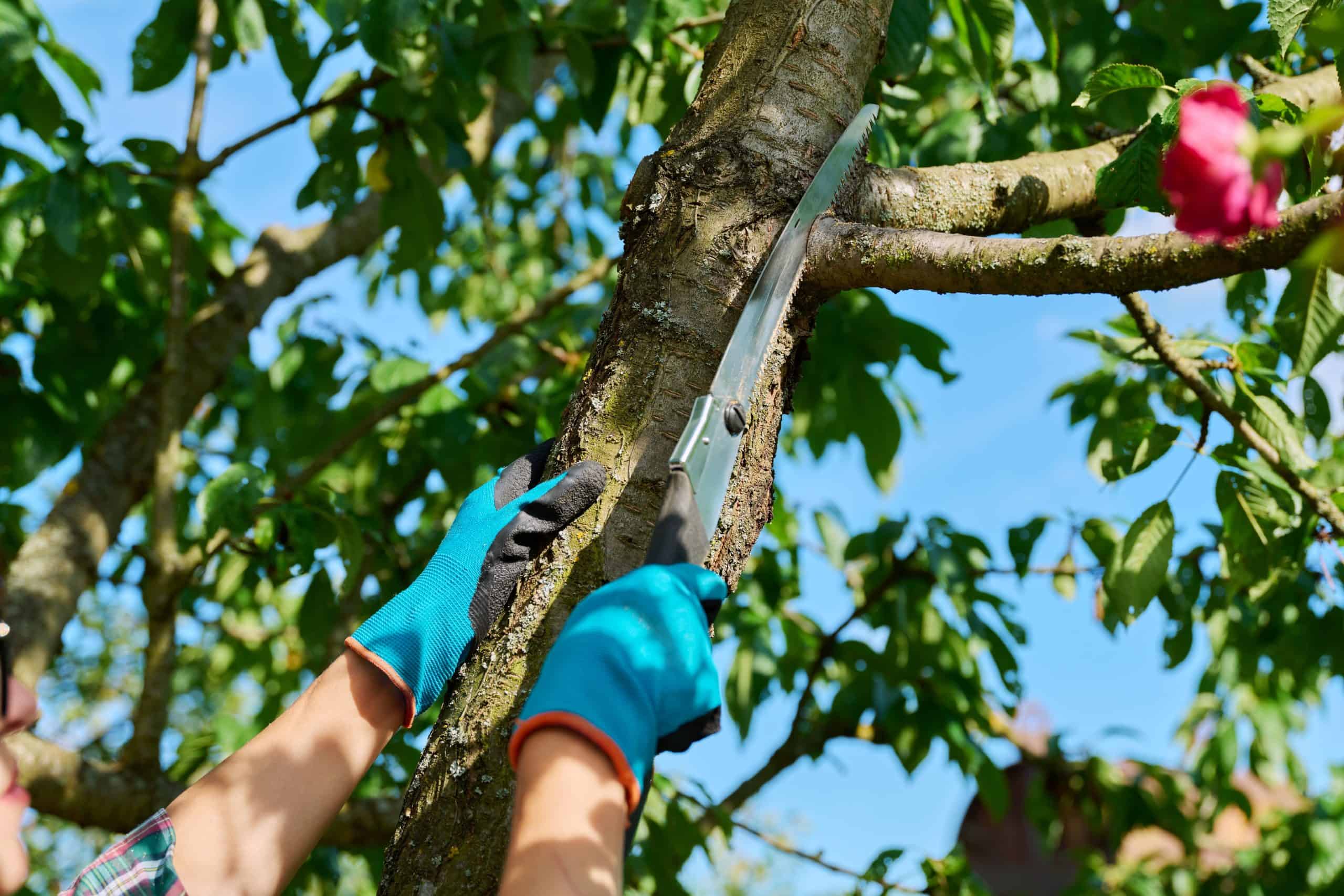
The homes along Lansing’s older residential streets sit under some seriously large trees. Oaks, elms, cottonwoods — many of them have been growing since before US-73 was the main road through town. That’s genuinely valuable. But a mature tree that hasn’t been touched in years is a different story, especially when spring storm season rolls through northeastern Kansas.
When overgrown branches get trimmed back and the canopy gets properly raised, you’re not just making the yard look better. You’re reducing the load on limbs that a Kansas wind event could turn into a projectile. You’re opening up airflow through the canopy, which slows the spread of fungal disease in the humid summers this region is known for. And you’re giving yourself a clear picture of what’s actually going on up there — because a lot of what makes a tree dangerous isn’t visible from the driveway.
For homeowners who moved to Lansing recently — particularly military families arriving near Fort Leavenworth on a PCS timeline — professional tree trimming is often the first smart step toward actually knowing what you’ve got on your property. You don’t know the history of those trees. We do, after one walk-around.
We’re a family-owned, Kansas-based tree care company serving the Kansas City, KS & MO metro and Leavenworth County. We travel the K-7 corridor into Lansing regularly — this isn’t a stretch of our service area, it’s a straight shot up the same road that runs through your neighborhood.
Over more than a decade of work in this region, we’ve safely managed over 1,200 trees with a 100% safety record. That number matters because tree trimming — especially on large, mature trees close to structures — is not a job where you want to find out after the fact that someone cut corners. Every job comes with full cleanup. No piles left behind, no debris on the lawn, no awkward conversation about who’s hauling what away.
We carry full insurance, hold a 4.9-star rating across 40-plus verified reviews, and were recognized in 2024 by Quality Business Awards as a top-1% tree service in Kansas City, KS & MO. The free quote is same-day, and there’s no pressure attached to it.
It starts with a free on-site assessment. Someone from our crew comes out, walks the property with you, and takes an honest look at what the trees need. Not what generates the biggest invoice — what the trees actually need. For newer Lansing homeowners who bought a property without knowing its tree history, this walkthrough alone is worth the call. You’ll leave it knowing whether you’re dealing with a straightforward trim or something that needs more attention.
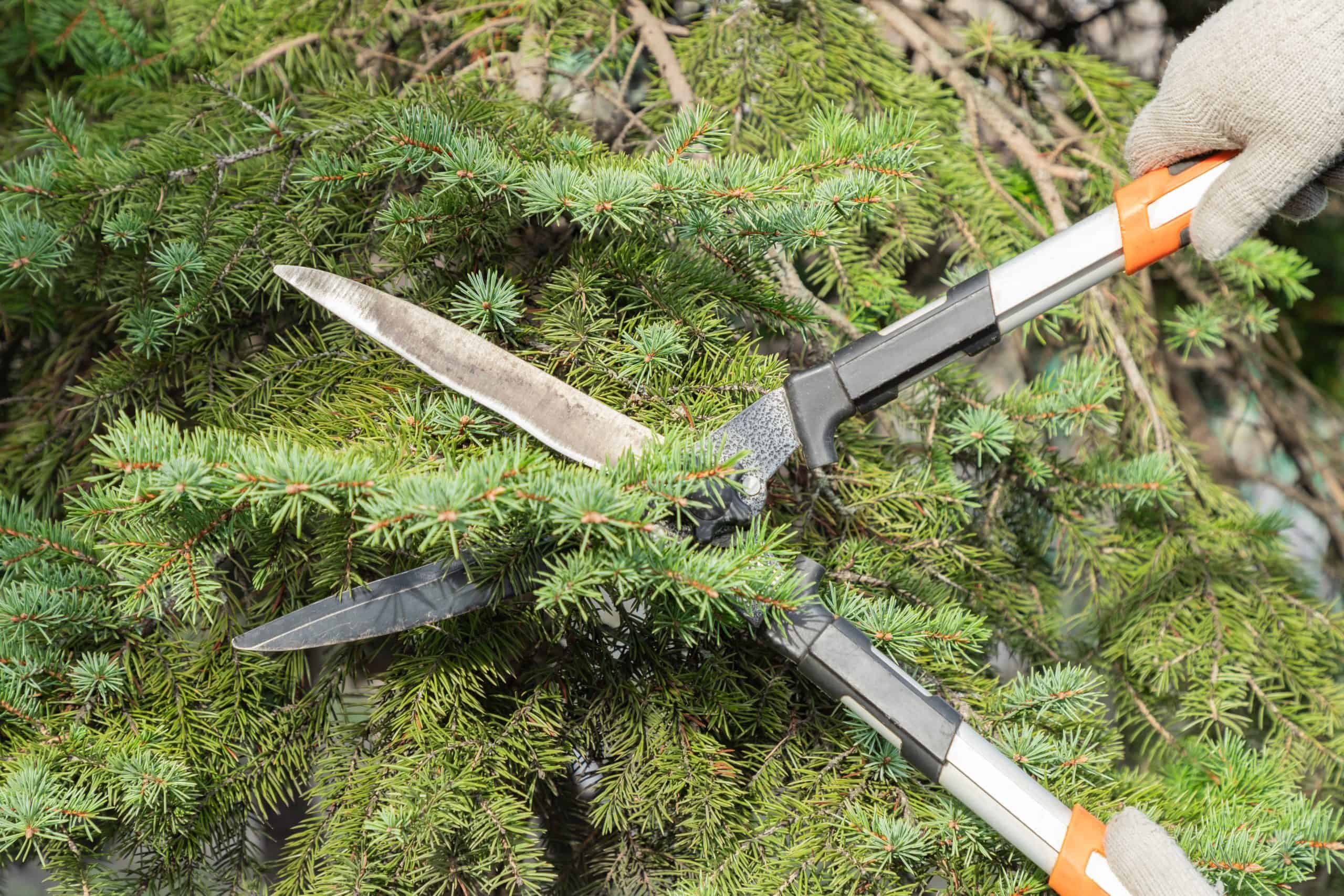
From there, we handle the work with the right equipment for the job. Canopy raising, dead branch removal, overgrown tree trimming, tree shaping for younger trees in newer subdivisions like Wyndham Hills — the approach depends on what’s in front of us, not a one-size formula. Timing matters here too. In Lansing’s climate, late winter through early spring is the preferred window for most deciduous species — trees are dormant, pests are inactive, and we can see the structure clearly without a full canopy in the way. That said, storm damage doesn’t wait for the right season, and same-day emergency response is available when it’s needed.
When the work is done, we clean up completely. Every branch, every chip. If you want to keep the wood or mulch, just say so. If not, it’s gone. You do a walkthrough, confirm you’re satisfied, and that’s it.
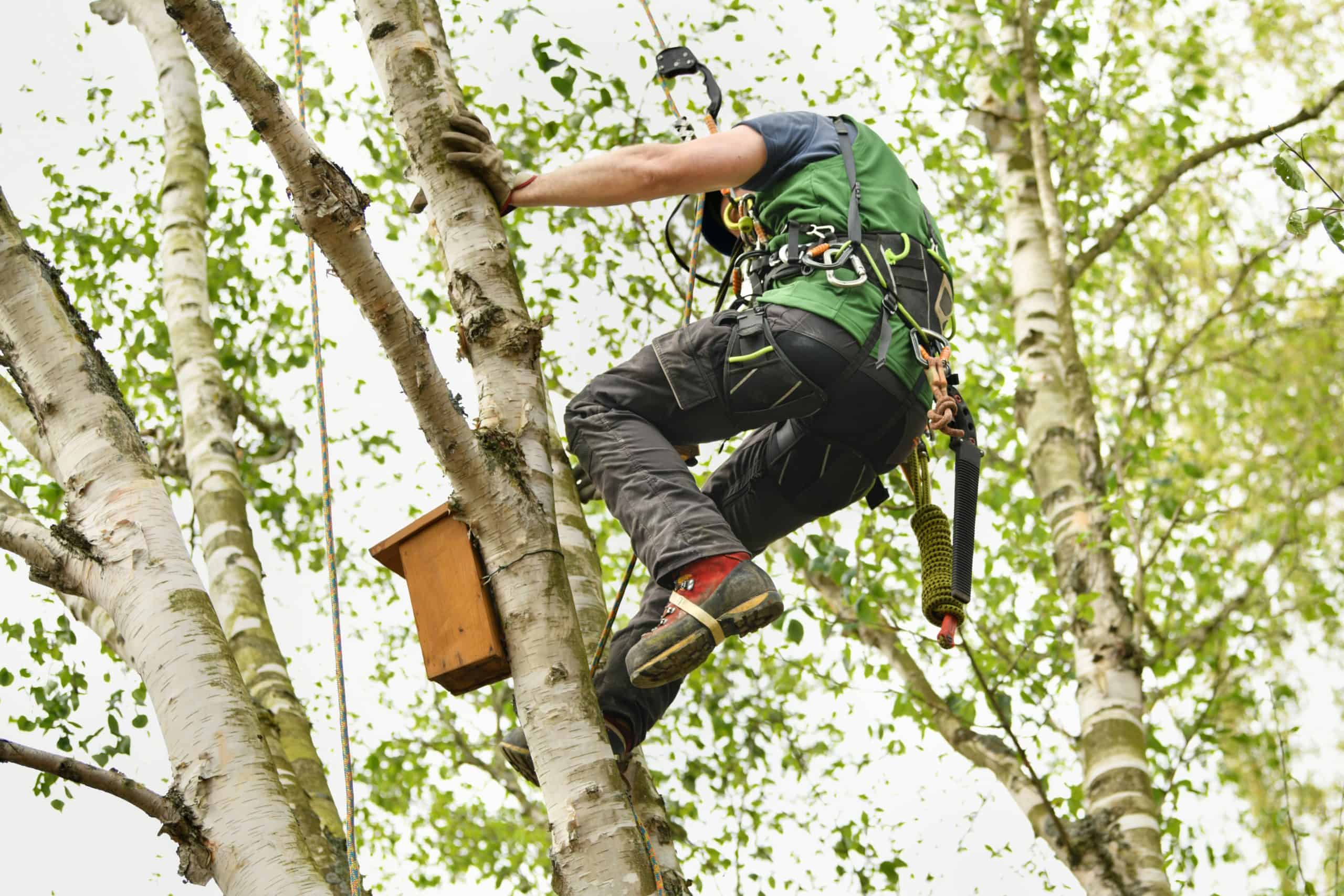
Ready to get started?
Tree trimming in Lansing covers more ground than most people expect when they first call. The core work is what most homeowners picture — cutting back branches that have grown too long, clearing limbs that hang over rooflines, fences, or driveways, and shaping the canopy so the tree looks and functions the way it should. But there’s more to it than that.
Canopy raising — lifting the lower canopy to clear structures, improve sightlines, and create usable space beneath large trees — is one of the most common requests on older Lansing properties, where decades of growth have pushed branches down toward the roof or yard. Tree shaping is more relevant for the younger trees going into newer developments, where the goal is establishing good structure now before bad habits become expensive problems later. Dead branch removal and overgrown tree trimming are year-round needs, especially given how quickly trees grow in Lansing’s humid subtropical climate.
We also handle tree health assessment during the visit. Northeastern Kansas has documented pressure from pests like the emerald ash borer, and fungal disease spreads quickly in hot, humid summers. If something looks off, you’ll hear about it — not as an upsell, but because it’s better to know. Every service includes a full property cleanup, and we handle all compliance questions related to local codes so you don’t have to sort through that yourself.
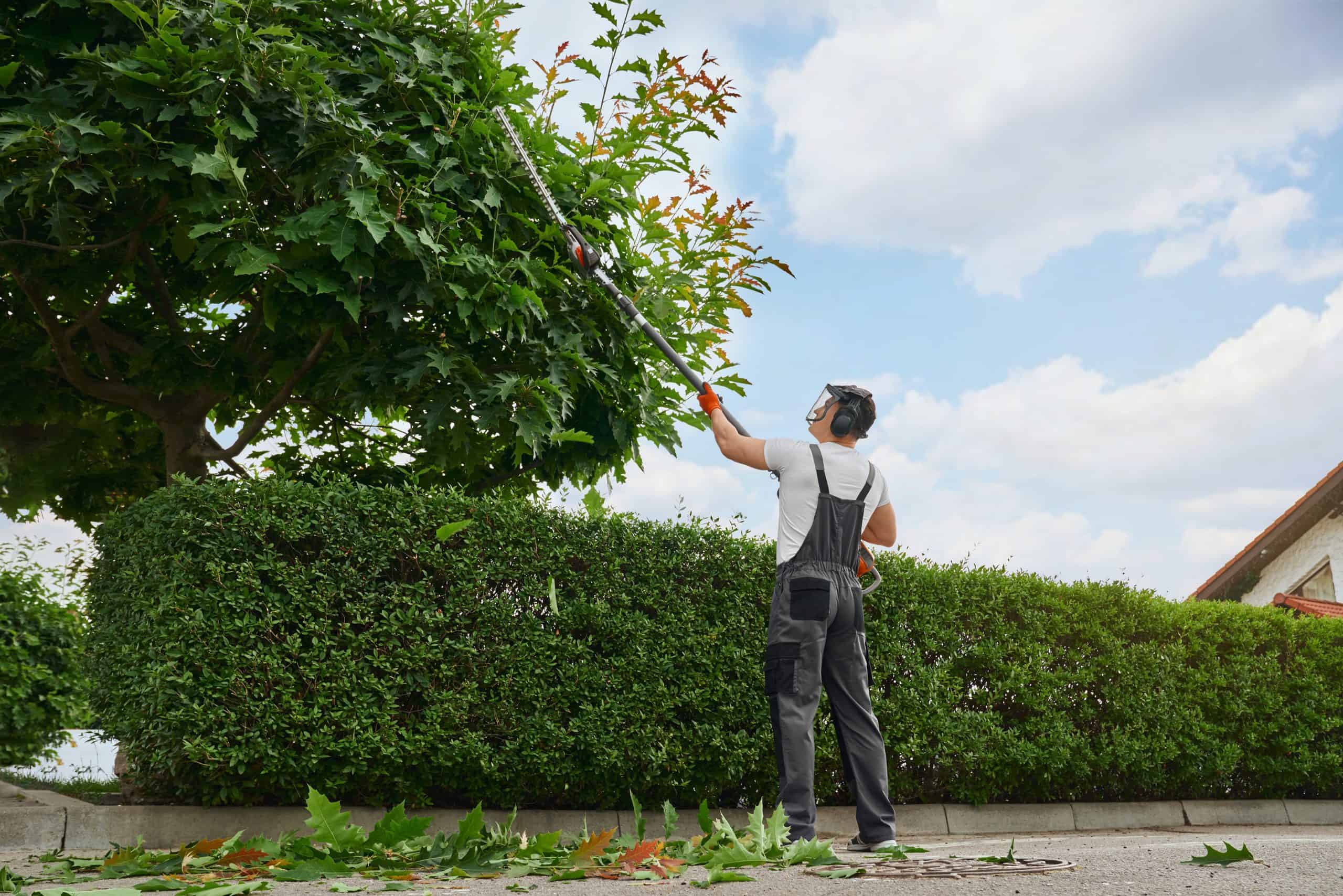
Tree trimming cost in Lansing generally falls somewhere in the range of $300 to $900 per tree, depending on the size of the tree, how accessible it is, how much work it actually needs, and whether there are complicating factors like proximity to a structure or fence line. Local data suggests tree removal in Lansing averages around $472, which gives you a rough benchmark — trimming is typically less than removal, but larger or more complex trees will push the number higher.
The most useful thing you can do before worrying about cost is get a free on-site quote. We offer same-day quotes at no charge and no obligation. The estimate is based on what we actually see when we walk your property — not a number pulled from a phone call. That way you know exactly what you’re looking at before any decision is made.
For most deciduous trees in the Lansing area, late winter through early spring is the ideal window — roughly February through April, while trees are still dormant. During dormancy, pests are inactive, the tree is under less stress from cuts, and we have clear sightlines through the bare canopy to assess structure and identify problem areas that would be hidden under a full leaf canopy.
That said, Lansing’s spring storm season — which can bring high winds, hail, and severe weather through the Missouri River corridor — sometimes forces the timeline. If a storm damages a tree or creates a hazard, waiting for the “right” season isn’t an option. The same logic applies to dead branches, which pose a risk regardless of the calendar. Fall is also a reasonable secondary window as trees begin to go dormant. Summer trimming is generally fine for most species but requires more care with certain trees — oaks, for example, are best left alone during peak oak wilt risk periods.
Canopy raising is the process of removing the lower branches of a tree to lift the base of the canopy higher off the ground. The goal is usually to clear structures, improve sightlines, create usable space beneath large trees, or reduce the risk of low branches contacting a roofline, fence, or vehicle. It’s a targeted approach — not a dramatic reshaping of the whole tree, just a deliberate lift of where the canopy starts.
For older homes in Lansing — particularly the 1930s through 1960s ranch and prairie-style properties that make up a significant part of the city’s housing stock — canopy raising is one of the most common needs. Trees that have been growing for 50 to 80 years without professional management tend to have low-hanging branches that have gradually crept toward rooflines, driveways, and neighboring fences. Done correctly, canopy raising improves the look of the property, reduces storm risk from branches that could contact the house, and doesn’t harm the tree’s long-term health when the cuts are made properly.
This is one of the most practical questions a new Lansing homeowner can ask. When you buy a property, you’re inheriting whatever tree maintenance — or lack of it — the previous owners did. And a tree that looks healthy from the street can have dead branches, crossing limbs, or structural problems that only show up when someone trained actually looks at it up close.
The signs that a tree needs attention include dead or hanging branches, limbs that are growing toward the house or roof, a canopy that’s become visibly uneven or top-heavy, bark that’s splitting or showing signs of disease, and any leaning that seems more pronounced than it used to be. In Lansing’s climate, trees also face real pressure from pests and fungal issues that aren’t always obvious without a trained eye. The simplest move is to schedule a free on-site assessment with us. We walk the property, tell you what we see, and give you an honest picture of what’s worth addressing now and what can wait. No pressure, no obligation.
For standard residential tree trimming on your own property in Lansing, a permit is not typically required. The City of Lansing manages building permits and code compliance through its Community and Economic Development Department, and routine tree care on private property generally falls outside the permit process.
Where things get more complicated is when work involves trees near rights-of-way, utility easements, or trees that overhang a public street or sidewalk. Those situations can involve additional considerations depending on where the tree sits relative to the property line. Similarly, any work near utility lines requires a certified line-clearance arborist — that’s a legal requirement, not just a preference. We handle all compliance questions as part of the job assessment, so if there’s anything unusual about your property’s situation, we’ll flag it before work begins. You won’t be left to sort through local code language on your own.
In everyday conversation, trimming and pruning get used interchangeably, and for most homeowners calling to schedule a job, the distinction doesn’t need to be technically precise. But there is a real difference in what each term emphasizes, and it’s worth understanding so you can communicate clearly about what you actually want done.
Tree trimming is primarily about controlling size, shape, and clearance. It’s the work you do to keep a tree from overgrowing its space — cutting back branches that have gotten too long, raising the canopy to clear a structure, or shaping the tree so it looks the way you want it to. Tree pruning is more focused on the tree’s health and structure — removing dead, diseased, or crossing branches that are causing problems inside the canopy, improving airflow, and reducing the risk of disease spread. In Lansing’s humid summers, good pruning that opens up canopy airflow can meaningfully slow the spread of fungal issues that thrive in heat and moisture. In practice, our crew handles both during the same visit — the distinction matters more for understanding the purpose of the work than for deciding what to ask for when you call.
Other Services we provide in Lansing