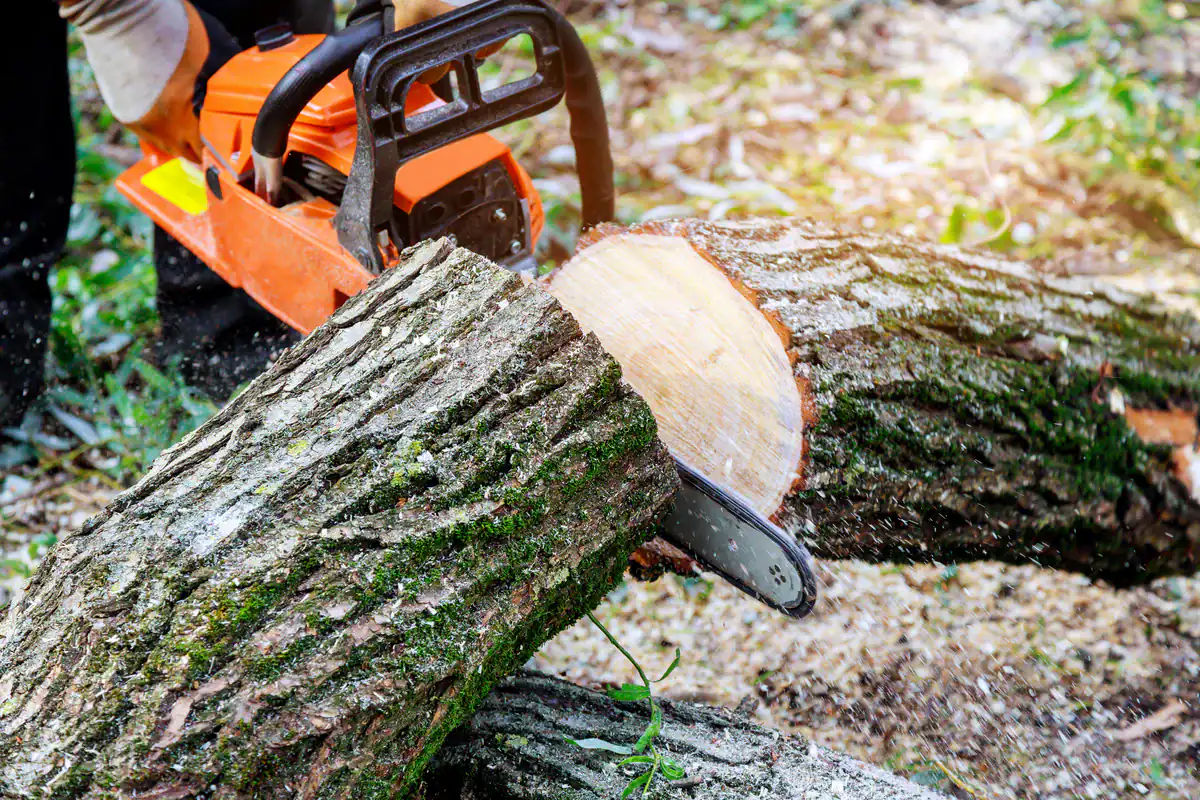
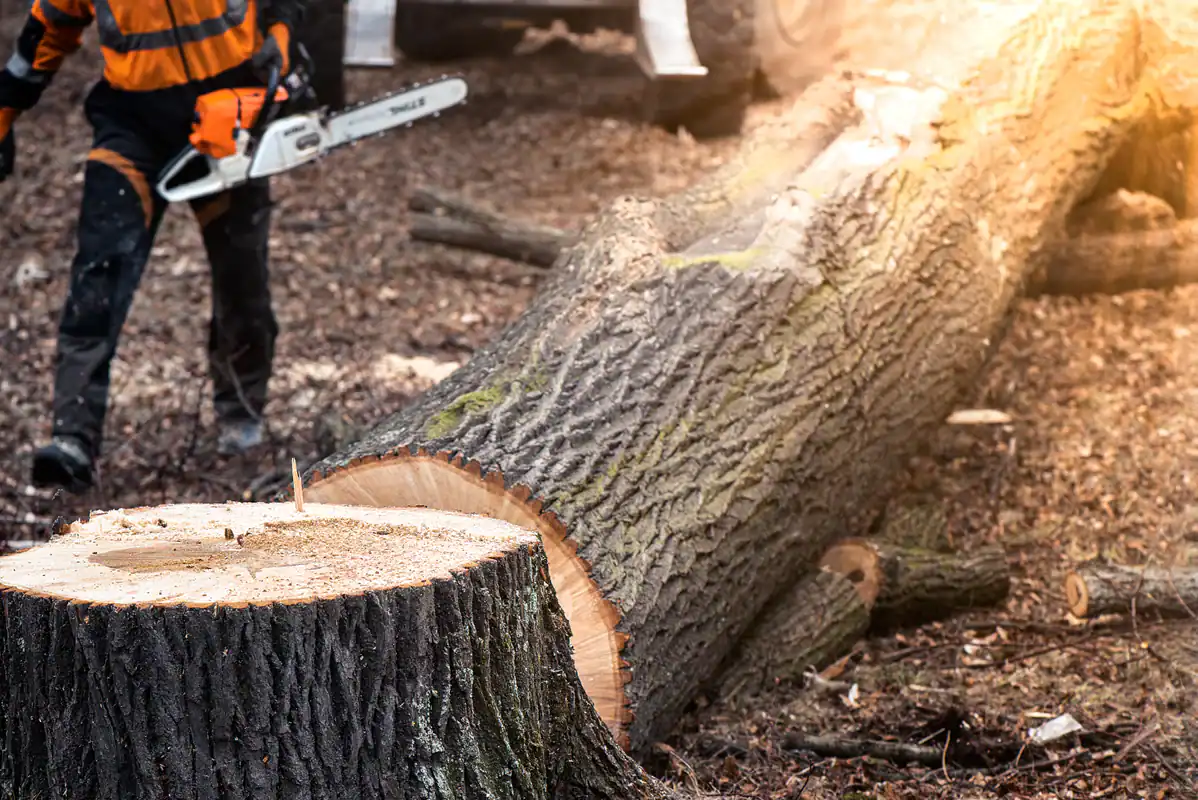
Lansing’s residential streets are defined by mature trees — the same ones that give neighborhoods their character and shade. But those older trees, especially on the ranch-style lots that have been around since the 1950s and 60s, are also the ones most likely to be quietly failing. A dead or structurally compromised tree doesn’t wait for a convenient moment. It comes down in a wind event, or on a calm afternoon when nobody expects it.
When you get tree removal done right, the immediate result is simple: the hazard is gone. No more watching that leaning oak every time a storm rolls through on US-73. No more wondering whether the large dead ash near your fence line is going to be your problem or your neighbor’s. The threat is removed, the cleanup is done, and your yard looks like the work never happened.
What a lot of homeowners in Lansing don’t realize is that leaving a dead or diseased tree in place can actually cost you more than removing it. If that tree falls and damages your home or a neighbor’s property, your homeowners insurance may deny the claim if it can be shown you knew the tree was at risk and didn’t act. Proactive removal isn’t just about safety — it’s the financially responsible call.
We’ve been doing this work for over a decade across the Kansas City, KS & MO metro and Leavenworth County. Our crew is Kansas-raised, fully insured — liability and workers’ comp both — and we’ve handled everything from routine trimming to large-scale storm recovery operations across multiple states. That experience isn’t a marketing line. It means when something complicated comes up on your Lansing property, we’ve seen a version of it before.
For families near Fort Leavenworth who are new to their home and still figuring out what they’ve got on their lot, that kind of honest, experienced assessment matters. You’re not getting someone who’s going to recommend full removal on a tree that just needs a strategic trim. You’re getting a crew that tells you what the tree actually needs — and then does the work cleanly, completely, and without leaving a mess behind.
Every job we do includes full cleanup. No wood piles left on the lawn, no chip mounds sitting in the driveway. If you want to keep the wood or mulch, just say so before we start.
It starts with a free on-site estimate. We come out, look at the tree, and give you a straight read on what it needs. If removal is the right call, we’ll tell you why. If a trim can solve the problem, we’ll tell you that instead. No pressure either way.
Once the work is scheduled, our crew arrives with the equipment needed for your specific job. Lansing’s older neighborhoods have the kind of tight residential lots where large trees sit close to fences, driveways, garages, and neighboring yards. We work carefully around those structures — the goal is to remove the tree without creating a new problem in the process. Our customers have specifically noted that we handle large removals in dense neighborhoods without any damage to surrounding property, and that’s not an accident. It’s how we approach every job.
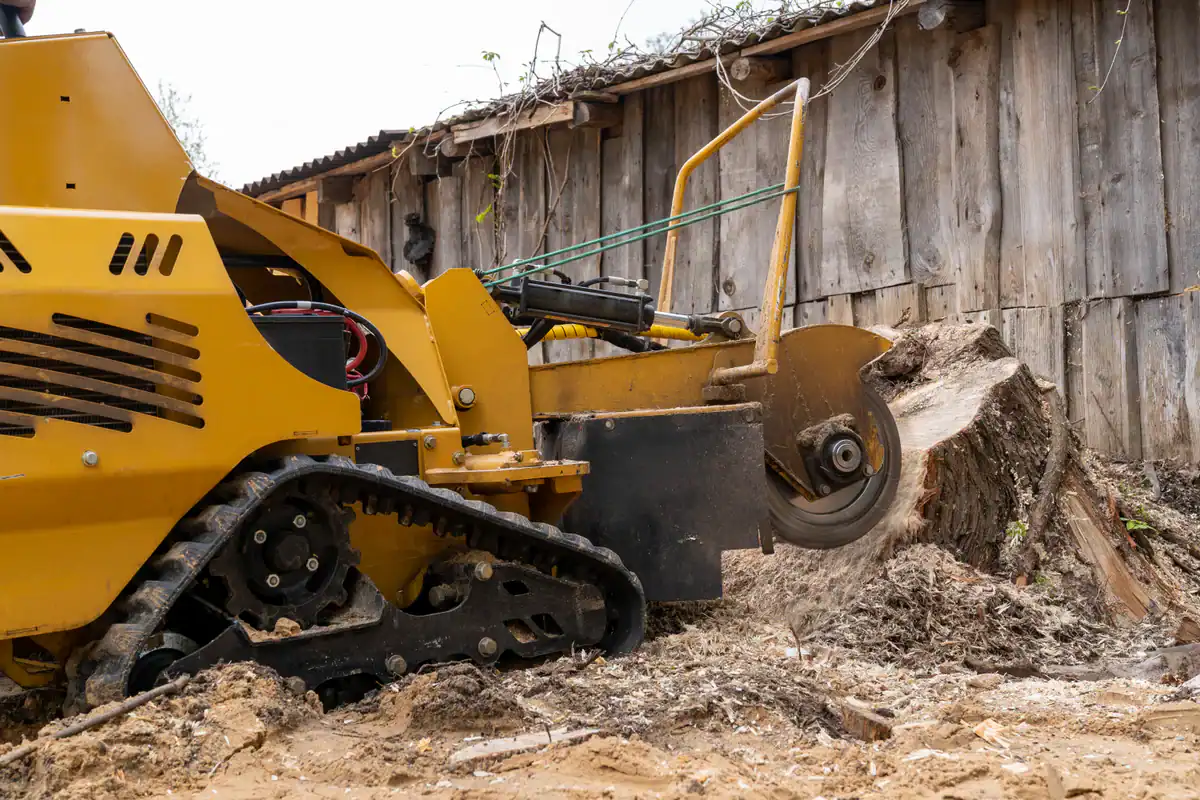
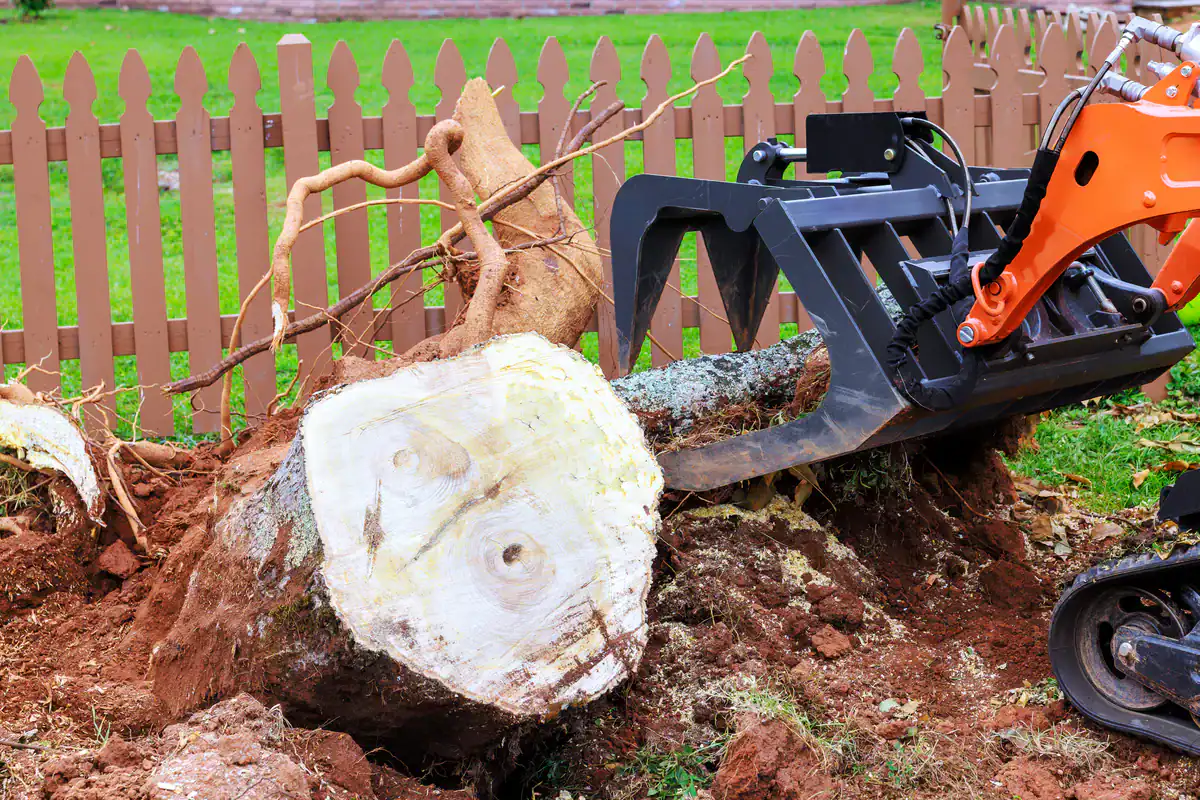
After the tree is down, the cleanup happens the same day. Lansing’s city waste program allows residents to set out brush and cut limbs in bags or bundles — up to 12 per week — but that system is built for small debris, not a large downed tree. We handle the full removal so you’re not spending weeks managing what’s left. If stump grinding is part of the job, that gets handled too. You’re left with a clean, usable yard — not a reminder of the work that was done.
Ready to get started?
Tree removal in Lansing covers more ground than just cutting something down. We handle the full scope — dead tree removal, diseased tree removal, hazardous tree removal, large tree removal, stump grinding, brush removal, and emergency response for storm-damaged trees. Whether it’s a single dead tree in your backyard or a storm-split trunk that came down against your garage after a severe weather event, the process is the same: show up, do the work properly, and leave the property clean.
Leavenworth County’s clay-heavy soil along the Missouri River valley creates specific root stability challenges that aren’t always obvious from the surface. A tree that looks structurally fine can have a compromised root system from years of saturated ground. That’s one reason an honest on-site assessment matters here more than a phone quote — the conditions on your specific lot tell the real story.
The Emerald Ash Borer has been working through ash tree populations across the Kansas City, KS & MO metro for years, and Lansing’s mature tree stock is no exception. If you’ve got an ash tree that’s been declining, it’s worth getting eyes on it sooner rather than later. Dead ash trees become brittle faster than most other species, which makes them more unpredictable when they finally fail. The same applies to trees showing signs of Oak Wilt or Bagworm damage — diseases and infestations that are common in northeastern Kansas and that we know how to identify and address.
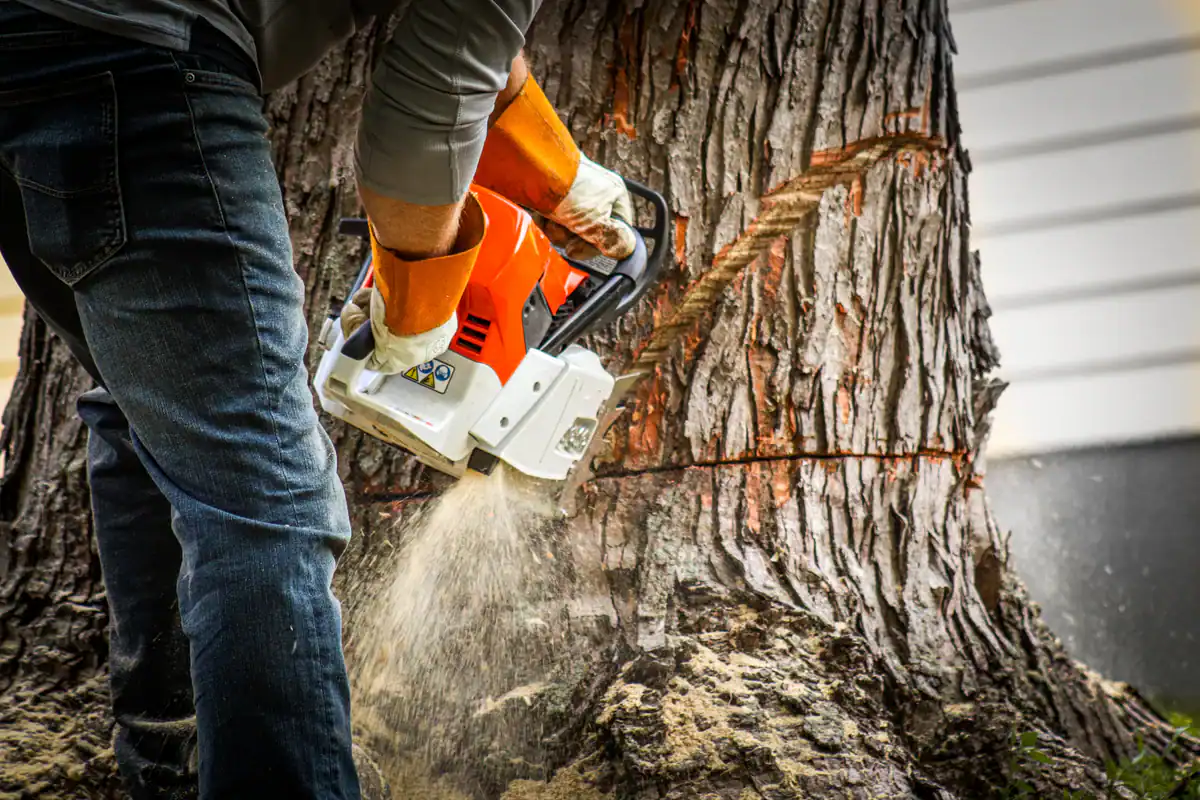
Lansing does have regulations around tree removal, particularly when a tree is on or near city-owned land or affects a public right-of-way. For most standard residential removals — a dead tree in your backyard, a hazardous tree on your own property that’s clear of the right-of-way — you typically don’t need prior approval. But larger trees, or anything that touches city land, may require a permit or at minimum a notification to the city before work begins.
The safest approach is to contact the City of Lansing’s Public Works department directly before scheduling removal on any tree you’re uncertain about. During your free estimate visit, we can help you understand what you’re dealing with, but the final call on permit requirements comes from the city. Getting that confirmed upfront takes maybe one phone call and saves you from a potential issue after the fact.
This is one of the most common questions homeowners ask, and the honest answer is that it depends on what’s actually going on with the tree. A tree that’s lost some branches in a storm, or one that’s growing too close to your roofline, may not need full removal at all. Strategic trimming can often resolve the problem and extend the tree’s life by years. On the other hand, a tree that’s more than 50 percent dead, has a compromised root system, or is showing signs of a disease like Oak Wilt isn’t going to recover from a trim — removal is the right call.
In Lansing specifically, the clay soil conditions near the Missouri River valley mean root systems can be weaker than they look, especially after a wet season. A tree that appears stable above ground may have significant root instability below. That’s exactly the kind of thing that only becomes clear with an on-site assessment. We’ll give you a straight read on what the tree actually needs — not what generates the biggest invoice.
This is where a lot of homeowners get caught off guard. Most people assume their homeowners insurance will cover it automatically, but that’s not always how it works. If your insurer can establish that you knew the tree was dead or visibly diseased and you didn’t take action, they may deny the claim based on negligence. That means the cost of repairing your fence, your roof, your garage — or your neighbor’s property — could fall entirely on you.
The neighbor scenario is the one that tends to surprise people most. If a tree from your yard falls onto your neighbor’s house or car, and it can be shown you were aware of the tree’s condition, your liability doesn’t disappear just because the damage happened next door. Removing a dead or hazardous tree before it falls isn’t just about protecting your own property — it’s about protecting your financial exposure. In a community like Lansing where lots sit close together, especially in the older neighborhoods near downtown, that risk is real.
For a smaller tree — say, under 30 feet — most removal jobs take somewhere between two and four hours from start to cleanup. A large mature tree, the kind you’ll find on Lansing’s older residential lots that have been growing for 60 or 70 years, can take a full day depending on the complexity of the job. Proximity to structures, the condition of the tree, and how much of the root system needs to be addressed all factor into the timeline.
What you should expect on any job with us is that the cleanup happens the same day the tree comes down. You won’t be left with a pile of limbs or a mound of wood chips to deal with later. If stump grinding is part of the scope, that gets handled in the same visit. The goal is that by the time our crew leaves, the job looks finished — not like something that still needs to be dealt with.
Yes, and storm response is actually one of the areas where our experience goes well beyond what most local tree services can offer. We’ve deployed to storm recovery operations across Kansas, Missouri, North Carolina, South Carolina, and Florida. That’s not a detail that comes up often in a standard residential job, but it matters when you’re dealing with the aftermath of a serious weather event — because a crew that’s handled large-scale storm recovery knows how to work quickly, safely, and systematically in conditions that would overwhelm a less experienced operation.
Lansing sits in a part of northeastern Kansas that sees real storm exposure — severe thunderstorms, high winds, and ice events that can bring down large limbs or whole trees with little warning. When that happens, you need someone who can respond fast and handle the situation completely. We offer same-day or next-day estimates and rapid scheduling, so you’re not waiting weeks while a storm-damaged tree sits against your house or blocks your driveway.
The two questions that matter most before any other conversation are: do you carry general liability insurance, and do you carry workers’ compensation? Both. Not just one. If a crew member is injured on your property and the company doesn’t carry workers’ comp, you could be personally liable for those medical costs. It doesn’t matter how experienced or professional the crew seems — without those two coverages in place, you’re taking on real financial risk.
Beyond insurance, ask how long they’ve been operating in the area, whether the estimate is free and in writing, and what the cleanup process looks like. In Lansing, where a lot of the older residential lots have tight spacing between structures, it’s also worth asking whether they’ve done similar jobs in comparable neighborhoods — large tree removals near fences, garages, or neighboring yards. A company that can point to a track record of clean, damage-free work in those conditions is a company worth trusting with your property.
Other Services we provide in Lansing