
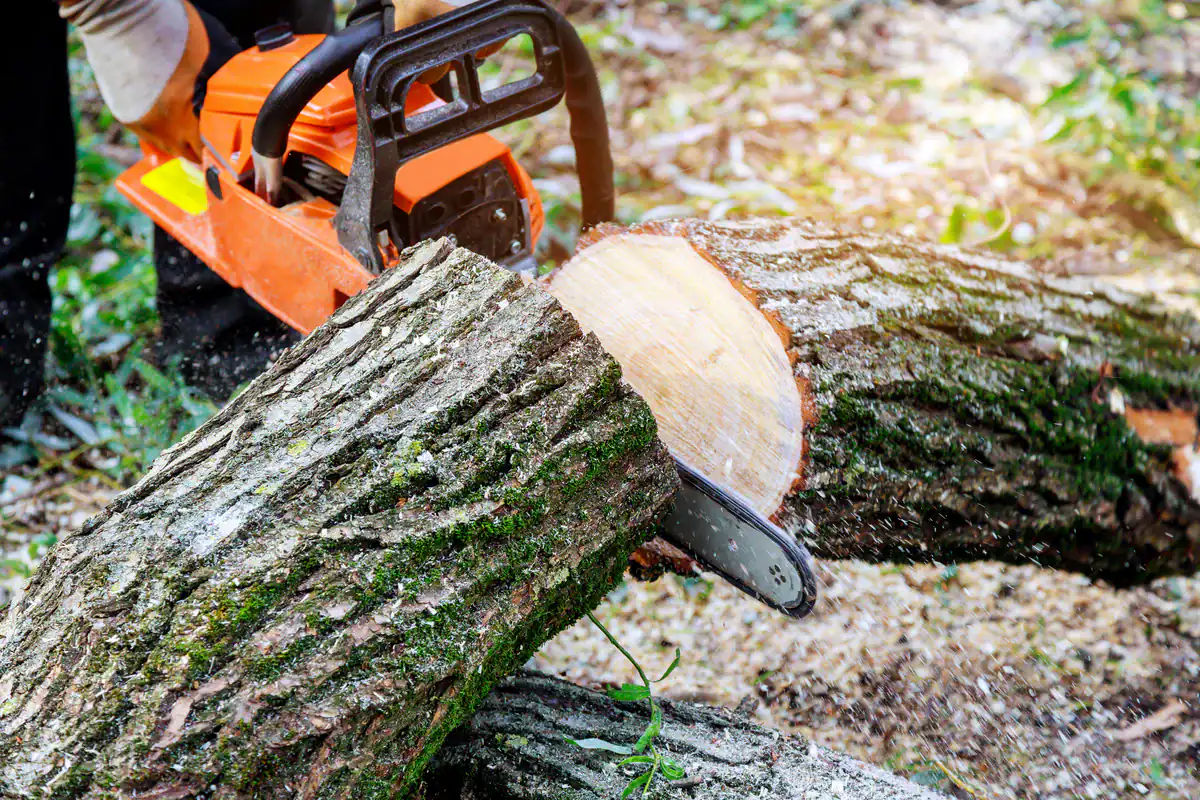
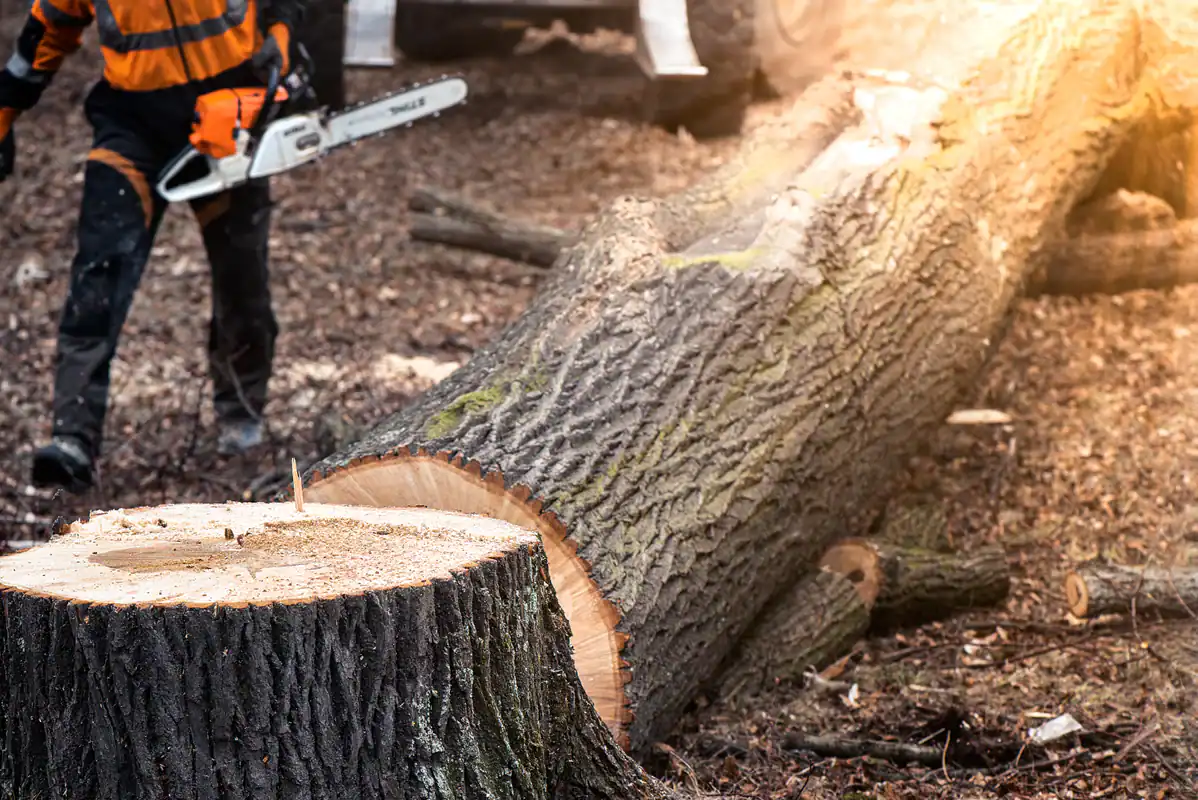
A dead or storm-damaged tree isn’t just an eyesore — it’s a liability sitting on your property. Most homeowners don’t realize that if a dead tree falls and causes damage, their insurance company can deny the claim on the grounds of negligence. That’s a clause that applies whether the tree lands on your roof, your fence, or your neighbor’s garage.
Smithville has the storm history to make this real. The National Weather Service confirmed an EF-1 tornado near Smithville Lake with peak winds of 95 mph — the kind of event that turns a leaning shoreline tree into a structural emergency overnight. The heavy clay soil that runs through Clay County doesn’t do roots any favors either. Trees in clay-heavy ground develop shallower root systems, which means they’re more likely to uproot in a wind event than they would be in well-draining soil.
Once the tree is down and the yard is clear, the difference is immediate. No more watching that dead oak every time the wind picks up. No more wondering if the ash tree by the fence is going to make it through another spring. You get your property back — clean, safe, and not a problem you’re carrying into next season.
We’ve been doing tree work in the Kansas City, KS & MO metro for over a decade, which means we know Clay County clay soil, northland storm seasons, and the specific tree species that grow along the Little Platte River corridor. We’ve seen what a dead ash looks like after Emerald Ash Borer has worked through it, and we know how to take one down safely when the wood has gone brittle and unpredictable.
This is a family-owned operation — not a franchise, not a call center dispatching strangers. The same crew that gives you an estimate is the one showing up to do the work. Every job, whether it’s a single hazardous tree in a Greyhawke at the Lake subdivision or a large removal near a home’s foundation, ends with a full cleanup. No piles left on your property. If you want to keep the wood or mulch, just say so before the job starts.
We’re fully insured, with liability coverage and workers’ compensation. That matters more than most homeowners realize until something goes wrong.
It starts with a free on-site estimate. We come out, look at the tree, and give you a straight answer — what it needs, why, and what it’ll cost. If a strategic trim can solve the problem instead of a full removal, that’s what you’ll hear. The goal is an honest assessment, not the biggest invoice.
Once you decide to move forward, scheduling is fast. Multiple customer reviews confirm same-day estimates and next-day work completion — which matters when you’re commuting into Kansas City, KS & MO every morning and don’t have a week to wait around. For storm-related situations, where a limb came down overnight or a tree is actively threatening a structure, response time becomes the whole ballgame. We’ve deployed storm response crews across multiple states — this isn’t a crew learning on your job.
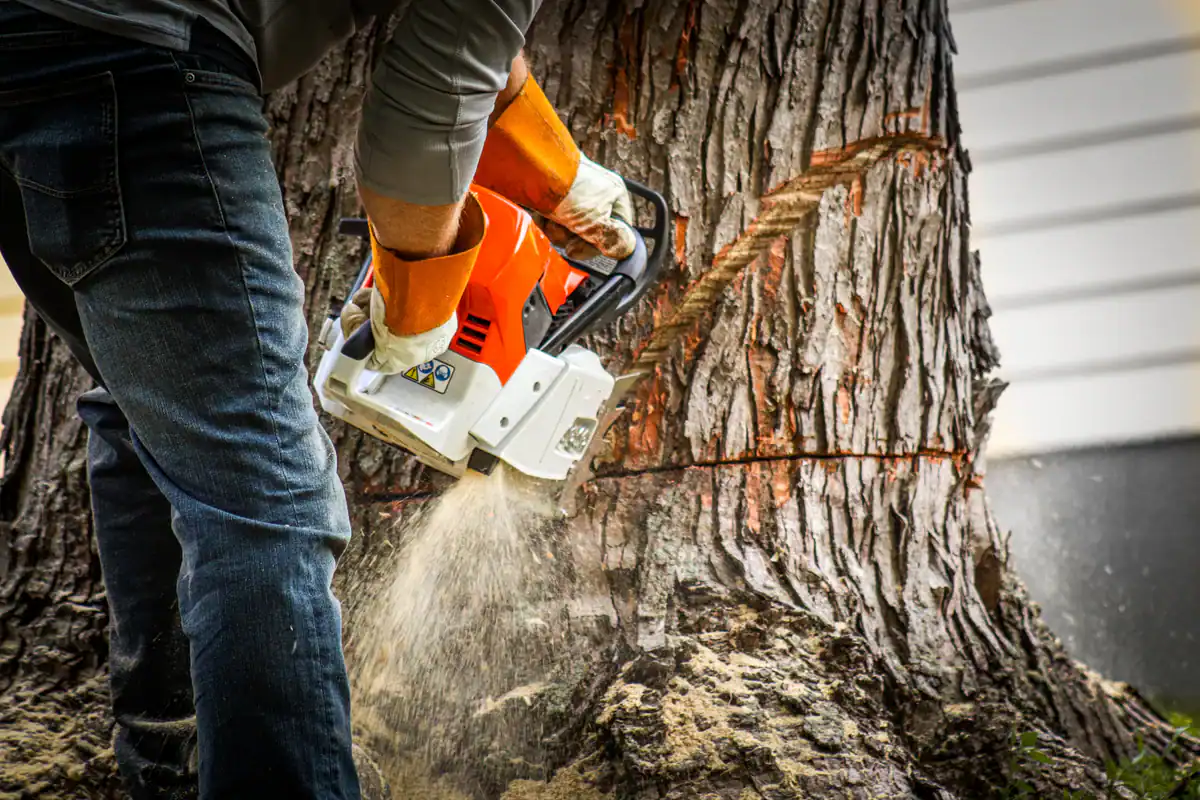
On the day of the work, we handle everything from the cut to the cleanup. Limbs, trunk sections, debris — it all goes. If the tree is near a structure, a fence, or a neighboring property, we work controlled and deliberate. Smithville’s residential neighborhoods and lake-adjacent properties don’t leave much room for error, and we work accordingly. When we leave, your yard is clean.
Ready to get started?
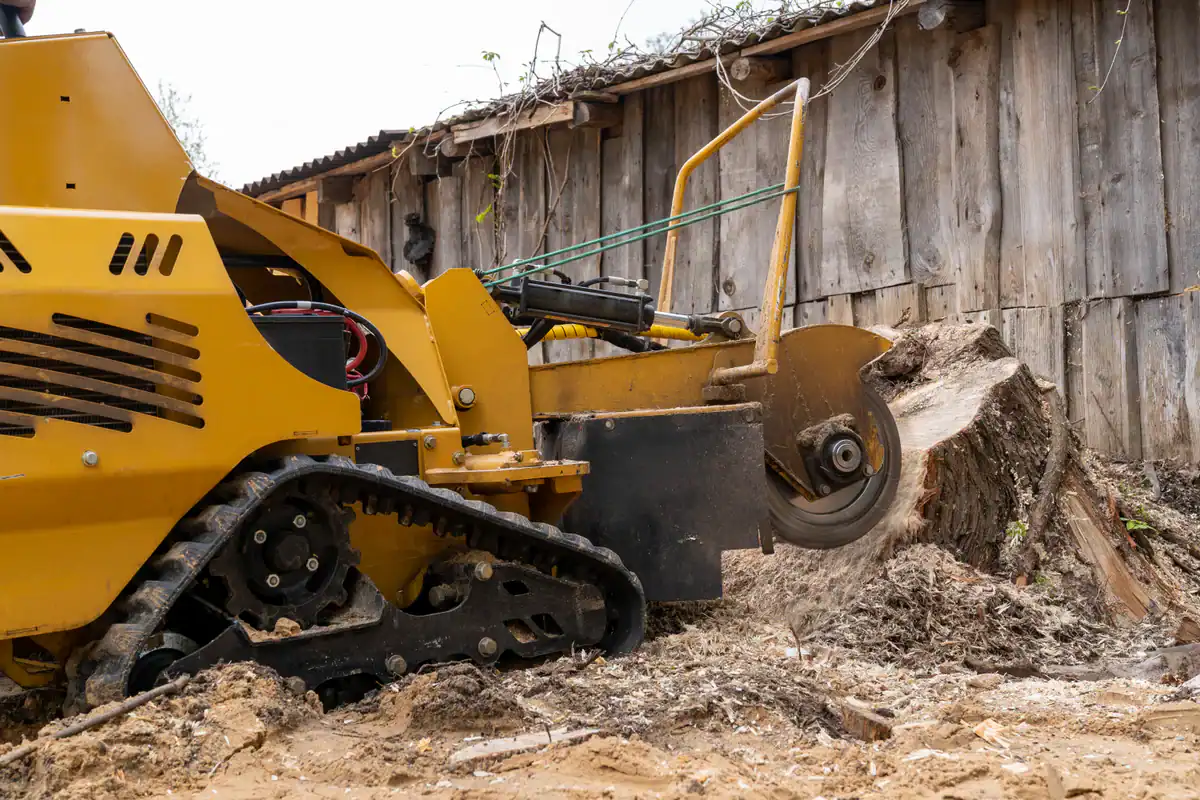
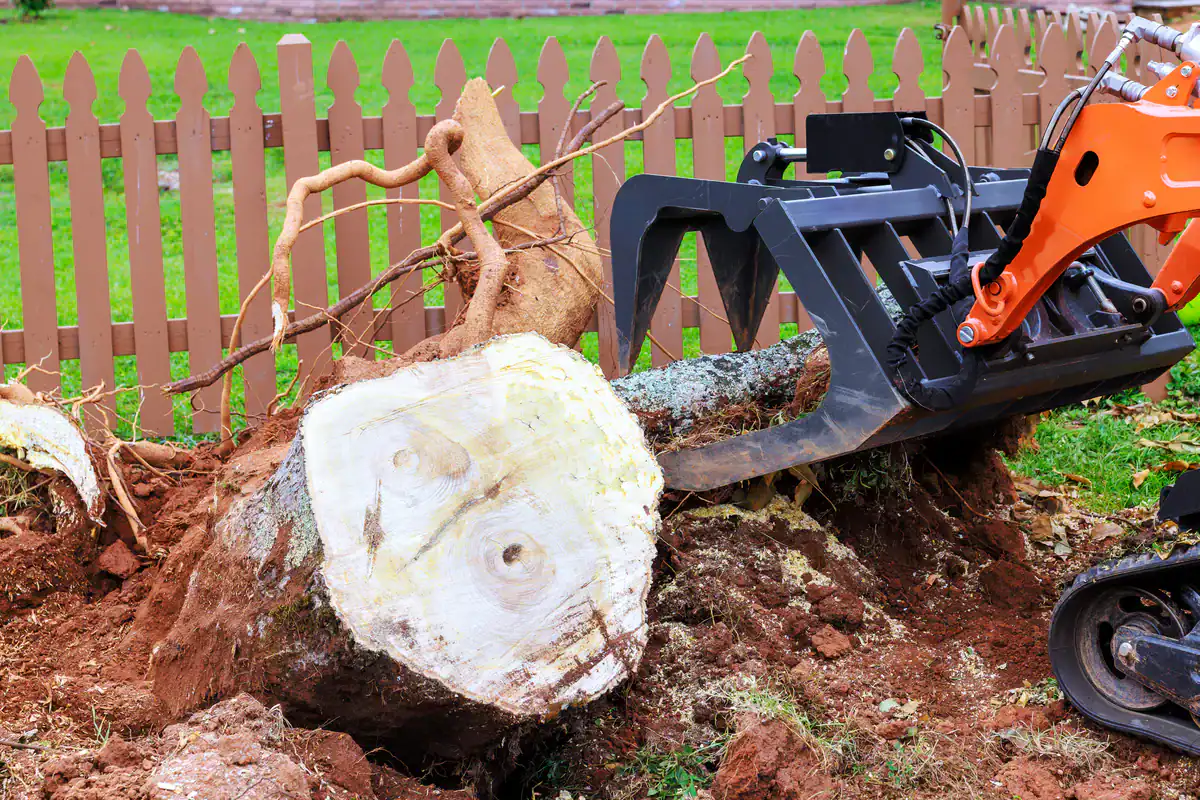
Tree removal covers the full scope — cutting, sectioning, hauling, and cleanup. Stump grinding is available if you want the area brought back to a usable condition. Brush and debris removal is included. If you’re dealing with multiple trees, storm damage across the property, or a large-scale removal near the lake shoreline, we’re equipped to handle it in a single visit rather than scheduling it across multiple trips.
Smithville’s rapid residential growth over the past decade means many homeowners in newer subdivisions like Diamond Creek and Eagle Ridge inherited trees they didn’t plant and haven’t had professionally assessed. Construction activity — grading, trenching, equipment compaction near root zones — can silently compromise a tree’s structural integrity for years before it becomes visible. If you moved into a newer home and there are mature trees on the property, an honest assessment is worth doing before a storm makes the decision for you.
Missouri has no statewide permit requirement for removing trees on private property, and no Smithville-specific private-property permit requirement applies. Trees in the public right-of-way — the strip between your yard and the road — are the city’s responsibility, not yours. During the estimate, we can help you identify which trees fall under your responsibility and which don’t, so you’re not paying to remove something the city should be handling.
Not every tree that looks rough needs to come down. A good rule of thumb is that if less than 25% of the tree’s branches are damaged or dead, the tree may recover with proper pruning. But there are situations where removal is the right call regardless of how the canopy looks — a tree that’s leaning toward a structure, one with significant trunk decay at the base, or one where the root system has been compromised by construction activity or Clay County’s heavy clay soil.
The honest answer is that you won’t know for certain without someone looking at it in person. A free on-site estimate gives you a real answer based on the actual condition of the tree — not a guess over the phone. If a trim can solve the problem, that’s what you’ll hear. If removal is necessary, we’ll explain exactly why so you can make an informed decision.
It depends on the circumstances, and the answer isn’t always what homeowners expect. If a healthy tree falls on your home during a storm, most standard homeowners insurance policies will cover a portion of the removal cost — typically somewhere in the range of $500 to $1,000 toward removal when a structure is damaged. But if the tree was already dead or visibly diseased and you hadn’t addressed it, your insurer may deny the claim based on negligence.
This is a real scenario in Smithville and across Clay County. It’s worth calling your insurance agent to understand exactly what your policy covers before something happens. If you have a dead or declining tree on your property right now, getting it removed proactively is almost always less expensive than dealing with the aftermath of a fall — both financially and in terms of the damage itself.
Clay County’s heavy clay soil affects tree root systems in a few important ways. Trees growing in clay-heavy ground tend to develop shallower, more lateral root systems because clay doesn’t drain well and roots can’t penetrate as deeply. That makes trees more susceptible to windthrow — uprooting during a storm — even when the tree looks structurally sound from the outside. It also means the root ball can be significantly larger and heavier than you’d expect for a given tree size, which affects how the removal is approached.
For the actual removal process, clay soil can make stump grinding and root removal more labor-intensive than it would be in sandier or loamier soil. This can influence the overall cost of the job, particularly for large trees or situations where the stump needs to be fully ground down to allow replanting or lawn restoration. During the estimate, we’ll assess the root situation and factor it into the quote so there are no surprises.
The first thing to ask for is proof of insurance — specifically general liability coverage and workers’ compensation. This isn’t just a formality. In Missouri, there’s no state licensing requirement for basic tree work, which means anyone with a truck and a chainsaw can legally call themselves a tree service. Without workers’ comp coverage, if a crew member is injured on your property, you could be personally liable for their medical costs.
Beyond insurance, ask how long they’ve been operating in the KC metro area, whether the estimate is free and written, and what the cleanup process looks like. A company that’s vague about cleanup — or that asks for a large deposit before starting work — is worth being cautious about. Get at least two or three quotes, compare what’s included, and trust your read on how the estimator communicates. The company that gives you a clear, straight answer during the estimate is usually the one that delivers the same on the job.
For most residential jobs, a single tree removal takes anywhere from two to four hours for a smaller tree, up to a full day for a large tree — think a mature oak or cottonwood near a Smithville Lake shoreline property. The actual time depends on the size of the tree, how close it is to structures or neighboring properties, and whether stump grinding is included. Multiple trees on the same property can usually be handled in a single visit, which is more efficient than scheduling separate trips.
In most cases, yes — the job is completed in one visit, including cleanup. That’s the standard expectation, and it’s what we deliver. If you’re commuting south on US-169 every morning and can’t afford to take multiple days off to supervise a job that drags out, that matters. We arrive, do the work, clean up, and you come home to a yard that looks right.
Yes, it’s a real and active problem in Clay County and across the KC northland. The Emerald Ash Borer is an invasive beetle that kills ash trees by disrupting the tree’s ability to move water and nutrients under the bark. Once a tree is infested, it typically dies within two to four years. Ash trees are common in Smithville’s older residential neighborhoods and along the Little Platte River corridor, which means many homeowners are dealing with dead or dying ash trees right now.
Dead ash trees are among the more challenging removals because the wood becomes brittle and structurally unpredictable as it dries out. If you have an ash tree on your property that has lost most of its canopy or shows signs of woodpecker activity and D-shaped exit holes in the bark, those are strong indicators of EAB damage. Getting it assessed sooner rather than later — before the wood deteriorates further — makes the removal safer and often less complicated.
Other Services we provide in Smithville