There’s a reason Parkville homeowners think about their trees differently than people in flat suburban neighborhoods. The Missouri River bluffs that make this area beautiful — the wooded hillsides, the elevated ridgelines, the mature hardwoods in neighborhoods like River Hills Estates and Riss Lake — also mean that a failing tree has gravity working against you.
On a sloped lot, a structurally compromised tree doesn’t just threaten the yard. It threatens the roof, the fence, the garage, and anything else sitting downhill from it. Clay-heavy soils, like the ones throughout Parkville’s bluff-side properties, become saturated quickly after heavy rain. A tree that looked perfectly stable in dry conditions can develop a lean and fail within hours of a significant storm.
This isn’t a worst-case scenario — it’s a physics problem that plays out every spring and ice storm season in Platte County. Getting a dead, diseased, or structurally compromised tree removed before it becomes an emergency protects your home, your neighbors, and your financial investment in your property. We include full cleanup on every job — no wood piles, no debris left behind, no HOA headaches.
We’ve been working in the Kansas City, KS & MO metro for over a decade. That means real experience with the kinds of properties that define Parkville — wooded lots, hillside terrain, mature hardwoods that have been growing for 40 or 50 years, and tight residential spaces where there’s no room for error.
Our crew has handled large-scale storm recovery operations across five states, including Kansas and Missouri, so a challenging removal on a bluff-side lot in Parkville isn’t something we’re figuring out on the fly. What sets our work apart isn’t a credential list — it’s the approach. If a strategic trim can solve your problem, that’s what you’ll hear. If the tree genuinely needs to come down, you’ll get a straight answer on that too.
We’re a family-owned operation rooted in the Kansas City, KS & MO area, and every job — whether it’s a large oak near the Missouri River corridor or a storm-damaged tree in Riverchase — gets treated like it matters. No upsell, no runaround.
It starts with a free on-site estimate. We come out, look at the tree, and give you an honest read on what it needs — removal, trimming, or something in between. No pressure, no obligation.
For Parkville properties, that initial assessment also accounts for the specifics of your lot: the slope, what’s downhill from the tree, proximity to your home or neighboring properties, and whether the work involves any street trees or falls within the city’s right-of-way. Parkville’s municipal code requires a permit for work within the public right-of-way, so if that applies to your situation, it gets identified upfront — not after the crew shows up.
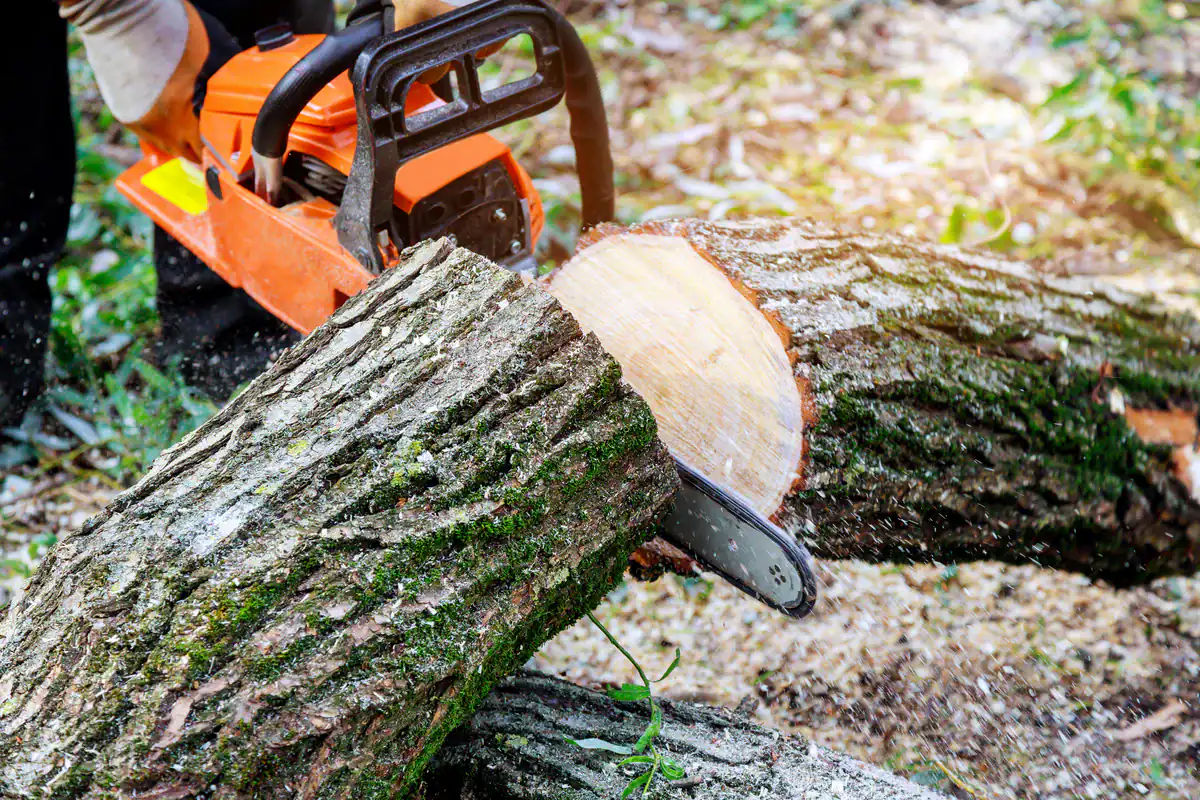
Once you’re ready to move forward, the job gets scheduled. Most customers see same-day estimates and work completed within a day or two. On the day of removal, our crew handles everything — the cut, the limb work, the trunk, and the cleanup. Full cleanup is included on every single job. If you want to keep the wood or mulch, just say so in advance. Otherwise, the property gets left clean.
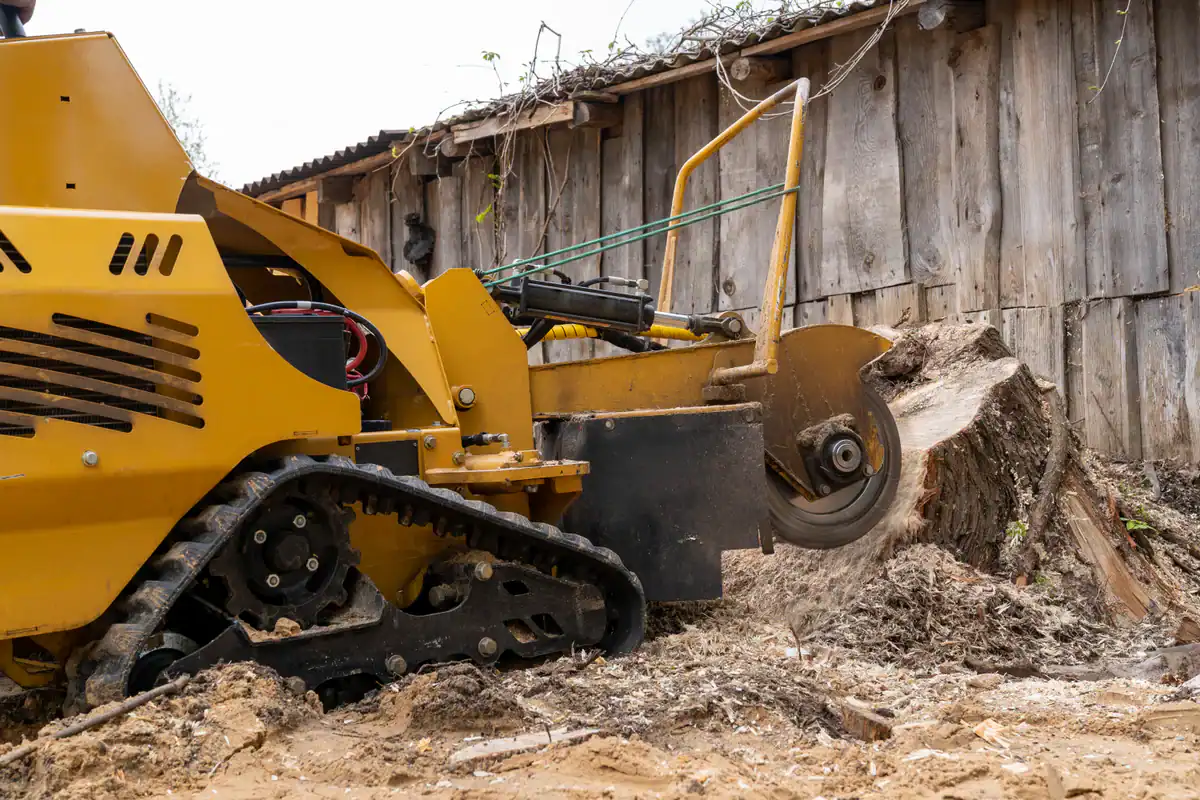
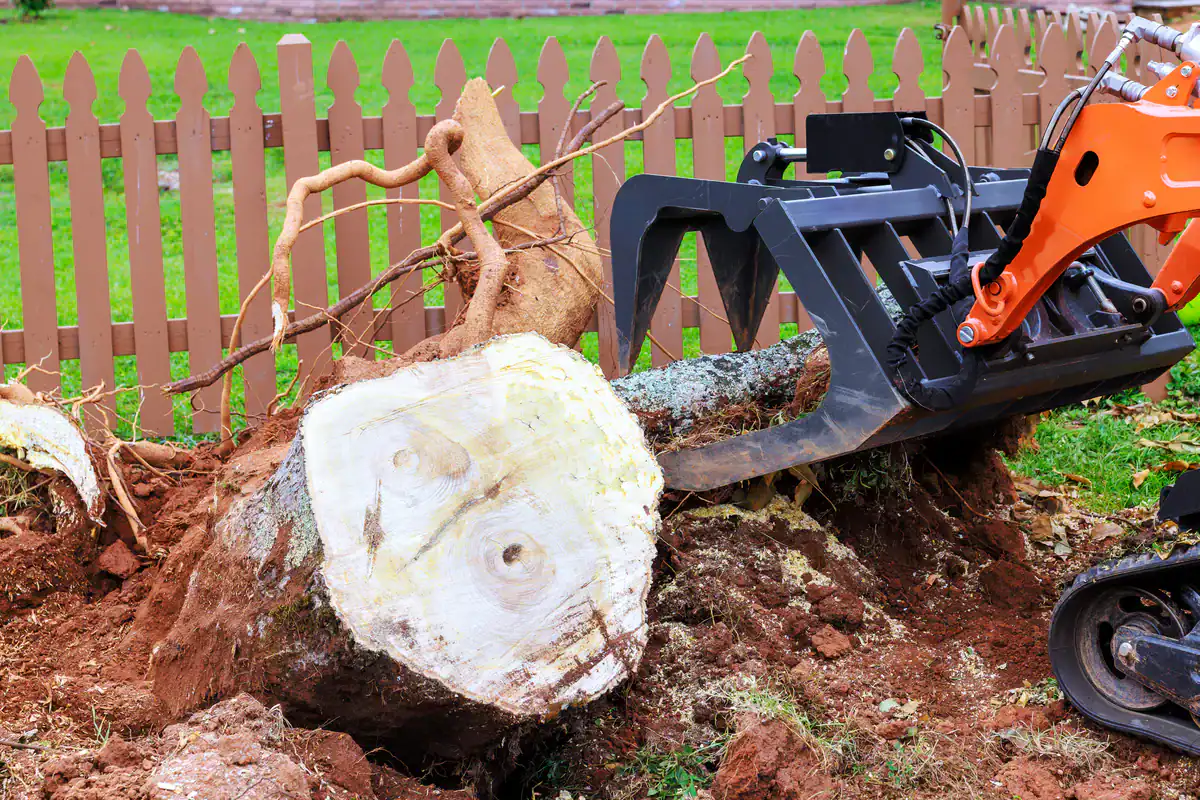
Stump grinding is available if you want the area fully restored. For larger or more complex removals — trees on steep slopes, trees close to structures, or large canopy hardwoods common throughout Parkville’s established neighborhoods — the process is the same, just with more planning built into the approach. Our goal is always to get the tree down safely, without damage to your property or your neighbor’s.
Ready to get started?
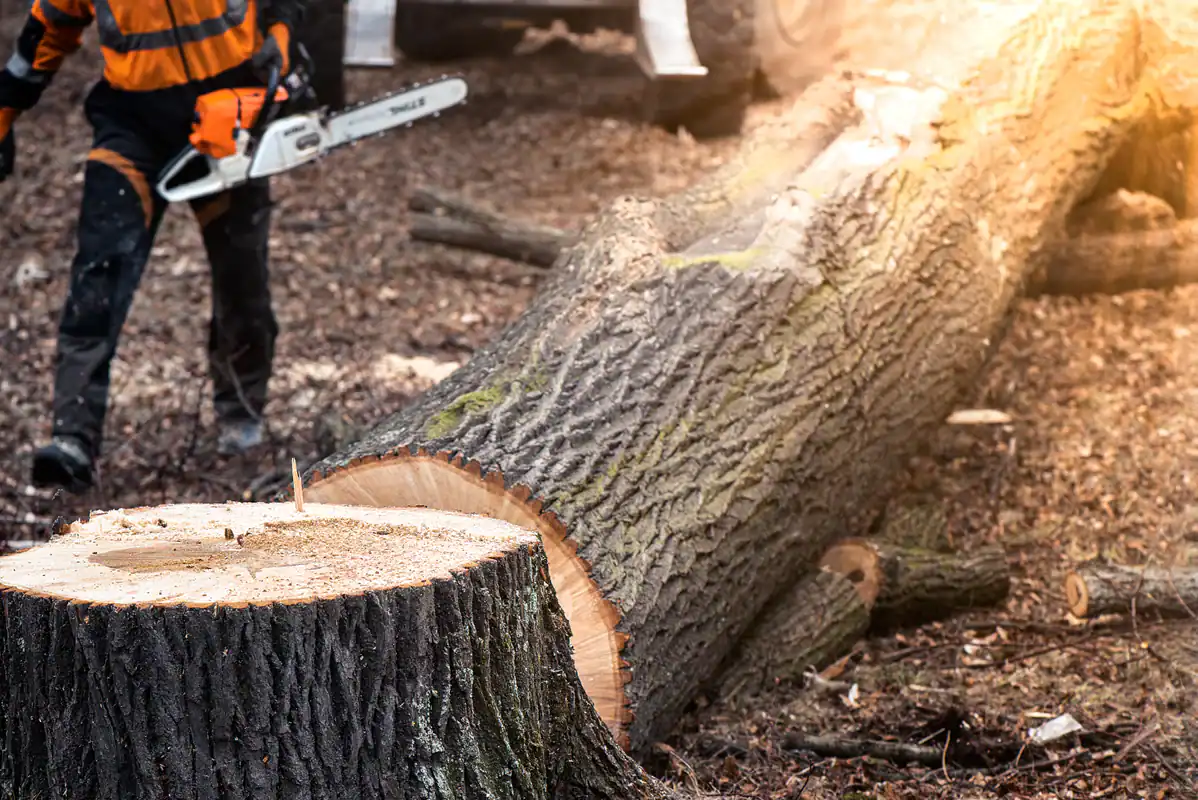
Tree removal in Parkville covers a range of situations — a dead tree that’s been leaning toward the house for two winters, a diseased oak showing signs of Oak Wilt, a large tree that took storm damage and is now a structural risk, or a hazardous tree on a hillside lot where the soil has been saturated one too many times. We handle all of it, for both residential and commercial properties throughout Parkville and the surrounding Platte County area.
Every removal we perform includes full cleanup — no piles, no debris, no chips left on the lawn. That matters especially in HOA communities like Riss Lake, where what your property looks like after the job is just as important as the work itself. Stump grinding is available as an add-on if you want the area brought back to grade.
For trees near structures, fences, or neighboring lots — which describes a large number of properties in Parkville’s wooded subdivisions — we plan the removal specifically around what’s in the way. Missouri doesn’t require specific licensing for tree removal, which means anyone with a truck and a chainsaw can legally advertise the service. What actually protects you is verified liability insurance and workers’ compensation coverage. We carry both. If a tree is dead, diseased, or visibly compromised and causes damage, your homeowners insurance may not cover it if negligence can be shown — proactive removal is the financially sound move, and it’s covered by a company that’s accountable if anything goes wrong.
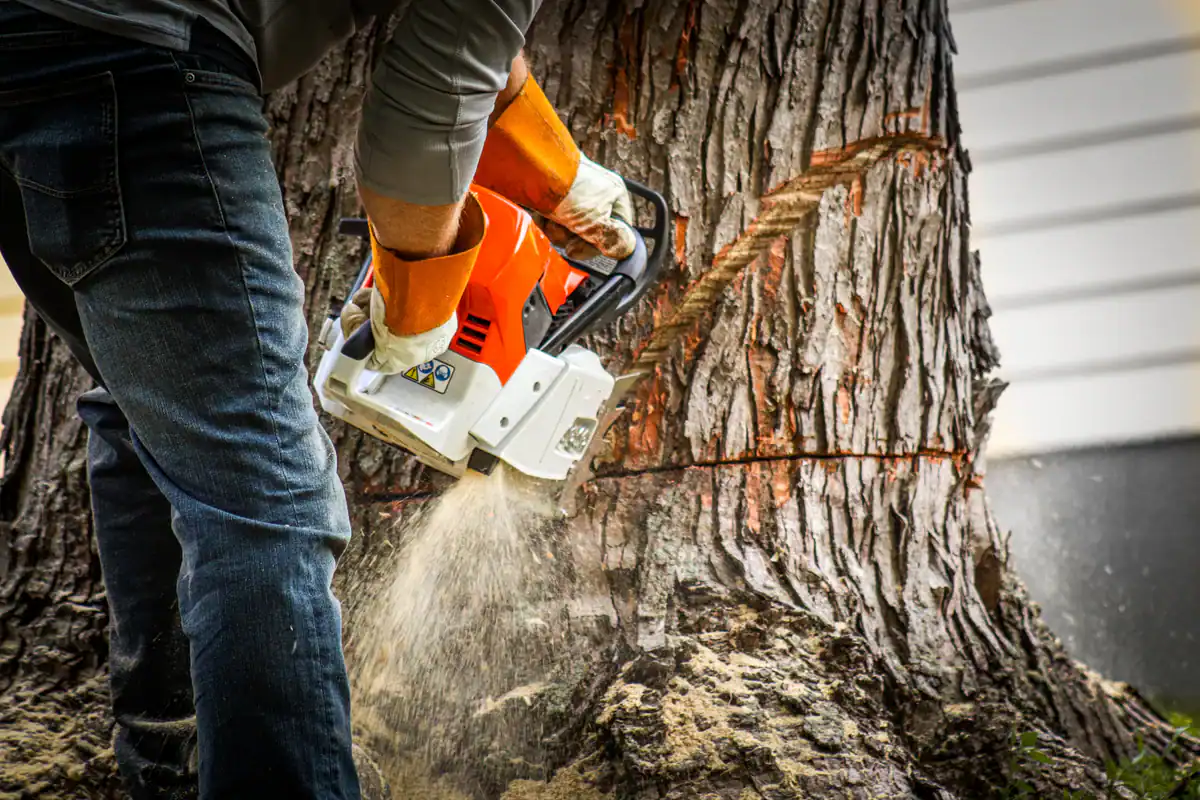
It depends on where the tree is located. For trees on private residential property, Parkville does not require a permit for standard removal. However, if the tree is in or near the public right-of-way — along the street, near a sidewalk, or within a utility corridor — a right-of-way permit from the City of Parkville is required before any work begins. This is governed by Chapter 515 of Parkville’s municipal code, which covers street tree ownership, maintenance, and removal.
The City of Parkville also has an active Route 9 Downtown Improvements project underway, which affects tree-lined corridors in and around the downtown area. If your property is near that corridor, it’s worth confirming the right-of-way boundaries before scheduling work. During the free on-site estimate, we identify this upfront so there are no surprises on the day of the job. Parkville’s landscape design standards also require property owners to remove dead, dying, or diseased plant material — so in some cases, removal isn’t just a safety decision, it’s a code compliance one.
This is one of the most common questions, and the honest answer is that it depends on what’s actually wrong with the tree. A tree that has lost less than about a quarter of its branch structure can often recover with proper pruning. But a tree that’s structurally compromised at the trunk, showing signs of disease at the root zone, or leaning over a structure is a different situation — trimming won’t fix a root system that’s failing.
In Parkville specifically, the bluff-side terrain adds a layer of complexity. A tree growing on a slope is already managing more lateral stress than one on flat ground. When you add clay-heavy soil that swells and shifts with moisture, or root systems that have been stressed by periodic flooding near the Missouri River corridor, the structural picture changes. What looks like a stable tree in summer can behave very differently after a wet spring. A free on-site assessment will tell you which category your tree falls into — and if trimming is the right answer, that’s exactly what you’ll hear.
A few things can happen, and none of them are good. The most immediate risk is physical — dead trees can fail without warning, even on calm days, because the internal wood structure deteriorates faster than what’s visible from the outside. On a hillside property in Parkville, a falling tree doesn’t just drop straight down. It follows the slope, which means whatever is downhill — your roof, your deck, a neighbor’s fence — is in the fall zone.
Beyond the physical risk, there’s a financial one. If a dead or visibly diseased tree falls and causes damage, your homeowners insurance may deny the claim if they can show you knew the tree was at risk and didn’t act. That shifts the liability directly to you. Parkville’s municipal code also requires property owners to remove dead, dying, or diseased plant material under the city’s landscape design standards — so a dead tree isn’t just a hazard, it may also be a code violation. Getting it removed proactively is the straightforward solution to all three problems at once.
Costs vary based on the size of the tree, its location on the property, and how complex the removal is. Emergency tree removal in Parkville typically runs around $895 based on local market data. Nationally, standard tree removal averages between $750 and $1,200, though large canopy trees — which are common throughout Parkville’s established wooded neighborhoods — can run higher depending on the scope of work.
What affects the price most in Parkville is usually the terrain and proximity to structures. A large oak on a flat backyard is a different job than the same tree on a hillside lot in River Hills Estates with a home downslope and a neighbor’s fence on one side. The slope, the access, and what needs to be protected during the removal all factor into the estimate. The best way to get an accurate number is a free on-site assessment — that’s when all the variables get accounted for, and you get a straight price with no surprises after the fact.
Yes, and it’s worth being upfront about that. Parkville’s Missouri River bluff topography creates conditions that are genuinely different from flat suburban tree removal. Trees growing on slopes develop root systems that are compensating for lateral stress, which affects how they’re anchored and how they’ll behave when cut. The clay-heavy soils throughout the bluff-side neighborhoods absorb and hold water differently than sandy or loamy soils, which means root stability can change significantly with seasonal moisture.
For properties in neighborhoods like River Hills Estates, Riverchase, or anywhere along the bluff corridor, the removal process requires more planning around the fall zone, access routes, and protection of adjacent structures. This isn’t a reason to avoid the work — it’s a reason to make sure the crew doing it has handled this kind of terrain before. We have over a decade of Kansas City, KS & MO-area experience, including removals in tight residential settings on sloped lots, and have deployed for large-scale storm recovery operations across multiple states. Complicated terrain isn’t new territory for us.
Fast response is one of the things we’re consistently recognized for across customer reviews — same-day estimates and work completed the following day are the norm, not the exception. For Parkville homeowners, that matters more than it might in a calmer suburban setting. Platte County sits squarely in the Kansas City, KS & MO metro’s storm belt, and Parkville’s position along the Missouri River adds flood and wind exposure that other parts of the metro don’t face in the same way.
Spring storm seasons and ice storms — which cause significant branch failure and whole-tree collapses in Parkville’s mature hardwood canopy — generate real urgency. When a storm drops a limb on your roof in Riss Lake or takes out a tree along Route 9, waiting two weeks for someone to show up isn’t a realistic option. We’ve deployed for storm recovery operations across Kansas, Missouri, North Carolina, South Carolina, and Florida — meaning our crew has handled high-volume, high-pressure storm response before. That experience translates directly to how we handle post-storm calls locally. Reach out, describe what happened, and the response will be prompt.
Other Services we provide in Parkville