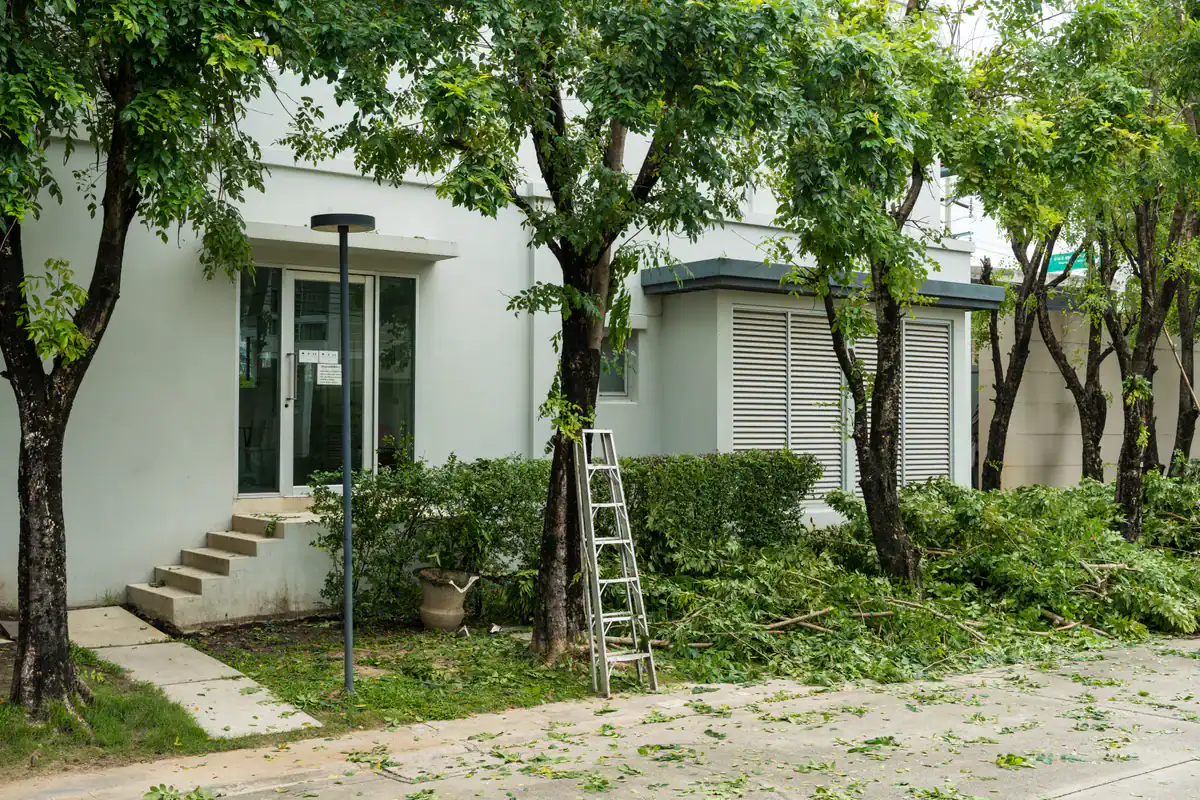
Most people call a tree company because something finally pushed them to it — a storm rolled through Platte County, a branch came down, or they’ve been staring at a leaning tree in the backyard for two seasons wondering if it’s actually a problem. Whatever got you here, the goal on the other end is the same: a yard that’s safe, clean, and one less thing to worry about.
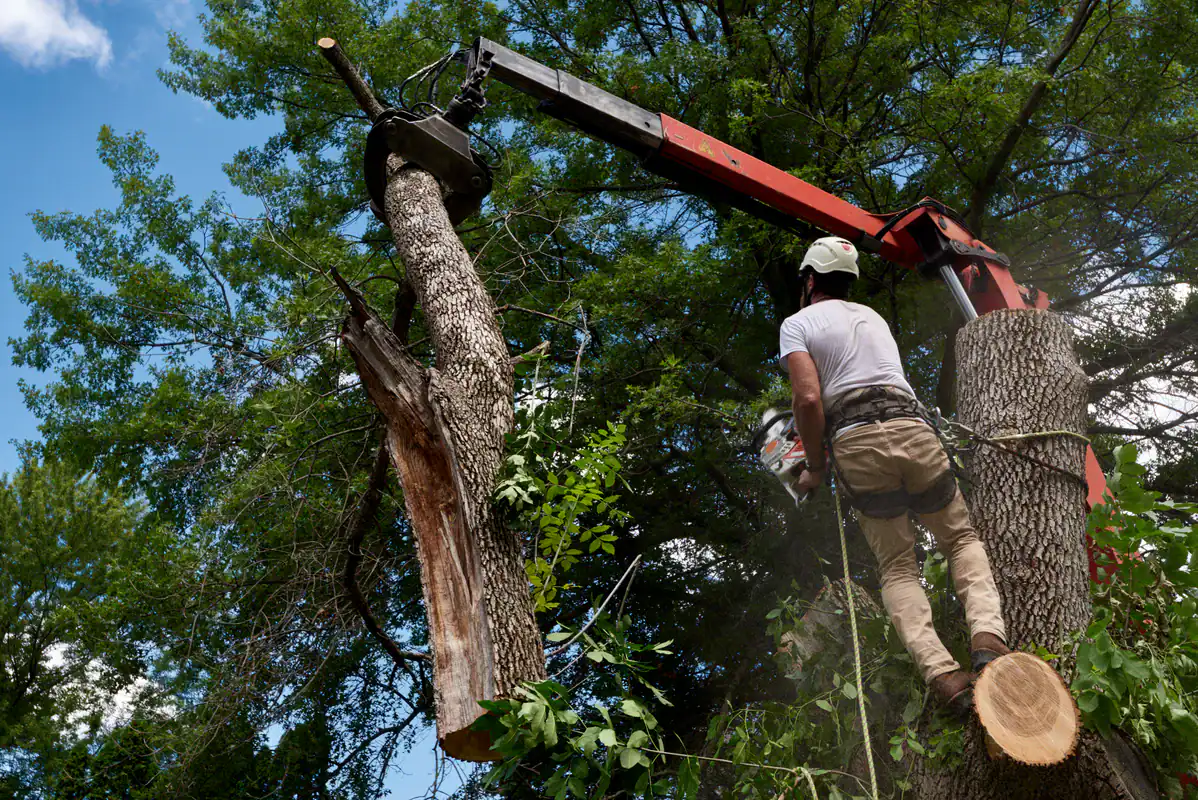
Parkville’s terrain makes that a little more complicated than it sounds. Neighborhoods like Thousand Oaks, River Hills Estates, and The Bluffs sit on elevated, sloped ground above the Missouri River. Trees on hillside lots don’t fall the way flat-ground trees do — they fall downhill, toward whatever is below them. That means the fall zone is bigger, the stakes are higher, and the planning has to be more deliberate before anyone picks up a chainsaw. Getting that right is what separates a clean job from a costly one.
Once the work is done, you shouldn’t have to deal with the aftermath yourself. Every job we complete includes full cleanup — no debris piles, no wood chips left across your driveway, no mess handed back to you. You also have the option to keep the wood or mulch if you want it. The property gets left neat and safe, which in a community like Parkville — where the homes are worth what they’re worth and neighbors notice — is exactly what you’d expect from a professional crew.
We’ve been doing tree work in the Kansas City, KS & MO area for over 10 years, with deep roots in Parkville and the surrounding Northland. Our crew is small, local, and accountable — not a dispatch queue, not a national chain routing calls through a call center. When you reach out, you’re dealing with real people who know Parkville’s terrain, understand the complexities of working on bluff lots above the Missouri River, and know what it takes to work safely in the kind of wooded, hillside neighborhoods that define this area.
We’re fully licensed under Missouri’s occupational licensing requirements and fully insured — liability and workers’ comp both. That matters on a $630,000 to $700,000 property. If something goes sideways on an uninsured job near your home, that exposure lands on you. With us, it doesn’t.
Our 4.9-star rating across 40 reviews, Quality Business Awards recognition as a top 1% American business in tree care, and a safety record that covers more than 1,200 removals without a single accident — none of that happened by accident either. It’s the result of a crew that takes the work seriously and treats your property like our own.
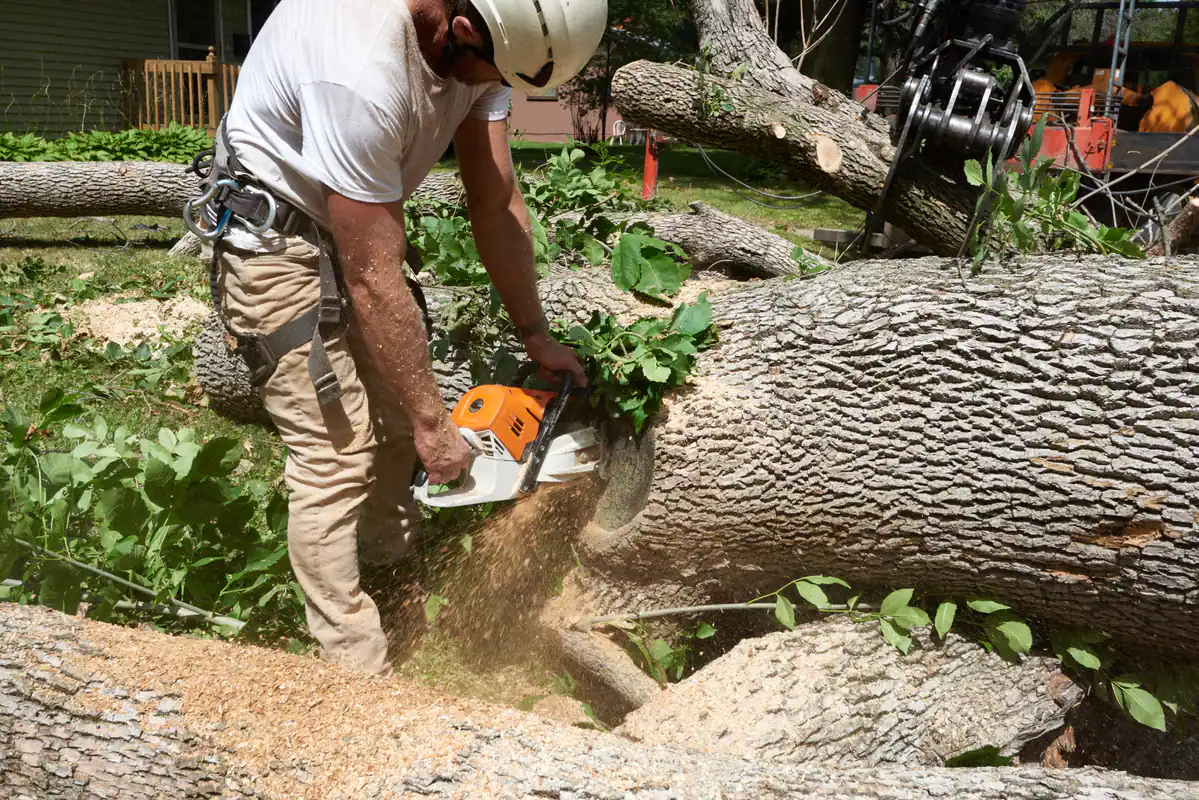
It starts with a free quote, and most of the time that quote happens the same day you call. Someone from our crew comes out to your property, looks at the tree or trees in question, and gives you a straight answer — what needs to happen, what it’ll cost, and whether there’s a less aggressive option worth considering first. No pressure, no runaround. If a trim can solve the problem instead of a full removal, that’s what you’ll hear.
Once you decide to move forward, we plan the job with your specific site in mind. In Parkville, that often means accounting for slope. Hillside lots in neighborhoods like River Hills Estates or along the Route 9 corridor near downtown require a different removal approach than a flat suburban yard. The fall zone gets mapped out, access routes are assessed, and any work near the city’s right-of-way — which can apply along Route 9 or Route 45 — gets handled with the appropriate coordination.
If your property is in a community with HOA landscaping standards, like The National or Riss Lake, we work with that in mind too. The job itself is clean and efficient. Most residential removals are completed in a single visit. When the work is done, the property gets fully cleaned up — every branch, every chip, every piece of debris. You’re left with a yard that looks better than it did before we showed up, not worse.
Ready to get started?
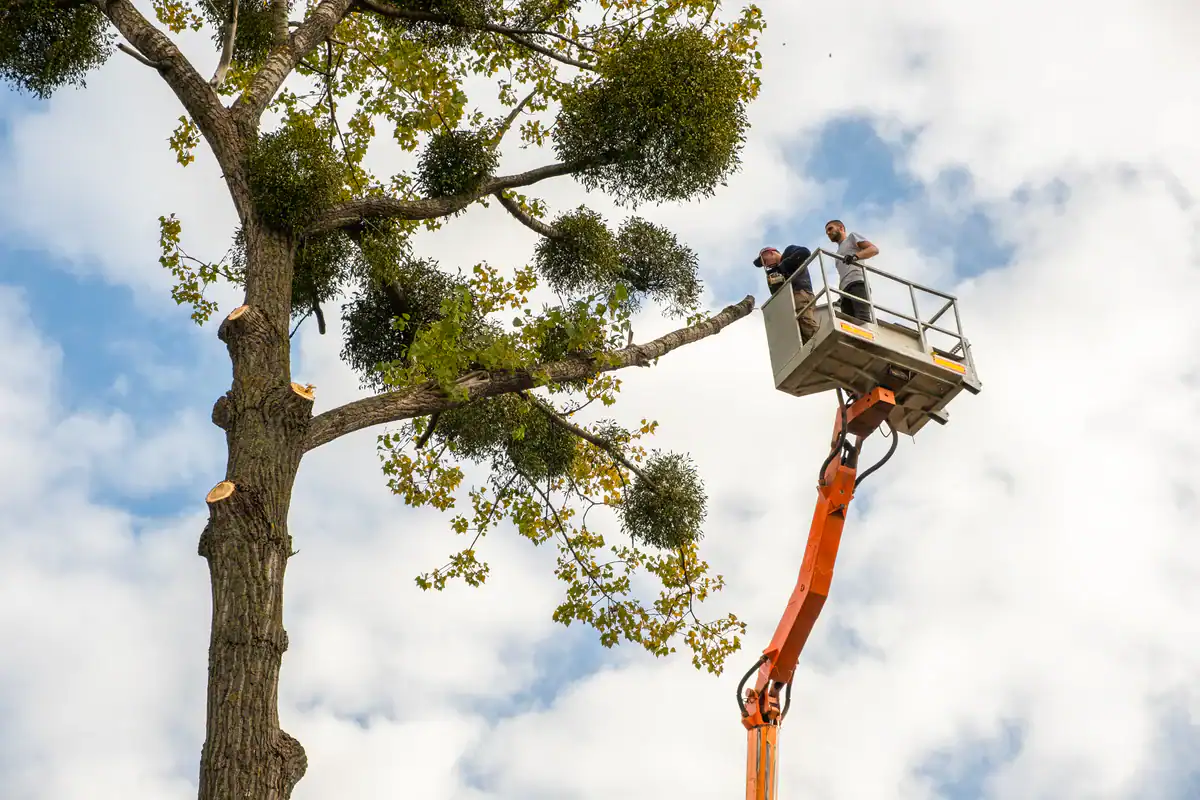
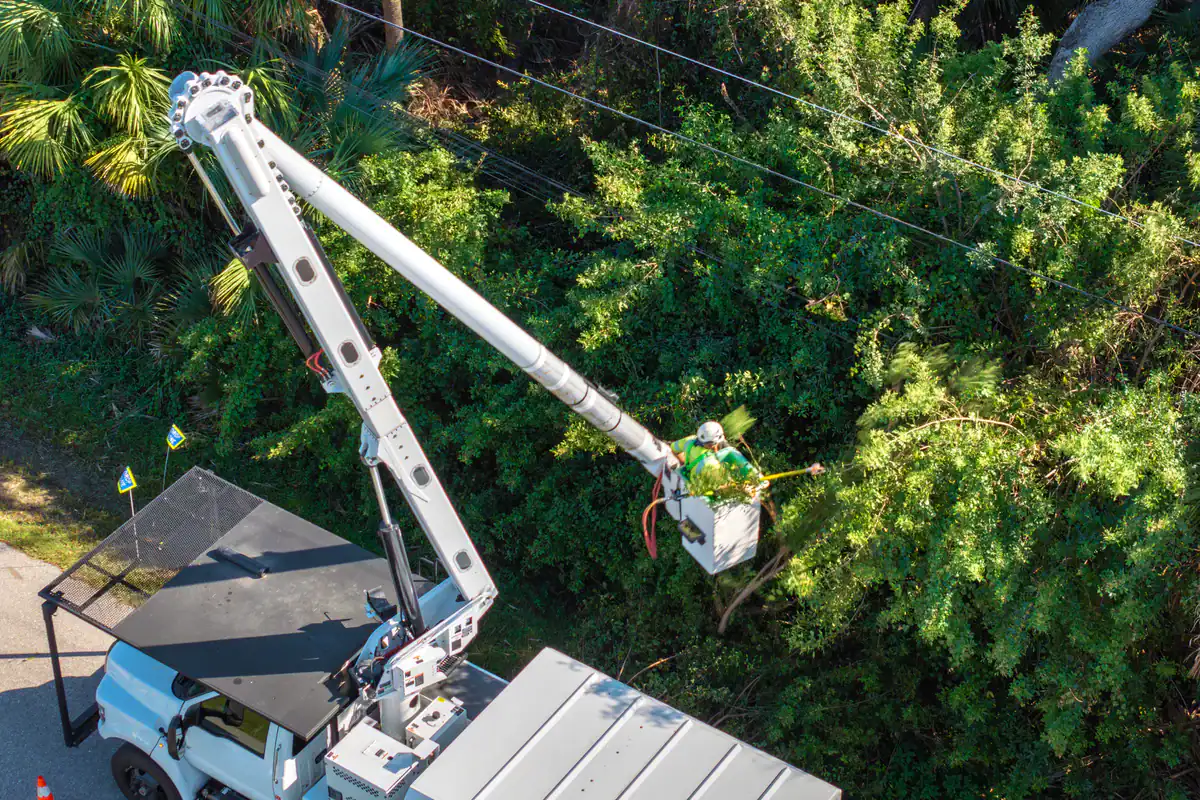
We handle the full range of residential tree care needs in Parkville. Tree removal covers everything from storm-damaged trees and dead wood to hazardous trees on hillside lots that have been flagged as a structural risk. Tree trimming and pruning keeps healthy trees shaped and safe — done correctly, not just cut back to whatever is convenient. There’s a real difference between proper pruning for long-term tree health and a rough trim that leaves a tree more vulnerable than before, and in Parkville’s heavily wooded neighborhoods, that difference shows.
Stump grinding is available as a separate service after removal, which is worth knowing upfront — stumps don’t disappear on their own, and leaving one behind can attract pests and create a tripping hazard on a sloped yard. Land clearing is also available for homeowners dealing with overgrown lots or properties being prepared for new construction. If you’re not sure what you’re dealing with, a tree health assessment gives you a clear, honest answer about what the tree actually needs — whether that’s treatment, trimming, or removal.
Parkville’s spring and summer storm seasons are the busiest time for emergency calls, and we offer same-day visits for urgent situations. The Missouri River corridor that runs through this area channels severe weather in ways that can produce 70 mph wind gusts and significant tree damage with very little warning. Having a crew that answers the phone and shows up quickly — not three days later — is the difference between managing a situation and letting it get worse.
For most private residential properties in Parkville, Missouri does not require a state-level permit to remove a tree on your own land. You generally have the right to remove trees on your private property without going through a permitting process.
That said, there’s an important exception: if the tree is located near or within the city’s right-of-way — which can apply along Route 9, Route 45, or other public corridors in Parkville — you’ll need a right-of-way permit from the City of Parkville before any work is performed. Parkville Municipal Code Chapter 515 governs this specifically. Additionally, Parkville’s site and landscape design standards require property owners to maintain their landscaping, including the removal of dead, dying, or diseased plant material.
If you’re in a development where a tree was credited as part of a landscape plan, replacement requirements may also apply. When you get a quote from us, our crew will flag any permit or coordination considerations specific to your property before work begins.
Most homeowners aren’t tree experts, and that’s completely normal. The honest answer is that some warning signs are obvious — a tree that’s visibly leaning after a storm, large dead branches hanging over a structure, or fungal growth at the base — and some aren’t. Internal decay, root damage, and structural compromise often don’t show from the outside, which is why a professional assessment matters more than a visual guess from the ground.
In Parkville specifically, hillside lots add a layer of complexity. A tree that looks stable on a flat yard might have a root system that’s working against gravity on a sloped lot. Over time, seasonal soil movement on bluff terrain can shift a tree’s anchor in ways that aren’t visible until something triggers a failure. If you’re in a neighborhood like Thousand Oaks or River Hills Estates and you’ve got a large mature tree on a slope near your home, it’s worth having someone take a look — not to sell you a removal, but to give you an honest read on where things stand.
We’ll assess the tree on-site and tell you straight: remove it, trim it, or leave it alone.
These two terms get used interchangeably, but they’re not quite the same thing. Trimming is primarily about shaping — keeping a tree’s growth in check for appearance and clearance purposes. Pruning is more targeted: it’s the selective removal of specific branches to improve the tree’s health, structure, or safety.
Done correctly, pruning removes dead or diseased wood, improves air circulation through the canopy, and reduces the weight load on branches that might otherwise fail in a storm. In Parkville’s heavily wooded neighborhoods, improper trimming is actually a real risk. Topping a tree — cutting it back to stubs without regard for its natural structure — is a common mistake that leaves the tree more vulnerable to disease, pest infestation, and storm damage, not less.
A tree that’s been topped in a community like The National or Riss Lake, where HOA standards apply and property values are high, can become both an aesthetic and a structural problem over time. We approach trimming and pruning with the tree’s long-term health in mind, not just what’s quickest on the day of the job.
Stump grinding is a separate service from tree removal — it’s not automatically included, and this is something a lot of homeowners don’t find out until after the tree is already down. Once a tree is removed, the stump that’s left behind doesn’t disappear on its own. It can take years to decay naturally, and in the meantime it can attract insects, produce new shoots, and create a tripping hazard on uneven terrain.
On a sloped Parkville lot — the kind you’d find in River Hills Estates or on the bluffs above the Missouri River — a stump on a hillside is a more significant obstacle than one on flat ground. It affects mowing, landscaping, and the overall usability of the yard. We offer stump grinding as an add-on service, and it’s worth discussing during your free quote so you can make a decision before the crew wraps up the removal. If you want the stump gone the same day, that can typically be arranged. The quote will be clear about what’s included and what isn’t — no surprises after the fact.
The two non-negotiables are licensing and insurance. Missouri requires an occupational license for tree service companies, and any crew working on your property should carry both liability insurance and workers’ compensation coverage. This isn’t a technicality — if an uninsured worker is injured on your property, you can be held liable. In a market like Parkville, where home values are in the $630,000 to $700,000 range, that’s a risk that simply isn’t worth taking to save a few dollars on a quote.
Beyond the basics, look at reviews — not just the star rating, but what people actually say. Speed of response, cleanup quality, and whether the crew communicated clearly throughout the job are the things that show up in real reviews from real customers. Be cautious of door-to-door solicitors, especially after a storm rolls through Platte County. Storm chasers and unlicensed operators are a documented problem in the Kansas City, KS & MO metro after severe weather events, and they tend to target exactly the kind of heavily wooded neighborhoods Parkville has. A reputable company has a local address, a verifiable track record, and won’t pressure you to sign anything on the spot.
Parkville sits directly on the Missouri River corridor, which concentrates and channels severe weather in ways that can produce sudden, significant damage. Documented severe thunderstorm warnings for the area have included 70 mph wind gusts with official alerts explicitly noting to expect considerable tree damage. When that kind of storm moves through a heavily wooded community like Parkville — through Thousand Oaks, along the Route 9 corridor, or across the bluff neighborhoods above the river — the calls start coming in fast.
We offer same-day visits for emergency situations. The typical response after an initial inquiry is within 24 hours, and for urgent storm-damage calls, our crew works to get out the same day. The key advantage of working with a local Kansas City, KS & MO area company rather than a regional chain is exactly this: there’s no dispatch queue, no call center routing your request to whoever is available three counties over. We know the Northland, know Parkville’s terrain, and can move quickly when the situation calls for it.
If a tree has come down on a fence, is blocking access, or is leaning against a structure after a storm, call as soon as it’s safe to do so — the sooner the assessment happens, the sooner the situation gets resolved.
Other Services we provide in Parkville