A dead or hazardous tree in North Kansas City Metropolitan Area, MO isn’t just a problem for your yard. In a city that covers 4.6 square miles and packs over 900 businesses alongside residential streets, your tree is almost always close to something — a fence, a driveway, a commercial parking lot, a power line running along Armour Road.
When it comes down on its own terms, it rarely lands somewhere convenient. Getting it removed before that happens means you’re not filing an insurance claim, you’re not calling a neighbor to apologize, and you’re not dealing with the kind of damage that a standard homeowners policy may not even cover.
If a tree was visibly dead or declining and you knew about it, your insurer can deny the claim on negligence grounds. That’s a real clause that catches homeowners off guard every year.
North Kansas City Metropolitan Area, MO also sits on the north bank of the Missouri River, in low-lying terrain that sees serious storm exposure. Spring systems track northeast through the river corridor and hit the Northland hard. When the ground gets saturated and the wind picks up, even a tree that looked stable last summer can go. Taking care of it now, on your schedule, is almost always easier — and cheaper — than dealing with the aftermath.
We’ve been doing this work in the Kansas City Metropolitan Area, MO metro for over ten years, and we’re based right here in North Kansas City Metropolitan Area, MO — not a franchise, not a regional chain routing calls through a call center. When you reach out, you’re talking to people who know the Northland, know the Missouri River corridor, and have worked in neighborhoods where tight clearances and mature trees make every job more complicated than it looks on paper.
We’re fully licensed and insured — liability coverage and workers’ compensation both. That matters more than most people realize. If an uninsured worker gets hurt on your property, the liability can fall on you. We carry the coverage so that’s never your problem.
Every job ends with a full cleanup. No wood piles left in your driveway, no debris scattered across your lawn. If you want to keep the wood or the mulch, just say so upfront — otherwise, it all goes with us.
It starts with a free on-site estimate. We come out, look at the tree, and give you a straight answer — what it needs, what it’ll cost, and whether full removal is actually necessary or if a strategic trim would solve the problem. No upsell, no pressure. If a trim gets the job done, that’s what you’ll hear.
Once you’re ready to move forward, scheduling is fast. We’ve had customers receive estimates within 24 hours and work completed the following day. In a city like North Kansas City Metropolitan Area, MO — where a dead limb hanging over a shared fence line or a storm-damaged tree leaning toward a neighbor’s property can escalate quickly — that turnaround matters.
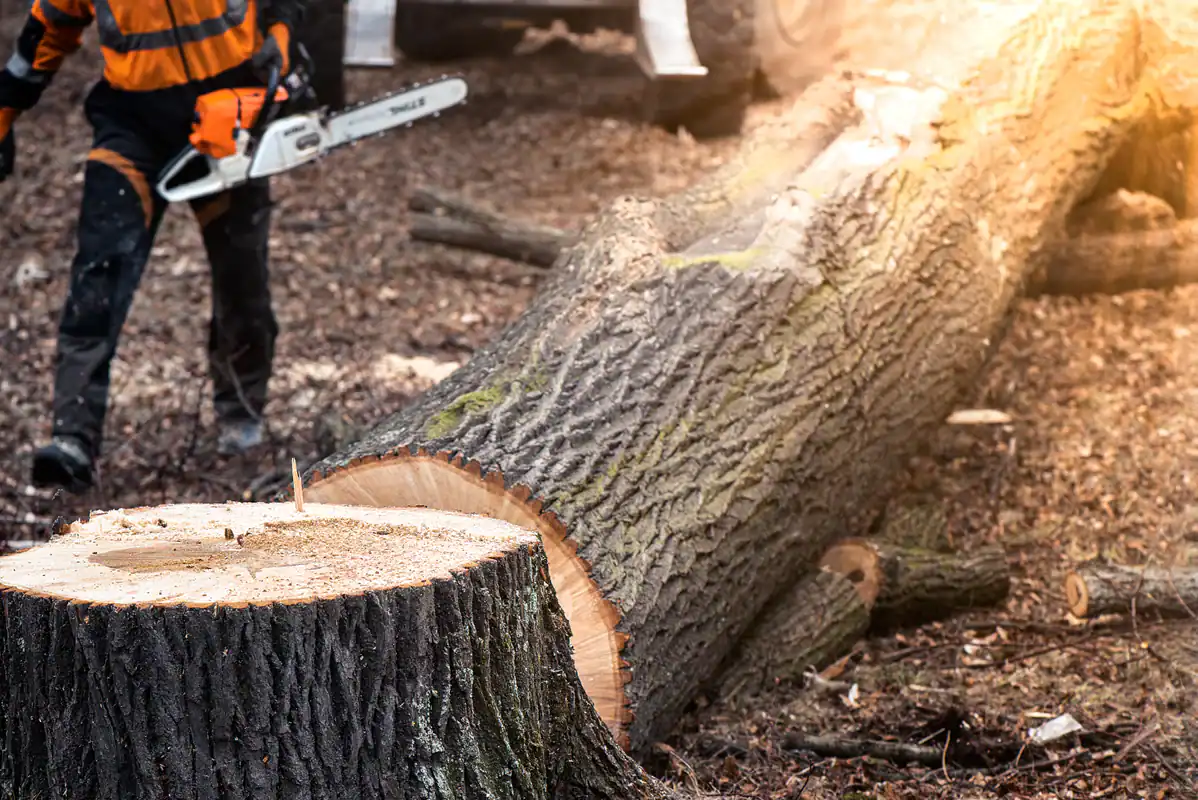
On the day of the job, we work through the removal methodically. Large trees in tight spaces get taken down in sections, not all at once. This is especially relevant in North Kansas City Metropolitan Area, MO’s older residential blocks, where homes are close and there’s little margin for error. If your property is near a commercial corridor, utility infrastructure, or the kind of compact lot that’s common throughout the city, we’ve handled it before.
Once the tree is down, everything gets cleaned up — debris, branches, wood — before we leave. If you’re keeping anything, it gets stacked. If not, it goes.
It’s also worth knowing that North Kansas City Metropolitan Area, MO maintains its own Code of Ordinances as an independent municipality. If your tree is in or near the public right-of-way, it’s worth a quick call to City Hall at 2010 Howell Street before work begins to confirm whether a permit is required. We can walk you through what typically applies.
Ready to get started?
We handle the full range of residential and commercial tree work in North Kansas City Metropolitan Area, MO. Dead tree removal, diseased tree removal, hazardous tree removal, large tree removal — if it needs to come down, we’re equipped to do it safely. We also handle stump grinding, brush removal, and tree trimming for situations where removal isn’t the right call.
In North Kansas City Metropolitan Area, MO specifically, a few things come up more than others. The Missouri River floodplain environment means the area sees silver maples, cottonwoods, and willows with aggressive root systems that can invade sewer laterals, crack older foundations, and lift sidewalks — all common issues in a city with aging housing stock.
Diseased trees are another recurring concern: the Kansas City Metropolitan Area, MO metro deals with Emerald Ash Borer, Oak Wilt, and Bagworm pressure, and once those take hold, removal is usually the only realistic path forward.
For large tree removal near structures — homes, fences, the commercial buildings that sit right alongside residential lots throughout North Kansas City Metropolitan Area, MO — we take a sectional approach that keeps the work controlled and the surrounding property protected. This isn’t the kind of job where you want the cheapest quote you can find. It’s the kind of job where you want a crew that’s done it in tight spaces, carried the right insurance, and left the property clean when it was over.
North Kansas City Metropolitan Area, MO is an independent municipality with its own Code of Ordinances — separate from Kansas City Metropolitan Area, MO — so the rules here are specific to the city. Whether a permit is required depends on where the tree is located.
If it’s on private property and not within the public right-of-way, removal typically doesn’t require a permit. But if the tree is in or near the street right-of-way, close to utility easements, or on a commercial parcel, it’s worth confirming with the city directly before any work starts. City Hall is at 2010 Howell Street, and the main line is 816-274-6000.
The safest move is to ask before you assume. We can help you think through what applies to your specific situation during the estimate visit. Most residential removals on private property in North Kansas City Metropolitan Area, MO move forward without a permit, but it only takes a quick call to be sure — and it’s better to know upfront than to deal with a compliance issue after the fact.
This is one of the most common questions, and the honest answer is that it depends on what’s actually going on with the tree. A tree that’s structurally sound but overgrown, or one that has a few dead branches, can often be addressed with a proper trim. If less than about 25% of the branches are damaged or dead, the tree has a reasonable chance of recovering with the right pruning.
Where removal becomes necessary is when the tree is dead, when disease has taken over the majority of the structure, when the root system is compromising your foundation or sewer line, or when the tree is leaning toward a structure in a way that creates real hazard.
In North Kansas City Metropolitan Area, MO, where homes and commercial properties sit close together and mature trees are common throughout the older residential blocks, a tree that’s been declining slowly can reach a tipping point faster than homeowners expect — especially after a wet spring or a storm season on the Missouri River corridor. We give you a straight assessment on-site. If a trim solves it, that’s what you’ll hear. If removal is the right call, we’ll explain exactly why.
It depends on the circumstances. If a tree falls and damages a covered structure — your roof, your fence, your garage — most homeowners policies will contribute to removal costs, typically somewhere in the range of $500 to $1,000 for the removal itself, with the structural damage covered separately.
But there are important exceptions that catch people off guard. If the tree was already dead, visibly diseased, or leaning dangerously and you hadn’t taken action, your insurer can deny the claim on the basis of negligence. The argument is that you knew — or should have known — the tree was a risk, and you didn’t address it. That clause is real, and it applies.
In a city as compact as North Kansas City Metropolitan Area, MO, where your tree is often within feet of a neighbor’s fence or a shared driveway, this isn’t a remote scenario. Proactive removal is almost always the financially smarter move compared to the cost of a denied claim and out-of-pocket repairs.
For a straightforward removal — a single tree on a residential lot with reasonable access — most jobs are completed in a single day, including cleanup. A smaller tree under 30 feet can take two to four hours. Larger trees, or removals that require sectional work because of proximity to a structure or property line, can take a full day or run into the following morning depending on complexity.
In North Kansas City Metropolitan Area, MO, the compact lot sizes and mixed residential-commercial environment mean a higher percentage of jobs involve some level of tight-clearance work. A tree that’s close to a fence line, overhanging a shared driveway, or near a commercial building on Armour Road takes more time and more care than a tree on a wide suburban lot.
Our turnaround from first contact to completed job is consistently fast. Multiple verified customers have received an estimate within 24 hours and had the work finished the following day. For urgent situations — storm damage, a leaning tree after a heavy rain — that response time is one of the most important things a tree service can offer.
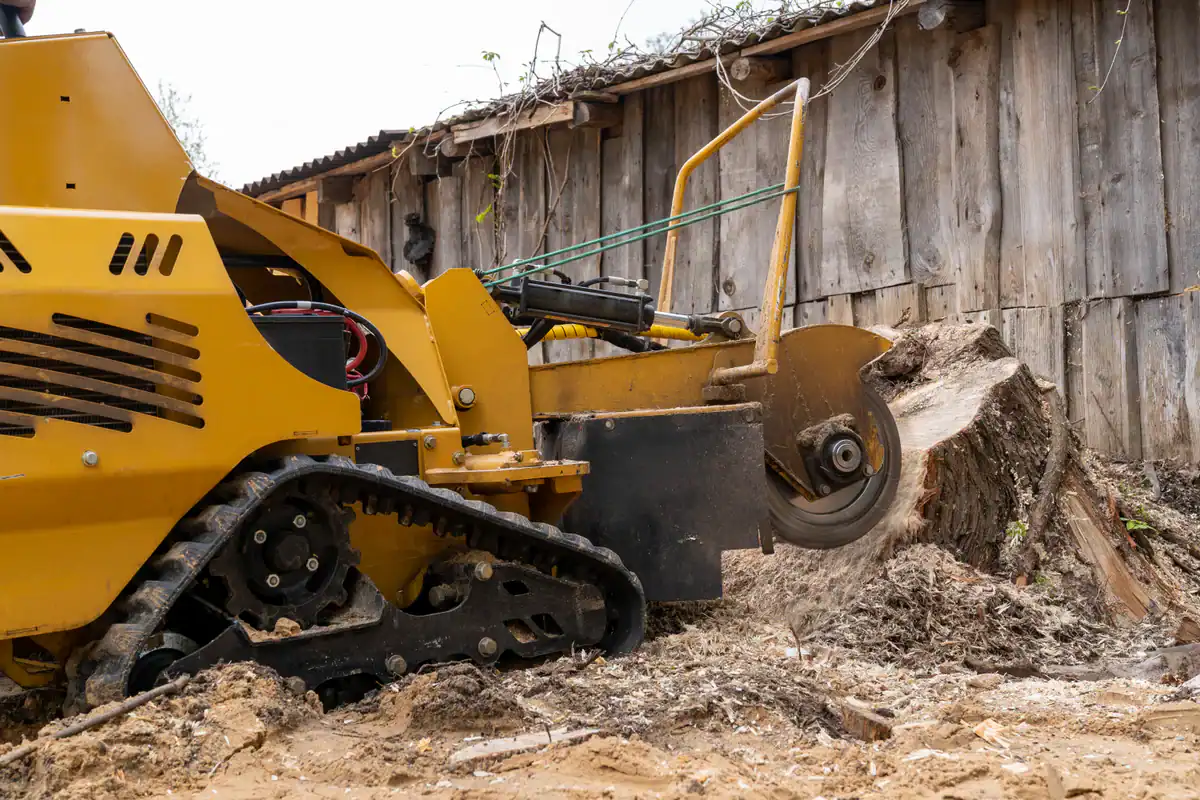
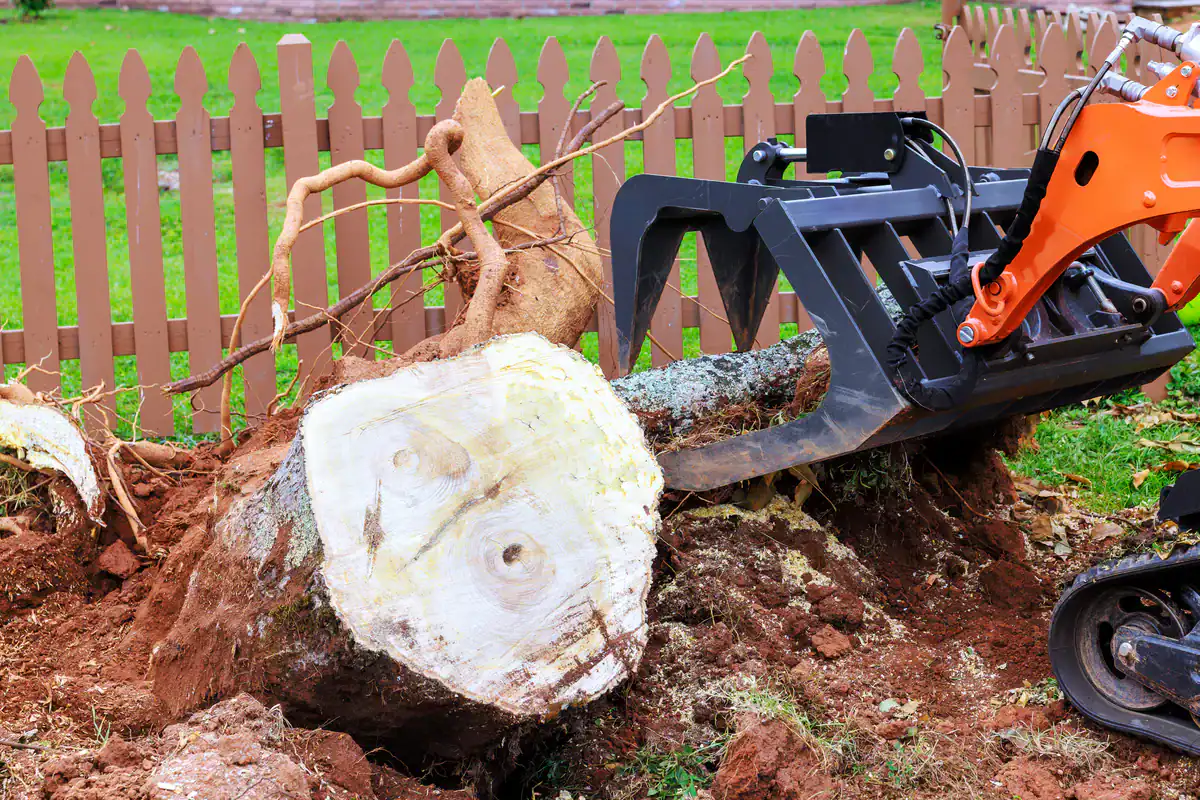
Stump removal is a separate service from tree removal, and it’s worth thinking through before the job starts. When a tree comes down, you’re left with a stump and the root system below grade. Left alone, stumps can take years to fully decompose, they can attract insects, and they create obstacles in your yard — especially in smaller residential lots where space is already limited.
Stump grinding is the most common solution. A grinder reduces the stump to wood chips below the surface grade, which can then be raked out or left to decompose in the soil. In North Kansas City Metropolitan Area, MO’s older neighborhoods, where silver maples and cottonwoods are common and their root systems can be extensive, grinding is typically the practical and cost-effective approach.
If you want the area fully restored — especially for a property near a commercial corridor or one you’re preparing to sell — full stump and root removal is an option, though it’s more involved. Talk through what makes sense for your specific situation during the estimate. We’ll give you an honest read on what’s actually worth doing.
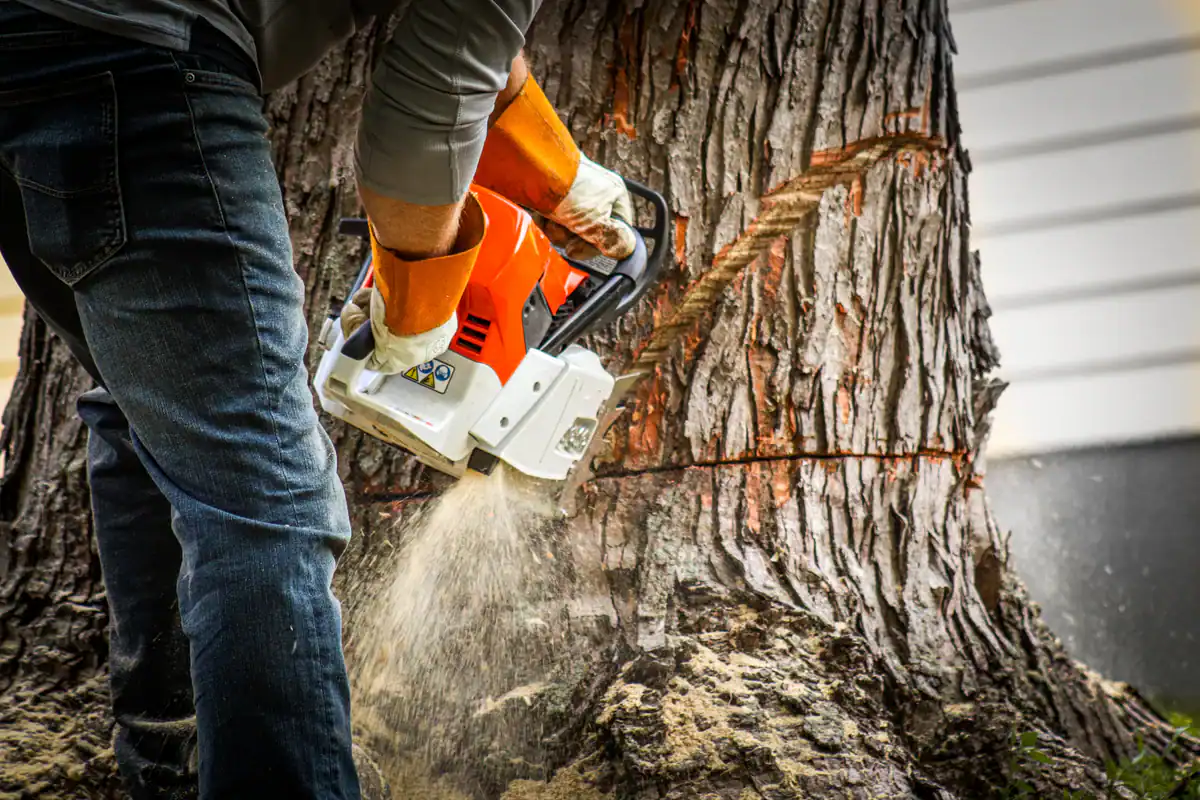
Yes — when it’s done by a crew that knows what they’re doing. Large tree removal near structures is one of the more technically demanding jobs in this line of work, and the difference between a clean result and a costly mistake comes down to experience and process. The right approach is sectional removal: taking the tree down in controlled pieces from the top, rather than felling it in one direction.
North Kansas City Metropolitan Area, MO’s residential environment makes this scenario common. The city’s compact footprint means trees near homes, fences, shared driveways, and commercial buildings are the norm — not the exception. We’ve handled exactly these kinds of removals in dense neighborhoods throughout the Kansas City Metropolitan Area, MO metro, and verified customer reviews specifically call out safe, clean work in tight residential settings without damage to neighboring properties.
We’re fully insured — both general liability and workers’ compensation — which means if something unexpected does happen, you’re covered. That’s the baseline you should require from any tree service working this close to your home. An uninsured crew working near your house or your neighbor’s fence is a financial risk that isn’t worth taking, regardless of how low the quote is.
Other Services we provide in North Kansas City Metropolitan Area, MO