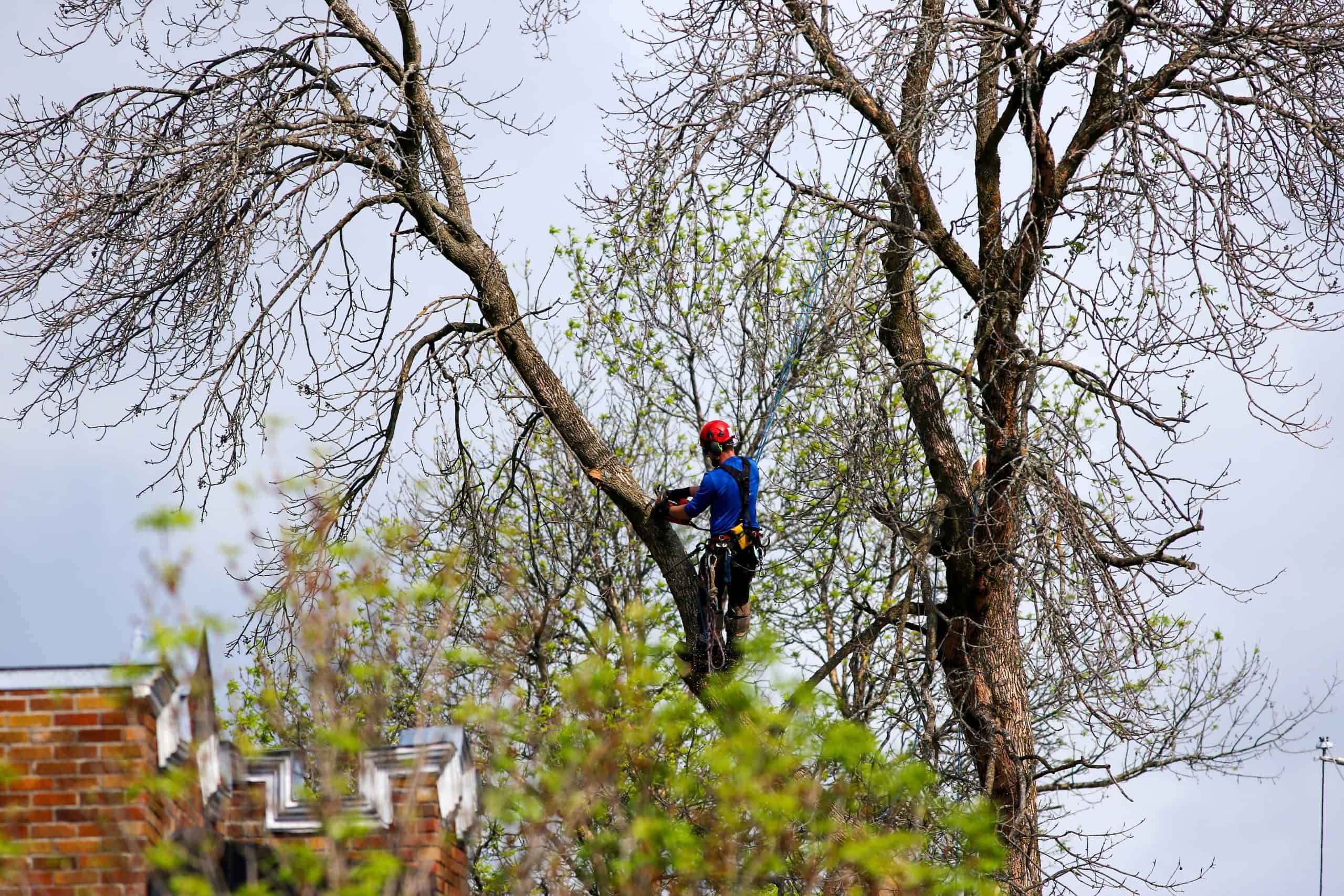
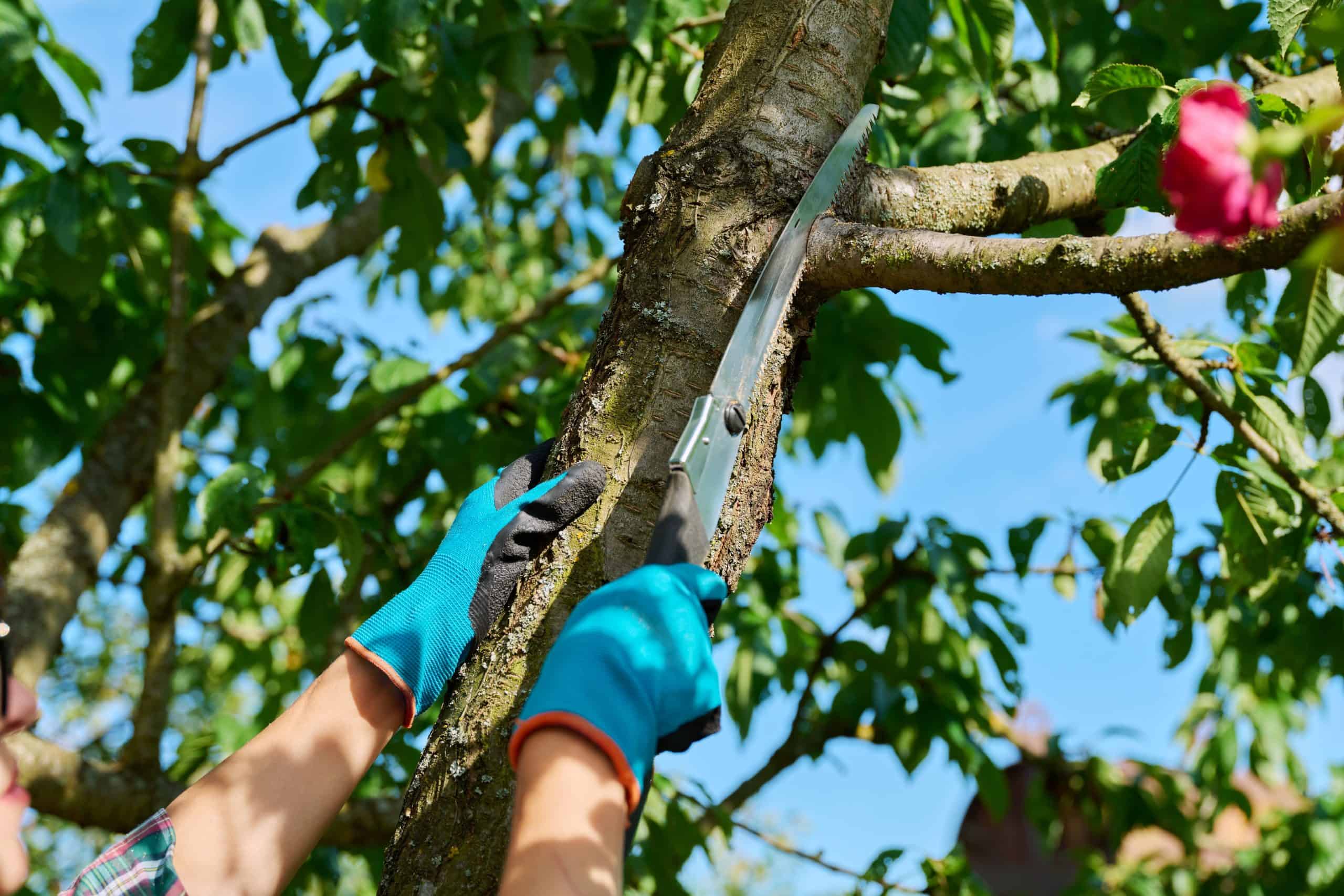
When you’re sitting on a large lot with mature trees — the kind Edwardsville is known for — untrimmed canopies aren’t just an eyesore. They’re a liability. Overgrown branches that hang over a roofline or push against a fence line get heavier every season. And when a spring storm rolls through Wyandotte County, which it will, those branches don’t ask permission before they come down.
Getting your tree canopy trimmed properly means your property stops being a risk and starts being what it’s supposed to be — land you actually enjoy. Dead limbs get removed before they fall. Overgrowth gets shaped back so your trees stay structurally sound for years, not just looking better for a week. You get clearance where you need it, airflow through the canopy, and the kind of visibility around your property that makes a difference when you’re backing out of a long driveway or watching where kids are playing.
For properties near the Kansas River corridor, there’s another layer to this. Seasonal flooding stresses root systems in ways you can’t always see from the ground. That stress works its way up into the limbs over time, making branches brittle and more likely to fail under wind load. A professional trimming assessment catches that early — before a compromised limb becomes a compromised roof or fence.
We’re a family-owned, fully insured tree care company based in Kansas City, KS & MO, KS — the same Wyandotte County as Edwardsville. That’s not a technicality. It means the crew that shows up at your property knows this part of Kansas, knows the properties here, and isn’t making a long haul from Johnson County to get to you.
With over 10 years of experience working across the Kansas City, KS & MO metro, our team has handled everything from single-tree trimming jobs in tight backyard spaces to multi-tree, large-lot work on acreage properties — exactly the kind of work that’s common in Edwardsville. We’ve managed more than 1,200 trees with a 100% safety record to go with it.
The work is straightforward: show up on time, assess the job honestly, do it right, and leave the property clean. No piles left behind, no shortcuts, no inflated quotes. If you want to keep the wood or mulch, that’s your call. If you want it gone, it’s gone.
It starts with a free on-site quote, and for most Edwardsville homeowners, that happens the same day you call. We come to your property, walk the job, and look at what’s actually there — not what you described over the phone. On a large lot with multiple mature trees, that walkthrough matters. A phone estimate on a property like this is just a guess, and guesses lead to surprises on the invoice.
During the assessment, we identify which branches need to come down for safety, which areas of the canopy need thinning for long-term tree health, and whether any limbs are showing signs of stress or disease. If your property is in one of the newer developments like The Groves — where you bought a wooded lot and you’re still figuring out what you’ve got — this first visit is especially useful. You’ll walk away knowing what’s healthy, what’s hazardous, and what the city’s tree ordinance actually requires of you as a property owner.
Once the quote is accepted, we handle the trimming, cleanup, and a final walkthrough with you before we leave. Everything that came down is cleared from your property. The work is done in a single visit whenever possible, so you’re not waiting around for a second crew to come finish what the first one started.
Ready to get started?
Tree trimming in Edwardsville covers more ground than a standard suburban job — because the properties here aren’t standard suburban. Whether you’re dealing with a canopy that’s grown over a structure, low-hanging limbs blocking a long driveway, branches crossing a fence line onto a neighbor’s acreage, or a tree that took storm damage along K-32, we scope the work to what your specific property actually needs.
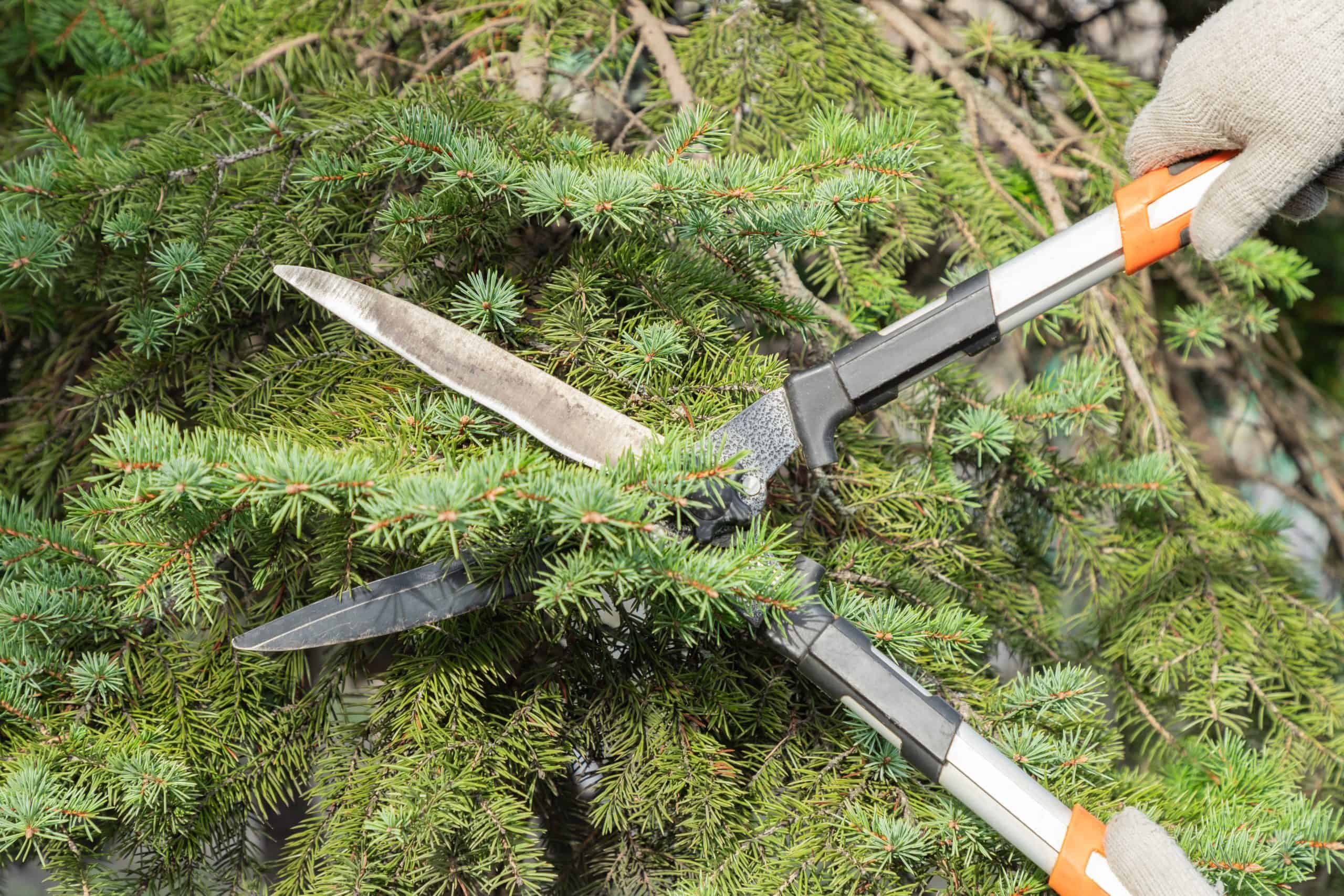
Our services include tree branch trimming and dead limb removal, overgrown tree trimming to bring canopies back to a manageable size, tree shaping for younger trees that need structural guidance early, and canopy raising to clear sightlines, improve light under large shade trees, and create usable space beneath the canopy. If you’ve got trees near the house that are overhanging the roofline or pushing against gutters, that gets addressed as part of the trimming scope — not as an add-on.
Cleanup is included every time, no exceptions. Every branch, every chip, every piece of debris that comes off your trees gets cleared before we leave. Wyandotte County homeowners dealing with large-lot cleanup after a trimming job know how significant that is — it’s not a small thing when you’re talking about acreage. If you want to keep the wood for firewood or the chips for mulch, just say so. Otherwise, it leaves with us.
Edwardsville has a tree ordinance on the books that regulates tree removal, and the city’s code places the responsibility for removing dead, diseased, or dangerous trees squarely on the property owner. If a tree on your property poses a safety risk and you don’t address it, the city has the right to step in and handle it — and bill you for it.
For routine trimming of branches that aren’t being fully removed, permit requirements are generally less involved than for full removal. That said, if you’re on one of the newer acreage developments like The Groves and you’re clearing trees as part of establishing your property, it’s worth confirming with Edwardsville City Hall whether your specific scope of work requires a permit before you start. We can help you understand what you’re looking at during the on-site assessment, so you’re not going in blind.
For most deciduous trees — the oaks, elms, maples, and cottonwoods common across Wyandotte County properties — late winter is the best window. Trees are dormant, sap isn’t actively flowing, and you can see the full branch structure clearly without leaves in the way. That visibility matters on a large lot where you’re trying to identify dead limbs, crossing branches, or weak unions that need to come out.
Trimming during dormancy also reduces the risk of attracting insects or introducing disease through fresh cuts, which is a real concern in spring and summer. That said, if you’ve got a hazardous limb that came down in a storm or is actively threatening a structure, timing goes out the window — that’s an immediate job regardless of the season. We offer same-day emergency response for exactly that situation.
The honest answer is that most homeowners can’t tell from the ground, and that’s not a knock — it’s just the reality of looking up at a 40-foot canopy without a trained eye. What you can watch for: dead branches that don’t leaf out in spring, limbs that are visibly cracked or hanging at an odd angle, branches rubbing against each other or crossing through the center of the canopy, and any growth that’s getting close to your roofline, gutters, or power lines.
On large-lot Edwardsville properties, there’s an additional factor worth knowing about. Trees near the Kansas River corridor can experience root stress from seasonal flooding that isn’t visible until it shows up as limb dieback or unusual leaf drop. If your property is in a lower-lying area or close to drainage channels, that’s worth flagging during an assessment. A free on-site quote from us is also a practical look at what your trees actually need — there’s no obligation, and you’ll leave with real information either way.
They’re related, but they’re not the same job. Trimming is primarily about managing size, shape, and clearance — cutting back overgrowth, raising the canopy to clear structures or sightlines, shaping younger trees, and keeping branches from encroaching on rooflines, fences, or neighboring property. It’s the work you do to keep a tree from becoming a problem.
Pruning is more targeted at tree health and structure. It focuses on removing dead, diseased, or damaged branches, eliminating crossing limbs that create friction and wound points, and improving airflow through the canopy to reduce disease pressure. In practice, a professional trimming visit usually involves both — you don’t raise a canopy without also addressing dead wood, and you don’t prune for health without considering how the tree looks and where it’s heading structurally. We handle both as part of a standard trimming job, so you’re not paying for two separate visits to get the full picture.
Most homeowners in the Kansas City, KS & MO metro pay somewhere between $300 and $900 per tree for professional trimming, with the national average sitting around $460. Smaller trees under 25 feet tend to run $150 to $250. Medium trees in the 25 to 50 foot range typically fall between $250 and $500. Large trees over 50 feet can run $500 to $1,500 or more depending on the scope.
What moves the price around is straightforward: the size and species of the tree, how many trees are being done in one visit, how accessible the canopy is, and whether any branches are near structures, fences, or power lines. On Edwardsville’s large-lot properties, multi-tree jobs are common, and doing several trees in one visit is more efficient than scheduling them separately — which usually works in your favor on the overall cost. We quote every job in person, for free, so you know exactly what you’re looking at before anything starts.
Yes — and not just in the general “we serve the Kansas City, KS & MO metro” sense. We’re based in Kansas City, KS & MO, KS, which puts us in the same Wyandotte County as Edwardsville. Our crew works this part of Kansas regularly and is familiar with the kind of properties here: large lots, acreage-scale parcels, mature trees without HOA oversight, and the storm exposure that comes with being in western Wyandotte County.
That matters practically. A crew that’s worked large-lot Wyandotte County properties knows the difference between trimming a single backyard tree in a tight suburban yard and managing a multi-tree canopy on an acre or more. We also understand the seasonal storm patterns here, the flood-stress factors near the Kansas River, and what Edwardsville’s tree ordinance requires of property owners. If you’re newer to the area — whether you just moved into The Groves, Highland Ridge, or anywhere else in town — that local familiarity is worth something when you’re trusting someone to work overhead on your property.
Other Services we provide in Edwardsville