There’s a well-known piece of local lore in Tonganoxie — the idea that storms tend to split around town, that the terrain and Hubbel Hill offer some kind of natural protection. For generations, people have believed it. And for a long time, it felt true.
But the EF1 tornado that the National Weather Service confirmed near Tonganoxie in April 2026 didn’t split. It came down just west of US-24, split a massive tree in half, took out a barn, and damaged a family’s home. The homeowner said it herself: “The lore is it’s the Tonganoxie Split. So it’s very rare that a tornado comes through this town.”
The lore never protected individual trees. A dead tree doesn’t need a tornado to come down — straight-line winds, ice loading, or a root system compromised by Leavenworth County’s heavy clay soil can do the job on a calm day. If there’s a tree on your property that’s been leaning, dropping limbs, or showing signs of decay, the question isn’t whether it’ll eventually fall. It’s whether it falls on your roof, your fence, or your neighbor’s property.
Once a hazardous tree is down and cleared, that anxiety goes away. You stop watching it every time the wind picks up. Your home is protected. Your yard is usable again. And if you’re on one of the rural acreage tracts outside the Tonganoxie city center — where mature cottonwoods and oaks have been growing along Stranger Creek for decades without ever being assessed — getting a straight answer about which trees are actually dangerous is worth more than any landscaping upgrade you could make.
We’re a family-owned, fully insured tree service based in Kansas City, KS & MO, Kansas, and we’ve been working in Tonganoxie and Leavenworth County for over ten years. We’re raised in Kansas, work in Kansas, and treat every property like it belongs to someone we know — because it usually does.
What sets us apart from the average local operator isn’t just experience — it’s the kind of experience that actually matters. We’ve deployed to storm recovery operations across multiple states, which means when a storm rolls through Tonganoxie and you’ve got a split oak over your driveway or a root ball lifting out of clay soil near your foundation, we’re not figuring it out as we go.
We’ll tell you honestly whether a tree needs to come down or whether a strategic trim can solve the problem. That’s just how we operate. No upselling, no scare tactics, no inflated quotes. Just a straight answer from people who’ve seen thousands of trees and know the difference.
It starts with a free on-site estimate. We come out, look at the tree, and give you an honest assessment — what needs to happen, why, and what it’ll cost. No pressure, no obligation. If the tree genuinely needs to come down, we’ll tell you. If a trim can handle it, we’ll tell you that too.
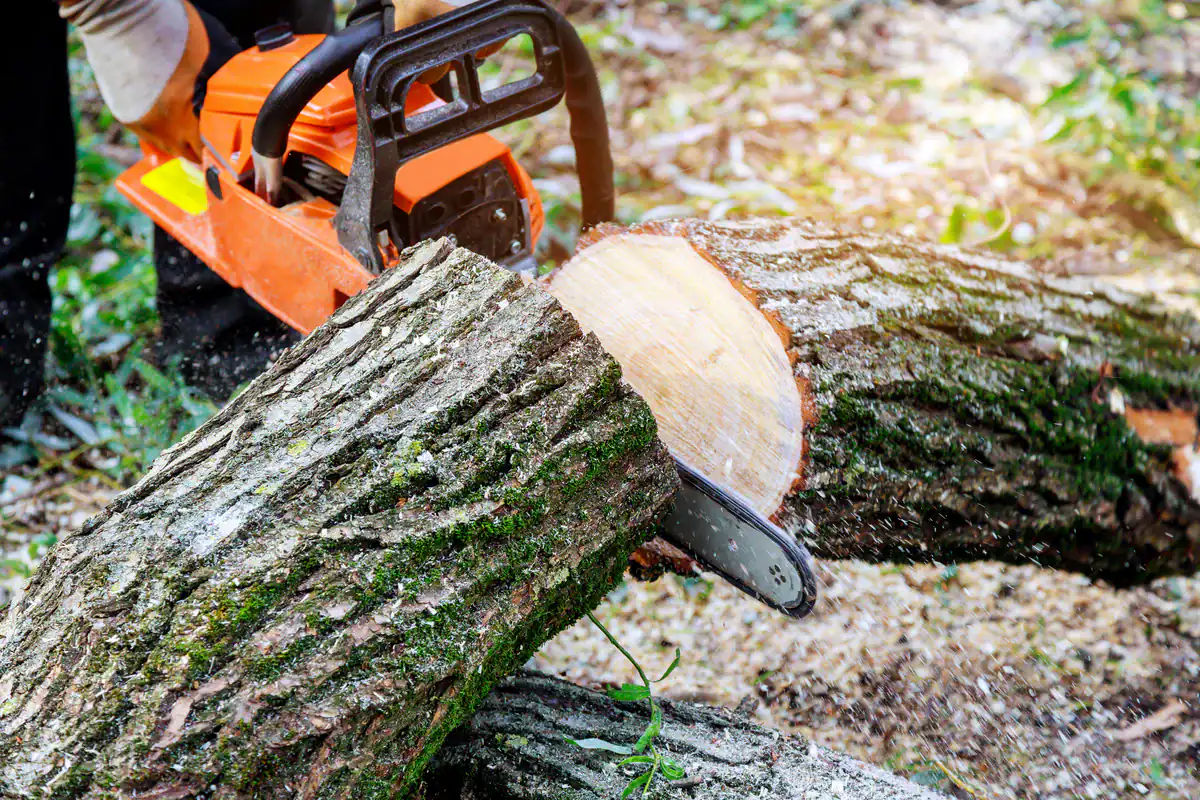
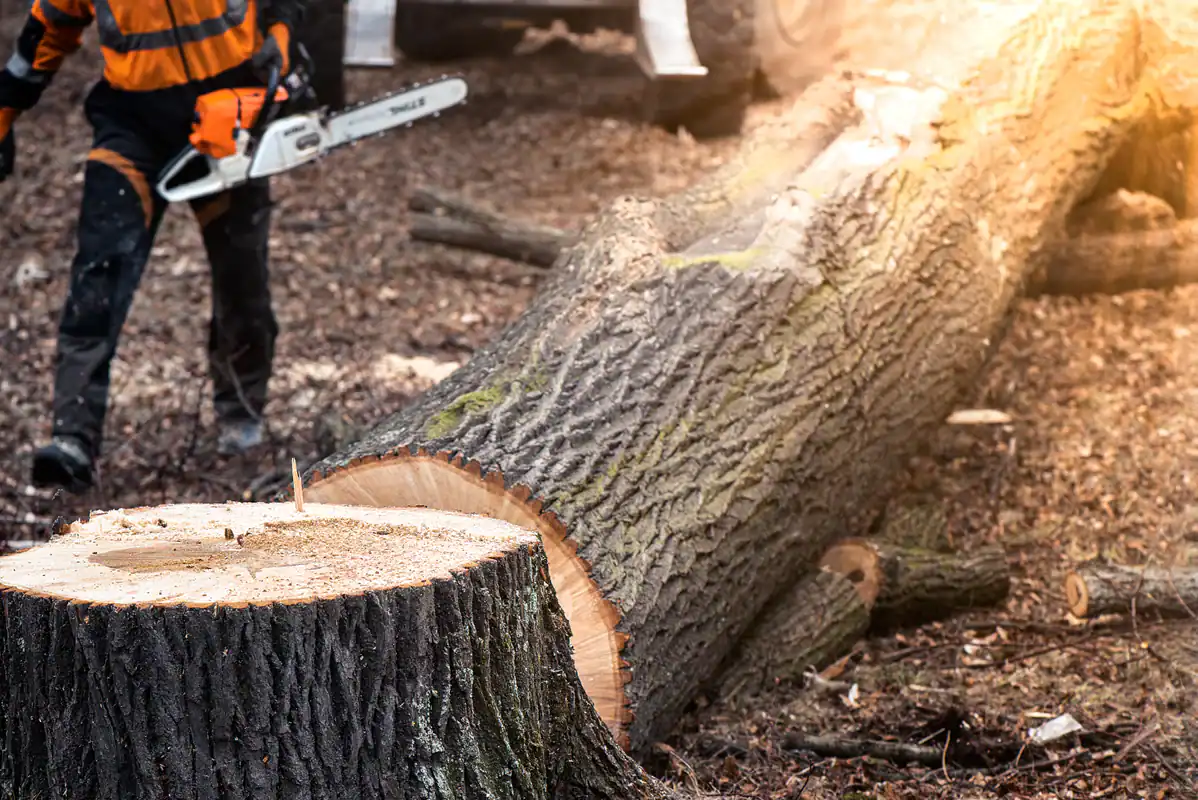
Once you’re ready to move forward, we schedule the job and get it done. For most residential removals in Tonganoxie, that means showing up, safely cutting the tree in sections — working around structures, fence lines, and neighboring properties — and hauling everything out. If you’re on an acreage property outside the Tonganoxie city center, we account for that: open-country access, larger material volumes, proximity to outbuildings or fence lines. It’s not the same job as a subdivision lot removal, and we know that.
One thing worth knowing if your property is within Tonganoxie city limits: the municipal code actually requires that cut-down tree material be immediately removed or treated to prevent disease spread. That’s not a burden with us — full cleanup is included on every job as a matter of course. No piles left behind, no debris scattered across your yard. If you want to keep the wood for firewood or the chips for mulch, just say so before the job starts. Otherwise, the property is clean when we leave. That’s the standard every time, not an add-on.
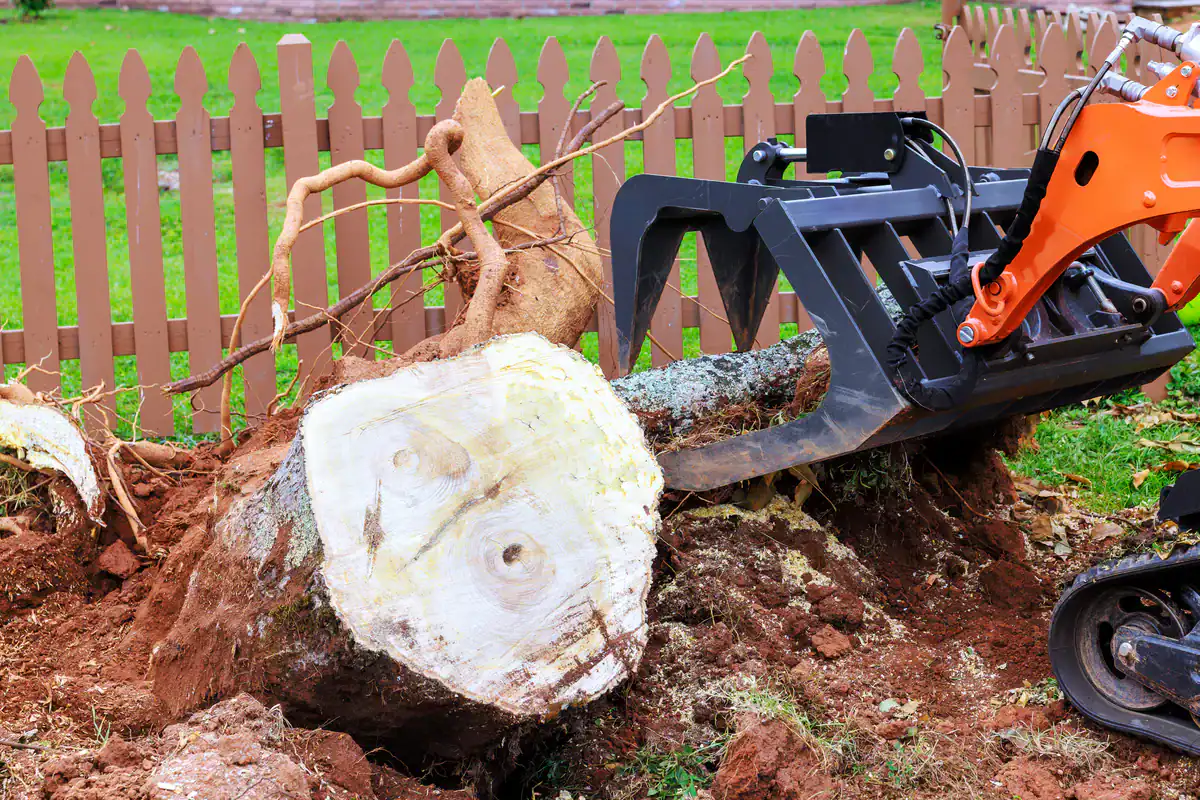
Ready to get started?
Tree removal in Tonganoxie isn’t one-size-fits-all. A dead tree on a newer Highland Meadows subdivision lot is a different job than a mature cottonwood along a creek-adjacent acreage property off K-16. We handle both — residential and commercial, standard lots and large rural tracts, straightforward removals and complex jobs near structures or power lines.
Dead tree removal is one of the most common calls we get. A tree that looks like it’s just dormant in winter can be structurally hollow, and the clay soils common throughout Leavenworth County make root failure more likely than most homeowners realize — roots spread laterally in clay rather than anchoring deep, which means a large tree can tip with less warning than you’d expect.
Diseased tree removal is equally important here, especially with Oak Wilt and Emerald Ash Borer active in the Kansas City, KS & MO metro. A diseased tree left standing doesn’t just become a hazard — it becomes a vector, spreading to the healthy trees around it.
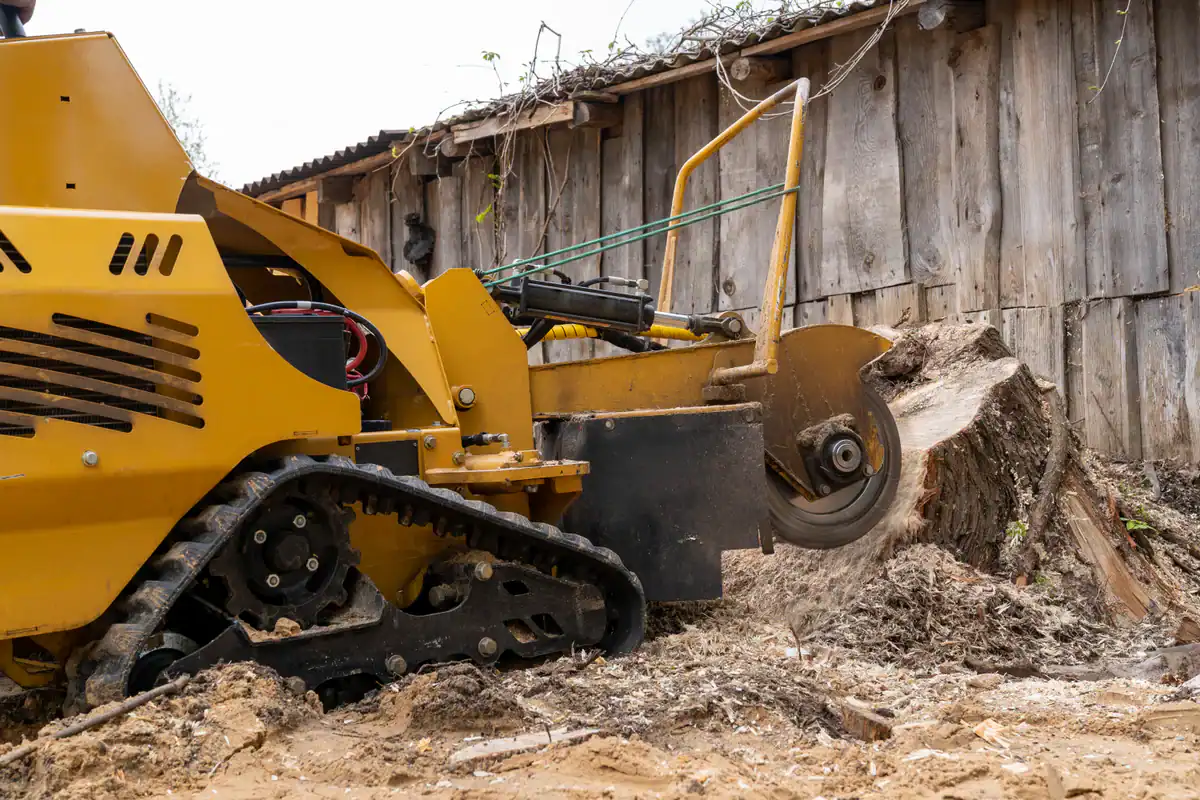
Beyond full removal, we also handle stump grinding, brush removal, and tree trimming for situations where removal isn’t the right call. Every service includes a complete cleanup of all material from the work area. We’re fully insured — liability and workers’ compensation — which matters in Kansas, where there’s no state licensing requirement for basic tree work. Anyone can show up with a chainsaw and call themselves a tree service. Verifying insurance before you hire anyone is the single most important step you can take, and we have it documented.
For most private property tree removals in Tonganoxie, there’s no permit required. However, if the tree is near a public right-of-way or overhanging a street, the city’s municipal code comes into play. Tonganoxie’s tree ordinance (Article 3, Trees and Shrubs) gives the city authority over trees in public rights-of-way, and it places a legal obligation on property owners to prune branches that overhang streets so they don’t obstruct light or traffic. If a tree is so far gone that pruning won’t fix it, removal may be the only compliant option.
There’s also a specific requirement in the Tonganoxie municipal code that cut-down tree material — whether removed by you or by a contractor — must be immediately removed, burned, or otherwise disposed of to prevent the spread of tree disease. This isn’t optional. It’s a legal requirement for in-city removals. Our standard full-cleanup process meets this requirement on every job, so you don’t have to think about it separately.
The honest answer is that it depends on the tree and the situation, and a lot of homeowners — especially those on rural acreage outside the Tonganoxie city center — have trees they’ve never had professionally assessed. Some of the clearest signs that removal is the right call: the tree is dead or more than 50% of its canopy is gone, there’s significant decay or hollow sections in the trunk, the root system is visibly lifting or destabilized, or the tree is leaning toward a structure.
In Leavenworth County specifically, the heavy clay soil means roots spread laterally rather than anchoring deep, which makes large trees more susceptible to wind throw than they would be in sandier soil conditions. That said, not every tree that looks rough needs to come down. If less than about 25% of the branches are damaged or dead, the tree may well recover with proper trimming. We’ll give you a straight answer on this during the free estimate — if a trim can solve the problem, that’s what we’ll tell you.
It depends heavily on the circumstances, and this is one of the most misunderstood things about tree removal. If a healthy tree falls due to a storm — a tornado, straight-line winds, an ice event — most standard homeowners insurance policies will cover the damage to your structure, though coverage for the removal itself is typically capped at $500 to $1,000. That’s often not enough to cover the full cost of removing a large tree from a roof or driveway.
Where it gets complicated is when the tree was already dead, visibly diseased, or leaning before it fell. If your insurer can show that you knew — or reasonably should have known — the tree was a hazard and you didn’t address it, they can deny the claim based on negligence. This applies to damage on your own property and potentially to your neighbor’s property if your tree falls on theirs.
Given that Tonganoxie has a documented history of severe weather, including the April 2026 EF1 tornado, a dead or compromised tree on your property isn’t just an aesthetic problem. It’s a financial liability. Proactive removal is almost always cheaper than the alternative.
For most standard residential removals, the job is done in a single day — often in just a few hours for smaller trees. A large tree, a complex removal near a structure, or a job on a rural acreage property with significant material volume may take longer, but we work efficiently and don’t leave jobs half-finished.
As for the mess — this is one of the things we’re most consistent about, and it shows up in our reviews repeatedly. Full cleanup is included on every job. That means all wood, limbs, and debris are removed from your property when we leave. No piles in the yard, no chips scattered across the lawn, no logs stacked in the corner for you to deal with later. If you want to keep any of the wood for firewood or the chips for mulch — which is a reasonable thing to want, especially on a larger Tonganoxie acreage property — just let us know before the job starts and we’ll set it aside for you. The default is a clean property, full stop.
The terms get used interchangeably sometimes, but they’re not quite the same thing. A dead tree removal is exactly what it sounds like — the tree has died, it’s no longer living, and it needs to come out before it falls on its own. Dead trees lose structural integrity over time as the wood dries and becomes brittle, and they can come down without warning even on calm days.
In Tonganoxie’s climate, where ice storms load branches in winter and severe thunderstorms hit hard in spring and summer, a dead tree is a genuine and immediate risk. A hazardous tree removal is broader — it includes dead trees, but also living trees that pose a structural danger due to disease, root failure, a bad lean, storm damage, or proximity to a structure. A tree can be technically alive and still be hazardous. Oak Wilt and Emerald Ash Borer are both active in the Kansas City, KS & MO metro, and an ash tree in the early stages of EAB infestation may still have leaves while its structural integrity is already compromised. The right question isn’t just “is it dead?” — it’s “does this tree pose a risk to my property, my family, or my neighbors?” That’s what a free on-site assessment from us is designed to answer.
It’s a fair question, and the honest answer is that proximity alone isn’t the right way to choose a tree service. What actually matters is insurance, experience, and a track record of doing the work right. We’re based in Kansas City, KS & MO, Kansas — about 25 to 30 miles from Tonganoxie via US-24/40 — and we’ve been working in the Kansas City, KS & MO metro, including Leavenworth County, for over ten years. We know the clay soil conditions that affect root stability here, the tree species common to northeast Kansas, and the storm patterns that make this part of the state one of the more active severe weather zones in the country.
The bigger differentiator is capability. We’ve deployed to large-scale storm recovery operations across multiple states. That’s not something most small local operators in the Tonganoxie area can say. For a straightforward suburban lot removal, that might not matter much. But for a complex job on a rural acreage property — a large cottonwood near a barn, a storm-split oak close to your foundation, a tree with root failure on clay soil near a fence line — you want a crew that has genuinely seen and handled that kind of work before. Our response time is fast, the estimates are free, and the cleanup is always included. That’s the same standard whether you’re in a Falcon Lakes villa or on a five-acre tract off K-16.
Other Services we provide in Tonganoxie