
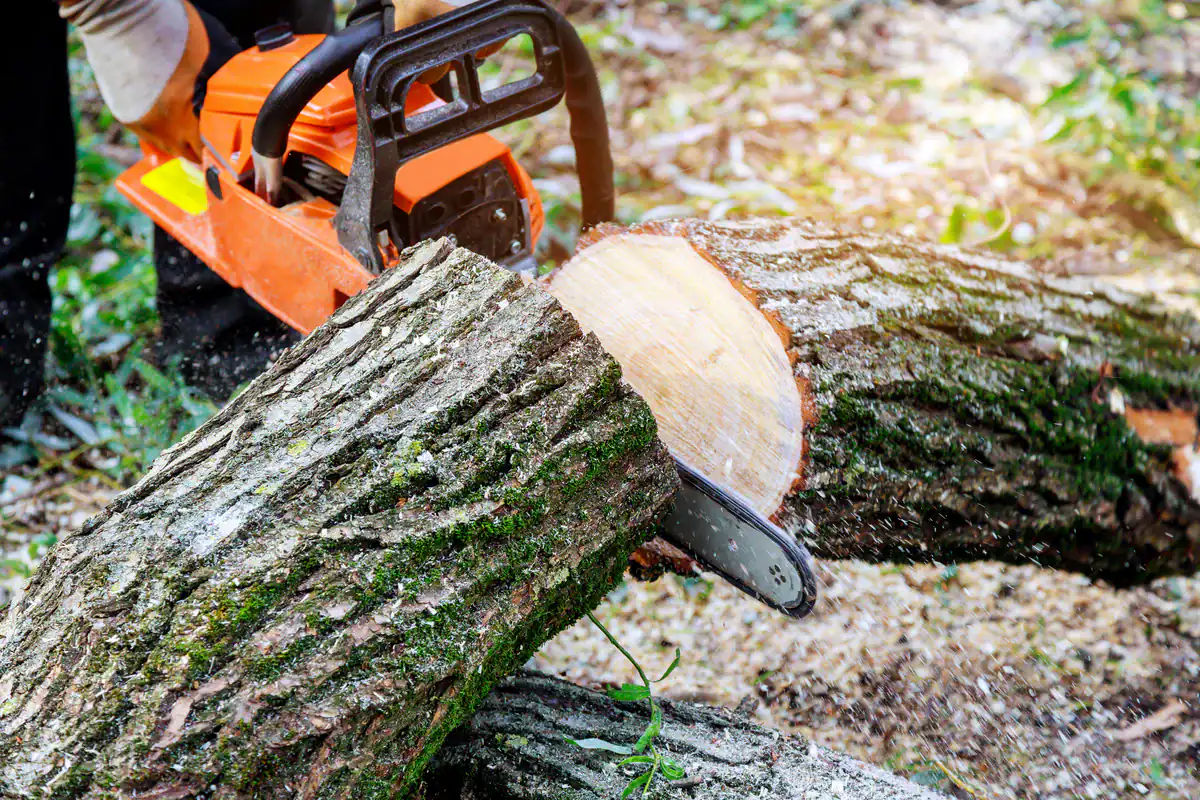
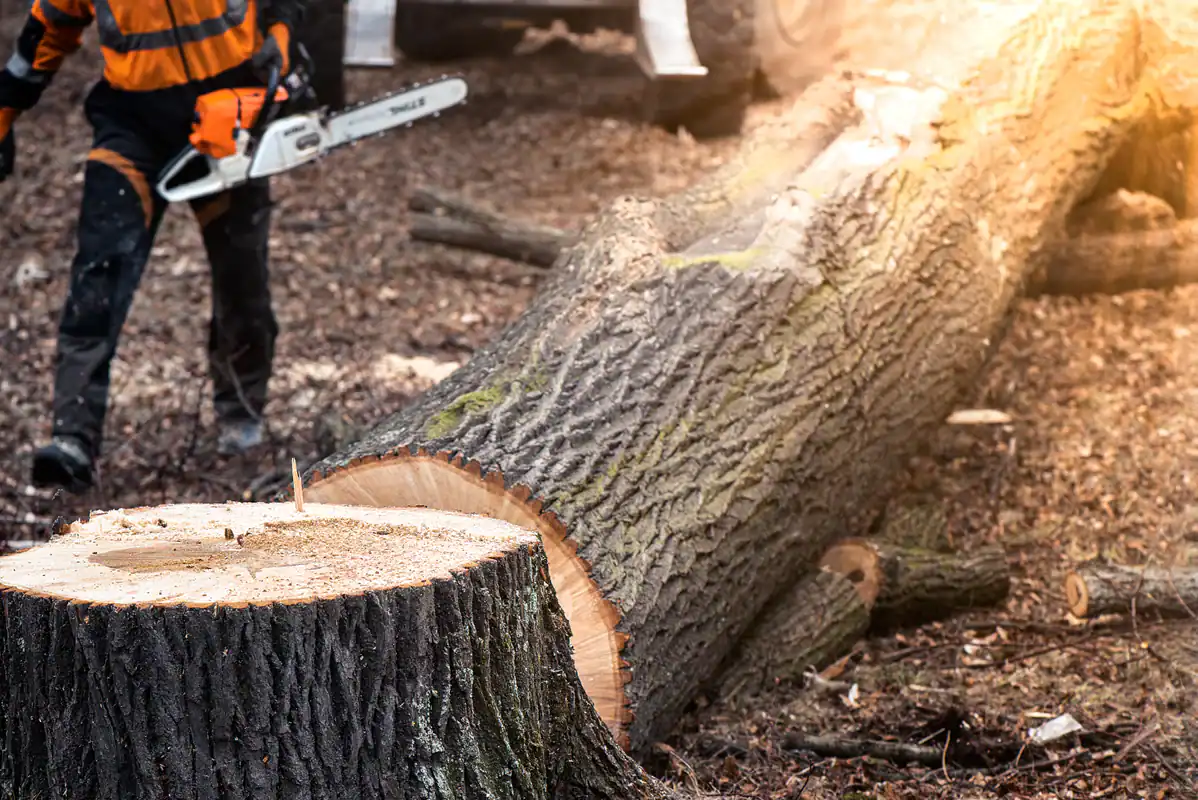
Most of Sugar Creek’s residential core was built in the 1950s. The trees planted alongside those ranch homes and bungalows are now pushing 60, 70, even 80 years old — and some of them are well past their natural lifespan. A tree that’s been slowly dying for years doesn’t announce when it’s going to fall. It just does. And when it goes, it doesn’t care whether it lands on your roof, your fence, or your neighbor’s car.
Once a dead, diseased, or hazardous tree is removed, what you get back is simple: peace of mind. You stop watching that leaning oak every time a storm rolls through on Highway 24. You stop wondering whether your homeowners insurance would even cover it if something went wrong — because the truth is, if the tree was visibly dead and you didn’t act, your insurer may not cover the damage at all. Proactive removal isn’t just a safety call. It’s a financial one.
Sugar Creek’s position right along the Missouri River corridor also means your trees take a beating that inland neighborhoods don’t. Open river winds, seasonal flooding near the riverbank, and the heavy clay soil throughout Jackson County all put extra stress on root systems. A tree that looks stable on a calm day can become a serious problem the next time a storm tracks up the river valley. Getting ahead of it is always easier — and cheaper — than dealing with the aftermath.
We’ve been working in the Kansas City, KS & MO area for over a decade. Sugar Creek is 9 miles from downtown KC — well within the territory we know intimately, including the clay soil, the storm patterns, and the kind of mature, large-canopy trees that come with neighborhoods built 70 years ago. We’re not a franchise. We’re not a call center dispatching strangers. We’re a small, family-owned crew that treats your property like it matters.
Every job comes with full liability insurance and workers’ compensation coverage. That matters more than most people realize. If an uninsured crew member gets hurt on your property, the liability can fall on you. We carry the coverage so you don’t have to worry about that conversation.
Customers describe us as straight shooters — fair prices, no runaround, and a yard that looks clean when we leave. That’s not a tagline. It’s what shows up in review after review, from jobs in dense residential neighborhoods where large trees came down without touching a fence or a neighbor’s garden.
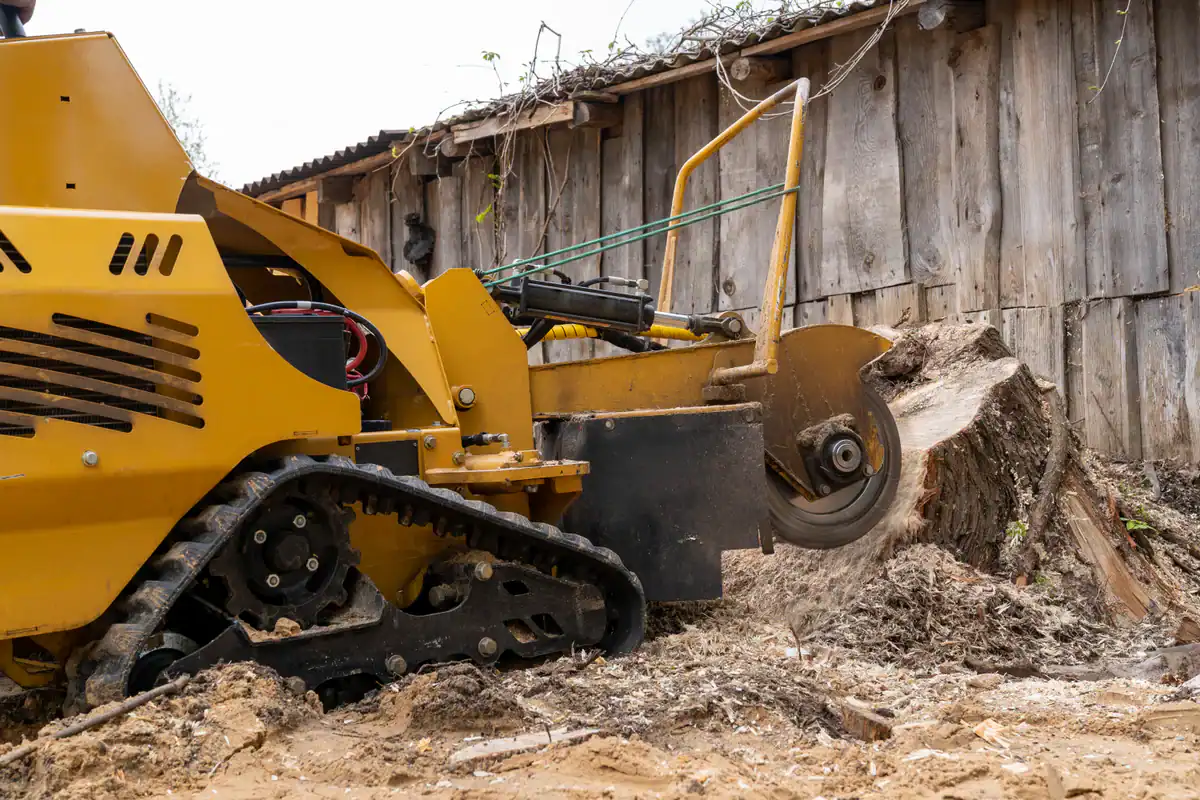
It starts with a free on-site estimate. We come out, look at the tree, and give you an honest assessment — not a sales pitch. If the tree can be addressed with a strategic trim instead of full removal, we’ll tell you that. If it needs to come down, you’ll know exactly why and what it involves before anyone picks up a chainsaw.
Once you’re ready to move forward, scheduling is fast. Multiple customers have confirmed estimates within 24 hours and work completed the following day. In Sugar Creek, where an ice storm or a river-corridor wind event can turn a borderline tree into an emergency overnight, that kind of response time isn’t a luxury — it’s just practical.
The removal itself is planned around your specific property. In a neighborhood of close-set homes on modest lots, that means thinking through the angles, protecting what’s around the tree, and working carefully in tight spaces. After the tree is down, we handle full cleanup — no wood piles left in the yard, no debris scattered across the driveway. If you want to keep the wood or mulch, just say so before the job starts. Otherwise, it’s gone when we leave. The whole process is designed so that when we pull away, your yard looks like the tree was never there.
Ready to get started?
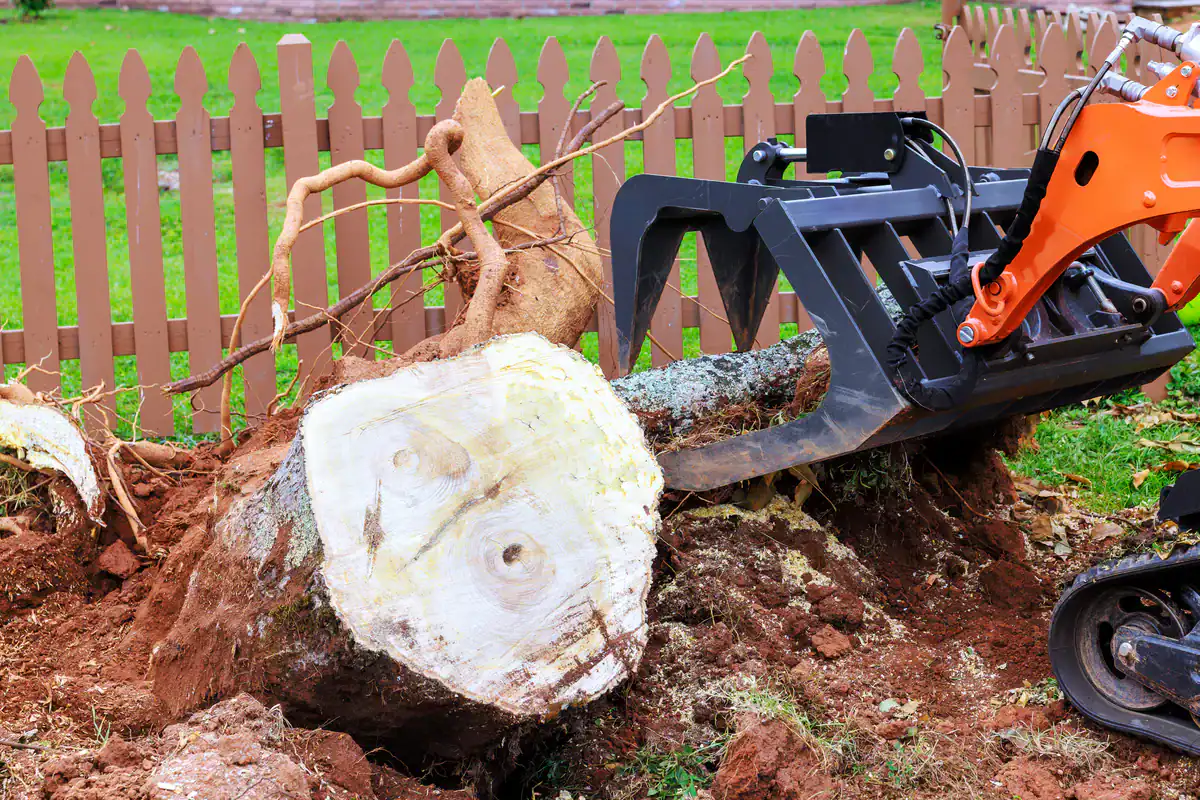
We handle the full range of residential and commercial tree work in Sugar Creek and throughout Jackson County. That includes dead tree removal, diseased tree removal, hazardous tree removal, large tree removal, stump grinding, brush removal, and general tree trimming and pruning. There are no named packages or tiers — you get an honest quote based on what your specific job actually requires.
For Sugar Creek specifically, large tree removal is one of the most common calls. The aging housing stock in the southwestern residential core means mature trees have had decades to grow into rooflines, push up sidewalks, and develop root systems that are now cracking foundations. The heavy clay soil throughout Jackson County compounds this — roots in clay-heavy ground tend to spread wide and shallow rather than deep, which makes older trees less anchored than they look. We’ve handled these conditions across the KC metro for over ten years.
If you have a tree near a structure, close to a fence line, or positioned where a standard drop would cause damage, that’s not a problem to avoid — it’s a situation we’ve navigated repeatedly. We work carefully, we communicate throughout the job, and we don’t leave until the yard is clean. No state permit is required for tree removal on private property in Missouri, but Sugar Creek’s active code enforcement environment means a dead or hazardous tree left unaddressed can become a code compliance issue. Getting it handled proactively is always the better call.
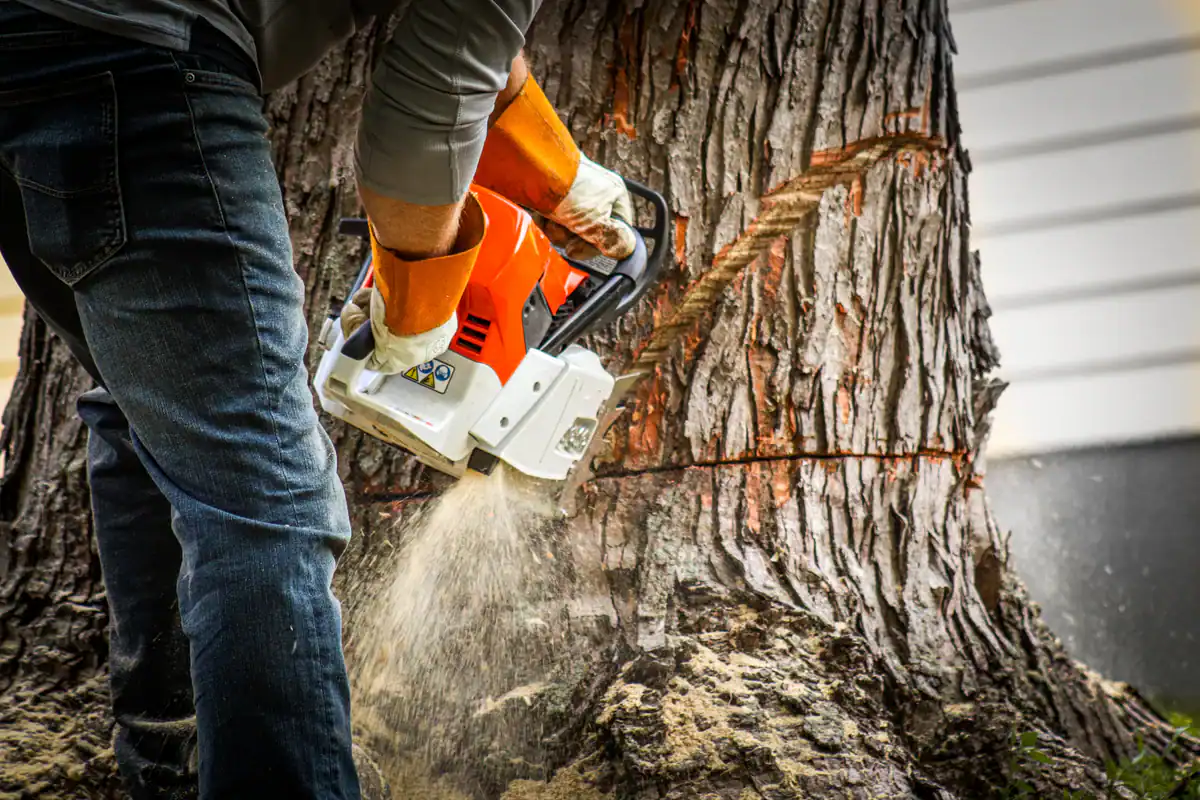
Not every tree that looks rough needs to come down — but some do, and waiting too long is where homeowners get into trouble. The clearest signs a tree needs removal are: dead or brittle branches that break without bending, visible decay or hollow sections in the trunk, fungal growth at the base, significant lean that wasn’t there before, or roots that are visibly damaged or lifting out of the ground. In Sugar Creek’s clay soil, root problems are especially common in older trees because clay limits how deep roots can anchor — so a tree that looks stable above ground may be less secure than it appears.
A dead tree doesn’t only fall during storms. Structurally compromised trees can come down on calm days, without warning. If you’re unsure, the right move is a free on-site assessment. An honest look at the tree will tell you whether removal is necessary or whether a targeted trim can address the issue. We’ll give you a straight answer either way — we’re not going to recommend a full removal if a trim will solve the problem.
It depends — and the answer matters more than most homeowners expect. If a tree falls suddenly due to a storm or an unforeseeable event, most homeowners insurance policies will cover the resulting structural damage, though coverage for the actual tree removal is typically limited to around $500 to $1,000. That gap between what removal costs and what insurance pays can be significant, especially for a large, mature tree.
Where it gets more complicated is negligence. If your insurer can show that the tree was visibly dead or diseased before it fell — and that you were aware of the risk and didn’t act — they may deny the claim entirely. In a modest housing market like Sugar Creek, where homes are valued at $125,000 to $250,000, a denied claim on storm damage can be a serious financial hit. Removing a hazardous tree before it falls is genuinely the lower-risk financial decision.
Tree removal costs vary based on a few key factors: the size of the tree, how close it is to structures or utility lines, and how complex the removal is given the surrounding space. Nationally, most tree removals fall somewhere between $750 and $1,200 on average, though large trees near structures or power lines can run higher, and smaller, straightforward jobs can come in lower.
In Sugar Creek and the broader Jackson County area, a few local factors tend to affect pricing. The clay soil here means root systems on older trees are often wide-spreading and close to the surface, which can complicate stump removal. The density of the older residential neighborhoods — homes close together, modest lot sizes, mature canopies — means more careful, methodical work than a wide-open suburban yard would require. None of that means the price should be a surprise. We provide free, upfront estimates with no games. You know the number before anyone starts work.
Yes, but it requires experience and a clear plan before the first cut. Large tree removal near structures is one of the situations where the difference between a crew that knows what they’re doing and one that doesn’t becomes very obvious, very fast. The process involves assessing the tree’s lean, identifying the drop zone, rigging larger limbs for controlled lowering rather than letting them fall, and working in sections when a full drop isn’t safe given the surrounding space.
In Sugar Creek’s residential core, where homes are close together and lot sizes are modest, this kind of careful, sectional removal is the norm rather than the exception. We’ve completed large-tree removals in dense residential neighborhoods across the KC metro, including situations where the tree was directly adjacent to a fence, a neighboring property, or a structure. One customer specifically noted that we handled a tall tree in a tight neighborhood without any damage to the neighboring property — and cleaned up both yards when we were done. Fully insured coverage means that if something unexpected does happen, you’re protected.
Emerald Ash Borer is one of the most destructive tree pests in the Kansas City, KS & MO area, and Sugar Creek is not exempt. The signs to watch for on ash trees include S-shaped galleries under the bark, D-shaped exit holes about the size of a pencil eraser, heavy woodpecker activity on the upper trunk (woodpeckers target the larvae), and dieback starting at the top of the canopy and working downward. Once an ash tree is heavily infested, removal is typically the only realistic option — treatment works best as a preventive measure before significant damage occurs.
Oak Wilt is another serious concern in the KC metro. It spreads through root contact between neighboring trees and through sap beetles, and it can kill an oak within weeks once it takes hold. Signs include wilting and browning leaves starting at the top of the canopy, often in late spring or early summer. Bagworm infestations are also common here and can defoliate evergreens quickly if left untreated. If you’re seeing any of these signs on trees in your Sugar Creek yard, getting an assessment sooner rather than later is the right call — diseased trees that are left standing become hazardous trees over time.
Yes. Sugar Creek sits about 9 miles east of downtown Kansas City, KS & MO, well within the service area we’ve been working in for over a decade. Jackson County is familiar territory for us — the clay soil conditions, the mature tree canopy in older neighborhoods like Sugar Creek’s 1950s residential core, and the storm exposure that comes with being positioned along the Missouri River corridor are all factors we’ve dealt with regularly across the KC metro.
On response time: multiple customers have confirmed receiving estimates within 24 hours of reaching out, with the actual work completed the following day. For situations where a storm has already caused damage — a limb down, a tree leaning against a structure, a root system that finally gave way — that turnaround matters. Sugar Creek’s location along the Missouri River means storm systems that track up the river valley can move through fast and leave damage behind just as quickly. Having a crew that can get out to you the next day, assess the situation, and get the work done without a week-long wait is a practical advantage in this part of Jackson County.
Other Services we provide in Sugar Creek