Raytown was built in a decade. The 1950s and 1960s housing boom that turned a small farming community into a suburb of 17,000 also planted a generation of shade trees — pin oaks, silver maples, American elms, hackberries — that are now 60 to 70 years old and standing directly over the same ranch homes and split-levels they were meant to shade.
At that age, these trees are beautiful. They’re also at or past their structural peak, and the signs of failure aren’t always visible from the street. Internal decay, root system failure, and structural weakness can hide inside a tree that still looks solid from your driveway.
That’s the specific reality of tree removal in Raytown. You’re not dealing with a young tree in a new subdivision with open yard space on all sides. You’re dealing with a full-grown, aging tree that’s grown into your roofline, over your garage, or within a few feet of your neighbor’s fence. Getting it down safely — without damage to your home or the property next to it — takes a crew that has done this kind of tight-space work before, not one that’s figuring it out on your job.
Once the tree is down, the relief is real. No more watching the forecast every time a storm rolls through. No more wondering whether that crack in the bark is getting worse. We handle the full cleanup — every job ends with a clean property, which matters in a city where code enforcement actively monitors for yard waste left outside too long.
We’re a family-owned tree care company based in Kansas City, KS & MO, Missouri — right on Raytown’s western border. We’ve been working in Jackson County for over a decade, which means we know the clay-heavy Missouri soil that weakens root systems over time, the Blue Ridge terrain that gives this part of the metro its rolling topography, and the species common to Raytown’s mid-century neighborhoods.
This isn’t a franchise operation dispatching crews from a call center. It’s a tight-knit crew that lives and works in this area, treats every property like our own, and has built a track record across HomeAdvisor, Angi, Thumbtack, and Birdeye. We’re fully insured — liability and workers’ comp — so if anything goes sideways on the job, you’re covered. That’s not a given in this industry, and it’s the first thing you should verify before hiring anyone.
It starts with a free on-site estimate. We come out, look at the tree, and tell you what it actually needs — not what generates the biggest invoice. If a strategic trim can solve the problem instead of full removal, we’ll say so. If the tree needs to come down, you’ll get a clear, honest quote with no runaround.
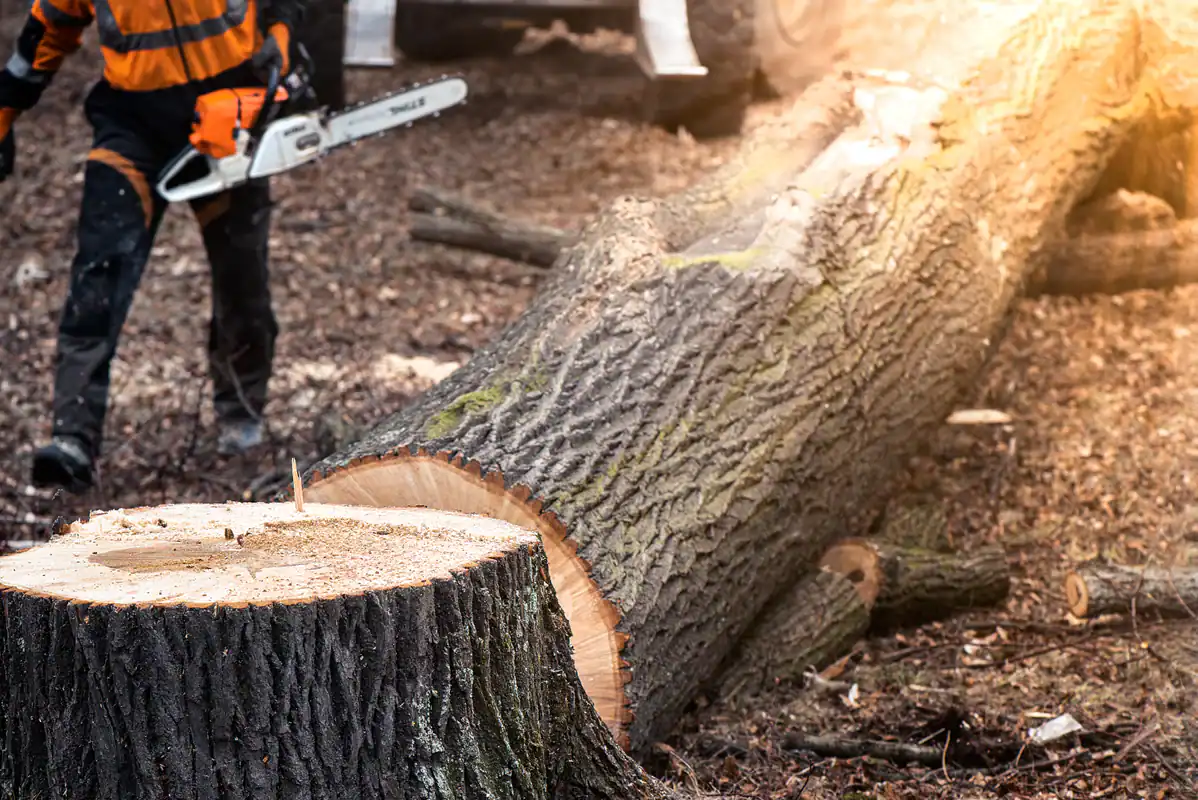
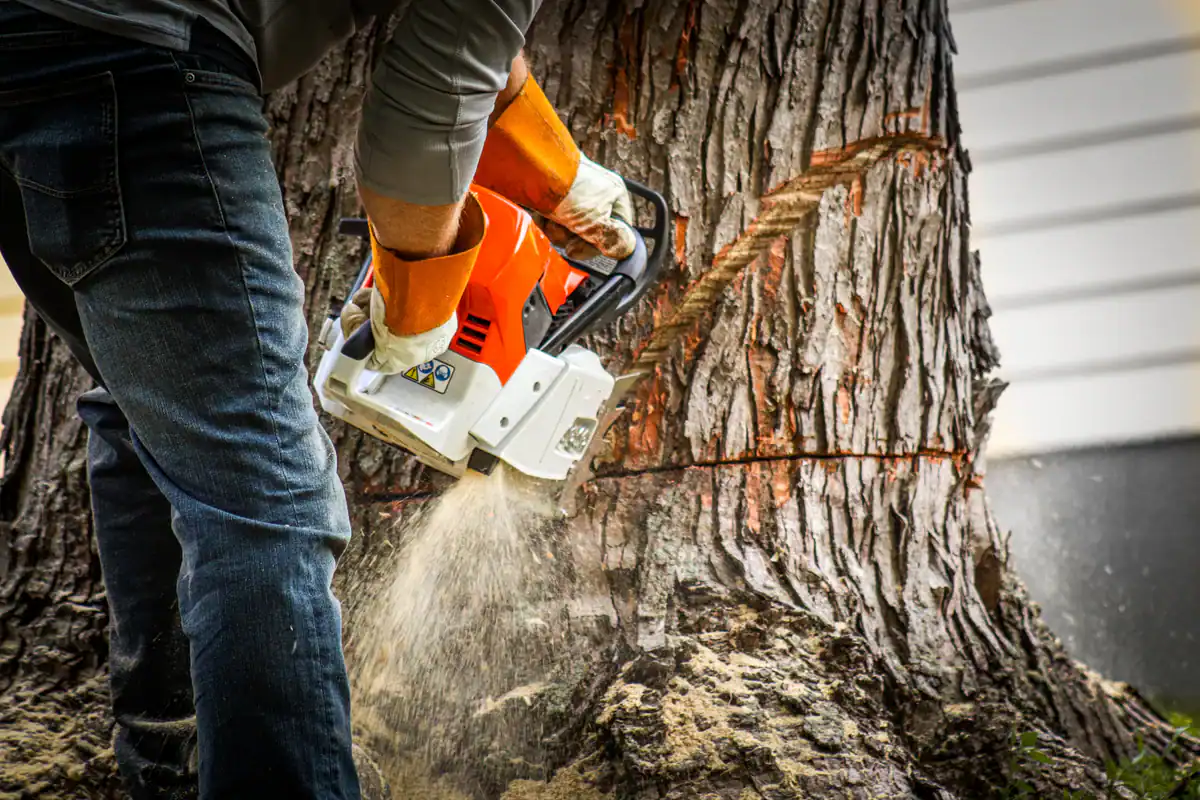
Once the job is scheduled, we assess the site before anything gets cut. In Raytown’s dense residential grid, that means looking at what’s around the tree — your roofline, your neighbor’s fence, any utility lines overhead, and how much working space is actually available. Large trees in tight spaces require sectional removal, where the tree comes down in controlled pieces rather than a single fell. This is standard practice for the kind of mature, large-canopy trees common throughout Raytown’s neighborhoods, and it’s the approach that protects your property and the properties around you.
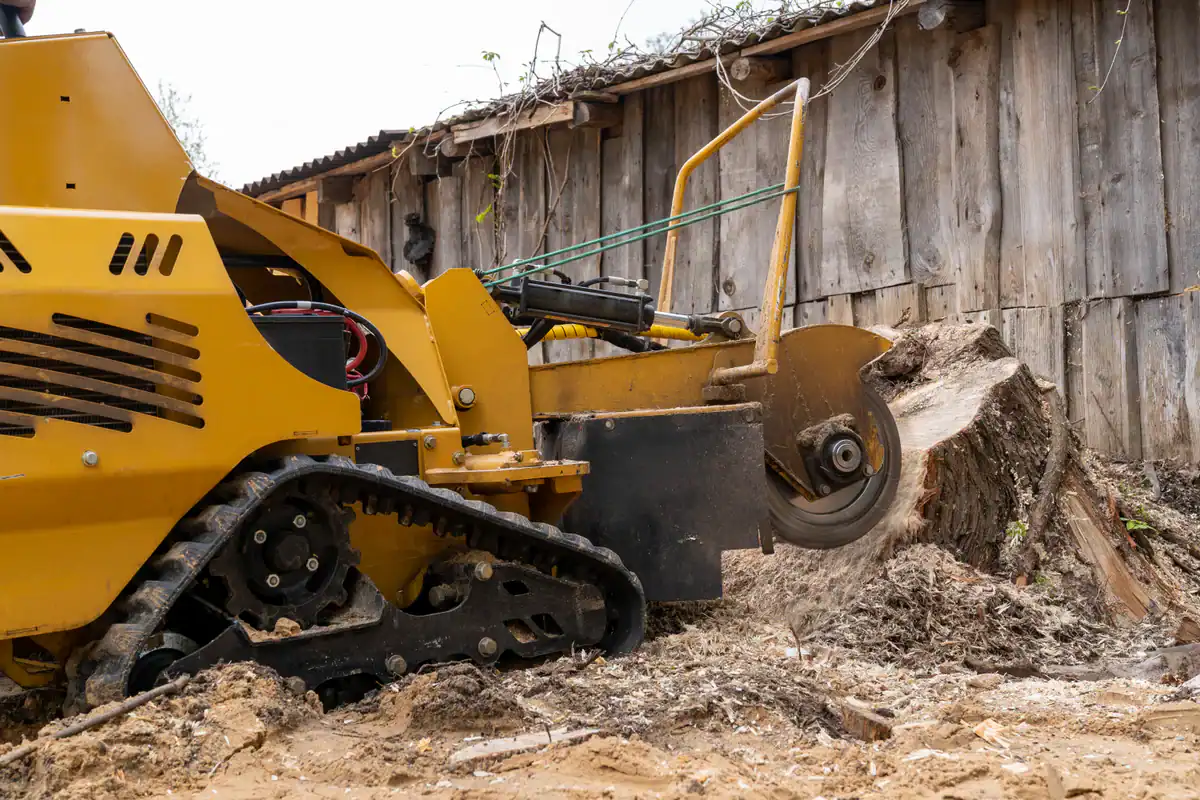
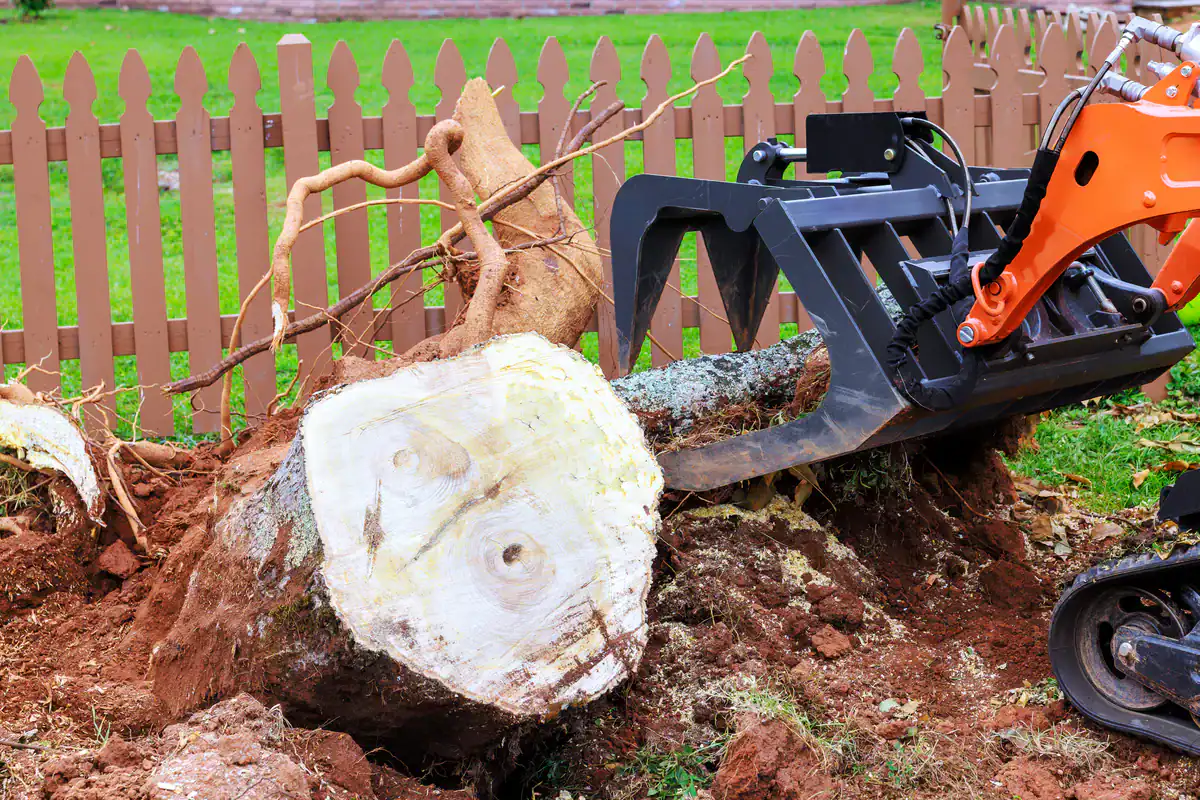
After the tree is down, the stump can be ground down if you want the area restored. All debris — wood, limbs, brush — gets cleared from the property. If you want to keep the wood or mulch for personal use, just say so before the job starts. When we leave, the yard is clean. That’s not optional — it’s how every job ends.
Spring storm season is real in Raytown. Jackson County sees severe thunderstorms, straight-line winds, and tornado activity every year. If a storm drops a tree on your property and you need someone out fast, we respond quickly — multiple customers have confirmed same-day or next-day estimates and work completed shortly after.
Ready to get started?
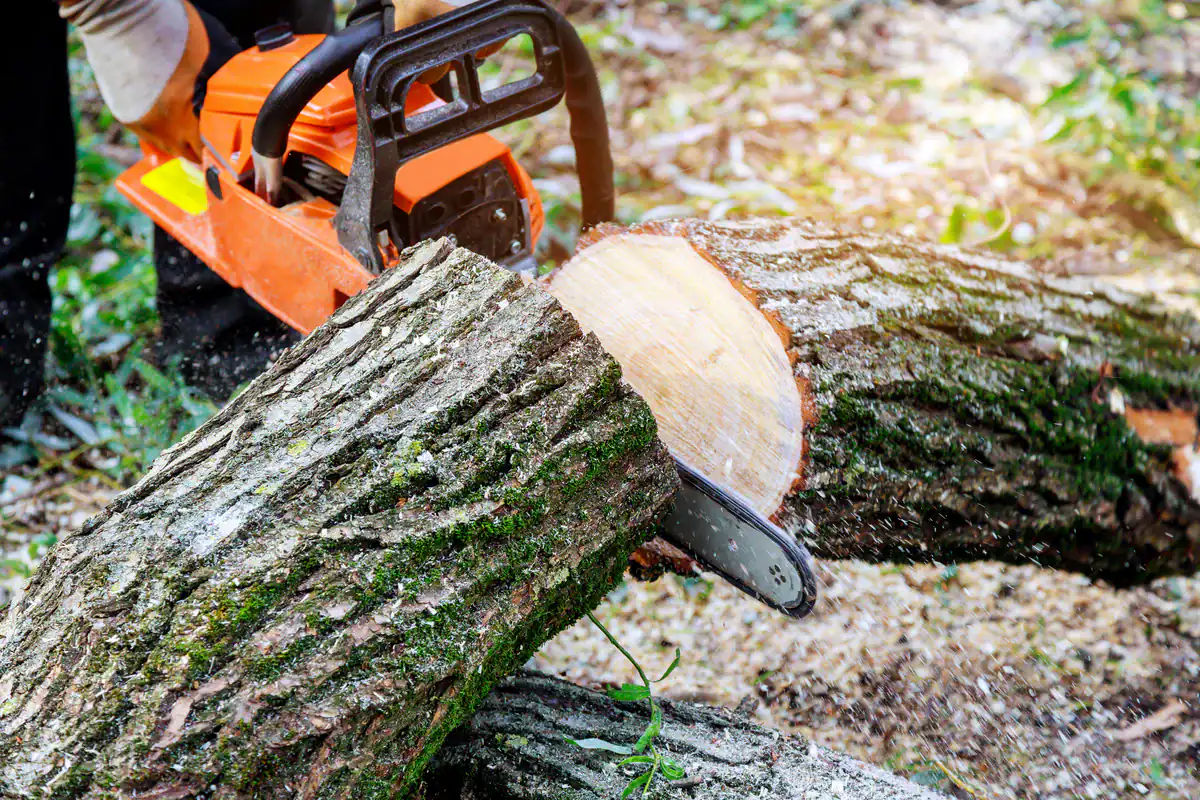
Tree removal in Raytown covers the full scope of the job — from the initial cut to the final cleanup. That includes removing the trunk, limbs, and all debris from your property. Stump grinding is available if you want the area cleared completely. Whether the tree is diseased, dead, or storm-damaged, we handle it the same way.
For Raytown homeowners dealing with the large-canopy species common to the city’s mid-century neighborhoods — pin oaks, silver maples, American elms — removal often involves working in close proximity to structures. That’s not unusual here; it’s the norm. We have a documented track record of safe removal in exactly these conditions, including large trees taken down in dense neighborhoods without damage to homes or neighboring properties.
Jackson County also sees its share of tree disease and pest pressure. Emerald Ash Borer has been active in Missouri for years and has affected ash trees throughout the Kansas City, KS & MO metro. Oak Wilt is a concern for the many mature oaks throughout Raytown. If you’re not sure whether your tree needs to come down or whether it can be treated or trimmed, the on-site assessment will tell you. The answer you get will be honest — not designed to sell you a removal you don’t need.
Not every tree that looks bad needs to come down. The key things to look for are structural issues — cracks or splits in the main trunk, large dead branches in the upper canopy, mushroom growth at the base of the tree (which signals internal decay), or a visible lean that wasn’t there before. If less than about 25% of the tree’s branches are damaged or dead, the tree may be able to recover with proper pruning. But if the trunk has significant decay, if the root system has been compromised, or if the tree is leaning toward your house or a neighboring structure, removal is usually the right call.
In Raytown specifically, the trees most likely to need removal are the large-canopy species planted during the 1950s and 1960s housing boom — pin oaks, silver maples, American elms, and hackberries that are now 60 to 70 years old. At that age, these trees can have internal decay that isn’t obvious from the outside. If you’re unsure, a free on-site assessment will give you a straight answer. You don’t have to guess, and you don’t have to commit to anything to find out what the tree actually needs.
It depends on the situation, and the answer matters more than most people realize. If a healthy tree falls on your home due to a storm or other sudden event, your homeowners insurance will typically cover some of the removal cost — usually in the range of $500 to $1,000 toward removal, plus the structural damage itself. But if the tree was already dead, visibly diseased, or showing clear signs of failure and you hadn’t addressed it, your insurer may deny the claim on the basis of negligence.
This is a real concern in Raytown, where a significant portion of the residential tree canopy consists of large, aging trees that are at or past their structural peak. A dead or declining tree isn’t just an aesthetic issue — it’s a financial liability. If it falls on your home, your neighbor’s fence, or a parked car, the cost of the damage can far exceed the cost of proactive removal. A free estimate from us costs nothing and gives you a clear picture of what you’re dealing with before the decision gets made for you by a storm.
For a large tree — say, a mature pin oak or silver maple in a typical Raytown residential yard — plan on a full day. Smaller trees, generally under 30 feet, can often be done in two to four hours. The main factors that affect timing are the size of the tree, how close it is to structures, and how much working space we have to operate safely.
In Raytown’s dense residential grid, where houses sit close together and trees often stand within feet of a roofline or a neighbor’s fence, sectional removal is the standard approach for large trees. That means taking the tree down in controlled sections from the top rather than felling it in one piece — which takes more time but protects everything around it. Stump grinding, if you want it done the same day, adds some time as well. We’ll give you a realistic time estimate when we come out for the assessment, so you know what to expect before the job starts.
For trees on private residential property in Raytown, there is no confirmed permit requirement for removal. You generally have the right to remove trees on your own property without going through the city first. That said, there are a few situations where things get more complicated. If the tree is in the public right-of-way — the strip of land between your property line and the street — it may fall under city jurisdiction rather than yours, and you’d want to check with the City of Raytown before touching it. If the tree is near a utility line, the utility company’s protocols apply regardless of permit requirements.
One thing that is relevant in Raytown is what happens after the tree comes down. Raytown’s code enforcement division actively monitors for yard waste and debris left outside for extended periods. A pile of wood, limbs, or brush left on your property after a removal job can become a code issue if it isn’t cleared in a timely way. That’s one reason the full cleanup included with every job matters here — the property is clean when we leave, not a week later.
The most important thing to verify before you hire anyone is insurance — specifically, general liability coverage and workers’ compensation. In a dense suburb like Raytown, where removal jobs almost always happen within feet of your home, your neighbor’s property, or a utility line, the insurance question isn’t optional. If a crew member is injured on your property and the company doesn’t carry workers’ comp, you can be personally liable. If the job damages your home or your neighbor’s fence and the company isn’t properly insured, you’re the one dealing with the fallout.
Beyond insurance, ask how long they’ve been doing this and whether they’ve handled large trees in tight residential spaces before — not just open-yard removals. Ask what the cleanup process looks like and whether it’s included or an add-on. Ask whether they’ll give you an honest assessment of whether the tree actually needs to come down or whether trimming could solve the problem. A company worth hiring will answer all of these questions directly. One that gets evasive or pushes you toward removal before they’ve even looked at the tree is worth passing on.
Jackson County’s storm season runs roughly from March through October, with the most active severe weather period in the spring. Raytown has seen documented tornado and high-wind events — including an EF-0 tornado with winds up to 84 mph that drove a large tree through a home’s living room. Straight-line wind events with gusts in the 70 mph range have also caused confirmed tree-on-house damage in the area.
The practical answer is: don’t wait for storm season to schedule a removal if you already know there’s a problem. The weeks leading into spring are a good time to get an assessment done while the schedule is more flexible and before the post-storm rush makes response times longer. Late winter — February into early March — is also one of the better windows for tree work in the Kansas City, KS & MO area before new growth begins. If a storm does hit and you need emergency response, we move quickly — but the easiest version of this is getting ahead of the problem before the season starts.
Other Services we provide in Raytown