
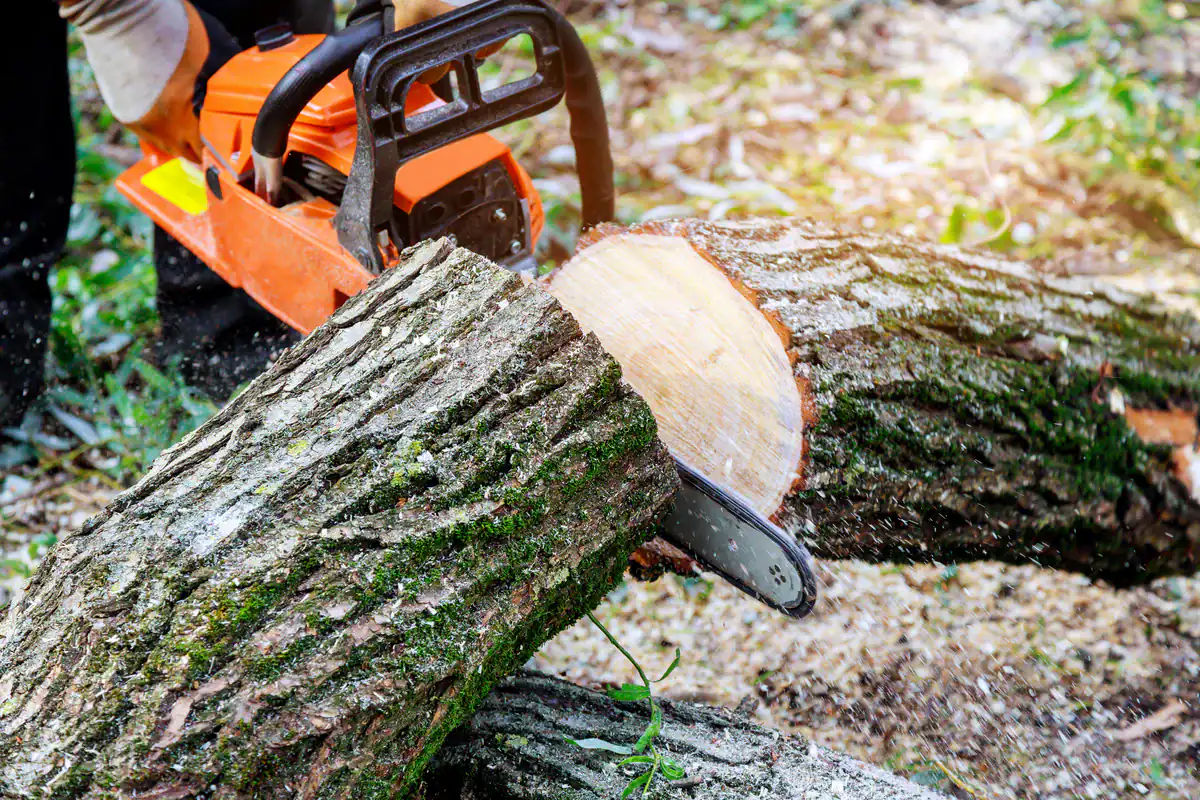
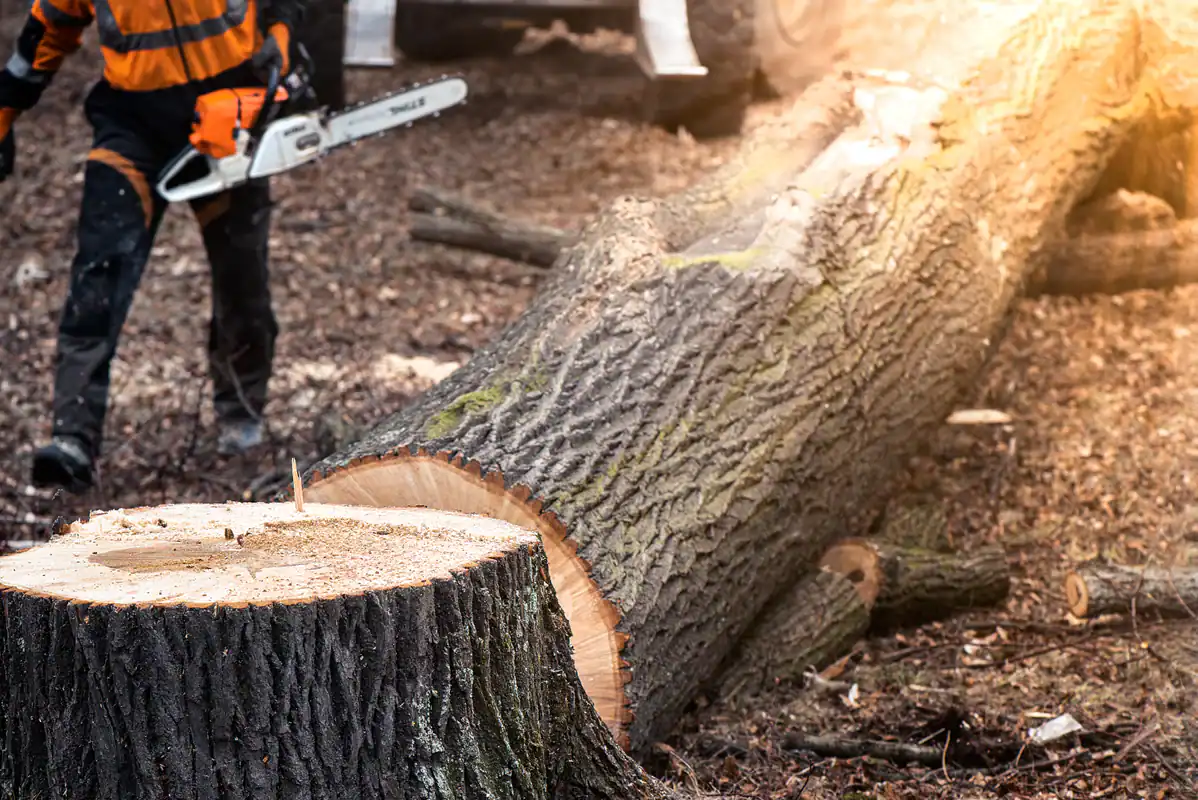
A dead or hazardous tree doesn’t just look bad. It’s a liability sitting over everything you’ve built. Once it’s gone, the anxiety goes with it — no more wondering what happens the next time a storm rolls through, and no more watching that leaning trunk every time you pull into the driveway.
Platte City’s terrain makes this more than a general concern. A lot of homes here sit on rolling hillside lots — properties that were carved out of wooded land, where large mature trees were already standing long before the house was built. That means the trees are close to structures, the root systems are deep, and a fall doesn’t have a clean path. The rolling grade adds complexity that flat suburban lots simply don’t have.
There’s also a specific local issue that’s been quietly working through Platte County for years. The Emerald Ash Borer has been active here — Platte County was one of the first areas the Missouri Department of Agriculture specifically targeted for EAB surveys after new infestations were confirmed statewide. If you have ash trees on your property, there’s a real chance they’re already affected. Dead ash trees lose structural integrity fast, and the wood becomes brittle and unpredictable. Getting ahead of it is the smart move.
Squirrel Master Tree Services, LLC has been doing this work in the Kansas City, KS & MO metro for over a decade. That’s not a credential we throw around lightly — it means we’ve worked through the kinds of jobs that test a crew: large trees in tight spaces, storm damage on complex terrain, removals near structures where there’s no margin for error.
Platte City and the broader Platte County area are a natural part of our service footprint. We know the landscape up here — the wooded hillside lots, the mature hardwoods common to the area, the storm patterns that come through during spring and fall. We’ve also responded to storm recovery operations across multiple states, which means when severe weather hits Platte City, we’re not figuring it out on the fly.
We’re fully insured — liability and workers’ compensation — and we give you a straight, honest estimate before any work starts. No runaround on pricing. If a trim can solve your problem instead of a full removal, we’ll tell you that too.
It starts with a free on-site estimate. We come out, look at the tree, assess the situation — the size, the lean, what’s around it, what’s below it. On a hillside lot in Platte City, that assessment matters more than it does on a flat suburban property. We’re looking at the grade, the proximity to your structure, whether there are power lines or fences in the fall zone, and what equipment access looks like. You get a clear price before anything else happens.
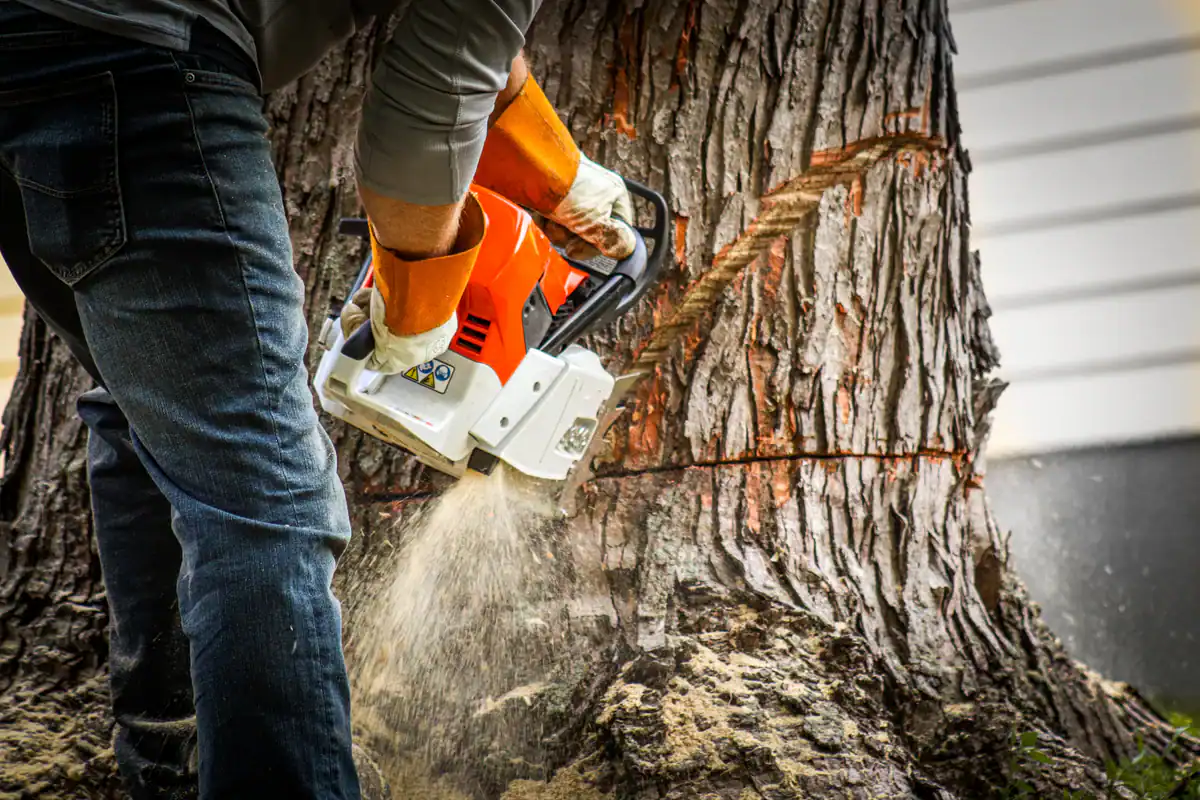
Once you’re ready to move forward, we schedule the work and show up when we say we will. The removal itself is methodical — we work in sections, control the direction of the fall, and manage the debris as we go. For larger trees on complex terrain, that can take most of a day. For a straightforward removal, we’re often done the same day we start.
One thing worth knowing about Platte City specifically: under the city’s municipal code, dead or hazardous trees on private property are legally classified as a nuisance, and the city has the authority to compel removal at your expense if they determine the tree poses a risk. Getting it handled proactively — on your schedule, at a price you agreed to — is almost always better than waiting for the city to initiate that process.
When the job is done, we clean up completely. No wood piles, no debris left behind. If you want to keep the wood or mulch for your own use, just let us know before we start.
Ready to get started?
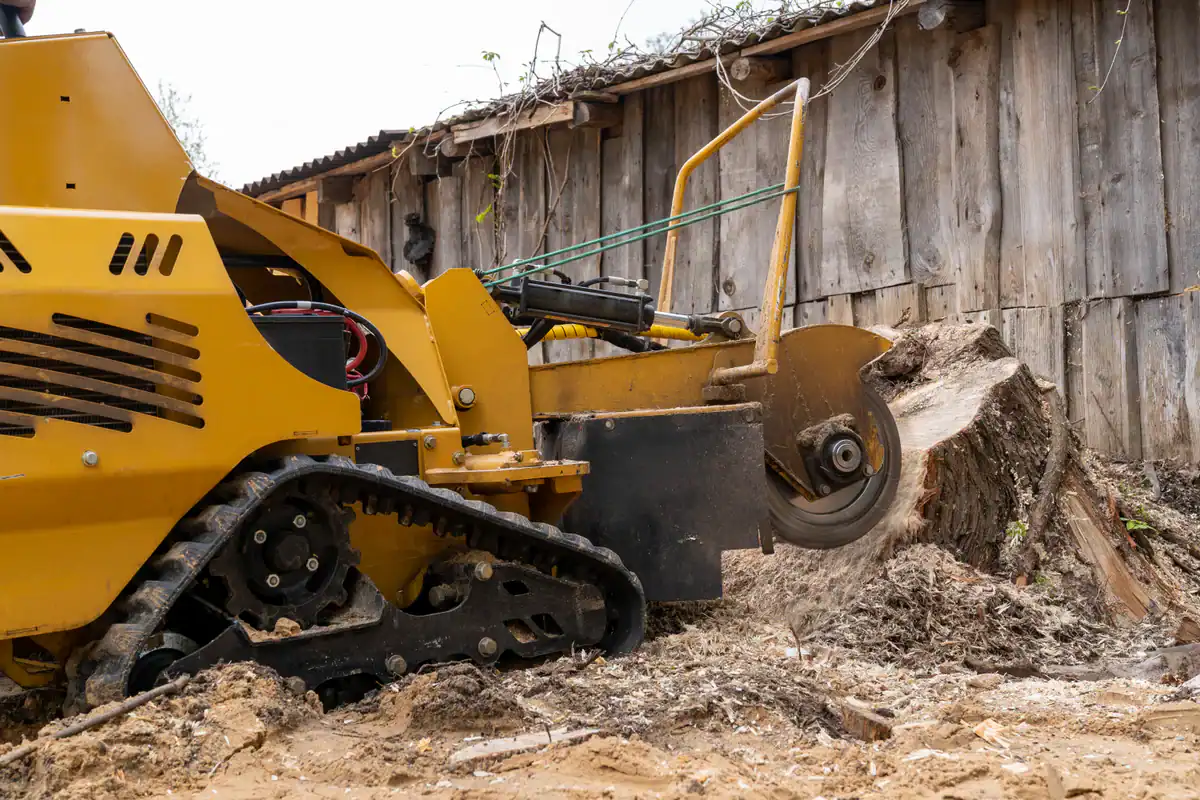
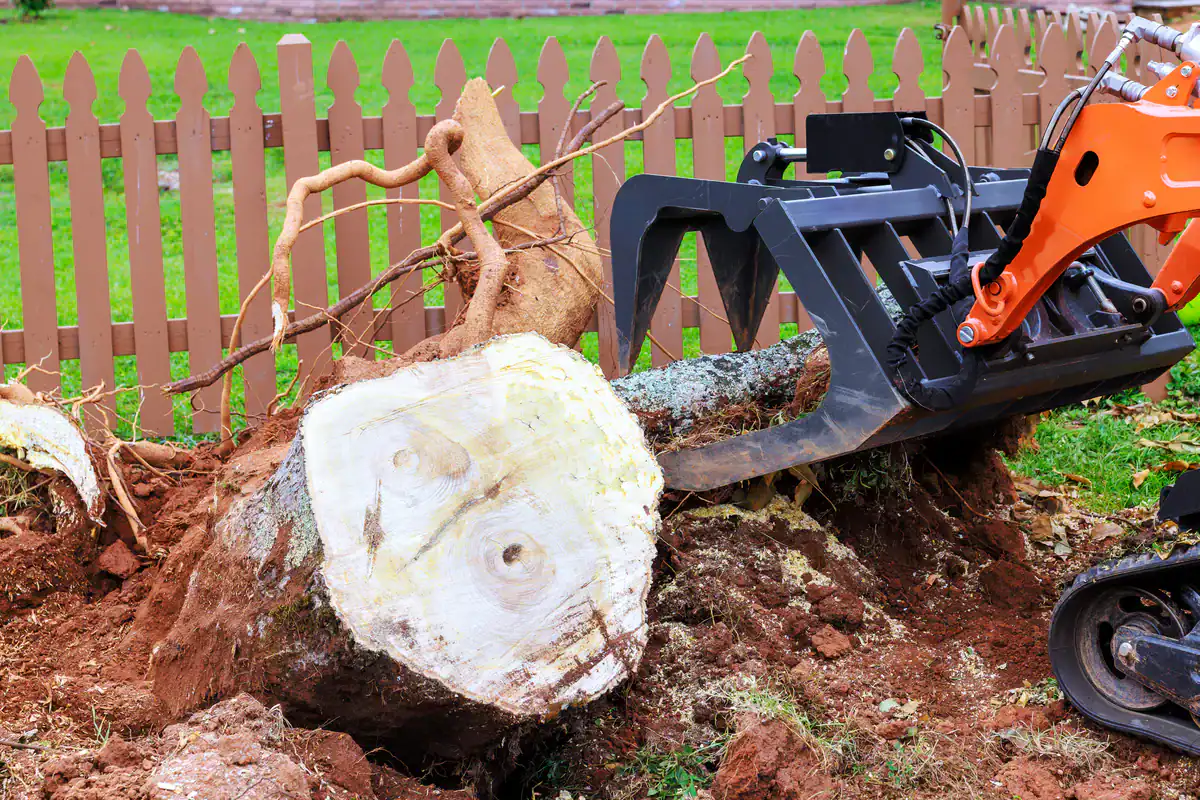
Tree removal in Platte City covers the full scope — from the initial cut to hauling off every piece of what’s left. That includes the trunk sections, the limbs, the brush, and the cleanup of the surrounding area. Stump grinding is available if you want the stump taken down below grade so the area can be restored.
If the tree was dead or diseased, we handle that carefully — dead wood, especially in EAB-affected ash trees, behaves differently than healthy timber and requires a measured approach to avoid unpredictable breaks.
We also handle large tree removal for the kind of mature, established trees that are common on Platte City’s older and hillside residential lots. These aren’t small jobs, and we don’t treat them like they are. Big trees near structures — whether that’s your home, a fence line, or a detached garage — require the right equipment, the right technique, and a crew that’s done this kind of work before.
Beyond removal, we offer trimming and pruning for trees that don’t need to come down. If storm damage has left you with broken or hanging limbs, or if you’ve got a tree that’s grown too close to your roofline, a strategic trim is often the right call. We’ll tell you honestly which situation you’re in. Emergency response is also part of what we do — if a spring thunderstorm drops a tree on your property, we’re equipped to respond quickly.
For most private property tree removals in Platte City, there isn’t a standard permit requirement the way you’d pull a building permit for a renovation. However, there’s something more important to understand about Platte City’s municipal code. Under Chapter 215, Section 215.050, any dead or live tree that constitutes a hazard to people or property is legally classified as a nuisance — and the city has the authority to enter your property, inspect the tree, and compel removal at your expense if they determine it poses a risk.
What that means practically is that a hazardous tree isn’t just your problem to deal with on your own timeline. If the city identifies it first, the process moves on their schedule, not yours. Getting it removed proactively, through a licensed and insured tree service, puts you in control of the timing and the cost. It’s also worth noting that any work near public rights-of-way — street trees, trees along alleys — requires prior written approval from the city before any cutting happens. When in doubt, the Platte City Building Inspector’s office can clarify current requirements for your specific situation.
Platte County was specifically identified by the Missouri Department of Agriculture as one of the first counties targeted for Emerald Ash Borer surveys after new infestations were confirmed in Missouri. The entire Kansas City, KS & MO metro area is under EAB quarantine, which means if you have ash trees on your Platte City property, the threat is real and present — not something that might happen eventually.
Signs that an ash tree has been compromised by EAB include thinning or dying canopy starting at the top of the tree, S-shaped galleries under the bark, D-shaped exit holes in the bark, and increased woodpecker activity as birds go after the larvae. Once an ash tree is dead or in advanced decline, the wood deteriorates faster than most other species — it becomes brittle and unpredictable, which makes removal more hazardous the longer you wait. A tree that’s lost significant canopy and shows visible bark damage should be assessed by an experienced crew sooner rather than later. In many cases, removal is the only safe option once EAB damage has progressed to a certain point.
This is one of the most common questions we get, and the honest answer is that it depends on what’s actually going on with the tree — not on what generates the bigger job. If a tree has structural damage, is dead or dying, has significant root problems, or is positioned in a way that creates an ongoing hazard to your home or a neighboring property, removal is usually the right call. Trimming a compromised tree doesn’t fix the underlying problem; it just delays the decision.
On the other hand, if a tree is healthy but has grown too close to your roofline, has storm-damaged limbs, or is putting too much weight on one side, a strategic trim can often resolve the issue without losing the tree entirely. For Platte City properties with large, mature trees on hillside lots, we’ll look at the root system, the lean, the canopy distribution, and the proximity to structures before making a recommendation. If trimming is the right answer, that’s what we’ll tell you — even if removal would be a bigger job for us.
It depends on the circumstances, and the details matter more than most people realize. If a healthy tree falls due to a storm and damages a structure on your property — your roof, a fence, a detached garage — your homeowners insurance will typically cover a portion of the removal cost, often in the range of $500 to $1,000, as part of the claim for the structural damage. The key word there is “healthy.” If the tree was already dead, visibly diseased, or showing signs of decline and you hadn’t addressed it, your insurer may deny the claim on the basis of negligence.
Platte County is in an active severe weather corridor. Spring and early summer thunderstorms regularly produce downed trees and wind damage across the area. That history makes the negligence clause more than a theoretical concern. A dead or hazardous tree that you were aware of and didn’t remove is the exact scenario where coverage gets denied. Proactive removal is the financially responsible move, not just the safe one.
For a straightforward removal — a single tree with reasonable access and no major obstructions — we’re typically done in a few hours and off the property the same day. A large tree, or one in a more complex position like a hillside lot with limited equipment access, can take most of a full day. We’ll give you a realistic timeframe during the estimate so you’re not left guessing.
As for yard damage, the honest answer is that removing a large tree involves equipment and activity that will affect the immediate area — that’s unavoidable. What we control is how we work: we approach the removal in sections, manage the debris as we go, and clean up completely before we leave. No piles, no limbs scattered across the lawn. If you want to keep the wood for firewood or the chips for mulch, let us know before the job starts and we’ll set it aside for you. For Platte City properties with larger wooded lots, that cleanup guarantee matters more than it does on a compact suburban lot — and it’s included on every job, not an add-on.
The most important thing to verify before hiring anyone for tree removal is insurance — specifically, both general liability and workers’ compensation coverage. This isn’t a formality. In most states, including Missouri, there’s no required licensing for basic tree work, which means anyone with a truck and a chainsaw can legally offer the service. The only real protection you have as a homeowner is confirming that the company carries proper insurance. If a worker is injured on your property and the company doesn’t have workers’ comp, that liability can fall on you.
Beyond insurance, look for documented local experience, real reviews that mention specific jobs and outcomes, and a company that gives you a clear price upfront without pressure. For Platte City specifically, it helps to work with a crew that understands the terrain — hillside lots, mature hardwoods, the kinds of complex removals that are common in this part of Platte County. Ask whether cleanup is included, whether they’ll assess whether you actually need full removal or just a trim, and how quickly they can respond if the situation is urgent. Those questions will tell you a lot about who you’re dealing with before any work begins.
Other Services we provide in Platte City