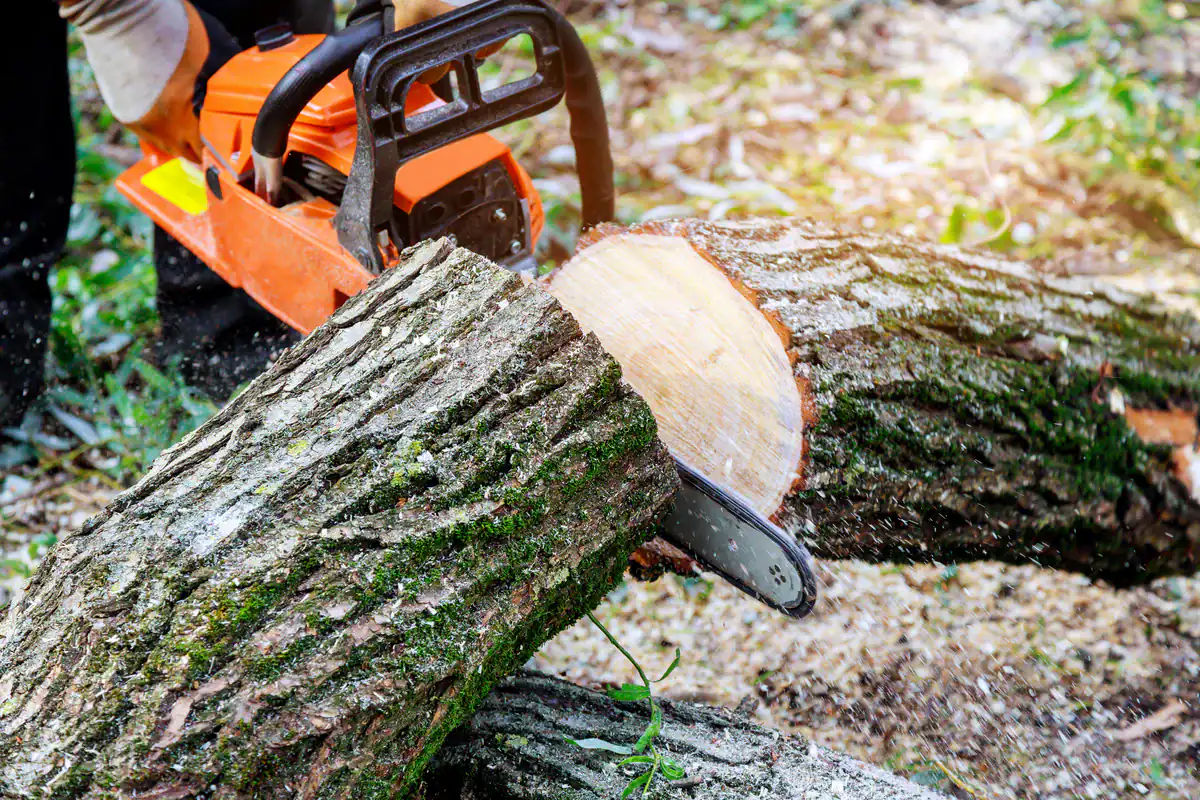
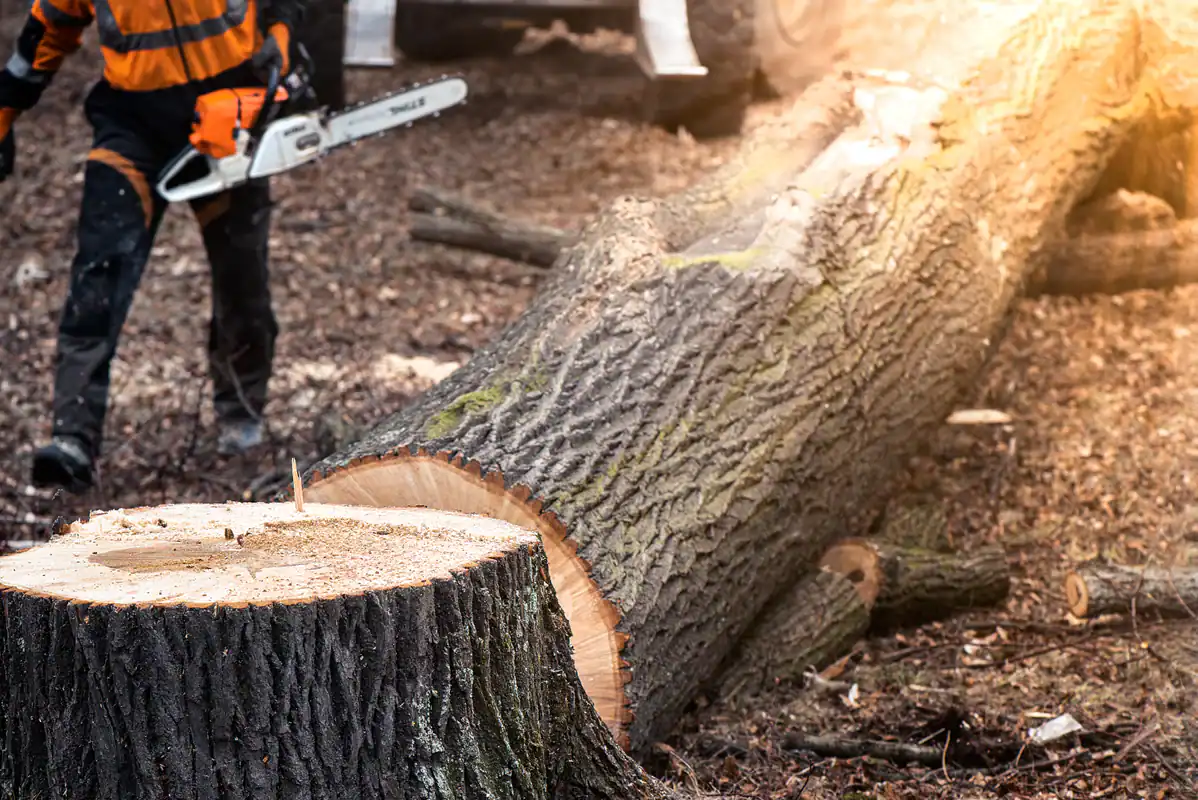
When the job is done, your yard looks like a crew was never there — except the hazard is gone. No wood piles sitting in your driveway. No debris scattered across the lawn. Full cleanup is included on every single job, and if you want to keep the wood or mulch, just say so before we start.
For Olathe homeowners in established neighborhoods like Cedar Creek and Arbor Creek, that matters more than it might sound. These are neighborhoods with 30-plus years of tree growth, homes sitting close together, and driveways and fences within range of a falling limb. Getting the tree out cleanly — without damaging what’s around it — takes a crew that has actually done this kind of work in tight residential spaces before.
Johnson County property values climbed 7.19% in 2024 alone. A tree that comes down on its own, on a home worth half a million dollars or more, is not a small problem. Proactive tree removal in Olathe is less about aesthetics and more about protecting what you’ve built — and making sure a dead or diseased tree doesn’t turn into a five-figure insurance headache.
We’re Squirrel Master Tree Services, LLC — a family-owned, fully insured tree care company based in Kansas City, KS & MO, KS. Olathe is one of our named service areas, not an afterthought. Over the past decade, we’ve worked throughout Olathe and Johnson County, and we know the conditions that come with it: the heavy clay soils, the rolling terrain through communities like Cedar Creek, and the storm patterns that roll through every spring and summer.
We’re not a franchise. We’re not a call center dispatching whoever’s closest. We’re a small, tight-knit crew raised in Kansas who treats your property like we’d want someone to treat ours. That means we show up on time, we tell you what the tree actually needs — not just what generates the biggest invoice — and we leave the property clean when we’re done.
We carry full liability insurance and workers’ compensation coverage. Before you hire anyone for tree removal in Olathe, those are the two things that matter most.
It starts with a free estimate. We come out, look at the tree, and give you a straight answer — what needs to happen, why, and what it involves. If a strategic trim can solve the problem, we’ll tell you that. If the tree needs to come down, we’ll explain exactly why and walk you through what the job looks like.
One thing worth knowing for Olathe specifically: the city does not require a permit for tree removal on private residential property. That means no waiting on paperwork, no delays. If your tree sits in the right-of-way — between the sidewalk and the curb — that’s a different situation, and we can help you figure out what applies before anything gets cut.
Once the work starts, we move deliberately and safely. Large trees in neighborhoods like Covington Creek or Coffee Creek Meadows don’t have a lot of margin for error — homes, fences, and neighboring yards are close. We’ve removed large trees in dense residential settings without incident, and the reviews from those jobs speak for themselves.
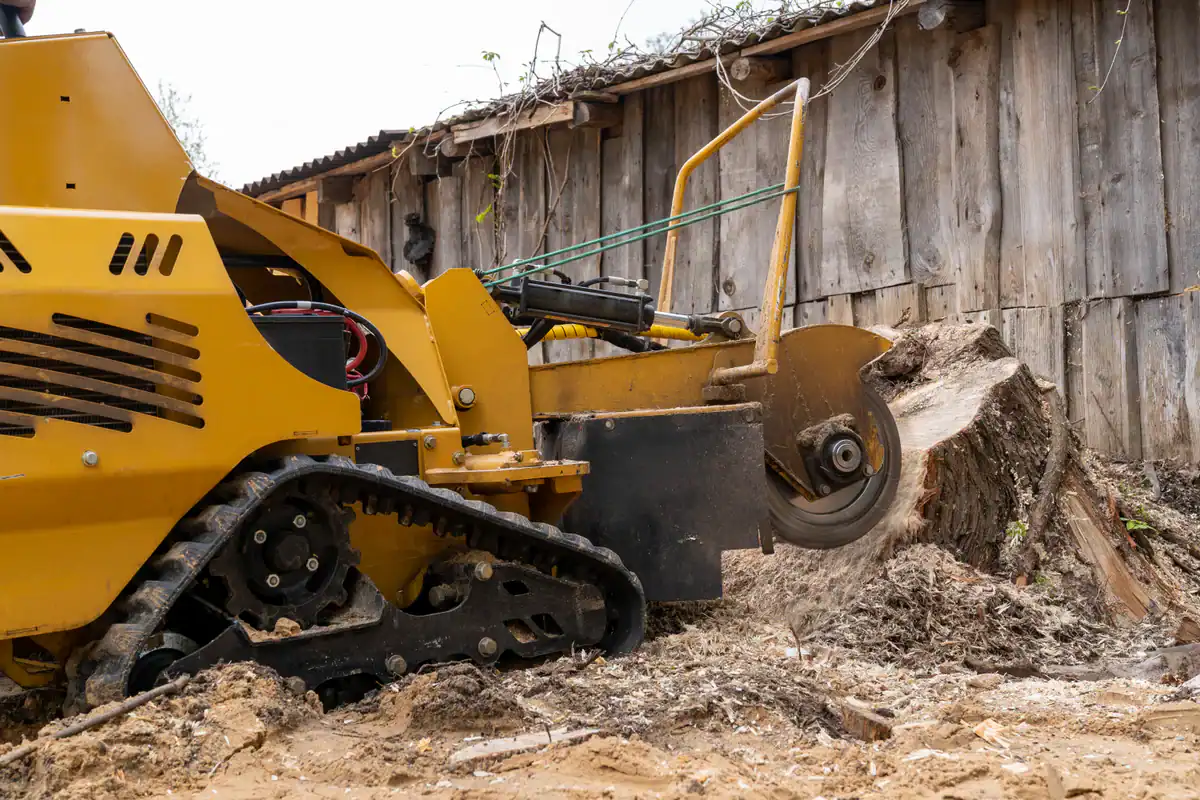
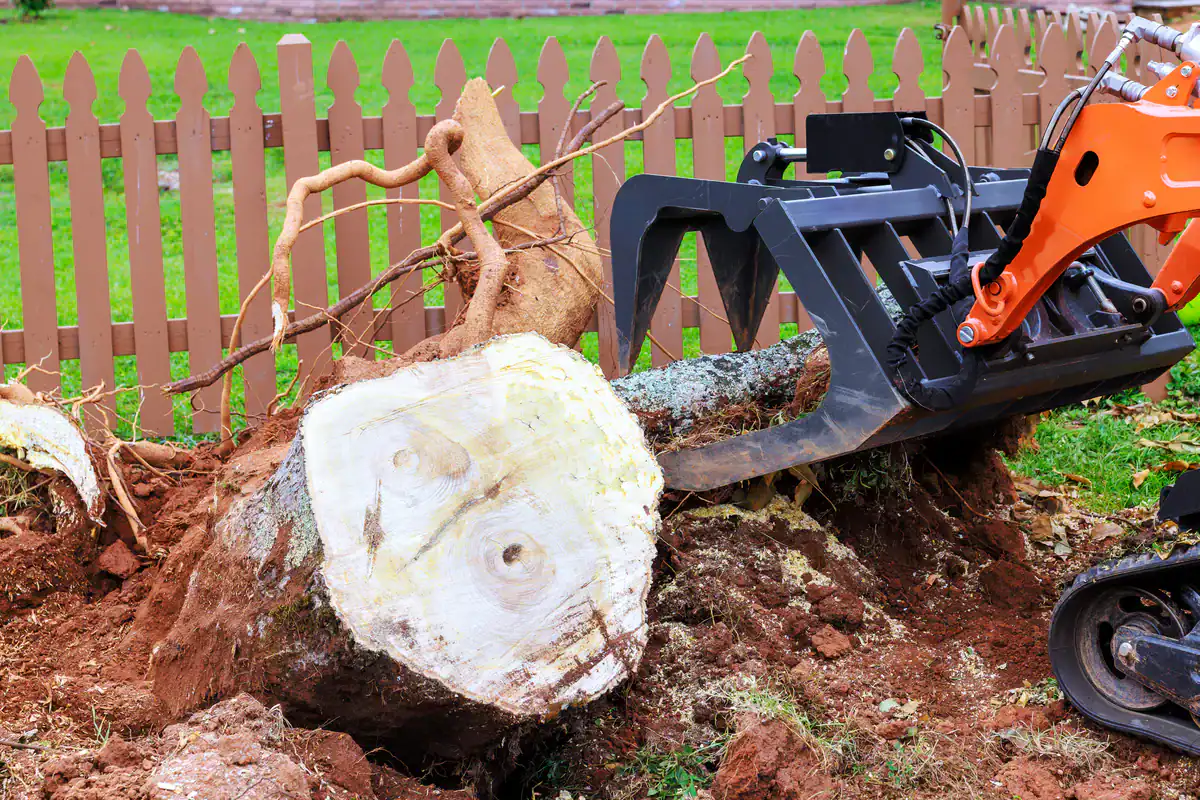
When the tree is down, we handle all cleanup. Stumps can be ground down during the same visit or scheduled separately. You decide what happens to the wood and mulch — it leaves with us, or it stays if you want it.
Ready to get started?
Tree removal in Olathe covers a lot of ground depending on what you’re dealing with. Dead tree removal is one of the most common calls we get — and in Johnson County right now, a significant portion of those are ash trees. Olathe’s own municipal code prohibits all ash species in new landscaping, which reflects just how widespread the Emerald Ash Borer damage has become across the area.
If you have an ash tree in an established Olathe neighborhood that’s been declining for a season or two, it’s worth getting eyes on it soon. A dead ash doesn’t stay stable for long, and once it starts dropping large limbs, you’re in reactive mode instead of planned mode.
Beyond dead tree removal, we handle diseased tree removal, hazardous tree removal, large tree removal, stump grinding, brush removal, and emergency storm cleanup. If a severe thunderstorm rolls through Olathe — and since June 2023 alone, the city has recorded 46 confirmed severe weather events — and a tree splits or comes down overnight, we respond quickly. Multiple customers have had estimates within 24 hours and work completed the following day.
Every service includes a full property cleanup. No packages, no tiers — just the job done right and the yard left clean. If you’re near Lake Olathe, in a cul-de-sac in Cedar Creek, or on a tight lot near the College Boulevard corridor, the process is the same: safe removal, clean finish, honest pricing.
For most Olathe homeowners, no permit is required. The city does not require a permit to remove a tree on private residential property, which means you can move forward without waiting on any approval process. That’s one less thing slowing you down when you’re dealing with a dead or hazardous tree that needs to come out.
The situation changes if your tree is located in the right-of-way — the strip of land between the sidewalk and the curb. That area is technically maintained by the adjoining property owner under Olathe’s development ordinance, but you should contact the city before removing anything there. If you’re not sure whether your tree falls on private property or in the right-of-way, that’s something we can help you sort out during the estimate visit before any work begins.
It depends on the situation, and the answer isn’t always what homeowners expect. If a healthy tree falls during a storm and damages a structure — your roof, your fence, your garage — most standard homeowners insurance policies will cover a portion of the removal cost, typically somewhere in the range of $500 to $1,000 toward the removal itself, with the structural damage handled separately under your dwelling coverage.
Where it gets complicated is with dead or visibly diseased trees. If your insurer can show that you knew the tree was dead or deteriorating and didn’t address it, they may deny the claim on negligence grounds. In a market like Olathe, where home values have been climbing steadily and the average Johnson County home is now selling around $560,000, that’s a significant financial exposure to leave unmanaged. Getting a dead or hazardous tree removed before it falls is the move that keeps your coverage intact.
The Emerald Ash Borer has been working through Johnson County for years, and Olathe’s response has been significant enough that the city now prohibits all ash species in new landscaping. If you have an ash tree that was planted in the 1980s, 1990s, or early 2000s — which covers a large portion of the mature tree stock in established Olathe neighborhoods like Cedar Creek and Arbor Creek — it’s worth a close look.
Signs that an ash tree is in serious trouble include thinning or dying branches starting at the top of the canopy, S-shaped galleries under the bark, increased woodpecker activity, and vertical bark splits. Once an ash is dead, it becomes structurally unstable relatively quickly — within a couple of years, large limbs can come down without warning, even on calm days. If the canopy is more than 50% gone or the tree is already showing signs of structural failure, removal is almost always the right call. We’ll give you a straight assessment during the estimate visit — if the tree can be saved with treatment, we’ll say so.
Fast. Olathe sits in a part of the Kansas City, KS & MO metro that sees serious storm activity — 60 mph wind gusts, large hail, and the occasional tornado. Since June 2023, the city has recorded 46 confirmed severe weather events. When a storm splits a tree or drops a large limb on a fence or roof, waiting a week for a crew isn’t an option.
Multiple customers have received same-day estimates and had work completed the following day. In genuine emergency situations — a tree leaning against a structure, a root ball exposed and the tree actively threatening the house — we prioritize those calls. We’ve deployed crews for large-scale storm recovery operations across multiple states, including Kansas and Missouri, so this isn’t a crew learning on the fly. We know how to move quickly and safely when the situation calls for it.
Cleanup is included on every job — that’s not an add-on or an upgrade. When the tree comes down, all debris, branches, and wood are removed from your property. No piles left in the yard, no chips scattered across the lawn. If you want to keep the wood for firewood or the mulch for your garden beds, just let us know before the job starts and we’ll set it aside for you. Otherwise, it leaves with us.
The stump is a separate decision. We can grind it down during the same visit, which is the most common choice — stump grinding brings the stump below grade so you can replant, lay sod, or just stop looking at it. If you want to leave the stump for now and come back to it later, that’s fine too. For homeowners in well-maintained Olathe subdivisions where curb appeal matters, most prefer to handle the stump at the same time rather than leave a visible reminder in the yard.
Tree removal costs vary based on the size of the tree, its location on the property, and what’s around it. Nationally, the average cost of tree removal runs between $750 and $1,200, with smaller trees on the lower end and large trees near structures, fences, or power lines running significantly higher. Every job in Olathe is different — a 60-foot oak in an open backyard is a different job than the same tree hanging over a garage in a Cedar Creek cul-de-sac.
What we do offer is a free, no-obligation estimate with straightforward pricing — no runaround, no bait-and-switch. You’ll know what the job costs before anyone picks up a chainsaw. For Olathe homeowners getting multiple quotes, the most important thing to verify from any company isn’t the price — it’s proof of liability insurance and workers’ compensation coverage. An uninsured crew working on your property creates personal liability exposure that can cost far more than the tree removal itself if something goes wrong.
Other Services we provide in Olathe