Leavenworth’s snow and ice season runs from October through April. That’s six months of ice loading on some of the oldest, largest trees in the Kansas City, KS & MO metro. A tree that looked fine in September can have three major limbs hanging over your roof by January — and in Leavenworth’s older neighborhoods, where homes sit close together and mature oaks and cottonwoods have been growing for a century, a single branch failure can punch through a historic roof or land on a neighbor’s property.
Getting a hazardous or dead tree removed before winter isn’t being overly cautious. It’s closing a six-month window of risk that most homeowners don’t think about until something actually falls. Once a large limb comes down in an ice event, you’re dealing with emergency costs, potential insurance complications, and damage to a structure that may be irreplaceable.
Here’s what matters most: if your tree was already dead or visibly compromised and you hadn’t addressed it, your homeowners insurance may deny the claim. Negligence clauses exist for exactly this reason, and insurers use them. A proactive removal now is almost always cheaper — and less stressful — than the alternative.
After we finish the job, your yard is clean. No piles, no debris, no wood scattered across the lawn. If you want to keep the mulch or wood, just say so upfront and we’ll set it aside for you.
We’re a family-owned, fully insured tree care crew based in Kansas City, KS & MO, KS — about 25 miles down US-73 from Leavenworth. We’ve been doing this work across the Kansas City, KS & MO metro for over a decade, and we’ve handled tree removal in every kind of situation: tight historic lots in Leavenworth’s National Register districts, bluff-edge properties near creek corridors, large trees over garages and fences, and post-storm emergency calls where something already came down.
We’re a small, tight-knit crew — not a franchise, not a call center dispatching strangers. When you call, you get people who know Leavenworth, know the tree species common to Leavenworth County, and know what it takes to work carefully around structures that have been standing since before Kansas was a state.
Every job includes full cleanup. We carry liability insurance and workers’ compensation coverage, so if anything goes wrong on your property — or with a crew member — you’re not left holding the bill. Free estimates, honest assessments, and straight pricing. No runaround.
It starts with a free on-site estimate. We come out, look at the tree, look at what’s around it — your home, your neighbor’s fence, any overhead lines, the grade of the ground — and give you a straight assessment of what needs to happen and what it’ll cost. If a trim can solve the problem, we’ll tell you that. We’re not going to recommend a full removal just because it’s a bigger job.
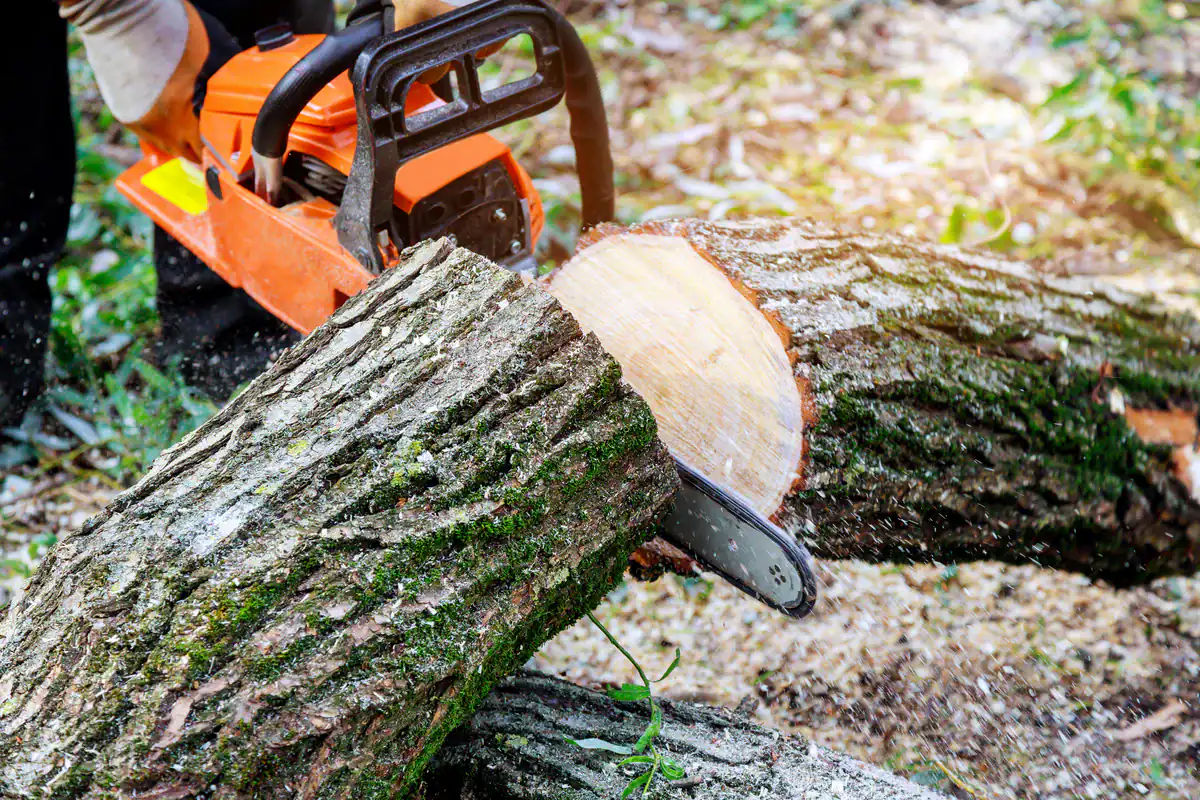
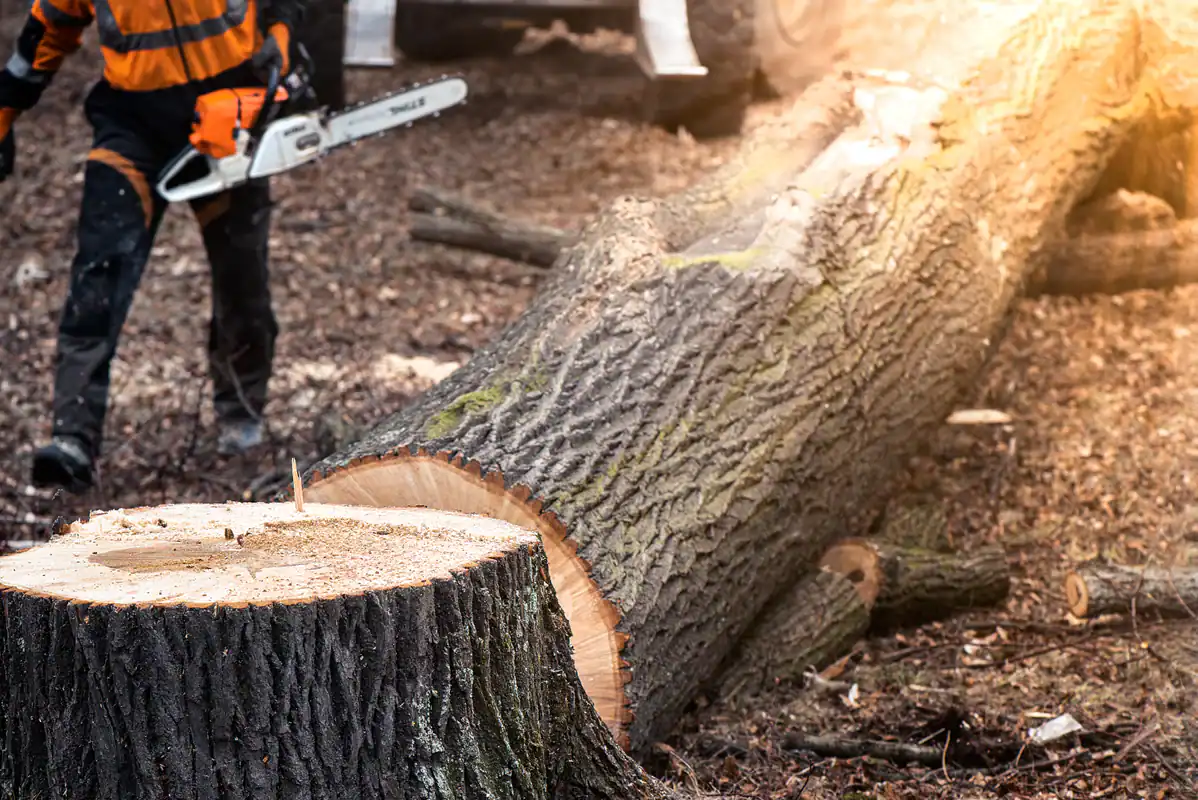
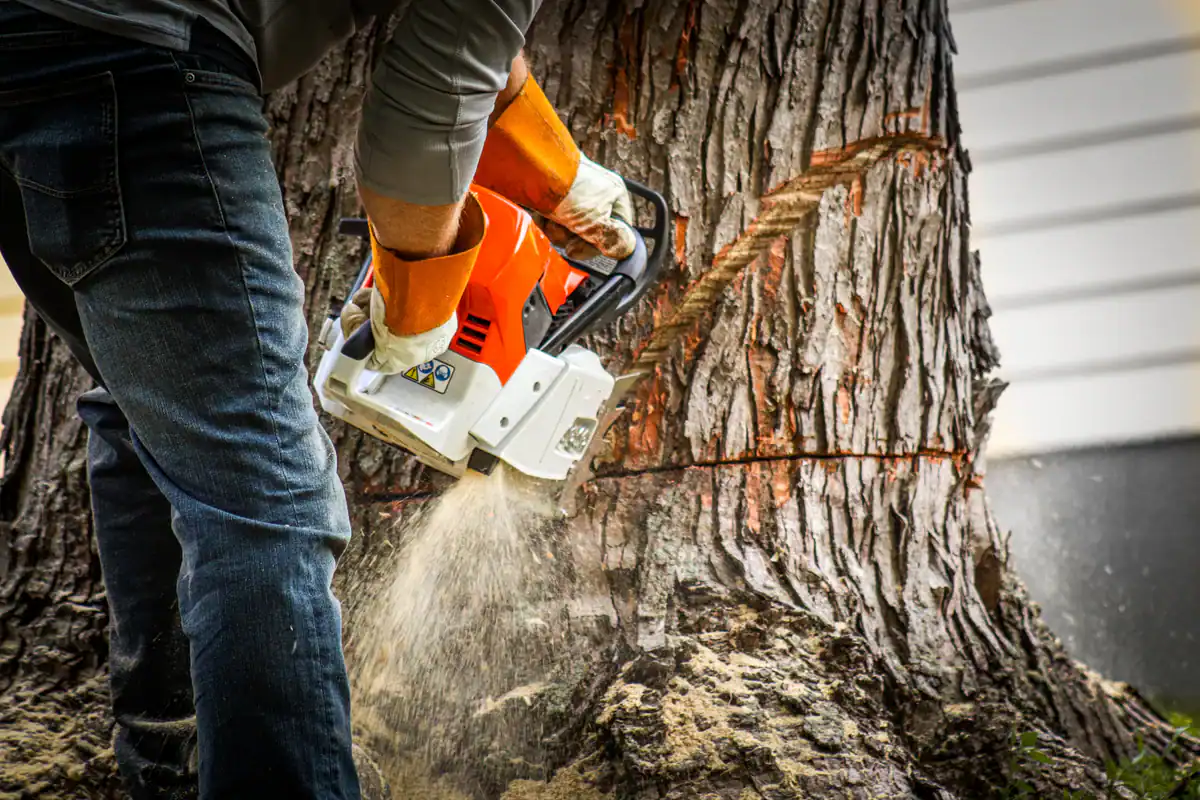
Once you’re ready to move forward, we get to work. For most residential jobs in Leavenworth, that means sectional removal — taking the tree down in controlled pieces rather than dropping it whole. This matters especially in the older neighborhoods near the historic districts, where lots are narrow, homes are close together, and the terrain isn’t always flat. The rolling bluff topography in parts of Leavenworth means we have to think carefully about rigging and debris direction in ways that a flat suburban lot simply doesn’t require.
Before we start any job, it’s worth checking with the City of Leavenworth’s Building Inspections Division if your property sits within or adjacent to one of the city’s eight National Register Historic Districts. In some cases, tree removal near a listed structure may warrant a quick conversation with the city’s Community Development office first. It’s not always required, but it’s worth a five-minute call to be sure.
Once the work is done, we clean everything up — chips, limbs, trunk sections — and leave your property the way it looked before the tree was there, minus the hazard.
Ready to get started?
We handle the full range of residential and commercial tree removal in Leavenworth, KS — from a single dead tree in a backyard to large, structurally compromised trees on bluff-edge lots above Quarry Creek and the other creek corridors that cut through the city’s older neighborhoods.
Dead tree removal is one of the most common calls we get in this area. Leavenworth’s urban tree canopy is among the oldest in the metro, and trees that were planted in the early 1900s are now at or past their natural lifespan in many neighborhoods. Emerald Ash Borer is also an active threat across Leavenworth County — EAB-killed ash trees are brittle, structurally unpredictable, and need to come down before they fail on their own terms. We know what an EAB-damaged ash looks like and how to remove one safely.
For diseased or hazardous tree removal, the process is the same: assess what’s there, determine the safest removal approach given the surrounding structures and terrain, and execute it cleanly. Large tree removal — the kind that involves mature oaks, cottonwoods, or silver maples that have grown for decades in tight residential spaces — is something we’ve done many times. We don’t have limitations on extremely tall trees that some local companies face.
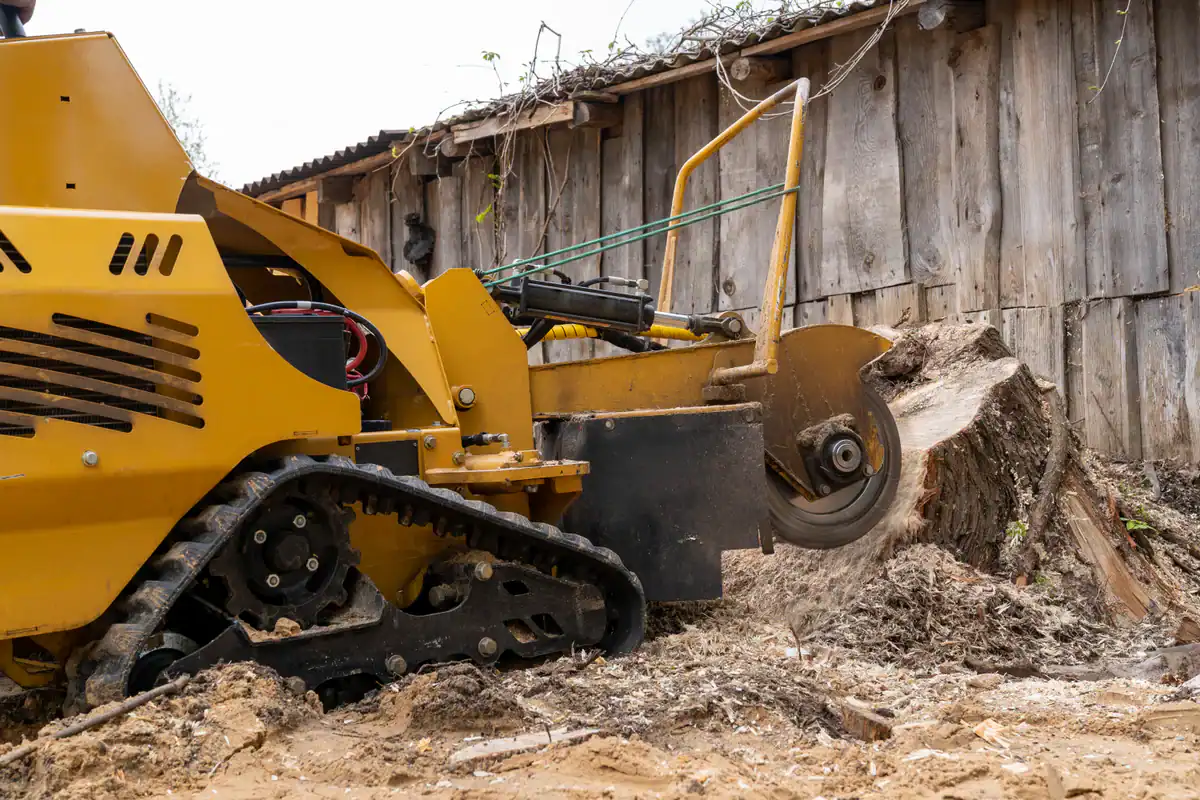
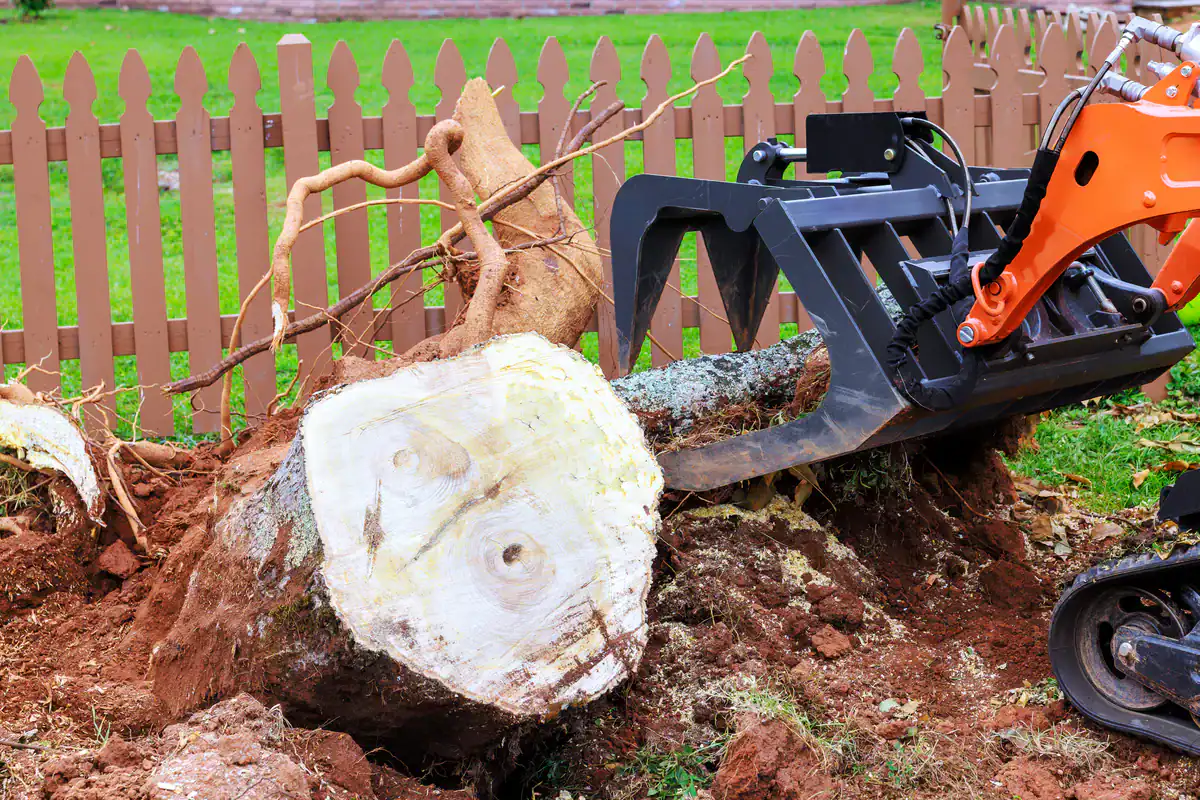
Stump removal and stump grinding are also available if you want the area cleared completely after the tree comes down.
For most private residential properties in Leavenworth, there’s no standalone tree removal permit required before taking down a tree on your own land. That said, Leavenworth is a Certified Local Government under the Kansas State Historic Preservation Office, and the city actively manages eight National Register Historic Districts. If your property sits within or adjacent to one of those districts, it’s worth a quick call to the city’s Community Development and Planning office before any work starts — not because removal is necessarily prohibited, but because some projects near listed historic structures may warrant a review.
The city’s code enforcement does require property owners to maintain vegetation so it doesn’t interfere with sidewalks, streets, or public property. If a tree or its branches are encroaching on a public right-of-way and you’ve received a notice of violation, that adds a time element to the decision. Either way, the safest move is to confirm with the city first if you’re unsure, then get your free estimate scheduled so you’re ready to move quickly once you have the green light.
This is one of the most common questions, and the honest answer is: it depends on what’s actually going on with the tree. A tree that’s lost a major limb in a storm but still has a healthy root system and a sound trunk may do fine with a strategic trim and some structural pruning. On the other hand, a tree showing signs of Emerald Ash Borer damage — sparse canopy, S-shaped galleries under the bark, dieback starting at the top — is not going to recover. EAB kills ash trees, and once the damage is significant, removal is the only safe option.
Dead branches don’t only fall during storms. A branch that’s been dead for a season can let go on a calm day with no warning. If you’re seeing large sections of a tree that aren’t leafing out, bark that’s cracking or falling off, or a trunk that sounds hollow when you knock on it, those are signs worth getting a professional set of eyes on. We’ll give you a straight answer at the free estimate — if a trim will solve it, that’s what we’ll tell you.
If a tree falls and causes damage, your homeowners insurance may cover it — but there are important conditions. If the tree fell because of a sudden storm event and there was no prior indication it was dead or diseased, most policies will cover the structural damage and contribute something toward removal costs, typically in the range of $500 to $1,000 for the removal itself. The damage to the structure is usually covered up to your policy limits.
Where it gets complicated is negligence. If the tree was already dead, visibly diseased, or leaning in a way that a reasonable person would recognize as a hazard, your insurer may argue you had a duty to address it and didn’t. In that case, the claim can be denied or significantly reduced. The same logic applies when your tree falls onto a neighbor’s property — if you knew the tree was a problem and didn’t act, liability can shift to you personally. In Leavenworth’s older neighborhoods, where mature trees grow close to historic homes and neighboring structures, this isn’t a hypothetical scenario. It happens. Dealing with the tree before it falls is almost always the better financial decision.
For a standard residential removal, most jobs are completed in a single day. A smaller tree — say, under 30 feet — typically takes our crew two to four hours from start to cleanup. Larger trees, especially the kind of mature oaks and cottonwoods common in Leavenworth’s older neighborhoods, can take a full day depending on the size, the proximity to structures, and the terrain. Properties on the bluff slopes or near the creek corridors in Leavenworth can add complexity to the job because of the uneven ground and the rigging required to control where sections fall.
We work in sections, not by dropping the whole tree at once. This is standard practice for tight residential lots, and it’s how you avoid damage to fences, neighboring homes, and anything else in the drop zone. Once the tree is down, everything gets cleaned up — wood, chips, limbs — and hauled away. If you want to keep any of the wood or mulch for personal use, let us know before we start and we’ll set it aside. Your yard should look essentially the same as it did before the tree was there, just without the hazard.
Yes, but it requires a crew that actually knows what they’re doing in tight, high-stakes spaces. Leavenworth has more National Register Historic properties than almost any other city in the Kansas City, KS & MO metro, and a significant number of tree removal jobs in this city happen within a few feet of brick facades, original foundations, and historic woodwork that can’t simply be patched or replaced if something goes wrong. The margin for error is smaller here than it would be on a newer suburban lot.
The key is controlled sectional removal — taking the tree down in manageable pieces with proper rigging so each section falls where we intend, not where gravity decides. This takes more time than a straight fell, but it’s the right approach when you’re working near a structure that has irreplaceable historic character. We’ve done this kind of work in dense residential neighborhoods across the KC metro, including documented removals of large trees in tight spaces without damage to neighboring properties. Full liability insurance and workers’ compensation coverage are in place on every job, so if the unexpected does happen, you’re protected.
Yes. We serve residential properties throughout Leavenworth, KS, including off-post housing in the areas surrounding Fort Leavenworth. If you’ve recently arrived on assignment and you’re moving into off-post housing for the first time, one of the most practical things you can do early on is get a quick assessment of the trees on your property. Leavenworth’s residential tree canopy is old — trees that have been growing for 50 to 100 years don’t always come with a maintenance history, and a previous occupant may not have addressed a dead or compromised tree before rotating out.
A free on-site estimate gives you a clear picture of what’s there and whether anything needs attention. There’s no obligation, and if everything looks fine, you’ll know that too. For military families working around a tight assignment timeline, the fast response matters — we have a track record of same-day and next-day estimates, and most jobs are completed quickly once scheduled. We’re fully insured, which is worth confirming with any tree service you hire — if a worker is injured on your property and the company doesn’t carry workers’ compensation, that liability can fall on you as the homeowner.
Other Services we provide in Leavenworth