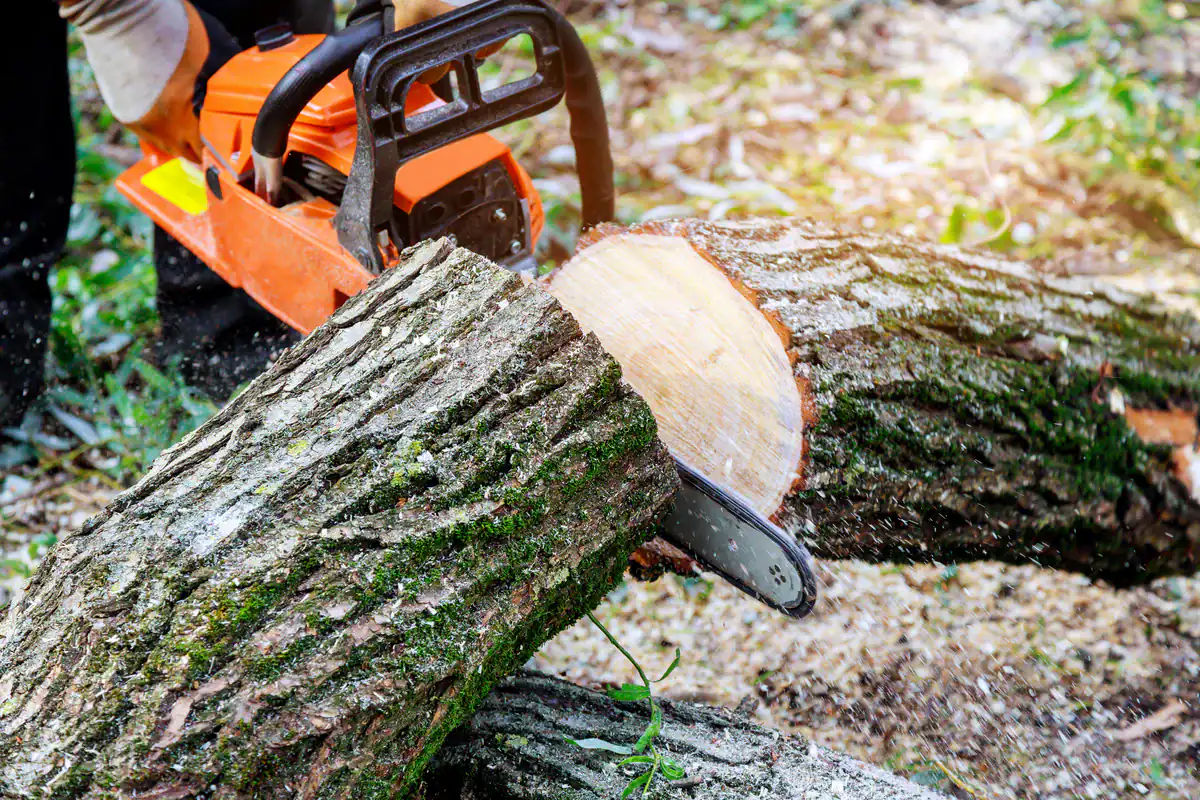
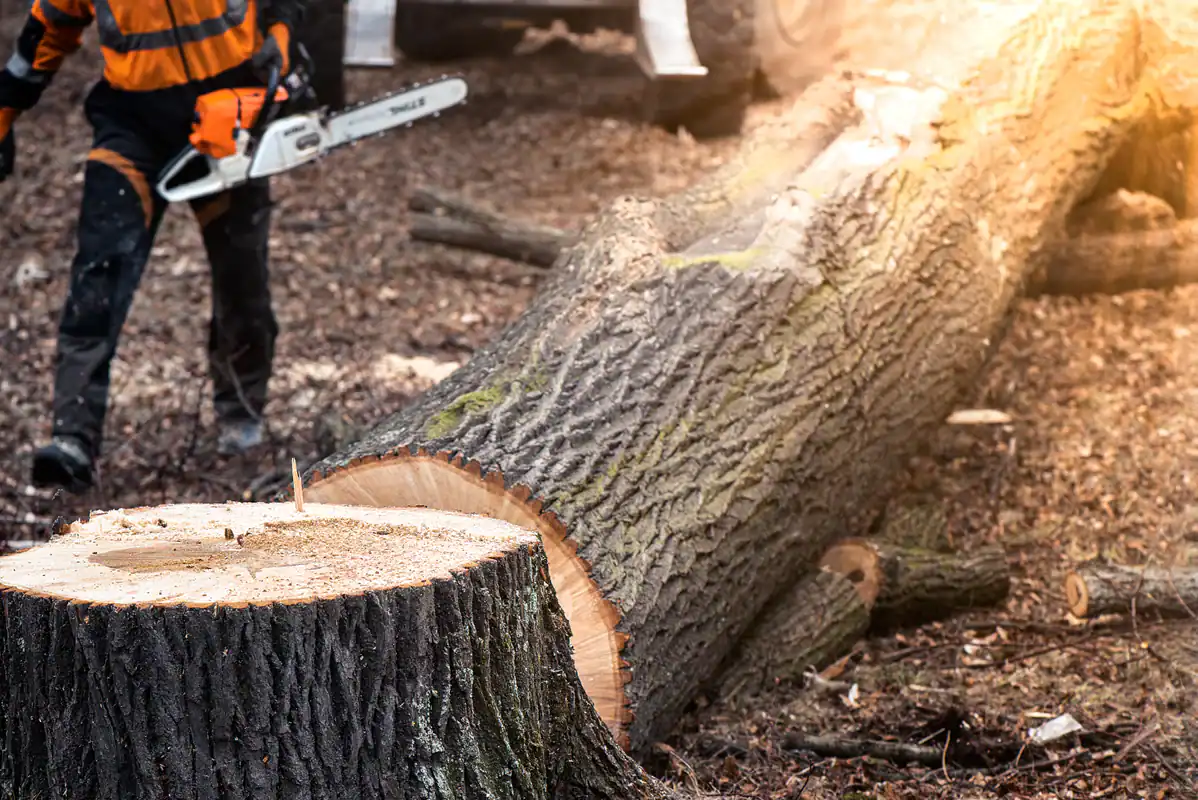
A dead or hazardous tree isn’t just an eyesore — it’s a liability sitting in your yard. In Harrisonville, where spring storms have a documented history of bringing large trees down across roads and onto power lines, waiting on a compromised tree is a gamble most homeowners can’t afford. The April 2026 storms that rolled through Cass County knocked trees down and blocked roads across the region. The homeowners who’d already handled their problem trees didn’t have to make any emergency calls.
Once the tree is gone, you get your yard back. No pile of logs sitting there for three weeks, no wood chips scattered across your lawn, no stump left to trip over. Every job we complete includes full cleanup — the debris goes with our crew. If you want to keep the wood or mulch for personal use, just say so before the job starts.
For homeowners in Harrisonville’s older neighborhoods near the historic Courthouse Square — where some of those oaks and elms have been growing in Missouri clay soil for 50 to 80 years — getting a professional eye on a mature tree before it becomes a problem is exactly the kind of thing that prevents a much bigger conversation later.
We’ve been doing this work in the Kansas City, KS & MO metro for over a decade. That means we’ve worked in the same clay soils, the same storm patterns, and with the same mature tree species that Harrisonville and Cass County homeowners deal with every year. This isn’t a franchise dispatching crews from a call center. We’re a tight-knit, family-owned operation that knows this region.
We’re fully licensed and insured — liability coverage and workers’ compensation both. That matters more than most homeowners realize. If an uninsured worker gets hurt on your property, that can become your problem. With us, it isn’t.
We also give free estimates with no pressure attached. You’ll get an honest read on what the tree actually needs — whether that’s full removal or something less involved. If a strategic trim can solve the problem, we’ll tell you that too. That kind of straight talk is what keeps people calling us back.
It starts with a free on-site estimate. We come out, look at the tree, and give you a clear picture of what needs to happen and what it’ll cost. No vague ballpark figures, no bait-and-switch. Just a straightforward assessment so you can make an informed decision without feeling like you’re being sold something.
Once you’re ready to move forward, scheduling is fast. Multiple verified customers have had their estimates completed within 24 hours and the work done the following day. For a Harrisonville homeowner juggling a 40-minute commute each way on I-49, that kind of turnaround matters. You’re not taking a week off work to wait around for a crew that may or may not show up.
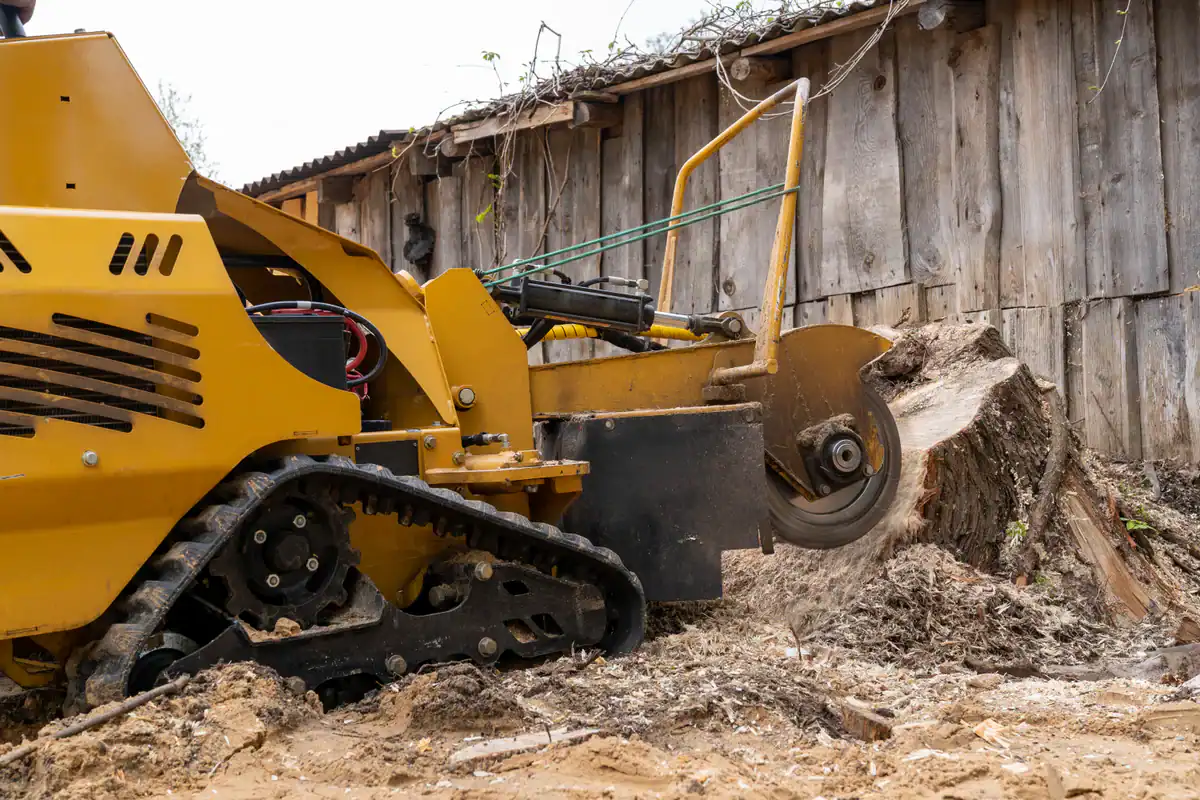
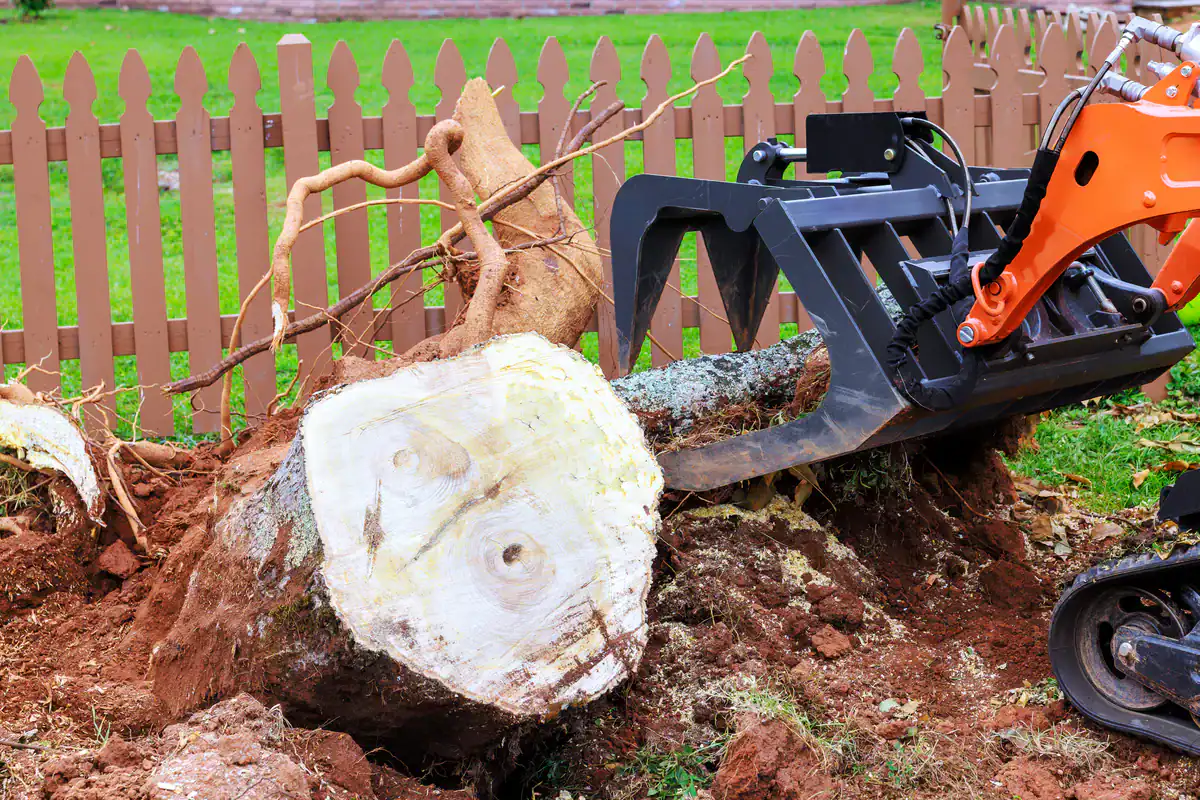
Our crew handles everything — cutting, removal of the trunk and branches, and full cleanup of the site. If stump grinding is part of the job, that’s addressed too. Harrisonville’s city code enforcement operates under the 2018 International Property Maintenance Code, which means hazardous trees on private property can become a compliance issue if left unaddressed. Getting it handled cleanly and completely keeps you on the right side of that. When we leave, the yard is clean. That’s the standard on every job, not just the ones where someone’s watching.
Ready to get started?
We handle the full range of what Harrisonville homeowners actually run into. Dead tree removal, diseased tree removal, hazardous tree removal, large tree removal — including the kind of mature oaks and elms that have been growing in the clay-heavy soil around the Courthouse Square neighborhood for decades. We also handle tree trimming, stump removal and grinding, brush removal, and emergency storm response when something comes down unexpectedly.
For newer subdivisions like Glen Eagle, Katy Trails, and Burris Ridge, the work often looks different — lot clearing, stump grinding left over from construction, or assessing young trees that were damaged during the building process. For the older neighborhoods closer to downtown Harrisonville, it’s more likely to be a large, mature tree with structural issues that aren’t obvious from the street but become very obvious in a storm.
If you recently bought a home in Harrisonville and aren’t sure what you’re working with in the yard, a free estimate is the right starting point. New homeowners in this area frequently inherit trees the previous owner never dealt with — and finding out what’s actually going on before the next storm season is a lot less stressful than finding out during one. We also handle commercial properties, so if you’re managing a rental in Harrisonville under the city’s Rental Ready Program, we can help you get and stay compliant.
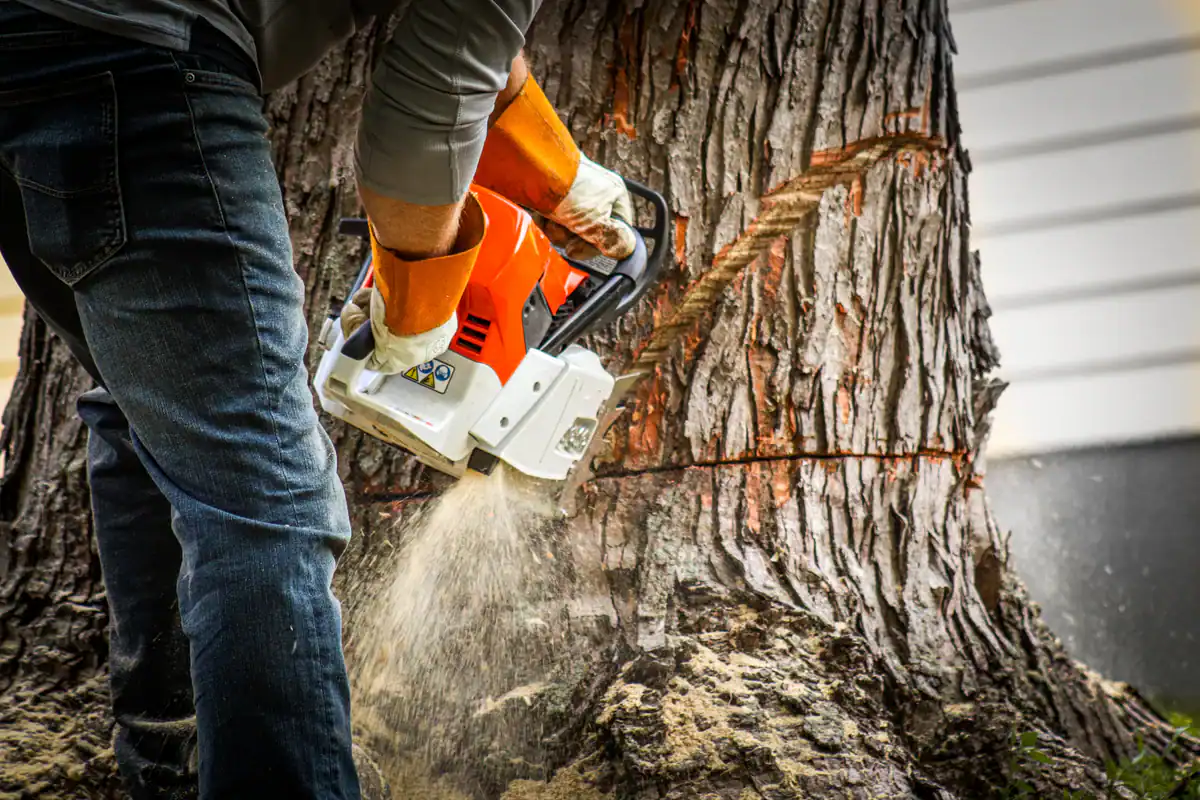
Not every tree that looks rough needs to come down — and we’ll tell you that honestly. The main things to look for are significant dead branching throughout the canopy, visible decay or hollow sections in the trunk, large cracks or splits in the main structure, or a noticeable lean that wasn’t there before. A tree that’s lost more than about a quarter of its healthy branches is usually in serious decline and worth having assessed professionally.
In Harrisonville specifically, the clay-heavy Missouri soil can gradually destabilize root systems in older trees without any visible warning above ground. A tree that looks structurally fine from the street may have compromised roots that won’t hold in a strong storm. That’s especially relevant in the older neighborhoods near the Courthouse Square, where some of these trees have been in the ground for 50 years or more. A free on-site estimate from us will give you a clear, honest answer — and if trimming can solve the problem instead of removal, that’s what you’ll hear.
It depends on the situation, and the answer isn’t always what homeowners expect. If a healthy tree falls on your home due to a storm or other sudden event, most homeowners insurance policies will cover a portion of the removal cost — typically somewhere in the range of $500 to $1,000 toward removal when the tree has caused structural damage. That’s often not enough to cover the full job, but it helps.
Where things get complicated is when the tree was already dead, visibly diseased, or structurally compromised before it fell. If your insurer can show that you knew — or reasonably should have known — the tree was a hazard and did nothing about it, they may deny the claim based on negligence. Proactive removal of a dead or hazardous tree is almost always less expensive than dealing with a denied insurance claim after the fact. If you’re unsure about a tree on your Harrisonville property, getting a professional assessment now is the lower-risk move by a wide margin.
For most standard residential tree removal on private property in Harrisonville, you generally don’t need a separate tree removal permit. The city’s storm water management code specifically references removing trees by an individual property owner as an activity that falls outside the storm water permit requirement, which covers the most common residential situation.
That said, Harrisonville does actively enforce property maintenance and nuisance abatement standards under the 2018 International Property Maintenance Code. If a dead or hazardous tree is creating a safety risk or threatening adjacent properties, the city’s Code Enforcement Division can and does issue notices requiring corrective action. So while you typically won’t need to pull a permit to remove a tree, ignoring a hazardous tree isn’t a risk-free option either. If you’re in a historic section of the city near the Courthouse Square, it’s worth confirming with the Community Development Department whether any additional considerations apply to your specific property before work begins.
Tree removal costs vary based on the size of the tree, its location on the property, and what complications are involved — proximity to the house, fencing, neighboring structures, or overhead lines all factor in. Nationally, most tree removals fall somewhere between $750 and $1,200 on average, though large trees near structures can run significantly higher, and smaller straightforward removals can come in well below that range.
Harrisonville’s market tends to run on the more reasonable end of regional pricing, which is consistent with the area’s overall cost of living. Stump removal in the Harrisonville area averages around $169, which is in line with or slightly below national norms. The most important thing to know is that the cheapest quote isn’t always the right call — if a company is significantly underbidding everyone else, the first question to ask is whether they carry full liability insurance and workers’ compensation. We offer free estimates with transparent pricing, so you’ll know exactly what you’re paying for before any work begins.
First, stay away from any tree that’s fallen near or on power lines — that’s a situation for your utility provider before anyone else touches it. Once you’ve confirmed there’s no live electrical hazard, document what happened with photos before any cleanup begins. That documentation is useful if you end up filing an insurance claim.
For trees that are partially down, hanging, or leaning against your house or fence, don’t try to manage it yourself. A partially fallen tree under tension can shift or snap unpredictably, and that’s when injuries happen. We’ve deployed storm response crews across multiple states and handle exactly these kinds of post-storm situations regularly. Harrisonville has seen its share of storm events — the spring 2026 storms that knocked trees down and blocked roads across Cass County are a recent example. Getting a crew out quickly after that kind of event matters, and fast response times are one of the things we’re consistently recognized for in customer reviews.
Not every diseased tree is a lost cause, and a straightforward answer to that question is one of the things that separates a trustworthy tree service from one that’s just trying to sell you a removal. If less than about 25% of a tree’s branches are affected, there’s a reasonable chance the tree can survive with the right intervention — targeted pruning, treatment, and monitoring. The key is catching it early enough.
In the Kansas City, KS & MO metro and Cass County, the diseases and pests most likely to affect your trees are the Emerald Ash Borer, Oak Wilt, and Bagworm infestations. Emerald Ash Borer in particular is aggressive — it kills ash trees with near-total mortality if left untreated, and dead ash trees become brittle and dangerous within a few years. If you have ash trees on your Harrisonville property that haven’t been assessed recently, that’s worth prioritizing. Oak Wilt moves through root systems and can spread to neighboring trees, so early identification matters there too. We’ll give you an honest read on whether treatment is a realistic option or whether removal is the safer and more cost-effective path forward.
Other Services we provide in Harrisonville