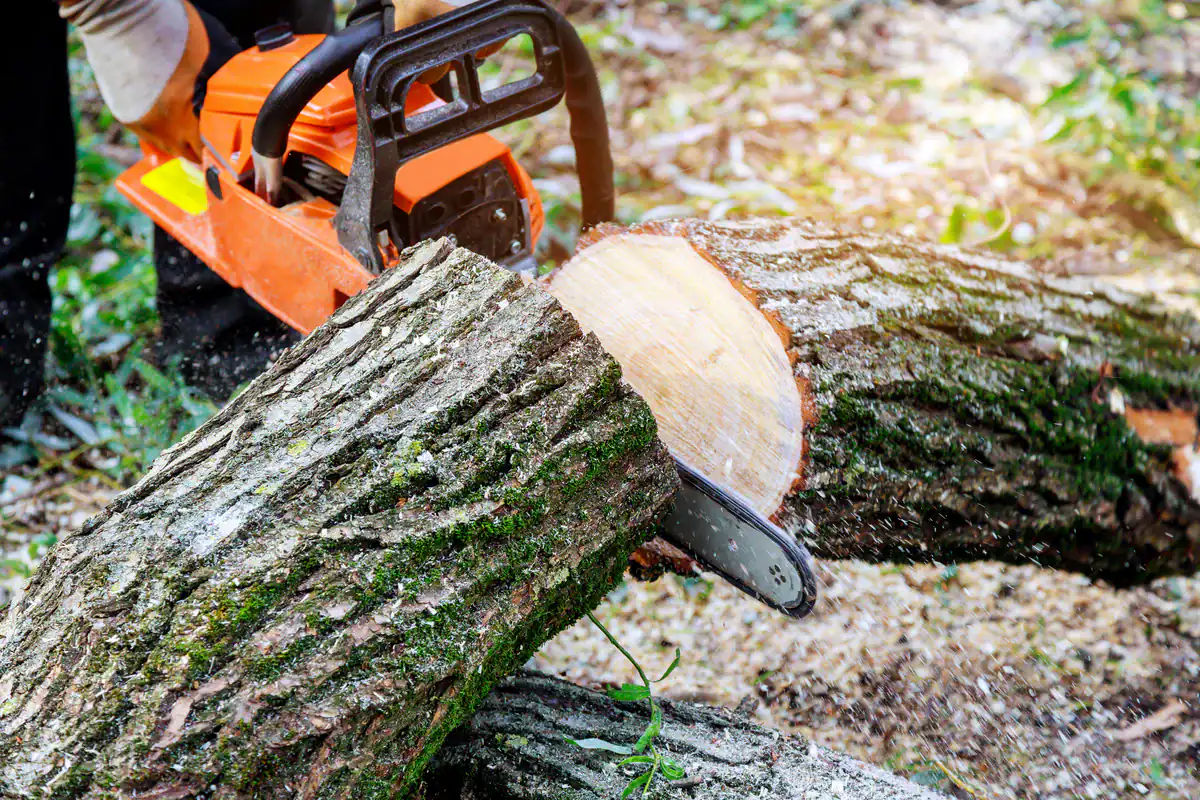
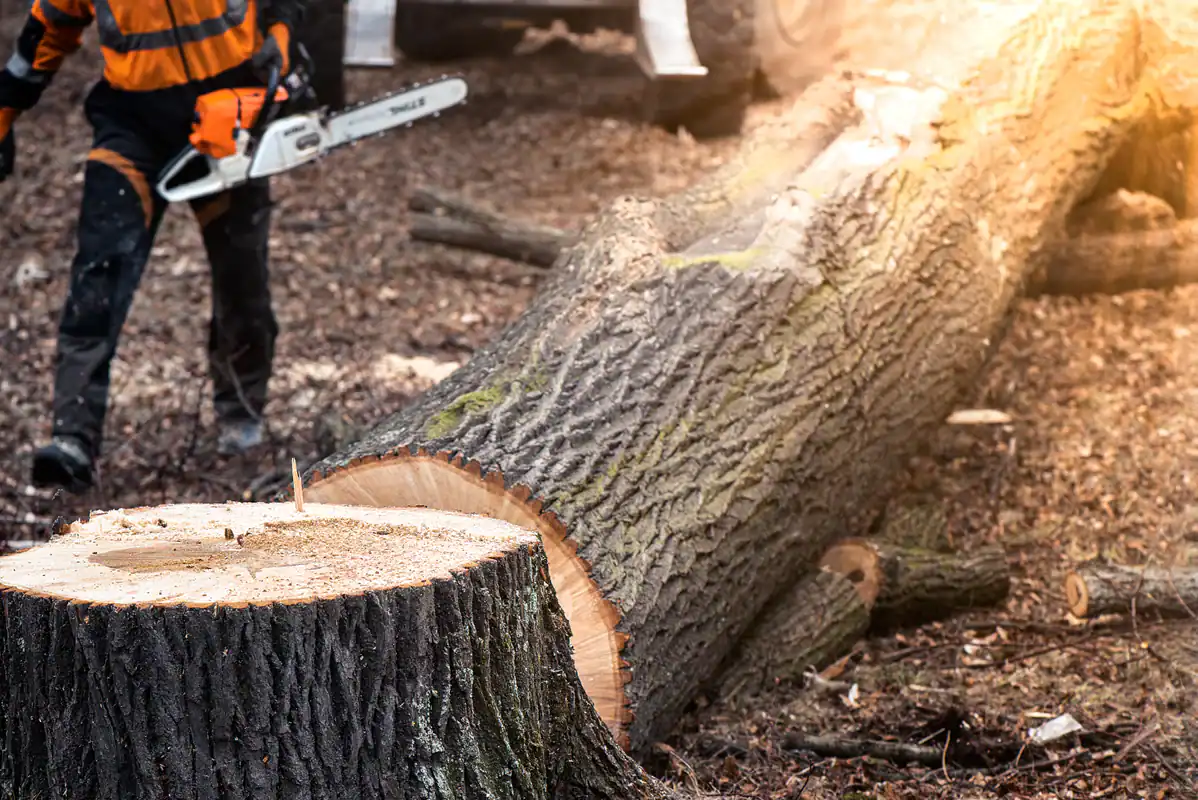
When a tree comes down the right way, you stop wondering every time the wind picks up. That’s the practical outcome — not just a cleaner yard, but a property that isn’t one bad storm away from a fence-crushing, roof-damaging event. For Greenwood homeowners, that peace of mind is worth something real.
Greenwood was literally named for its elm trees back in 1867. Those same elms — and the ash trees, oaks, and evergreens that have grown up alongside them over the decades — are now aging, and some are well past their prime. Dutch Elm Disease has been working through the Midwest for years, and the Emerald Ash Borer has taken out ash trees across Jackson County. If you’ve got a mature tree on your property that’s looking rough, it’s worth finding out whether it needs to come down before it decides on its own.
The homes on the west side of the railroad tracks, the acreage properties along the northern edge of town near the James A. Reed Wildlife Area, the newer builds in Woodland Trails — they all have different tree situations, but the same basic need: someone who shows up, does the job right, cleans up completely, and doesn’t leave you with a pile of wood and a mess to deal with for the next three weeks.
We’ve been working across the Kansas City, KS & MO metro for over a decade, including the kind of properties Greenwood is known for — large lots, mature trees, tight spots near outbuildings and fence lines, and the occasional job that smaller crews take one look at and pass on. We don’t pass.
We’re family-owned, fully insured, and based right here in the KC area. We carry liability coverage and workers’ compensation, which matters more than most homeowners realize — especially on complex jobs. If something goes wrong on your property and the crew isn’t properly insured, that can become your problem fast. With us, it isn’t.
We’ve also deployed to storm recovery operations across multiple states, including Missouri and Kansas. For a town that sits in Jackson County’s severe weather corridor and has documented tornado damage, that experience counts. It means we’ve handled large-scale storm damage before and know what we’re doing when things get complicated.
It starts with a free on-site estimate. We come out, look at the tree, look at what’s around it — the fence, the outbuilding, the neighbor’s yard, the proximity to the house — and give you a straight answer about what needs to happen and what it’s going to cost. No vague ranges, no pressure to sign anything on the spot.
Once you decide to move forward, we schedule the job and show up when we say we will. For urgent situations — a storm-damaged tree leaning against the fence, a dead limb hanging over the roof — our response time is fast. Multiple customers have had estimates within 24 hours and work completed the following day. In Greenwood, where Route 150 is your main corridor out to the metro and you’re not exactly around the corner from everything, having a crew that actually shows up and follows through matters.
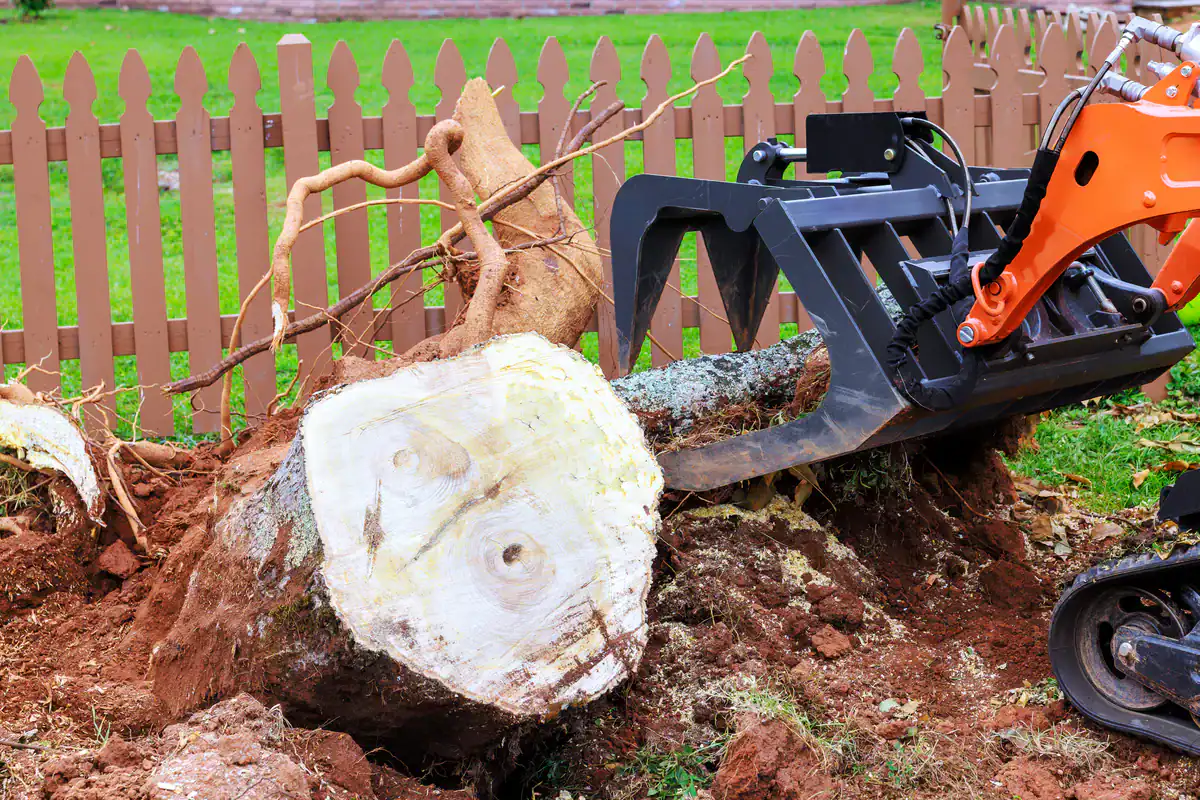
The removal itself is planned around what’s on the ground. Big trees near structures get taken down in sections. Equipment access on larger lots — the kind of acreage properties you’ll find along the northern edge of town near the James A. Reed Wildlife Area — gets figured out before the first cut, not during it. When the job is done, the property gets cleaned up completely. No piles left behind. If you want to keep the wood or mulch, say so in advance and we’ll work around that.
Ready to get started?
Tree removal in Greenwood isn’t one-size-fits-all. A dead elm on a standard residential lot in the older part of town is a different job than a large oak on a six-acre property bordering conservation land. We handle both — and everything in between.
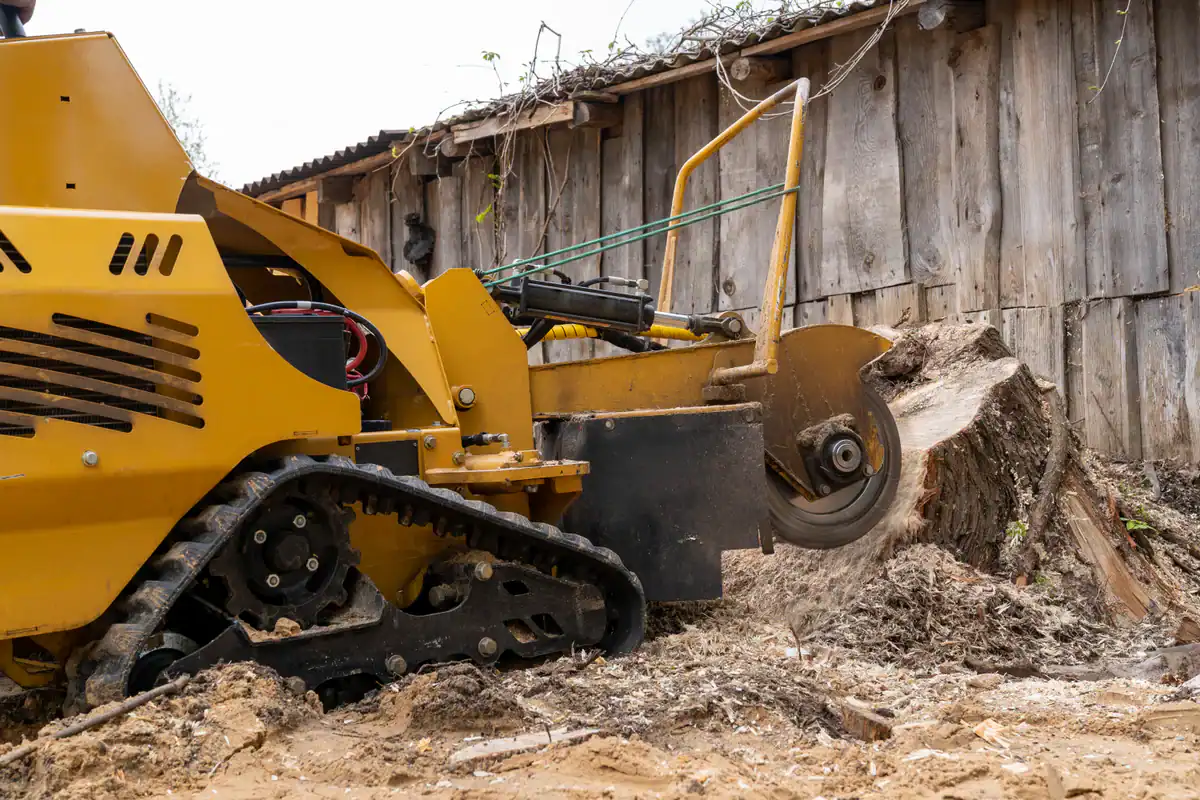
Our core service covers the full removal: cutting, hauling, and cleanup. Stump grinding is available if you want the area restored closer to its original condition. If you’ve got storm-damaged limbs that don’t require full removal, we offer trimming and pruning too — and if that’s genuinely all the tree needs, that’s what we’ll tell you. There’s no incentive here to upsell a full removal when a trim will do the job.
For Greenwood properties specifically, a few things come up regularly. Diseased tree removal — elm, ash, and oak trees showing signs of Dutch Elm Disease, Emerald Ash Borer, or Oak Wilt — is a common call, especially on older lots with mature canopy. Large tree removal near outbuildings, ponds, and fence lines is another. And after severe weather moves through Jackson County, we’re available for emergency storm response on trees that can’t wait. Whatever the situation, the job ends with a clean property — no debris, no piles, and a clear picture of what was done and why.
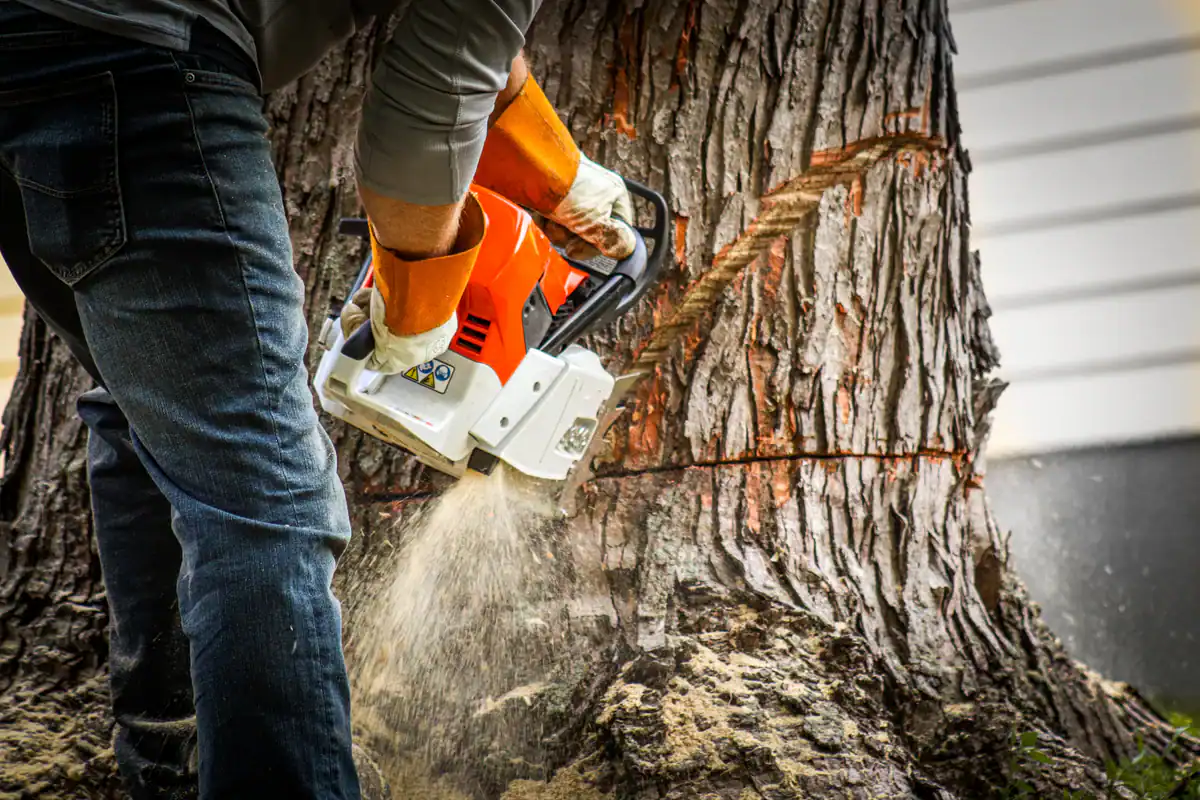
Not every tree that looks bad needs to come down, and we’ll tell you that honestly. The general rule is this: if less than 25% of the tree’s branches are damaged or dead, the tree can often recover with proper trimming. But there are situations where removal is the only responsible call — a tree that’s structurally compromised at the base, a dead tree with no living tissue remaining, or a tree that’s leaning toward a structure in a way that can’t be corrected.
In Greenwood specifically, the trees worth watching most closely are elms and ash trees. Dutch Elm Disease and the Emerald Ash Borer have been moving through Jackson County for years, and both can kill a tree faster than most homeowners expect. A tree that looks like it’s struggling in spring may be completely dead by fall. Getting an honest on-site assessment early — before the tree becomes an emergency — is almost always the cheaper and safer path.
It depends on the situation, and the answer matters more than most people realize. If a tree falls and damages a structure — your house, your fence, your garage — your homeowners insurance will typically cover some of the removal cost, often in the range of $500 to $1,000 toward the removal itself, along with the structural damage repairs. But if the tree just falls in the yard without hitting anything, most policies won’t cover the removal at all.
Here’s the part that catches people off guard: if the tree was already dead or visibly diseased before it fell, your insurer may deny the claim entirely — even if it damaged your home. The argument is negligence. You knew, or should have known, the tree was a hazard, and you didn’t address it. That’s a real outcome. For Greenwood homeowners with older elms or ash trees showing obvious signs of decline, proactive removal is the financially responsible move — not just for safety, but to protect your ability to make a claim if something does go wrong.
Dead trees don’t announce when they’re going to fall. A tree that’s been dead for a season or two can drop a major limb on a calm day with no wind at all — internal decay weakens the structure in ways that aren’t always visible from the outside. The risk isn’t limited to big storms, and it’s not limited to the tree itself falling. Dead branches come down first, often without warning.
The liability side of this is worth understanding too. If a dead tree on your property falls and damages your neighbor’s fence, car, or home, and it can be shown that you were aware the tree was in bad shape, you may be held personally responsible for the damage. Homeowners insurance doesn’t always step in to cover negligence-based claims. In a tight-knit community like Greenwood — where properties sit close together, especially in the older residential areas west of the tracks — that’s a real consideration.
For a standard residential tree — say, a 30-foot elm or ash on a typical Greenwood lot — the removal itself usually takes two to four hours from start to cleanup. Larger trees, or trees in more complex situations like those on acreage properties near the James A. Reed Wildlife Area, can take a full day depending on access and what’s nearby.
Yard damage depends entirely on how the crew plans the job. A crew that thinks through equipment access, drop zones, and ground protection before the first cut can remove a large tree with minimal disruption to the surrounding area. A crew that doesn’t plan ends up dragging equipment through landscaping and leaving ruts. The difference is experience. After the removal, stump grinding can restore the area close to its original condition, and the cleanup — including all debris, wood, and chips — is included in the job. If you want to keep any of the wood or mulch, that’s easy to arrange ahead of time.
Yes, when the crew knows what they’re doing. Large tree removal near structures is one of the more technically demanding jobs in this line of work, and it’s where the gap between an experienced crew and an inexperienced one becomes very obvious. The key is sectional removal — taking the tree down in controlled pieces rather than felling it whole — combined with careful planning around where each section will land.
Greenwood has a fair number of properties where this comes up: older homes with mature trees that have grown close to the roofline over the decades, acreage properties with barns or outbuildings in the drop zone, and newer builds in subdivisions like Woodland Trails where lot lines are close and neighbors are nearby. We’ve handled these situations across the Kansas City, KS & MO metro, and our reviews back that up — including specific accounts of large tree removal in tight residential spaces without damage to neighboring properties. Being fully insured means that if something unexpected does happen, you’re covered.
The two most important things to verify before anyone starts work on your property are liability insurance and workers’ compensation coverage. These aren’t formalities — they’re what protect you if equipment damages your fence or a crew member gets hurt on the job. In Missouri, there’s no state licensing requirement for basic tree work, which means anyone with a truck and a chainsaw can legally call themselves a tree service. That makes insurance the primary filter, not a credential you assume everyone has.
Beyond insurance, ask how long they’ve been operating in the Kansas City, KS & MO area, whether they offer a written estimate before work begins, and what the cleanup process looks like. In Greenwood, where a lot of searches for tree removal turn up national aggregators using toll-free numbers and templated websites, it’s worth confirming you’re actually talking to the crew that will show up — not a call center that will dispatch whoever’s available. A company with real local reviews, named crew members, and a verifiable track record in the KC metro is a meaningfully different thing than a lead-generation site dressed up to look like one.
Other Services we provide in Greenwood