When a tree comes down the right way — planned, controlled, and cleaned up completely — you stop carrying the weight of it. No more watching that oak every time the wind picks up. No more wondering if this is the spring storm that finally brings it down onto your fence, your garage, or your neighbor’s car. That mental load is real, and it ends the day the job is done.
For Grandview homeowners specifically, that relief comes with some practical stakes attached. The city’s municipal code requires that hazardous live or dead trees be promptly removed or trimmed — it’s not just a safety preference, it’s written into Grandview’s ordinances. And if a tree you knew was dead or compromised causes damage before you act, your homeowners insurance may not cover it. Negligence clauses exist, and insurers use them.
The 1960s and ’70s housing stock that defines so much of Grandview comes with trees that have been growing for 50 to 70 years. Oaks, maples, hackberries, and elms of that age on Jackson County clay soil are not the same as a young tree in a newer subdivision. They’re heavier, their root systems are more complex, and when they go, they go big. Getting ahead of that is not overreacting — it’s just what responsible homeownership looks like at this stage of a tree’s life.
We’ve been working in the Kansas City, KS & MO area for over a decade, which means we know Jackson County clay soil, mature hardwoods in tight residential yards, and the spring storm seasons that Grandview residents know well. The city has recorded 133 hail events within 10 miles since 2004, with baseball-sized hail on record. We’ve seen what that does to a 60-year-old oak, and we know how to deal with the aftermath.
This is a family-owned, tight-knit operation — not a franchise, not a call center dispatching whoever’s available. We’re rooted in the Kansas City, KS & MO area, and we treat your property accordingly. Fair pricing, no runaround, and a yard that’s clean when we leave. That’s our standard every time, whether it’s a single dead tree on a View High Drive lot or a storm-damaged limb hanging over a Blue Ridge Boulevard fence line.
If the tree doesn’t need full removal, we’ll tell you that too. An honest assessment upfront costs nothing and saves everyone time.
It starts with a free on-site estimate. We come out, look at the tree, and tell you what it actually needs — not what generates the biggest invoice. If a strategic trim can solve the problem, you’ll hear that. If removal is the right call, you’ll get a clear explanation of why and what the job involves. No pressure, no guessing.
Once you’re ready to move forward, scheduling is fast. We’re known for same-day and next-day response, which matters in Grandview when a storm has just moved through and you’re dealing with a compromised tree leaning toward your structure. Our crew arrives with the equipment needed for the job — including the ability to work safely in tight residential spaces, which is exactly what Grandview’s established quarter-acre lots require. Large trees close to fences, driveways, and neighboring properties are handled with controlled removal technique, not guesswork.
One thing worth knowing: Grandview’s code requires trees overhanging public thoroughfares to maintain a minimum six-foot clearance. If your tree is encroaching on a sidewalk or street, that gets addressed as part of the job. When the work is done, the yard is cleaned up completely — wood, limbs, debris, all of it. If you want to keep the wood or mulch, just say so before we start. Otherwise, it leaves with us.
Ready to get started?
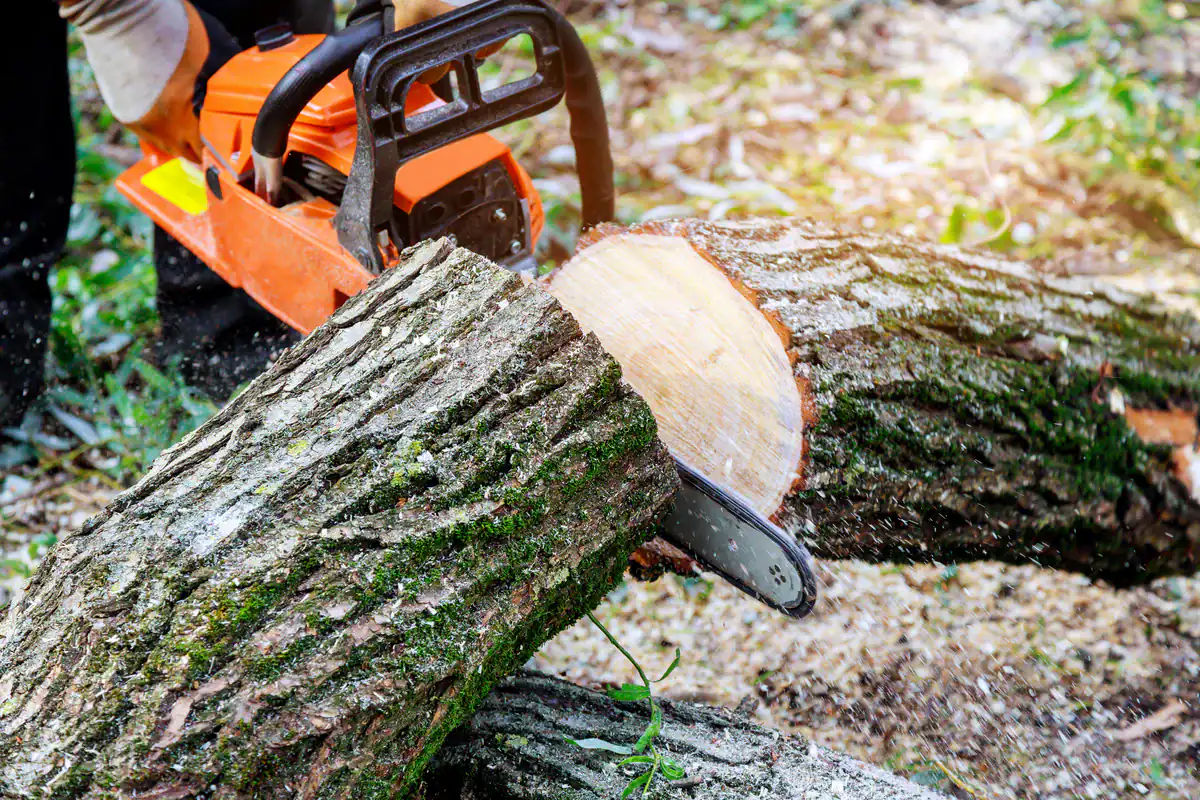
Tree removal in Grandview covers the full scope of what that actually means. Cutting the tree is one part of it. The other part is everything that follows — sectioning the trunk, clearing the limbs, grinding or removing the stump if that’s part of the plan, and leaving the property clean. Full cleanup is included on every job. That’s not an add-on or an upgrade — it’s just how we do the work.
We handle dead tree removal, diseased tree removal, hazardous tree removal, and large tree removal — the 50 to 70-year-old oaks and maples that have been growing in Grandview neighborhoods since the Eisenhower era. These are not small jobs, and we don’t treat them like small jobs. We also handle tree trimming, stump removal, stump grinding, and brush removal for situations where full removal isn’t what’s needed.
For Grandview properties near the I-49 corridor or along Blue Ridge Boulevard, where infrastructure projects have been active in recent years, root systems in adjacent yards can be affected by construction vibration and soil disruption over time. If you’ve noticed changes in how a mature tree is sitting or leaning, that’s worth getting looked at. The assessment is free, and knowing where you stand is always better than finding out after a storm.
For standard residential tree removal on private property in Grandview, there is generally no permit required. However, if the tree is in or overhanging the public right-of-way, different rules apply — Grandview’s code requires that trees overhanging public thoroughfares be trimmed to a minimum six-foot clearance, and any work involving city-owned land or public ROW does require coordination with the city.
What matters more for most Grandview homeowners is the flip side of the permit question: Grandview’s municipal code (Chapter 10, Article VII) actually obligates property owners to promptly remove or trim hazardous live or dead trees. So while you may not need a permit to remove a tree, you may have a legal obligation to do so if that tree is posing a hazard. If you’re unsure whether your situation falls under that ordinance, a free on-site assessment will give you a straight answer without any obligation to book the work.
In general, a tree that has lost more than about 50 percent of its canopy, has significant internal decay, is structurally compromised at the root or trunk, or is dead is typically a removal candidate. A tree with a few problem limbs, some storm damage to the outer canopy, or overgrowth near a structure may only need a strategic trim.
In Grandview’s established neighborhoods, the complicating factor is age. A 60-year-old oak or maple on a quarter-acre lot has had decades to develop both its value and its vulnerabilities. Jackson County’s clay soil can affect root stability over time, and trees that look fine from the outside can have internal issues that only become visible during an assessment. You need someone to actually look at the tree — not give you a phone estimate. We’ll tell you what it actually needs, and if that’s a trim instead of a full removal, that’s what you’ll hear.
It depends on the circumstances, and the details matter more than most people realize. If a healthy tree falls due to a storm — wind, lightning, ice — and damages a structure on your property, your homeowners insurance will typically cover the damage to the structure and may cover a portion of the removal cost, often in the range of $500 to $1,000 toward the tree itself. If the tree just falls in your yard without hitting anything, most policies won’t cover removal at all.
The situation changes significantly if the tree was already dead or visibly diseased before it fell. Insurers can and do deny claims when they can show the homeowner knew — or should have known — the tree was a hazard and didn’t act on it. That’s the negligence clause, and it’s not rare. Grandview sees real storm activity every spring, with documented tornado and damaging wind risk throughout the season. A dead tree that survives nine storms and comes down on the tenth is still your liability if you knew it was dead. Getting it removed proactively is almost always the more financially sound decision.
For a mid-sized tree — say, 30 feet — you’re typically looking at two to four hours for the removal itself, not counting cleanup. A large, mature hardwood like the oaks and maples common to Grandview’s 1960s and ’70s neighborhoods can take a full day, particularly when the tree is close to a fence, a structure, or a neighboring property that requires careful, controlled sectioning rather than a straightforward fell.
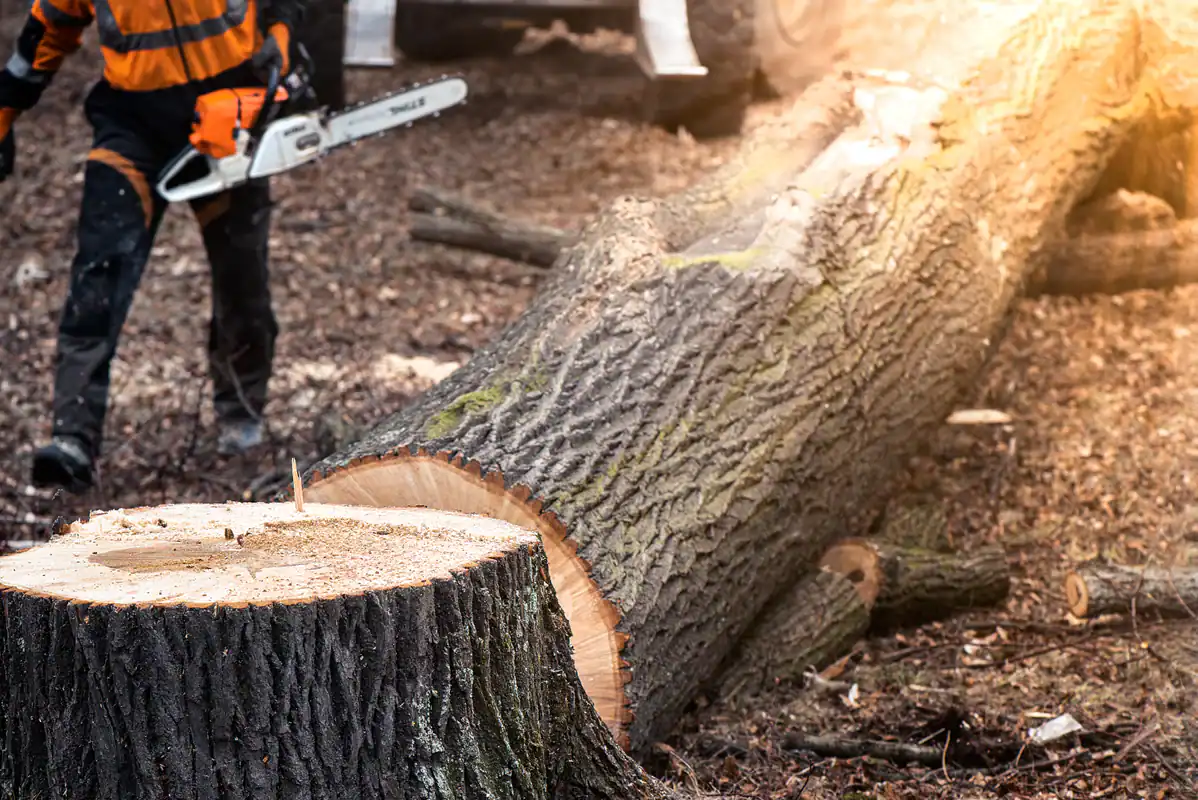
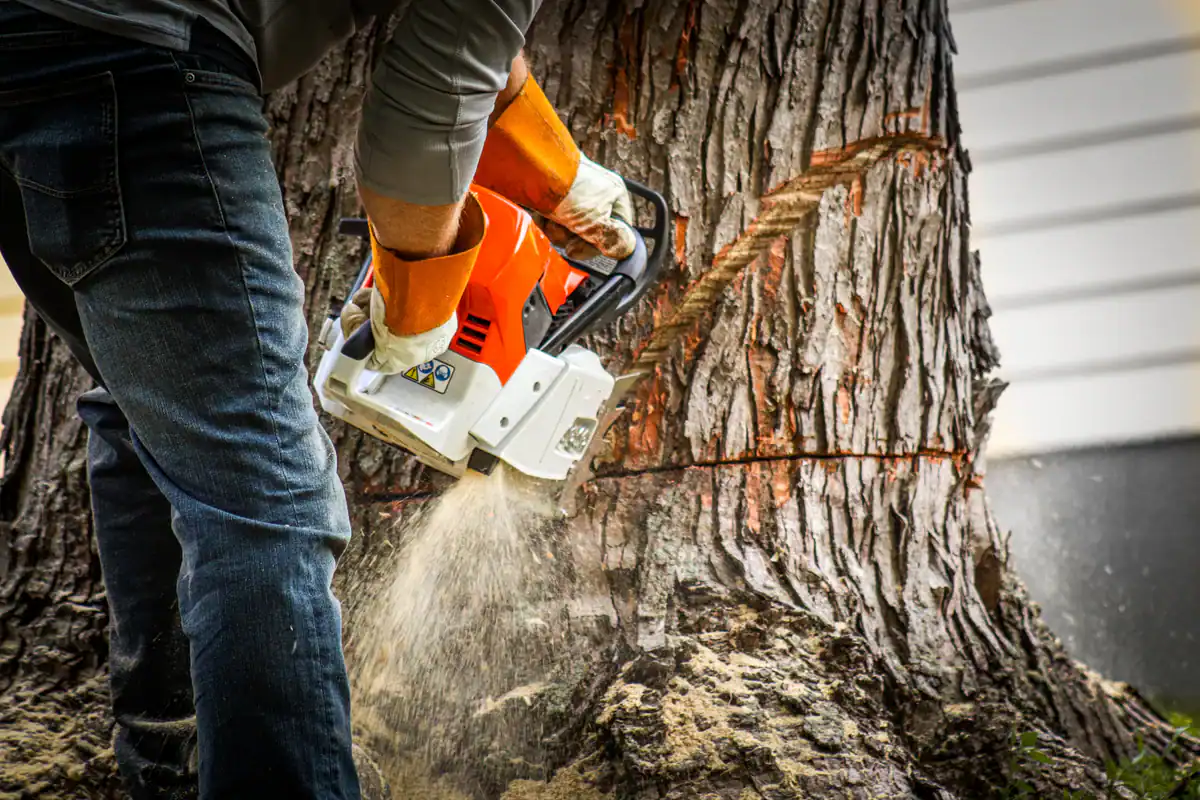
The layout of Grandview’s established residential lots — quarter-acre yards with homes close together — means most large tree removals here require more precision than speed. We work in sections from the top down, controlling where each piece lands rather than dropping the whole tree at once. That takes longer, but it’s the right way to do it when you have a neighbor’s driveway on one side and your own garage on the other. Same-day completion is common for most standard residential jobs, and the yard is cleaned up before we leave.
Yes, when it’s done by a crew that has handled exactly that situation before — and in Grandview’s older, denser residential neighborhoods, that scenario is the norm rather than the exception. The homes along streets like View High Drive or in the blocks between Grandview Road and I-49 were built close together on lots that have had 50-plus years of tree growth. Removing a large tree in that environment without touching the fence, the neighbor’s property, or the structure it’s near requires controlled sectioning, the right rigging, and experience with how large hardwoods behave when they come down in pieces.
We have verified customer accounts of exactly this — large tree removal in dense Kansas City, KS & MO-area neighborhoods, including situations where the tree was adjacent to neighboring driveways and structures, completed without property damage. Full liability insurance and workers’ compensation coverage are in place on every job, which means if something unexpected does happen, you’re not left holding the bill. That’s the protection that matters when a crew is working that close to your home.
The stump doesn’t go away on its own — at least not on any timeline that’s useful to you. Left in place, a stump from a large oak or maple can take decades to fully decompose, and in the meantime it becomes a tripping hazard, an obstacle for mowing, and in some cases a host for fungal disease or insects that can affect other trees nearby. In Grandview’s clay soil environment, large root systems from mature hardwoods can also continue to shift and heave as they decay, which can affect nearby hardscape like driveways, sidewalks, and patios over time.
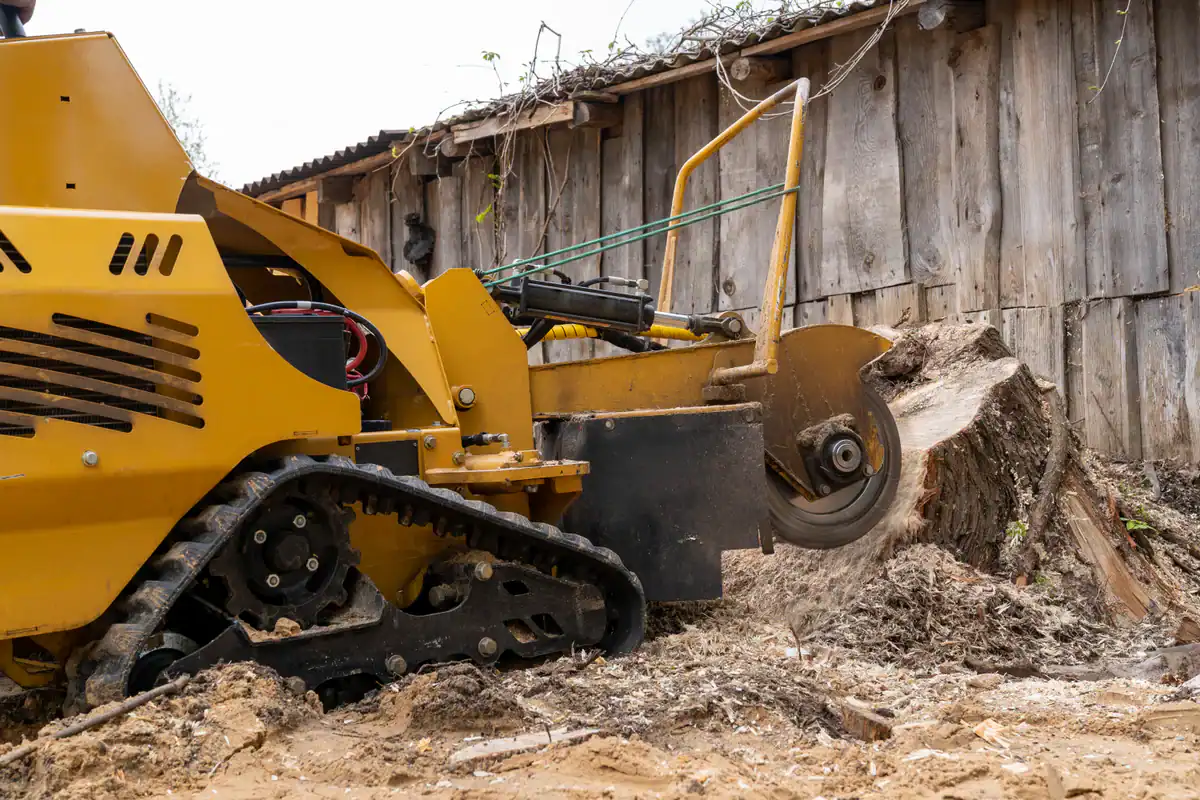
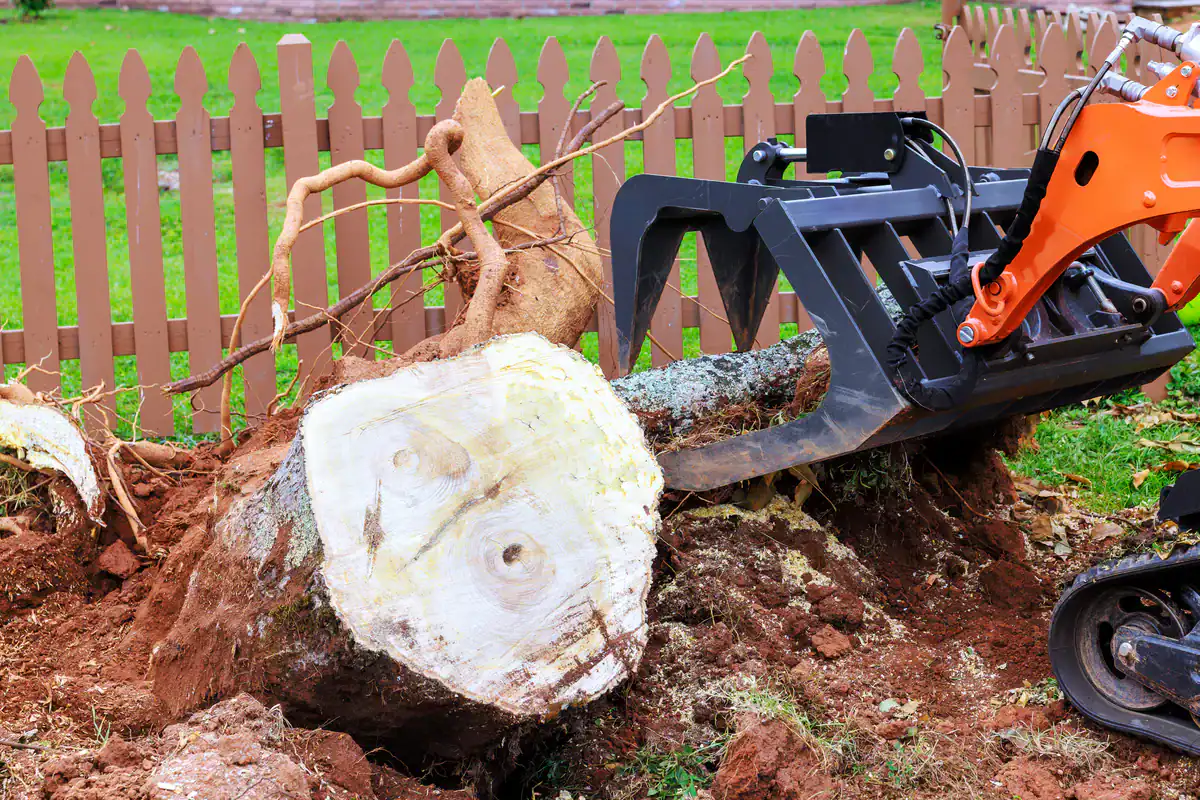
Stump grinding is the standard solution. It takes the stump down below grade — typically six to twelve inches — so the area can be filled, seeded, or left flush with the surrounding yard. It doesn’t remove the root system entirely, but it eliminates the visible stump and stops the active decay process at the surface. We handle stump removal and stump grinding as part of the broader job or as a standalone service if you’ve already had a tree removed and are dealing with the leftover stump. Just ask when you call for your free estimate and it gets factored into the plan from the start.
Other Services we provide in Grandview