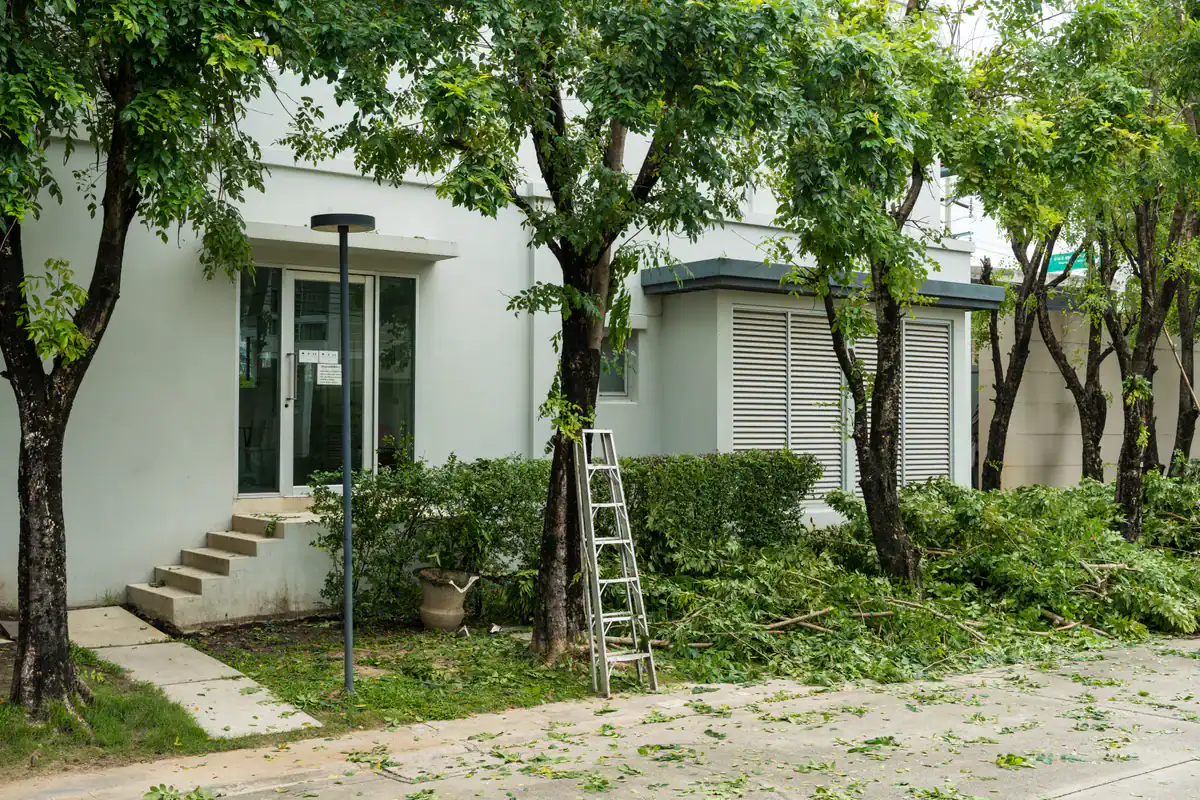
The biggest thing most Merriam homeowners feel after a tree job is done right isn’t relief — it’s the wish they’d called sooner. That leaning oak they’d been watching for two springs. The dead limb hanging over the driveway. The stump sitting in the backyard that’s been there since the previous owner. When those things are gone, the yard actually feels like yours again.
Merriam’s housing stock is older — most homes went up in the 1950s and 1960s, and the trees planted alongside them are now 60 to 70 years old. That’s the age range when large trees start developing real structural problems: internal decay, root damage, crowns that have grown too wide for the lot they’re sitting on. In a city that covers just 4.3 square miles with nearly 2,700 people per square mile, those trees aren’t falling into open space. They’re falling toward something.
Getting ahead of that is the outcome that matters. A free on-site assessment tells you what you’re actually dealing with — whether a tree needs to come down, whether a strategic trim can extend its life, or whether what you’re seeing is normal. You get a clear answer, same day, with no pressure attached to it.
We’re a small, tight-knit crew based right here in Kansas. We’ve been doing this work in the Kansas City, KS & MO metro — including Johnson County communities like Merriam — for over ten years. We’re fully licensed and insured in Kansas, which matters more than it sounds in a state that actually requires an arborist license to do this work legally.
What sets us apart isn’t a long list of services or a fleet of branded trucks. It’s that we’ve removed more than 1,200 problem trees with a 100% safety record — in neighborhoods just like yours, where the margin for error is measured in feet. We show up, we assess, we do the work cleanly, and we leave your yard in better shape than we found it. No piles, no debris, no surprises on the invoice.
If you’ve got a tree near the Antioch Road corridor, along a fence line, or overhanging a structure anywhere in Merriam, we’ve worked in that kind of space before. We know this area, and we know what careful looks like here.
It starts with a phone call. You describe what you’re seeing — a leaning tree, a dead limb, storm damage, a stump you want gone — and we set up a time to come out and take a look. Most quotes happen the same day you call.
We come to the property, assess the tree in person, and give you a clear, written number. No vague estimates, no “we’ll know more when we get started.” Once you’re ready to move forward, we schedule the job and show up when we say we will.
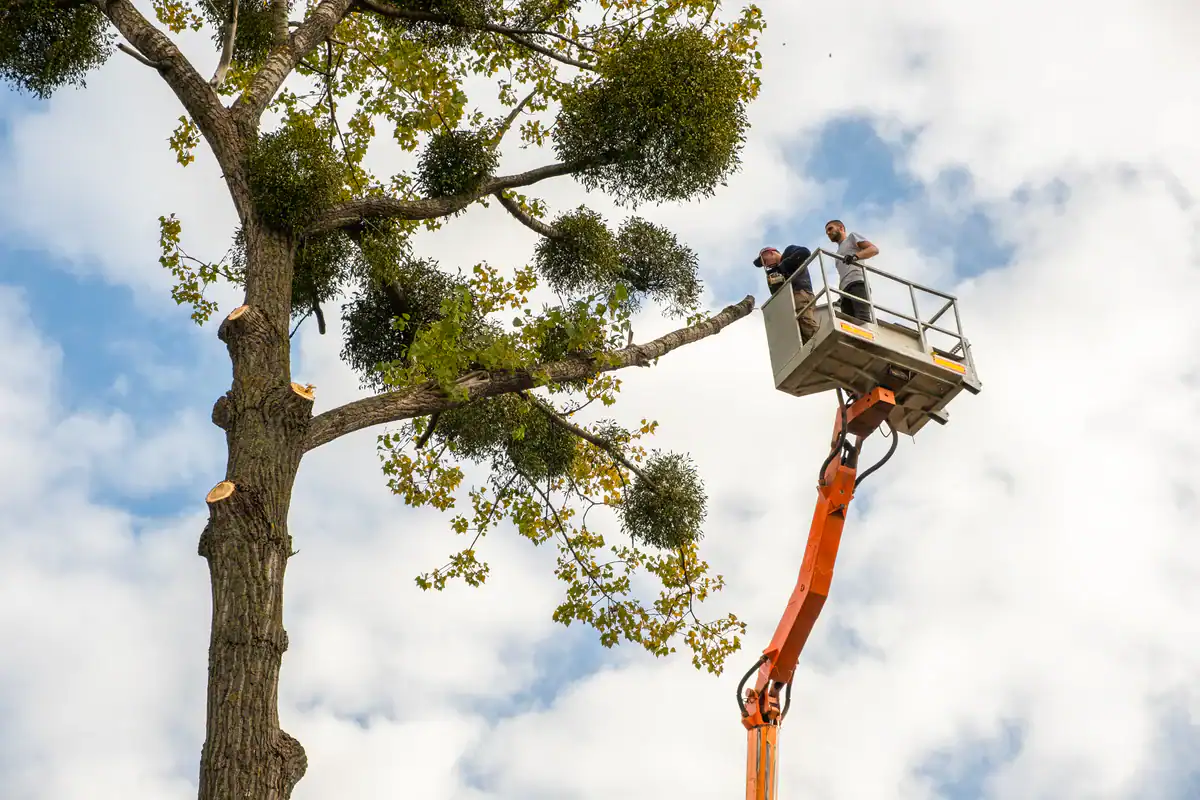
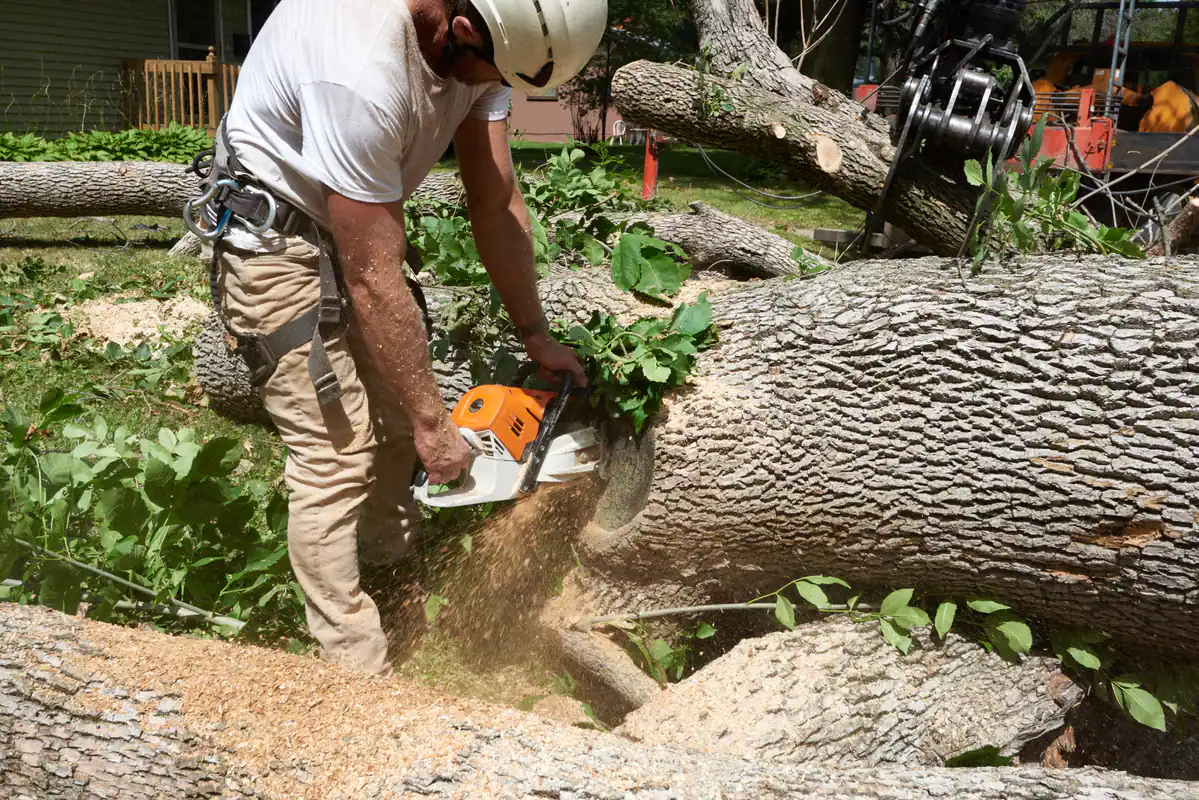
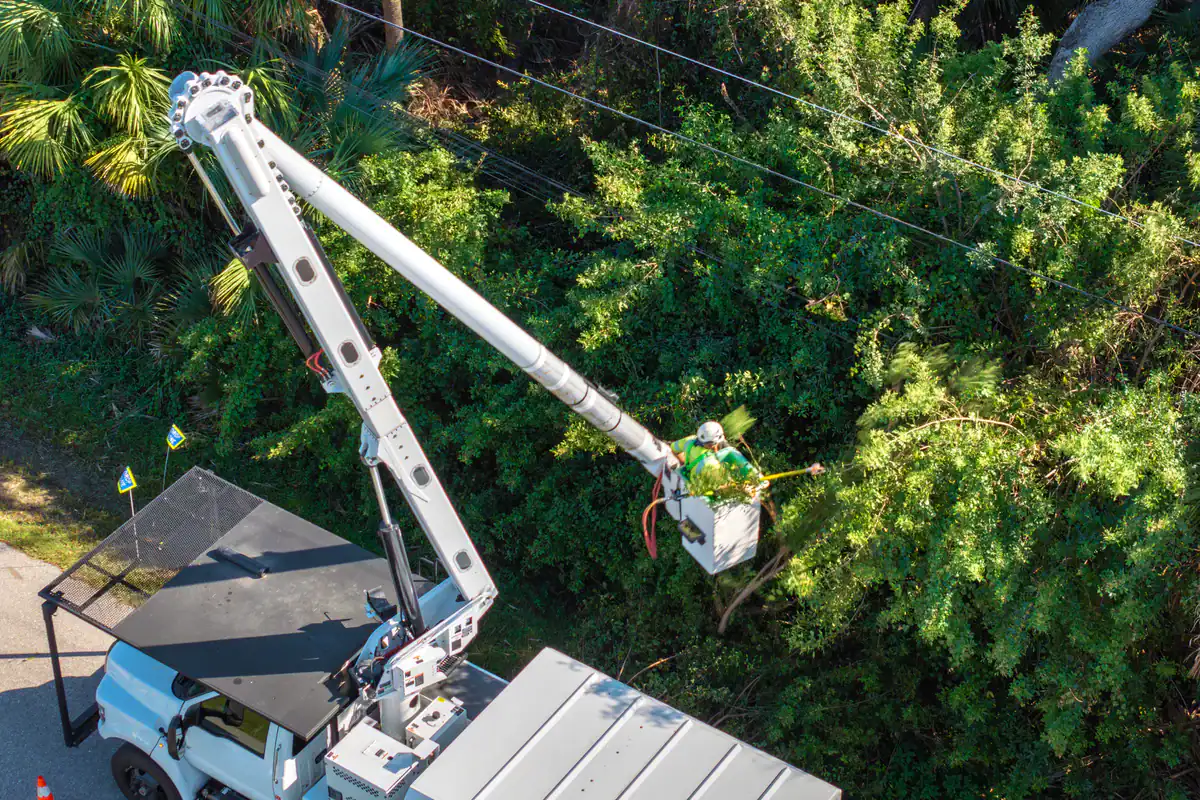
In Merriam, that often means working in tight residential lots where trees sit close to structures, fences, or neighboring properties. We plan the removal or trim carefully before a single cut is made — figuring out the safest direction, what equipment is needed, and how to protect what’s around the tree. Merriam’s Chapter 47 tree ordinance governs street trees and right-of-way plantings, so if your tree is near the curb or sidewalk, we’ll make sure the work is done in a way that keeps you on the right side of the city’s requirements.
When the job is done, we clean up completely. Wood, chips, branches — all of it leaves with us unless you want to keep the material. You don’t have to chase anyone down to finish the job.
Ready to get started?
We handle tree removal, tree trimming and pruning, stump grinding, land clearing, and tree health assessments. These aren’t separate departments — it’s one crew that does all of it, which means you’re not coordinating between three different companies to get a tree down and the stump ground out afterward.
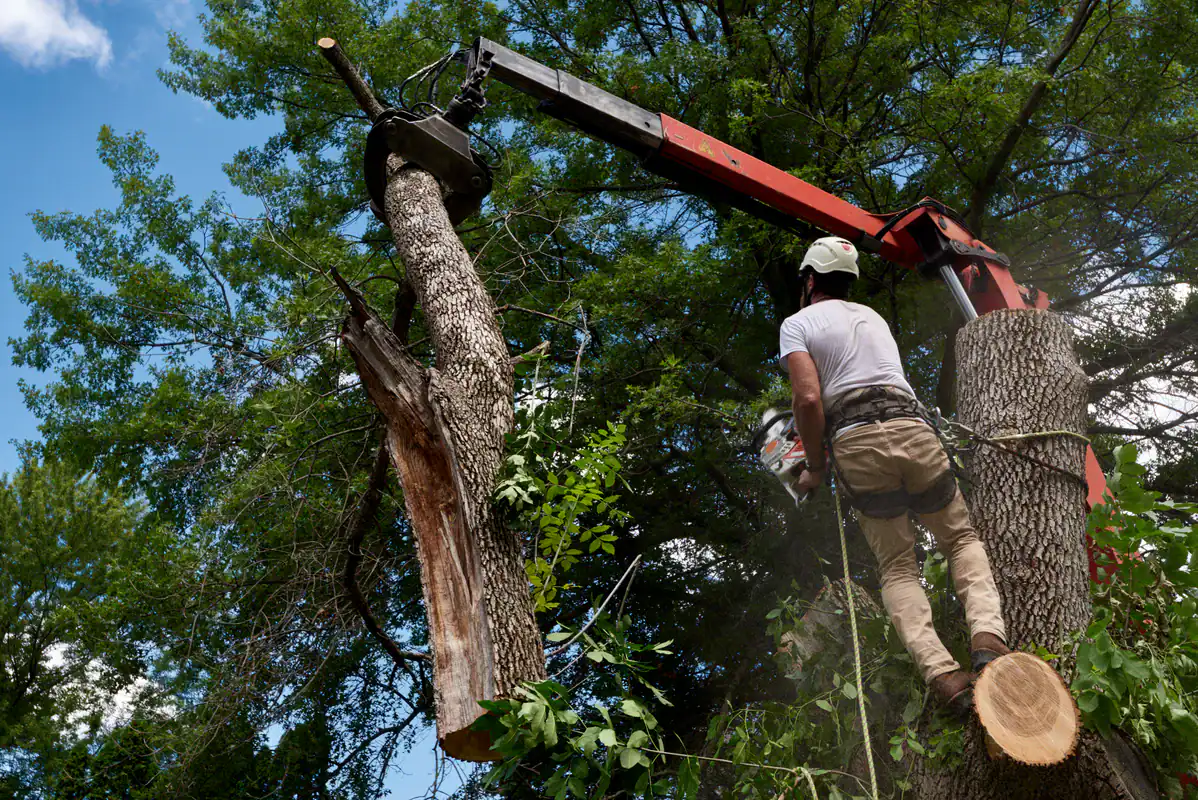
Tree removal in Merriam’s older, denser neighborhoods requires more planning than a straightforward rural job. When a 60-foot tree is sitting ten feet from your roofline and five feet from the neighbor’s fence, the removal process has to account for every variable before the first cut. That’s the kind of work we do routinely.
Stump grinding is quoted separately from removal so you know exactly what each piece costs — no bundled pricing that hides what you’re actually paying for. If you’re not sure whether a tree needs to come down or just needs a good trim, the health assessment is where we start.
We look at the structure, the root zone, signs of disease or pest activity, and how the tree is positioned relative to your home and property lines. Johnson County has seen its share of Emerald Ash Borer activity in surrounding areas, and aging trees in established neighborhoods like Merriam can be vulnerable in ways that aren’t visible from the street. We give you a straight read on what we find — and a clear recommendation on what to do about it.
It depends on where the tree is located and what condition it’s in. Merriam has a tree ordinance under Chapter 47 of its municipal code that governs street trees, right-of-way plantings, and certain removal situations. Trees located on private property that are dead, diseased, or structurally hazardous are typically exempt from permit requirements across Johnson County municipalities — meaning if your tree is clearly a safety issue, you generally don’t need to wait on paperwork to get it handled.
Where it gets more nuanced is with trees near the street, sidewalk, or public right-of-way. Merriam’s Forestry division within Public Works actively manages the city’s street tree canopy, and there are specific rules about what can be removed, planted, or maintained in those zones. If your tree is in or near the right-of-way, it’s worth a quick call to the city before work begins. Working with us means you won’t accidentally run into a code issue — we’ll flag anything relevant during the assessment.
This is the most common question we get, and the honest answer is that you usually can’t tell from the outside. A tree can look healthy from the street and have significant internal decay, compromised root structure, or pest damage that only becomes visible when you know what to look for. That’s especially true for older trees — and in Merriam, where most of the housing stock and the trees alongside it date back to the 1950s and 1960s, a lot of the trees in these neighborhoods are at the age where internal problems become more common.
The signs that lean toward removal include a significant lean that wasn’t there before, large dead branches in the upper crown, fungal growth at the base of the trunk, or a history of dropping limbs. Signs that a trim might be enough include overgrowth that’s blocking light or rubbing against the house, minor deadwood in the lower canopy, or branches that have grown into utility clearance zones. We assess both possibilities on every visit and give you a straight recommendation — not the one that makes us the most money, but the one that makes sense for the tree and your property.
Everything leaves with the crew. Branches, wood sections, chips — all of it gets cleared from your property as part of the job. We don’t stack debris against the fence and call it done, and we don’t leave piles for you to deal with later. In Merriam’s compact residential neighborhoods, where yards are smaller and there’s often no good place to store a pile of wood, a full cleanup isn’t optional — it’s part of what you’re hiring us to do.
If you want to keep the wood — for firewood, for a fire pit, or for personal use — just let us know before we start. Same goes for wood chips if you want them for mulch. We’ll set aside what you want and haul the rest. The default is that your yard is clean when we leave, and that’s what you should expect from any professional tree company doing work in a neighborhood like yours.
Same-day visits are available for emergency situations, and we typically respond to initial inquiries within 24 hours. That matters in a place like Merriam, where spring storm season is real and severe weather can produce downed trees and damaged limbs across the city.
After a storm, the priority is safety first. If a tree has fallen on a structure or is blocking access to your property, that’s an emergency call. If a large limb came down and you’re not sure whether the rest of the tree is stable, that’s also something we want to look at quickly — because a tree that’s been stressed by wind or impact can fail again. We don’t tell storm-damage customers to get in line behind routine maintenance jobs. If it’s urgent, we treat it that way.
It’s a separate service, and we quote it separately so you know exactly what each piece costs. This catches a lot of homeowners off guard — they assume that when the tree comes down, the stump comes with it. It doesn’t, and most tree companies don’t include stump grinding in a standard removal quote unless you specifically ask about it.
The reason it’s separate is that stump grinding requires different equipment and adds meaningful time to the job. The cost depends on the diameter of the stump and how accessible it is. Stumps left in place can attract certain insects over time, create tripping hazards in the yard, and sometimes produce new growth from the root system. In Merriam’s smaller residential lots, a stump sitting in the middle of the yard is hard to work around and tends to become a real nuisance. We’ll quote both the removal and the stump grinding at the same time so you can decide what makes sense — no pressure either way.
Ask for proof before anyone starts work, and don’t hire a company that hesitates to provide it. Kansas is one of the states that requires an arborist license for tree work — it’s not optional, and it’s not just a formality. An unlicensed crew working on your property creates real liability exposure for you as the homeowner. If a worker is injured on your property and the company doesn’t carry workers’ compensation insurance, that can become your problem legally and financially.
The simplest way to protect yourself is to ask two questions before you agree to anything: Are you licensed to do tree work in Kansas? Can I see proof of liability insurance and workers’ comp? We’re fully licensed and insured — we’ve been operating in the Kansas City, KS & MO metro for over ten years, and we’re happy to show documentation before a single tool comes off the truck. In a market where unlicensed operators show up after every major weather event, knowing who you’re dealing with upfront is worth the thirty seconds it takes to ask.
Other Services we provide in Merriam