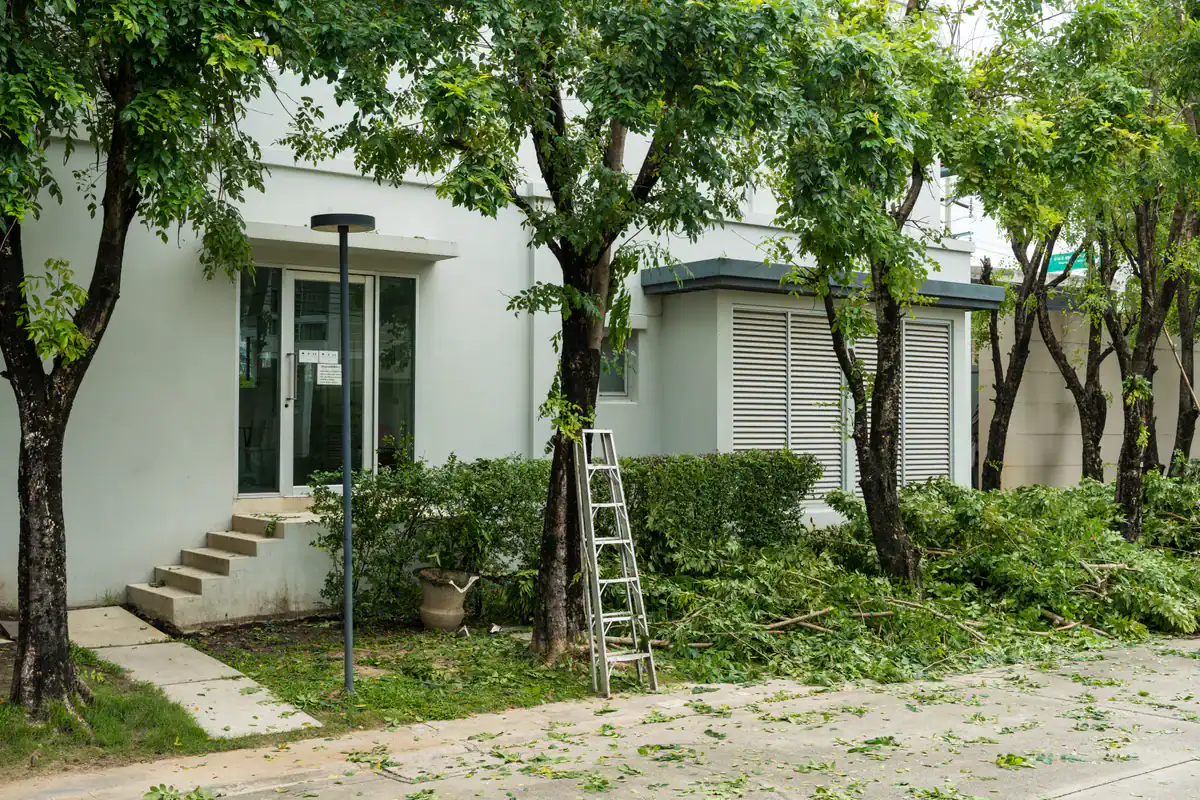
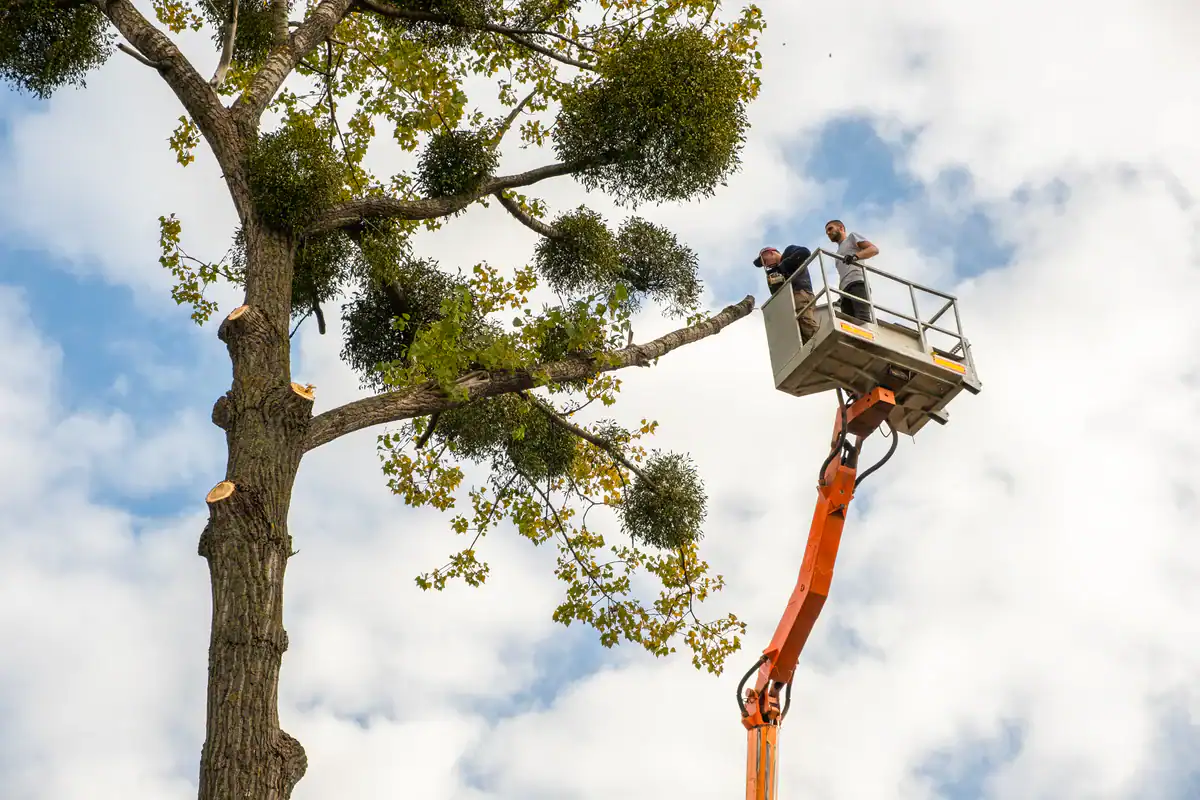
Mission is one of the most densely settled communities in Johnson County — small lots, older homes, trees that have been growing since the neighborhood was first subdivided back in 1926. When a tree starts showing signs of trouble here, it’s not just your problem. It’s your neighbor’s fence, the power line along Shawnee Mission Parkway, and the car parked in the driveway next door. That’s the reality of tree work in a city this compact, and it’s why who you call actually matters.
When the job is done right, you get more than a cleared yard. You get a property that’s genuinely safer — no dead limbs hanging over the roofline, no compromised trunk waiting on the next storm to make your decision for you. Johnson County’s spring season brings straight-line winds and tornadoes that have caused documented tree and power line damage in Mission. A tree that looks fine from the street can be hollowed out at the core.
Every job we complete includes full cleanup. No piles left behind, no debris pushed to the edge of the yard. You come home to a clean property — and if you want to keep the wood or chips, just say so.
We’re a small, family-owned tree company based in the Kansas City, KS & MO area, and Mission is part of the community we’ve been working in for over a decade. We’re not a franchise, not a national chain, and not a crew that showed up after the last storm looking for quick work. We live and work in this area, and that matters when the job is happening ten feet from your neighbor’s living room window.
The numbers speak plainly: more than 1,200 trees removed with a 100% safety record. In a neighborhood like Cunningham Heights or along the tight residential streets near Johnson Drive, that kind of track record isn’t a marketing line — it’s the only thing that should matter when a large tree needs to come down close to your home.
Kansas requires an arborist license for tree work. We are fully licensed and insured, which means if anything goes sideways on your property, you’re protected. That’s not always the case with every company bidding jobs in Mission.
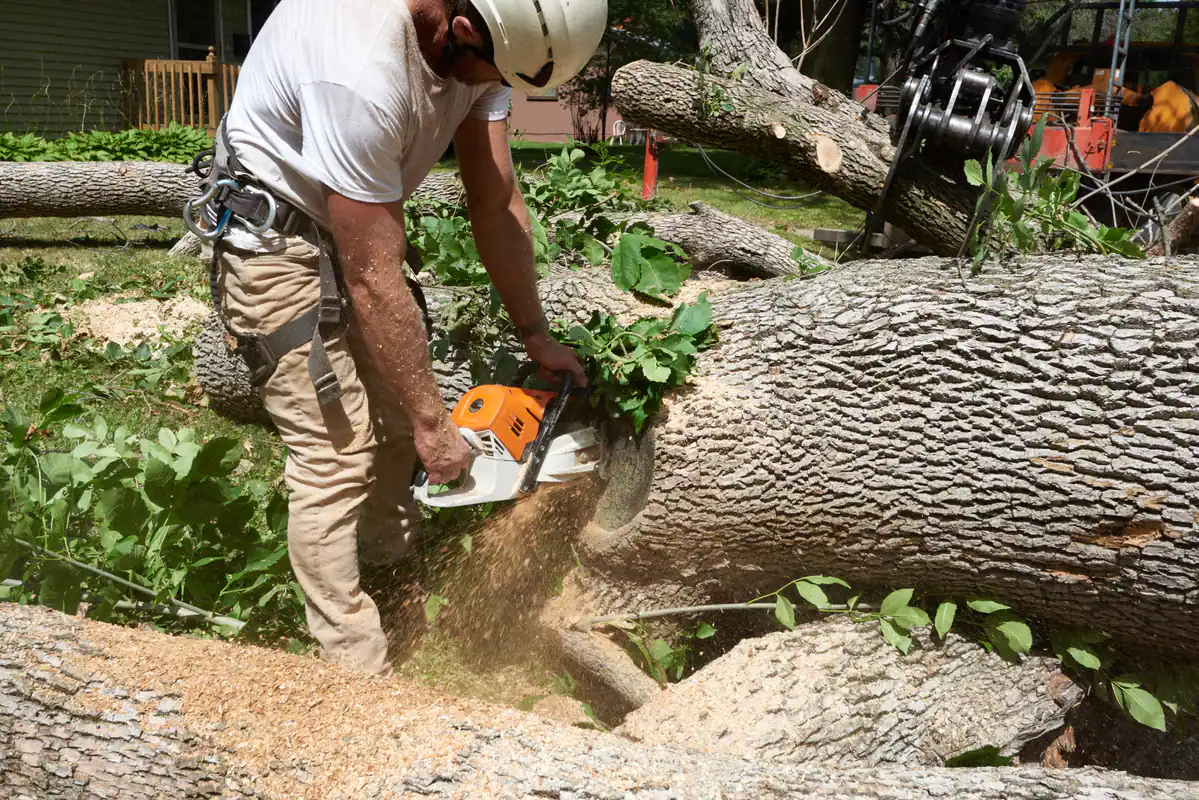
It starts with a free estimate, and most quotes happen the same day you call. We come out, look at the tree in person, and give you a straight answer about what it needs. No pressure, no upsell, no vague ballpark over the phone. If a trim solves the problem, that’s what you’ll hear. If removal is the right call, we’ll walk you through why.
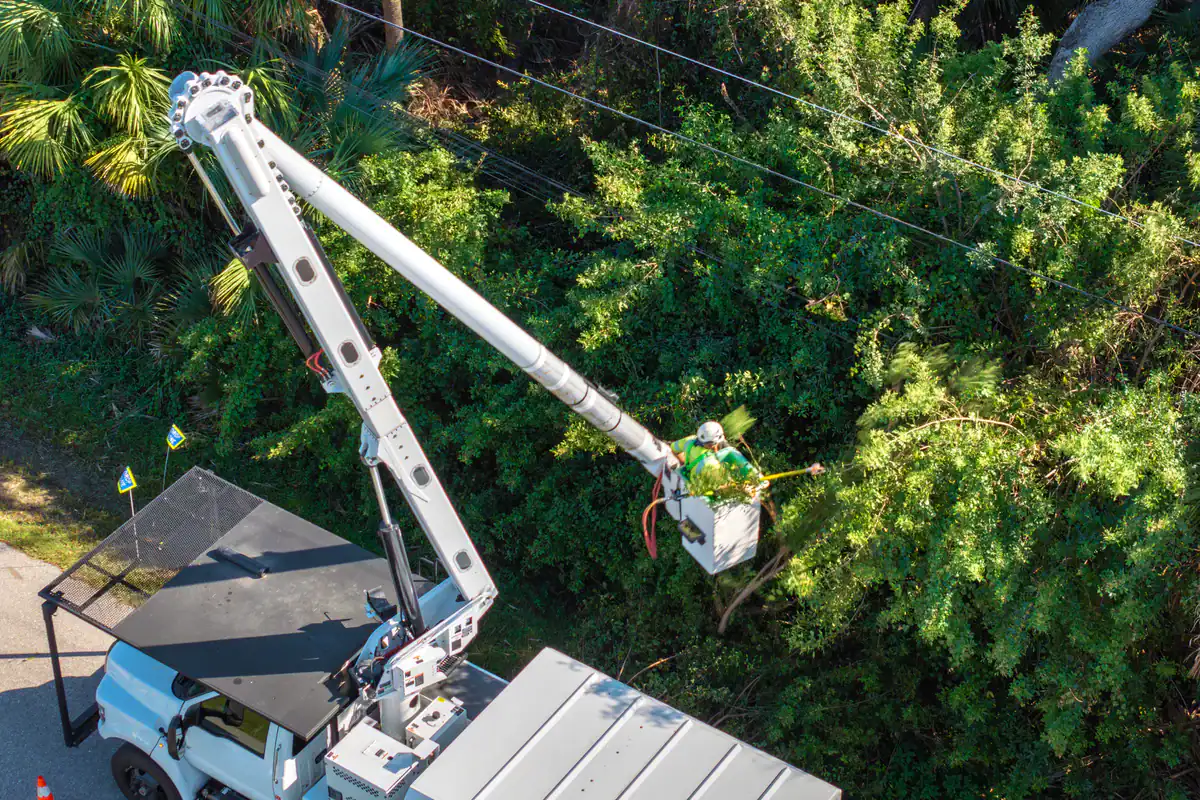
Once you’re ready to move forward, we handle access and logistics before a single cut is made. In Mission, that often means working around shared fence lines, overhead utility lines along streets like Roe Avenue or Roeland Drive, and neighboring properties that are close enough to matter. That planning isn’t an afterthought — it’s how a 100% safety record stays intact job after job.
Mission’s city code is specific about trees near street right-of-ways, utility easements, and sight-distance triangles. If your job involves a tree near a public corridor, we can help you understand what city coordination may be needed before work begins. When the job wraps, full cleanup is included — the debris goes with us, not onto your lawn.
Ready to get started?
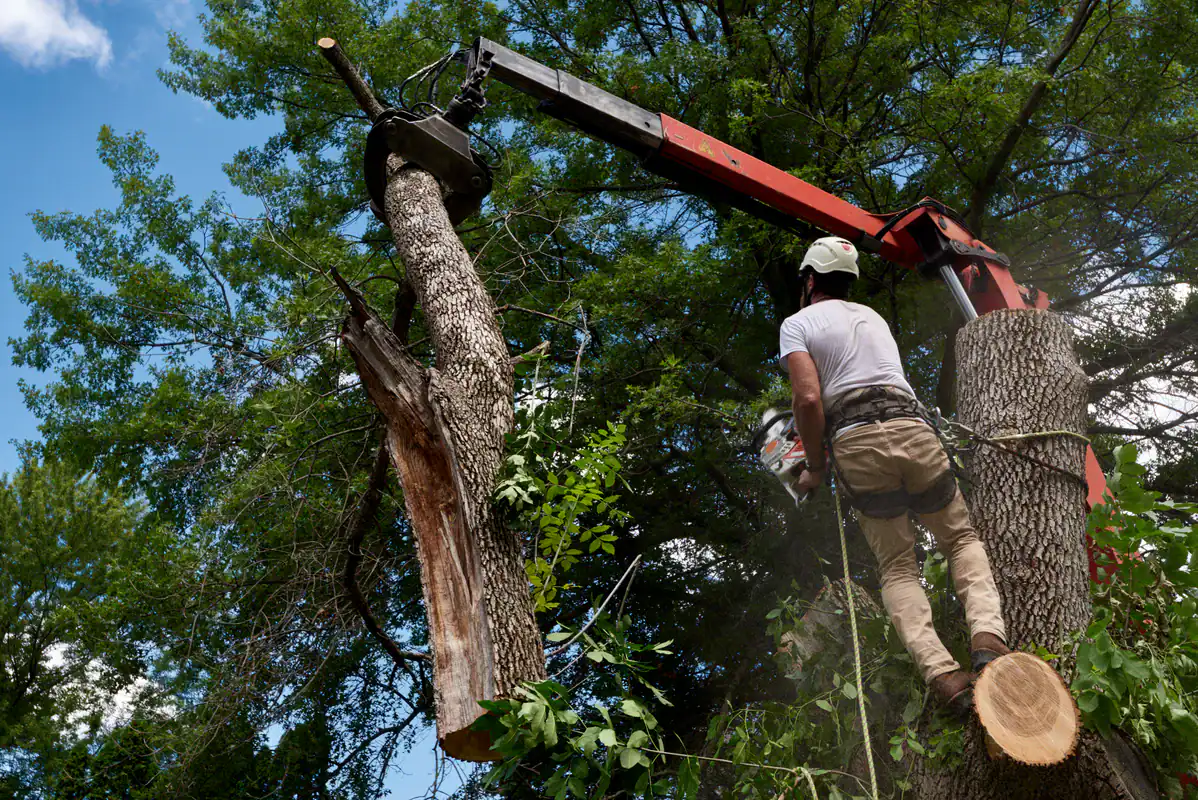
Tree removal is the most common call, but it’s rarely the only thing a property needs. We handle the full picture: tree removal, trimming and pruning, stump grinding, land clearing, and on-site tree health assessments. Each service is available individually or as part of a complete job — whatever your property actually requires.
Stump grinding is worth mentioning specifically because a lot of homeowners assume it’s included in a removal quote and find out later it isn’t. In Mission’s dense residential neighborhoods, a leftover stump in a small yard is a tripping hazard, a regrowth problem, and an invitation for pests. It’s worth asking about upfront, and we’ll be clear about what’s included before any work begins.
The tree health assessment is one of the more underused services, and it’s particularly relevant for Mission’s older housing stock. A 70- or 80-year-old tree can look completely stable while carrying internal decay that only shows up under a trained eye. If you’ve got mature trees on your lot — the kind that have been shading Craftsman bungalows since the mid-20th century — a professional assessment gives you real information instead of a guess. That’s especially true heading into spring storm season, when Johnson County’s severe weather history makes a compromised tree a genuine liability.
This is the most common question, and the honest answer is that you usually can’t tell just by looking. A tree can appear completely healthy from the street while harboring internal decay, root damage, or structural stress that only shows up during a hands-on assessment. Signs worth paying attention to include visible leaning that wasn’t there before, large dead branches in the upper canopy, fungal growth at the base of the trunk, or cracks and splits in the main structure.
In Mission specifically, the age of the housing stock adds a layer of complexity. Many of the trees on residential lots here have been growing since the 1920s and 1930s — they’re large, deep-rooted, and potentially compromised in ways that aren’t obvious. The right call isn’t always removal. Sometimes a targeted trim addresses the problem entirely. The only way to know for sure is to have someone come out and look at it in person, which is exactly what our free on-site assessment is for.
For most private residential trees, there’s no specific permit requirement. However, Mission’s city code does include detailed provisions governing trees near street right-of-ways, utility easements, and sight-distance triangles — sections 240.220 through 240.280 of the municipal code cover responsibility for care and removal of trees and shrubs, permissible and prohibited street trees, and trees within utility easements.
If your tree is near a public sidewalk, a city street, or runs along a utility corridor, there may be coordination required with the city before work begins. It’s not something to assume either way. When we come out for the assessment, we can help you identify whether your specific situation involves any of those regulated areas and what steps, if any, need to happen before the job starts. Getting that clarity upfront saves headaches later.
Full cleanup is included on every job. We don’t leave you with a pile of branches at the curb or a yard full of wood chips to deal with. When the work is done, the debris goes with us — logs, limbs, chips, and all.
If you want to keep any of it — firewood for a fire pit, wood chips for garden beds — just let us know before we start. We’ll set aside what you want and haul the rest. This is worth mentioning because it’s not the standard practice across the industry. A lot of companies treat cleanup as a separate line item or simply leave the mess. For Mission homeowners with smaller lots and close neighbors, a yard full of post-removal debris isn’t just inconvenient — it can also run into the city’s nuisance vegetation ordinance, which classifies untended brush and debris as a code violation subject to enforcement.
For emergency situations, same-day visits are available. For non-emergency calls, most responses happen within 24 hours. That turnaround matters more in Mission than it might in a lower-density suburb, because when a storm hits a neighborhood this compact, the fallout tends to be immediate — a downed limb on a shared fence line, a tree leaning against a roofline, a blocked driveway on a narrow residential street.
Johnson County’s spring storm season is well-documented. Straight-line winds and tornadoes have caused confirmed tree and power line damage in Mission. When that kind of weather moves through, the demand for tree crews spikes fast. Having a company you’ve already vetted — one that’s licensed, insured, and familiar with your neighborhood — means you’re not scrambling to find someone reliable in the middle of a post-storm rush when unlicensed operators tend to show up looking for quick cash jobs.
It’s a separate service, and it’s one of the most common surprises homeowners run into after a tree removal. The removal quote covers taking the tree down — the stump is typically a separate conversation. This is standard across the industry, not specific to any one company.
That said, it’s worth addressing at the time of the estimate rather than after the fact. In Mission’s smaller residential lots, a leftover stump isn’t just an eyesore. It’s a tripping hazard in a yard where kids or older residents are walking, it can attract wood-boring insects, and stumps from certain species will send up new growth shoots if they’re left in the ground. With 17.6% of Mission residents aged 65 or older, the tripping hazard angle alone is worth taking seriously. Ask about stump grinding upfront, confirm what’s included in your quote, and you won’t have any surprises when the crew wraps up.
Post-storm periods are when unlicensed, uninsured operators are most active. They show up door-to-door, often with out-of-state plates, offer a low price, and either disappear after collecting a deposit or do substandard work with no accountability. State attorneys general have issued consumer alerts specifically about this pattern after ice storms and severe weather events — and Johnson County’s storm history makes Mission a recurring target.
A few things to check before agreeing to anything: ask for proof of license and insurance before any work starts. Kansas requires an arborist license for tree work, and any legitimate company should be able to show documentation without hesitation. Be cautious of anyone demanding full payment upfront — a deposit of up to 50% is reasonable for larger jobs, but full payment before the work is done is a red flag. Get the scope of work in writing. And check reviews on Google, Yelp, or HomeAdvisor — not just the star rating, but whether the reviews are specific, recent, and mention real details about the job. A company with a real track record in Mission will have that history to show you.
Other Services we provide in Mission