
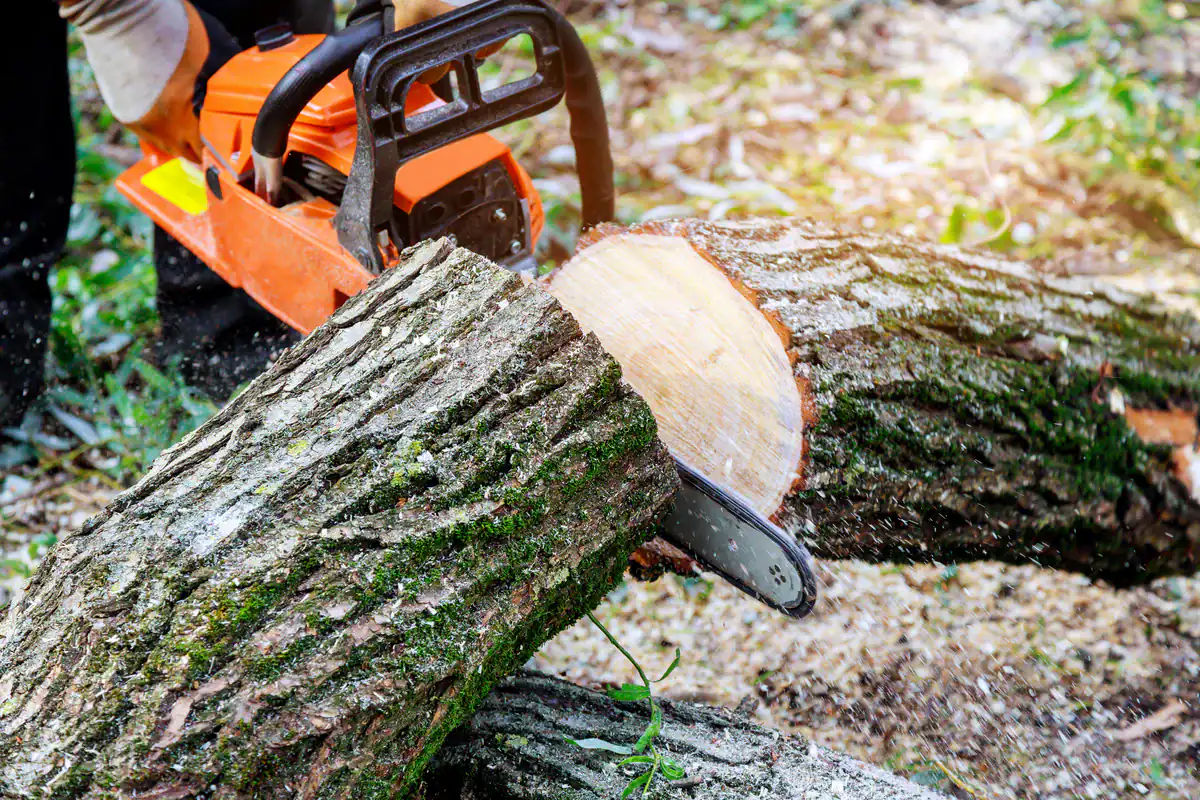
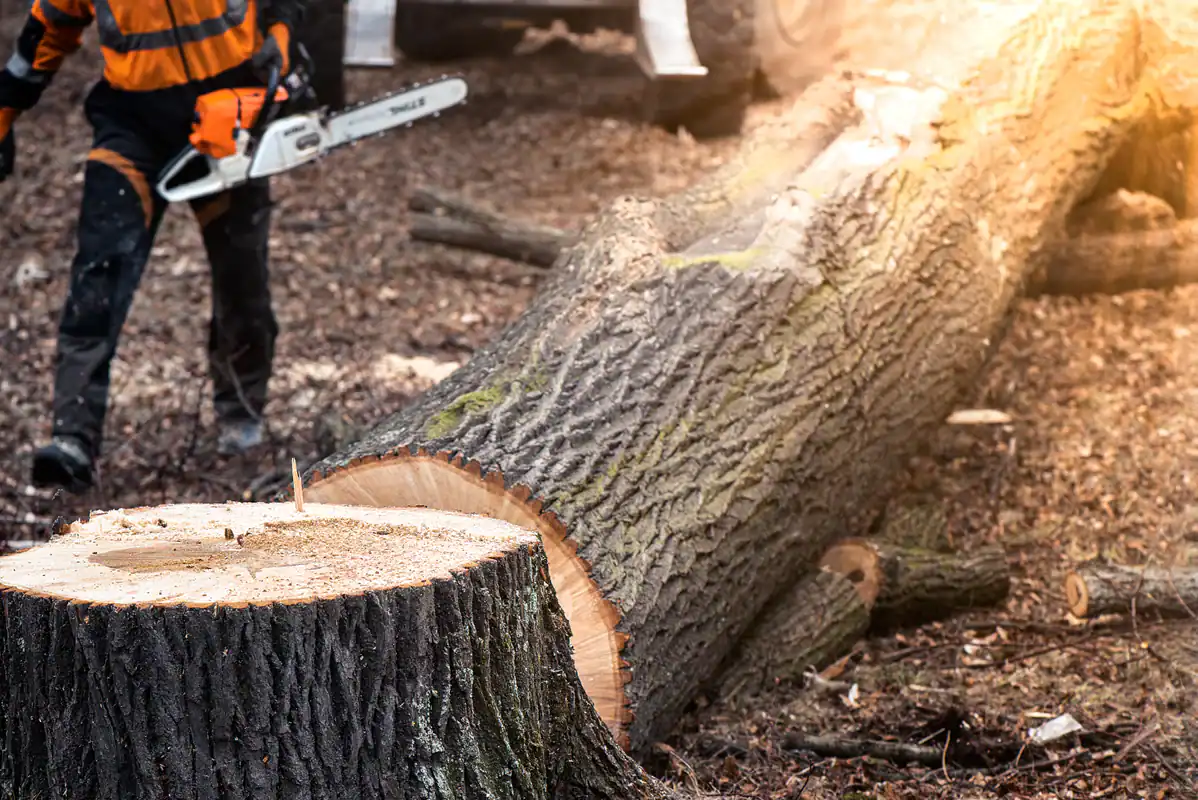
When a tree comes down the right way, you stop worrying. No more scanning the yard after every storm, no more wondering whether that leaning oak is going to take out your fence line or land on your neighbor’s dock. That’s what a clean, professional removal actually gives you — not just a cleared lot, but genuine peace of mind about the property you’ve invested in.
Weatherby Lake’s homes sit on rolling, sloped lots with curving roads and a private lake right in the mix. That’s not a typical suburban setup. Trees here grow on hillsides, hang over seawalls, and drop limbs onto access roads with no easy alternate route. When something goes wrong, it goes wrong in a way that costs real money — and in a community where median home values sit above $545,000, the gap between a proactive removal and an emergency one is significant.
The other thing that changes after a proper removal is how your property looks. In a community governed by standards that have been in place since 1952, a dead or storm-damaged tree sitting on your lot isn’t just a safety issue — it’s a visible one. Full cleanup is included on every job. No piles, no chips scattered across the lawn, no debris near the water. You can even keep the wood or mulch if you want it — just say so before the crew starts.
We’ve been working across the Kansas City, KS & MO metro for over a decade. That includes Platte County — the storms that roll through here, the clay soil conditions, the mature native trees that define Weatherby Lake. This isn’t a company learning your neighborhood on your dime.
Our crew is family-owned and Kansas City, KS & MO-rooted. We’ve handled large-scale storm recovery across five states — Kansas, Missouri, North Carolina, South Carolina, and Florida — which means when a Platte County thunderstorm drops a 70-foot oak on a lakefront property off Eastside Drive, we’re not figuring it out as we go. We’ve done harder jobs than that, in tighter spaces, under worse conditions.
What you’ll notice most is that we treat the job like it’s our own property on the line. That shows up in how carefully we work around structures, how thoroughly we clean up, and how straight we are with you about what the tree actually needs — even if the answer is “you don’t need a full removal.”
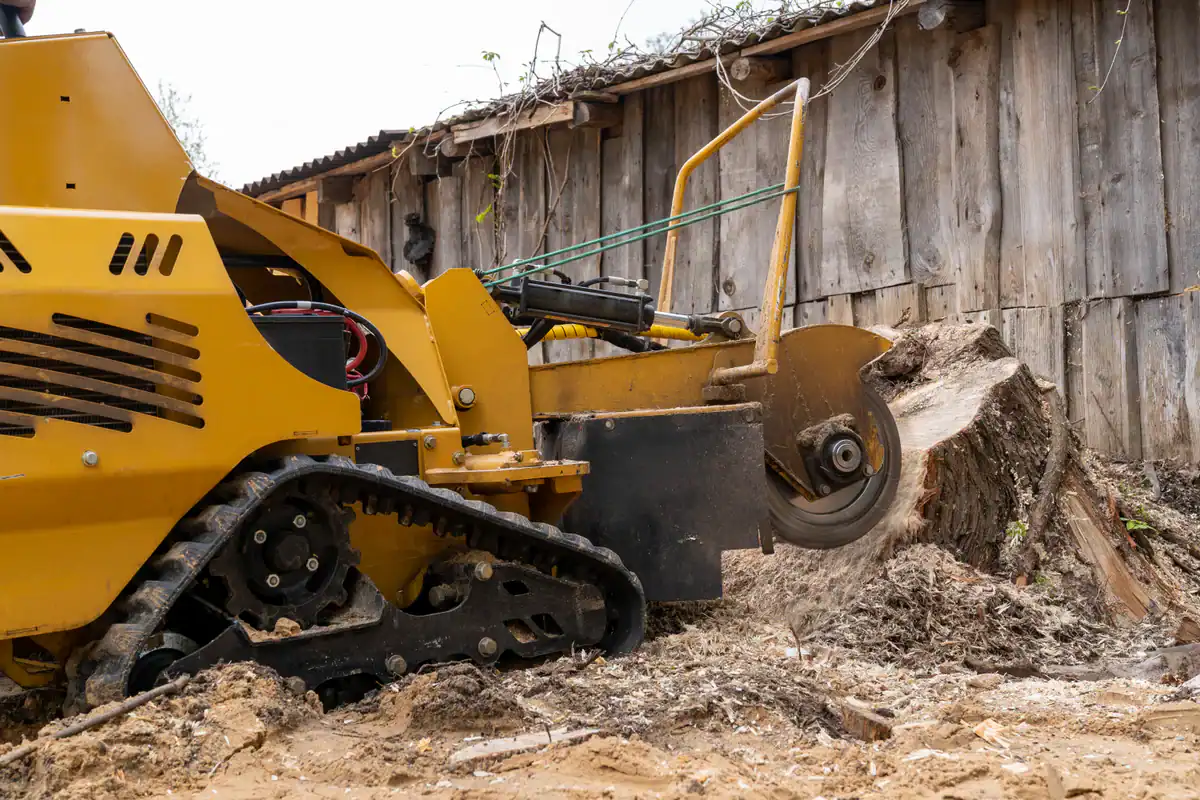
It starts with a free on-site estimate. We come out, look at the tree, and give you a straight answer — what it needs, what it’ll cost, and whether removal is actually the right call or if a targeted trim would handle the problem. No pressure, no upsell. If the tree can be saved, we’ll tell you.
Once you’re ready to move forward, scheduling is fast. Multiple customers have confirmed same-day estimates and next-day work. In Weatherby Lake, that matters — especially when you’re dealing with a storm-damaged tree near the lake or a limb that came down across your driveway. We stage equipment carefully on your property, account for the slope and the road geometry, and work in sections to keep everything controlled. For lakefront properties, that means keeping debris well clear of the water and respecting the seawall — work near the lake’s edge in Weatherby Lake requires coordination with the Weatherby Lake Improvement Company, and a crew that doesn’t know that can create problems you didn’t have before we arrived.
When the tree is down, cleanup isn’t an afterthought — it’s part of the job. Every cut, every limb, every chip gets cleared before we leave. If you want to keep the wood for a fire pit or the mulch for your beds, just let us know in advance and we’ll set it aside. What we won’t do is leave you with a pile and a promise to come back for it.
Ready to get started?
Tree removal in Weatherby Lake covers the full scope of what comes up in a community like this. Dead tree removal is one of the most common calls — a community built in the 1950s has trees that are now well past their prime, and dead trees don’t always fall during storms. They can come down on a calm afternoon with no warning. Diseased tree removal is equally relevant here, where Oak Wilt and Emerald Ash Borer are active threats across the Kansas City, KS & MO metro’s mature native canopy. If you’ve got oaks or ash trees on your property and haven’t had them assessed recently, that’s worth knowing.
For large tree removal — the 60 and 70-foot specimens that define so many Weatherby Lake lots — the process requires experience with complex, access-constrained jobs. Sloped terrain, curving roads, proximity to the lake, neighboring properties just feet away. We’ve handled exactly these kinds of removals, and our crew knows how to work in tight residential spaces without turning a tree job into a property damage claim.
Hazardous tree removal gets priority treatment. If you’ve got a tree leaning toward your home, a storm-split trunk hanging over your roof, or a root system that’s compromising your foundation or seawall, that’s not something to schedule two weeks out. The same fast-response capability that makes us effective in post-storm situations applies here — because a hazardous tree doesn’t get less hazardous while you wait for a crew to show up.
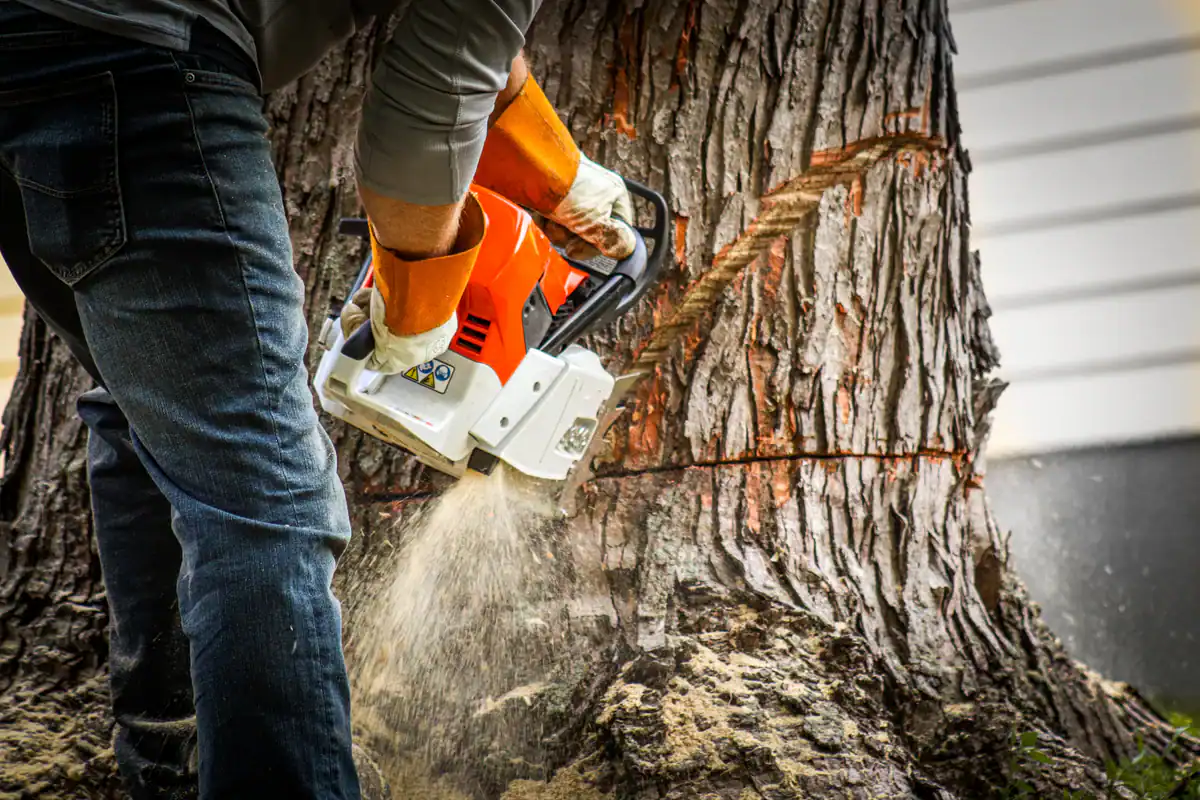
Missouri doesn’t require a statewide permit for removing trees on private residential property, and Weatherby Lake’s city code doesn’t appear to impose a specific tree removal permit requirement for standard private-lot work either. So for most removals — a dead oak in your backyard, a storm-damaged tree near your driveway — you’re not dealing with a permit process before the crew can start.
The exception worth knowing about is work near the lake itself. If the tree is close to the water’s edge or involves any work near your seawall, Weatherby Lake’s building code requires a permit and coordination with the Weatherby Lake Improvement Company before that work begins. A tree crew that isn’t aware of that requirement can put you in a difficult position with the WLIC. We’re familiar with how these jobs work in lake communities and will flag any coordination requirements before the work starts — not after.
This is one of the most common questions, and the honest answer is: it depends on what’s actually wrong with the tree. If a tree has lost more than about 25% of its branch structure, is showing signs of root failure, has a trunk that’s split or hollowed out, or is dead throughout — removal is usually the right call. But if the issue is a few problematic limbs, a canopy that’s grown too close to the roofline, or branches hanging over a neighbor’s property, strategic trimming can often solve the problem without taking the whole tree down.
The only way to know for sure is an honest on-site assessment. We’ll tell you which option your tree actually needs — and if trimming will handle it, that’s what we’ll recommend. In Weatherby Lake, where mature trees are part of what makes the community what it is, unnecessary removals aren’t in anyone’s interest. The goal is to give you a straight answer, not the most expensive one.
This is where a lot of homeowners get surprised. The general assumption is that homeowners insurance covers falling trees — and it often does, if the tree fell due to a storm or another sudden event. But if the tree was already dead or visibly diseased, and there’s evidence you knew about it and didn’t act, your insurer may deny the claim on negligence grounds. That applies whether the tree falls on your own home or on a neighbor’s property.
In Weatherby Lake, where properties are close together, lots slope toward the lake, and home values are well above the metro average, the financial exposure from a tree failure is real. A dead tree falling on a lakefront home, a dock, or a neighbor’s seawall isn’t a minor claim. Getting a hazardous tree removed before something happens isn’t just a safety decision — it’s the financially responsible one. A free estimate from us costs nothing and gives you a clear picture of what you’re dealing with.
For a standard removal — say, a medium-sized dead tree on a flat-access lot — most jobs are done in a few hours. Larger trees, particularly the mature 60 to 70-foot specimens common in Weatherby Lake, can take a full day depending on the complexity of the job. Sloped lots, proximity to the water, and access constraints from curving residential roads like those throughout Weatherby Lake can all affect how long a removal takes and how we stage our equipment.
What won’t happen is a crew finishing the cut and leaving the rest for later. Cleanup is part of the job, not a follow-up visit. Before we leave, the wood is cleared, the chips are dealt with, and your property looks like the tree was never there — or close to it. If you want to keep any of the wood or mulch, that’s easy to arrange, but it needs to be communicated before the job starts so we can set it aside rather than chip it.
Yes, meaningfully so — and it’s worth understanding why before you hire anyone. On a flat suburban lot with open access, a large tree removal is a controlled, straightforward process. On a sloped lakefront lot in Weatherby Lake, the variables multiply. Equipment staging is more constrained. We have to account for where debris falls relative to the water. If the tree is near a seawall, the work has to be done carefully enough that the removal doesn’t damage the wall or disturb the bank. And on curving residential roads with limited turnaround space, a crew that isn’t used to working in these conditions can create access problems for the whole street.
This is exactly why experience matters more than price when you’re getting quotes for a job like this. We’ve handled large, complex removals in tight residential settings — including post-storm emergency work across multiple states — and our crew knows how to adapt to the physical realities of a property like yours. The multi-state storm response history isn’t just a credential; it’s evidence of the operational capability these jobs require.
Honestly, tree removal can be done year-round — and for dead or hazardous trees, waiting for the “right season” isn’t a good idea. A dead tree doesn’t become safer in winter. That said, timing does matter for certain situations. Late winter and early spring — before new growth begins — is generally the best window for most pruning and trimming work in the Kansas City, KS & MO area. It’s also when structural defects are easiest to spot, since the leaves are off and you can actually see the tree’s architecture.
For oak trees specifically, timing matters for a different reason. Oak Wilt is an active threat in the KC metro, and pruning oaks during the warmer months when picnic beetles are active increases the risk of spreading the disease. If you have oaks on your property in Weatherby Lake and are considering trimming rather than removal, late fall through early spring is the safer window. If you’re unsure what you’re dealing with, a free on-site assessment from us will give you a clear answer on timing and next steps before you commit to anything.
Other Services we provide in Weatherby Lake