
There’s a specific kind of stress that comes with watching a tree and wondering when — not if — something’s going to give. Maybe it’s a large cottonwood near your fence line that’s been leaning since the last big storm rolled through the Missouri River valley. Maybe it’s a silver maple with a hollow trunk sitting ten feet from your roofline. You already know it needs to go. You just haven’t made the call yet.
Once the tree is down and the yard is clean, that stress disappears. You’re not scanning the sky every time a thunderstorm warning pops up on your phone. You’re not wondering whether your homeowners insurance will actually cover the damage if it falls — because here’s the thing: if a tree was visibly dead or declining and you knew about it, your insurer may deny the claim on negligence grounds. Proactive removal isn’t just peace of mind. It’s financially the smarter move.
Riverside’s alluvial and clay-heavy soils along the river corridor are hard on root systems over time. Clay expands and contracts with every wet and dry season, and trees that have been rooted in that ground for decades can look solid from the outside while the root structure is compromised underneath. That’s not a situation you want to find out about during a spring storm on I-635. Getting a professional assessment now costs far less than the alternative.
We’ve been working in the Kansas City, KS & MO metro for over a decade, and we’re based in Kansas City, KS & MO, KS — connected to Riverside directly via I-635. That’s not a stretch of the service area. That’s a fifteen-minute drive.
We’re family-owned and fully insured, carrying both general liability and workers’ compensation coverage. That matters more than most people realize. If a tree crew without workers’ comp gets hurt on your property in Platte County, the liability doesn’t disappear — it can shift to you. Our coverage protects everyone involved, which is why informed homeowners and commercial property managers at places like Horizons Business Park ask for proof of insurance before anyone picks up a chainsaw.
What you’ll notice quickly is that our estimates are honest. If a strategic trim can solve the problem instead of a full removal, we’ll tell you that. No upsell, no inflated scope. Just a straight answer about what the tree actually needs.
It starts with a free on-site estimate. We come out, look at the tree, assess the situation — proximity to structures, root condition, species, what the soil looks like — and give you a straight number. In Riverside, that assessment often includes a look at the surrounding terrain. Properties near NW Platte Road and the river bluff corridor deal with different conditions than properties further inland, and we know what to look for before the first cut is made.
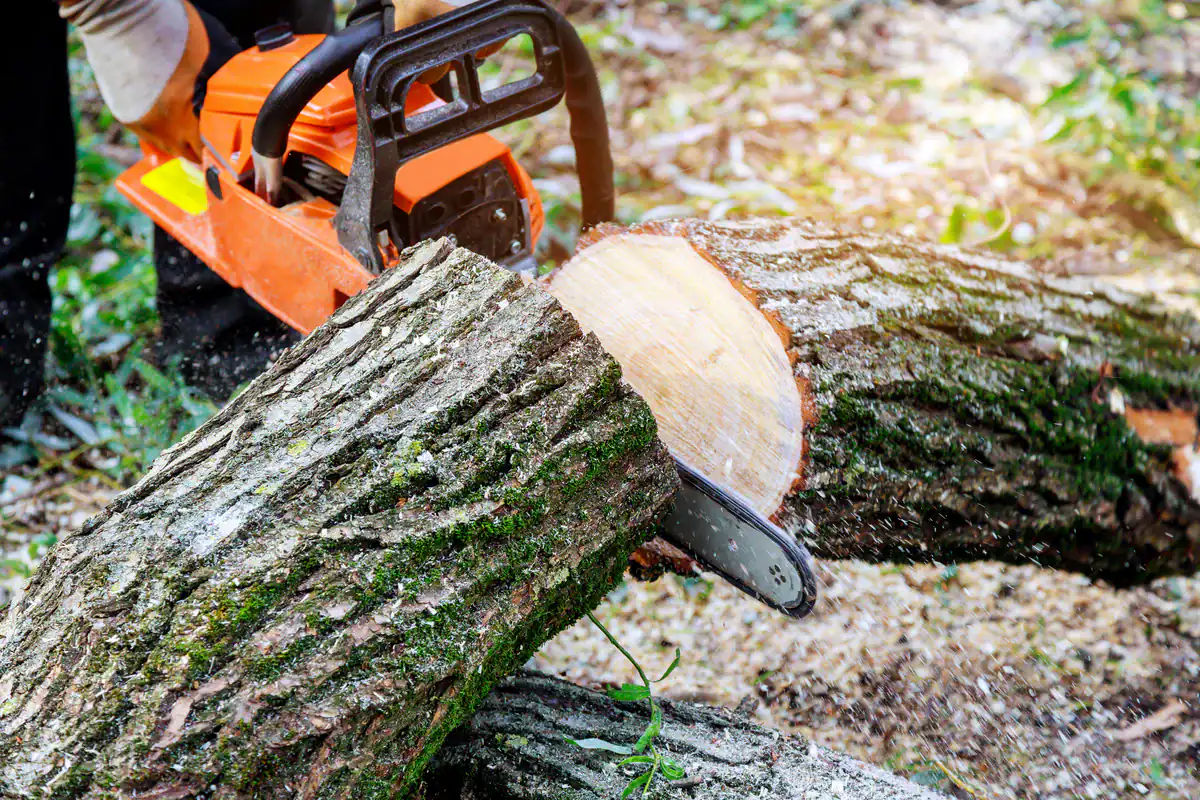
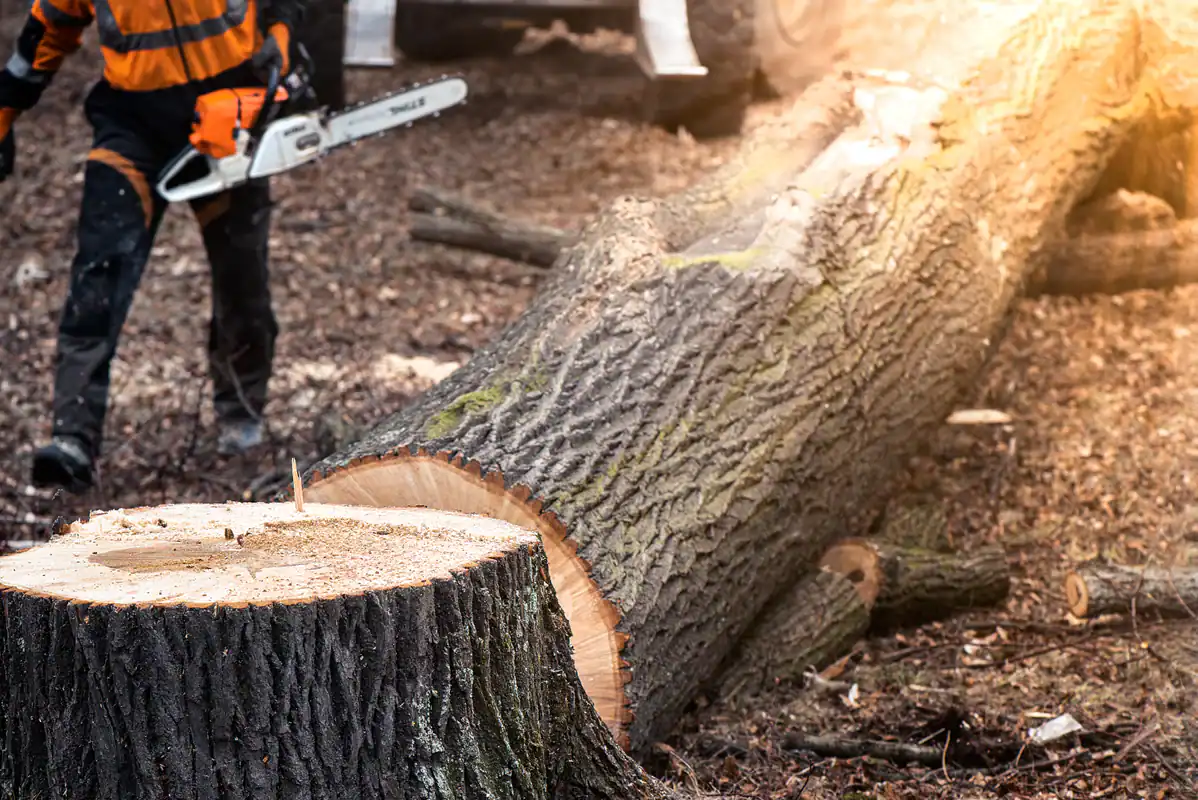
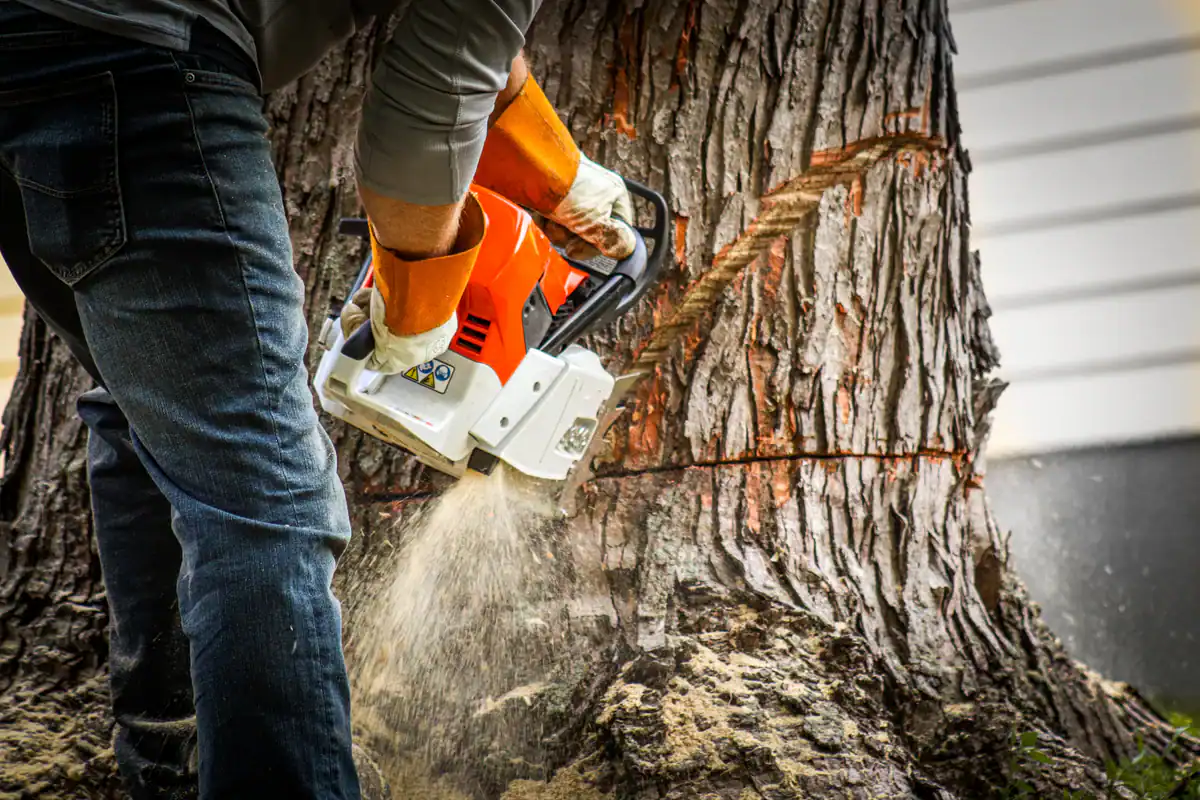
Once you approve the work, we handle everything. For large tree removal — the kind of mature cottonwoods and silver maples common to Riverside’s established neighborhoods — that means sectional cutting, controlled lowering of limbs, and careful work around any structures, fences, or neighboring properties. Our customers in similar dense residential situations specifically mention how clean and careful the process was, including cleanup that extended to adjacent yards.
Every job ends with a full cleanup. No wood piles left behind, no chip mounds sitting on your lawn. If you want to keep the firewood or mulch, just say so before we start and we’ll set it aside. Otherwise, it leaves with us. For Riverside homeowners managing rental properties or commercial managers with facilities in the Horizons Business Park area, that clean finish isn’t optional — it’s part of the job.
Ready to get started?
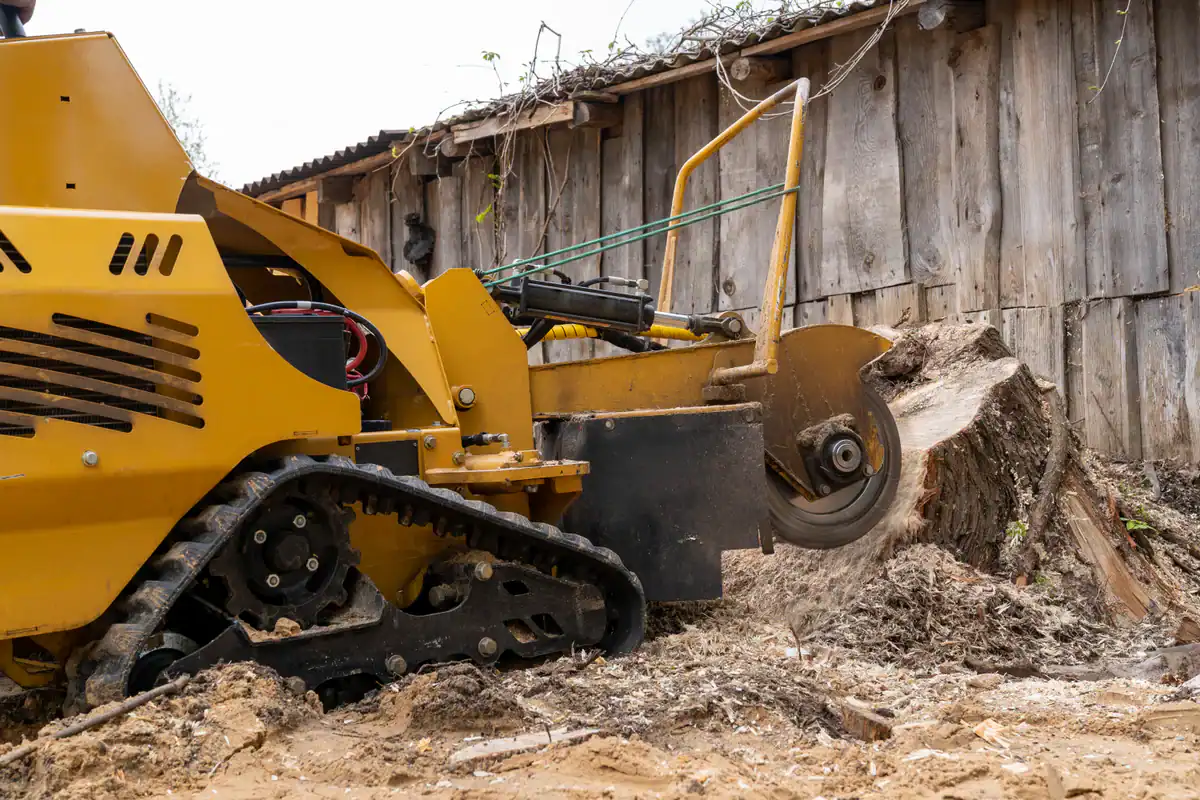
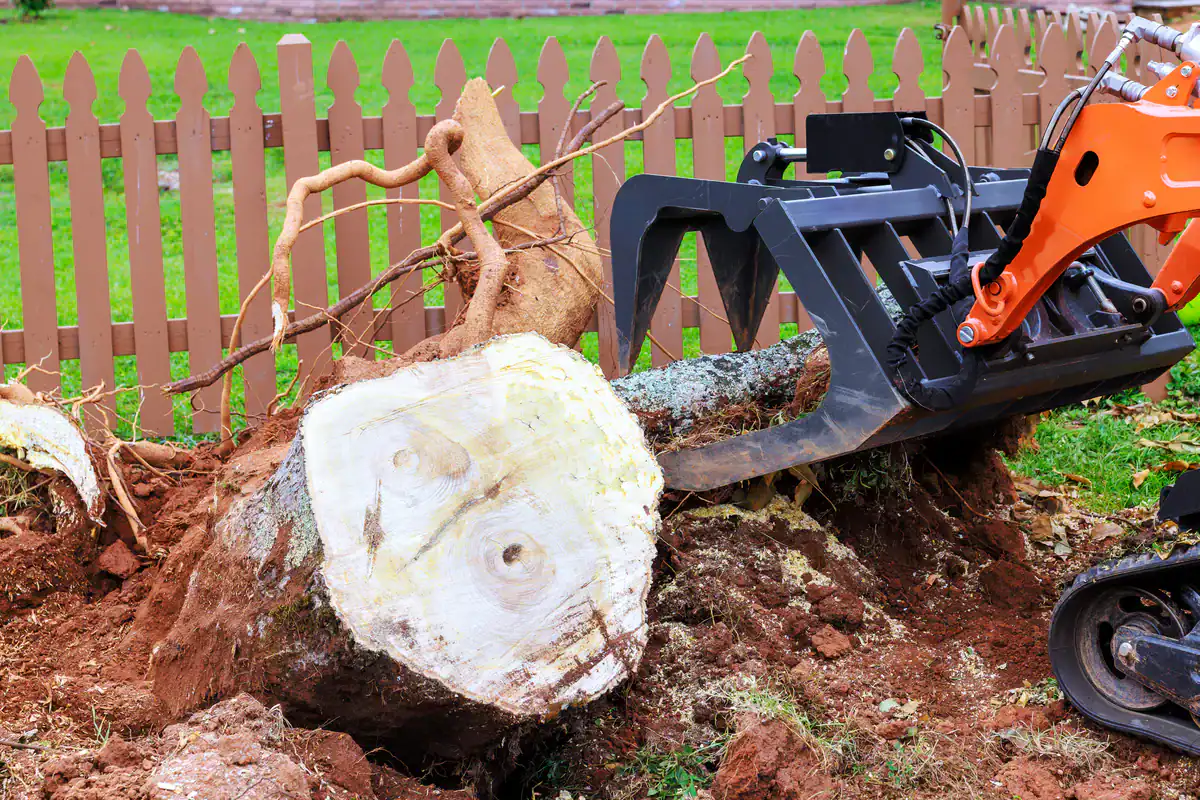
Tree removal in Riverside isn’t one-size-fits-all. The city has a mature tree canopy built up over 70-plus years, and the species common to the Missouri River bottomland — cottonwoods, silver maples, willows — grow large and fast, which means removal often involves serious size and weight. We handle the full scope: dead tree removal, diseased tree removal, hazardous tree removal, large tree removal, and storm-damage response. Stump grinding and brush removal are also available if you want the site fully cleared after the tree comes down.
For diseased tree removal, the KC metro’s documented threats are real in Platte County. Emerald Ash Borer has been active in the area, and Oak Wilt is a genuine concern for the mature oak population in Riverside’s older neighborhoods. If you’re not sure whether your tree is diseased, declining, or simply dormant, our on-site assessment will tell you. You don’t have to guess, and you don’t have to commit to removal before you have a clear picture.
Commercial properties in Riverside — including facilities along the Horizons Business Park corridor near the I-635 interchange — have different removal needs than a single-family home. We schedule around business operations, work near loading areas or parking structures, and provide proper insurance documentation as part of how we handle commercial tree cutting service requests. Residential or commercial, the process is the same: show up, do the job right, leave the property clean.
For most standard residential tree removals on private property in Riverside, a specific tree removal permit is not typically required under Missouri’s general approach to private property tree work. That said, Riverside’s municipal code does include land disturbance regulations that protect significant trees in the context of grading, construction, or development projects — so if your removal is tied to any kind of site work or redevelopment, there may be additional steps involved.
If your property is near the L-385 levee corridor along the Missouri River, there may also be separate considerations related to the levee management area and the trees planted in the borrow zones during that project. We’re familiar with local conditions in Riverside and Platte County and can help you understand what applies to your specific situation before any work begins.
This is one of the most common questions homeowners ask, and the honest answer is: it depends on what’s actually wrong with the tree. If less than about 25% of the branch structure is damaged or dead, many trees can recover with proper pruning. A leaning branch over a roofline, a few storm-damaged limbs, or early signs of disease don’t automatically mean the whole tree has to come down.
Where it gets more serious is when the trunk itself is compromised — hollow sections, deep cracks, significant decay at the base, or root damage from Riverside’s clay-heavy bottomland soils that can destabilize a tree from the ground up. Trees in the Missouri River corridor that have experienced repeated wet-dry soil cycles over decades can look healthy above ground while the root system is far weaker than it appears. A free on-site assessment will give you a clear answer. If trimming is the right call, that’s what you’ll hear — not an upsell to full removal.
This is where a lot of homeowners get caught off guard. Most people assume their homeowners insurance will automatically cover damage from a fallen tree, but that’s not always the case. If the tree was visibly dead, diseased, or declining — and you were aware of it and didn’t take action — your insurer may deny the claim based on negligence. The logic is straightforward: you knew the risk existed and didn’t address it.
It gets more complicated if the tree falls onto a neighbor’s property. In situations where negligence can be demonstrated — meaning you knew the tree was a hazard — liability can shift to you personally, even if the damage occurs on someone else’s land. In a city like Riverside, where established neighborhoods have mature tree canopies and properties sit close together, a large cottonwood or silver maple coming down doesn’t stay contained to one yard. Getting a hazardous tree removed before it falls is the financially responsible move, not just the cautious one.
Tree removal costs vary based on the size of the tree, its location on your property, proximity to structures or roads, and how complex the removal is. Nationally, most residential tree removals fall somewhere between $750 and $1,200 on average, though smaller trees can come in well below that range and large or structurally complex trees — particularly those near power lines, fences, or buildings — can run higher.
In the Kansas City, KS & MO area specifically, most residential removals fall in the $300 to $3,500 range depending on those same factors. Riverside’s mature bottomland species — large cottonwoods and silver maples near the river corridor — tend to be on the larger end of the size spectrum, which affects the scope of the job. We don’t publish set pricing because every job is genuinely different, but our estimates are free and the number you get will be straight — no surprise charges added after the fact.
Yes. Fast response is one of the things our customers consistently mention, with estimates often happening within 24 hours and work completed the following day. Riverside’s position in the Missouri River valley makes it more exposed to wind events than more sheltered inland suburbs, and the convergence of I-635, US-69, and MO Route 9 within city limits means storm-damaged trees near major roads create both safety hazards and access problems that need to be addressed quickly.
We’ve deployed to storm recovery operations across Kansas, Missouri, North Carolina, South Carolina, and Florida. That’s not a local crew learning how to handle a large-scale storm event — it’s a team that has worked mass-casualty storm situations across multiple states. When a spring storm or a Missouri River valley wind event brings a tree down on your property or across a road corridor near your home, that level of experience matters. Call and explain the situation — we’ll get someone out.
Yes — we carry full general liability insurance and workers’ compensation coverage. Both matter, and it’s worth understanding why. General liability covers damage to your property if something goes wrong during the removal. Workers’ compensation covers our crew if someone is injured on the job. Without workers’ comp, an injured worker on your property could pursue a claim against you personally — and in Missouri, that risk doesn’t disappear just because you hired a contractor.
This comes up more in Riverside than people expect, particularly for commercial properties in the Horizons Business Park area where facilities managers routinely require proof of insurance before any contractor begins work. We can provide documentation before the job starts. For residential homeowners in Platte County, the same protection applies — you’re covered on both sides. If you’re getting quotes from multiple tree cutting services in the area, asking for proof of insurance upfront is the single most important thing you can do before anyone sets foot on your property.
Other Services we provide in Riverside