When a tree starts dying in Mission, it’s rarely just your problem. In a city of under three square miles with houses sitting close together on streets like those off Johnson Drive and Roe Avenue, a dead or leaning tree is never far from a roofline, a fence, or a neighbor’s driveway. That’s the reality of living in one of Johnson County’s most established inner-ring suburbs — and it’s exactly why putting this off costs more than acting on it.
The Tudor cottages and mid-century ranches that define Mission’s neighborhoods were built alongside trees that are now 60 to 100 years old. Those trees have grown into full-canopy specimens with root systems that have had decades to spread. When one of them starts to go — whether it’s disease, storm damage, or just age — the window between “I should deal with that” and “it came down on something” closes faster than most people expect.
What you get when the job is done right: a clean yard, no debris left behind, no piles stacked against the fence, and a property that looks like a crew was never there — except the problem is gone. That’s the outcome. That’s what this is about.
We’ve been doing this work in the Kansas City Metropolitan Area, MO area for over a decade. Our crew is Kansas-raised, locally rooted, and operates out of Kansas City Metropolitan Area, MO, KS — which puts Mission practically next door. This isn’t a franchise dispatching strangers to your neighborhood. It’s a tight-knit crew that works the same streets, knows the same storm patterns, and treats your property the way we’d want ours treated.
Mission is one of six cities listed directly on our website as a named service area — not because of a dropdown, but because this is a market we actually work in. From the older lots in Cunningham Heights to the established streets near Arrowhead Trails, we’ve handled the kind of close-quarters, large-tree removal that Mission’s density demands.
We’re fully insured, including liability and workers’ compensation. Free estimates. No runaround on pricing. If a trim can solve the problem, we’ll tell you that instead of pushing for a full removal.
It starts with a free on-site estimate — usually within 24 hours of your call. Someone comes out, looks at the tree, assesses what it’s actually dealing with, and gives you a straight answer. If the tree needs to come down, we’ll tell you why. If a targeted trim can handle the problem, we’ll tell you that too. No upsell, no manufactured urgency.
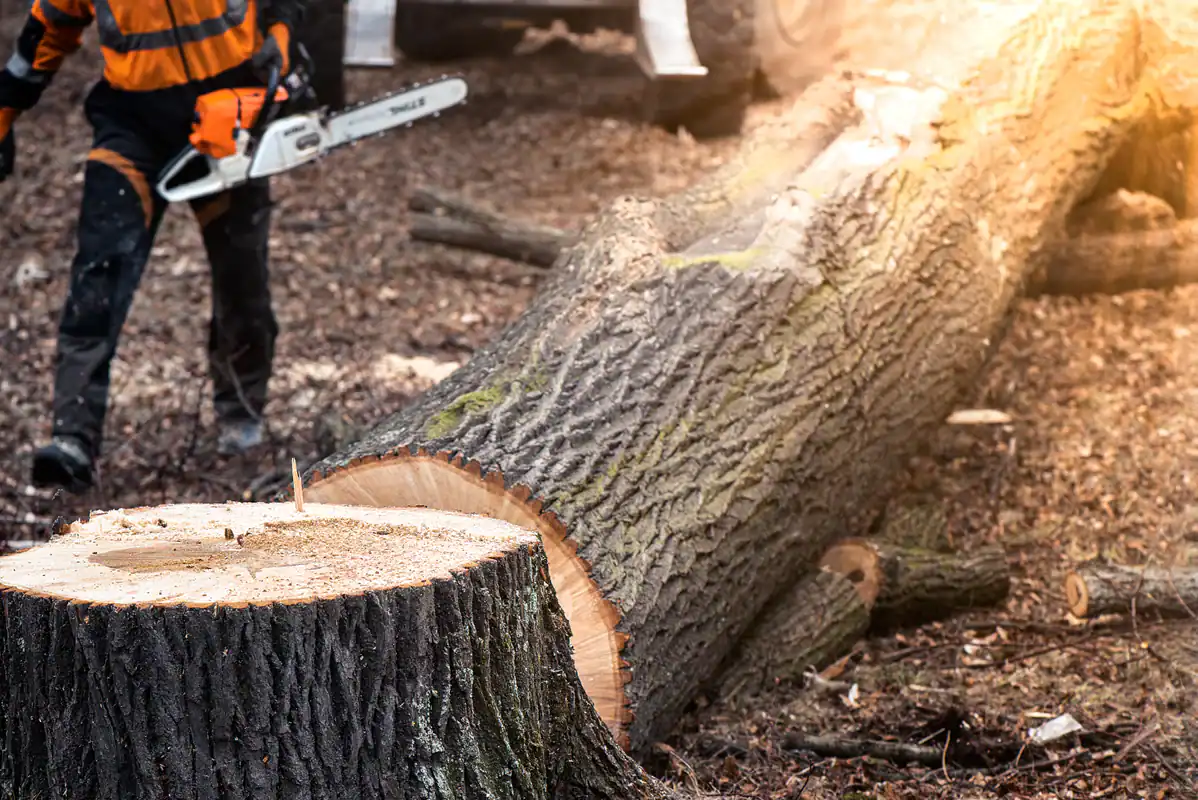
Once you’re ready to move forward, our crew shows up with the equipment the job requires. In Mission’s tight residential lots, that means working carefully around structures, fences, neighboring properties, and anything else in the drop zone. Large-tree removal in a dense neighborhood isn’t the same as dropping a tree in an open field — the planning matters, the angles matter, and our experience in exactly these conditions is what keeps the job clean.
One thing worth knowing specific to Mission: under the city’s current tree preservation ordinance, you don’t need a city permit to remove a tree on your own private property. That removes one layer of delay. We handle the cut, the cleanup, and the haul-out. If you want to keep the wood or mulch for personal use, just say so before we start. Otherwise, everything goes with us — no piles, no debris, no follow-up calls wondering when someone’s coming back to finish.
Ready to get started?
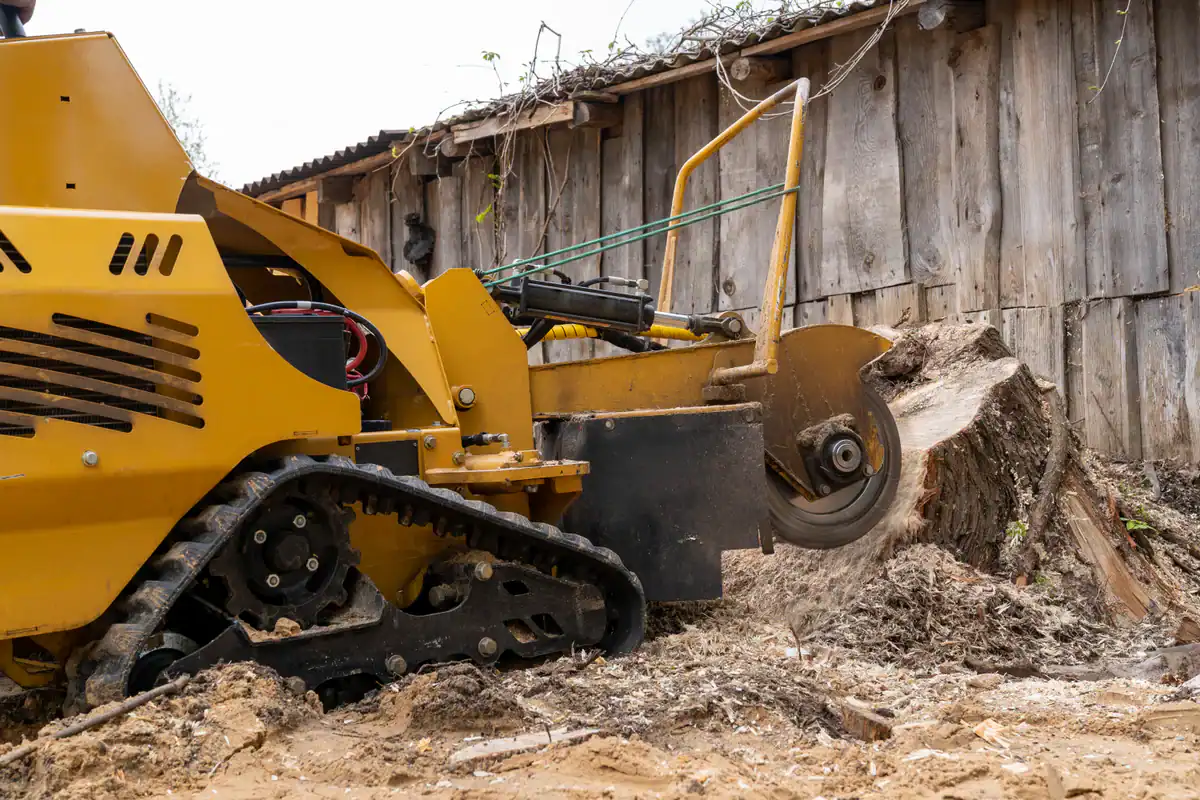
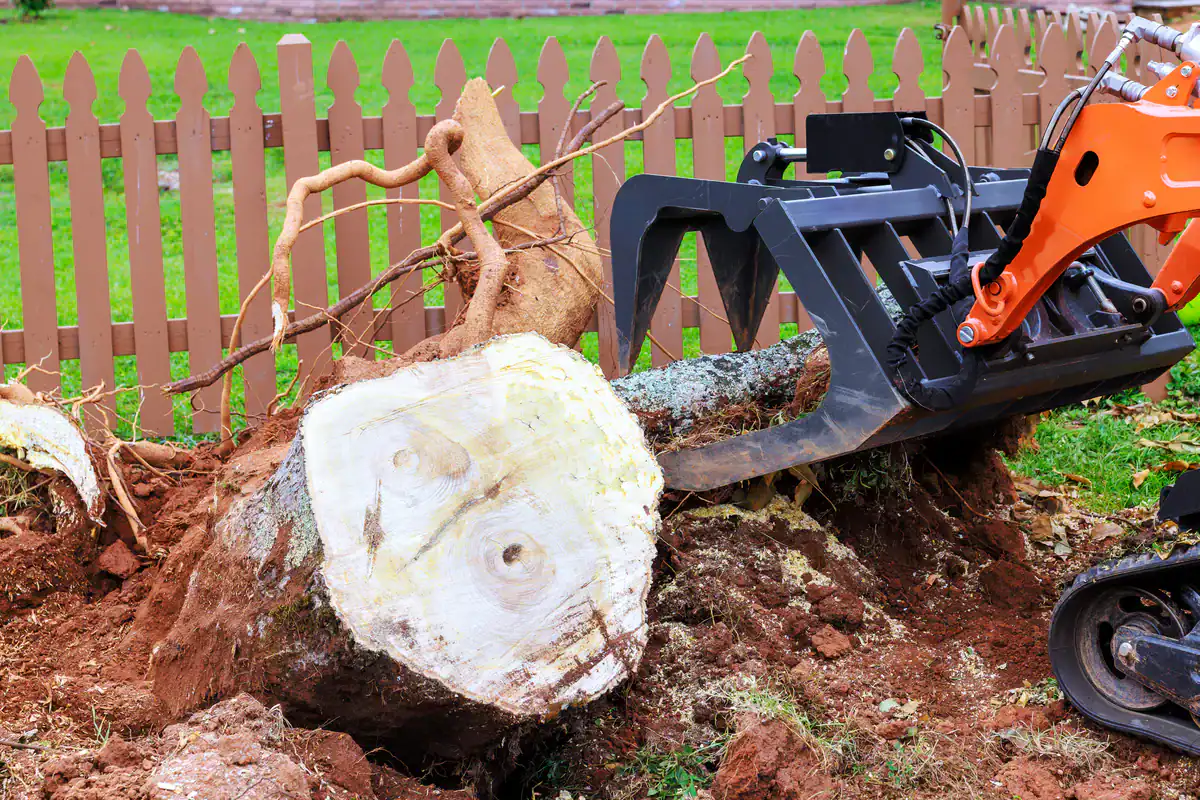
Tree removal in Mission covers the full scope: dead tree removal, diseased tree removal, hazardous tree removal, large tree removal, stump grinding, brush removal, and emergency response when a storm has already done the damage. There are no named tiers or packages — the work is scoped to what your specific tree and property actually need.
Mission’s city code is worth understanding here. Untended brush and woody vines around established trees are classified as nuisance weeds under local code enforcement. That means a dead tree that’s been sitting for a season — with overgrowth building up around the base — isn’t just a safety issue. It’s the kind of thing that draws a code notice. Getting it handled cleanly and completely is the right move on both counts.
For homeowners near Shawnee Mission Parkway or along the Johnson Drive corridor, visibility matters too. Dead or storm-damaged trees on high-traffic streets are conspicuous in a way that trees on quiet cul-de-sacs aren’t. Whether the concern is safety, compliance, or just not being the property that stands out for the wrong reason, the outcome is the same: the tree comes down, the yard gets cleaned up, and you’re done with it. Full cleanup is included on every job — Mission’s code prohibits yard debris in the street, and we leave nothing behind that would create that problem.
Under Mission’s current tree preservation ordinance — Ord. No. 1617, passed in November 2024 — you do not need a city permit to remove a tree on your own private residential property. The ordinance requires a tree protection and removal plan only when the work is tied to a broader development or permitted construction project. For a standard residential tree removal on your own lot in Mission, there’s no city permit required, and no waiting on approval before the work can begin.
That said, Mission’s code enforcement does classify untended brush and woody vines around established trees as nuisance weeds. So while you don’t need a permit, you do need to make sure the job is finished completely — not just the tree, but the surrounding debris and overgrowth. A crew that does a full cleanup on every job, without exception, is the right fit for Mission’s code environment.
This is one of the most common questions, and the honest answer is: it depends on what’s actually wrong with the tree. A tree that’s lost less than about a quarter of its branches to storm damage or disease may still be structurally sound and worth preserving with targeted pruning. A tree that’s fully dead, has a compromised root system, is leaning toward a structure, or has significant internal decay is a different situation entirely — that’s a removal conversation.
The only way to know for sure is an on-site assessment. In Mission’s dense residential neighborhoods, where a large tree is almost always near a fence, a roofline, or a neighboring property, erring toward removal when trimming could have worked is an unnecessary expense. We’ll give you a straight read on which option actually makes sense — not the one that generates the bigger invoice. The estimate is free, and there’s no obligation to move forward.
This is where a lot of homeowners get caught off guard. If a dead or visibly diseased tree falls and damages your own structure, your homeowners insurance may cover the removal and repair — but only up to a point, and only if you weren’t aware the tree was a hazard. If your insurer can show that you knew the tree was dead or dying and didn’t address it, they can deny the claim based on negligence.
The neighbor scenario is even more complicated. If your dead tree falls onto a neighboring property and causes damage, and your neighbor can demonstrate that the tree was visibly deteriorating before it fell, liability can shift to you personally. In Mission, where lots sit close together and neighboring structures are rarely more than a few feet from a property line, that risk is real and worth taking seriously. Proactive removal is almost always less expensive than the alternative.
For a smaller tree — say, under 30 feet — the job typically takes two to four hours from start to cleanup. A larger, mature tree can take a full day depending on its size, canopy spread, and how close it sits to structures or neighboring properties. In Mission’s established neighborhoods, where many trees are 60 years old or more and have grown into full-canopy specimens, it’s not unusual for a removal to take most of the day when we’re working carefully around tight spaces.
What you can expect when the job is done: the tree is gone, the stump can be ground down at the same visit if you want that handled, and the yard is cleaned up completely. No wood piles, no debris scattered across the lawn, no chips left in the driveway. If you want to keep the wood or mulch — some homeowners do — just let us know before we start. Otherwise, everything leaves with us, and your yard is usable the same day.
Yes — but it requires a crew that has actually done it before in conditions like this, not one learning on the job. Large tree removal near structures is a different skill set than open-field work. The crew has to plan the cut angles carefully, control the direction of each section as it comes down, and work in stages to keep limbs from swinging into rooflines, fences, or neighboring properties. This is exactly the kind of work Mission’s tight residential lots demand.
Multiple verified customer reviews specifically call out our work for safe removal of large trees in dense neighborhoods — including cleanup that extended to neighboring yards. That’s the standard of care the job requires when you’re working in a city this compact. We’re fully insured with liability and workers’ compensation coverage, which means that if something unexpected does happen, you’re protected. That’s the baseline you should require from any tree service you hire for this kind of work.
Mission’s situation is pretty specific. The city’s housing stock dates back to the 1920s in some neighborhoods, with a significant wave of development through the 1950s. The trees planted alongside those homes have had 60 to 100 years to grow — and many of them are now at or past the point where age, disease, or accumulated storm damage catches up with them. The Kansas City Metropolitan Area, MO metro’s climate doesn’t help: spring thunderstorms, summer drought stress, and winter ice loading all take a toll on large, established trees over time.
The Kansas City Metropolitan Area, MO area also deals with specific tree threats like Emerald Ash Borer, Oak Wilt, and Bagworm infestations — all of which can move through a neighborhood’s mature canopy faster than most homeowners realize. By summer 2024, dead and dying trees had become enough of a visible issue in Mission that the city council identified it as a community concern and moved forward with a new tree preservation ordinance that fall. If your property has a tree that’s been declining, you’re not alone — and the longer it sits, the more complicated the removal tends to get.