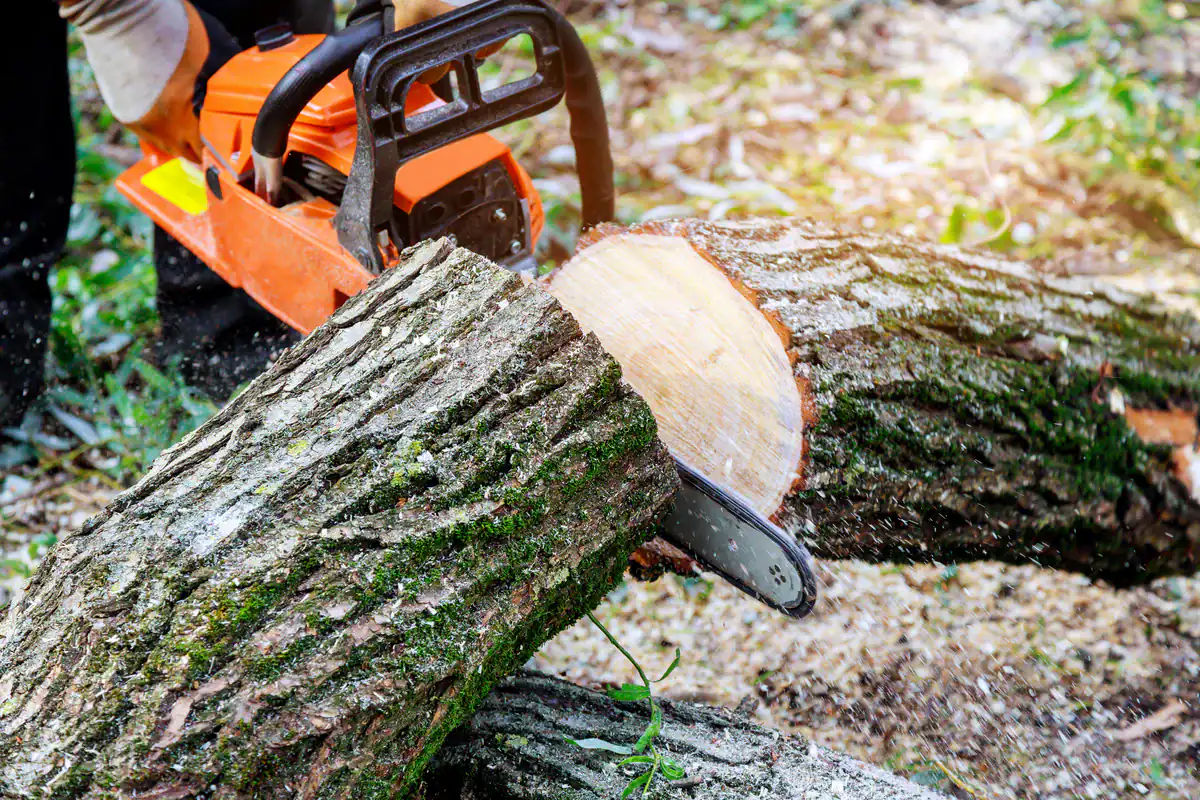
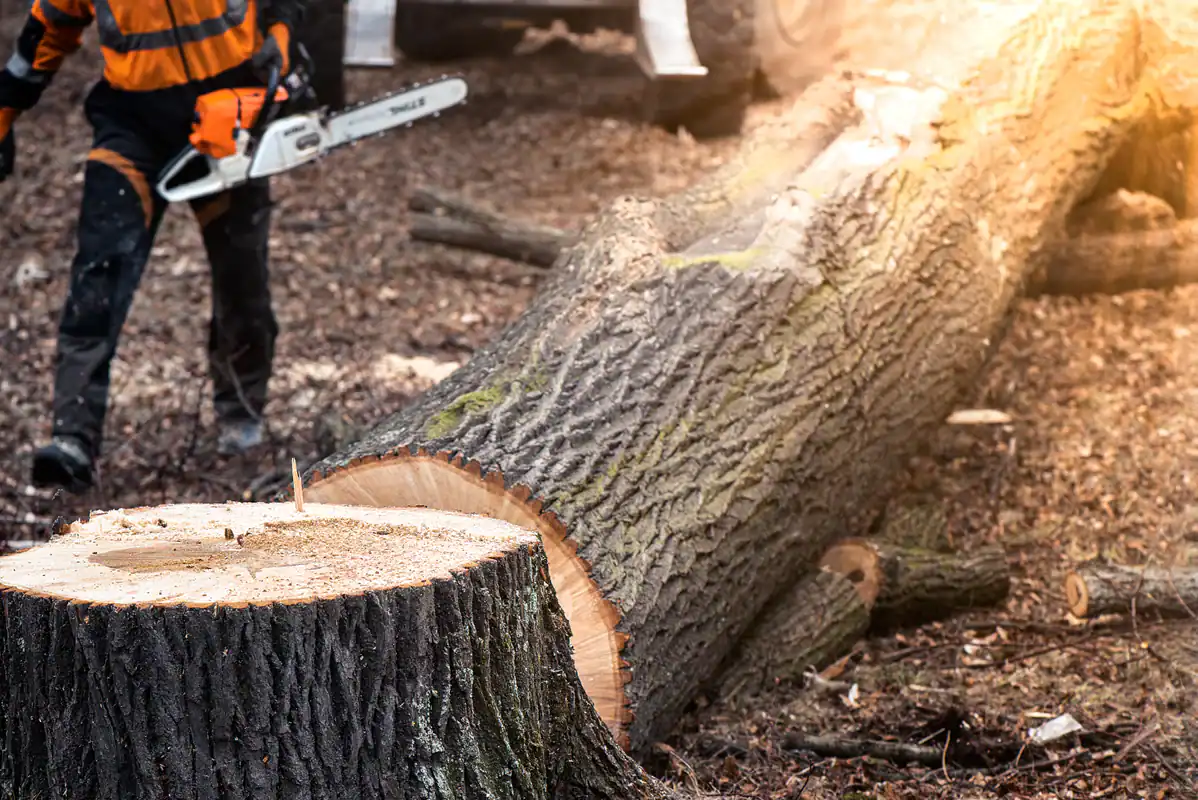
The moment a dead or storm-damaged tree comes down safely, something shifts. The anxiety of watching it from the kitchen window every time the wind picks up — gone. The worry about what happens if it comes down on its own — gone with it. That’s the actual outcome here, and it matters more than any before-and-after photo.
Kearney sits squarely in Tornado Alley, and that’s not a vague Midwest weather disclaimer — it’s a documented geographic reality. Severe weather events have already caused significant tree damage in neighborhoods like Southbrook, where large limbs came down on and around homes during documented wind events. When you have a compromised tree on your property, you’re not just dealing with an eyesore. You’re sitting on a liability that your homeowners insurance may not cover if the tree was visibly dead or diseased and you chose to wait.
For homeowners in the newer subdivisions off I-35 — Westbrook, The Meadows at Greenfield — and in the established tree-lined streets of River Oaks along the Fishing River, the risk profile is different but the urgency is the same. Mature trees near structures, saturated roots from the river corridor, clay soil that shifts and destabilizes root systems over time — these are real, local factors in Kearney. Getting the right crew in before a problem becomes a disaster is the outcome that actually protects your property.
We’ve been doing this work in the Kansas City, KS & MO metro for over a decade, which means we know the clay soil conditions in Clay County, the tree species common to established Missouri neighborhoods, and what storm damage actually looks like after a severe weather event — not just in theory, but from having cleaned it up across Kansas, Missouri, and multiple other states during large-scale storm recovery operations.
We’re a family-owned crew based in the KC area, and we work in Kearney regularly. We treat every property like it belongs to someone we know — because in a community this size, it often does. We’re fully insured with liability coverage and workers’ compensation, so if something unexpected happens on the job, you’re protected. That’s not a bonus — it’s the baseline.
We show up, do the work, and leave the property clean. No piles of debris sitting in your yard for a week. No follow-up calls chasing down a finish. Just a job done the right way, start to finish.
It starts with a free estimate. We come out, look at the tree, and give you a straight answer — what it needs, what it’ll take, and what it’ll cost. No runaround, no upsell. If a strategic trim can solve the problem instead of a full removal, that’s what we’ll tell you. Honesty at the estimate stage is how we operate, and it’s why customers call us back.
Once you’re ready to move forward, scheduling is fast. Our verified reviews consistently show estimates within 24 hours and work completed the following day. For Kearney homeowners who are commuting into Kansas City, KS & MO via I-35 and don’t have time to manage a drawn-out process, that turnaround matters. A dead or hazardous tree isn’t something you want sitting in your yard through another week of spring storm season.
On the day of the job, we handle everything — cutting, removal of trunks and debris, and full cleanup of the site. If you want to keep the wood or mulch, just say so in advance and we’ll set it aside. Otherwise, the yard is left clean. Worth noting for Kearney residents: the city’s municipal code gives the city authority to order removal of hazardous or diseased trees on private property. If you’ve received a notice — or think one might be coming — getting this handled proactively is always the better path.
Ready to get started?
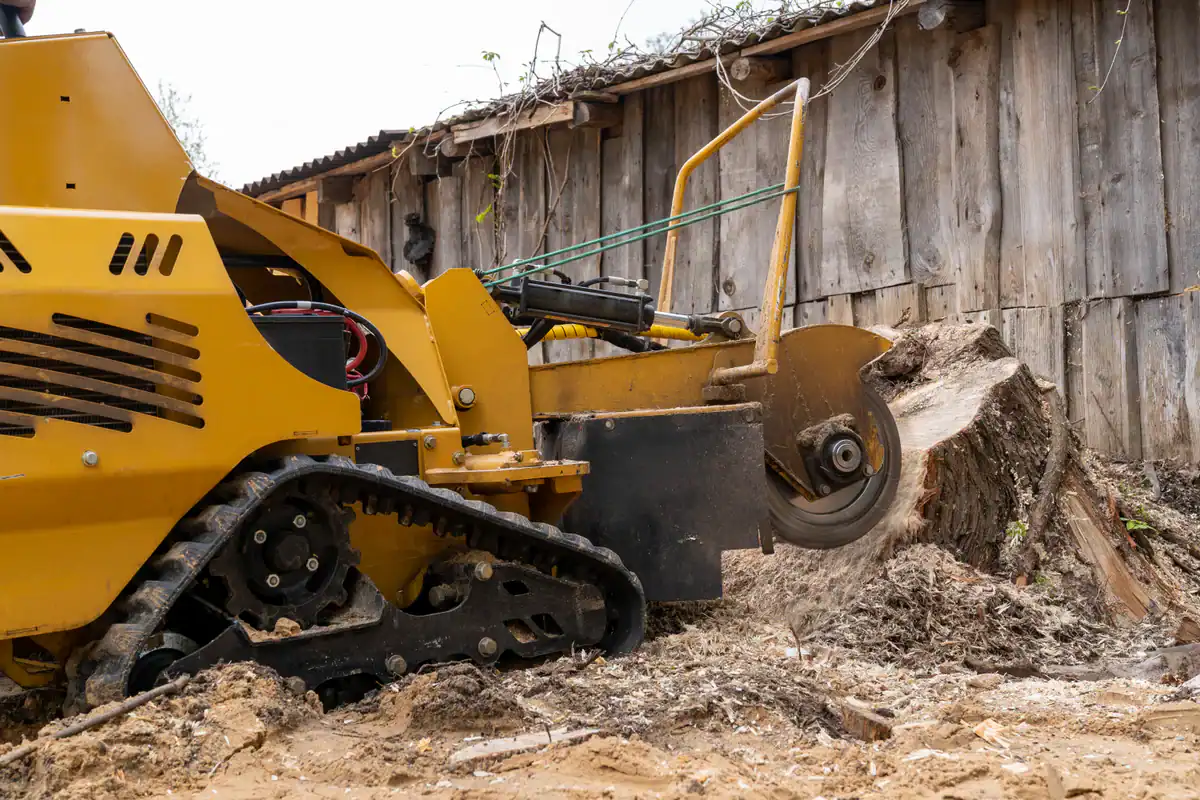
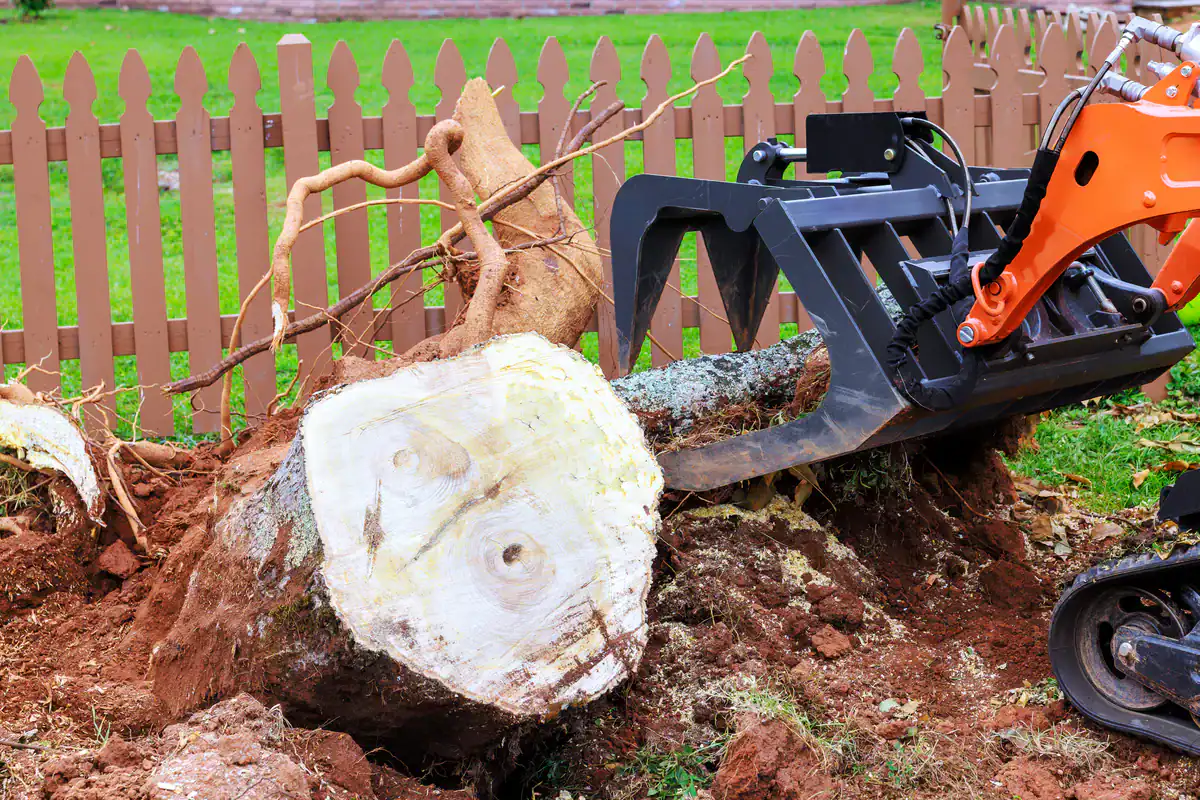
Tree removal in Kearney isn’t one-size-fits-all. A large oak near a home in Southbrook requires a different approach than a storm-snapped ash in a newer Prairie Field lot. We handle the full range — dead tree removal, diseased tree removal, hazardous tree removal, large tree removal, stump grinding, brush removal, and emergency response when a storm has already done the damage.
The Emerald Ash Borer has been active throughout Clay County for years. Ash trees that have been infested become brittle and structurally unpredictable within a few years of infestation — they’re among the more urgent removal situations because they don’t give much warning before failing. If you have ash trees on your property and they’re showing signs of decline, that’s worth getting looked at sooner rather than later.
Every job includes full cleanup — no debris left behind, no half-finished work. We’re fully insured, and that insurance covers both property damage and worker injury, which matters especially when you’re dealing with large trees near structures. For Kearney homeowners in established neighborhoods with mature canopy, or new residents still getting familiar with what’s on their lot, a free on-site assessment is the right starting point. You’ll know exactly what you’re dealing with before any work begins.
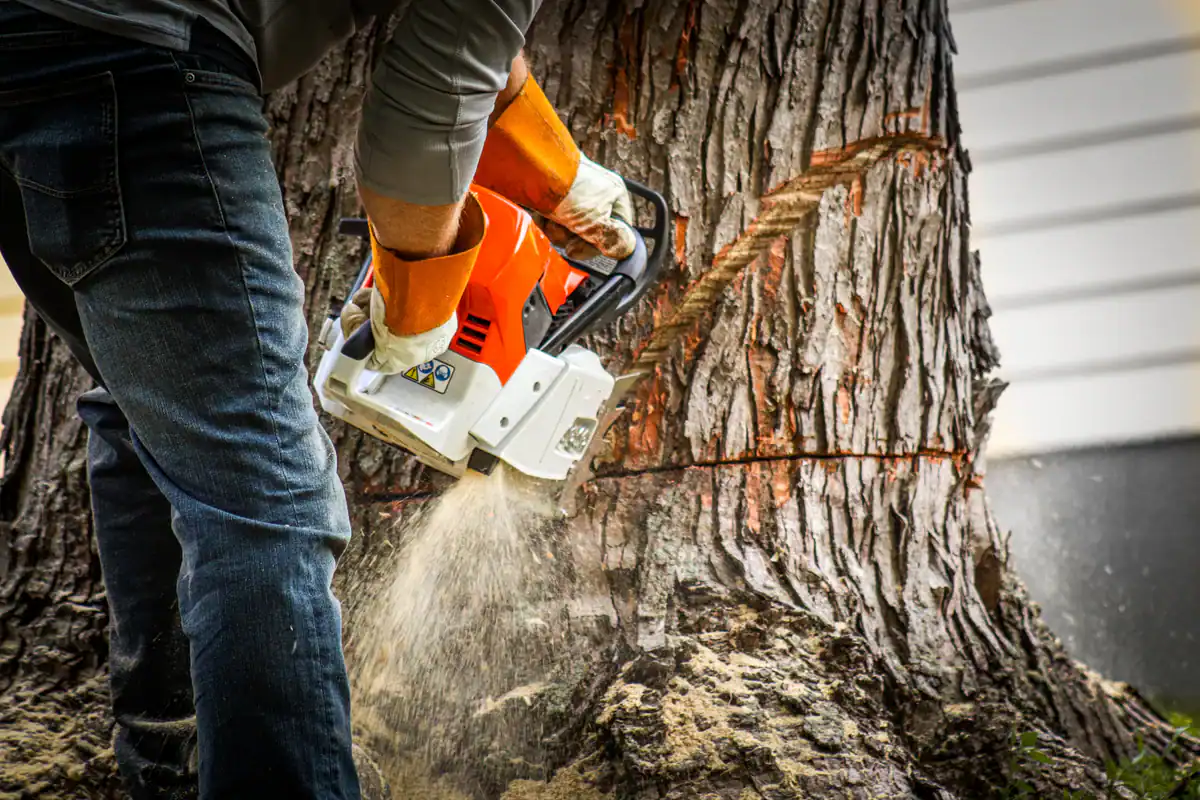
For most private property removals in Kearney, you don’t need a permit — Missouri doesn’t have a statewide tree removal permit requirement, and private trees not located in the public right-of-way generally don’t require city approval before removal. That said, there are a couple of important exceptions worth knowing.
Kearney’s municipal code (Chapter 232) gives the city authority over trees within the right-of-way — meaning street trees along the front of your property are not yours to remove without city involvement. The same code also gives the city authority to order removal of trees on private property if they’re deemed hazardous, diseased, or injurious to power lines or other public improvements. If you’ve received any kind of notice from the city, or if your tree is close to a street or utility line, it’s worth clarifying jurisdiction before work begins. We can help you work through that on the front end so there are no surprises.
This is one of the most common questions, and the honest answer is: it depends on the tree, and you need someone to actually look at it. There are some general guidelines — if less than about 25% of the tree’s branches are damaged, it may survive with proper trimming. But if the trunk is compromised, the root system is unstable, or the tree is dead or heavily diseased, removal is usually the safer call.
In Kearney specifically, a few conditions push trees toward removal more quickly than homeowners expect. Clay soil expands and contracts significantly with moisture changes, which can destabilize root systems over time — especially for large, mature trees in older neighborhoods like River Oaks or around downtown. Emerald Ash Borer damage also tends to progress faster than it looks from the outside. A tree that appears borderline in the spring can become structurally unpredictable by fall. A free on-site assessment from us will give you a straight answer — not a push toward the biggest invoice.
It depends on the circumstances, and the details matter more than most homeowners realize. If a tree falls and damages a covered structure — your house, a fence, a detached garage — your homeowners insurance will typically cover some portion of the removal cost, often in the range of $500 to $1,000 toward the removal itself, alongside the structural damage claim. If the tree falls in your yard without hitting anything, most policies won’t cover removal at all.
The more important scenario to understand is this: if the tree was already dead, visibly diseased, or structurally compromised before it fell, your insurer may deny the claim based on negligence — meaning you knew or should have known the tree was a risk and didn’t address it. In a community like Kearney, where severe weather events are a documented and recurring reality, that’s not a hypothetical. It’s a real outcome that happens to homeowners who waited. Removing a hazardous tree before it falls is almost always less expensive — and far less complicated — than dealing with the aftermath.
For most residential jobs, a smaller tree — say, under 30 feet — can be cut, removed, and cleaned up in two to four hours. Larger trees, particularly the kind of mature oaks and ashes common in Kearney’s established neighborhoods, can take a full day depending on proximity to structures, the condition of the tree, and how the debris needs to be managed.
Disruption to your yard is minimal when the crew knows what they’re doing. We have a documented track record of removing large trees in tight residential settings — including situations where the tree is close to a home, fence, or neighboring property — without causing collateral damage. Full cleanup is included on every job, so the yard is left in good shape when we leave. If you want to keep the wood for firewood or the chips for mulch, just let us know before the job starts and we’ll set it aside rather than haul it away.
The two things that matter most before anything else are liability insurance and workers’ compensation coverage. In Missouri, there’s no required state licensing for basic tree work — which means anyone with a truck and a chainsaw can legally call themselves a tree service. That makes insurance the most important credential to verify, because without workers’ comp, you as the homeowner can be personally liable if a crew member is injured on your property.
Beyond insurance, look for a company with verifiable local experience and real reviews from jobs similar to yours — not just star ratings, but reviews that describe the actual work. Ask whether cleanup is included, how quickly they can get out for an estimate, and whether they’ll give you a straight answer about whether you actually need full removal or just a trim. A company that tells you a trim might solve the problem is one you can trust. One that quotes removal on every job without looking closely is one to be cautious about. We carry full insurance, offer free estimates, and have been working in the KC metro — including Clay County — for over ten years.
Technically, tree removal can be done any time of year — unlike pruning, which has more specific timing windows. That said, late winter and early spring tend to be a practical sweet spot in Kearney for a few reasons. Trees are dormant, which makes them easier to assess and work with, and scheduling tends to be more flexible before storm season picks up. Once spring severe weather season starts in earnest — and in Tornado Alley, that can mean March through June — emergency removal demand increases significantly, and wait times can stretch.
If you have a tree you’ve been meaning to deal with, getting it scheduled before storm season is the move that makes the most sense logistically and financially. A tree that’s already dead or compromised going into spring storm season is a higher-risk situation than it needs to be. Fall is also a reasonable window — getting hazardous trees down before ice storm season reduces the chance of a winter event doing the deciding for you. If you’re dealing with a storm-damaged tree right now, we respond quickly and handle emergency situations — that’s not a seasonal offer, it’s how we operate year-round.
Other Services we provide in Kearney